25-Jul-15
 Sucked To Death [ 25-Jul-15 12:00am ]
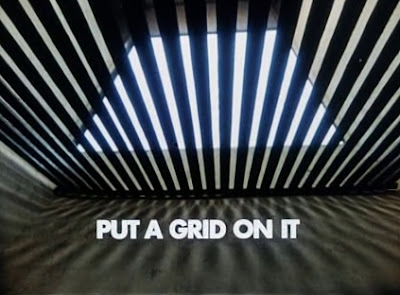
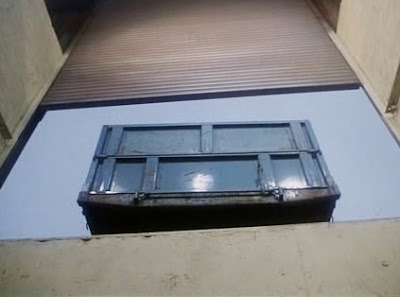
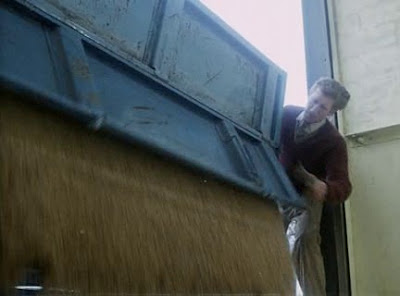


As a child I had a morbid fear of quicksand. I'd probably watched too many Tarzan films, and PIF's like 'Keep A Grid On It', a warning about the dangers of children dying in grain pits ('drowning without water') didn't help. Come to think of it, as an adult I'm still pretty scared of quicksand AND grain pits, I'm just wise enough to know that if I don't go looking for that sort of danger, it certainly won't coming looking for me.
24-Jul-15
Dracula, Prince of Deadness [ 24-Jul-15 12:00pm ]
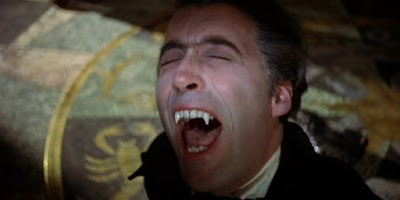

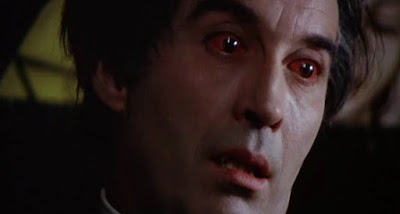
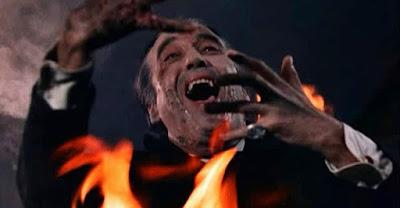
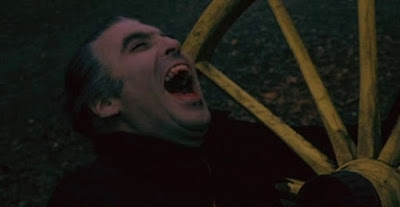
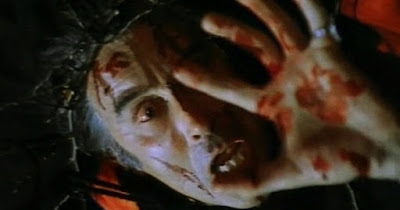
It's a convention of vampire films that Dracula starts dead, and ends up dead. In Hammer productions he is usually ended by a member of the Van Helsing family, but his nemesis can also be a callow youth or a monk who likes to warm his arse on an open fire. In 'Taste The Blood Of Dracula' he just gets giddy from being in a church and falls off a ledge. Fact is, Dracula is very much a bully. He's cock of the walk when biting young, vulnerable girls, but he crumbles when faced with any real opposition. Literally. That said, he'll be back. He always comes back.
RIP, Sir Christopher, you pompous old marvel. See you again soon.
Interesting Postcards [ 24-Jul-15 12:00am ]
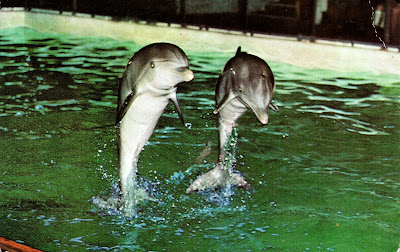
Dolphins at Brighton Aquarium, Sussex
I know what you're thinking, 'yeah, dolphins are cool, Paul, but they're not that interesting'. Well, wind your neck in, mate, because these clever little bastards are Dick and Delilah, the dolphins the CIA trained to sabotage Soviet submarines during the cold war. And you can't prove otherwise.
20-Jul-15
The Evil of Banality [ 20-Jul-15 12:00am ]
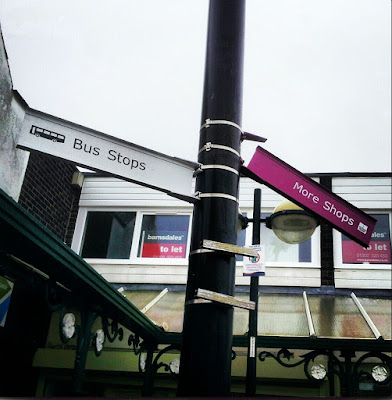
The writer, theorist and academic Mark Fisher recently set up a Facebook page called 'Boring Dystopia', and invited the submission of photographs of Britain in the 21st century to illustrate the concept. I've already uploaded a few snaps, as manifestations of dullness and decay have long been an interest of mine, particularly the places where the banal and the broken intersect, and the true, terrible, tedious horror of modern life is revealed.
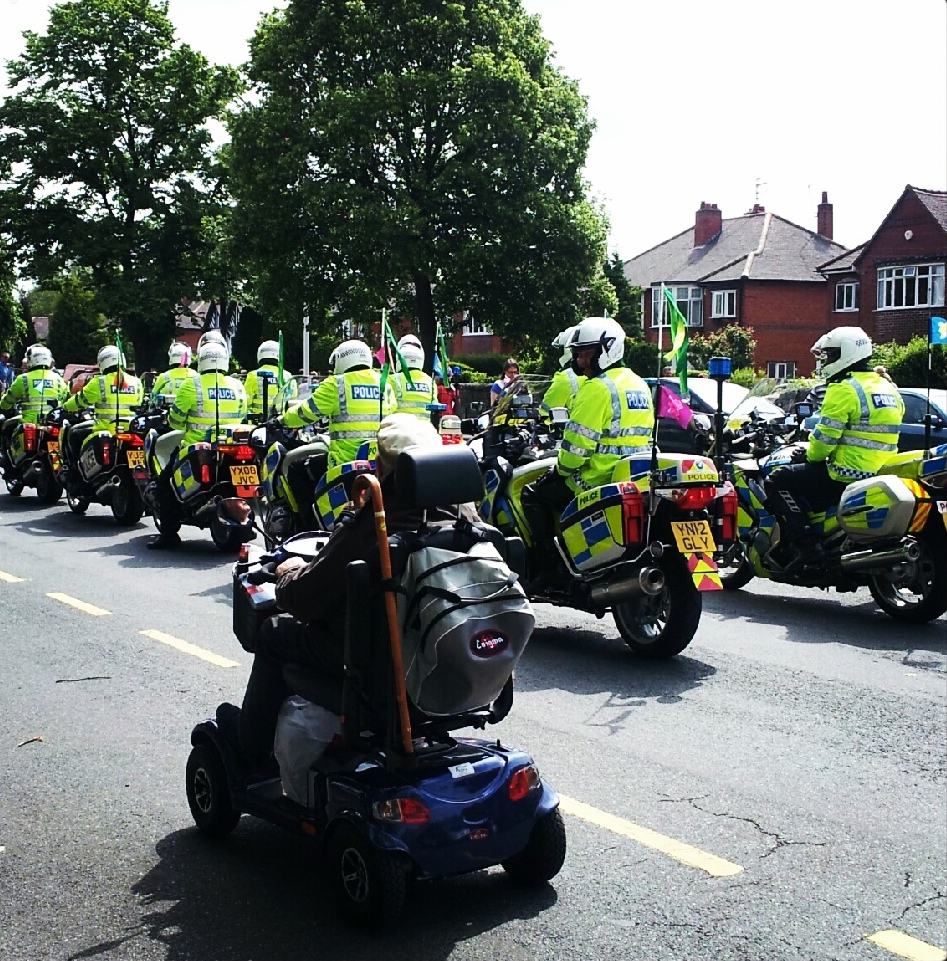
We've all read '1984' and seen the implications of totalitarianism: the endless war, constant surveillance, the relentless propaganda machine, the purges, the torture, the executions, the mind boggling twists and turns in ideology, in language, in life under the heel of the system. But this is a very different dystopia that lacks even the charm of the police state: there are hardly any police for a start (the phalanx of coppers in the picture below dates from 2012, and the procession of the Olympic Torch).
This dystopia is held in place by neglect, by apathy, by a lack of resources, by a lack of interest. Everything is falling apart, but we lack the money and energy to make it right. Newly built things look half-dead even as they are unveiled, MDF where wood used to be, bricks made out of old bricks, slates and glass made out of plastic, all covered with a single coat of watery pastel paint.
New housing is prohibitively expensive and resembles a series of bird boxes split into quarters, sixths, eighths depending on how many newly weds are expected to cram into them. The pity of the boring dystopia is that these poorly and hastily constructed pens are sought after. It has come to this: we are so desperate to live somewhere that we will settle for a Lego house with a tiny consolatory patch of polyurethane lawn. There are some townhouses near to where I work. Each of them has one large window has a tiny balcony attached to it, like a fancy fringe on the bottom of a sofa. You cannot stand on it, sit on it, or even dangle a child over it. In any event, it just looks out onto a dirty, busy road.

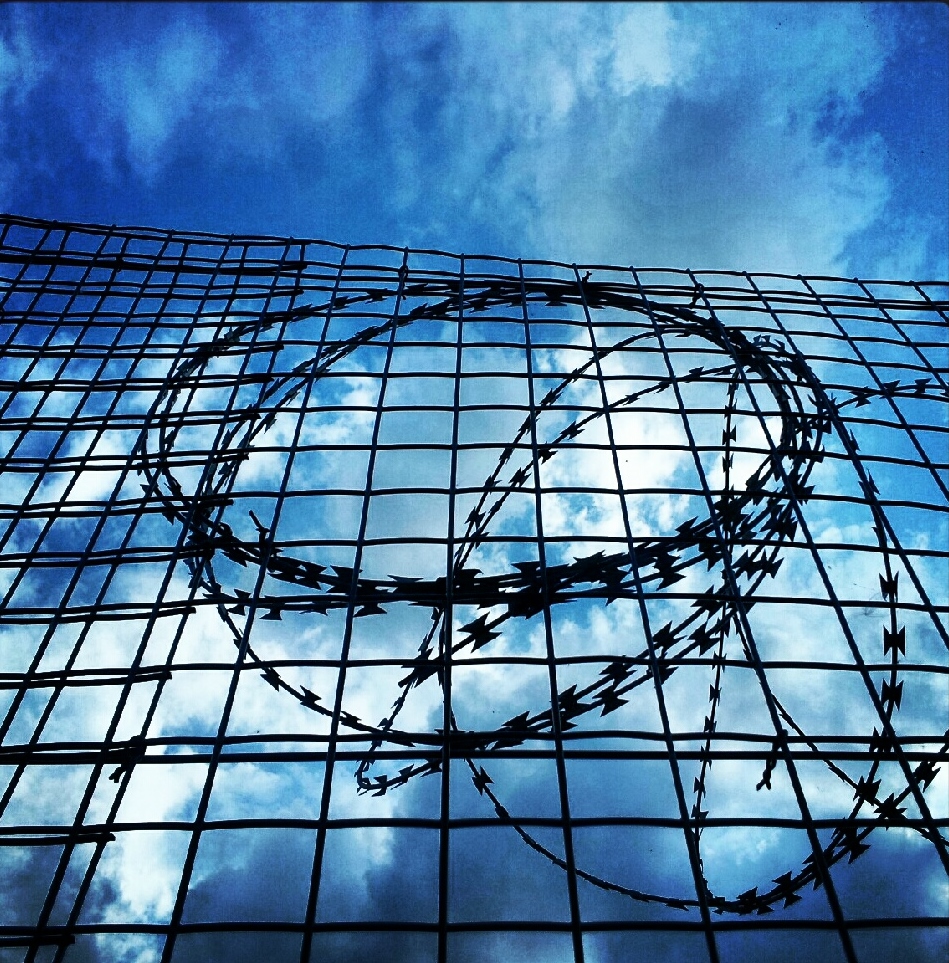
Local authorities and other central civil organisations are not instrumental in the boring dystopia, they are subsumed by it, just like everybody else. Lacking money, resources and motivation, their interventions are confined to putting up signs, or erecting fences and barriers to keep members of the public away from areas that they already have no interest in.
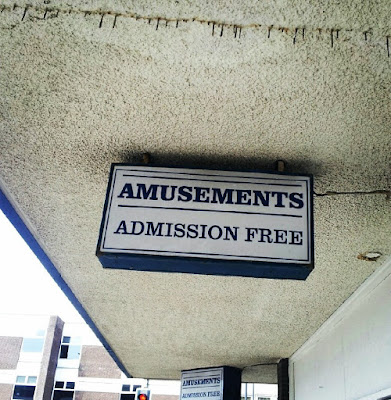
Old and empty buildings are no longer demolished, as that costs too much money, and the boring dystopia has put too many rules in place about blowing things up or setting fire to them. Instead these buildings ossify with pigeon droppings, and stalactites form like spindly toxic fingers. After a while the buildings become invisible.
Yet, despite the underpopulated office blocks, in spite of the abandoned buildings, we keep on building because we are not able to stop, perhaps because we want to fulfil the life trajectory we expected when our world was not so dystopic, not so boring. Or perhaps it's to see out the job that our distant ancestors started several centuries ago: to carve up and chop down this land until every inch of it has the brand of civilisation upon it, until there is no corner or parcel of space that does not have a foot print or a unit or a trampoline upon it. There CCTV cameras everywhere, but they simply provide a continuous flow of unmonitored images. They flicker through the night in unmanned offices. If something happens, someone will review the footage, in exactly the same way that a store detective might rewind the day's surveillance tape to check out a shoplifting incident - in 1990. We've spent billions on replicating a process that already existed. We've lost the whirring noise and gained blurred footage of Michael McIntire shopping.
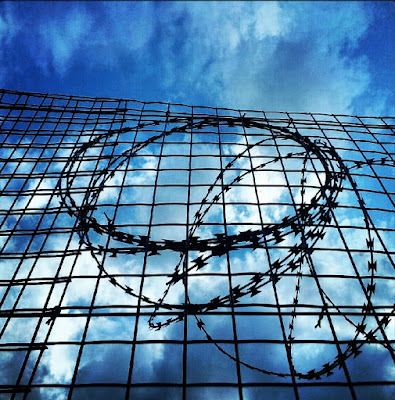
Who runs the boring dystopia? The answer is no-one. There is no-one driving. The government are too busy to bother with little things like the administration of the country now. They are like burglars who have meticulously planned a precision raid on a gold warehouse, only to get there and find all the doors open and the alarms switched off. They wander around, taking what they want, not quite believing their luck. After a while, they take their masks off. They know no-one will stop them, and they no longer care who sees them.
We can obey a dictator, respect an ideologue, fear a tyrant. These individuals lead by bending parts of the world to their will, and, whether, we go along or fight against, we live or die in the shadow of their monstrous ego. But this dystopia is boring, and it is run by boring people, except for Ian Duncan Smith, who is a fucking maniac.

So, yes, thanks to Mark Fisher, the Boring Dystopia has a name now, and Facebook users can participate in its cataloguing. It is unlikely to spark a revolution, or challenge the parameters of this society that we have created. We are too tired and disengaged to throw a brick, so we press a button to 'like' a picture of something that, actually, represents our cultural penury and societal subjugation, like condemned men unknowingly shaking the hand of their executioner, who uses the contact to estimate the length of the drop. We should be ashamed, really, mortally ashamed, but this dystopia has made us all boring, and we are too stupefied to do a fucking thing about it.
A Million Horns [ 18-Jul-15 12:00am ]

It's 1970, and Cliff Richard faces up to the challenges of a new decade and a less than inspiring recent sales record by teaming up with his old pal Hank Marvin and releasing a single that is not only rockier than his usual output, but also exploits a topical theme: the unstoppable rise of the car, and the damage pollution is doing to the environment.
Written by Hank, 'The Joy of Living' features an interesting guitar effect that seems to evoke the grinding futility of a traffic jam, and lyrics that are both deeply sarcastic and rather angry and are redolent of J.G Ballard (who would have thought lots of big, sexy, deadly cars a good thing) or even Patrick Hamilton (who would have thought it disastrous*). In this dystopic version of the future where the motor car is King, man is reduced to living in state appointed high rises, looking down on the world and remembering what it felt like to breathe clean air, like a scene from the credit sequence to 'Soylent Green' come to life.
In the end, however, a strong ecological message and a jaunty chorus were not enough to propel the song higher than number 25 in the charts and the backlash against the dirty bastard car didn't take place after all. As someone who was stuck in a lovely multi coloured crocodile for twenty minutes this morning, I wish the world had listened to Cliff more closely. He was also right about young ones not being young for very long.* Hamilton had more reason than most to hate the motor car, having been knocked over and nearly killed by one in the late 1920's. In 'Coleoptera', the last chapter of his 1953 novel 'Mr. Stimpson & Mr. Gorse', he predicts a Britain over-run by cars, created by man to serve but now completely in charge of their inventors and 'pitilessly exacting' in their demands. 'The beetles were not magnanimous in victory', he notes.
F*** Me, It's Freddie! [ 17-Jul-15 9:00am ]
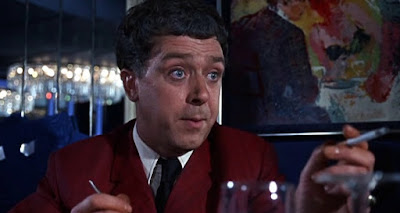
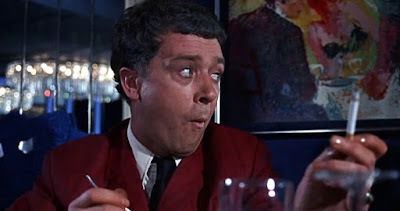
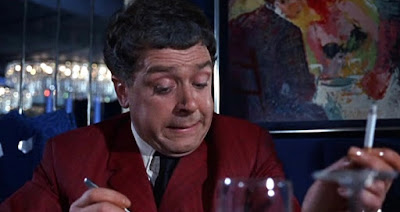
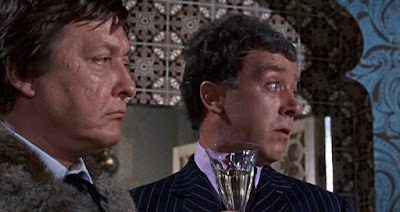
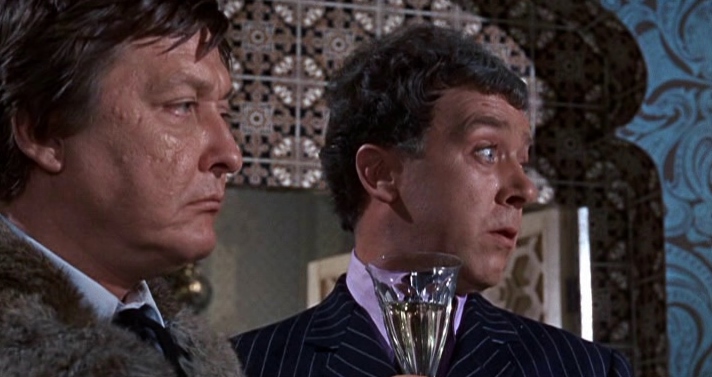
FMIF as Philip Proudfoot in 'Otley' (1968).
We've actually done this film before, but it is well worth revisiting, especially with facial expressions this good. Freddie plays what is called in olden days parlance 'a flaming homosexual', i.e. he isn't scared of what you think of his sexuality. He's also quite a dandy, and at the centre of the intrigue, like a camp mod spider. It's a broad performance, but it works - after all, as you can see from the second screen shot, Freddie has his tongue firmly in its cheek.
Otley [ 17-Jul-15 12:00am ]
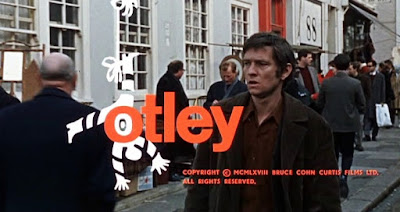
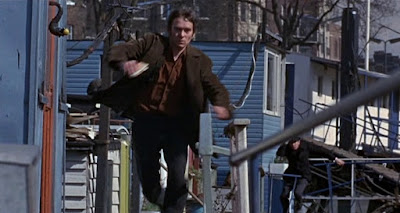
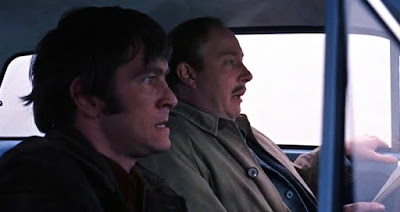
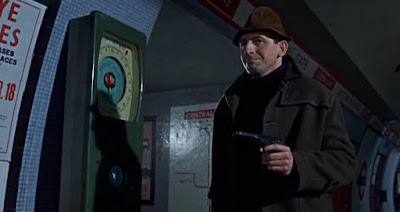
'Otley' is about fifteen minutes too long, but it's a fun film about the rather shabby world of espionage that features a stellar cast of British character actors, led by the great Tom Courtenay as Gerald Arthur Otley, a shiftless moocher and compulsive pincher of ornaments who, by sheer idiocy, finds himself at the centre of a web of slightly incomprehensible intrigue.
A nice mix of comedy and drama, 'Otley' is very sixties (never a problem in my book - or on my blog, anyway), but gives us a glimpse of the 'real' London behind the swing: the markets and bedsits, cafes, pubs and tube stations, people in polo necks and socks that need darning. The grooviest person in it is Freddie Jones, who is so sharply dressed it makes Beau Brummel look like Worzel Gummidge.
Tom Courtenay is excellent, as always. His light Yorkshire accent, bony face and slightly camp delivery are miles away from the usual leading man, and he's not afraid to appear cowardly and pathetic, which is probably why he never made it big in action films. He's also very funny and, at times, the self-obsessed, duplicitous Otley is reminiscent of a (slightly) more grown up Billy Liar, which makes you wonder sometimes if all the running around and gun play is simply part of some elaborate, extended fantasy.
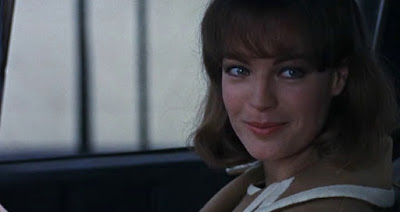
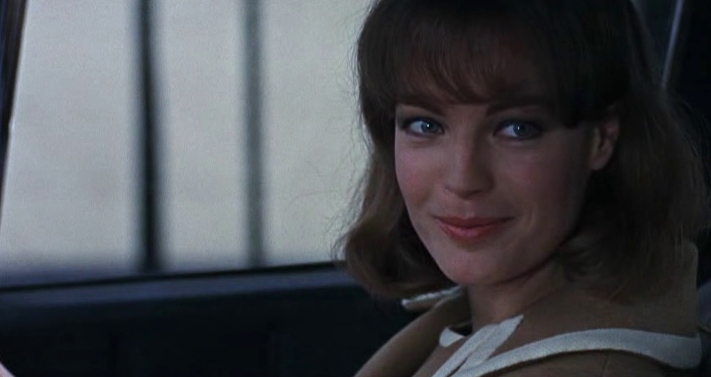
The rest of the cast are a who's who of contemporary character actors, including James Villiers, Alan Badel, Leonard Rossiter, James Cossins, Ronald Lacey, Frank Middlemass, Geoffrey Bayldon and, of course, our beloved Freddie. The last two on the list are still with us (aged 91 and 87, respectively) and, I hope, will remain so for a good few years to come. Romy Schneider makes an attractive female lead, but then she always did, particularly when sporting thigh length white pvc go go boots as she does here.
Light hearted and full of twists, it's the sort of film that should be on TV right now but, for whatever reason, never is. Bloody nowadays TV.
Adieu, Aubrey [ 16-Jul-15 10:50pm ]
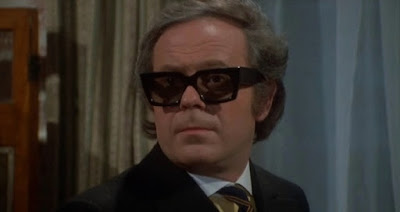
The purring, sinister, wonderfully eccentric Aubrey Morris is dead. He lived for 89 years, and was acting up until a few months ago. Here he is as an utterly bonkers psychiatrist Dr. Putnum in Hammer's 'Blood From The Mummy's Tomb'. Adieu, Aubrey.
What Might Have Been [ 16-Jul-15 12:00am ]
It's February 1979, and Punk is moribund enough for Legs & Co to get involved and start clod hopping about in plastic sandals and party wigs. If they'd only flipped the record over they would have encountered 'Frigging in the Rigging', a puerile chant full of explicit sexual imagery that is crying out for literal interpretation in dance by five ditzy dancers. Can you imagine the hand gestures?
Christ Almighty [ 12-Jul-15 12:00pm ]
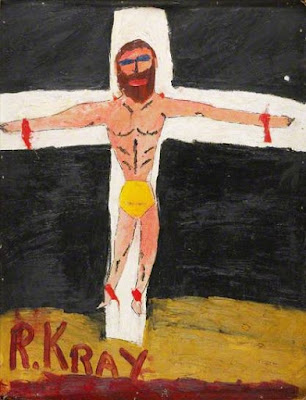
Art therapy is an essential part of prison for those serving long sentences: they've got to do something, after all, and smearing a load of paint all over a canvas can be cathartic.
Ronnie Kray was a keen amateur artist, and his paintings (not all of which are as good as his 'Crucifixion' above) now sell for several thousand pounds each. Good news, Ronnie, wherever you are: people are still fucking mugs when it comes to your tawdry legend.
A tip of the cap to Jonny Trunk who originally posted this on Instagram and made me aware of it. Now I can't think about anything else, so, yeah, thanks a lot.
Keep It Broken! [ 12-Jul-15 12:00am ]
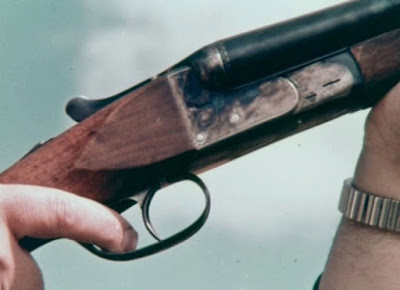
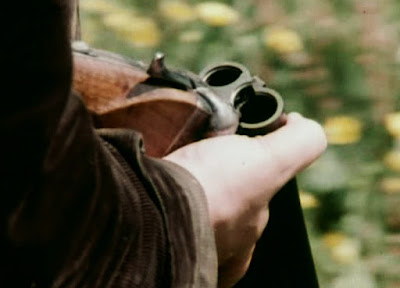
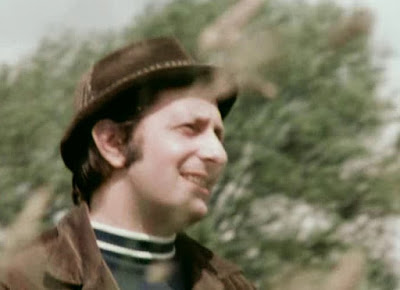
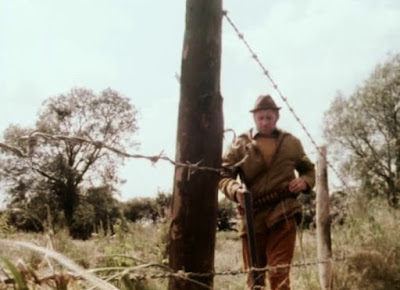
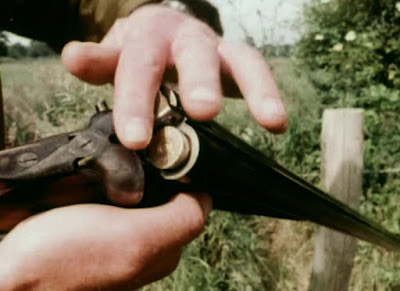
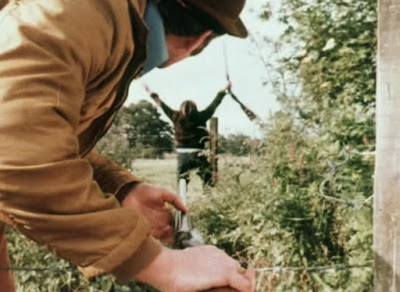
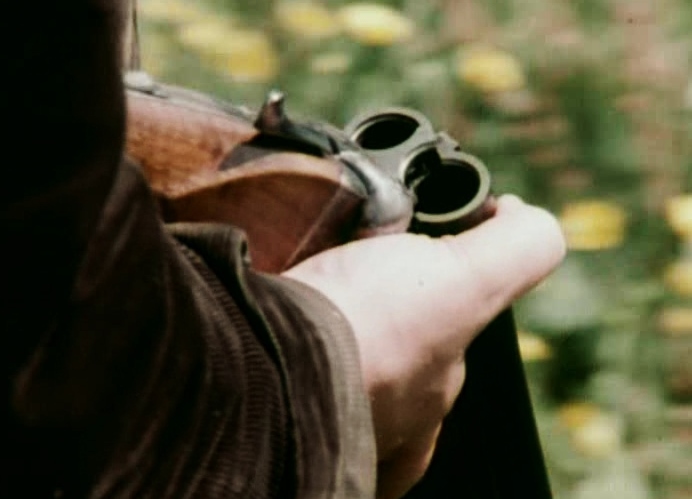
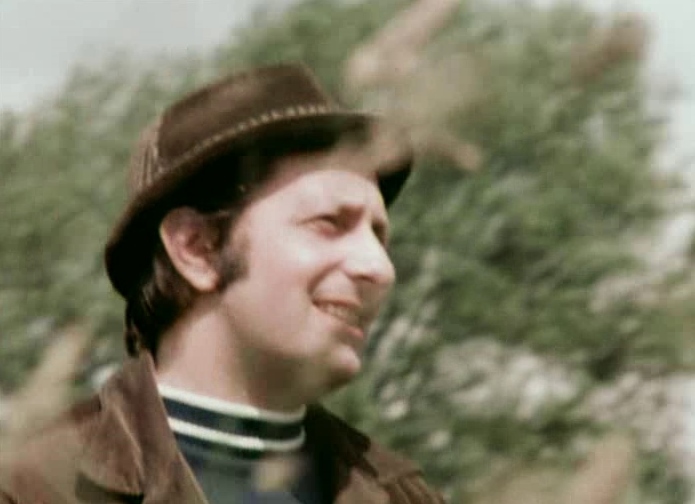
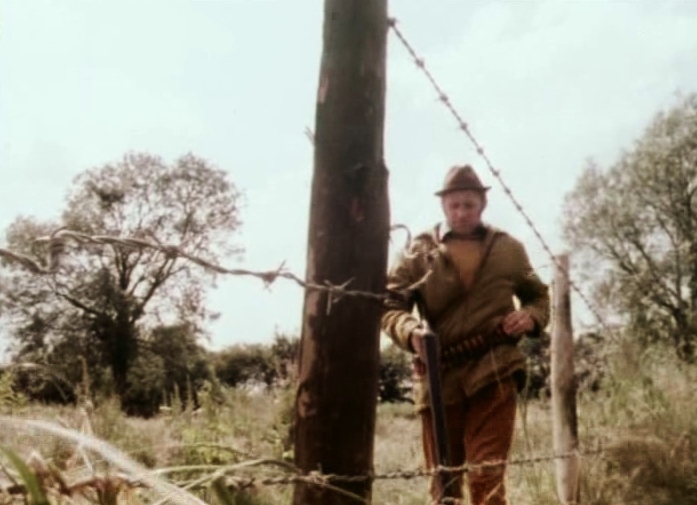
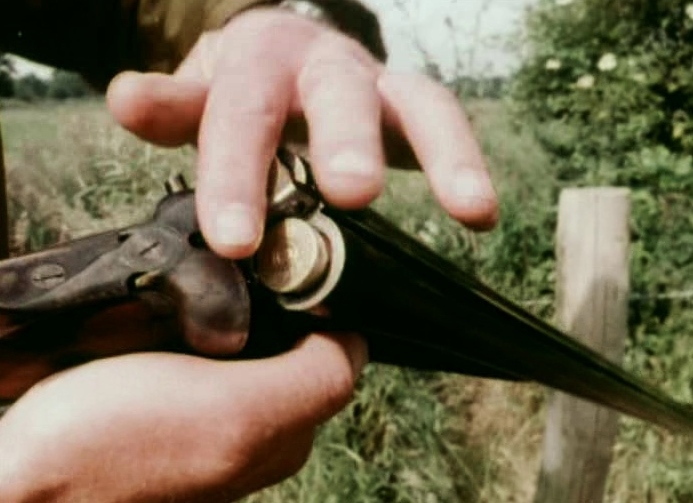
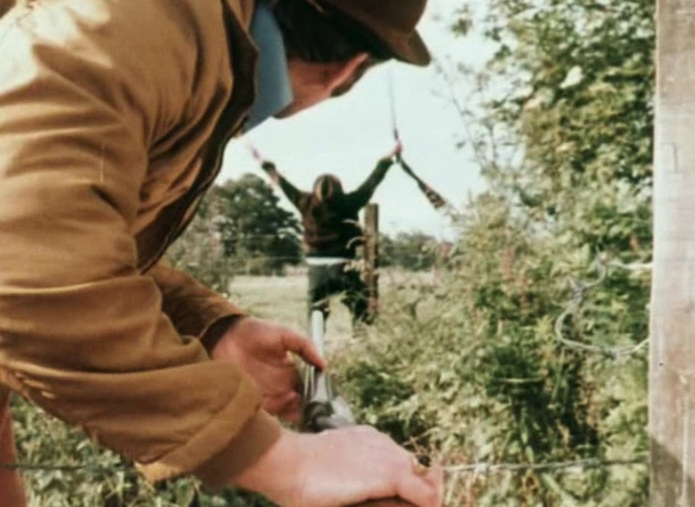
While we're thinking about shotguns, rural settings and sudden, violent death, remember --
'A gun should be broken and unloaded whenever it's not being fired, and especially when getting through a fence or over any obstacle. If you don't follow the rules, sooner or later there'll be a - BANG! - tragedy'.
Look at the geezer being shot. Is it just me, or is he hamming it up a bit?
House On Straw Hill [ 11-Jul-15 12:00am ]

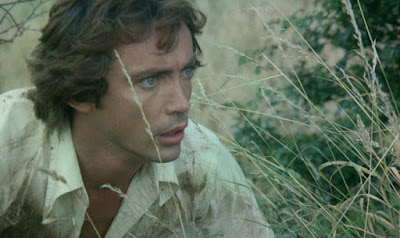
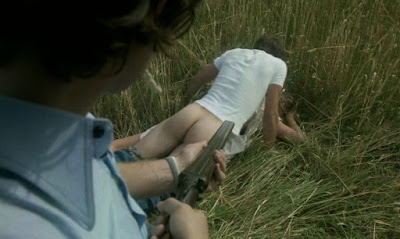

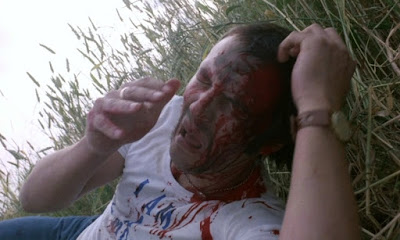
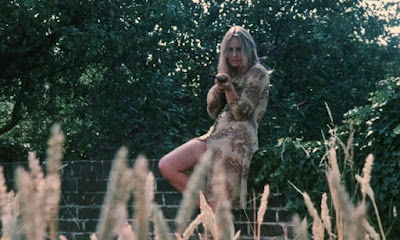
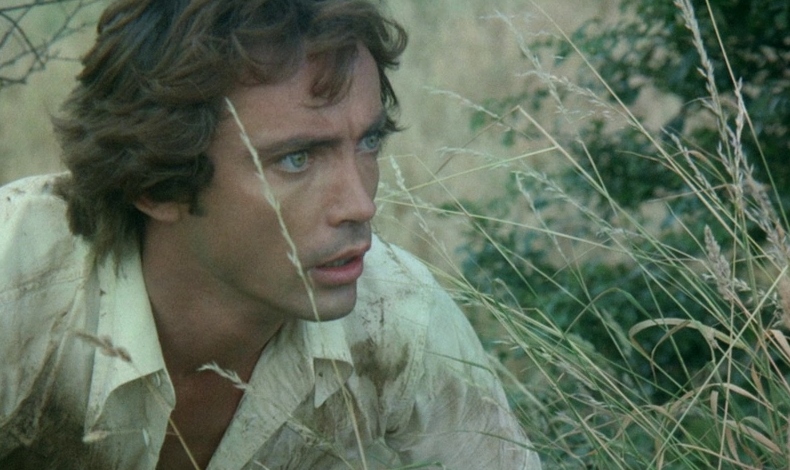
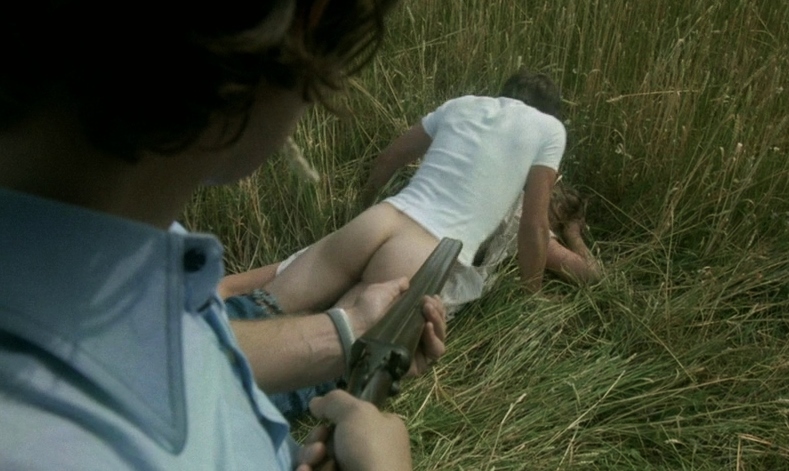
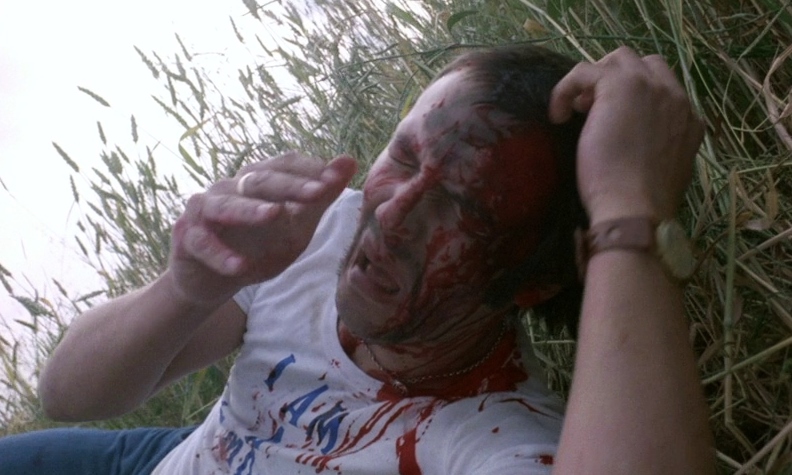
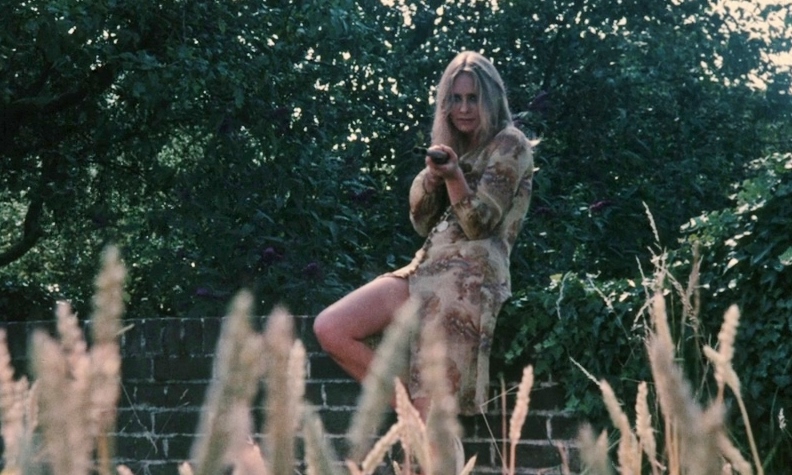
'House On Straw Hill' has either an illustrious history or a terrible reputation, depending on how you look at these things. It was the only British film on the 1984 list of banned video nasties, mainly because of its fairly explicit mix of sex (some consensual, some not) and violence (some consensual, some not). Made in 1975, it exists in any number of different versions, and under several different titles, although a more or less definitive version has recently been released on Digital Versatile Disc.
The always odd Udo Keir plays Paul Martin, a successful author who rents a remote cottage in Essex in order to work on his second book. He has an on-off relationship with porn star Fiona Richmond, i.e. he gets on, then off, then sends her packing. Their 'love' scenes have a rough and ready quality that makes them seem more explicit than they really are, but then some of that might be due to him putting on latex gloves every time they get it on.
Paul hires a secretary over the phone to help type up his masterpiece and is delighted when she turns out to be Linda Hayden, who brings her usual blend of jailbait precocity to the role, and forgets to bring a bra. Linda is a compulsive masturbator and, when she is caught fiddling with herself in a field by a couple of bicycle riding 'youths' (including an already balding Karl 'Brush Strokes' Howman), an unpleasant rape scene (is there any other type?) ensues. This young woman is not quite the pushover she seems, however, as the yokels who assault her find out to their cost.
The last half hour explodes in a frenzy of rough sex and sharp knives and a soap opera plot twist which makes enough sense to validate all the huffing, puffing and intimate touching that has gone before. Unlike the BBFC, I wouldn't describe the film as nasty, rather as an adult psychodrama that occasionally gets a little too adult for comfort: if Ingmar Bergman had made it, it would have been hailed as a masterpiece (it's worth remembering that Bergman's film 'The Virgin Spring' was the inspiration for 'Last House on The Left'). Probably.

I enjoyed the rural setting (it was filmed near Chelmsford, the furthest extent of 'my' Essex), and the scene where Keir drives a brakeless Morris Minor into a pond. I liked Linda Hayden, who always does an excellent sexy psycho, and I was intrigued by Fiona Richmond's lissom body and bricklayer's face. Most of all I enjoyed hearing extracts from the book Paul is working on, which sounds like it's going to be truly fucking awful.
Music lovers will be pleased to hear that the film has a rather good soundtrack, but you needn't take my word for it as my friend and colleague Fearlono has made a custom soundtrack for it that you can download at his smashing website Cottage of Electric Hell. One thing: you will need to pretend to be an adult to gain entry, as there are grown up themes and some sexual swear words.
Baby Love [ 10-Jul-15 12:00am ]

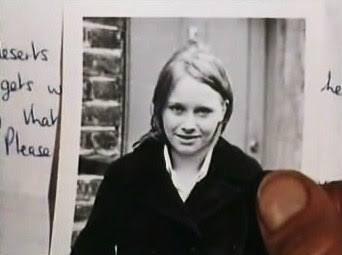
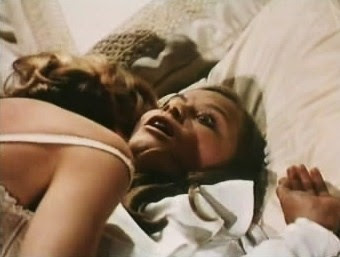
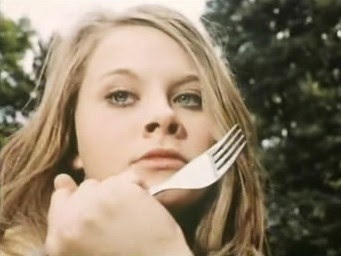

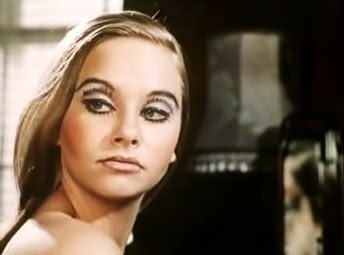
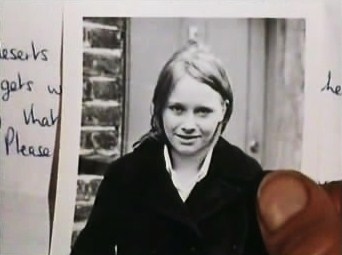
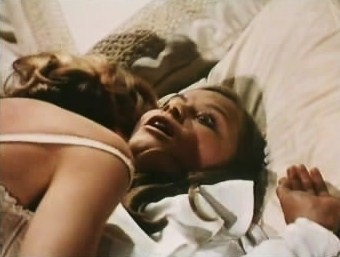
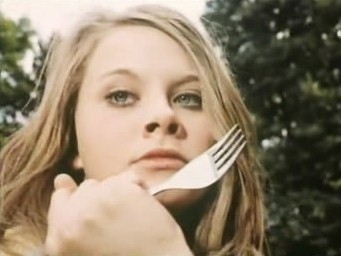
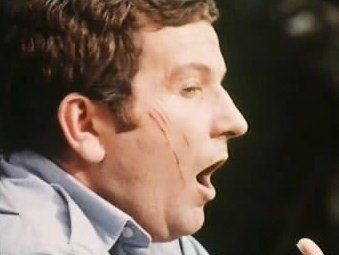
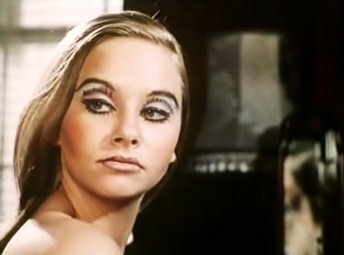
'Baby Love' centres around the familiar plot device of a stranger who enters a supposedly perfect household and shags (or is shagged by) everyone, subsequently exposing how damn dysfunctional they all are behind the smiles and soft focus. Lucy is a fifteen year old strumpet in training who is suddenly orphaned when her sluttish mother (Diana Dors) kills herself. Mum's last wish was that Lucy go to live with Keith Barron, one of her few old flames to have actually done well for himself. Lucy's arrival throws the house into turmoil, not least because she has been trained to exploit her sexuality at every opportunity, and spends most of her time flirting, walking around in her bra and letting seedy strangers feel her up at the pictures. After a while, however, Lucy begins to long to be part of the family, only to find that the family rather like her as she is - a sex object that they can project their hetero and homo sexual fantasies onto.
'Baby Love' simply wouldn't get made today, if only for the fact that frequently nude star Linda Hayden was only fifteen years old at the time of filming. This role propelled her into a career in which she almost exclusively played, for want of a better term, jailbait. In the various retrospective interviews I've seen with her she seems remarkably well-adjusted and good humoured about her ten years as a baby faced slut but, as she went out with Robin Askwith for a number of years, her critical faculties may be slightly impaired.
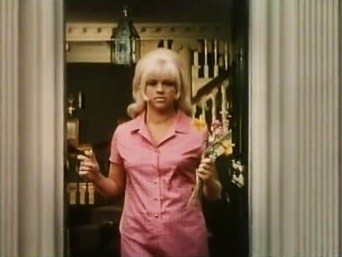
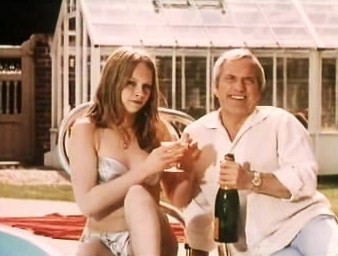
Some interesting guest stars in this, by the way - the aforementioned Diana Dors, right on the cusp of turning from pneumatic blonde bombshell to frowsy Earth Mother, and, in a small but sleazy role, dirty old Dick Emery.
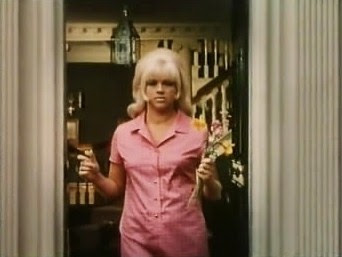
The ghost of Diana Dors.
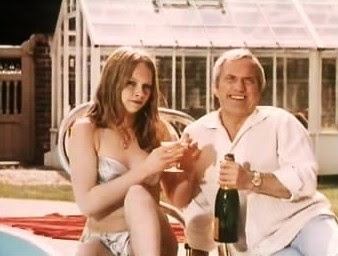
'Ooh, you are awful', etc.
Bloody Hell [ 09-Jul-15 12:00am ]
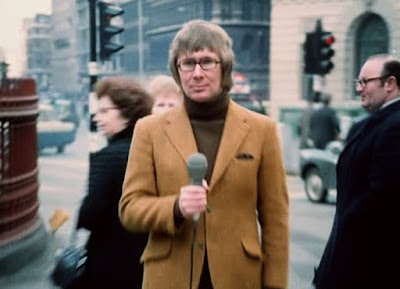
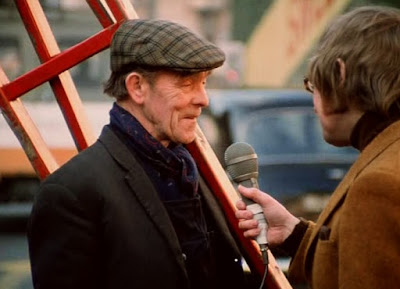
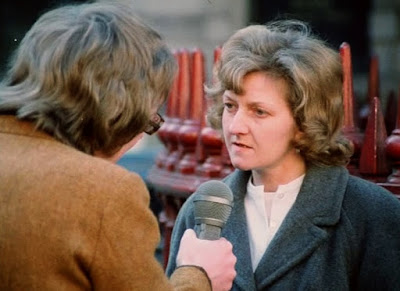
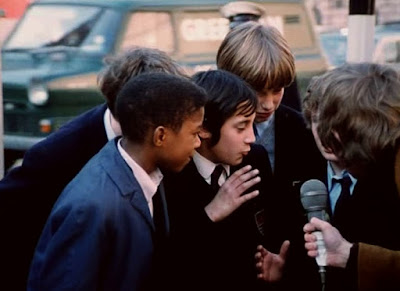
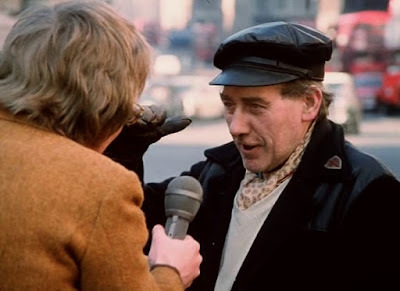
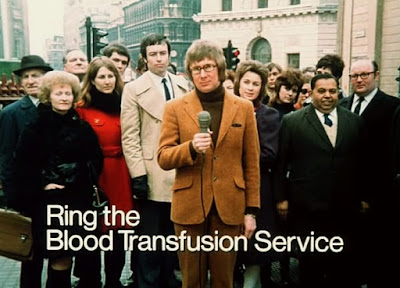
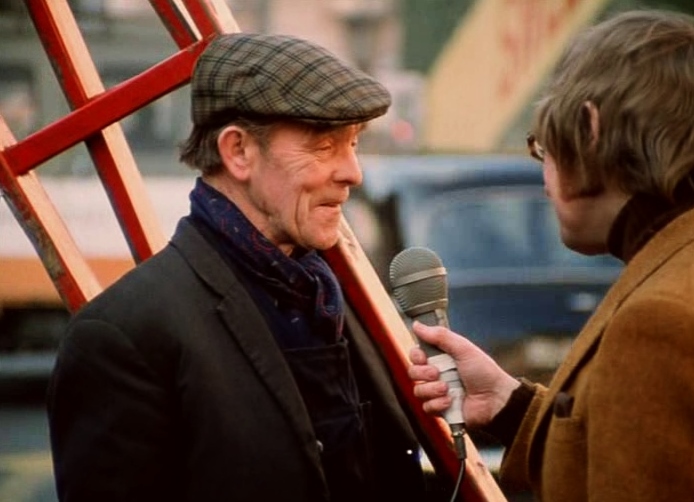
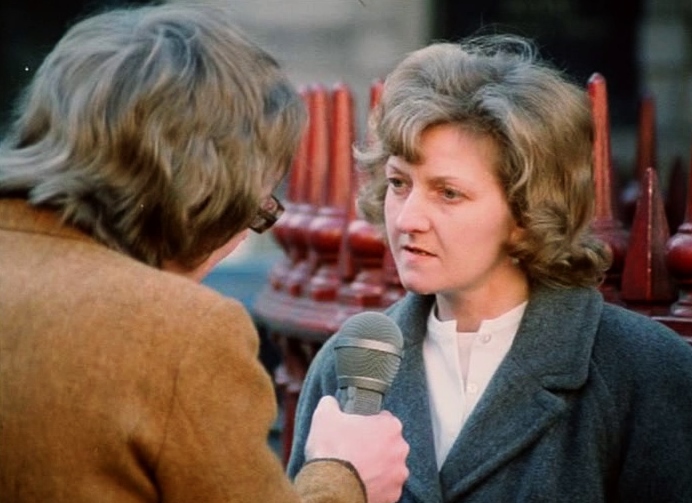
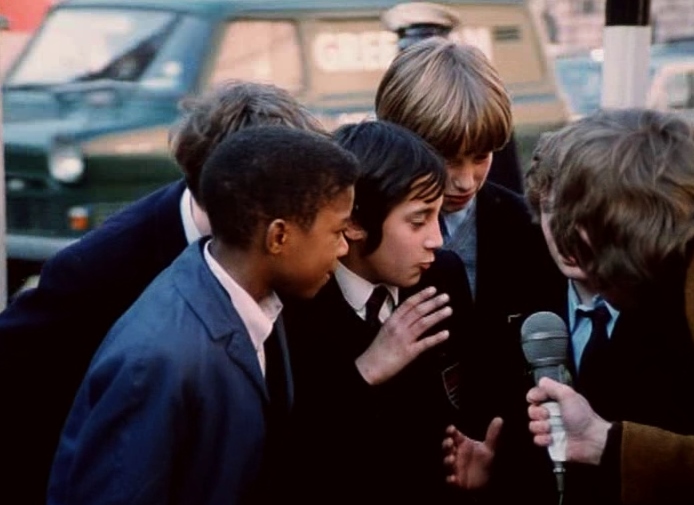
What do these randomly selected band of Dickensian grotesques and cheeky urchins know about blood? Nothing. One bloke in a bowler hat even thinks that you can keep it for up to a year! Surely everyone knows it only lasts three weeks, which is why it is used immediately, and why the NHS needs so much of it. So, do as the gingerbread man made flesh says: ring the Blood Transfusion Service and GIVE BLOODY BLOOD.
F*** Me, It's Freddie! [ 04-Jul-15 12:00am ]
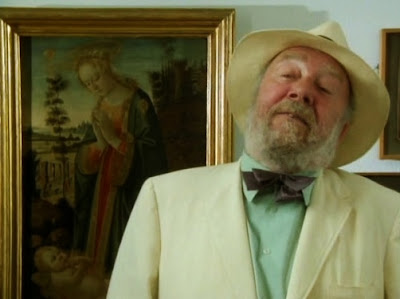
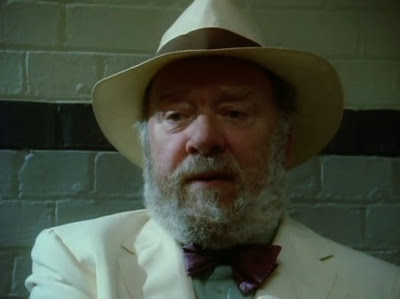
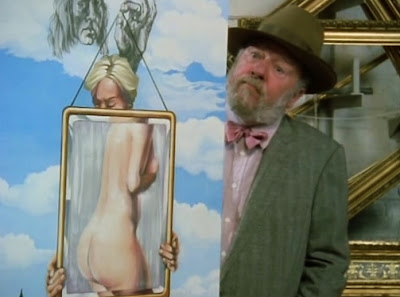
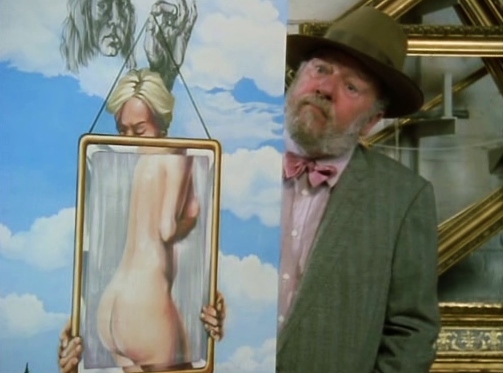
FMIF as Harry Field's Dad in 'Who Killed Harry Field?', a 1991 episode of 'Inspector Morse'. If you're wondering who did kill Harry Field, you'll have to watch the show, but, believe me, he definitely had it coming. Freddie gives a great performance, by the way, but then that's Freddie's stock in trade, isn't it? He's a great hero of mine, and it feels good to be paying tribute to him again.
Lifeforce [ 03-Jul-15 12:00am ]

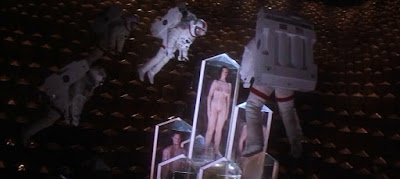

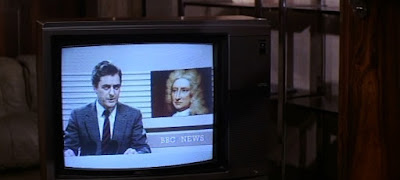


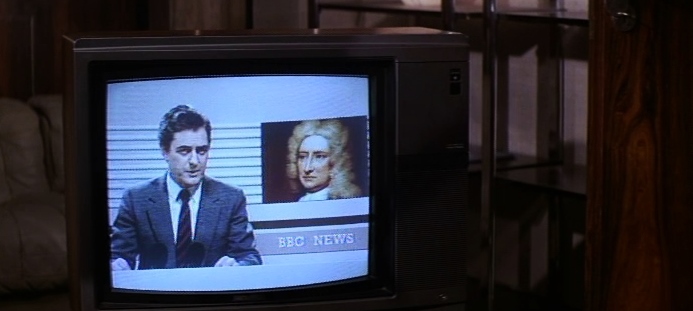
'Lifeforce' is a mostly enjoyable adaptation of Colin Wilson's classic novel 'Space Vampires'. In it, a space shuttle mission is interrupted by the discovery of a huge, seemingly abandoned space craft of alien origin. When the crew board the hulk, they discover hundreds of dead space bats and three naked humanoids in a state of suspended animation. Their genitals are thoughtfully obscured but the sole female (Mathilda May) is very beautiful indeed and has perfect breasts, and we are allowed full sight of these, which is a fatal mistake as they become pretty much all we can see and, when they disappear about forty five minutes in, all we can think about is when we will see them again. Indeed, if I close my eyes I can see them now *closes eyes*

As it goes on, the film becomes less interesting and slightly chaotic, especially in the semi-hysterical finale in which vampirism has infected London and is driving people to barbaric acts of public unrest, and our uninspiring American hero (Steve Railsback) has to strip off and kiss the sexy naked vampire lady a lot in order purely to get her into a position where he can stab her with a special anti gorgeous bloodsucker sword, killing her, saving the world, but sacrificing himself. Good, the man's an idiot.
There are some excellent actors in the cast (Jerome Willis, Frank Finlay, Patrick Stewart, the superb Aubrey Morris), although Peter Firth is miscast as a tough SAS officer. There was also clearly some money spent on the production, and the special effects are generally very good if rather derivative of both 'Alien' and 'Raiders Of The Lost Ark'. There's even a promising plot line about the vampires having visited Earth on a cyclical basis for centuries but this doesn't really develop into anything interesting. Ultimately, however, all of those positive points are totally irrelevant in the scheme of things: this film is all about the ancient space vampire's stupendously attractive chest and the rest, a mysterious celestial body well worth getting bitten on the neck for.
Thinking about it, perhaps not the best film to come back with. I don't want you thinking I've had some sort of breakdown and am now obsessed with knockers, especially as a couple of next week's posts are about Linda Hayden.
From Just This Side Of Midnight [ 02-Jul-15 12:00am ]
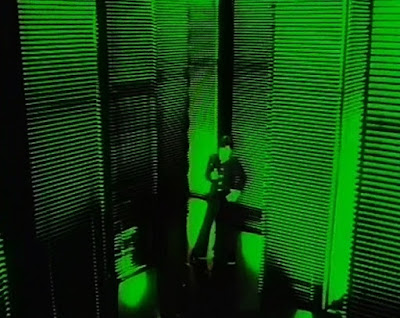
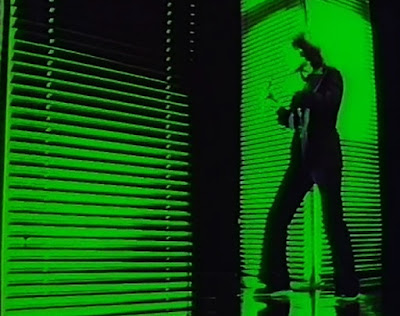
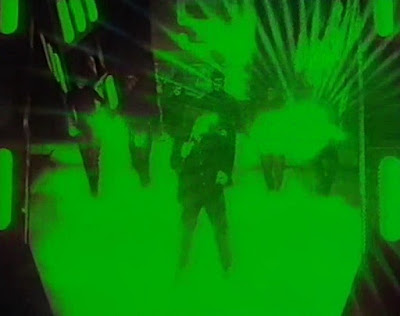
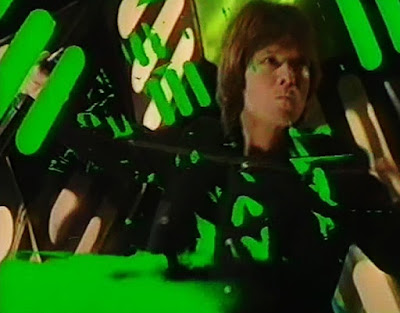

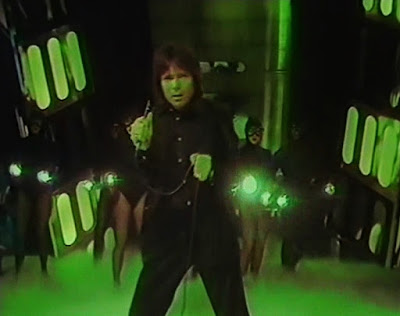
I don't know whether recent allegations about Cliff Richard are true. My only response is that it wouldn't surprise me, not because I have reason to particularly suspect him but because, in a world where Rolf Harris has been unmasked as a serial sex offender, I now lack the capacity to be shocked by further revelations. Anyway, Cliff fascinates me, and always has done, so I thought I'd look at some of his occasionally very odd oeuvre, today arriving in 1979, already twenty one years into his seemingly endless career.
Here, Cliff is searching for a green light. He's been looking for it all night. It's one of his sleaziest records, ably complemented here by the addition of Hot Gossip in this performance from a 1979 episode of 'The Kenny Everett Video Show'.
Cliff appears to be lost in a sensuous reverie but, ever the innovator, has clearly worked closely with choreographer Arlene Phillips to invent dogging. The torch wielding, goggle wearing, balaclava clad dancers bring an additional sinister note to the balefully lit proceedings. Cliff, clad all in black, is both victim and voyeur. He's found half a dozen green lights tonight, and, one way or another, he is going to get fucked.
It's good to be back.
I Had No Luck With Her [ 02-Jul-15 12:00am ]
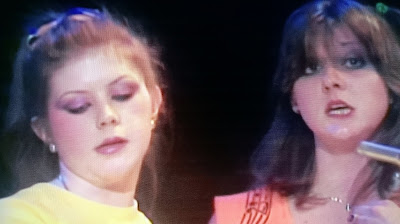
To kick off, here's a screenshot from a recently repeated episode of 'Top of The Pops' originally broadcast in 1980. It features the backing singers for a performance of Jona Lewie's quirky electro pop hit 'You'll Always Find Me In The Kitchen At Parties'.
Left hand lady is the much missed Kirsty MacColl, of course, but I have been unable to identify her co-worker. This task has been made harder by the fact that neither of them actually sang on the record, they were just in the vicinity when needed for the telly. They really remind me of the girls I used to like as a young man: attractive, feisty, not interested.
The British Esperantist [ 29-Jun-15 9:00pm ]

This is Issue 6 of The British Esperantist, the 'mix tape of books' that I have been working on since I left The Island a year ago. It's been pretty successful and, now I have returned, I would like to suggest that you purchase a copy if you can as it is not only very entertaining, it is also informative and really cheap. This issue's contents include: Hawkwind; Ben Weber, International Ventriloquist; William Blake's horoscope; trouser trends and lots, lots more.
More details here --
The British Esperantist 6
Don't linger, though, they generally aren't around for very long. Thank you for your attention.
Why there's more to successful cycle paths than just building cycle paths [ 20-Jul-15 8:30am ]
# [ 19-Jul-15 11:28pm ]
14-Jul-15
# [ 14-Jul-15 6:25pm ]
Now that the Tour de France has left, what else can Utrecht teach us about cycling? [ 09-Jul-15 8:00am ]
I'm on a summer trip, making a tour of Le Tour following the riders around Antwerp, Namur, and even riding with the peloton in a race car. It's been a brilliant journey and now I am on my last stage, returning to the scene of the Grand Depart, Utrecht in the Netherlands, to see what this cycling city looks like once the pro riders have passed by.
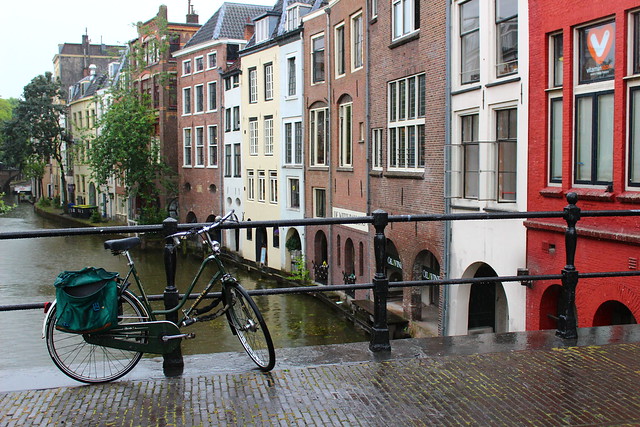
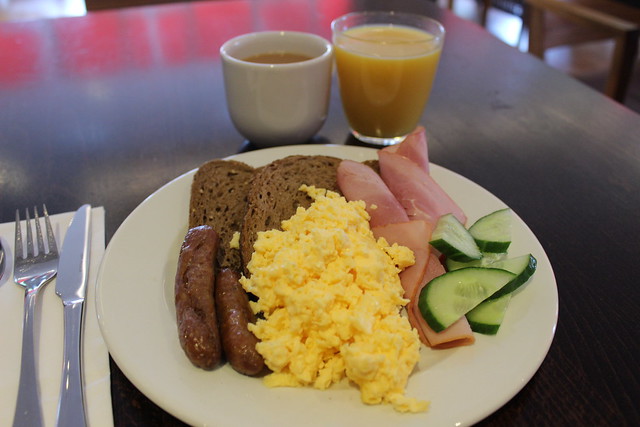
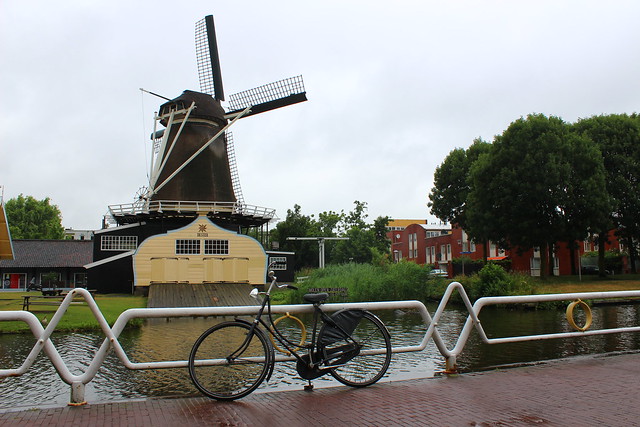
I've partnered with Ibis Hotels for this trip and all of the staff have been so friendly and helpful. Utrecht was the same; "Of course you can ride today", said the cheery receptionist "It takes more than a bit of rain to stop the Netherlands from rolling!" I looked out the window at the rain blowing in sideways and decided to fortify myself with the fantastic breakfast before I set off, grabbing the keys to a bicycle rented directly from the hotel. The Ibis in Utrecht is just a five minute ride in to the city centre along a pretty canal lined by windmills and old town houses - not a bad start to my day, despite the weather.
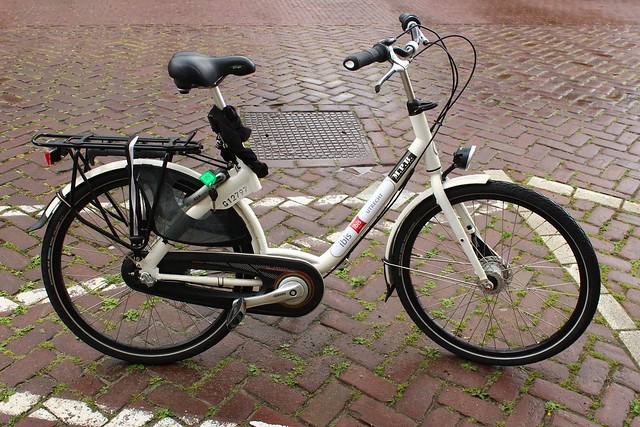
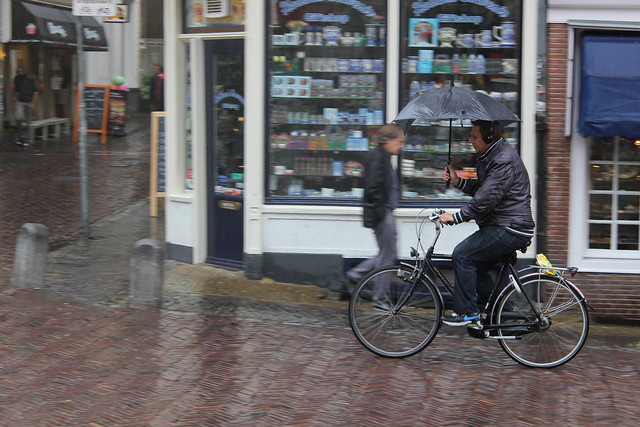
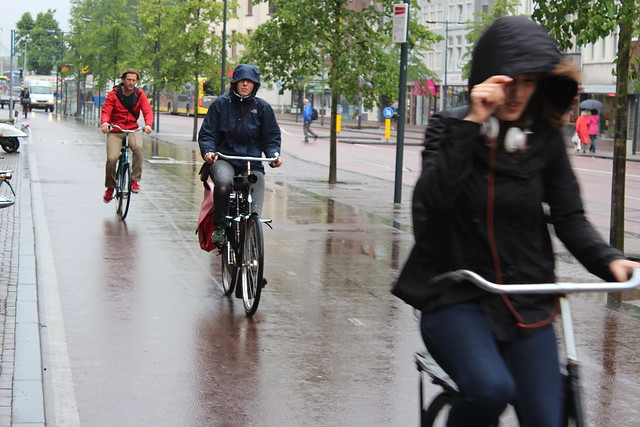
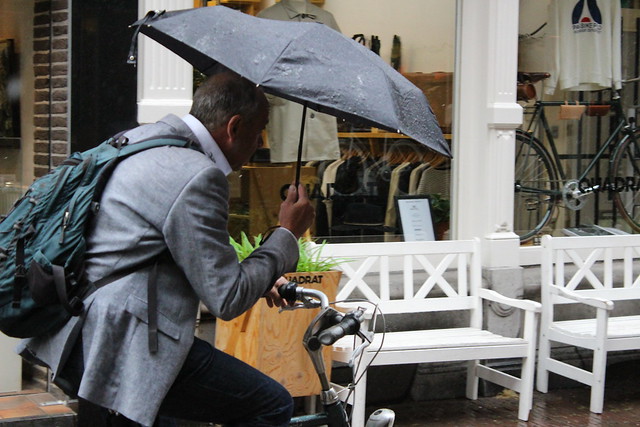
The clouds darkened and rain intensified, but this didn't seem to deter Dutch riders who cycled on regardless. Rain coats were pulled out of bags, hats were donned and umbrellas were lifted, making it immediately apparent I was in a totally different cycling situation to the UK. You could ride down the Tottenham Court Road in London at peak time in the rain whilst holding a big umbrella if you wanted to, of course, but I wouldn't recommend it. Here, things are different.
Hints that the Tour de France had recently been this way were everywhere. Shop windows were decorated with bicycles, flags were hung over every street and a statue of the city's most famous daughter - Miffy the bunny - had been put up in the tourism office. Naturally, she was riding her bicycle. The facade of the popular cafe Winkel van Sinkel was decked out in yellow jerseys, too.
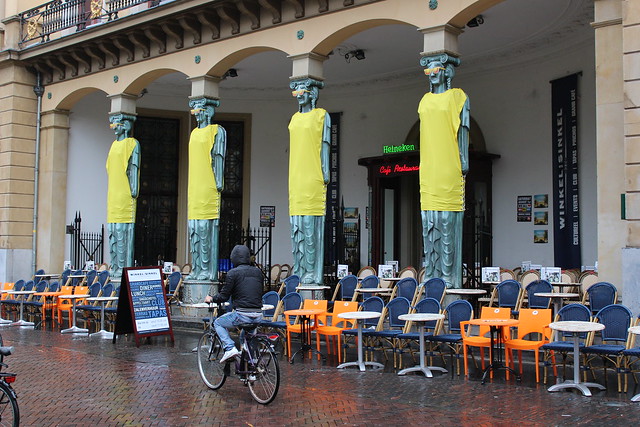
But even though the pro riders had left, there's still a festive cycling feel to Utrecht that stems from the many thousands of people on bikes who cycle here every day. I saw small children being carried on their parent's bikes, middle-sized children riding alongside on their own, and teenagers enjoying their mobility and being totally independent.
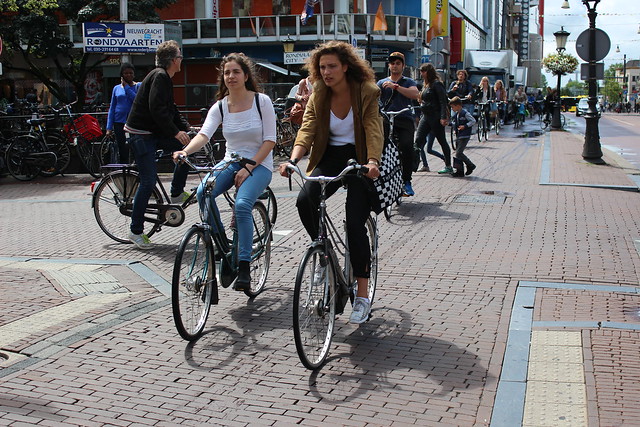
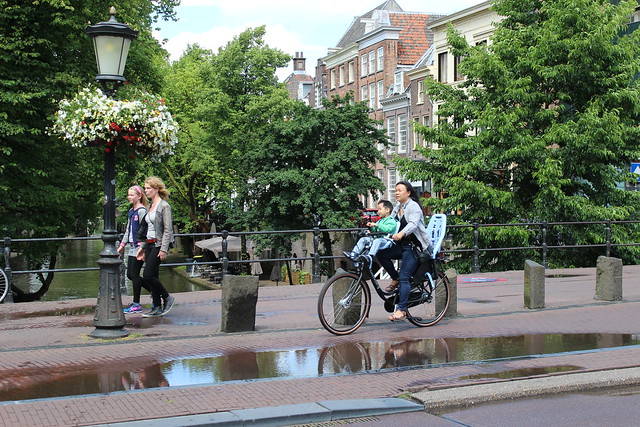
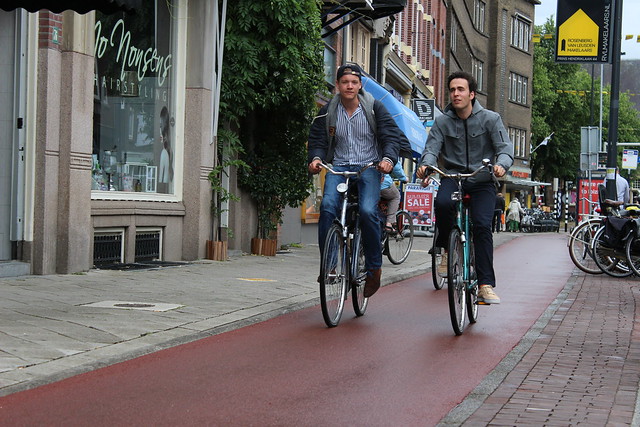
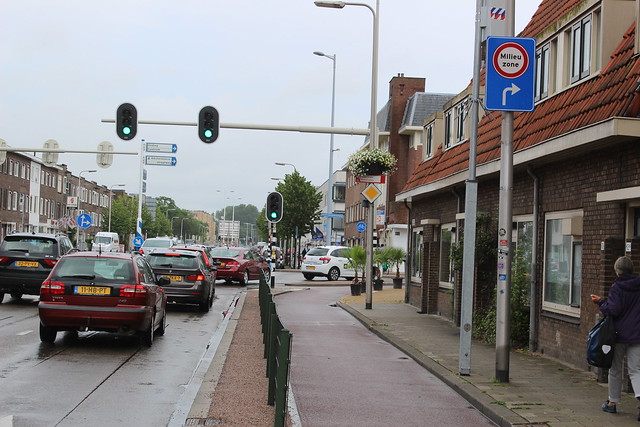
I have no doubt that all that freedom stems directly from the excellent cycling infrastructure which you'll find all over the Netherlands, but what I was particularly impressed by was how the Dutch don't sit on their hands, but are always seeking to improve things. I went for coffee with Mark Wagenbuur from the brilliant Bicycle Dutch blog. He took me out to a junction on the edge of the city, smiling proudly all the way, that we had last visited together in 2012. Back then, he had described it to me as 'the most dangerous junction in Utrecht' and I was inclined to agree. Cyclists were forced to merge with a lane of fast-moving traffic turning right, and to ride together alongside a metal fence for about 100metres. Just three years later and the situation has entirely changed. Engineers have 'found' the space to continue the cycle track safely through the junction, and the right turning traffic simply waits in a lane of the rest of the road. Of course, it's not a question of 'finding' space at all but simply a choice of what to do with the space that you have and who to allocate it to.
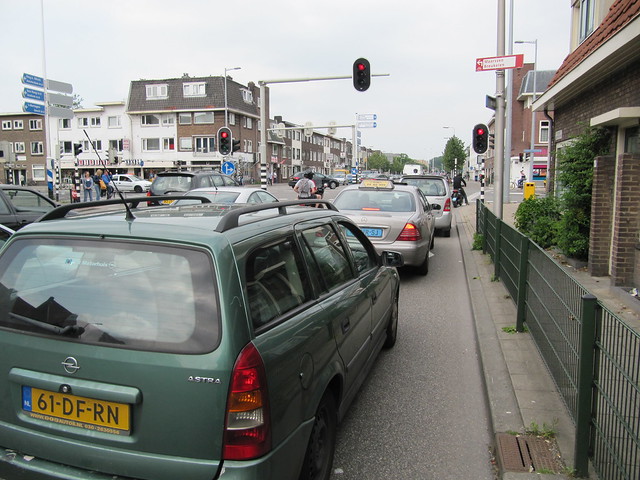
The same junction, above in 2012, as it appears today, below in 2015. Notice how space has been 'found' for the new and safer cycle track without taking the pedestrian's pavement away.
I had been impressed by the new junction, but it was nothing compared to the building project which is nearing completion in the city centre. When I first visited Utrecht the space in this photo was part of a multi-lane city ring road built in the 1970s. All it did was create traffic congestion and bring more cars in to the city centre, where there was no room for them. So the city planners decided to push the ring road further out of the city - to loosen the city's belt, if you like - to create more space for people.
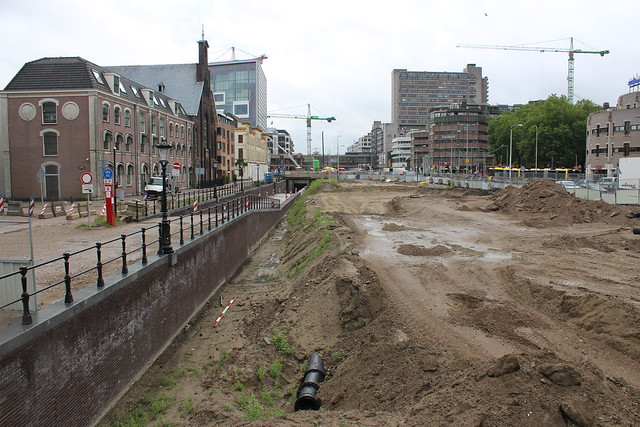
The move has allowed for the total redevelopment of the train station, created space for a new shopping area and offices and very soon the dirt that you see in the photo will be removed and replaced with water, re-connecting two sections of the city's ancient canals.
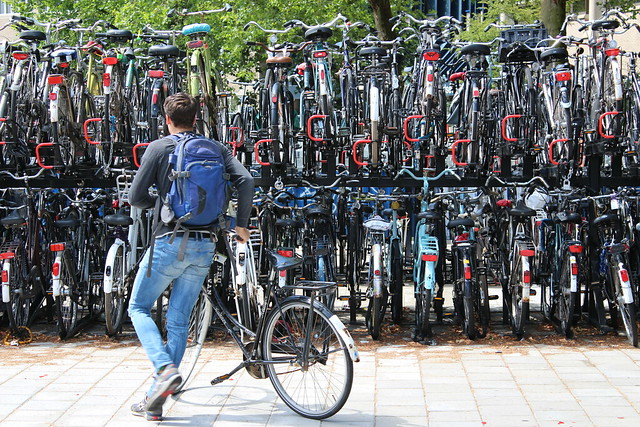
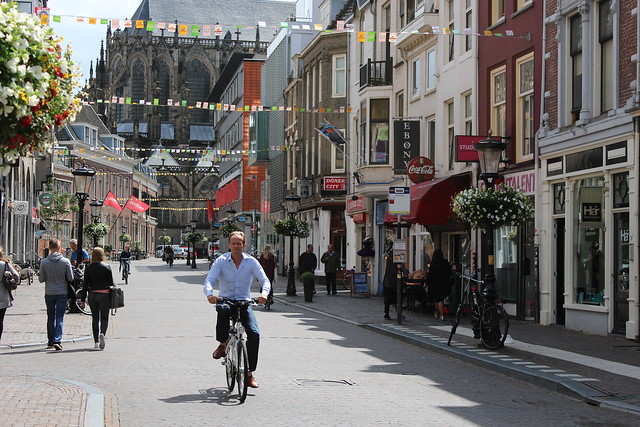
At the new station the city's cycle racks are being refreshed and new bicycle parking areas are being built. On Korte Jansstraat in the old town, a road which used to be clogged with two lanes of car parking has been re-surfaced in red bricks and the parking spaces moved away. Rather than harming the businesses there, the streets were busy with shoppers and restaurants had laid out new tables and chairs.
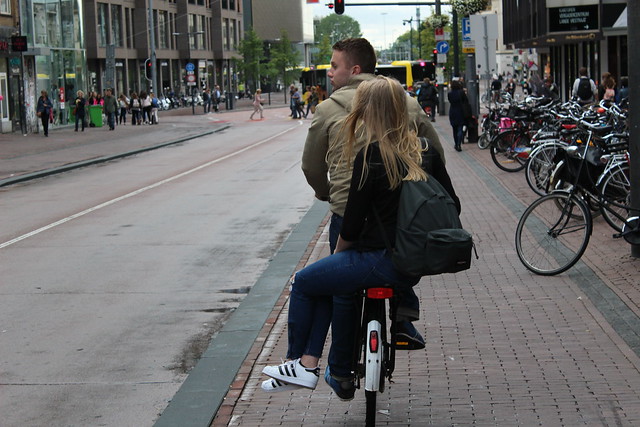
This is my third trip to Utrecht and each visit has left me with the same impression; that this is a city rapidly growing, improving itself, identifying the planning mistakes of the past and quietly getting on with rectifying them. It's lively and packed with young people and University students. Better still, it is easily connected to the rest of the Netherlands and Schipol airport by the fantastic national rail network. Utrecht proved with the Tour de France that they know how to throw a good bike party, but if the world's cycling cities were in a race Utrecht would in the break away every day. Why not make a visit to see for yourself?
Share
07-Jul-15
Tour de France Stage 4: Citadelle de Namur, Belgium [ 07-Jul-15 7:02pm ]

After riding in Antwerp and spending the day with the peloton, my tour of Le Tour continues, today bringing me to the Belgian city of Namur. There was a huge gap between the break away and the main bunch, who crawled up the hot, dusty road to the summit of the Citadelle, where I captured this photo.
It was a hugely exciting stage on the cobbles and a dramatic win for Tony Martin. Tomorrow I leave the pro-riders behind and return to the Netherlands to the host city of the Grand Depart, Utrecht, to find out what happens in a cycling city after the racing cyclists have gone. Stay tuned!
Share
06-Jul-15
In the thick of it. Today I found out what it's like in the middle of the Tour de France... [ 06-Jul-15 11:40pm ]
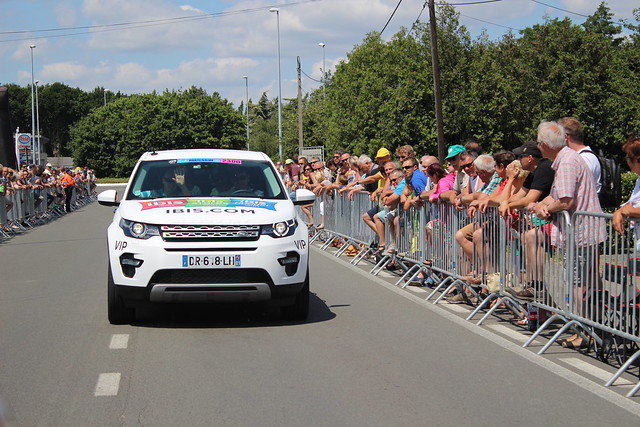
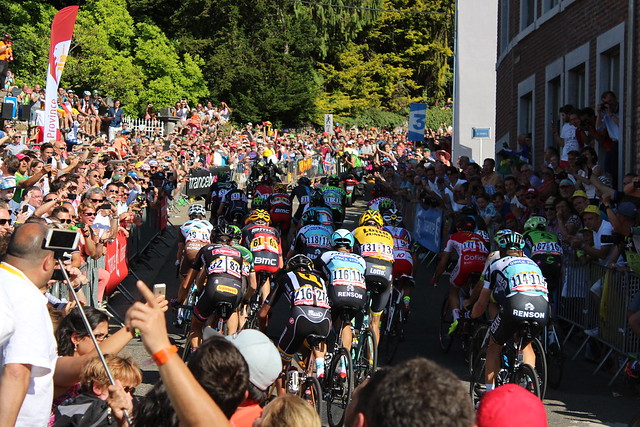
The cyclists ride at breakneck speeds whilst all around them there is ordered chaos; mechanic's cars, radio cars, official cars and of course the infamous publicity caravan. Spectators waive their picnics from the roadside as the riders tear past. Boozey kids run alongside, shouting and jumping up and down. More than a few crowd members get perilously close in the quest for a perfect snapshot to share with friends. I took a ride in the Tour de France, and here's what it's like to be right in the middle of the world's most famous cycling race.
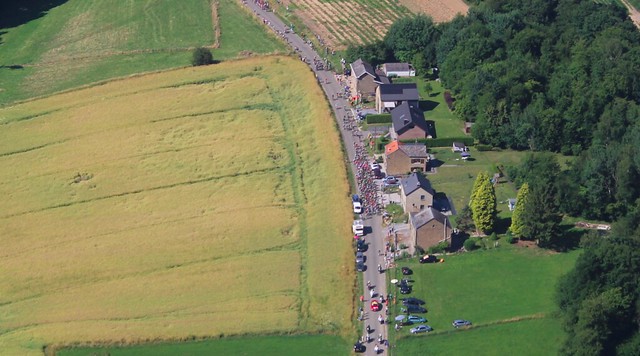
The summers of my youth were always filled with the Tour de France, enjoyed by the whole family as much for the lingering shots of magnificent French scenery as for the riding itself. We cheered on Greg Lemond and talked endlessly about Lance Armstrong as though he were some kind of cycling superman. Looking back it seems like a cycling age of innocence, but I loved all the poetry and drama of a journey around a nation by bike. Not just a journey, but a race no less.
This was all before talk of drugs, "enabling" Doctors, self-administered transfusions and blood bags in the hotel room fridge. Doping cast a deep stain on professional cycling, and it was a long time before I allowed myself to get back in to bike racing. It's all the fault of Mark Cavendish, really. His technical prowess and sheer bravura meant I'd find myself tuning in for the sprints again. Then came Sir Bradley Wiggins. A Brit winning the tour was the stuff of dreams when I was a kid, but then it actually happened. Seeing young rider Simon Yates power to the top of Hay Tor during the Tour of Britain in 2013 meant I was roadside - along with about a million other people - to cheer him on when the Tour de France visited our shores last year.
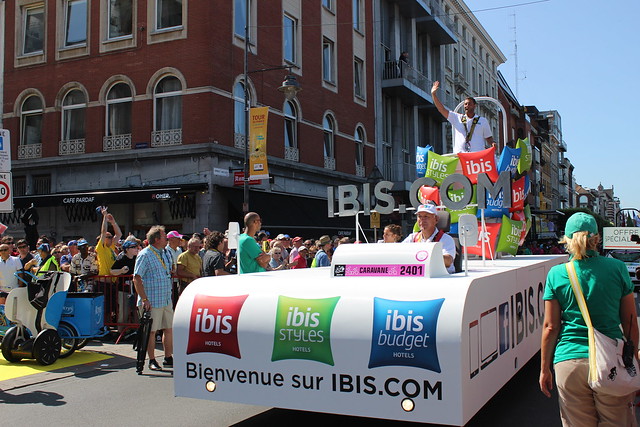
So when official Tour partner Ibis Hotels got in touch asking if I'd be interested in spending the day right in the middle of the race, they didn't have to ask twice.
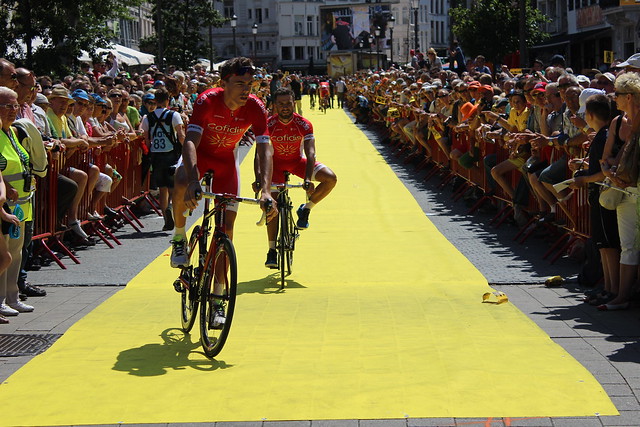
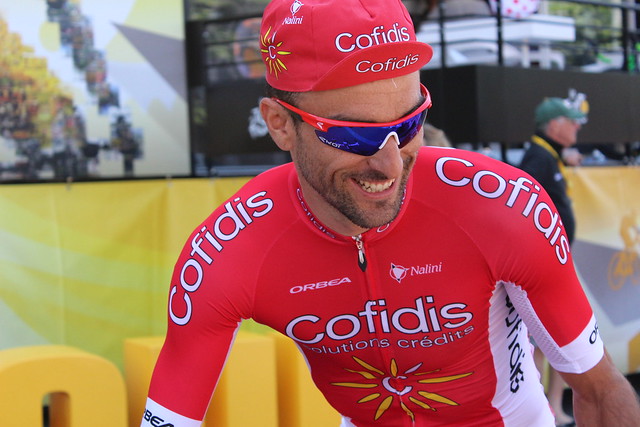
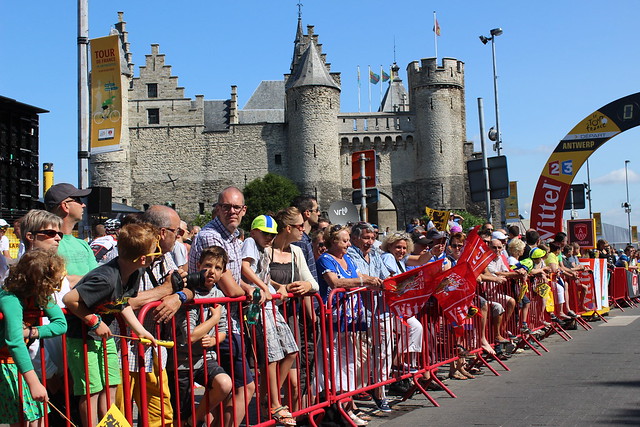
The route from Antwerp to Huy was one of the first 'real' stages after the ceremony of the Grand Depart in Utrecht (a time trial) and a flat spin across the green fields of Holland. With Quintana, Contador, Nibali and of course Chris Froome all keen to prove their metal in the initial stages there was plenty of scope for pushing, shoving and hard racing from the off - and the first real uphill finish; the short and steep Mur de Huy. Both Froome and Cavendish were out of the 2014 Tour within the initial 5 stages, so there was lots to prove.
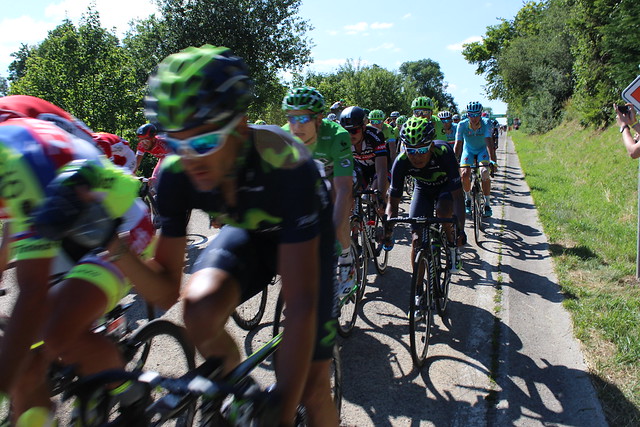
Going to spectate at the Tour is a funny business. You'll stand on a dusty roadside for many hours, and the whole thing flashes past you in a matter of minutes. The cyclists themselves pass in mere seconds. Being stuck in the middle of it all gave me a totally different perspective. The first thing you notice is the speed at which the entire convoy clips along. These boys - all 198 of them - don't hang around. And somewhat paradoxically for cycling the centre of the convoy is a noisy place. There's no elysian wheeling through the countryside here - right behind the cyclists are roaring mechanic's cars, powerful Police motorbikes with sirens, commissaires hurriedly jabbering on their radios, helicopters and not to mention the crowds. Despite the tumult, they do a great job of cheering and shouting at the riders and its surprising how much of what they say is legible. Chris Froome must hear people telling him to cheer up all the time.
Not all of the drama in the peloton takes place at the front of the bunch, either. Domestics - the worker bees of the Tour - are always falling back to pick up supplies from their team cars (themselves zipping along at a steady 40kph or so) and relaying it forward to their team mates. Bidons are hung out of car windows and you watch as the riders grab hold, perhaps for a second more than is sportsmanlike. The team crew and the cyclists amiably chat as though riding next to a tonne of car moving at speed with a man inside shouting at you is the most natural thing in the world. No wonder Britain is doing so well in pro cycling these days.
And what of the Brits? There's Froome of course, and Cavendish who'll be relishing the absence of young German sprinter Marcel Kittel this year. There's eight other British names - compared to last year's four - and this when well-known names like Wiggins and David Millar are past their peloton prime and not in the Tour. Ian Stannard will be working hard to pull Chris Froome safely across the cobbled sections tomorrow, whilst hour-record-grabbing rider Alex Dowsett will be looking for a good ride after fracturing his collarbone earlier this year. Geraint Thomas, Luke Rowe and Peter Kennaugh will be riding for Team Sky under the tutorship of Sir David Brailsford, whilst the 22-year-old Yates twins - Simon and Adam - are racing with Australian team Orica-GreenEDGE and are the riders I'll be watching most closely. Steve Cummings, riding aged 34, will be in a lead support role in his team MTN-Qhubeka. Surely a golden age of British pro cycling if ever there was one?
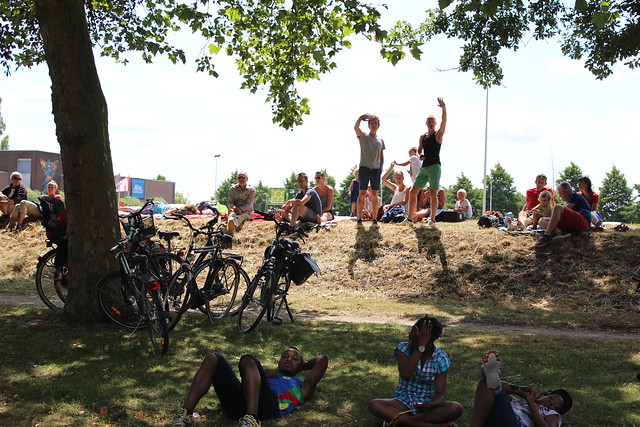
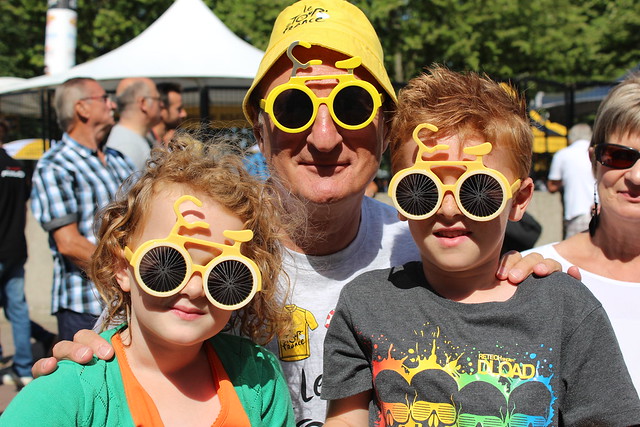
Along the route, entire communities find themselves making the most of an enforced day off. Their streets, no longer enthral to the motor car, are closed down and become occupied by people again. Kids chalk drawings on to the tarmac. Families put out picnic tables and share food with friends and neighbours. In Tienan we saw a Belgian oomph band keeping a whole village entertained. There's a certain holiday atmosphere which, coupled with sunshine, makes for a wonderful day out.
Today's stage raced along at incredible speed. With nerves in plentiful supply and lead riders keen to establish their position, a crash seemed almost inevitable. When the crash came, with about 60km still to go, it was a big one, leading the race director to temporarily suspend the Tour whilst medical staff dealt with a multitude of serous injuries. Yesterday's Yellow Jersey winner, Fabian Cancellara, completed today's stage but has now withdrawn from the Tour after it became apparent he'd broken pieces of his back. White jersey-wearer and young hopeful Tom Dumoulin is also out of the rest of the Tour. Cycling is a tough sport.
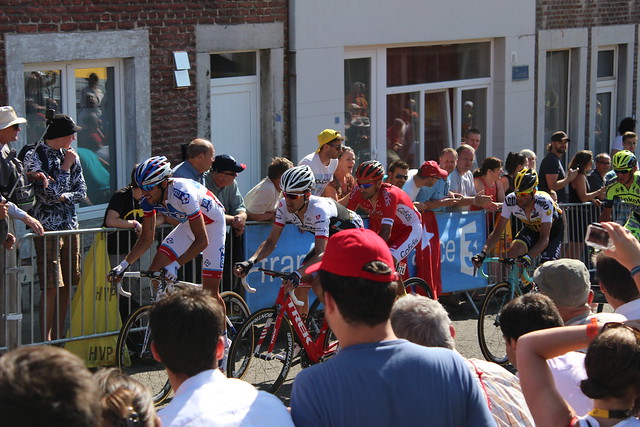
The sheer scale of the entire Tour operation becomes apparent at the finish line when you finally see all those riders, all those support vehicles and all those bikes in the one place. It's like a happy cycling chaos, with riders being ushered in to trailers, pursued by journalists, fans, erstwhile bike bloggers and doping control. Masseurs swing in to action, whilst stage host Mayors beam from the podium for the cameras. I can understand why Ibis loves supporting the Tour de France - all those riders, team directors and hangers on (not to mention the spectators) have to stay somewhere. Indeed, some 1,500 hotel room beds are reserved every night of the Tour just for organisers and teams.
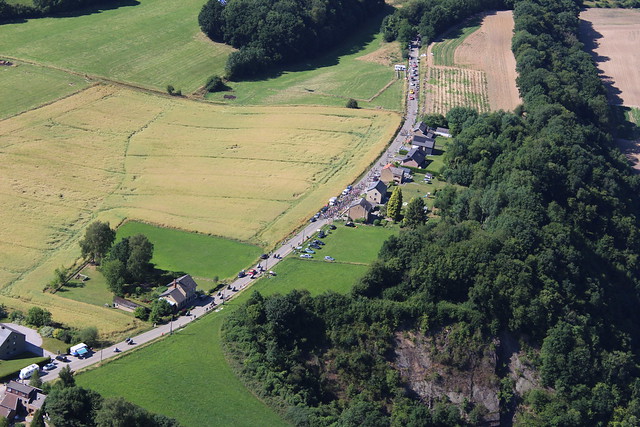
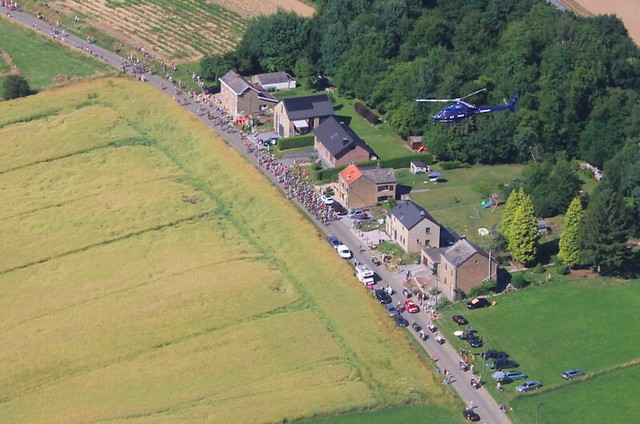
Ibis, who have been putting me up in their super comfortable hotels here in Belgium (I love their Sweet Beds and have been sleeping like a baby throughout my trip) decided that it wasn't enough for a cycle racing fan to be allowed in to the thick of the action and had one final surprise in store for me; a transfer to a helicopter about 20kms out from the finish line to watch the peloton from up on high. Watching the bunch snake its way around corners and up hills through the spectacular, green countryside is a memory that will stay with me forever, and I feel exceptionally lucky to have had such an opportunity. Thank you, Ibis, for your support of the Tour, for such a welcoming stay and for an incredible day of cycling I'll never forget!
Share |
05-Jul-15
Everyone cycles in Antwerp (who knew?!) [ 05-Jul-15 5:21pm ]
I'm in Antwerp, Belgium, which will host stage 3 of the 2015 Tour de France tomorrow. I'm here for the Tour (follow my Twitter feed for live updates tomorrow) but hadn't appreciated what a great cycling city Antwerp is.
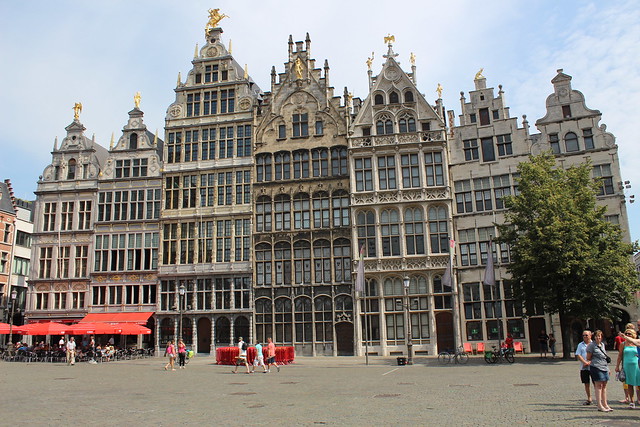
Home to about a million people its Belgium's most populous city, blessed with a compact historic core which is criss-crossed by a web of tram lines and very good cycling infrastructure. There's tonnes of Tour fans in town, and roadies were out in force riding the route ahead of tomorrow's stage, but I also saw lots of just about everybody else riding a bike as well.
As you'd expect, cyclists share with other traffic on small and quiet roads here, but where volumes or speeds of cars are high the bikes are given their own space. And I was glad to see there was plenty of new cycling infrastructure in place and that it was well maintained; always a sure sign that a city cares for its cyclists.
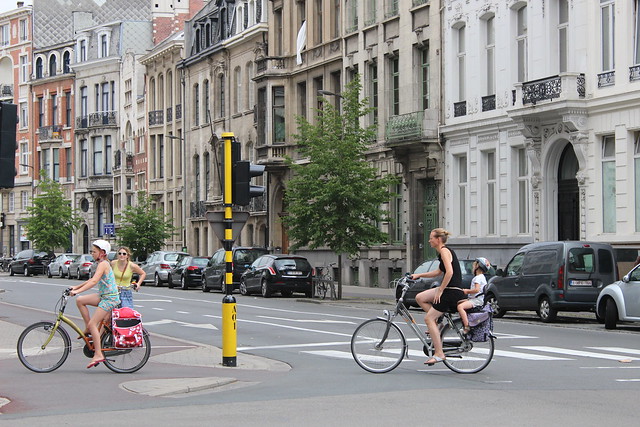
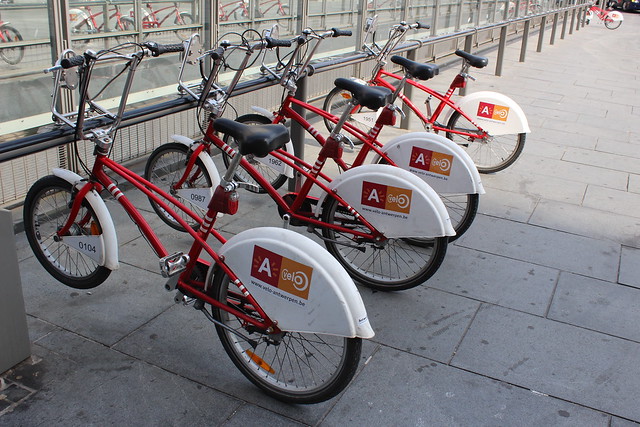
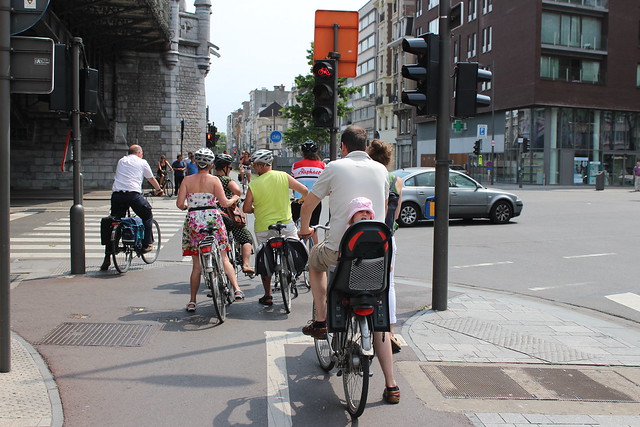
From the moment you step off the high speed train at Antwerp Centraal (and oh my goodness me, train fans, what a station it is) the fact that you're in a cycling city is apparent - deep in the bowels of the station there's acres of secure bicycle parking, a mechanic's workshop and a bike hire station. There's a suite of city bike share schemes - depending on how long you need a bike for - but if you're just visiting I recommend Fietshaven's Yellow Bike scheme, where you can rent a fantastic bike for a full 24 hours for just €13.
It was great to see the beautiful merchant's houses in the bike and pedestrian-friendly city centre. Cyclists are exempt from having to follow most one-way streets here, and bike parking abounds. But it is not just in the old town that the city has been thinking about bikes. There were acres of heavily-used bike parking outside the nearly-new Berchem Station, and smooth, wide brand-new bike tracks to get you there.
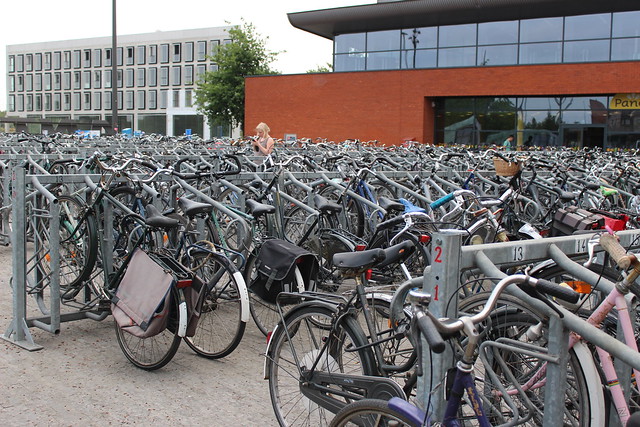
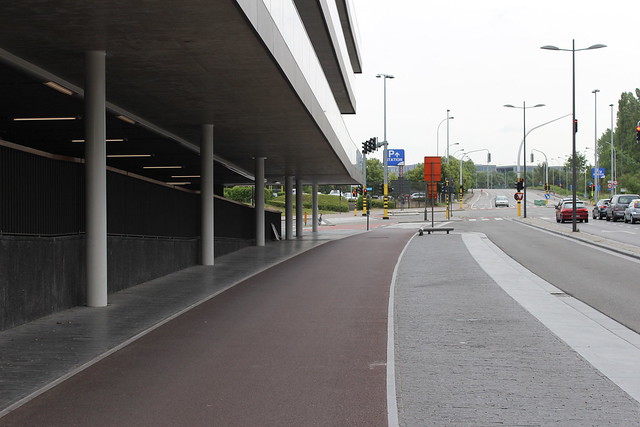
Beneath the river Scheldt, the 1933 Saint Anne's tunnel accommodates people on bike and foot, and allows you to take your bike down the original wooden escalators before a leisurely ride beneath the river with excellent acoustics!
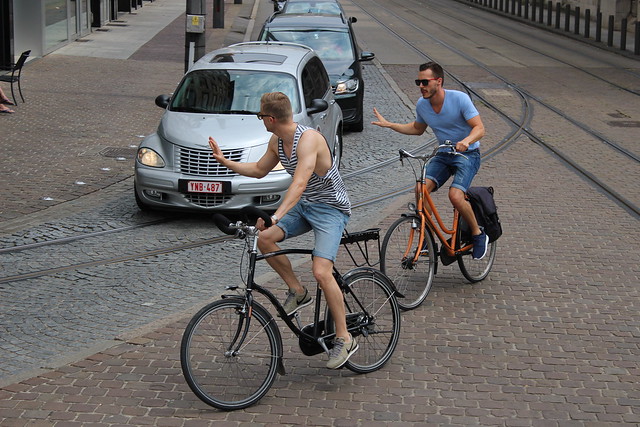
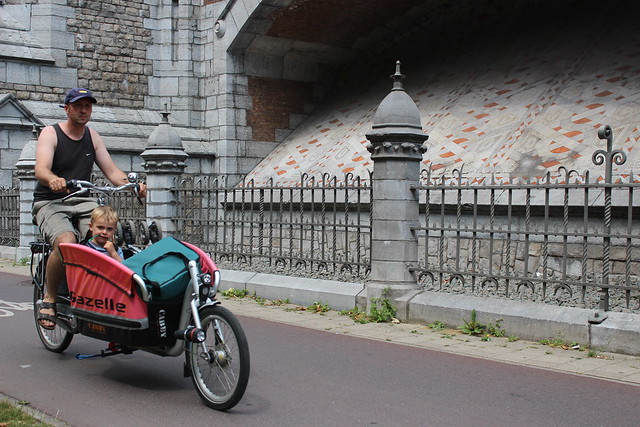
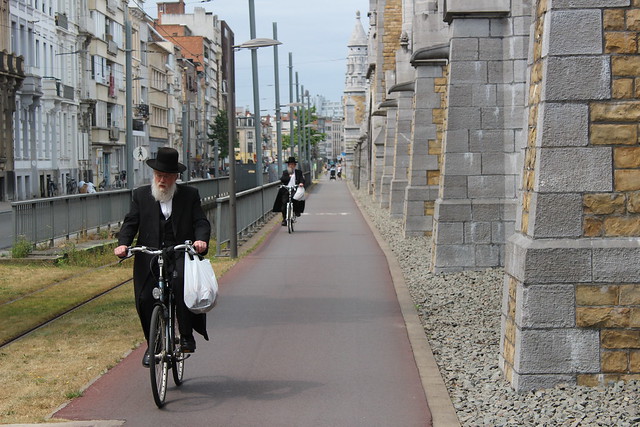
I found drivers to be courteous and interaction between riders and cars seemed friendly. What's more I saw cyclists of all ages out enjoying a summer's Sunday ride. Indeed, the leisurely cycle track that follows the railway south out of the city is so popular it could well do with being made even wider - that's what we call in cycle planning circles "a nice problem to have".
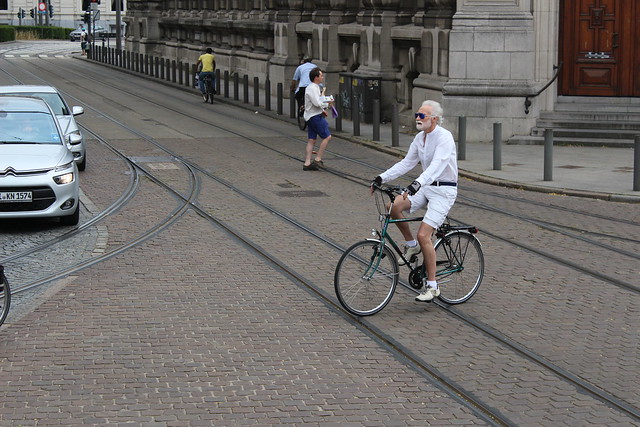
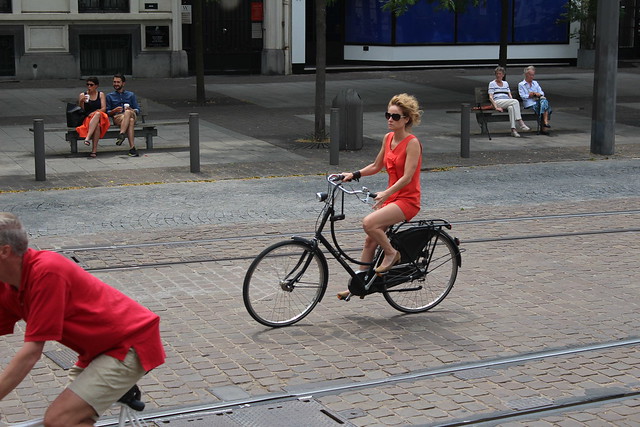
Antwerp had never been on my list of places to visit before. I knew it was here, of course, and that it was really just a short trip by train from London. I had a vague idea that it was famous for diamonds, and shipping, but that was about it. Well, more fool me. Antwerp punches above its weight; both as a cycling city and as a destination in its own right. I couldn't think of a nicer weekend away than riding around here by bike.
For more info on cycling in Antwerp go to Visit Antwerp.
Check LeTour.com for a profile of tomorrow's stage departing from Antwerp.
You can get to Antwerp via the Eurostar in about two hours, with tickets from £80.
Share |
04-Jul-15
# [ 04-Jul-15 6:57pm ]
# [ 04-Jul-15 6:57pm ]
# [ 04-Jul-15 6:58pm ]
28-Jun-15
Utrecht welcomes the Tour de France but what's the legacy for a city that already cycles? [ 28-Jun-15 8:30am ]
Nature Boy [ 23-Jun-15 6:33pm ]
London is changing, and it's all down to you. But what next for cycle campaigners? [ 22-Jun-15 8:30am ]
James Mason - Home James (1972) [ 13-Jun-15 4:38pm ]
Via Tariq.
20-Apr-15
James Goldsmith's Referendum Party was generally seen as an unhinged plutocrat's last hurrah. The Natural Law Party, backed by George Harrison: for those who thought Monster Raving Loony were too sensible.
And yet .... an in-out Referendum on EU membership remains one of the key issues in British politics and still divides the Right. Goldsmith's railing against "professional politicians" is an even more mainstream view. And doesn't Natural Law's program to de-stress the British people sound rather like the Happiness agenda?
25-Mar-15
# [ 25-Mar-15 3:51pm ]
# [ 07-Mar-15 2:00pm ]
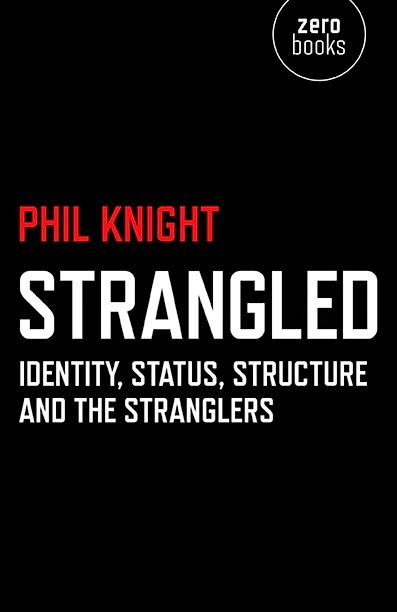
Phil and I are going to have a promotional pub crawl for Strangled and No More Heroes on the 27th of March. Quite what it will constitute remains to be seen. I intend to flog my author copies of No More Heroes out of my gym bag and give the funds raised to Defend The Right to Protest. We will start in Central London around 5 then head south. London Bridge/ Elephant then New Cross/Deptford. We will figure out the exact pubs later. Essentially doing this solves one fundamental problem: the fact that I still like and get on with people who have now fallen out with each other. We will come to you, or somewhere near you, and you don't have to not come for a quick pint through the fear that you'll bump into that ex-comrade who has turned out to be a psycho/ reactionary/ closet Tory/ leering Troll / treacherous Careerist, etc. If you ever contributed to the Decade's blogs it would be great to see you, but it would be great to see you anyway. This is an open invitation. I'll update the pub location nearer the date, after full consultation with Phil. He's dead fussy.
Facebook page here. #
# [ 07-Mar-15 2:00pm ]
Phil and I are going to have a promotional pub crawl for Strangled and No More Heroes on the 27th of March. Quite what it will constitute remains to be seen. I intend to flog my author copies of No More Heroes out of my gym bag and give the funds raised to Defend The Right to Protest. We will start in Central London around 5 then head south. London Bridge/ Elephant then New Cross/Deptford. We will figure out the exact pubs later. Essentially doing this solves one fundamental problem: the fact that I still like and get on with people who have now fallen out with each other. We will come to you, or somewhere near you, and you don't have to not come for a quick pint through the fear that you'll bump into that ex-comrade who has turned out to be a psycho/ reactionary/ closet Tory/ leering Troll / treacherous Careerist, etc. If you ever contributed to the Decade's blogs it would be great to see you, but it would be great to see you anyway. This is an open invitation. I'll update the pub location nearer the date, after full consultation with Phil. He's dead fussy.
Facebook page here. #
# [ 07-Mar-15 2:00pm ]
Phil and I are going to have a promotional pub crawl for Strangled and No More Heroes on the 27th of March. Quite what it will constitute remains to be seen. I intend to flog my author copies of No More Heroes out of my gym bag and give the funds raised to Defend The Right to Protest. We will start in Central London around 5 then head south. London Bridge/ Elephant then New Cross/Deptford. We will figure out the exact pubs later. Essentially doing this solves one fundamental problem: the fact that I still like and get on with people who have now fallen out with each other. We will come to you, or somewhere near you, and you don't have to not come for a quick pint through the fear that you'll bump into that ex-comrade who has turned out to be a psycho/ reactionary/ closet Tory/ leering Troll / treacherous Careerist, etc. If you ever contributed to the Decade's blogs it would be great to see you, but it would be great to see you anyway. This is an open invitation. I'll update the pub location nearer the date, after full consultation with Phil. He's dead fussy.
Facebook page here. #
09-Feb-15
I watched the Adam Curtis film Bitter Lake this week. I'm not going to comment on the argument of the film, as I have no special insights into Afghanistan other than having followed the news for the last 15 years. However, a whole line of criticism has developed around the aesthetics of Curtis' films, particularly his use of film archive, that is worth responding to.
The internet was hailed as great breakthrough in multimedia, which it is of course. But it has also produced a revenge of the written word, and of those who believe writing is the senior service of media. Platforms like tumblr or pinterest have ended up devaluing images by reducing them to a churn; twitter actively defaces them, using pictures and video as fodder for jokes, constant fact-checking or abuse. Live-tweeting programs seems like a way of refusing to surrender to the pull of video and sound.
The left, with its tradition of print journalism, and critical theory, created by people trained in philosophy and literature, has form here. On Photography and Camera Lucida could be seen as attempts to cut visual mass media down to size, by those who felt threatened by them. Marshall McLuhan's career is now an academic morality tale: don't get too into television or you will become vacuous. (The exception is John Berger who was an artist before he began writing, and has retained a positive sense of making images.) There is a Protestant and iconoclastic (in the original sense) undercurrent here.
The criticisms of Curtis' use of archival footage and his editing techniques have some of this spirit. At work here is a misunderstanding of what he is doing. Curtis' films are histories. Almost all serious written histories are led by the use of archival sources. In practise most of these were produced, and are kept, by institutions of various kinds. So the argument that Curtis is 'lost in archives' or 'or lost in the BBC archives' is a non-criticism. His use of audio-visual sources is also close to the practise of 'thick description' where historians build up a picture of a past society or event by piling detail on detail and example on example. This is a methodical and rhetorical strategy, and one used by several different historians from Raphael Samuel to Keith Thomas to Saul Friedländer. It should be noted that this technique involves a fair bit of direct quotation or repetition of material that the author may not agree with and is often presented without much comment. Walter Benjamin fans will see the similarity with the Arcades Project; indeed Keith Thomas has written of his admiration for that work. I can't help noticing the link with Humphrey Jennings' Pandemoniumeither - Curtis' father was Jennings' cameraman. This is also the technique of many works of oral history. The statement that Bitter Lake is an 'emotional history' is therefore in keeping with this tradition.
This sheds a different light on complaints about decontextualisation too. This has been perhaps thecomplaint against thick description as a method ['quotation out of the context' is the standard charge]. But this is a problem of all methods: they show some things and reveal others. It is true that, unlike history writing, Curtis' films have no footnotes and apparatus: but this is true of all factual films. Having more talking head experts would not solve the problem; it would merely introduce multiple arguments from authority.
The other point about archives is this: progress in history has generally been made by bringing new sources into play or finding new ways of looking at them. Indeed, it should be emphasised how underused television and film archives are in creating works of histories [as opposed to illustrating them.] This is partly due to the conservatism of the academic form, but also because it is very hard to get access to these archives and even harder to re-use the material publicly. Ironically therefore, the 20th century, that supposedly radical and modernist century, has some of the most conservative and restricted forms of telling its history.
There is a deep literalism at work in criticism of his technique. People seem to want every image or video to come with captions and explanations. Or perhaps every frame has to feature Fergal Keene telling us when to feel sad. Curtis is creating a new form of multi-media history. Who knows where others will take it next?
30-Jan-15
# [ 30-Jan-15 11:08am ]
As the LTDA goes to war with cyclists, we ask just who runs London? Is this a Cycle Superhighway Stich up?! [ 30-Jan-15 8:30am ]
# [ 29-Jan-15 1:40pm ]
27-Jan-15
Whatever happened to him? [ 27-Jan-15 11:31am ]
Boris gives green light to Cycle Superhighways to unlock central London for bikes [ 27-Jan-15 10:05am ]
In defence of fair-weather cyclists: how do you keep a city cycling, even in the worst of winter? [ 26-Jan-15 8:30am ]
One of the most persistent criticisms I hear levelled against investing in cycling is that as soon as the weather becomes inclement people stop riding, therefore making it an unreliable way of moving people in cities.
 Cyclists in a recent rush hour snow storm in Copenhagen, via the Copenhagenize / Viking Biking Tumbr.
Whilst the difference between summer and winter cycling levels in London have been decreasing year on year, the number of cyclists on the road over the winter months is markedly lower than in the long, light and warmer summer days.
If a journey by bicycle is tolerated for the sake of convenience, rather than comfort, it is true that poor weather can serve to increase the perception of it being sketchy. I personally dread cycling around Old Street roundabout or through Holborn Circus in heavy rain with reduced visability. No matter how good your waterproofs, you'll still be soaked through with the sweat of anxiety by the end of your terrifying trip.
 Cyclists in the snow, Bethnal Green, London, 2010
Of course, it is not the actual rain, snow or darkness that I fear but the chance that my fellow road users are not paying sufficient attention to the conditions, and do not modify their behaviour appropriately.
In successful cycling countries this problem is solved by separating cyclists from motorised traffic one way or another; perhaps with cycle tracks on main roads, or with closures, restrictions and one-way routes on lesser roads with lighter traffic. But this in turn can pose its own problems: in the worst of the winter weather, how do you keep cyclists - and the city - moving?
When you have a high percentage of your population making their journey by bikes - as in Copenhagen or across the Netherlands - making sure that cycle routes are clear becomes a very serious consideration. In another fascinating new post, video blogger Mark of Bicycle Dutch fame recently recorded how his home city of 'S-Hertogenbosch kept people moving through a recent snow storm, and made journeys by bicycle possible in challenging conditions.
He explains: "On a cycle way the 'gritters' brush the surface first, and then it is sprayed with a mixture of salt and water. That film of salt water does cover the entire surface and that means most of the snow melts instantly on the entire street surface even without [passing cyclist's] tyres to disperse the salt. The difference between routes that were cleared and gritted and those that were not (yet) was huge."
I know what you're already thinking: here in the UK we don't deal with adverse weather well. That we struggle to clear our roads and pavements, let alone cycle paths. That we can't even build all-weather year-round cycle routes.
 Mud, mud, glorious mud! It's not Middle Earth, but all the same you shall not pass... Via As Easy As Riding A Bike.
Indeed, As Easy As Riding A Bike blog recently highlighted a Sussex cycle route which could provide a safe and convenient bypass to the busy A2 is impassable to all but those equipped with mountain bikes and wellington boots for much of the year. It's never been laid properly due to concerns about an "urbanising effect" on the countryside, which clearly doesn't consider the same effect car journeys have that could easily be replaced by trips on this path, were it a viable route instead. Making this journey on the path in its current form on a dark night in wet and windy weather would be reserved for all but the hardiest of thrill-seekers.
 The heavy snow fall of 2010 caught London unprepared. My street, seen here, remained uncleared for over a week.
But as the Dutch example demonstrates, winter weather need not be an insurmountable obstacle for successful cycling. People always tell me that "there's no such thing as bad weather, only bad clothes" but I'd argue that there's more to it than that...
You can have all the fancy water proof kit in the world, but if you're having to fend off thundering lorries and itinerant taxi drivers in addition to trying to stay upright through wet and windy weather you're not going to be having a very nice time. And you could have all the cycle infrastructure in the world (and I'm thinking in particularly of the separated lanes we should start to see being rolled out in London over the next few years) but if the authorities don't have a plan for keeping them clear of mud, snow and ice they'll be next to useless. Keeping your city cycling, even in the worst of weather, shows the special care and consideration people on two wheels need.
Further reading:
Bicycle Dutch: how to make cycling in the snow possible
Copenhagenize: the ultimate bike lane snow clearance post!
As Easy As Riding a Bike: Natural Character
ibikelondon: Cycling through epic amounts of snow, retro Norway style
Share
21-Jan-15
Never mind "cyclists stay back", what about "drivers, watch for cyclists"? [ 21-Jan-15 6:30am ]
They're big, they're yellow, they're angry and they're everywhere. "Cyclists! Stay back!" they shout, and they seem to be stuck on the back (or even the side) of just about every working vehicle in London.
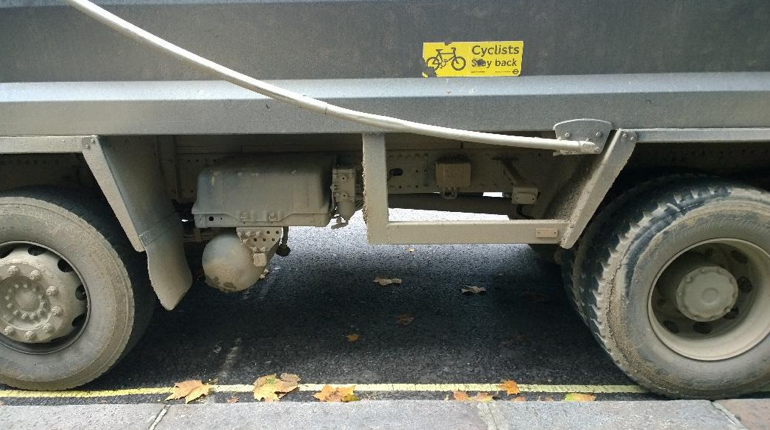 The ubiquitous yellow safety stickers first appeared on lorries as a warning to cyclists that they had massive blind spots, and slipping down their sides was a potentially fatal thing to do. But when Transport for London began requiring every contracted vehicle to also sport the stickers, they began to appear on vehicles ranging from-mini buses to ordinary cars; vehicles which are hampered not by blind spots but by the driver's failure to look. Peter Walker of the Guardian explains very well just why these stickers seem particularly impertinent to cyclists.
There was uproar last summer as the yellow menace spread, and Transport for London agreed to begin replacing the stickers with more gently worded warnings to "avoid passing this vehicle on the inside". But I can only assume the replacement stickers are lost in the post somewhere as just last night I saw what looked to be brand new "stay back" stickers on the rear window of two different taxis.
Popular cycling website Road.cc turned their hand to sticker making and came up with these "Cyclists! Stay Awesome!" stickers, and I can appreciate the humour: too often it seems that signs shouting at people on bikes lurk around every corner. Cyclists! Stay Back! Cyclists! Dismount! Cyclists! Stop at red! Cyclists! Proceed directly to jail, do not pass go, do not collect £200!
So I was really happy to see the below sign on the exit gates of the Crossrail station construction site at Bond Street, which is busy with lorries day in and day out. The message is bold, the message is simple, the message makes sense: "Drivers! Watch for cyclists!"
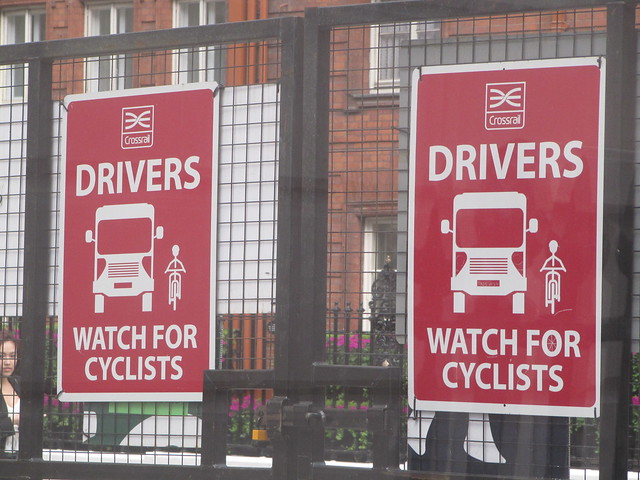
Maybe I bear a two-wheeled bias, but I'd like to see a lot more of these around town. In fact, I have a proposal to make: I'll agree to anyone slapping a "Cyclists! Stay back!" marker on the back of their vehicle so long as they also agree to stick "Driver! Watch for cyclists!" on their steering wheel. Seems like a fair deal to me, don't you think?
Share |
19-Jan-15
Will Camden deliver the UK's best urban planning scheme (with HUGE benefits for cyclists)? 48hrs to tell them to DO IT! [ 19-Jan-15 8:30am ]
"The Wages of Sin is Death; The Gift Of God Is Life" [ 14-Jan-15 1:06pm ]
Island of Terror [ 25-Jul-15 12:00am ]

Sucked To Death [ 25-Jul-15 12:00am ]
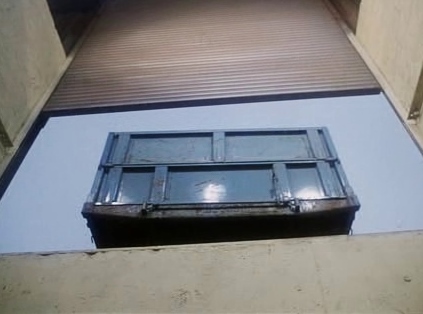




As a child I had a morbid fear of quicksand. I'd probably watched too many Tarzan films, and PIF's like 'Keep A Grid On It', a warning about the dangers of children dying in grain pits ('drowning without water') didn't help. Come to think of it, as an adult I'm still pretty scared of quicksand AND grain pits, I'm just wise enough to know that if I don't go looking for that sort of danger, it certainly won't coming looking for me.
Dracula, Prince of Deadness [ 24-Jul-15 12:00pm ]



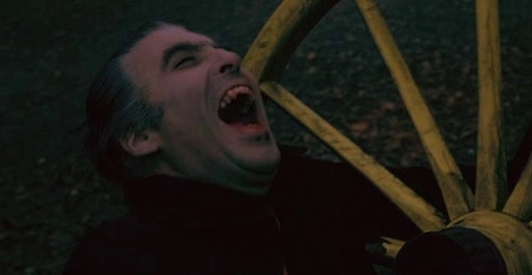

It's a convention of vampire films that Dracula starts dead, and ends up dead. In Hammer productions he is usually ended by a member of the Van Helsing family, but his nemesis can also be a callow youth or a monk who likes to warm his arse on an open fire. In 'Taste The Blood Of Dracula' he just gets giddy from being in a church and falls off a ledge. Fact is, Dracula is very much a bully. He's cock of the walk when biting young, vulnerable girls, but he crumbles when faced with any real opposition. Literally. That said, he'll be back. He always comes back.
RIP, Sir Christopher, you pompous old marvel. See you again soon.
Interesting Postcards [ 24-Jul-15 12:00am ]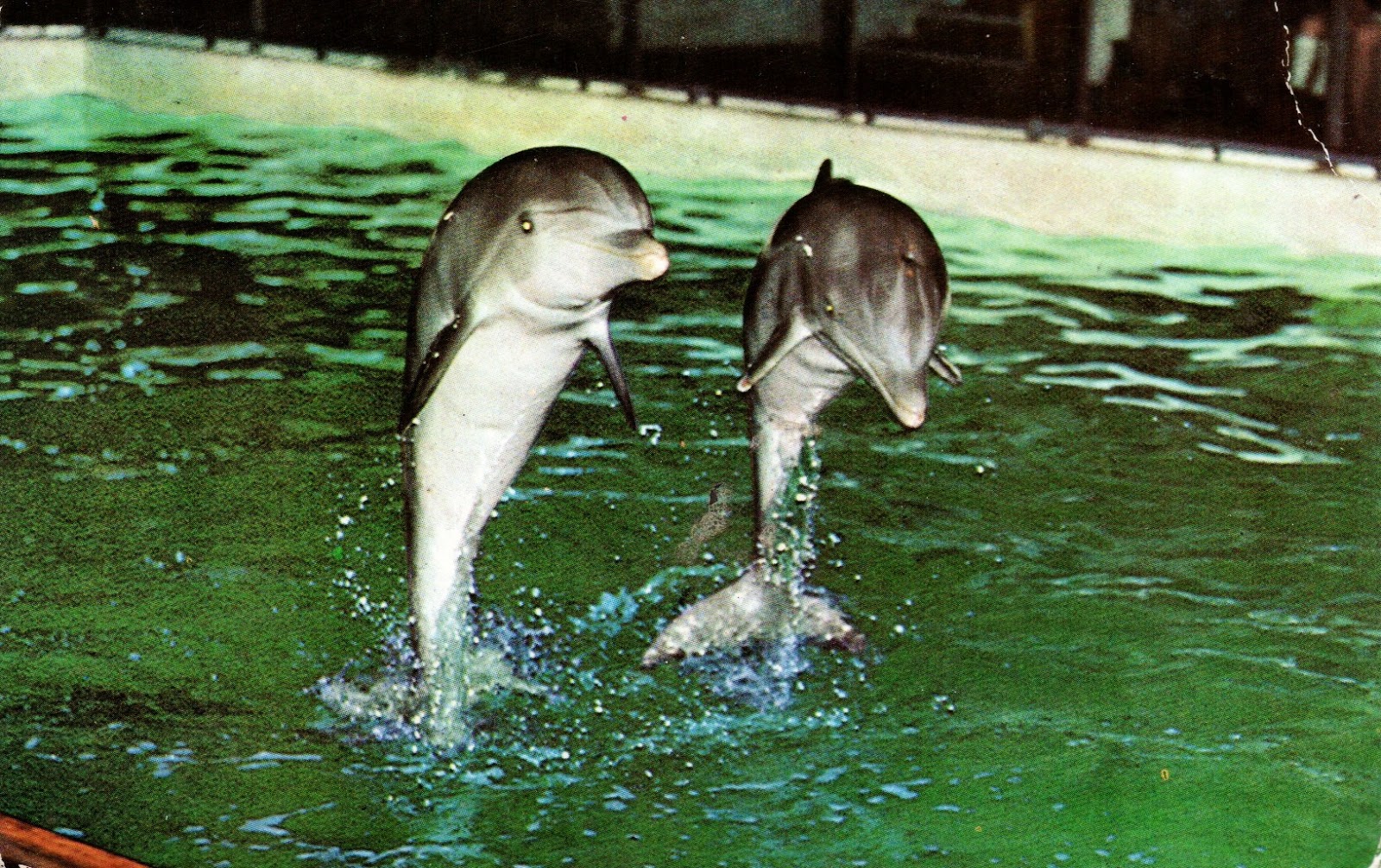
Dolphins at Brighton Aquarium, Sussex
I know what you're thinking, 'yeah, dolphins are cool, Paul, but they're not that interesting'. Well, wind your neck in, mate, because these clever little bastards are Dick and Delilah, the dolphins the CIA trained to sabotage Soviet submarines during the cold war. And you can't prove otherwise.
The Evil of Banality [ 20-Jul-15 12:00am ]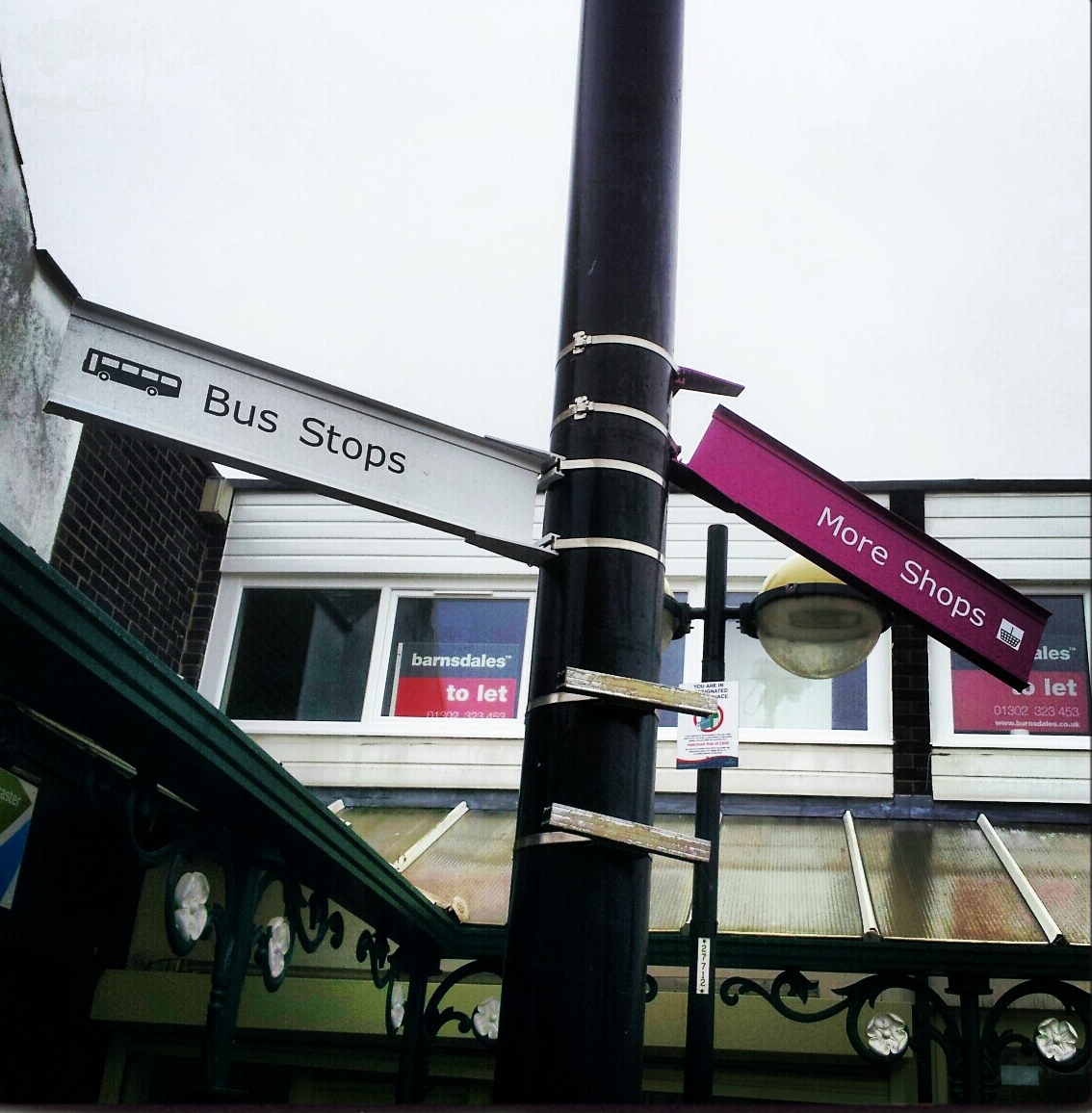
The writer, theorist and academic Mark Fisher recently set up a Facebook page called 'Boring Dystopia', and invited the submission of photographs of Britain in the 21st century to illustrate the concept. I've already uploaded a few snaps, as manifestations of dullness and decay have long been an interest of mine, particularly the places where the banal and the broken intersect, and the true, terrible, tedious horror of modern life is revealed.
We've all read '1984' and seen the implications of totalitarianism: the endless war, constant surveillance, the relentless propaganda machine, the purges, the torture, the executions, the mind boggling twists and turns in ideology, in language, in life under the heel of the system. But this is a very different dystopia that lacks even the charm of the police state: there are hardly any police for a start (the phalanx of coppers in the picture below dates from 2012, and the procession of the Olympic Torch).
This dystopia is held in place by neglect, by apathy, by a lack of resources, by a lack of interest. Everything is falling apart, but we lack the money and energy to make it right. Newly built things look half-dead even as they are unveiled, MDF where wood used to be, bricks made out of old bricks, slates and glass made out of plastic, all covered with a single coat of watery pastel paint.
New housing is prohibitively expensive and resembles a series of bird boxes split into quarters, sixths, eighths depending on how many newly weds are expected to cram into them. The pity of the boring dystopia is that these poorly and hastily constructed pens are sought after. It has come to this: we are so desperate to live somewhere that we will settle for a Lego house with a tiny consolatory patch of polyurethane lawn. There are some townhouses near to where I work. Each of them has one large window has a tiny balcony attached to it, like a fancy fringe on the bottom of a sofa. You cannot stand on it, sit on it, or even dangle a child over it. In any event, it just looks out onto a dirty, busy road.
Local authorities and other central civil organisations are not instrumental in the boring dystopia, they are subsumed by it, just like everybody else. Lacking money, resources and motivation, their interventions are confined to putting up signs, or erecting fences and barriers to keep members of the public away from areas that they already have no interest in.
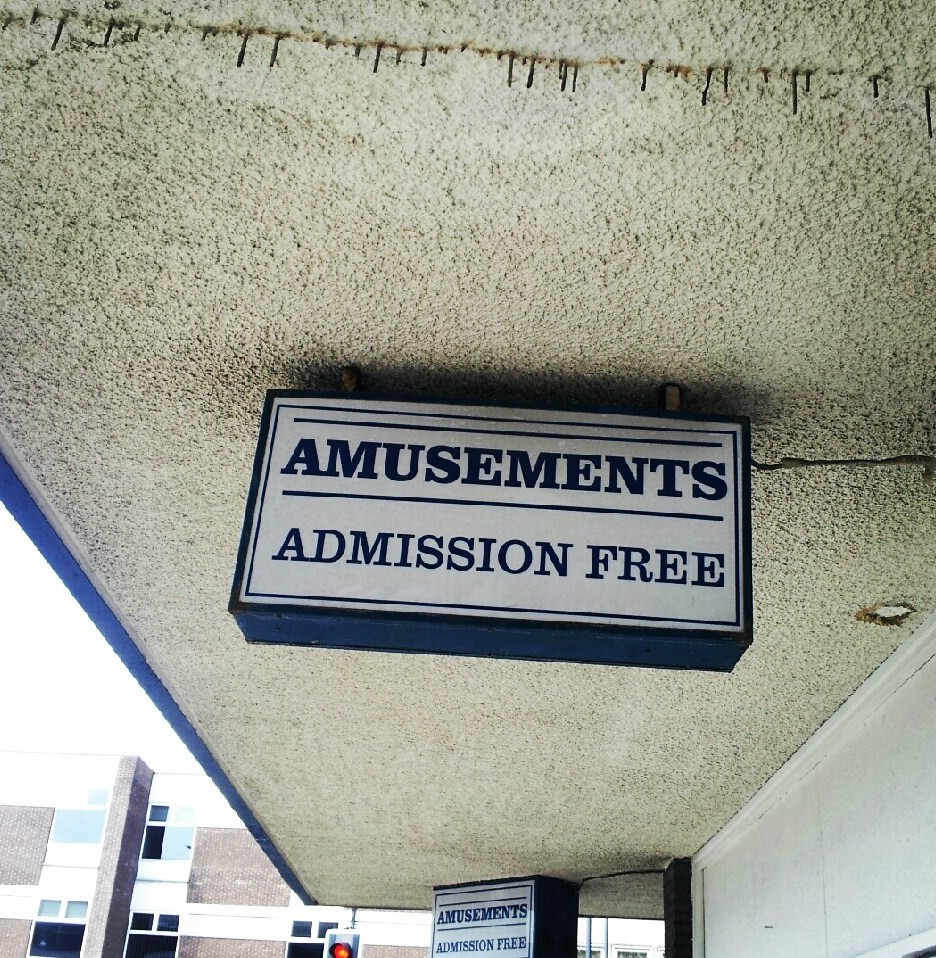
Old and empty buildings are no longer demolished, as that costs too much money, and the boring dystopia has put too many rules in place about blowing things up or setting fire to them. Instead these buildings ossify with pigeon droppings, and stalactites form like spindly toxic fingers. After a while the buildings become invisible.
Yet, despite the underpopulated office blocks, in spite of the abandoned buildings, we keep on building because we are not able to stop, perhaps because we want to fulfil the life trajectory we expected when our world was not so dystopic, not so boring. Or perhaps it's to see out the job that our distant ancestors started several centuries ago: to carve up and chop down this land until every inch of it has the brand of civilisation upon it, until there is no corner or parcel of space that does not have a foot print or a unit or a trampoline upon it. There CCTV cameras everywhere, but they simply provide a continuous flow of unmonitored images. They flicker through the night in unmanned offices. If something happens, someone will review the footage, in exactly the same way that a store detective might rewind the day's surveillance tape to check out a shoplifting incident - in 1990. We've spent billions on replicating a process that already existed. We've lost the whirring noise and gained blurred footage of Michael McIntire shopping.
Who runs the boring dystopia? The answer is no-one. There is no-one driving. The government are too busy to bother with little things like the administration of the country now. They are like burglars who have meticulously planned a precision raid on a gold warehouse, only to get there and find all the doors open and the alarms switched off. They wander around, taking what they want, not quite believing their luck. After a while, they take their masks off. They know no-one will stop them, and they no longer care who sees them.
We can obey a dictator, respect an ideologue, fear a tyrant. These individuals lead by bending parts of the world to their will, and, whether, we go along or fight against, we live or die in the shadow of their monstrous ego. But this dystopia is boring, and it is run by boring people, except for Ian Duncan Smith, who is a fucking maniac.

So, yes, thanks to Mark Fisher, the Boring Dystopia has a name now, and Facebook users can participate in its cataloguing. It is unlikely to spark a revolution, or challenge the parameters of this society that we have created. We are too tired and disengaged to throw a brick, so we press a button to 'like' a picture of something that, actually, represents our cultural penury and societal subjugation, like condemned men unknowingly shaking the hand of their executioner, who uses the contact to estimate the length of the drop. We should be ashamed, really, mortally ashamed, but this dystopia has made us all boring, and we are too stupefied to do a fucking thing about it.
A Million Horns [ 18-Jul-15 12:00am ]It's 1970, and Cliff Richard faces up to the challenges of a new decade and a less than inspiring recent sales record by teaming up with his old pal Hank Marvin and releasing a single that is not only rockier than his usual output, but also exploits a topical theme: the unstoppable rise of the car, and the damage pollution is doing to the environment.
Written by Hank, 'The Joy of Living' features an interesting guitar effect that seems to evoke the grinding futility of a traffic jam, and lyrics that are both deeply sarcastic and rather angry and are redolent of J.G Ballard (who would have thought lots of big, sexy, deadly cars a good thing) or even Patrick Hamilton (who would have thought it disastrous*). In this dystopic version of the future where the motor car is King, man is reduced to living in state appointed high rises, looking down on the world and remembering what it felt like to breathe clean air, like a scene from the credit sequence to 'Soylent Green' come to life.
In the end, however, a strong ecological message and a jaunty chorus were not enough to propel the song higher than number 25 in the charts and the backlash against the dirty bastard car didn't take place after all. As someone who was stuck in a lovely multi coloured crocodile for twenty minutes this morning, I wish the world had listened to Cliff more closely. He was also right about young ones not being young for very long.* Hamilton had more reason than most to hate the motor car, having been knocked over and nearly killed by one in the late 1920's. In 'Coleoptera', the last chapter of his 1953 novel 'Mr. Stimpson & Mr. Gorse', he predicts a Britain over-run by cars, created by man to serve but now completely in charge of their inventors and 'pitilessly exacting' in their demands. 'The beetles were not magnanimous in victory', he notes.
F*** Me, It's Freddie! [ 17-Jul-15 9:00am ]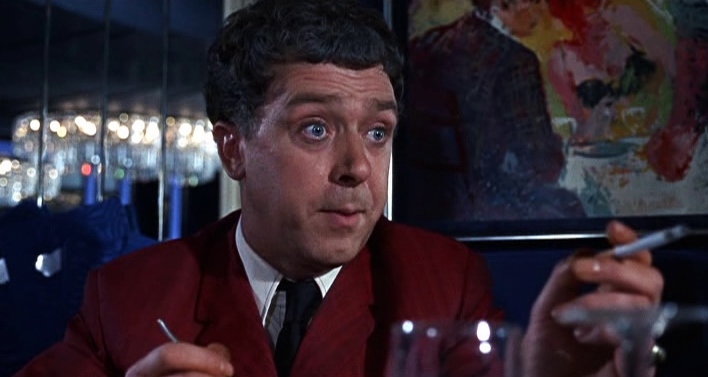
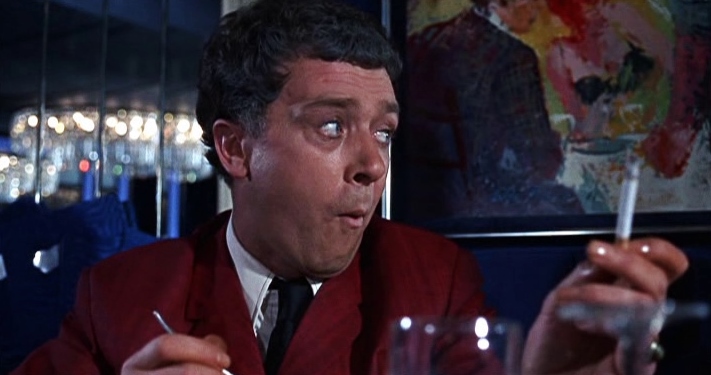
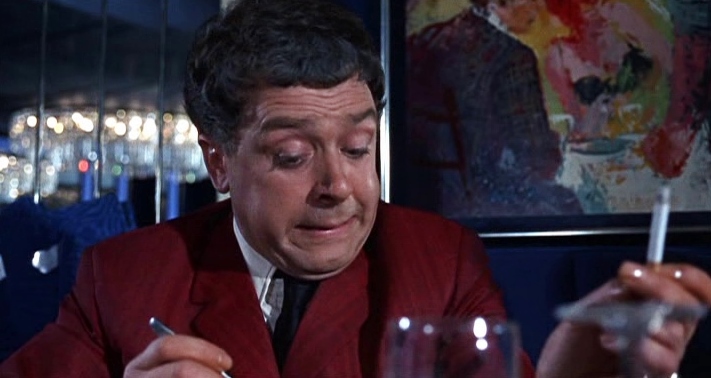
FMIF as Philip Proudfoot in 'Otley' (1968).
We've actually done this film before, but it is well worth revisiting, especially with facial expressions this good. Freddie plays what is called in olden days parlance 'a flaming homosexual', i.e. he isn't scared of what you think of his sexuality. He's also quite a dandy, and at the centre of the intrigue, like a camp mod spider. It's a broad performance, but it works - after all, as you can see from the second screen shot, Freddie has his tongue firmly in its cheek.
Otley [ 17-Jul-15 12:00am ]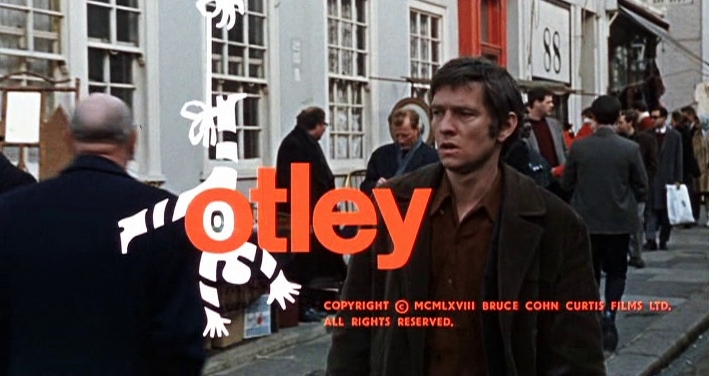
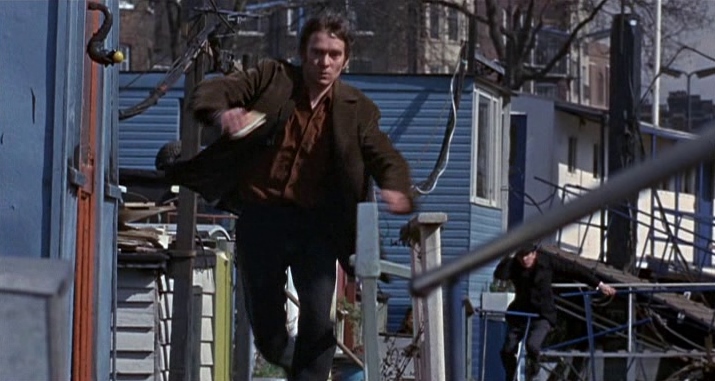
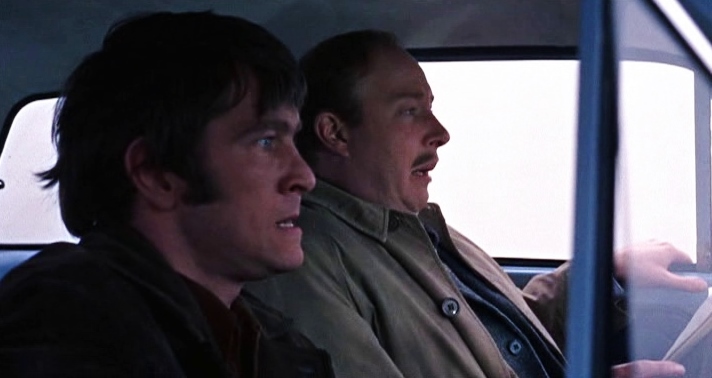
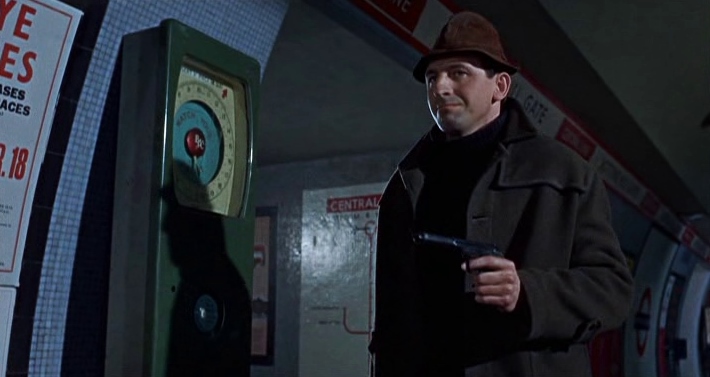
'Otley' is about fifteen minutes too long, but it's a fun film about the rather shabby world of espionage that features a stellar cast of British character actors, led by the great Tom Courtenay as Gerald Arthur Otley, a shiftless moocher and compulsive pincher of ornaments who, by sheer idiocy, finds himself at the centre of a web of slightly incomprehensible intrigue.
A nice mix of comedy and drama, 'Otley' is very sixties (never a problem in my book - or on my blog, anyway), but gives us a glimpse of the 'real' London behind the swing: the markets and bedsits, cafes, pubs and tube stations, people in polo necks and socks that need darning. The grooviest person in it is Freddie Jones, who is so sharply dressed it makes Beau Brummel look like Worzel Gummidge.
Tom Courtenay is excellent, as always. His light Yorkshire accent, bony face and slightly camp delivery are miles away from the usual leading man, and he's not afraid to appear cowardly and pathetic, which is probably why he never made it big in action films. He's also very funny and, at times, the self-obsessed, duplicitous Otley is reminiscent of a (slightly) more grown up Billy Liar, which makes you wonder sometimes if all the running around and gun play is simply part of some elaborate, extended fantasy.
The rest of the cast are a who's who of contemporary character actors, including James Villiers, Alan Badel, Leonard Rossiter, James Cossins, Ronald Lacey, Frank Middlemass, Geoffrey Bayldon and, of course, our beloved Freddie. The last two on the list are still with us (aged 91 and 87, respectively) and, I hope, will remain so for a good few years to come. Romy Schneider makes an attractive female lead, but then she always did, particularly when sporting thigh length white pvc go go boots as she does here.
Light hearted and full of twists, it's the sort of film that should be on TV right now but, for whatever reason, never is. Bloody nowadays TV.
Adieu, Aubrey [ 16-Jul-15 10:50pm ]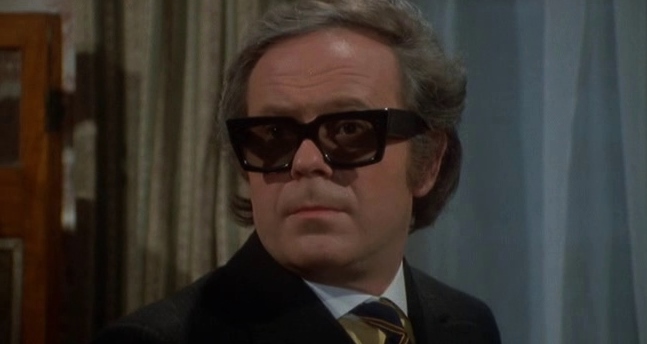
The purring, sinister, wonderfully eccentric Aubrey Morris is dead. He lived for 89 years, and was acting up until a few months ago. Here he is as an utterly bonkers psychiatrist Dr. Putnum in Hammer's 'Blood From The Mummy's Tomb'. Adieu, Aubrey.
What Might Have Been [ 16-Jul-15 12:00am ]It's February 1979, and Punk is moribund enough for Legs & Co to get involved and start clod hopping about in plastic sandals and party wigs. If they'd only flipped the record over they would have encountered 'Frigging in the Rigging', a puerile chant full of explicit sexual imagery that is crying out for literal interpretation in dance by five ditzy dancers. Can you imagine the hand gestures?
Christ Almighty [ 12-Jul-15 12:00pm ]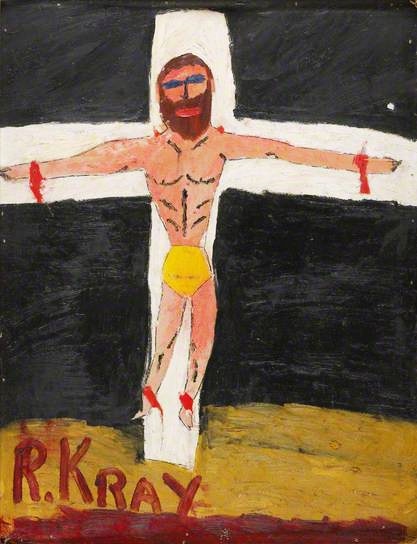
Art therapy is an essential part of prison for those serving long sentences: they've got to do something, after all, and smearing a load of paint all over a canvas can be cathartic.
Ronnie Kray was a keen amateur artist, and his paintings (not all of which are as good as his 'Crucifixion' above) now sell for several thousand pounds each. Good news, Ronnie, wherever you are: people are still fucking mugs when it comes to your tawdry legend.
A tip of the cap to Jonny Trunk who originally posted this on Instagram and made me aware of it. Now I can't think about anything else, so, yeah, thanks a lot.
Keep It Broken! [ 12-Jul-15 12:00am ]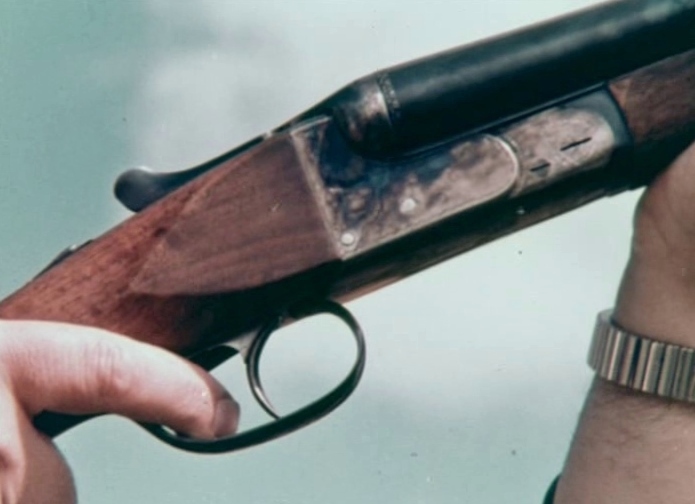
While we're thinking about shotguns, rural settings and sudden, violent death, remember --
'A gun should be broken and unloaded whenever it's not being fired, and especially when getting through a fence or over any obstacle. If you don't follow the rules, sooner or later there'll be a - BANG! - tragedy'.
Look at the geezer being shot. Is it just me, or is he hamming it up a bit?
House On Straw Hill [ 11-Jul-15 12:00am ]

'House On Straw Hill' has either an illustrious history or a terrible reputation, depending on how you look at these things. It was the only British film on the 1984 list of banned video nasties, mainly because of its fairly explicit mix of sex (some consensual, some not) and violence (some consensual, some not). Made in 1975, it exists in any number of different versions, and under several different titles, although a more or less definitive version has recently been released on Digital Versatile Disc.
The always odd Udo Keir plays Paul Martin, a successful author who rents a remote cottage in Essex in order to work on his second book. He has an on-off relationship with porn star Fiona Richmond, i.e. he gets on, then off, then sends her packing. Their 'love' scenes have a rough and ready quality that makes them seem more explicit than they really are, but then some of that might be due to him putting on latex gloves every time they get it on.
Paul hires a secretary over the phone to help type up his masterpiece and is delighted when she turns out to be Linda Hayden, who brings her usual blend of jailbait precocity to the role, and forgets to bring a bra. Linda is a compulsive masturbator and, when she is caught fiddling with herself in a field by a couple of bicycle riding 'youths' (including an already balding Karl 'Brush Strokes' Howman), an unpleasant rape scene (is there any other type?) ensues. This young woman is not quite the pushover she seems, however, as the yokels who assault her find out to their cost.
The last half hour explodes in a frenzy of rough sex and sharp knives and a soap opera plot twist which makes enough sense to validate all the huffing, puffing and intimate touching that has gone before. Unlike the BBFC, I wouldn't describe the film as nasty, rather as an adult psychodrama that occasionally gets a little too adult for comfort: if Ingmar Bergman had made it, it would have been hailed as a masterpiece (it's worth remembering that Bergman's film 'The Virgin Spring' was the inspiration for 'Last House on The Left'). Probably.

I enjoyed the rural setting (it was filmed near Chelmsford, the furthest extent of 'my' Essex), and the scene where Keir drives a brakeless Morris Minor into a pond. I liked Linda Hayden, who always does an excellent sexy psycho, and I was intrigued by Fiona Richmond's lissom body and bricklayer's face. Most of all I enjoyed hearing extracts from the book Paul is working on, which sounds like it's going to be truly fucking awful.
Music lovers will be pleased to hear that the film has a rather good soundtrack, but you needn't take my word for it as my friend and colleague Fearlono has made a custom soundtrack for it that you can download at his smashing website Cottage of Electric Hell. One thing: you will need to pretend to be an adult to gain entry, as there are grown up themes and some sexual swear words.
Baby Love [ 10-Jul-15 12:00am ]
'Baby Love' centres around the familiar plot device of a stranger who enters a supposedly perfect household and shags (or is shagged by) everyone, subsequently exposing how damn dysfunctional they all are behind the smiles and soft focus. Lucy is a fifteen year old strumpet in training who is suddenly orphaned when her sluttish mother (Diana Dors) kills herself. Mum's last wish was that Lucy go to live with Keith Barron, one of her few old flames to have actually done well for himself. Lucy's arrival throws the house into turmoil, not least because she has been trained to exploit her sexuality at every opportunity, and spends most of her time flirting, walking around in her bra and letting seedy strangers feel her up at the pictures. After a while, however, Lucy begins to long to be part of the family, only to find that the family rather like her as she is - a sex object that they can project their hetero and homo sexual fantasies onto.
'Baby Love' simply wouldn't get made today, if only for the fact that frequently nude star Linda Hayden was only fifteen years old at the time of filming. This role propelled her into a career in which she almost exclusively played, for want of a better term, jailbait. In the various retrospective interviews I've seen with her she seems remarkably well-adjusted and good humoured about her ten years as a baby faced slut but, as she went out with Robin Askwith for a number of years, her critical faculties may be slightly impaired.
Some interesting guest stars in this, by the way - the aforementioned Diana Dors, right on the cusp of turning from pneumatic blonde bombshell to frowsy Earth Mother, and, in a small but sleazy role, dirty old Dick Emery.
The ghost of Diana Dors.
'Ooh, you are awful', etc.
Bloody Hell [ 09-Jul-15 12:00am ]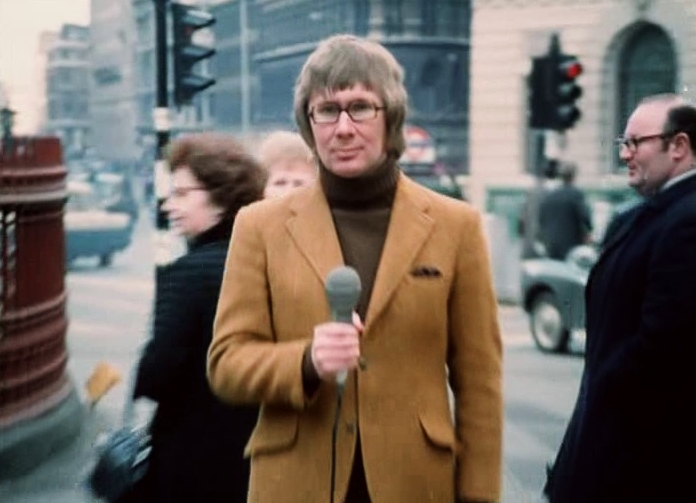
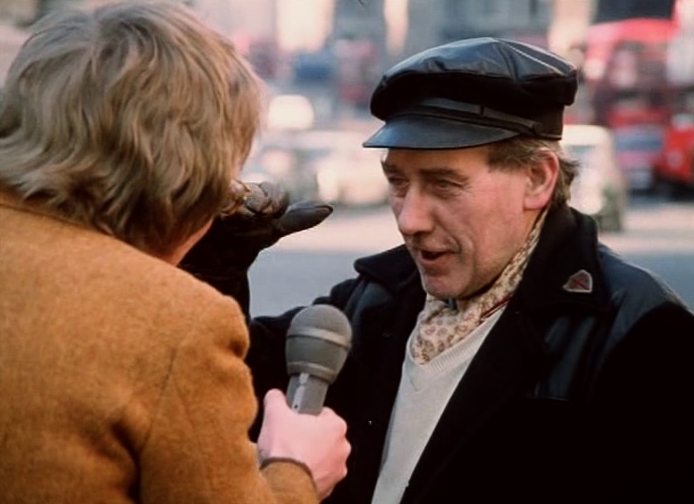
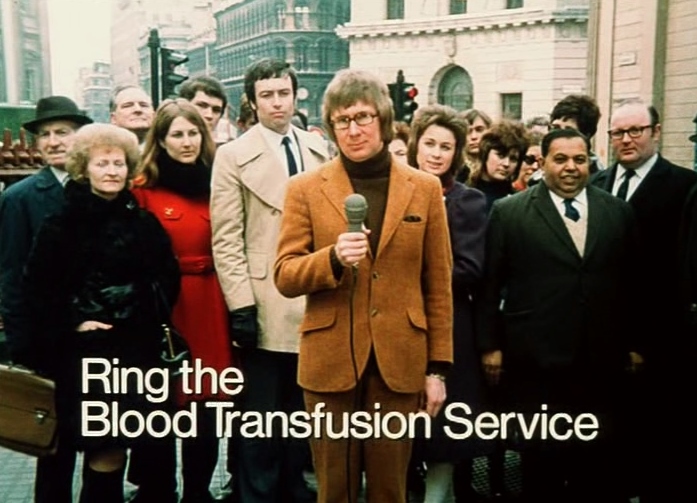
What do these randomly selected band of Dickensian grotesques and cheeky urchins know about blood? Nothing. One bloke in a bowler hat even thinks that you can keep it for up to a year! Surely everyone knows it only lasts three weeks, which is why it is used immediately, and why the NHS needs so much of it. So, do as the gingerbread man made flesh says: ring the Blood Transfusion Service and GIVE BLOODY BLOOD.
F*** Me, It's Freddie! [ 04-Jul-15 12:00am ]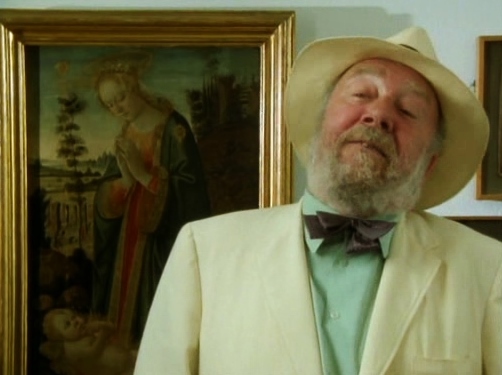
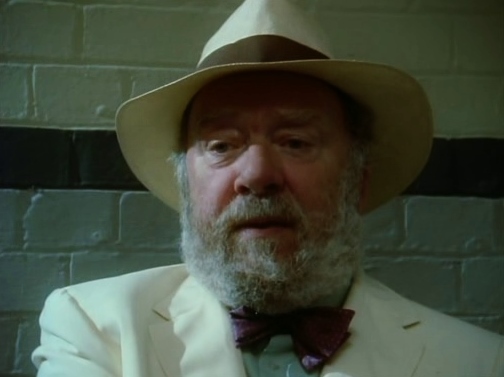
FMIF as Harry Field's Dad in 'Who Killed Harry Field?', a 1991 episode of 'Inspector Morse'. If you're wondering who did kill Harry Field, you'll have to watch the show, but, believe me, he definitely had it coming. Freddie gives a great performance, by the way, but then that's Freddie's stock in trade, isn't it? He's a great hero of mine, and it feels good to be paying tribute to him again.
Lifeforce [ 03-Jul-15 12:00am ]




'Lifeforce' is a mostly enjoyable adaptation of Colin Wilson's classic novel 'Space Vampires'. In it, a space shuttle mission is interrupted by the discovery of a huge, seemingly abandoned space craft of alien origin. When the crew board the hulk, they discover hundreds of dead space bats and three naked humanoids in a state of suspended animation. Their genitals are thoughtfully obscured but the sole female (Mathilda May) is very beautiful indeed and has perfect breasts, and we are allowed full sight of these, which is a fatal mistake as they become pretty much all we can see and, when they disappear about forty five minutes in, all we can think about is when we will see them again. Indeed, if I close my eyes I can see them now *closes eyes*

As it goes on, the film becomes less interesting and slightly chaotic, especially in the semi-hysterical finale in which vampirism has infected London and is driving people to barbaric acts of public unrest, and our uninspiring American hero (Steve Railsback) has to strip off and kiss the sexy naked vampire lady a lot in order purely to get her into a position where he can stab her with a special anti gorgeous bloodsucker sword, killing her, saving the world, but sacrificing himself. Good, the man's an idiot.
There are some excellent actors in the cast (Jerome Willis, Frank Finlay, Patrick Stewart, the superb Aubrey Morris), although Peter Firth is miscast as a tough SAS officer. There was also clearly some money spent on the production, and the special effects are generally very good if rather derivative of both 'Alien' and 'Raiders Of The Lost Ark'. There's even a promising plot line about the vampires having visited Earth on a cyclical basis for centuries but this doesn't really develop into anything interesting. Ultimately, however, all of those positive points are totally irrelevant in the scheme of things: this film is all about the ancient space vampire's stupendously attractive chest and the rest, a mysterious celestial body well worth getting bitten on the neck for.
Thinking about it, perhaps not the best film to come back with. I don't want you thinking I've had some sort of breakdown and am now obsessed with knockers, especially as a couple of next week's posts are about Linda Hayden.
From Just This Side Of Midnight [ 02-Jul-15 12:00am ]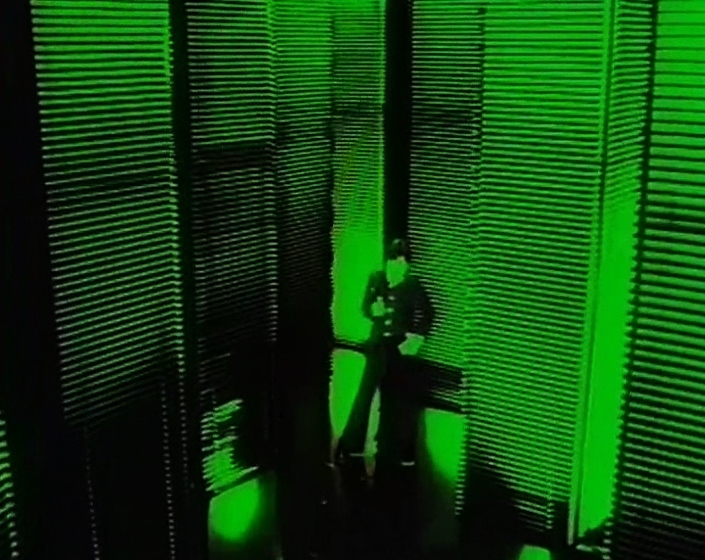
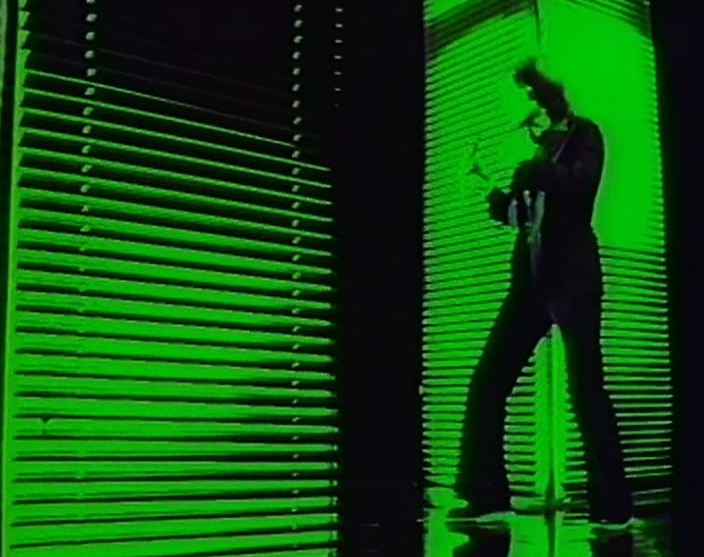
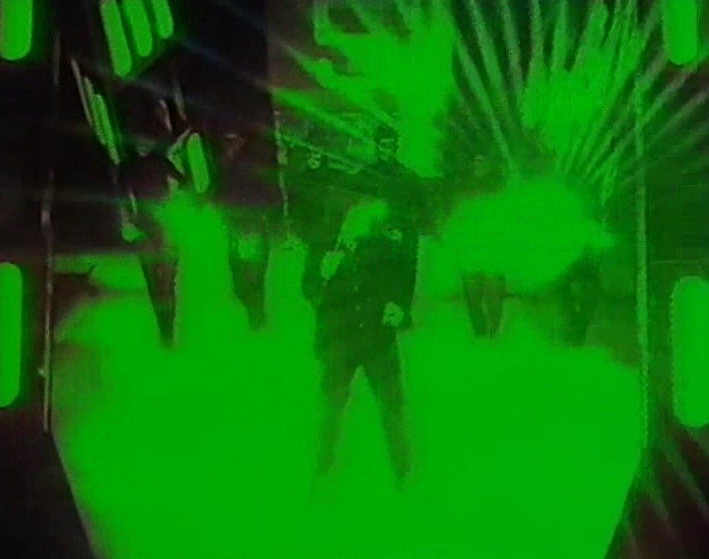
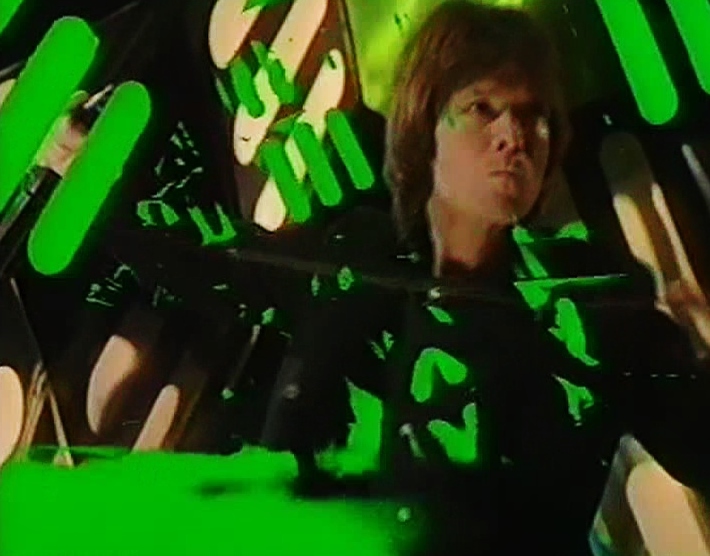

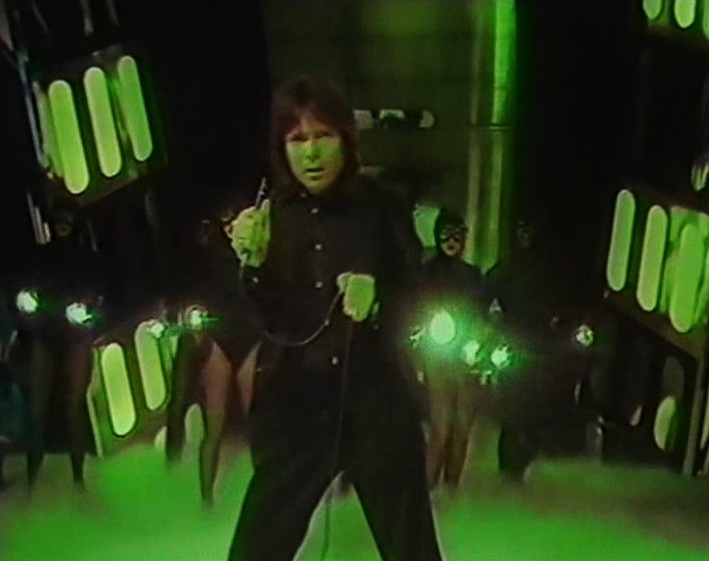
I don't know whether recent allegations about Cliff Richard are true. My only response is that it wouldn't surprise me, not because I have reason to particularly suspect him but because, in a world where Rolf Harris has been unmasked as a serial sex offender, I now lack the capacity to be shocked by further revelations. Anyway, Cliff fascinates me, and always has done, so I thought I'd look at some of his occasionally very odd oeuvre, today arriving in 1979, already twenty one years into his seemingly endless career.
Here, Cliff is searching for a green light. He's been looking for it all night. It's one of his sleaziest records, ably complemented here by the addition of Hot Gossip in this performance from a 1979 episode of 'The Kenny Everett Video Show'.
Cliff appears to be lost in a sensuous reverie but, ever the innovator, has clearly worked closely with choreographer Arlene Phillips to invent dogging. The torch wielding, goggle wearing, balaclava clad dancers bring an additional sinister note to the balefully lit proceedings. Cliff, clad all in black, is both victim and voyeur. He's found half a dozen green lights tonight, and, one way or another, he is going to get fucked.
It's good to be back.
I Had No Luck With Her [ 02-Jul-15 12:00am ]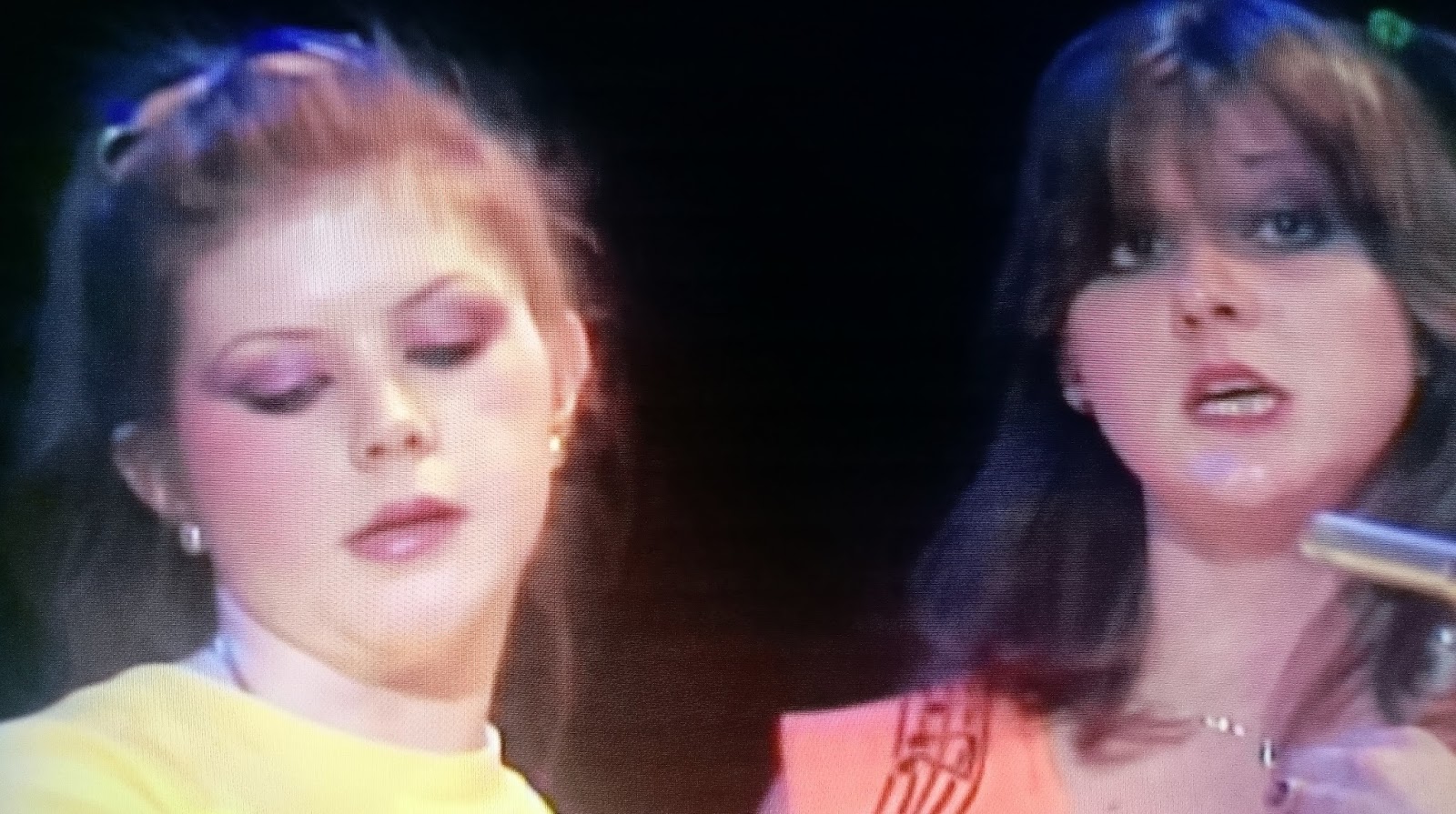
To kick off, here's a screenshot from a recently repeated episode of 'Top of The Pops' originally broadcast in 1980. It features the backing singers for a performance of Jona Lewie's quirky electro pop hit 'You'll Always Find Me In The Kitchen At Parties'.
Left hand lady is the much missed Kirsty MacColl, of course, but I have been unable to identify her co-worker. This task has been made harder by the fact that neither of them actually sang on the record, they were just in the vicinity when needed for the telly. They really remind me of the girls I used to like as a young man: attractive, feisty, not interested.
The British Esperantist [ 29-Jun-15 9:00pm ]
This is Issue 6 of The British Esperantist, the 'mix tape of books' that I have been working on since I left The Island a year ago. It's been pretty successful and, now I have returned, I would like to suggest that you purchase a copy if you can as it is not only very entertaining, it is also informative and really cheap. This issue's contents include: Hawkwind; Ben Weber, International Ventriloquist; William Blake's horoscope; trouser trends and lots, lots more.
More details here --
The British Esperantist 6
Don't linger, though, they generally aren't around for very long. Thank you for your attention.
i b i k e l o n d o n [ 20-Jul-15 8:30am ]
Why there's more to successful cycle paths than just building cycle paths [ 20-Jul-15 8:30am ]Wherever you are in the UK, you're never too far from a so-called "recreational bike path"; a family-friendly cycle route separated from the roads and often built on converted railway lines. Thanks largely to the work of the charity Sustrans these routes criss-cross the country. Some are wildly popular, both with long-distance touring cyclists as well as with families out for a ride and a day out by bicycle.
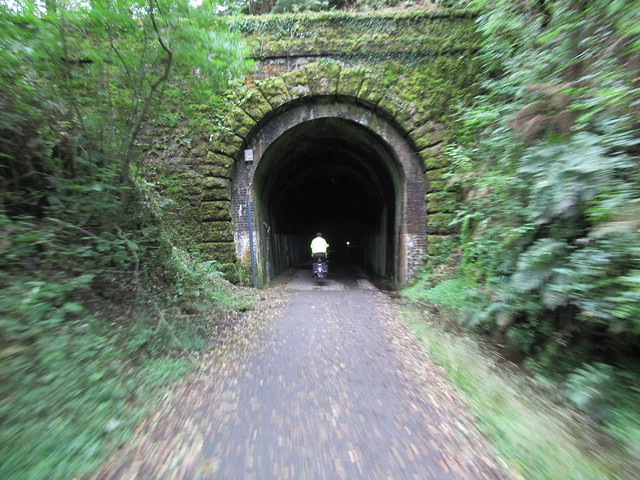
In previous discussions cycling friends of mine have denigrated these paths, describing them as "choked", "slow" and in one instance "stuffed with nodders on bike-shaped-objects." But I take a different view. The Mums and Dad you find hitting these trails in the school holidays might not ride the best bikes, or even self-define as "cyclists", but when it comes to rehabilitating the bicycle with the British public every journey counts.
In order to encourage adults to start cycling again (often for the first time since their teens) we need to make the experience as simple as possible. What's more, you shouldn't have to make a large up-front investment before deciding you'd like to try riding a bike once more. And that's where I think we are going wrong with our recreational cycle paths here in the UK. It turns out there is more to building successful cycle paths than just building cycle paths.
Fun in the sun on the Venice Beach bike track, Los Angeles.
On a recent trip to Los Angeles I was astonished to find that there - in the very heart of the world's most car-sick city - was a resoundingly popular recreational bike path. Running along the length of Venice Beach, the track itself was smooth, wide and separated from pedestrians. It passed Venice pier, Muscle Beach and other interesting spots and on the Friday afternoon I visited it was packed with people of all ages cruising up and down on bikes. Roller skaters, cycling ice cream salesmen and shady palm trees helped to lend a festive air. We turned off the path and rode for a few blocks away from the beach to see if the whole district was a cycling nirvana, but found ourselves alone. The people on bikes were stuck resolutely to cycling up and down on their safe cycle path. I watched the riders, and started to think; what made this path such a success?
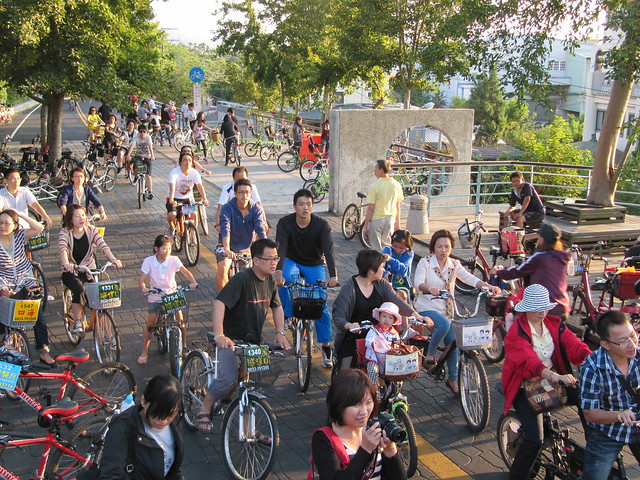
A few years ago I was lucky enough to cycle in Taiwan (check out this ride from the capital, Taipei) In the city of Taichung the local government have converted a disused railway to create a cycling route which stretches for a number of miles along the river and in to the country. There I saw whole families (some on only one bike!) out enjoying themselves for the day on hired bicycles. There were tandems, and cargo bikes and bikes with baby seats. There were electric pedal-assist bikes and bikes with sound systems and bikes which looked like small family cars. The trails were packed with riders, stopping off at small track-side cafes for drinks and snacks or hiring another bike when they got bored with the other at one of the many hire shops. They even had ride-in toilets so you didn't have to worry if you'd not brought a bike lock with you! It turns out that the same amenities in Taiwan which make this path work are the same amenities you find in Los Angeles, and it's what we are lacking on our British paths.
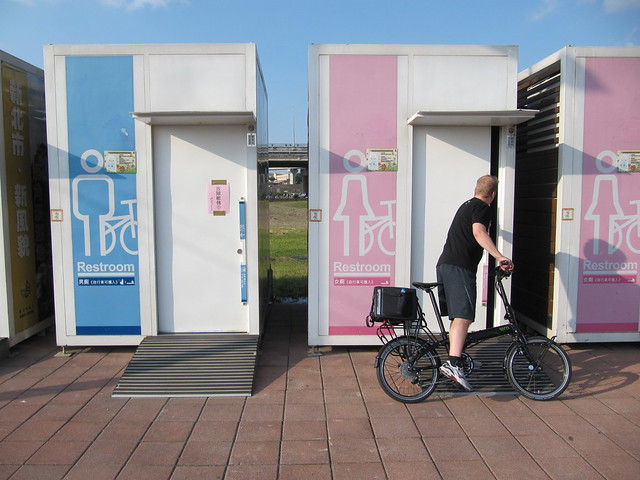 Ride-in toilets for security conscious cyclists who don't have a lock.
In Los Angeles all of the cycle hire stalls were run by the same business, meaning bikes could be dropped off at any point along the route. If people got tired of riding they could simply drop off the bike without having to ride back, or they could do a one way journey with the wind behind them without having to contemplate a strenuous return trip. The ice cream salesmen on bikes added a further level of amenity, whilst well-observed and safe cycle parking clusters were positioned at interesting points along the route meaning people could lock up their bikes with confidence.
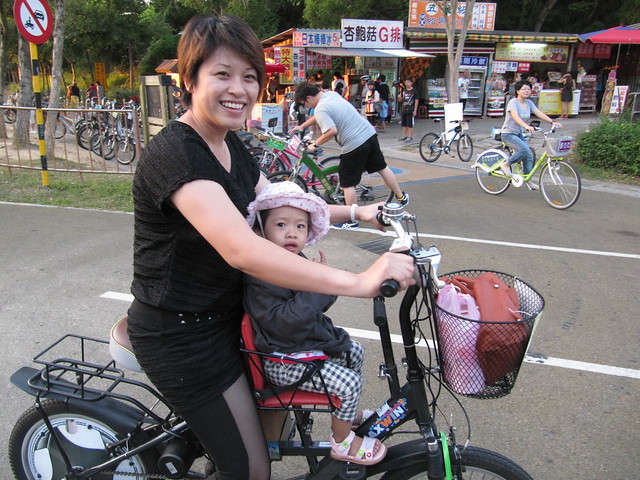 Small businesses selling food, drink and hiring out bicycles line the Taichung bike path.
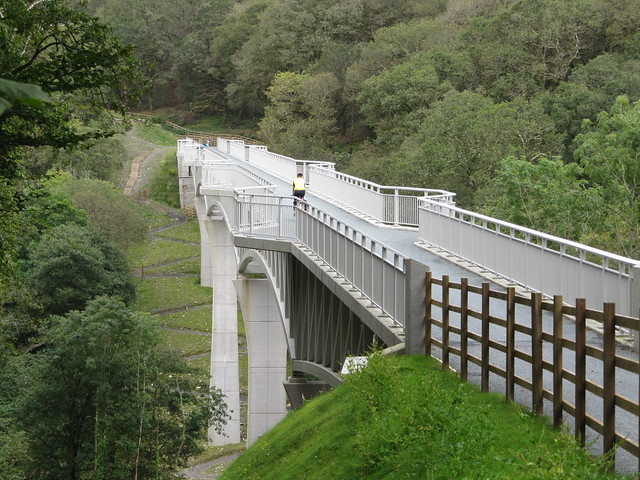 Gem Bridge, near Tavistock. Beautiful, and somewhat empty of cyclists.
In Taiwan, the bike hire was cheap and plentiful and once again right on the path itself so that the ride started in pleasure straight way. On a recent trip to Devon I cycled on the impressive Gem Bridge, a beautiful structure which fords a deep valley and connects two newly-opened sections of converted railway line. But in order to access the path from the nearest town, Tavistock, was a torturous route crossing main roads and down little alleyways. It may not have the best eco-credentials, but people need to have "park and play" access to these routes in order for them to be a success.
Of course, these successful cycle routes had all of the usual things you'd expect, such as smooth surfaces, good sign posting, and safe bike parking. But there's a role for business - such as bike hire and small cafes - in making better recreational cycle routes that we don't utilise enough in the UK. It helps to create jobs, keep money in the local economy and enable rehabilitating bicycle journeys for people who wouldn't usually ride and need their bike served up on a plate. What's not to like?
Share |
19-Jul-15
In previous discussions cycling friends of mine have denigrated these paths, describing them as "choked", "slow" and in one instance "stuffed with nodders on bike-shaped-objects." But I take a different view. The Mums and Dad you find hitting these trails in the school holidays might not ride the best bikes, or even self-define as "cyclists", but when it comes to rehabilitating the bicycle with the British public every journey counts.
In order to encourage adults to start cycling again (often for the first time since their teens) we need to make the experience as simple as possible. What's more, you shouldn't have to make a large up-front investment before deciding you'd like to try riding a bike once more. And that's where I think we are going wrong with our recreational cycle paths here in the UK. It turns out there is more to building successful cycle paths than just building cycle paths.
Fun in the sun on the Venice Beach bike track, Los Angeles.
On a recent trip to Los Angeles I was astonished to find that there - in the very heart of the world's most car-sick city - was a resoundingly popular recreational bike path. Running along the length of Venice Beach, the track itself was smooth, wide and separated from pedestrians. It passed Venice pier, Muscle Beach and other interesting spots and on the Friday afternoon I visited it was packed with people of all ages cruising up and down on bikes. Roller skaters, cycling ice cream salesmen and shady palm trees helped to lend a festive air. We turned off the path and rode for a few blocks away from the beach to see if the whole district was a cycling nirvana, but found ourselves alone. The people on bikes were stuck resolutely to cycling up and down on their safe cycle path. I watched the riders, and started to think; what made this path such a success?
A few years ago I was lucky enough to cycle in Taiwan (check out this ride from the capital, Taipei) In the city of Taichung the local government have converted a disused railway to create a cycling route which stretches for a number of miles along the river and in to the country. There I saw whole families (some on only one bike!) out enjoying themselves for the day on hired bicycles. There were tandems, and cargo bikes and bikes with baby seats. There were electric pedal-assist bikes and bikes with sound systems and bikes which looked like small family cars. The trails were packed with riders, stopping off at small track-side cafes for drinks and snacks or hiring another bike when they got bored with the other at one of the many hire shops. They even had ride-in toilets so you didn't have to worry if you'd not brought a bike lock with you! It turns out that the same amenities in Taiwan which make this path work are the same amenities you find in Los Angeles, and it's what we are lacking on our British paths.
Ride-in toilets for security conscious cyclists who don't have a lock. In Los Angeles all of the cycle hire stalls were run by the same business, meaning bikes could be dropped off at any point along the route. If people got tired of riding they could simply drop off the bike without having to ride back, or they could do a one way journey with the wind behind them without having to contemplate a strenuous return trip. The ice cream salesmen on bikes added a further level of amenity, whilst well-observed and safe cycle parking clusters were positioned at interesting points along the route meaning people could lock up their bikes with confidence.
Small businesses selling food, drink and hiring out bicycles line the Taichung bike path. Gem Bridge, near Tavistock. Beautiful, and somewhat empty of cyclists. In Taiwan, the bike hire was cheap and plentiful and once again right on the path itself so that the ride started in pleasure straight way. On a recent trip to Devon I cycled on the impressive Gem Bridge, a beautiful structure which fords a deep valley and connects two newly-opened sections of converted railway line. But in order to access the path from the nearest town, Tavistock, was a torturous route crossing main roads and down little alleyways. It may not have the best eco-credentials, but people need to have "park and play" access to these routes in order for them to be a success.
Of course, these successful cycle routes had all of the usual things you'd expect, such as smooth surfaces, good sign posting, and safe bike parking. But there's a role for business - such as bike hire and small cafes - in making better recreational cycle routes that we don't utilise enough in the UK. It helps to create jobs, keep money in the local economy and enable rehabilitating bicycle journeys for people who wouldn't usually ride and need their bike served up on a plate. What's not to like?
Share |
...and what will be left of them? [ 19-Jul-15 11:28pm ]
# [ 19-Jul-15 11:28pm ] # [ 14-Jul-15 6:25pm ]Right then, I am going to be sticking my oar in re Utopia Then and Now at AYA, and predictably enough using it partially as an opportunity to talk about neoliberalism and Film. Again. Starting with the 70's., of course. #
09-Jul-15
i b i k e l o n d o n [ 9-Jul-15 8:00am ]
Now that the Tour de France has left, what else can Utrecht teach us about cycling? [ 09-Jul-15 8:00am ]I'm on a summer trip, making a tour of Le Tour following the riders around Antwerp, Namur, and even riding with the peloton in a race car. It's been a brilliant journey and now I am on my last stage, returning to the scene of the Grand Depart, Utrecht in the Netherlands, to see what this cycling city looks like once the pro riders have passed by.
I've partnered with Ibis Hotels for this trip and all of the staff have been so friendly and helpful. Utrecht was the same; "Of course you can ride today", said the cheery receptionist "It takes more than a bit of rain to stop the Netherlands from rolling!" I looked out the window at the rain blowing in sideways and decided to fortify myself with the fantastic breakfast before I set off, grabbing the keys to a bicycle rented directly from the hotel. The Ibis in Utrecht is just a five minute ride in to the city centre along a pretty canal lined by windmills and old town houses - not a bad start to my day, despite the weather.
The clouds darkened and rain intensified, but this didn't seem to deter Dutch riders who cycled on regardless. Rain coats were pulled out of bags, hats were donned and umbrellas were lifted, making it immediately apparent I was in a totally different cycling situation to the UK. You could ride down the Tottenham Court Road in London at peak time in the rain whilst holding a big umbrella if you wanted to, of course, but I wouldn't recommend it. Here, things are different.
Hints that the Tour de France had recently been this way were everywhere. Shop windows were decorated with bicycles, flags were hung over every street and a statue of the city's most famous daughter - Miffy the bunny - had been put up in the tourism office. Naturally, she was riding her bicycle. The facade of the popular cafe Winkel van Sinkel was decked out in yellow jerseys, too.
But even though the pro riders had left, there's still a festive cycling feel to Utrecht that stems from the many thousands of people on bikes who cycle here every day. I saw small children being carried on their parent's bikes, middle-sized children riding alongside on their own, and teenagers enjoying their mobility and being totally independent.
I have no doubt that all that freedom stems directly from the excellent cycling infrastructure which you'll find all over the Netherlands, but what I was particularly impressed by was how the Dutch don't sit on their hands, but are always seeking to improve things. I went for coffee with Mark Wagenbuur from the brilliant Bicycle Dutch blog. He took me out to a junction on the edge of the city, smiling proudly all the way, that we had last visited together in 2012. Back then, he had described it to me as 'the most dangerous junction in Utrecht' and I was inclined to agree. Cyclists were forced to merge with a lane of fast-moving traffic turning right, and to ride together alongside a metal fence for about 100metres. Just three years later and the situation has entirely changed. Engineers have 'found' the space to continue the cycle track safely through the junction, and the right turning traffic simply waits in a lane of the rest of the road. Of course, it's not a question of 'finding' space at all but simply a choice of what to do with the space that you have and who to allocate it to.
The same junction, above in 2012, as it appears today, below in 2015. Notice how space has been 'found' for the new and safer cycle track without taking the pedestrian's pavement away.
I had been impressed by the new junction, but it was nothing compared to the building project which is nearing completion in the city centre. When I first visited Utrecht the space in this photo was part of a multi-lane city ring road built in the 1970s. All it did was create traffic congestion and bring more cars in to the city centre, where there was no room for them. So the city planners decided to push the ring road further out of the city - to loosen the city's belt, if you like - to create more space for people.
The move has allowed for the total redevelopment of the train station, created space for a new shopping area and offices and very soon the dirt that you see in the photo will be removed and replaced with water, re-connecting two sections of the city's ancient canals.
At the new station the city's cycle racks are being refreshed and new bicycle parking areas are being built. On Korte Jansstraat in the old town, a road which used to be clogged with two lanes of car parking has been re-surfaced in red bricks and the parking spaces moved away. Rather than harming the businesses there, the streets were busy with shoppers and restaurants had laid out new tables and chairs.
This is my third trip to Utrecht and each visit has left me with the same impression; that this is a city rapidly growing, improving itself, identifying the planning mistakes of the past and quietly getting on with rectifying them. It's lively and packed with young people and University students. Better still, it is easily connected to the rest of the Netherlands and Schipol airport by the fantastic national rail network. Utrecht proved with the Tour de France that they know how to throw a good bike party, but if the world's cycling cities were in a race Utrecht would in the break away every day. Why not make a visit to see for yourself?
Share
Tour de France Stage 4: Citadelle de Namur, Belgium [ 07-Jul-15 7:02pm ]After riding in Antwerp and spending the day with the peloton, my tour of Le Tour continues, today bringing me to the Belgian city of Namur. There was a huge gap between the break away and the main bunch, who crawled up the hot, dusty road to the summit of the Citadelle, where I captured this photo.
It was a hugely exciting stage on the cobbles and a dramatic win for Tony Martin. Tomorrow I leave the pro-riders behind and return to the Netherlands to the host city of the Grand Depart, Utrecht, to find out what happens in a cycling city after the racing cyclists have gone. Stay tuned!
Share
In the thick of it. Today I found out what it's like in the middle of the Tour de France... [ 06-Jul-15 11:40pm ]The cyclists ride at breakneck speeds whilst all around them there is ordered chaos; mechanic's cars, radio cars, official cars and of course the infamous publicity caravan. Spectators waive their picnics from the roadside as the riders tear past. Boozey kids run alongside, shouting and jumping up and down. More than a few crowd members get perilously close in the quest for a perfect snapshot to share with friends. I took a ride in the Tour de France, and here's what it's like to be right in the middle of the world's most famous cycling race.
The summers of my youth were always filled with the Tour de France, enjoyed by the whole family as much for the lingering shots of magnificent French scenery as for the riding itself. We cheered on Greg Lemond and talked endlessly about Lance Armstrong as though he were some kind of cycling superman. Looking back it seems like a cycling age of innocence, but I loved all the poetry and drama of a journey around a nation by bike. Not just a journey, but a race no less.
This was all before talk of drugs, "enabling" Doctors, self-administered transfusions and blood bags in the hotel room fridge. Doping cast a deep stain on professional cycling, and it was a long time before I allowed myself to get back in to bike racing. It's all the fault of Mark Cavendish, really. His technical prowess and sheer bravura meant I'd find myself tuning in for the sprints again. Then came Sir Bradley Wiggins. A Brit winning the tour was the stuff of dreams when I was a kid, but then it actually happened. Seeing young rider Simon Yates power to the top of Hay Tor during the Tour of Britain in 2013 meant I was roadside - along with about a million other people - to cheer him on when the Tour de France visited our shores last year.
So when official Tour partner Ibis Hotels got in touch asking if I'd be interested in spending the day right in the middle of the race, they didn't have to ask twice.
The route from Antwerp to Huy was one of the first 'real' stages after the ceremony of the Grand Depart in Utrecht (a time trial) and a flat spin across the green fields of Holland. With Quintana, Contador, Nibali and of course Chris Froome all keen to prove their metal in the initial stages there was plenty of scope for pushing, shoving and hard racing from the off - and the first real uphill finish; the short and steep Mur de Huy. Both Froome and Cavendish were out of the 2014 Tour within the initial 5 stages, so there was lots to prove.
Going to spectate at the Tour is a funny business. You'll stand on a dusty roadside for many hours, and the whole thing flashes past you in a matter of minutes. The cyclists themselves pass in mere seconds. Being stuck in the middle of it all gave me a totally different perspective. The first thing you notice is the speed at which the entire convoy clips along. These boys - all 198 of them - don't hang around. And somewhat paradoxically for cycling the centre of the convoy is a noisy place. There's no elysian wheeling through the countryside here - right behind the cyclists are roaring mechanic's cars, powerful Police motorbikes with sirens, commissaires hurriedly jabbering on their radios, helicopters and not to mention the crowds. Despite the tumult, they do a great job of cheering and shouting at the riders and its surprising how much of what they say is legible. Chris Froome must hear people telling him to cheer up all the time.
Not all of the drama in the peloton takes place at the front of the bunch, either. Domestics - the worker bees of the Tour - are always falling back to pick up supplies from their team cars (themselves zipping along at a steady 40kph or so) and relaying it forward to their team mates. Bidons are hung out of car windows and you watch as the riders grab hold, perhaps for a second more than is sportsmanlike. The team crew and the cyclists amiably chat as though riding next to a tonne of car moving at speed with a man inside shouting at you is the most natural thing in the world. No wonder Britain is doing so well in pro cycling these days.
And what of the Brits? There's Froome of course, and Cavendish who'll be relishing the absence of young German sprinter Marcel Kittel this year. There's eight other British names - compared to last year's four - and this when well-known names like Wiggins and David Millar are past their peloton prime and not in the Tour. Ian Stannard will be working hard to pull Chris Froome safely across the cobbled sections tomorrow, whilst hour-record-grabbing rider Alex Dowsett will be looking for a good ride after fracturing his collarbone earlier this year. Geraint Thomas, Luke Rowe and Peter Kennaugh will be riding for Team Sky under the tutorship of Sir David Brailsford, whilst the 22-year-old Yates twins - Simon and Adam - are racing with Australian team Orica-GreenEDGE and are the riders I'll be watching most closely. Steve Cummings, riding aged 34, will be in a lead support role in his team MTN-Qhubeka. Surely a golden age of British pro cycling if ever there was one?
Along the route, entire communities find themselves making the most of an enforced day off. Their streets, no longer enthral to the motor car, are closed down and become occupied by people again. Kids chalk drawings on to the tarmac. Families put out picnic tables and share food with friends and neighbours. In Tienan we saw a Belgian oomph band keeping a whole village entertained. There's a certain holiday atmosphere which, coupled with sunshine, makes for a wonderful day out.
Today's stage raced along at incredible speed. With nerves in plentiful supply and lead riders keen to establish their position, a crash seemed almost inevitable. When the crash came, with about 60km still to go, it was a big one, leading the race director to temporarily suspend the Tour whilst medical staff dealt with a multitude of serous injuries. Yesterday's Yellow Jersey winner, Fabian Cancellara, completed today's stage but has now withdrawn from the Tour after it became apparent he'd broken pieces of his back. White jersey-wearer and young hopeful Tom Dumoulin is also out of the rest of the Tour. Cycling is a tough sport.
The sheer scale of the entire Tour operation becomes apparent at the finish line when you finally see all those riders, all those support vehicles and all those bikes in the one place. It's like a happy cycling chaos, with riders being ushered in to trailers, pursued by journalists, fans, erstwhile bike bloggers and doping control. Masseurs swing in to action, whilst stage host Mayors beam from the podium for the cameras. I can understand why Ibis loves supporting the Tour de France - all those riders, team directors and hangers on (not to mention the spectators) have to stay somewhere. Indeed, some 1,500 hotel room beds are reserved every night of the Tour just for organisers and teams.
Ibis, who have been putting me up in their super comfortable hotels here in Belgium (I love their Sweet Beds and have been sleeping like a baby throughout my trip) decided that it wasn't enough for a cycle racing fan to be allowed in to the thick of the action and had one final surprise in store for me; a transfer to a helicopter about 20kms out from the finish line to watch the peloton from up on high. Watching the bunch snake its way around corners and up hills through the spectacular, green countryside is a memory that will stay with me forever, and I feel exceptionally lucky to have had such an opportunity. Thank you, Ibis, for your support of the Tour, for such a welcoming stay and for an incredible day of cycling I'll never forget!
Share |
Everyone cycles in Antwerp (who knew?!) [ 05-Jul-15 5:21pm ]I'm in Antwerp, Belgium, which will host stage 3 of the 2015 Tour de France tomorrow. I'm here for the Tour (follow my Twitter feed for live updates tomorrow) but hadn't appreciated what a great cycling city Antwerp is.
Home to about a million people its Belgium's most populous city, blessed with a compact historic core which is criss-crossed by a web of tram lines and very good cycling infrastructure. There's tonnes of Tour fans in town, and roadies were out in force riding the route ahead of tomorrow's stage, but I also saw lots of just about everybody else riding a bike as well.
As you'd expect, cyclists share with other traffic on small and quiet roads here, but where volumes or speeds of cars are high the bikes are given their own space. And I was glad to see there was plenty of new cycling infrastructure in place and that it was well maintained; always a sure sign that a city cares for its cyclists.
From the moment you step off the high speed train at Antwerp Centraal (and oh my goodness me, train fans, what a station it is) the fact that you're in a cycling city is apparent - deep in the bowels of the station there's acres of secure bicycle parking, a mechanic's workshop and a bike hire station. There's a suite of city bike share schemes - depending on how long you need a bike for - but if you're just visiting I recommend Fietshaven's Yellow Bike scheme, where you can rent a fantastic bike for a full 24 hours for just €13.
It was great to see the beautiful merchant's houses in the bike and pedestrian-friendly city centre. Cyclists are exempt from having to follow most one-way streets here, and bike parking abounds. But it is not just in the old town that the city has been thinking about bikes. There were acres of heavily-used bike parking outside the nearly-new Berchem Station, and smooth, wide brand-new bike tracks to get you there.
Beneath the river Scheldt, the 1933 Saint Anne's tunnel accommodates people on bike and foot, and allows you to take your bike down the original wooden escalators before a leisurely ride beneath the river with excellent acoustics!
I found drivers to be courteous and interaction between riders and cars seemed friendly. What's more I saw cyclists of all ages out enjoying a summer's Sunday ride. Indeed, the leisurely cycle track that follows the railway south out of the city is so popular it could well do with being made even wider - that's what we call in cycle planning circles "a nice problem to have".
Antwerp had never been on my list of places to visit before. I knew it was here, of course, and that it was really just a short trip by train from London. I had a vague idea that it was famous for diamonds, and shipping, but that was about it. Well, more fool me. Antwerp punches above its weight; both as a cycling city and as a destination in its own right. I couldn't think of a nicer weekend away than riding around here by bike.
For more info on cycling in Antwerp go to Visit Antwerp.
Check LeTour.com for a profile of tomorrow's stage departing from Antwerp.
You can get to Antwerp via the Eurostar in about two hours, with tickets from £80.
Share |
...and what will be left of them? [ 4-Jul-15 6:57pm ]
# [ 04-Jul-15 6:57pm ]up close and personal [ 4-Jul-15 6:57pm ]
# [ 04-Jul-15 6:57pm ]faces on posters too many choices [ 4-Jul-15 6:58pm ]
# [ 04-Jul-15 6:58pm ]i b i k e l o n d o n [ 28-Jun-15 8:30am ]
Utrecht welcomes the Tour de France but what's the legacy for a city that already cycles? [ 28-Jun-15 8:30am ]It's a year since the world's greatest cycle race kicked off in Britain and 'Tour fever' swept the country. From the hills of the north York moors, to the streets of London, millions turned out hoping to catch a glimpse of their favourite Tour de France rider flash past.
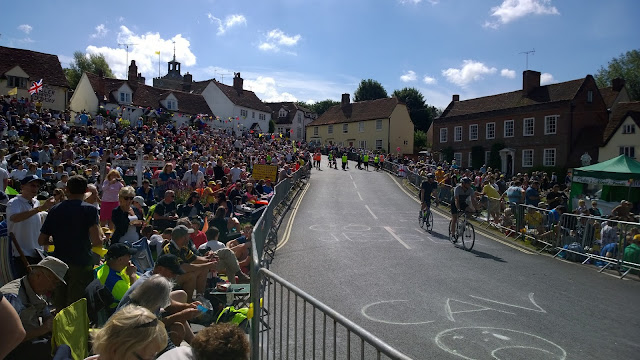
Thousands of spectators packed the tiny Essex village of Finchingfield to watch Le Tour pass by in 2014. With roads closed for miles around, most arrived by bicycle (including me!)
Everything has to have a "legacy" these days (thank you, London 2012) and the Grand Depart in Britain was no exception. Echoing last year's route, members of the public can now emulate their cycling heroes and ride Britain's hills alongside pro riders in the Tour de Yorkshire, encouraging more people to take to their bikes. There was even a Knighthood for Grand Depart organiser Gary Verity.
This Saturday the Tour de France is heading north once more, this time starting in the Dutch city of Utrecht. Home to canals, festivals and Miffy the bunny, it's a compact and charming university city stuffed with cycle tracks and people on bikes. So, in a city that already has a mainstream cycling culture, will the Grand Depart be all of that big deal for the Dutch?
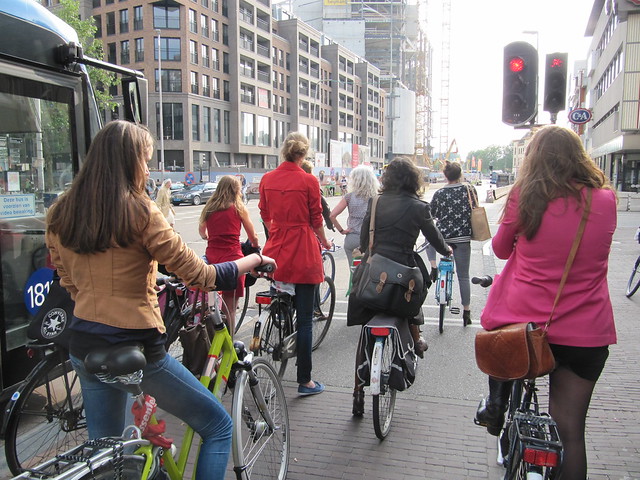
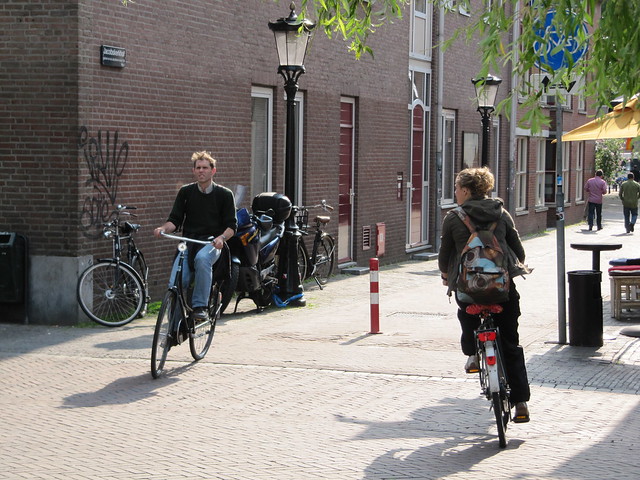
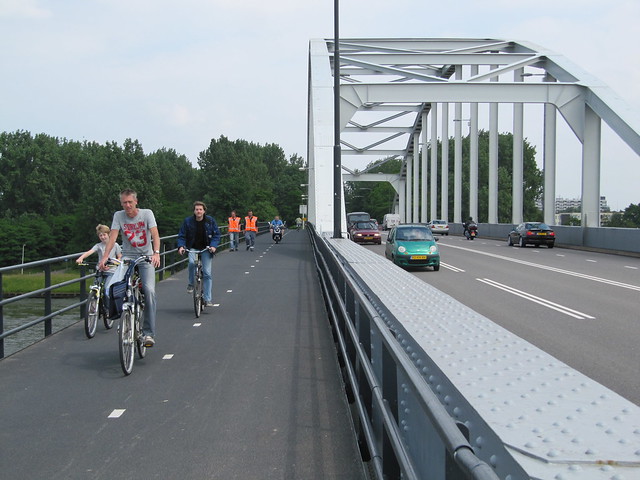
'Cyclists' riding in Utrecht, where the Tour de France will begin this weekend.
I've heard cycle campaigners on both sides of the equation disparaging sports cycling in mass cycling countries. On one hand, the argument goes that sports cycling is all well and good but it is not the "right kind" of journey by bike that cities so desire. On the other, some dedicated roadies discredit cycling provision in case it detracts from their right to ride as quickly as they can. I can see merits in both arguments, but on the ground in successful cycling cities the reality is very different.
Sports cycling is alive and well in the Netherlands (as multi-time world champion and Olympic gold medallist Marianne Vos and 2014 Tour de France stage winner Lars Boom attest) and there is no shortage of people pulling on their lycra on a Saturday morning to head out for a long spin in to the country.
The Dutch use bikes like we use cars and buses; it is an everyday and ordinary activity. So it seems perfectly natural that their language makes a distinction between 'being a person who uses a bike' and 'being a cyclist'. A fietser is someone who uses a fiets (a bicycle) whereas someone with all the kit and the fancy sports bike is called wielrenner, literally a 'wheel runner'. When the Dutch say cyclists don't wear helmets or special gear they mean it sincerely as 'fietser' is only ever a description of someone using a Dutch bike going about their day in a very ordinary way. This is not to say sports cyclists don't exist in the Netherlands and people aren't out there in all their kit putting in the miles.
As this video by Mark from the always excellent BicycleDutch blog demonstrates, the cycle tracks of the Netherlands are home to plenty of wielrenner. The reason you don't see them so much in bike blogs and photographs about the country is that they are somewhat obscured by the everyday and ordinary fietser all around them, much as Britain's sports cyclists are overwhelmed by the everyday and ordinary car journeys going on around them.
I can't help but feel that if we had the same linguistic distinction here in the UK, perhaps Transport for London wouldn't have dipped in to the cycling safety budget to the tune of £6million in order to host the Tour last year, instead of spending that money on making roads safer for bike riders of every hue. (Rumours abound that TfL bosses, keen to spend the cycle budget on anything other than actual changes on the road, are keen to lure the Grand Depart to London again soon) If we had the same linguistic distinction between cyclists and cyclists as the Dutch do, perhaps there might be a clearer understanding of what is needed to bring about those everyday and ordinary journeys by bike?
Utrecht is a beautiful energetic cycling city and I have no doubt it will give Le Tour a fantastic send off this weekend, heralding a summer of brilliant cycle racing. It would be interesting to see - once the professional wielrenner have wheeled out of town - how Utrecht carries on being an everyday and ordinary successful cycling city; it could be a 'legacy lesson' for us all.
Share
23-Jun-15
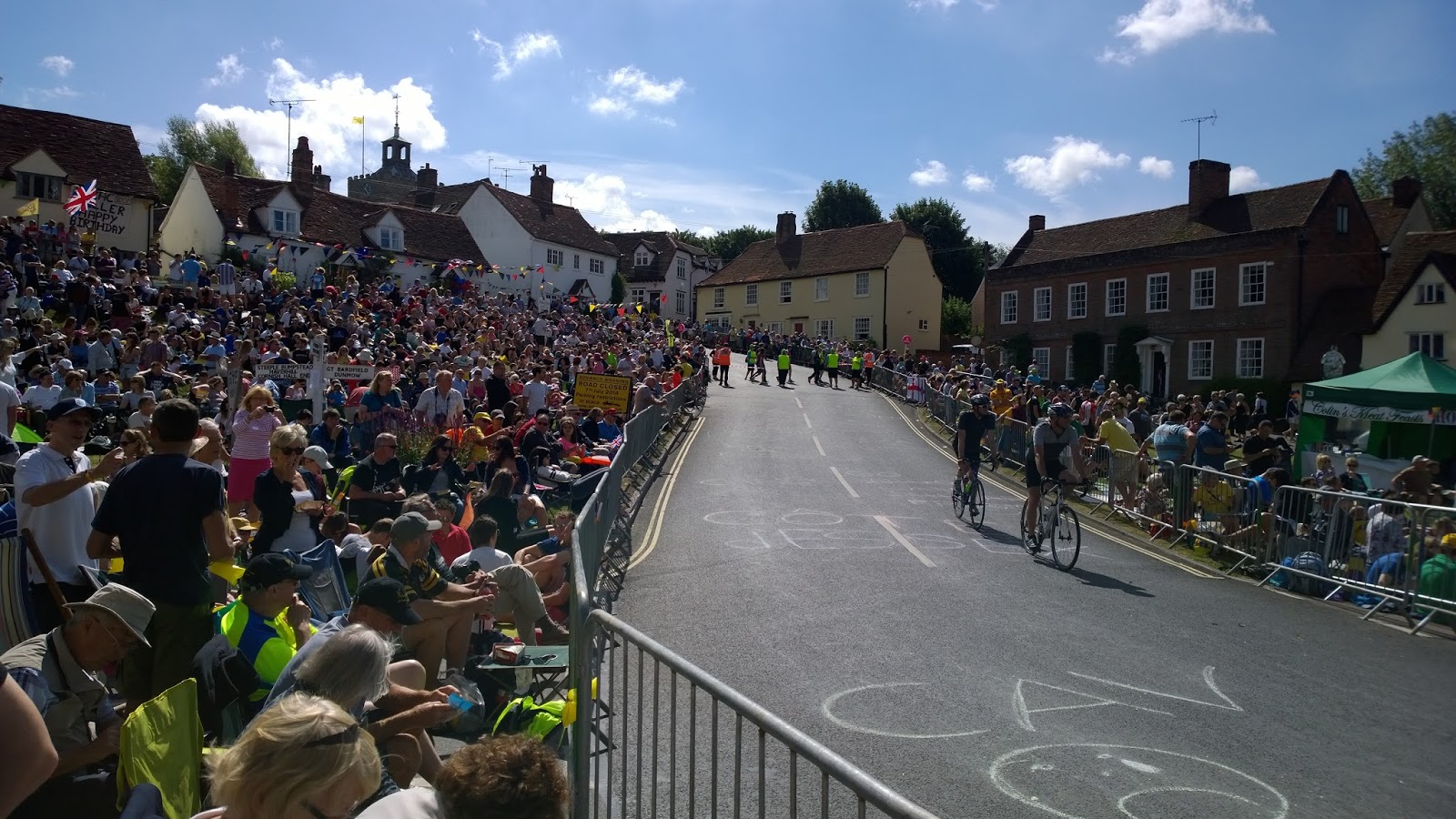
Thousands of spectators packed the tiny Essex village of Finchingfield to watch Le Tour pass by in 2014. With roads closed for miles around, most arrived by bicycle (including me!)
Everything has to have a "legacy" these days (thank you, London 2012) and the Grand Depart in Britain was no exception. Echoing last year's route, members of the public can now emulate their cycling heroes and ride Britain's hills alongside pro riders in the Tour de Yorkshire, encouraging more people to take to their bikes. There was even a Knighthood for Grand Depart organiser Gary Verity.
This Saturday the Tour de France is heading north once more, this time starting in the Dutch city of Utrecht. Home to canals, festivals and Miffy the bunny, it's a compact and charming university city stuffed with cycle tracks and people on bikes. So, in a city that already has a mainstream cycling culture, will the Grand Depart be all of that big deal for the Dutch?
'Cyclists' riding in Utrecht, where the Tour de France will begin this weekend.
I've heard cycle campaigners on both sides of the equation disparaging sports cycling in mass cycling countries. On one hand, the argument goes that sports cycling is all well and good but it is not the "right kind" of journey by bike that cities so desire. On the other, some dedicated roadies discredit cycling provision in case it detracts from their right to ride as quickly as they can. I can see merits in both arguments, but on the ground in successful cycling cities the reality is very different.
Sports cycling is alive and well in the Netherlands (as multi-time world champion and Olympic gold medallist Marianne Vos and 2014 Tour de France stage winner Lars Boom attest) and there is no shortage of people pulling on their lycra on a Saturday morning to head out for a long spin in to the country.
The Dutch use bikes like we use cars and buses; it is an everyday and ordinary activity. So it seems perfectly natural that their language makes a distinction between 'being a person who uses a bike' and 'being a cyclist'. A fietser is someone who uses a fiets (a bicycle) whereas someone with all the kit and the fancy sports bike is called wielrenner, literally a 'wheel runner'. When the Dutch say cyclists don't wear helmets or special gear they mean it sincerely as 'fietser' is only ever a description of someone using a Dutch bike going about their day in a very ordinary way. This is not to say sports cyclists don't exist in the Netherlands and people aren't out there in all their kit putting in the miles.
As this video by Mark from the always excellent BicycleDutch blog demonstrates, the cycle tracks of the Netherlands are home to plenty of wielrenner. The reason you don't see them so much in bike blogs and photographs about the country is that they are somewhat obscured by the everyday and ordinary fietser all around them, much as Britain's sports cyclists are overwhelmed by the everyday and ordinary car journeys going on around them.
I can't help but feel that if we had the same linguistic distinction here in the UK, perhaps Transport for London wouldn't have dipped in to the cycling safety budget to the tune of £6million in order to host the Tour last year, instead of spending that money on making roads safer for bike riders of every hue. (Rumours abound that TfL bosses, keen to spend the cycle budget on anything other than actual changes on the road, are keen to lure the Grand Depart to London again soon) If we had the same linguistic distinction between cyclists and cyclists as the Dutch do, perhaps there might be a clearer understanding of what is needed to bring about those everyday and ordinary journeys by bike?
Utrecht is a beautiful energetic cycling city and I have no doubt it will give Le Tour a fantastic send off this weekend, heralding a summer of brilliant cycle racing. It would be interesting to see - once the professional wielrenner have wheeled out of town - how Utrecht carries on being an everyday and ordinary successful cycling city; it could be a 'legacy lesson' for us all.
Share
up close and personal [ 23-Jun-15 6:33pm ]
Nature Boy [ 23-Jun-15 6:33pm ]One for Carl - Nature Boy (BBC Two, 2000), first episode shot in and around Barrow-In-Furness.
22-Jun-15
i b i k e l o n d o n [ 22-Jun-15 8:30am ]
London is changing, and it's all down to you. But what next for cycle campaigners? [ 22-Jun-15 8:30am ]I've been away from the blog for a few months travelling, moving house and standing back to watch as London begins to change in a way that was unthinkable just five years ago. As construction in the city centre begins of high quality cycle routes for the first time, it is worth taking a moment to assess how we got to this point, and to ask "what happens next"?
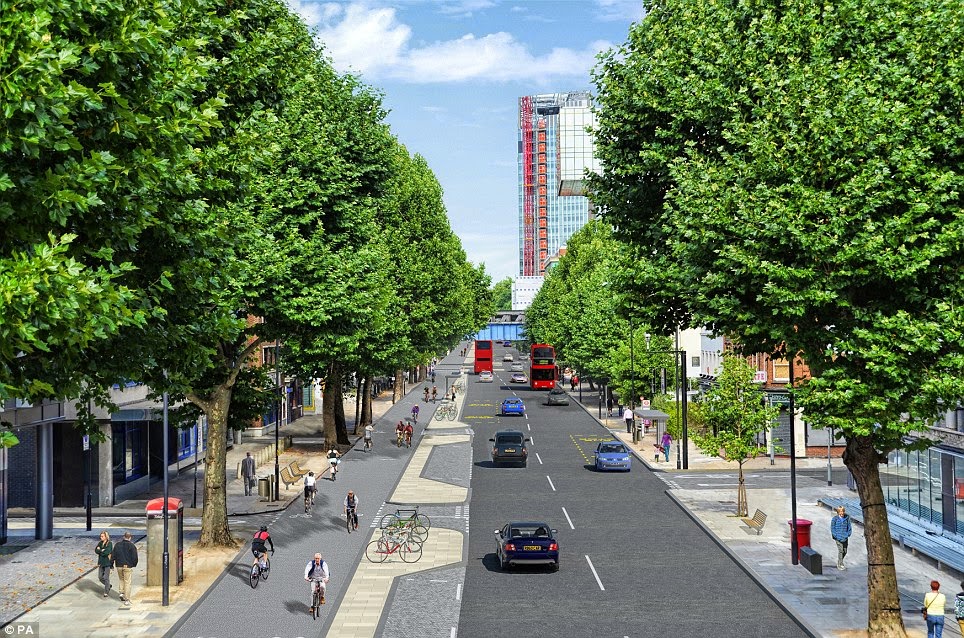
The North / South Cycle Superhighway is finally under construction.
My last article here was about the serious attempt by the Licensed Taxi Drivers Authority to have Mayor Boris Johnson's Cycle Superhighway plans stopped. In a classic filibuster they threatened to submit the entire scheme to Judicial Review in the High Court, which would have added months and innumerable expense to getting the routes built. In the end the LTDA slinked quietly away, and the Board of Transport for London gave construction the green light. (Though not until Board members, some with shocking conflicts of interest, had gone over the proposals in minuscule detail for some 90 minutes.)
Cycle campaigners - myself included - have been saying for many years that the pace of change in London has not been fast enough when considered against the annual death toll of people on bikes and the growth in numbers riding. And yet, in many ways the pace of change has now accelerated faster than anyone could have imagined even just a few years ago.
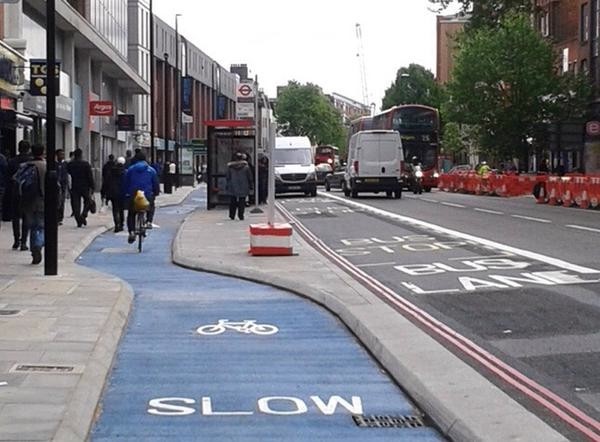
The upgraded Cycle Superhighway 2 in Whitechapel, which is opening in sections and where floating bus stops are working well. (Picture via Twitter with thanks)
In 2010 I demanded to know if the London Cycling Campaign and the Cyclists Touring Club were even prepared to push for decent cycling infrastructure or not. There was no consensus among cycle campaigners as to how best go about creating conditions for mass cycling, and even less agreement as to whether segregated cycle paths were even desirable. The integration / segregation conundrum sparked heated debates, both online and off. Respected cycling journalist and author Carlton Reid disparaged from the comments section of my blog;
Aldgate Gyratory is being largely rebuilt, due for completion in September 2016. Segregated cycle tracks in Oval will arrive by next spring. Construction is underway on the North / South Cycle Superhighways from Elephant and Castle to King's Cross, also due for completion by next spring. The most contentious cycle route of them all, the East / West Cycle Superhighway along the Embankment, is currently causing a little light traffic chaos along the river and will be operational by May 2016, not withstanding gaps in the Royal Parks who continue to dig in their heels, and in so doing reveal their prejudices.
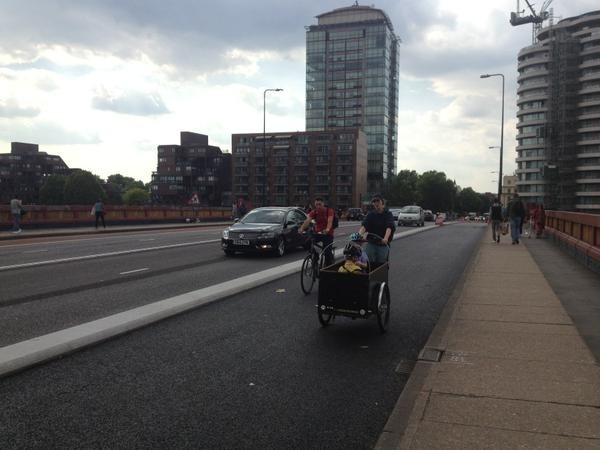
Welcome to the future! This segregated road space on terrifying Vauxhall Bridge will soon become a two-way cycle track. (via @citycyclists with thanks)
Cycle campaigner's integration / segregation argument has largely gone away, with most (cough, Hackney, cough) now acknowledging that where traffic volumes and speeds are sufficiently high then separating cyclists is desirable. As consensus emerged, much was made of the need for any new cycling infrastructure to be as fast and direct as the experience of riding in the road, and rightly so. The internet brought us easily accessible examples of best practise from overseas, whilst popular protests in London rallied around dangerous junctions and the need for design rather than behaviour to provide safety. This spawned the London Cycling Campaign's fabulous "Love London, Go Dutch" campaign and #space4cycling which, in turn, led to the Mayoral promise to build better routes.
Charting this progress is in itself an interesting exercise. I am struck by just how far we have come; my talk at the 2012 National Conference on Urban Design detailed how design and conditions on the ground emerged as the campaigning issue of our time. This consensus has in turn led to new routes being built on the ground. Here's the audio and slides from that talk, if you fancy a lunchtime history lesson.
Design Led Cycle Safety; how the cycling community came to value urban design from ibikelondon on Vimeo.
My 2010 talk on Design-led Cycle Safety charts how campaigning has changed in London.
Once that consensus emerged, London's cycle campaigners became increasingly resilient. Lots of new faces got involved, the LCC's policy was hammered in to shape by brilliant contributors like Dr Rachel Aldred whilst activists became advisers, working as much behind the scenes as in front. Brilliantly conceived activations were put together specifically with media impact in mind, and activist's work became targeted and with achievable aims. The pop-up business campaign CyclingWorks.London was instrumental in helping the new Cycle Superhighways plans scrape through TfL Board approval, in the face of exceptionally powerful opposition from the likes of Canary Wharf and their corporate lobbyists. Without the names of the 170 company CEOs pledging their support for the plans, I am not sure we would have made it. In a recent speech the Mayor's Cycling Commissioner, Andrew Gilligan, highlighted just how tight the fight has been:
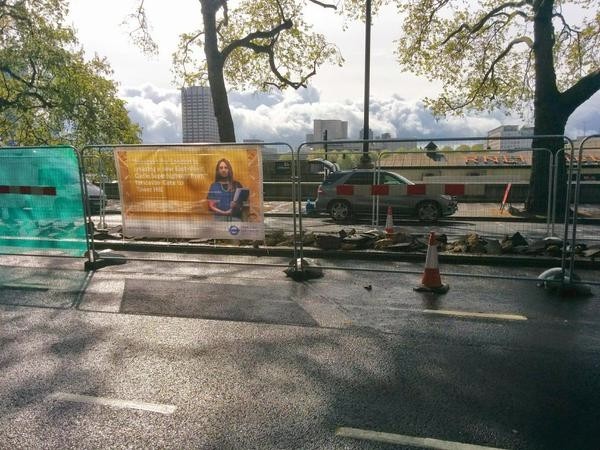
Work is underway on the Embankment for the East / West Cycle Superhighway (via @jonokenyon with thanks)
Despite the amount of work involved to date, campaigners cannot yet rest easy. In the short term we'll need to ensure the new segregated routes are fit for use and finished to a high quality. They'll also have to continue powerfully putting the case to the rest of London that the disruption they're currently experiencing will be worth it. Transport for London will need to ensure their spanking new cycle routes are maintained, cleaned and enforced - a cycle track with a truck parked in it is no good to anyone.
In the longer term efforts must now begin to focus on the Mayoral election in 2016. Without political will for cycling in City Hall in the future it will be too easy for TfL to draw back from their cycling responsibilities. 'Love London, Go Dutch' and #space4cycling were aspirational campaigns which captured the wider public's imagination about how London could be. As the results of those campaigns begin to take solid form, it's important to find a way to convince London that more of the same would be a good thing.
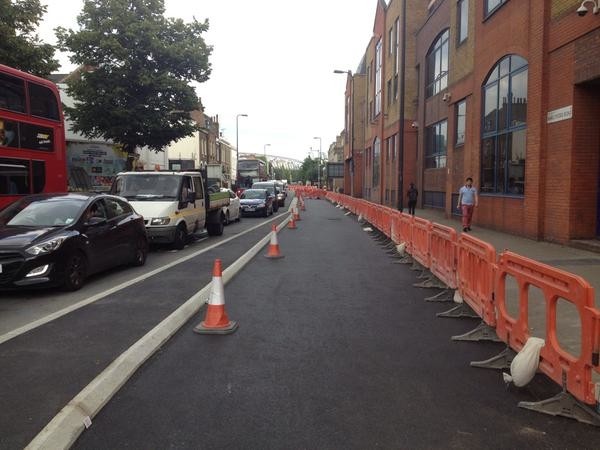
Brand spanking new cycle tracks in south London - look how smooth they are! (Pic via @citycyclists with thanks)
Away from the cycle tracks, lethal lorries remain a chronic issue for vulnerable road users in our city, and much more can still be done on this issue to get the shocking and seemingly inevitable annual death toll down. There is only so much campaigners can do, whereas Boris Johnson has the power to effect lasting change in the last 10 months of his Mayoralty. To keep the pressure up on Transport for London he should appoint a cycling representative to their Board, an easy and much overdue move. He should also push ahead with urgent reforms of lorry safety. In doing so, he'd help to secure his long term cycling legacy and make it harder for future Mayors to unpick his good work.
For now, everyone who has attended a protest, written to the Mayor, tweeted, signed petitions and helped keep the momentum going should take a moment to reflect on how far London has come - both in terms of consensus and successes - and enjoy watching the new cycle routes being built. But there's going to be more work to do to elevate London from "the foothills" of being a cycling city. We need to get ready for what's next.
Share |
13-Jun-15
The North / South Cycle Superhighway is finally under construction.
My last article here was about the serious attempt by the Licensed Taxi Drivers Authority to have Mayor Boris Johnson's Cycle Superhighway plans stopped. In a classic filibuster they threatened to submit the entire scheme to Judicial Review in the High Court, which would have added months and innumerable expense to getting the routes built. In the end the LTDA slinked quietly away, and the Board of Transport for London gave construction the green light. (Though not until Board members, some with shocking conflicts of interest, had gone over the proposals in minuscule detail for some 90 minutes.)
Cycle campaigners - myself included - have been saying for many years that the pace of change in London has not been fast enough when considered against the annual death toll of people on bikes and the growth in numbers riding. And yet, in many ways the pace of change has now accelerated faster than anyone could have imagined even just a few years ago.
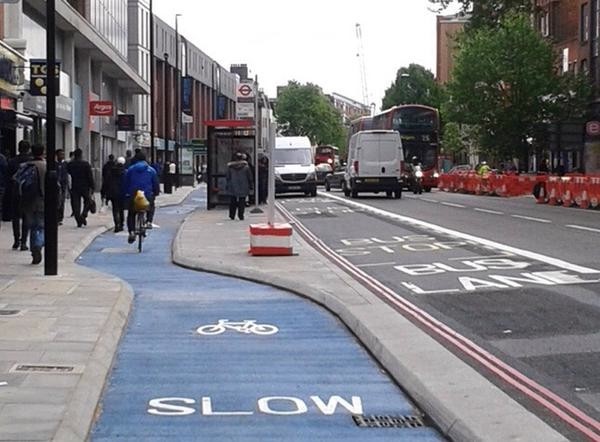
The upgraded Cycle Superhighway 2 in Whitechapel, which is opening in sections and where floating bus stops are working well. (Picture via Twitter with thanks)
In 2010 I demanded to know if the London Cycling Campaign and the Cyclists Touring Club were even prepared to push for decent cycling infrastructure or not. There was no consensus among cycle campaigners as to how best go about creating conditions for mass cycling, and even less agreement as to whether segregated cycle paths were even desirable. The integration / segregation conundrum sparked heated debates, both online and off. Respected cycling journalist and author Carlton Reid disparaged from the comments section of my blog;
"We ain't gonna get the sort of cycle infrastructure we'd all love. Ever.But here we are some 5 years later, and construction of high quality, segregated cycling infrastructure is already underway in London. The plans are by no means perfect, but they will be revolutionary. When TfL's previous Cycle Superhighways were built - effectively little more than just blue paint - cycling levels on those routes leapt. Imagine what the effect is going to be with safe new routes, separated from traffic and useable by all abilities? We didn't just get the kind of cycle routes that people said were impossible, they're going to be game changers too.
In such a car-centric society as the UK it would be next to impossible to take meaningful space away from cars."
Aldgate Gyratory is being largely rebuilt, due for completion in September 2016. Segregated cycle tracks in Oval will arrive by next spring. Construction is underway on the North / South Cycle Superhighways from Elephant and Castle to King's Cross, also due for completion by next spring. The most contentious cycle route of them all, the East / West Cycle Superhighway along the Embankment, is currently causing a little light traffic chaos along the river and will be operational by May 2016, not withstanding gaps in the Royal Parks who continue to dig in their heels, and in so doing reveal their prejudices.
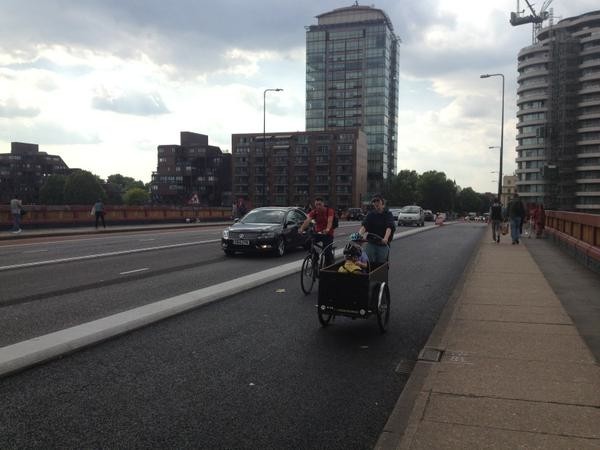
Welcome to the future! This segregated road space on terrifying Vauxhall Bridge will soon become a two-way cycle track. (via @citycyclists with thanks)
Cycle campaigner's integration / segregation argument has largely gone away, with most (cough, Hackney, cough) now acknowledging that where traffic volumes and speeds are sufficiently high then separating cyclists is desirable. As consensus emerged, much was made of the need for any new cycling infrastructure to be as fast and direct as the experience of riding in the road, and rightly so. The internet brought us easily accessible examples of best practise from overseas, whilst popular protests in London rallied around dangerous junctions and the need for design rather than behaviour to provide safety. This spawned the London Cycling Campaign's fabulous "Love London, Go Dutch" campaign and #space4cycling which, in turn, led to the Mayoral promise to build better routes.
Charting this progress is in itself an interesting exercise. I am struck by just how far we have come; my talk at the 2012 National Conference on Urban Design detailed how design and conditions on the ground emerged as the campaigning issue of our time. This consensus has in turn led to new routes being built on the ground. Here's the audio and slides from that talk, if you fancy a lunchtime history lesson.
Design Led Cycle Safety; how the cycling community came to value urban design from ibikelondon on Vimeo.
My 2010 talk on Design-led Cycle Safety charts how campaigning has changed in London.
Once that consensus emerged, London's cycle campaigners became increasingly resilient. Lots of new faces got involved, the LCC's policy was hammered in to shape by brilliant contributors like Dr Rachel Aldred whilst activists became advisers, working as much behind the scenes as in front. Brilliantly conceived activations were put together specifically with media impact in mind, and activist's work became targeted and with achievable aims. The pop-up business campaign CyclingWorks.London was instrumental in helping the new Cycle Superhighways plans scrape through TfL Board approval, in the face of exceptionally powerful opposition from the likes of Canary Wharf and their corporate lobbyists. Without the names of the 170 company CEOs pledging their support for the plans, I am not sure we would have made it. In a recent speech the Mayor's Cycling Commissioner, Andrew Gilligan, highlighted just how tight the fight has been:
"It was at times nightmarishly difficult to manage this, and we saw some absolutely ferocious resistance, kicking and screaming, and we saw a lot more passive resistance, heel digging and foot dragging from whom Olympic cyclist Chris Boardman called Old Men in Limos; you've heard of the MAMILs, those were the OMILs. A lot of objections, which would nearly always start with the words 'Of course I support cycling..."Gilligan went on to highlight how, with the helps of the likes of CyclingWorks, the OMILS were "comprehensively outfought in the PR and public support battle."
"You'll have to read our memoirs, if anyone wants to publish them, to find out how difficult it all was and how close it all came to not happening."
"I think we've made enormous progress - unprecedented progress - over the last couple of years, but I believe we're still in the foothills of making London a cycle friendly city and the task for Londoners is to make sure the progress we've made continues after May [2016, the next Mayoral election]."I think this is an honest assessment and shows how hard campaigners have worked to date. Gilligan has been a highly effective banger together of heads, but will he wish to continue as Cycling Commissioner when Boris Johnson steps down as Mayor next year? Furthermore, will the movers and shakers at Transport for London want to go back to playing just with buses and trains once the political drive for cycling moves on?
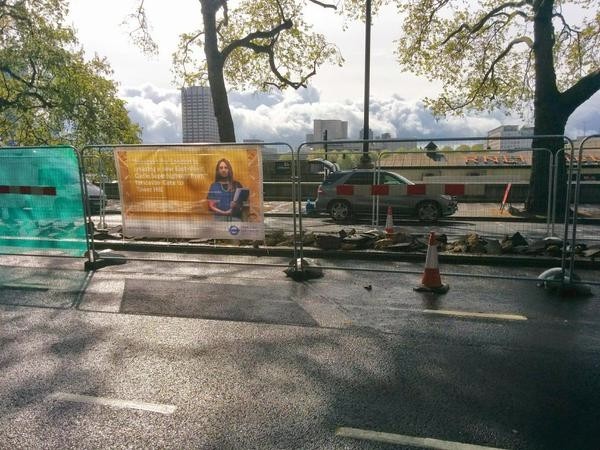
Work is underway on the Embankment for the East / West Cycle Superhighway (via @jonokenyon with thanks)
Despite the amount of work involved to date, campaigners cannot yet rest easy. In the short term we'll need to ensure the new segregated routes are fit for use and finished to a high quality. They'll also have to continue powerfully putting the case to the rest of London that the disruption they're currently experiencing will be worth it. Transport for London will need to ensure their spanking new cycle routes are maintained, cleaned and enforced - a cycle track with a truck parked in it is no good to anyone.
In the longer term efforts must now begin to focus on the Mayoral election in 2016. Without political will for cycling in City Hall in the future it will be too easy for TfL to draw back from their cycling responsibilities. 'Love London, Go Dutch' and #space4cycling were aspirational campaigns which captured the wider public's imagination about how London could be. As the results of those campaigns begin to take solid form, it's important to find a way to convince London that more of the same would be a good thing.
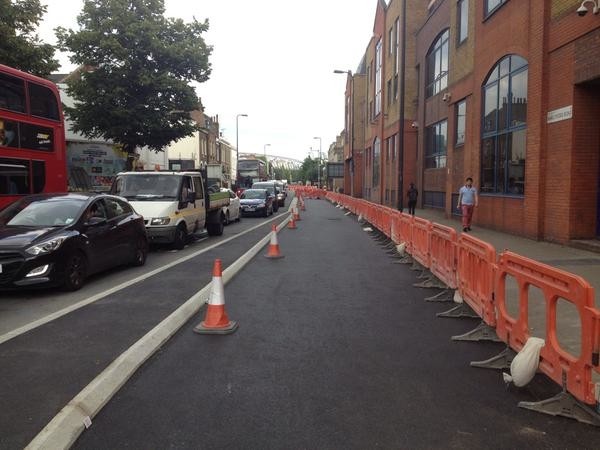
Brand spanking new cycle tracks in south London - look how smooth they are! (Pic via @citycyclists with thanks)
Away from the cycle tracks, lethal lorries remain a chronic issue for vulnerable road users in our city, and much more can still be done on this issue to get the shocking and seemingly inevitable annual death toll down. There is only so much campaigners can do, whereas Boris Johnson has the power to effect lasting change in the last 10 months of his Mayoralty. To keep the pressure up on Transport for London he should appoint a cycling representative to their Board, an easy and much overdue move. He should also push ahead with urgent reforms of lorry safety. In doing so, he'd help to secure his long term cycling legacy and make it harder for future Mayors to unpick his good work.
For now, everyone who has attended a protest, written to the Mayor, tweeted, signed petitions and helped keep the momentum going should take a moment to reflect on how far London has come - both in terms of consensus and successes - and enjoy watching the new cycle routes being built. But there's going to be more work to do to elevate London from "the foothills" of being a cycling city. We need to get ready for what's next.
Share |
...and what will be left of them? [ 13-Jun-15 4:38pm ]
James Mason - Home James (1972) [ 13-Jun-15 4:38pm ]Via Tariq.
up close and personal [ 20-Apr-15 12:06pm ]
Outriders [ 20-Apr-15 12:06pm ]
James Goldsmith's Referendum Party was generally seen as an unhinged plutocrat's last hurrah. The Natural Law Party, backed by George Harrison: for those who thought Monster Raving Loony were too sensible.
And yet .... an in-out Referendum on EU membership remains one of the key issues in British politics and still divides the Right. Goldsmith's railing against "professional politicians" is an even more mainstream view. And doesn't Natural Law's program to de-stress the British people sound rather like the Happiness agenda?
faces on posters too many choices [ 25-Mar-15 3:51pm ]
# [ 25-Mar-15 3:51pm ]Right, we are Wetherspooning.
Here from 5
http://www.jdwetherspoon.co.uk/home/pubs/the-lord-moon-of-the-mall
then I guess
The Rockingham arms at approx 7:30
http://www.jdwetherspoon.co.uk/home/pubs/the-lord-moon-of-the-mall
then Hipster fun in New Cross at 9:30 ish
http://www.royalalbertpub.com/
and a late nightcap in the Greenwich Wetherspoons from 11-ish
http://www.jdwetherspoon.co.uk/home/pubs/the-gate-clock
this won't work out of course. I don't have a smartphone, Phil doen't even have a mobile so hopefully we will meet up at some point. Bring anyone you like and remember we like meeting new people and have highly developed social skills. #
Here from 5
http://www.jdwetherspoon.co.uk/home/pubs/the-lord-moon-of-the-mall
then I guess
The Rockingham arms at approx 7:30
http://www.jdwetherspoon.co.uk/home/pubs/the-lord-moon-of-the-mall
then Hipster fun in New Cross at 9:30 ish
http://www.royalalbertpub.com/
and a late nightcap in the Greenwich Wetherspoons from 11-ish
http://www.jdwetherspoon.co.uk/home/pubs/the-gate-clock
this won't work out of course. I don't have a smartphone, Phil doen't even have a mobile so hopefully we will meet up at some point. Bring anyone you like and remember we like meeting new people and have highly developed social skills. #
...and what will be left of them? [ 25-Mar-15 3:51pm ]
# [ 25-Mar-15 3:51pm ]
Right, we are Wetherspooning.
Here from 5
http://www.jdwetherspoon.co.uk/home/pubs/the-lord-moon-of-the-mall
then I guess
The Rockingham arms at approx 7:30
http://www.jdwetherspoon.co.uk/home/pubs/the-lord-moon-of-the-mall
then Hipster fun in New Cross at 9:30 ish
http://www.royalalbertpub.com/
and a late nightcap in the Greenwich Wetherspoons from 11-ish
http://www.jdwetherspoon.co.uk/home/pubs/the-gate-clock
this won't work out of course. I don't have a smartphone, Phil doen't even have a mobile so hopefully we will meet up at some point. Bring anyone you like and remember we like meeting new people and have highly developed social skills. #
Here from 5
http://www.jdwetherspoon.co.uk/home/pubs/the-lord-moon-of-the-mall
then I guess
The Rockingham arms at approx 7:30
http://www.jdwetherspoon.co.uk/home/pubs/the-lord-moon-of-the-mall
then Hipster fun in New Cross at 9:30 ish
http://www.royalalbertpub.com/
and a late nightcap in the Greenwich Wetherspoons from 11-ish
http://www.jdwetherspoon.co.uk/home/pubs/the-gate-clock
this won't work out of course. I don't have a smartphone, Phil doen't even have a mobile so hopefully we will meet up at some point. Bring anyone you like and remember we like meeting new people and have highly developed social skills. #
up close and personal [ 25-Mar-15 3:51pm ]
# [ 25-Mar-15 3:51pm ]
Right, we are Wetherspooning.
Here from 5
http://www.jdwetherspoon.co.uk/home/pubs/the-lord-moon-of-the-mall
then I guess
The Rockingham arms at approx 7:30
http://www.jdwetherspoon.co.uk/home/pubs/the-lord-moon-of-the-mall
then Hipster fun in New Cross at 9:30 ish
http://www.royalalbertpub.com/
and a late nightcap in the Greenwich Wetherspoons from 11-ish
http://www.jdwetherspoon.co.uk/home/pubs/the-gate-clock
this won't work out of course. I don't have a smartphone, Phil doen't even have a mobile so hopefully we will meet up at some point. Bring anyone you like and remember we like meeting new people and have highly developed social skills. #
07-Mar-15
Here from 5
http://www.jdwetherspoon.co.uk/home/pubs/the-lord-moon-of-the-mall
then I guess
The Rockingham arms at approx 7:30
http://www.jdwetherspoon.co.uk/home/pubs/the-lord-moon-of-the-mall
then Hipster fun in New Cross at 9:30 ish
http://www.royalalbertpub.com/
and a late nightcap in the Greenwich Wetherspoons from 11-ish
http://www.jdwetherspoon.co.uk/home/pubs/the-gate-clock
this won't work out of course. I don't have a smartphone, Phil doen't even have a mobile so hopefully we will meet up at some point. Bring anyone you like and remember we like meeting new people and have highly developed social skills. #
# [ 07-Mar-15 2:00pm ]Phil and I are going to have a promotional pub crawl for Strangled and No More Heroes on the 27th of March. Quite what it will constitute remains to be seen. I intend to flog my author copies of No More Heroes out of my gym bag and give the funds raised to Defend The Right to Protest. We will start in Central London around 5 then head south. London Bridge/ Elephant then New Cross/Deptford. We will figure out the exact pubs later. Essentially doing this solves one fundamental problem: the fact that I still like and get on with people who have now fallen out with each other. We will come to you, or somewhere near you, and you don't have to not come for a quick pint through the fear that you'll bump into that ex-comrade who has turned out to be a psycho/ reactionary/ closet Tory/ leering Troll / treacherous Careerist, etc. If you ever contributed to the Decade's blogs it would be great to see you, but it would be great to see you anyway. This is an open invitation. I'll update the pub location nearer the date, after full consultation with Phil. He's dead fussy.
Facebook page here. #
faces on posters too many choices [ 7-Mar-15 2:00pm ]
# [ 07-Mar-15 2:00pm ]Phil and I are going to have a promotional pub crawl for Strangled and No More Heroes on the 27th of March. Quite what it will constitute remains to be seen. I intend to flog my author copies of No More Heroes out of my gym bag and give the funds raised to Defend The Right to Protest. We will start in Central London around 5 then head south. London Bridge/ Elephant then New Cross/Deptford. We will figure out the exact pubs later. Essentially doing this solves one fundamental problem: the fact that I still like and get on with people who have now fallen out with each other. We will come to you, or somewhere near you, and you don't have to not come for a quick pint through the fear that you'll bump into that ex-comrade who has turned out to be a psycho/ reactionary/ closet Tory/ leering Troll / treacherous Careerist, etc. If you ever contributed to the Decade's blogs it would be great to see you, but it would be great to see you anyway. This is an open invitation. I'll update the pub location nearer the date, after full consultation with Phil. He's dead fussy.
Facebook page here. #
...and what will be left of them? [ 7-Mar-15 2:00pm ]
# [ 07-Mar-15 2:00pm ]Phil and I are going to have a promotional pub crawl for Strangled and No More Heroes on the 27th of March. Quite what it will constitute remains to be seen. I intend to flog my author copies of No More Heroes out of my gym bag and give the funds raised to Defend The Right to Protest. We will start in Central London around 5 then head south. London Bridge/ Elephant then New Cross/Deptford. We will figure out the exact pubs later. Essentially doing this solves one fundamental problem: the fact that I still like and get on with people who have now fallen out with each other. We will come to you, or somewhere near you, and you don't have to not come for a quick pint through the fear that you'll bump into that ex-comrade who has turned out to be a psycho/ reactionary/ closet Tory/ leering Troll / treacherous Careerist, etc. If you ever contributed to the Decade's blogs it would be great to see you, but it would be great to see you anyway. This is an open invitation. I'll update the pub location nearer the date, after full consultation with Phil. He's dead fussy.
Facebook page here. #
up close and personal [ 9-Feb-15 8:05pm ]
Our man in the archive [ 09-Feb-15 8:05pm ]
I watched the Adam Curtis film Bitter Lake this week. I'm not going to comment on the argument of the film, as I have no special insights into Afghanistan other than having followed the news for the last 15 years. However, a whole line of criticism has developed around the aesthetics of Curtis' films, particularly his use of film archive, that is worth responding to.
The internet was hailed as great breakthrough in multimedia, which it is of course. But it has also produced a revenge of the written word, and of those who believe writing is the senior service of media. Platforms like tumblr or pinterest have ended up devaluing images by reducing them to a churn; twitter actively defaces them, using pictures and video as fodder for jokes, constant fact-checking or abuse. Live-tweeting programs seems like a way of refusing to surrender to the pull of video and sound.
The left, with its tradition of print journalism, and critical theory, created by people trained in philosophy and literature, has form here. On Photography and Camera Lucida could be seen as attempts to cut visual mass media down to size, by those who felt threatened by them. Marshall McLuhan's career is now an academic morality tale: don't get too into television or you will become vacuous. (The exception is John Berger who was an artist before he began writing, and has retained a positive sense of making images.) There is a Protestant and iconoclastic (in the original sense) undercurrent here.
The criticisms of Curtis' use of archival footage and his editing techniques have some of this spirit. At work here is a misunderstanding of what he is doing. Curtis' films are histories. Almost all serious written histories are led by the use of archival sources. In practise most of these were produced, and are kept, by institutions of various kinds. So the argument that Curtis is 'lost in archives' or 'or lost in the BBC archives' is a non-criticism. His use of audio-visual sources is also close to the practise of 'thick description' where historians build up a picture of a past society or event by piling detail on detail and example on example. This is a methodical and rhetorical strategy, and one used by several different historians from Raphael Samuel to Keith Thomas to Saul Friedländer. It should be noted that this technique involves a fair bit of direct quotation or repetition of material that the author may not agree with and is often presented without much comment. Walter Benjamin fans will see the similarity with the Arcades Project; indeed Keith Thomas has written of his admiration for that work. I can't help noticing the link with Humphrey Jennings' Pandemoniumeither - Curtis' father was Jennings' cameraman. This is also the technique of many works of oral history. The statement that Bitter Lake is an 'emotional history' is therefore in keeping with this tradition.
This sheds a different light on complaints about decontextualisation too. This has been perhaps thecomplaint against thick description as a method ['quotation out of the context' is the standard charge]. But this is a problem of all methods: they show some things and reveal others. It is true that, unlike history writing, Curtis' films have no footnotes and apparatus: but this is true of all factual films. Having more talking head experts would not solve the problem; it would merely introduce multiple arguments from authority.
The other point about archives is this: progress in history has generally been made by bringing new sources into play or finding new ways of looking at them. Indeed, it should be emphasised how underused television and film archives are in creating works of histories [as opposed to illustrating them.] This is partly due to the conservatism of the academic form, but also because it is very hard to get access to these archives and even harder to re-use the material publicly. Ironically therefore, the 20th century, that supposedly radical and modernist century, has some of the most conservative and restricted forms of telling its history.
There is a deep literalism at work in criticism of his technique. People seem to want every image or video to come with captions and explanations. Or perhaps every frame has to feature Fergal Keene telling us when to feel sad. Curtis is creating a new form of multi-media history. Who knows where others will take it next?
faces on posters too many choices [ 30-Jan-15 11:08am ]
# [ 30-Jan-15 11:08am ]i b i k e l o n d o n [ 30-Jan-15 8:30am ]
As the LTDA goes to war with cyclists, we ask just who runs London? Is this a Cycle Superhighway Stich up?! [ 30-Jan-15 8:30am ]Unless you've been living under a rock it won't have escaped your attention that Mayor of London Boris Johnson announced on Tuesday his intention to proceed with ambitious plans to build a "Crossrail for Bikes"; two new segregated Cycle Superhighways across central London, running from north to south and east to west. But those plans are seriously threatened due to the self-serving actions of two business groups, who could jeapordise the democratic balance of Transport for London's Board in the process.
Johnson's announcement follows one of Transport for London's largest ever consultations on a project, with a staggering 21,500 responses. So many people wanted to respond, they extended the length of the consultation to allow everyone time to air their views. But the results are conclusive; even when you discount responses automatically generated by the London Cycling Campaign's website, some 73% support the more contentious east / west route running along the Embankment.
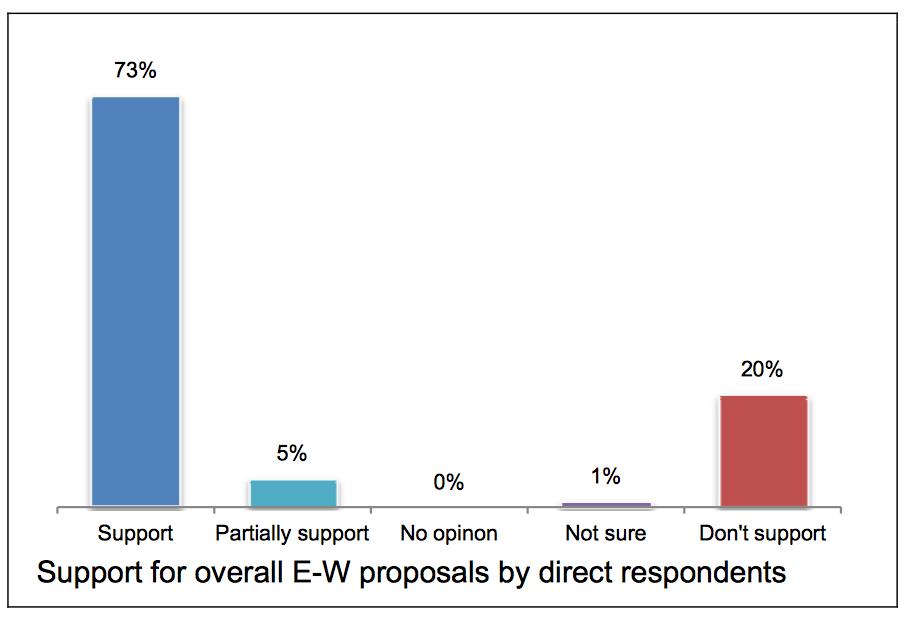 This reflects a recent YouGov poll of Londoners of all backgrounds, the majority (64%) of which supported the cycleway plans even if it involved taking a lane away from traffic. It's also worth remembering of course that the consultation is not a referendum on the proposals; the scheme is the brain-child of our directly elected Conservative Mayor, who is mandated by the population of London to deliver his manifesto promises, of which the Cycle Superhighways were one. So far, so democratic, right?
Within minutes of the announcement on Tuesday, the Licensed Taxi Drivers Association let it be known they were furious that the Cycle Superhighways were going ahead and planned to lodge a Judicial Review. Here's what Steve McNamara, the LTDA's Secretary, had to tell Vanessa Feltz on her BBC London radio show on Tuesday morning:
Then, in March 2014 their Director wrote this frankly bizarre editorial in their member's newsletter, claiming that cycling is "bringing this city to its knees":
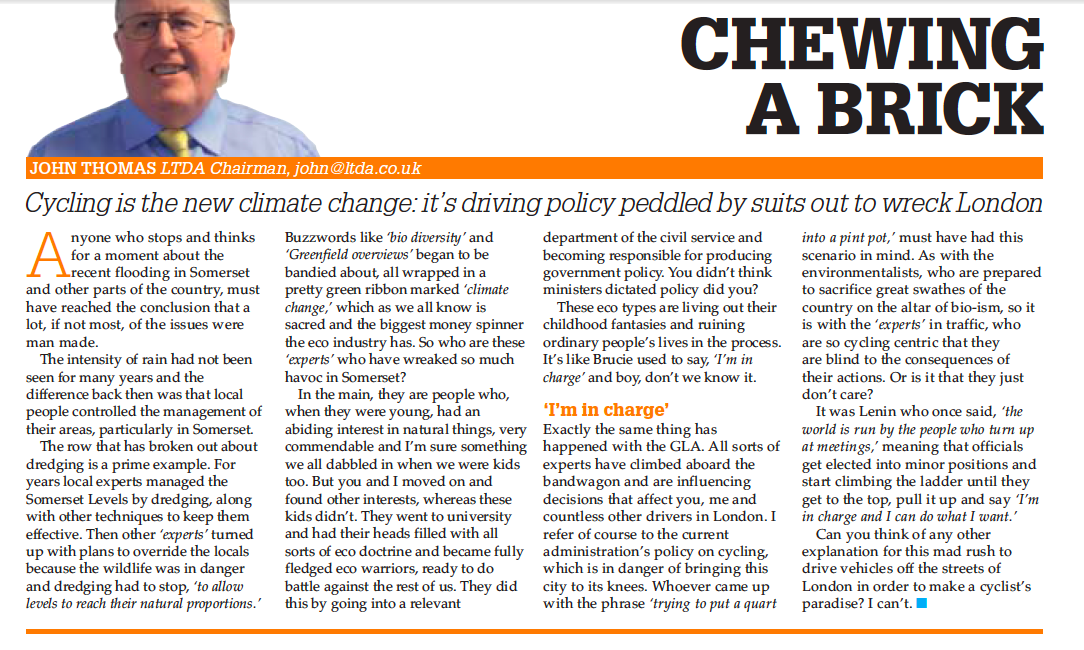
And now, in 2015, they're coming out all guns blazing against the Cycle Superhighway project, threatening legal action and mouthing off to anyone who will listen. But there's more to it than that, unfortunately. I'll deal with McNamara's ridiculous assertions firstly, but please do read on to the end because what happens next is even more ridiculous...
The idea that the LTDA is a paragon of working class, salt-of-the-earth virtue is preposterous: this is an organisation that gives discounts to its members for country hotel leisure breaks, golf clubs and designer glasses. (And cheap legal representation to those facing driving bans who accumulated too many points on their license) Most of their members will be earning around £60,000 a year (that's twice the national average).
Let's contrast that with the 13 people who were killed cycling in London last year: two teachers, two students, a ventilation engineer, a conference organiser, a pharmacist, a hospital porter, a bus depot worker, a solicitor, an IT worker, one person unknown and a security guard. Hardly what I'd call a "metropolitan elite".
And were those who were killed cycling "a few hundred yards or half a mile to work"? Of course not. The majority of all cycle journeys in London originate in the fringes of zone 2 and 3 and make their way to the centre and back again. Commuting patterns like my own journey to and from work which is 10 miles, versus the city-wide average of 15 miles (That's 15 miles regardless of which mode of transport you use).
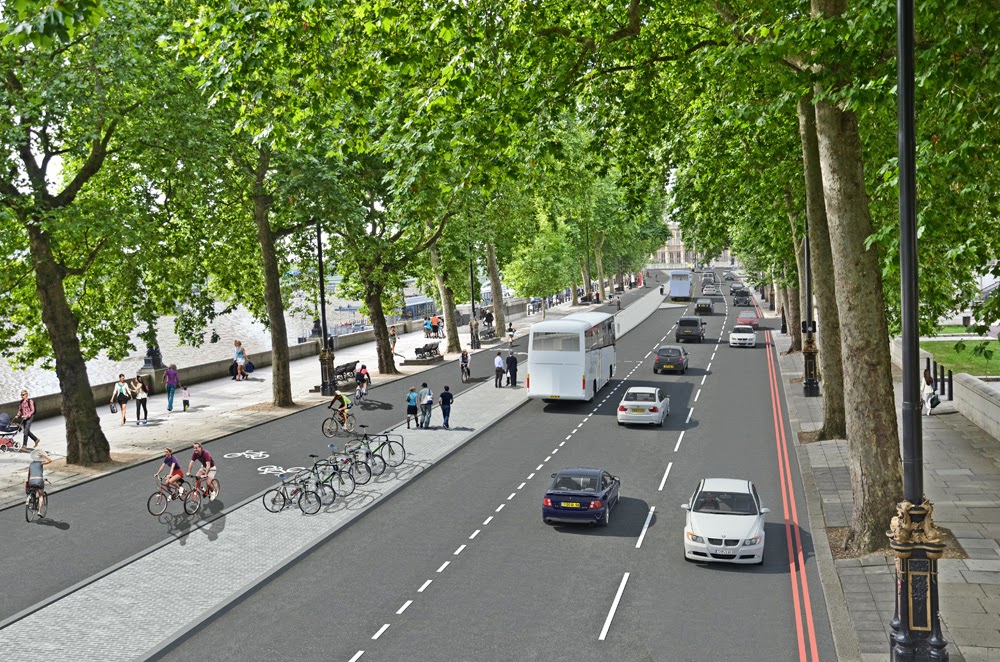 Proposals for Victoria Embankment
Taxis ferry about businessmen on expense accounts and unwitting tourists for the majority of the time, and are out of reach for most ordinary working Londoners. The last time I took a taxi from Heathrow to central London it cost nearly £100 (an awful journey during which the driver stopped his car to scream obscenities at a woman on a pedestrian crossing and deigned to share with me his abhorrently racist views for the duration of the trip). The Piccadilly Line can do the same journey - opinion free - for about a fiver.
As for sticking the Cycle Superhighway south of the river (presumably because Black Cab drivers don't go there) frankly, why should they? For a starter the whole point of the project is to get people by bicycle to centres of work quickly and safely. London's bridges are already a danger spots for cyclists, but to put it in language the LTDA would understand: around half of all the vehicles on Blackfriars Bridge during the peak hour are bicycles (that's one bike every two seconds) Are you sure putting more bikes on the bridges to get south of the river is such a good idea?
To put things in a clearer light, and to completely discredit McNamara's idea that cycle journeys are somehow unnecessary and get in the way of "working London", let's look at some actual statistics.
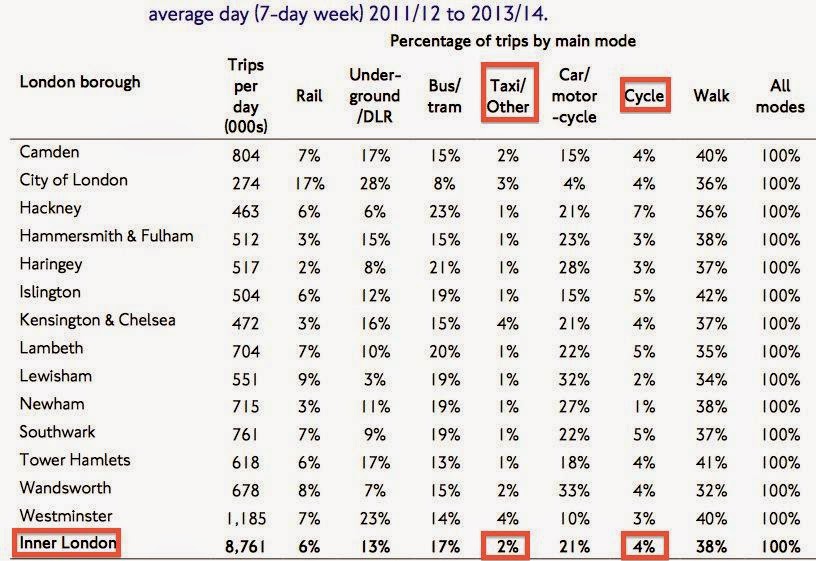 Via As Easy As Riding A Bike, with thanks.
According to Transport for London's latest data, taxis make up 2% of all inner London road users. Bicycles make up 4%. Cycle rates in the same area have doubled over the past 10 years, whilst journeys by car have consistently declined. Across greater London there are approximately 650,000 cycle journeys every day - they can't all be Bradley Wiggins wannabes making laps of Richmond Park.
The LTDA's stance is astonishing. That they'd channel so much effort and resource in to giving such a knee-jerk and provocative reaction to a scheme that will cover a tiny percentage of London's roads (whilst their members lose massive market share to credit-card accepting mini-cab firms and book-by-app discount drivers Uber) is sad to watch. If I was an LTDA member I'd be telling them to pick their battles. As a cyclist I'd laugh if this wasn't so serious.
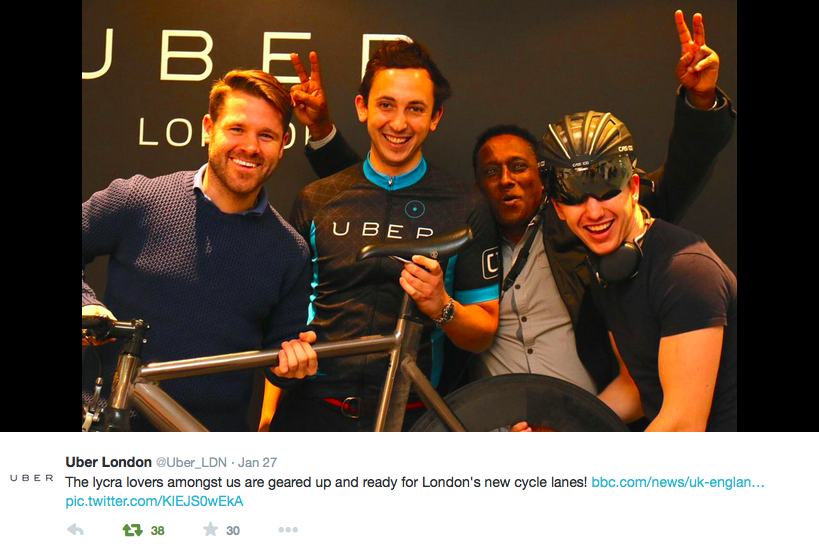 Uber take a pop at the LTDA's pre-historic attitude via their Twitter account @Uber_LDN
A Judicial Review could see the Cycle Superhighway project delayed by up to 14 weeks, and its TfL's fare-paying customers who will pick up the bill for fighting it (you know, ordinary working Londoners) But the madness doesn't stop there.
The LTDA's McNamara said say they "are considering a Judicial Review against the scheme in conjunction with Canary Wharf." You'll remember that the Canary Wharf Group were behind an anonymous briefing filled with untruths about the Cycle Superhighways which was distributed to politicians and business leaders late last year. They've also paid for a lobbyist to tour the political party conferences to try and drum up opposition to the scheme. Their strategic adviser, Howard Dawber, has appeared on television and radio claiming the project would be bad for their business and has attended numerous stake holder planning meetings.
And this is where things get ridiculous.
If a Judicial Review doesn't materialise, next Wednesday the Board of Transport for London will meet to decide whether to fund the Cycle Superhighway project or not. This is not just a case of rubber-stamping the Mayor's plans. As Cyclists In The City points out, they've picked over cycling plans in minute detail before.
But two members of the Board have a direct conflict of interest, and it would be a democratic failure were they to be allowed to participate in the funding decision...
Peter Anderson sits on the Board, and is also the Finance Director for.. ..Canary Wharf Group.
Bob Oddy sits on the Board, and is also the Deputy General Secretary of... ..the LTDA!
 The LTDA's Bob Oddy, above, and Canary Wharf Group's Peter Anderson, below
 In the long term I would ask - considering there's more of us on the roads every day than there are of them - why taxi drivers are represented on TfL's Board when cyclists are not. In the short term I'd ask this: what will the Mayor do to ensure that those whose employers have been actively lobbying against this scheme are totally excluded from the process which will decide its future?
London's cycling community has fought long and hard and waited for many years for this: just ONE safe segregated cycle route across our city. This project cannot be scuppered by members of the Board who no longer have a right to be involved in it. If Anderson and Oddy think they can turn up at the Board after all their companies have done they've got another thing coming.
Transport for London's Board meeting takes place at 10AM on Wednesday 4th Feb at City Hall, committee room 4. It is open to the public and the Board papers are available online to review.
Share
29-Jan-15
Johnson's announcement follows one of Transport for London's largest ever consultations on a project, with a staggering 21,500 responses. So many people wanted to respond, they extended the length of the consultation to allow everyone time to air their views. But the results are conclusive; even when you discount responses automatically generated by the London Cycling Campaign's website, some 73% support the more contentious east / west route running along the Embankment.
This reflects a recent YouGov poll of Londoners of all backgrounds, the majority (64%) of which supported the cycleway plans even if it involved taking a lane away from traffic. It's also worth remembering of course that the consultation is not a referendum on the proposals; the scheme is the brain-child of our directly elected Conservative Mayor, who is mandated by the population of London to deliver his manifesto promises, of which the Cycle Superhighways were one. So far, so democratic, right?Within minutes of the announcement on Tuesday, the Licensed Taxi Drivers Association let it be known they were furious that the Cycle Superhighways were going ahead and planned to lodge a Judicial Review. Here's what Steve McNamara, the LTDA's Secretary, had to tell Vanessa Feltz on her BBC London radio show on Tuesday morning:
"It's an abomination!... ...The ideal route would have been to run it along the Southbank, in front of the old LWT [London Weekend Television] building all the way along there, it would have been lovely, it would have been out of the way, it would have been ideal... ... We're against it, lots of businesses are against it. We are considering a Judicial Review against the scheme in conjunction with Canary Wharf and others."McNamara went on to give his opinions as to exactly why the Cycle Superhighways - which represent a tiny percentage of London's roads - were a BAD THING, especially if they benefit CYCLISTS:
"...they all try and tell you this myth, that it is wealthy people driving around in cars that we need to combat, and that it is the poor man on the cycle. And of course it's not. What we've got now is this metropolitan elite who can afford to live in the centre of the city, afford to cycle a few hundred yards or half a mile to work, they're the people campaigning for this. The vast majority of Londoners, working Londoners, business Londoners - the majority of your listeners who are coming in from the suburbs and trying to move around this city - are going to be severely disadvantaged by this scheme...I think it is fair to say that the LTDA has gone to war against cyclists. In November 2013 - the same month six London cyclists died on our roads in just two weeks - they gave the Evening Standard cooked up footage which claimed to show the majority of London cyclists run red lights.
..We're the only people in London who can actually stand up for working Londoners, us and a few businesses who have come together. As I say, Canary Wharf - a massive business that employs tens of thousands of people at the Wharf - they're concerned about their people getting to work, we're concerned about moving people around the city, lots of freight companies are very, very concerned about it, they've got to make deliveries. London is a working city, it's got to be able to work the 23 hours a day when them cyclists are not down on the Embankment - and they're not.... .. it's madness. They must see it, and we're hoping the Courts will see it." [Click here for a full transcript of his interview]
Then, in March 2014 their Director wrote this frankly bizarre editorial in their member's newsletter, claiming that cycling is "bringing this city to its knees":
And now, in 2015, they're coming out all guns blazing against the Cycle Superhighway project, threatening legal action and mouthing off to anyone who will listen. But there's more to it than that, unfortunately. I'll deal with McNamara's ridiculous assertions firstly, but please do read on to the end because what happens next is even more ridiculous...
The idea that the LTDA is a paragon of working class, salt-of-the-earth virtue is preposterous: this is an organisation that gives discounts to its members for country hotel leisure breaks, golf clubs and designer glasses. (And cheap legal representation to those facing driving bans who accumulated too many points on their license) Most of their members will be earning around £60,000 a year (that's twice the national average).
Let's contrast that with the 13 people who were killed cycling in London last year: two teachers, two students, a ventilation engineer, a conference organiser, a pharmacist, a hospital porter, a bus depot worker, a solicitor, an IT worker, one person unknown and a security guard. Hardly what I'd call a "metropolitan elite".
And were those who were killed cycling "a few hundred yards or half a mile to work"? Of course not. The majority of all cycle journeys in London originate in the fringes of zone 2 and 3 and make their way to the centre and back again. Commuting patterns like my own journey to and from work which is 10 miles, versus the city-wide average of 15 miles (That's 15 miles regardless of which mode of transport you use).
Proposals for Victoria EmbankmentTaxis ferry about businessmen on expense accounts and unwitting tourists for the majority of the time, and are out of reach for most ordinary working Londoners. The last time I took a taxi from Heathrow to central London it cost nearly £100 (an awful journey during which the driver stopped his car to scream obscenities at a woman on a pedestrian crossing and deigned to share with me his abhorrently racist views for the duration of the trip). The Piccadilly Line can do the same journey - opinion free - for about a fiver.
As for sticking the Cycle Superhighway south of the river (presumably because Black Cab drivers don't go there) frankly, why should they? For a starter the whole point of the project is to get people by bicycle to centres of work quickly and safely. London's bridges are already a danger spots for cyclists, but to put it in language the LTDA would understand: around half of all the vehicles on Blackfriars Bridge during the peak hour are bicycles (that's one bike every two seconds) Are you sure putting more bikes on the bridges to get south of the river is such a good idea?
To put things in a clearer light, and to completely discredit McNamara's idea that cycle journeys are somehow unnecessary and get in the way of "working London", let's look at some actual statistics.
Via As Easy As Riding A Bike, with thanks.According to Transport for London's latest data, taxis make up 2% of all inner London road users. Bicycles make up 4%. Cycle rates in the same area have doubled over the past 10 years, whilst journeys by car have consistently declined. Across greater London there are approximately 650,000 cycle journeys every day - they can't all be Bradley Wiggins wannabes making laps of Richmond Park.
The LTDA's stance is astonishing. That they'd channel so much effort and resource in to giving such a knee-jerk and provocative reaction to a scheme that will cover a tiny percentage of London's roads (whilst their members lose massive market share to credit-card accepting mini-cab firms and book-by-app discount drivers Uber) is sad to watch. If I was an LTDA member I'd be telling them to pick their battles. As a cyclist I'd laugh if this wasn't so serious.
Uber take a pop at the LTDA's pre-historic attitude via their Twitter account @Uber_LDNA Judicial Review could see the Cycle Superhighway project delayed by up to 14 weeks, and its TfL's fare-paying customers who will pick up the bill for fighting it (you know, ordinary working Londoners) But the madness doesn't stop there.
The LTDA's McNamara said say they "are considering a Judicial Review against the scheme in conjunction with Canary Wharf." You'll remember that the Canary Wharf Group were behind an anonymous briefing filled with untruths about the Cycle Superhighways which was distributed to politicians and business leaders late last year. They've also paid for a lobbyist to tour the political party conferences to try and drum up opposition to the scheme. Their strategic adviser, Howard Dawber, has appeared on television and radio claiming the project would be bad for their business and has attended numerous stake holder planning meetings.
And this is where things get ridiculous.
If a Judicial Review doesn't materialise, next Wednesday the Board of Transport for London will meet to decide whether to fund the Cycle Superhighway project or not. This is not just a case of rubber-stamping the Mayor's plans. As Cyclists In The City points out, they've picked over cycling plans in minute detail before.
But two members of the Board have a direct conflict of interest, and it would be a democratic failure were they to be allowed to participate in the funding decision...
Peter Anderson sits on the Board, and is also the Finance Director for.. ..Canary Wharf Group.
Bob Oddy sits on the Board, and is also the Deputy General Secretary of... ..the LTDA!
The LTDA's Bob Oddy, above, and Canary Wharf Group's Peter Anderson, belowIn the long term I would ask - considering there's more of us on the roads every day than there are of them - why taxi drivers are represented on TfL's Board when cyclists are not. In the short term I'd ask this: what will the Mayor do to ensure that those whose employers have been actively lobbying against this scheme are totally excluded from the process which will decide its future?London's cycling community has fought long and hard and waited for many years for this: just ONE safe segregated cycle route across our city. This project cannot be scuppered by members of the Board who no longer have a right to be involved in it. If Anderson and Oddy think they can turn up at the Board after all their companies have done they've got another thing coming.
Transport for London's Board meeting takes place at 10AM on Wednesday 4th Feb at City Hall, committee room 4. It is open to the public and the Board papers are available online to review.
Share
...and what will be left of them? [ 29-Jan-15 1:40pm ]
# [ 29-Jan-15 1:40pm ]up close and personal [ 27-Jan-15 11:31am ]
Whatever happened to him? [ 27-Jan-15 11:31am ]A pretty conventional Adam Curtis doc from 1996 about Nick Leeson, "the man who brought down Barings Bank." Worth watching for the interview with the man himself, who is brazenly unrepentant and rather odd.
What's interesting about Leeson is, as far as anyone has been able to tell, he didn't actually profit from the giant fraud he committed. He was just trying to cover up the losses he made early on into his new job on the Singapore Stock Exchange, and had to keep going until someone found out. Perhaps this quirk prevented people from drawing any deeper conclusions about finance from the case.
Funny by the way, how many key 90s figures came from Watford: Leeson, Mo Mowlam, Geri Halliwell and Gareth Southgate.
What's interesting about Leeson is, as far as anyone has been able to tell, he didn't actually profit from the giant fraud he committed. He was just trying to cover up the losses he made early on into his new job on the Singapore Stock Exchange, and had to keep going until someone found out. Perhaps this quirk prevented people from drawing any deeper conclusions about finance from the case.
Funny by the way, how many key 90s figures came from Watford: Leeson, Mo Mowlam, Geri Halliwell and Gareth Southgate.
i b i k e l o n d o n [ 27-Jan-15 10:05am ]
Boris gives green light to Cycle Superhighways to unlock central London for bikes [ 27-Jan-15 10:05am ]The Mayor of London, Boris Johnson, today confirmed he will go ahead with his proposed "Crossrail for Bikes" Cycle Superhighways across central London, following one of the largest public consultations in the history of Transport for London.
The East / West Cycle Superhighway will form Europe's longest substantially segregated urban cycleway, stretching from Tower Hill in the east to Acton in the west. Intersecting with a new North / South Cycle Superhighway from King's Cross to Elephant and Castle, the new routes will form the flagship facility in Johnson's £913million 10-year cycle investment plan.
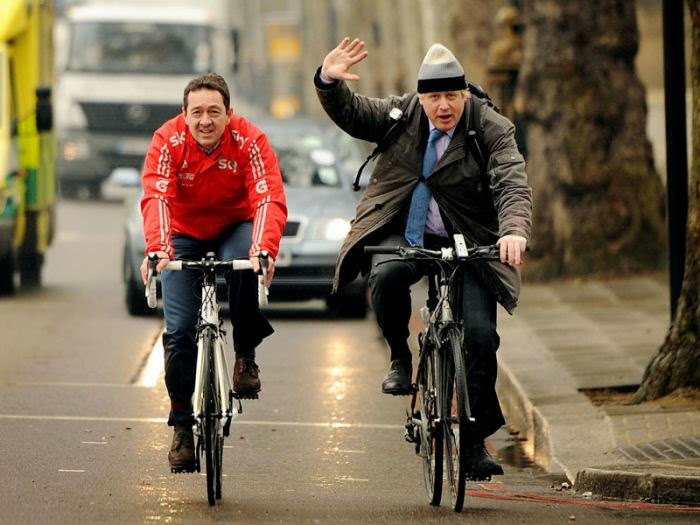 Boris Johnson rides the route of his future Cycle Superhighway on the Embankment with Olympic champion cyclist and campaigner Chris Boardman. Photo via Press Association with thanks.
The Mayor said: "We have done one of the biggest consultation exercises in TfL's history. We have listened, and now we will act. Overwhelmingly, Londoners wanted these routes, and wanted them delivered to the high standard we promised. I intend to keep that promise."
Subject to approval by the Board of TfL next week, construction on the routes will begin as soon as March, with the first route complete and ready for riders by spring 2016. (It's worth pointing out that Johnson's term as Mayor concludes in May 2016)
The nine-week public consultation on the plans saw an overwhelming 21,500 responses from individuals and business organisations, with 84% in overall support of the plans. A YouGov opinion poll taken during the consultation found 73% of Londoners supported the Cycle Superhighways, even if it meant taking a lane of traffic away.
Coordinated by pop-up campaigning group CyclingWorks.London, over 170 businesses and organisations pledged their support for the Cycle Superhighways and called on the Mayor to construct them without delay, including key employers along the route such as Unilever, Orange, the Royal Bank of Scotland and Deloitte.
Businessman and cyclist Chris Kenyon from CyclingWorks.London said:
"Rarely if ever has a scheme by TfL gathered so many CEO-level signatures of support. Surely that is the big story. The backers represent every major industry sector and show that Londoners are in it together and believe that it's time for kerb protected lanes in the heart of the city."
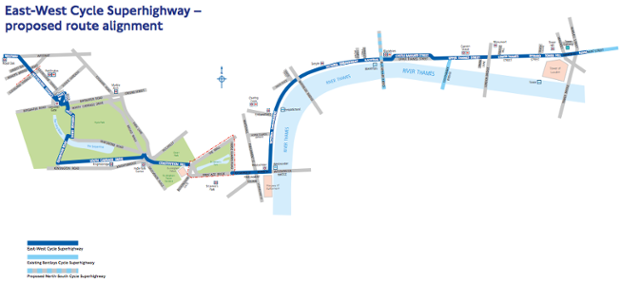 The original route along the Embankment, which will still incorporate Parliament Square, subject to modifications.
The original plans from Transport for London have been revised in response to concerns by the City of London, the taxi lobby and the Canary Wharf Group that building cycle tracks would cause too great a delay.
The lanes for other traffic on the Victoria Embankment were to be cut from two to three between the pinch points of Blackfriars underpass and Temple Station. By squeezing the cycle tracks at these points, the three lanes of traffic will be able to remain.
The Mayor's Cycling Commissioner, Andrew Gilligan, believes delays will be cut by 60% on the original plans. The worst affected journey - from Limehouse Link to Hyde Park Corner - will now only take an additional 6 minutes, rather than 16 minutes under the original plans. The traffic models do not account for people switching to other types of journey (ie cycling) as Rachel Aldred explains in her blog about why we should not fear the worst case scenario.
These new routes will fundamentally change London. Currently we stand with our back to the Thames and the Embankment. What is currently a traffic-choked, noisy and dirty rat-run for the city will become the spine of London's safest cycling infrastructure, where cyclists of all ages and abilities - from roadies, to children - will be able to undertake their journeys in safety.
Transport for London's rendering of the north / south Cycle Superhighway from King's Cross to Elephant and Castle.
Cycle use has already doubled across London over the past ten years, but these ambitious plans will see cycling levels rocket. Sir Peter Hendy CBE, transport commissioner for London, said:
"Cycling is clearly now a major transport option in London, with over 170,000 bike journeys now made across central London every single day... These projects will help transform cycling in London - making it safer and an option that more and more people can enjoy."
We should be clear that the Cycle Superhighway plans are not perfect: the width of the tracks being reduced to approximately 3 metres through the Blackfriars Underpass and at other pinch points on the Embankment is very much of concern. Once built they must be monitored, and potentially dangerous sections must re-assessed. Furthermore, the route through the Royal Parks is still not clear and will be consulted on at a later date, as explained by Danny over at Cyclists in the City. Could the Royal Parks put a spoke in the wheel of the whole scheme?
And there's no guarantee that the Canary Wharf Group will back down in their opposition to the Cycle Superhighway plans, despite the reduction in delays. You'll remember they employed a professional lobbyist, distributed an anonymous briefing paper full of dodgy statistics, and badgered politicians at party conferences over the scheme. The Canary Wharf Group's Finance Director is one Mr Peter Anderson. He's also Chair of Transport for London's Finance and Policy Committee and a member of their board - and therefore will have a say next week over whether the plans will go ahead or not.
The City and Canary Wharf Group have always been keen to demonstrate that opinion is divided on these schemes, whereas it has been my impression throughout that the majority of Londoners want these changes, they need these changes and they must be allowed to go ahead. Those who oppose these changes would do well to remember we are talking about a tiny fraction of London's streets, even though it could have a transformative effect for cyclists. Johnson has now made a big promise in the run up to the elections, it is important that he sticks to it.
If all goes well - and not withstanding skullduggery and backroom dealing - London has achieved something incredible with this announcement. It was only a few years ago, in November 2011, that Danny Williams from Cyclists In The City and I organised the Tour du Danger an initial protest around London's most dangerous junctions for cyclists. Since then there have been countless campaigns, protest rides (not least at Blackfriars Bridge) and of course, cyclist's deaths. Now we have a major UK politician staking their reputation on their cycling dream, prepared to put up the cash, and even ready to take roadspace away from other traffic to achieve their aims. This is in no part is down to all of you who've badgered your politicians, signed petitions, come on protests and responded to consultations. Give yourself a pat on the back, London. Let's make a date in our diaries for a celebratory ride on our city's beautiful new cycling infrastructure, coming soon to a road near you!
Share |
26-Jan-15
The East / West Cycle Superhighway will form Europe's longest substantially segregated urban cycleway, stretching from Tower Hill in the east to Acton in the west. Intersecting with a new North / South Cycle Superhighway from King's Cross to Elephant and Castle, the new routes will form the flagship facility in Johnson's £913million 10-year cycle investment plan.
Boris Johnson rides the route of his future Cycle Superhighway on the Embankment with Olympic champion cyclist and campaigner Chris Boardman. Photo via Press Association with thanks.The Mayor said: "We have done one of the biggest consultation exercises in TfL's history. We have listened, and now we will act. Overwhelmingly, Londoners wanted these routes, and wanted them delivered to the high standard we promised. I intend to keep that promise."
Subject to approval by the Board of TfL next week, construction on the routes will begin as soon as March, with the first route complete and ready for riders by spring 2016. (It's worth pointing out that Johnson's term as Mayor concludes in May 2016)
The nine-week public consultation on the plans saw an overwhelming 21,500 responses from individuals and business organisations, with 84% in overall support of the plans. A YouGov opinion poll taken during the consultation found 73% of Londoners supported the Cycle Superhighways, even if it meant taking a lane of traffic away.
Coordinated by pop-up campaigning group CyclingWorks.London, over 170 businesses and organisations pledged their support for the Cycle Superhighways and called on the Mayor to construct them without delay, including key employers along the route such as Unilever, Orange, the Royal Bank of Scotland and Deloitte.
Businessman and cyclist Chris Kenyon from CyclingWorks.London said:
"Rarely if ever has a scheme by TfL gathered so many CEO-level signatures of support. Surely that is the big story. The backers represent every major industry sector and show that Londoners are in it together and believe that it's time for kerb protected lanes in the heart of the city."
The original route along the Embankment, which will still incorporate Parliament Square, subject to modifications.The original plans from Transport for London have been revised in response to concerns by the City of London, the taxi lobby and the Canary Wharf Group that building cycle tracks would cause too great a delay.
The lanes for other traffic on the Victoria Embankment were to be cut from two to three between the pinch points of Blackfriars underpass and Temple Station. By squeezing the cycle tracks at these points, the three lanes of traffic will be able to remain.
The Mayor's Cycling Commissioner, Andrew Gilligan, believes delays will be cut by 60% on the original plans. The worst affected journey - from Limehouse Link to Hyde Park Corner - will now only take an additional 6 minutes, rather than 16 minutes under the original plans. The traffic models do not account for people switching to other types of journey (ie cycling) as Rachel Aldred explains in her blog about why we should not fear the worst case scenario.
These new routes will fundamentally change London. Currently we stand with our back to the Thames and the Embankment. What is currently a traffic-choked, noisy and dirty rat-run for the city will become the spine of London's safest cycling infrastructure, where cyclists of all ages and abilities - from roadies, to children - will be able to undertake their journeys in safety.
Transport for London's rendering of the north / south Cycle Superhighway from King's Cross to Elephant and Castle.Cycle use has already doubled across London over the past ten years, but these ambitious plans will see cycling levels rocket. Sir Peter Hendy CBE, transport commissioner for London, said:
"Cycling is clearly now a major transport option in London, with over 170,000 bike journeys now made across central London every single day... These projects will help transform cycling in London - making it safer and an option that more and more people can enjoy."
We should be clear that the Cycle Superhighway plans are not perfect: the width of the tracks being reduced to approximately 3 metres through the Blackfriars Underpass and at other pinch points on the Embankment is very much of concern. Once built they must be monitored, and potentially dangerous sections must re-assessed. Furthermore, the route through the Royal Parks is still not clear and will be consulted on at a later date, as explained by Danny over at Cyclists in the City. Could the Royal Parks put a spoke in the wheel of the whole scheme?
And there's no guarantee that the Canary Wharf Group will back down in their opposition to the Cycle Superhighway plans, despite the reduction in delays. You'll remember they employed a professional lobbyist, distributed an anonymous briefing paper full of dodgy statistics, and badgered politicians at party conferences over the scheme. The Canary Wharf Group's Finance Director is one Mr Peter Anderson. He's also Chair of Transport for London's Finance and Policy Committee and a member of their board - and therefore will have a say next week over whether the plans will go ahead or not.
The City and Canary Wharf Group have always been keen to demonstrate that opinion is divided on these schemes, whereas it has been my impression throughout that the majority of Londoners want these changes, they need these changes and they must be allowed to go ahead. Those who oppose these changes would do well to remember we are talking about a tiny fraction of London's streets, even though it could have a transformative effect for cyclists. Johnson has now made a big promise in the run up to the elections, it is important that he sticks to it.
If all goes well - and not withstanding skullduggery and backroom dealing - London has achieved something incredible with this announcement. It was only a few years ago, in November 2011, that Danny Williams from Cyclists In The City and I organised the Tour du Danger an initial protest around London's most dangerous junctions for cyclists. Since then there have been countless campaigns, protest rides (not least at Blackfriars Bridge) and of course, cyclist's deaths. Now we have a major UK politician staking their reputation on their cycling dream, prepared to put up the cash, and even ready to take roadspace away from other traffic to achieve their aims. This is in no part is down to all of you who've badgered your politicians, signed petitions, come on protests and responded to consultations. Give yourself a pat on the back, London. Let's make a date in our diaries for a celebratory ride on our city's beautiful new cycling infrastructure, coming soon to a road near you!
Share |
In defence of fair-weather cyclists: how do you keep a city cycling, even in the worst of winter? [ 26-Jan-15 8:30am ]One of the most persistent criticisms I hear levelled against investing in cycling is that as soon as the weather becomes inclement people stop riding, therefore making it an unreliable way of moving people in cities.
Cyclists in a recent rush hour snow storm in Copenhagen, via the Copenhagenize / Viking Biking Tumbr. Whilst the difference between summer and winter cycling levels in London have been decreasing year on year, the number of cyclists on the road over the winter months is markedly lower than in the long, light and warmer summer days.
If a journey by bicycle is tolerated for the sake of convenience, rather than comfort, it is true that poor weather can serve to increase the perception of it being sketchy. I personally dread cycling around Old Street roundabout or through Holborn Circus in heavy rain with reduced visability. No matter how good your waterproofs, you'll still be soaked through with the sweat of anxiety by the end of your terrifying trip.
Cyclists in the snow, Bethnal Green, London, 2010Of course, it is not the actual rain, snow or darkness that I fear but the chance that my fellow road users are not paying sufficient attention to the conditions, and do not modify their behaviour appropriately.
In successful cycling countries this problem is solved by separating cyclists from motorised traffic one way or another; perhaps with cycle tracks on main roads, or with closures, restrictions and one-way routes on lesser roads with lighter traffic. But this in turn can pose its own problems: in the worst of the winter weather, how do you keep cyclists - and the city - moving?
When you have a high percentage of your population making their journey by bikes - as in Copenhagen or across the Netherlands - making sure that cycle routes are clear becomes a very serious consideration. In another fascinating new post, video blogger Mark of Bicycle Dutch fame recently recorded how his home city of 'S-Hertogenbosch kept people moving through a recent snow storm, and made journeys by bicycle possible in challenging conditions.
He explains: "On a cycle way the 'gritters' brush the surface first, and then it is sprayed with a mixture of salt and water. That film of salt water does cover the entire surface and that means most of the snow melts instantly on the entire street surface even without [passing cyclist's] tyres to disperse the salt. The difference between routes that were cleared and gritted and those that were not (yet) was huge."
I know what you're already thinking: here in the UK we don't deal with adverse weather well. That we struggle to clear our roads and pavements, let alone cycle paths. That we can't even build all-weather year-round cycle routes.
Mud, mud, glorious mud! It's not Middle Earth, but all the same you shall not pass... Via As Easy As Riding A Bike. Indeed, As Easy As Riding A Bike blog recently highlighted a Sussex cycle route which could provide a safe and convenient bypass to the busy A2 is impassable to all but those equipped with mountain bikes and wellington boots for much of the year. It's never been laid properly due to concerns about an "urbanising effect" on the countryside, which clearly doesn't consider the same effect car journeys have that could easily be replaced by trips on this path, were it a viable route instead. Making this journey on the path in its current form on a dark night in wet and windy weather would be reserved for all but the hardiest of thrill-seekers.
The heavy snow fall of 2010 caught London unprepared. My street, seen here, remained uncleared for over a week.But as the Dutch example demonstrates, winter weather need not be an insurmountable obstacle for successful cycling. People always tell me that "there's no such thing as bad weather, only bad clothes" but I'd argue that there's more to it than that...
You can have all the fancy water proof kit in the world, but if you're having to fend off thundering lorries and itinerant taxi drivers in addition to trying to stay upright through wet and windy weather you're not going to be having a very nice time. And you could have all the cycle infrastructure in the world (and I'm thinking in particularly of the separated lanes we should start to see being rolled out in London over the next few years) but if the authorities don't have a plan for keeping them clear of mud, snow and ice they'll be next to useless. Keeping your city cycling, even in the worst of weather, shows the special care and consideration people on two wheels need.
Further reading:
Bicycle Dutch: how to make cycling in the snow possible
Copenhagenize: the ultimate bike lane snow clearance post!
As Easy As Riding a Bike: Natural Character
ibikelondon: Cycling through epic amounts of snow, retro Norway style
Share
Never mind "cyclists stay back", what about "drivers, watch for cyclists"? [ 21-Jan-15 6:30am ]They're big, they're yellow, they're angry and they're everywhere. "Cyclists! Stay back!" they shout, and they seem to be stuck on the back (or even the side) of just about every working vehicle in London.
The ubiquitous yellow safety stickers first appeared on lorries as a warning to cyclists that they had massive blind spots, and slipping down their sides was a potentially fatal thing to do. But when Transport for London began requiring every contracted vehicle to also sport the stickers, they began to appear on vehicles ranging from-mini buses to ordinary cars; vehicles which are hampered not by blind spots but by the driver's failure to look. Peter Walker of the Guardian explains very well just why these stickers seem particularly impertinent to cyclists.There was uproar last summer as the yellow menace spread, and Transport for London agreed to begin replacing the stickers with more gently worded warnings to "avoid passing this vehicle on the inside". But I can only assume the replacement stickers are lost in the post somewhere as just last night I saw what looked to be brand new "stay back" stickers on the rear window of two different taxis.
Popular cycling website Road.cc turned their hand to sticker making and came up with these "Cyclists! Stay Awesome!" stickers, and I can appreciate the humour: too often it seems that signs shouting at people on bikes lurk around every corner. Cyclists! Stay Back! Cyclists! Dismount! Cyclists! Stop at red! Cyclists! Proceed directly to jail, do not pass go, do not collect £200!
So I was really happy to see the below sign on the exit gates of the Crossrail station construction site at Bond Street, which is busy with lorries day in and day out. The message is bold, the message is simple, the message makes sense: "Drivers! Watch for cyclists!"
Maybe I bear a two-wheeled bias, but I'd like to see a lot more of these around town. In fact, I have a proposal to make: I'll agree to anyone slapping a "Cyclists! Stay back!" marker on the back of their vehicle so long as they also agree to stick "Driver! Watch for cyclists!" on their steering wheel. Seems like a fair deal to me, don't you think?
Share |
Will Camden deliver the UK's best urban planning scheme (with HUGE benefits for cyclists)? 48hrs to tell them to DO IT! [ 19-Jan-15 8:30am ]Back in June we explored Camden Council's exciting plans to improve the Tottenham Court Road area with their West End Project. The plans for cyclists have been made better following the public consultation. Now it is time for Camden's Cabinet to make a decision on what is ostensibly the boldest urban realm scheme proposed by a local authority in Britain today. But not everyone is happy about the scheme, which is why it is important we tell them to "Just do it!".
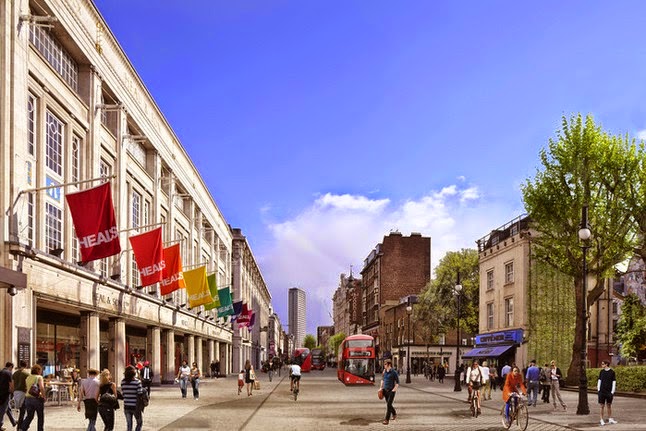 Tottenham Court Road will become a primarily pedestrian route, with safer and easier crossing of the road, 20mph speeds and bus priority. Cycle-specific provision will be supplied on parallel Gower Street.
So, what are the plans? Some £26million pounds will be spent removing the one-way gyratory which currently ensures speeds are much too high on Tottenham Court Road and condemns Gower Street (which should be one of London's finest Regency-era streets) to exist only as a traffic sewer filled with three lanes of buses and speeding vehicles. The area is currently described as one of the worst in the borough for collisions, with 259 casualties in total in the last three years, of which 36% involved pedestrians and 27% involved cyclists.
You can view the amended plans in full here.
14-Jan-15
Tottenham Court Road will become a primarily pedestrian route, with safer and easier crossing of the road, 20mph speeds and bus priority. Cycle-specific provision will be supplied on parallel Gower Street.So, what are the plans? Some £26million pounds will be spent removing the one-way gyratory which currently ensures speeds are much too high on Tottenham Court Road and condemns Gower Street (which should be one of London's finest Regency-era streets) to exist only as a traffic sewer filled with three lanes of buses and speeding vehicles. The area is currently described as one of the worst in the borough for collisions, with 259 casualties in total in the last three years, of which 36% involved pedestrians and 27% involved cyclists.
You can view the amended plans in full here.
...and what will be left of them? [ 14-Jan-15 1:06pm ]
"The Wages of Sin is Death; The Gift Of God Is Life" [ 14-Jan-15 1:06pm ]Here's the actual best cover version of all time, btw:


