

Unruly steeds from King Mu's mythology, cavorting across a silk scroll.

A bestselling 18th-century cookbook, containing the first recipe for curry in English.

Trump's war secretary, "Whiskey Pete" Hegseth, is threatening to blackball Anthropic's Claude over politics, as Trump denounces "woke AI" in favor of CSAM-generating "MechHitler" Grok.
It would appear that by questioning the Pentagon turning Claude into a mass surveillance tool, and developing self-firing AI weapons, Anthropic got on the administration's bad side. — Read the rest
The post Pentagon threatens Anthropic as Trump allies embrace Musk's problematic Grok appeared first on Boing Boing.

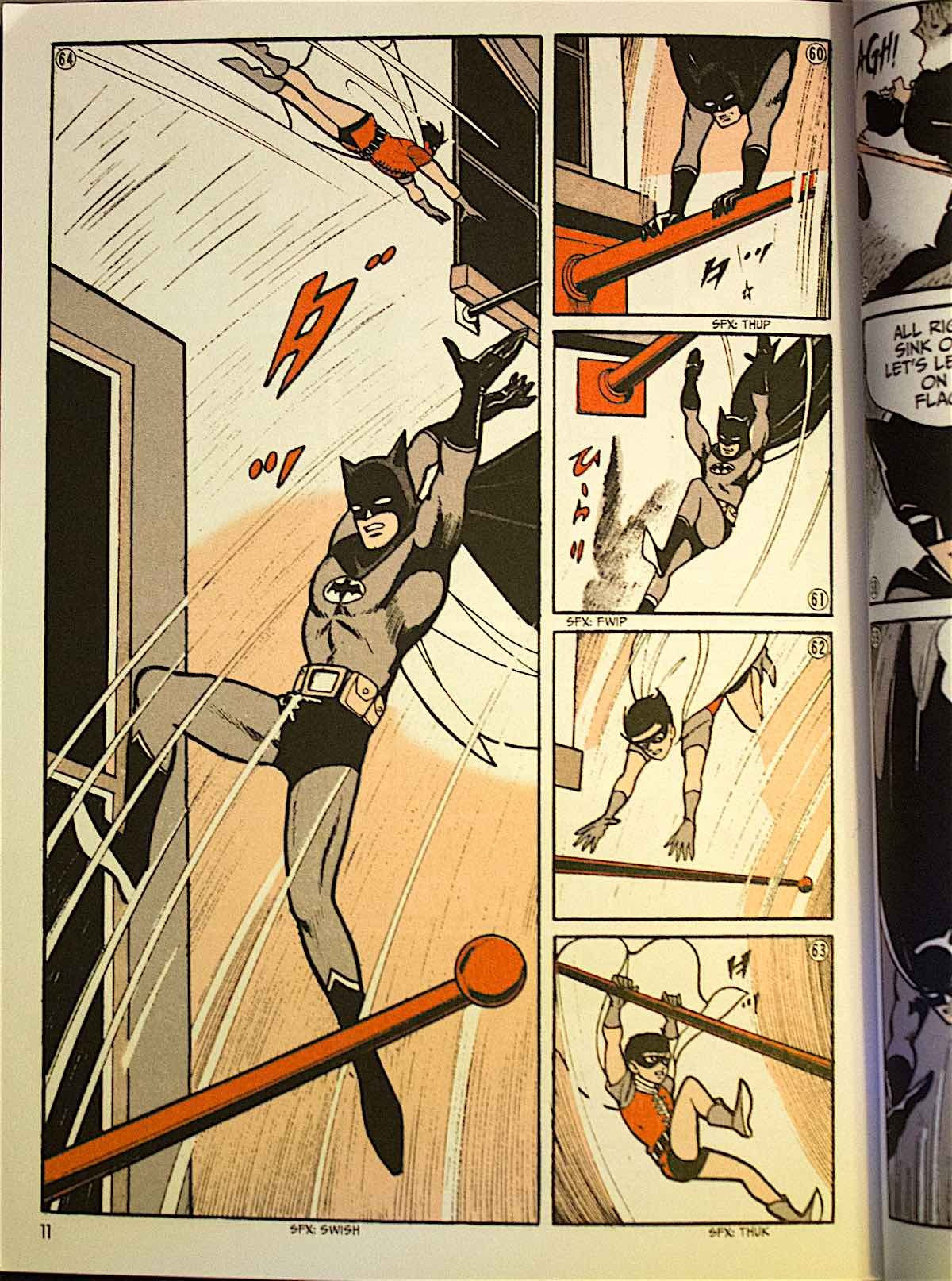
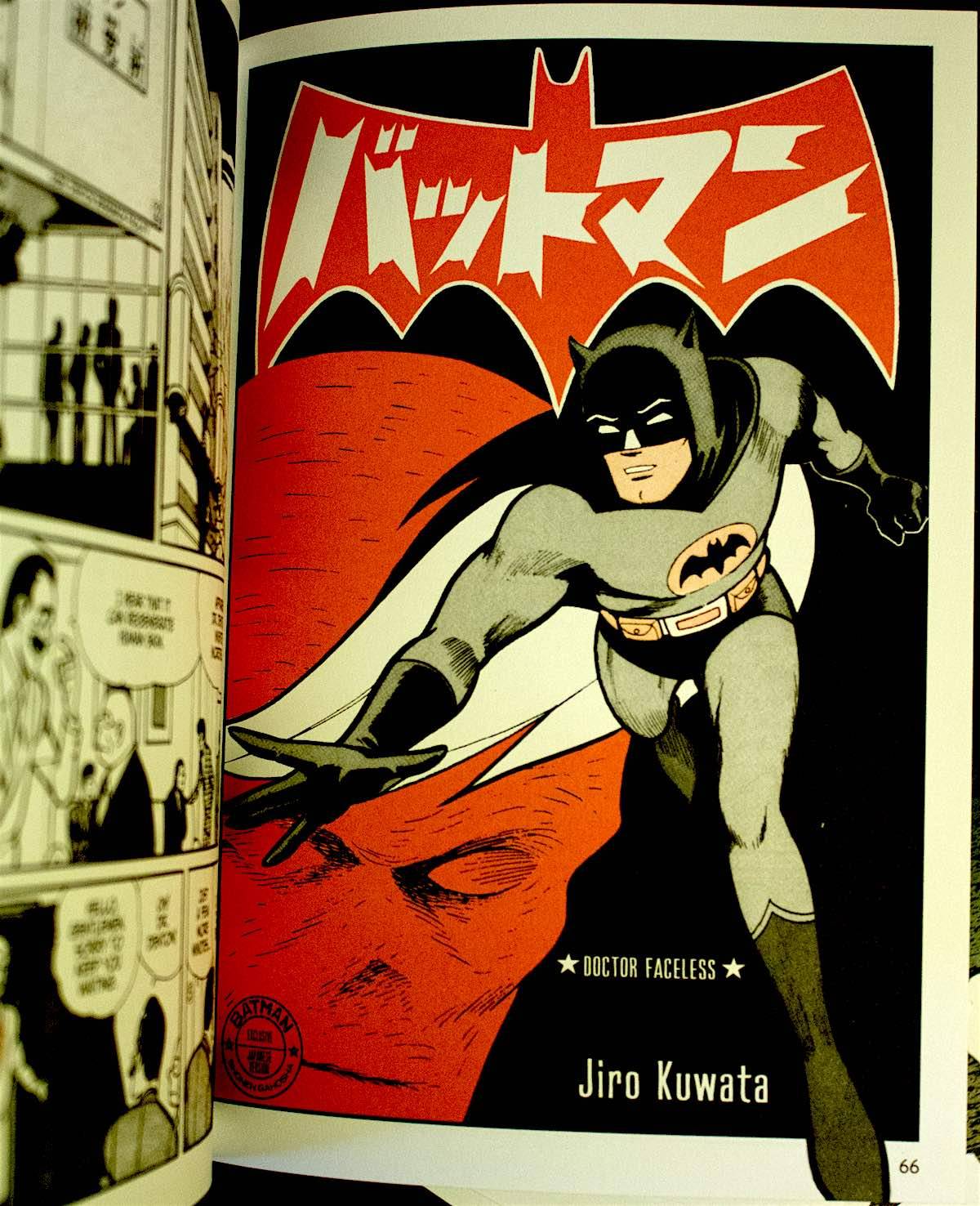
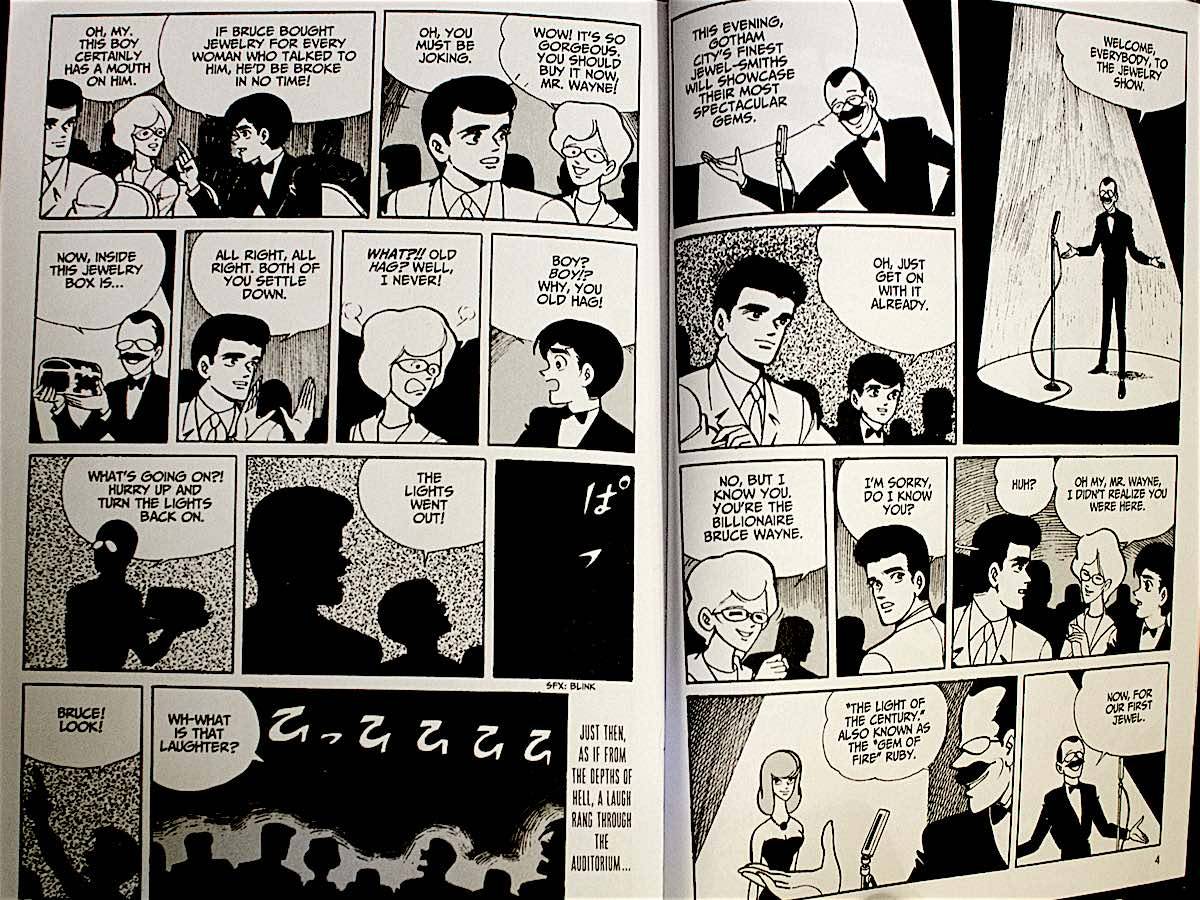
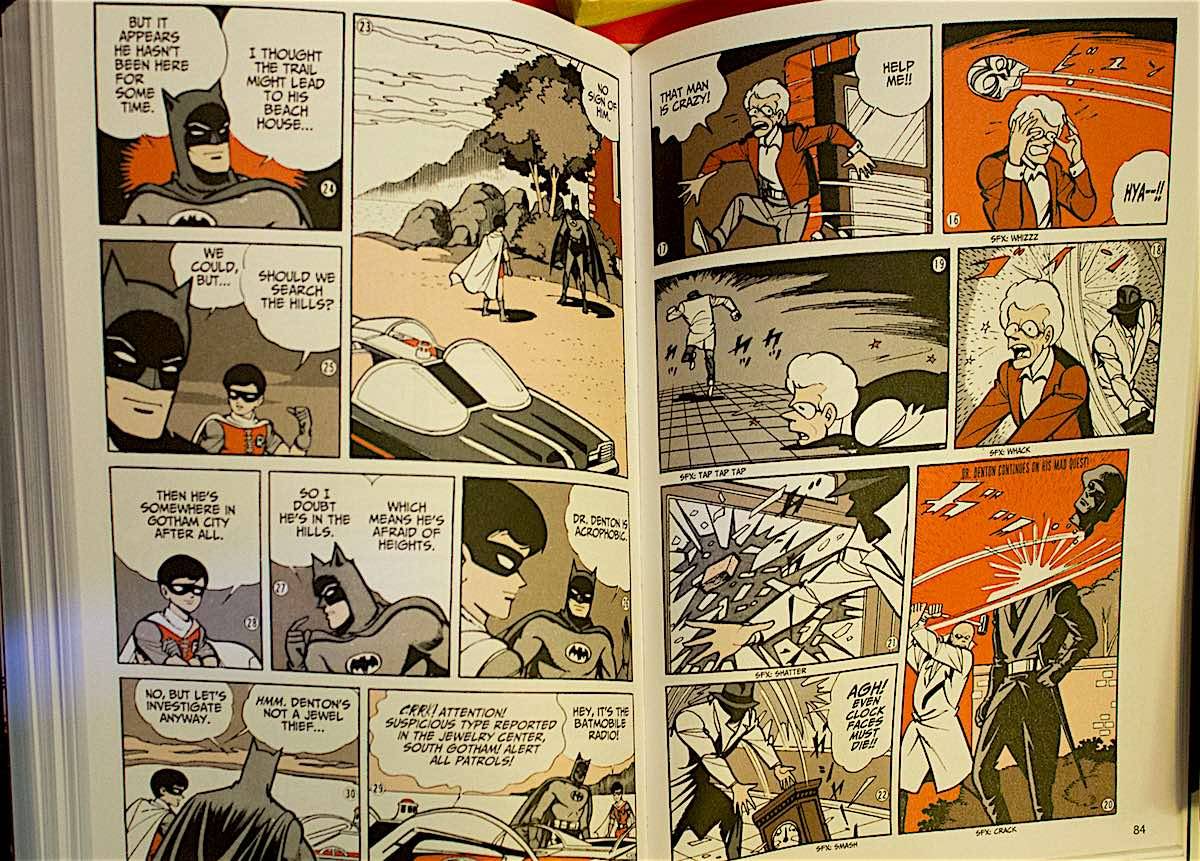
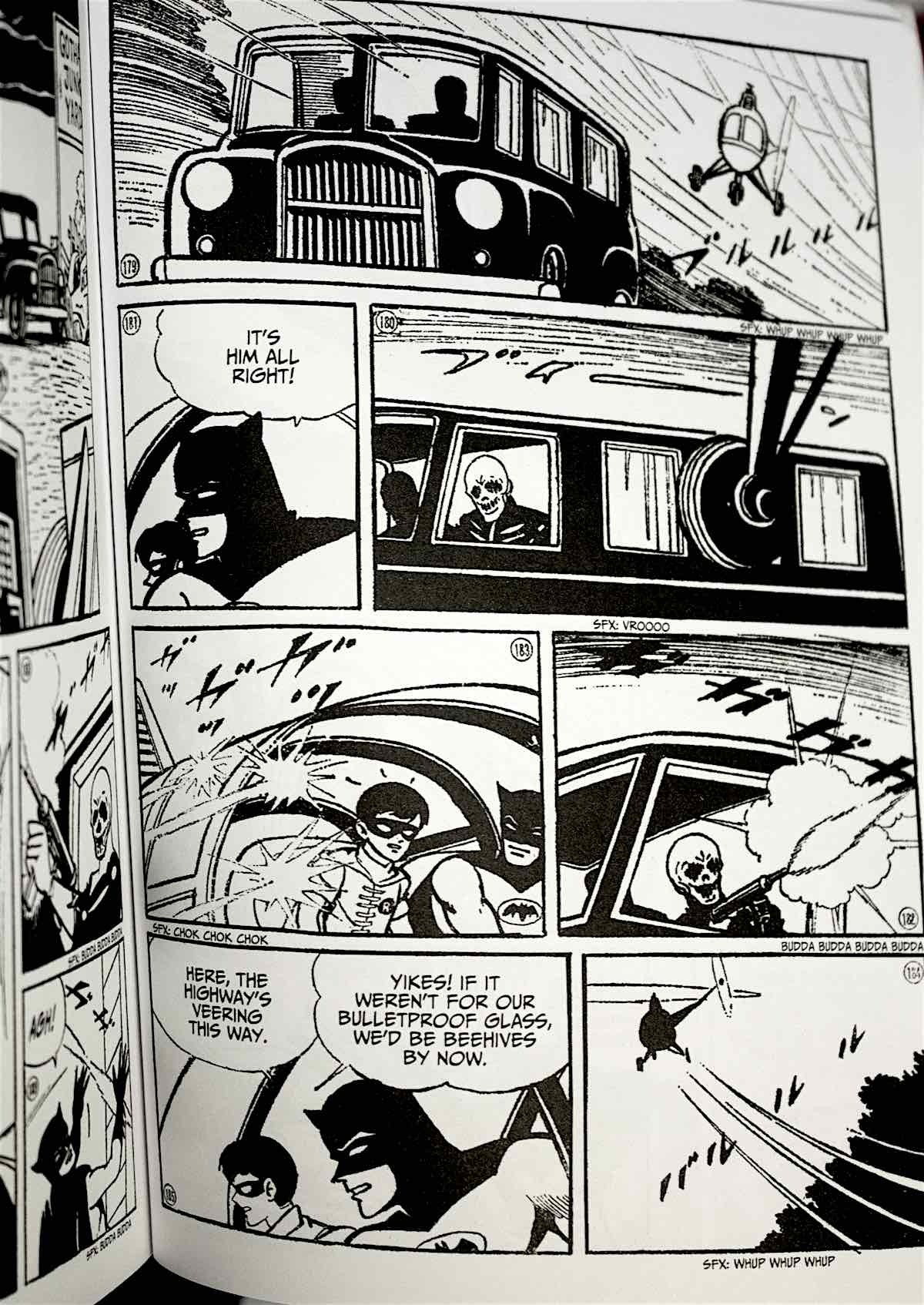
Batman: The Jiro Kuwata Batmanga Vol. 1
by Jiro Kuwata (illustrator)
DC Comics
2014, 352 pages, 5.8 x 8.2 x 1.1 inches (softcover)
Available for the first time in English, Jiro Kuwata's Batman is basically a Japanese version of the 1960s Batman TV series. It's campy, humorous, and sometimes so on the nose it's laughable. Maybe Batman will escape danger with a goofy, too convenient action, or the villain will taunt Batman with some of the oldest superhero cliches around. It will surely be an adjustment for readers who haven't experienced any of Batman's older stories, but it's important to remember this was produced in the '60s, and Kuwata was essentially mimicking the style of Batman that was popular. If you can do that you'll find a thoroughly enjoyable alternate take on the Caped Crusader and the Dynamic Duo.
Included here are six Batman stories, featuring Batman and Robin vs. unique villains like Lord Death Man and the Human Ball. The story arcs are all standalone and don't reference each other, however each arc is sub-divided into three to four parts. These villains are all formidable foes and a good mix of character types. Lord Death Man for example keeps coming back from the dead, while the Human Ball wears a metal suit that allows him to bounce off any surface, including Batman's punches. Each time, Batman is tasked with not just fighting the villain into submission, but using his classic Batman intellect to outthink them and set a trap. I personally love any Batman story that draws heavily on his detective skills, and Kuwata's work is one of the better examples of how to do it right.
The art style is interesting in that it looks and feels like a Batman comic, but Bruce is also drawn to look Japanese. It's incredibly authentic and you may even find yourself thinking that Kuwata himself invented Batman in the first place. The book is mostly black and white but a few color pages sneak in, and the chapter cover pages are all in color as well.
This translation keeps all the non-dialogue text in Japanese (signs, paces, SFX, etc.) and helpful translations are snuck into the margins. If you've never read manga before, have no fear! Pages are regularly numbered for clarity (as manga reads right to left). They're small and unobtrusive so manga pros probably won't even notice them. Two more volumes in the series are available, showcasing Kuwata's complete run. If you're a fan of manga or Batman, or hopefully both, you owe it to yourself to check this out. - Alex Strine
DARTH VADER'S PERSPECTIVE ON A NEW HOPE AND HIS NEED FOR VENGEANCE
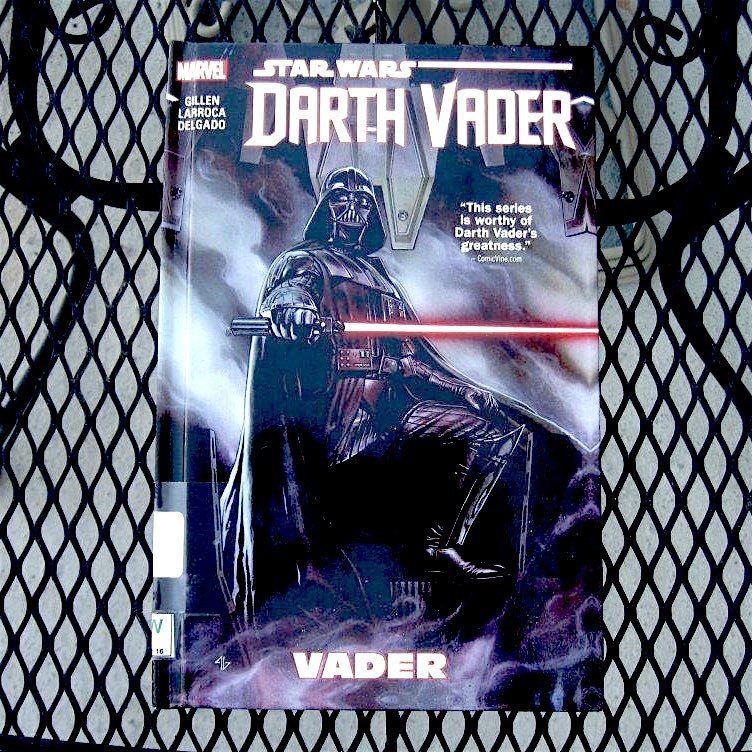
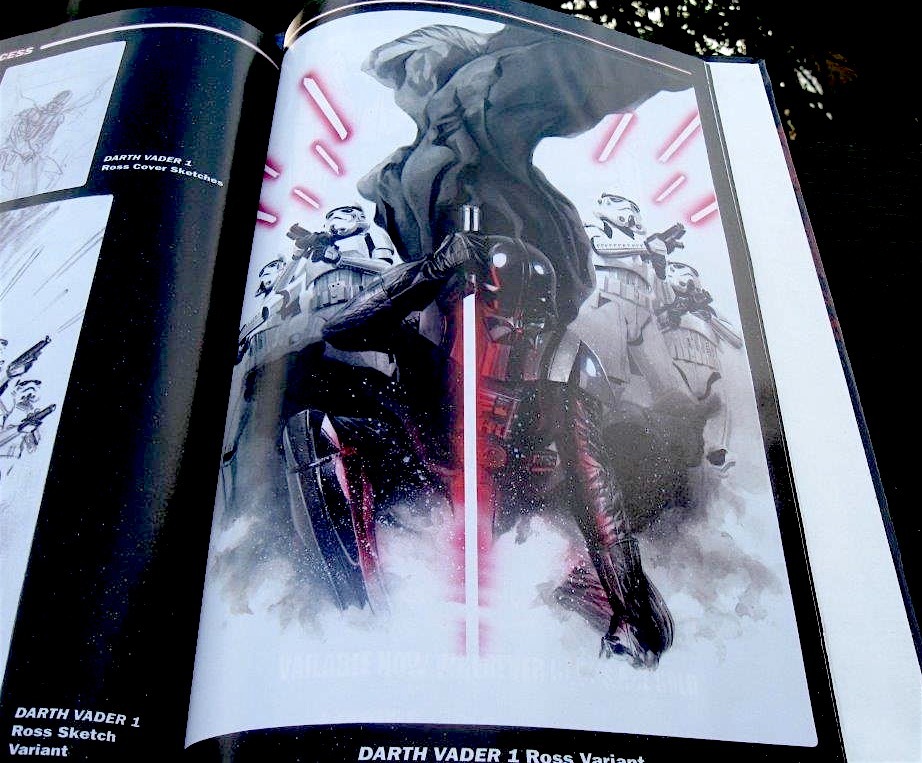
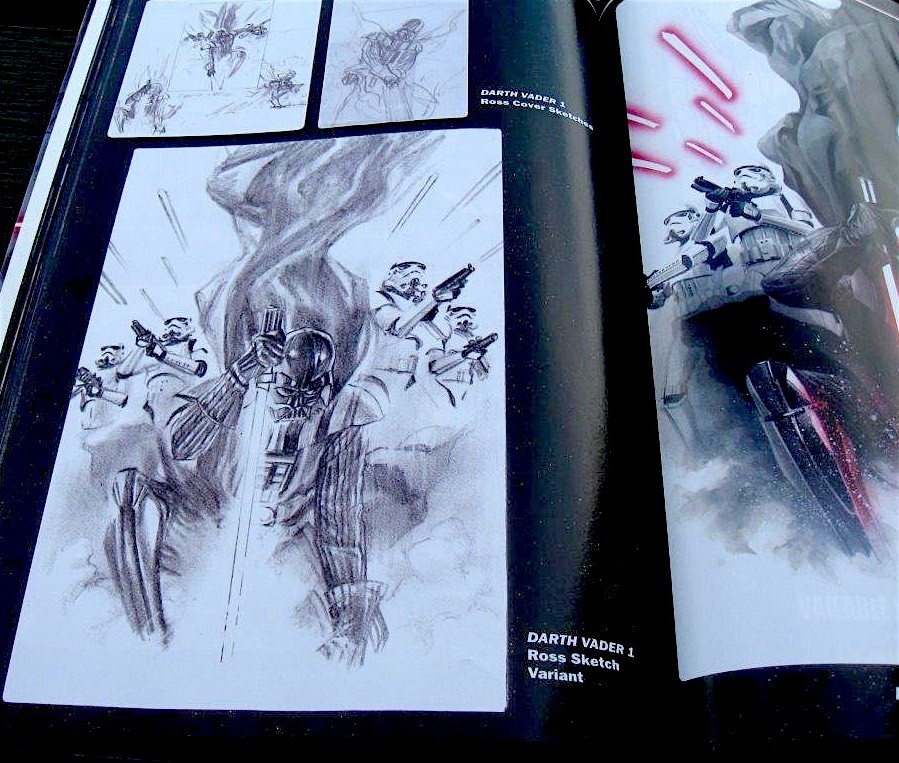

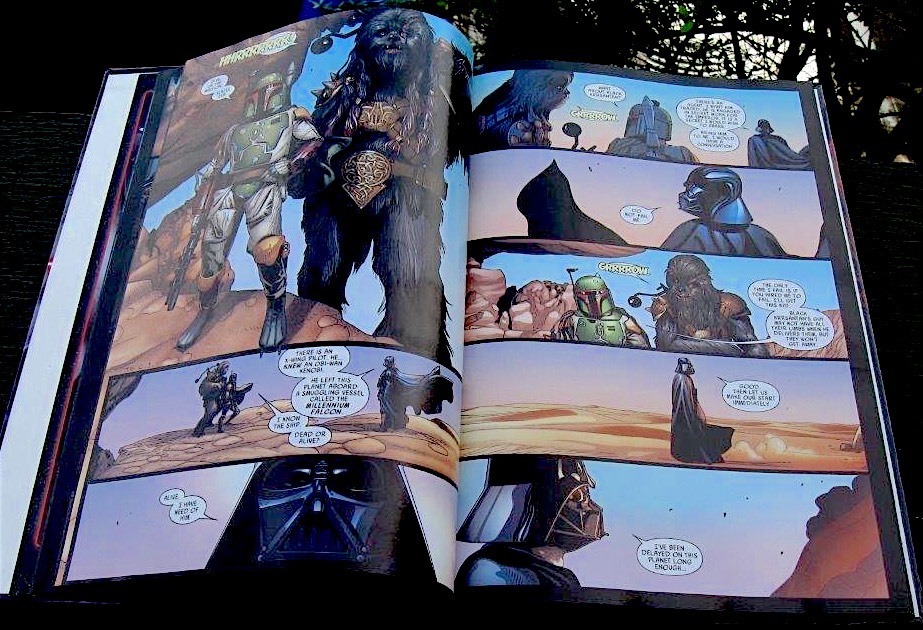
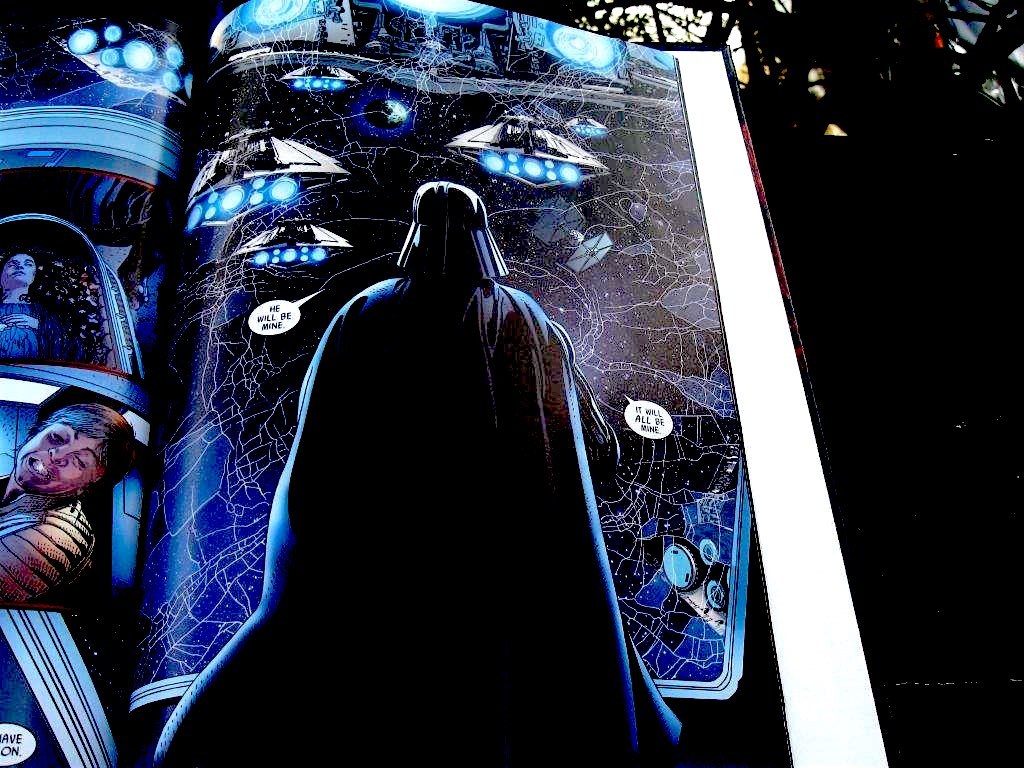
Vader: Star Wars Darth Vader Vol. 1
by Kieron Gillen (author) and Salvador Larocca (illustrator)
Marvel
2015, 160 pages, 6.8 x 10.2 x 0.2 inches (softcover)
The graphic novel Vader is the first installment of the series, Star Wars Darth Vader. Published by Marvel, this book collects into one volume the first six issues of Darth Vader. It begins with Vader's perspective on events of A New Hope. They reflect his need for vengeance because he is in a world of trouble after a really disastrous day at the office. The death star has been destroyed meaning the rule of law is in danger. Sith Lord Darth Vader has failed his master, the emperor, with all that entails for his own personal safety as well as the fact he must seek retribution.
To do that, first he journeys to meet with Jabba the Hutt. Darth Vader wants to work a deal with Jabba and will use force to get it one way or another. Having been a survivor of one of the worst military disasters in the history of the empire and having laid a trap that backfired, Darth Vader has a lot to be responsible for according to the Emperor. Darth Vader wants to find those who escaped on the Millennium Falcon, especially one person in particular, and to destroy any and all who helped them in the past or now.
He is doing all of that while being placed in a subordinate role having been demoted by the Emperor for his failure. Much of what happened prior to this book is referenced here by taking out Luke and inserting Vader into the scenes as everything is told from his perspective. As such prequels and flashbacks make up a significant part of the book. Those journeys into the past serve to enhance the storyline as it moves forward in time as well as refreshing the memory of the reader. It is a nice touch and works very well.
Filled with colorful panels, detailed artwork, and multiple storylines, the pages fly by as Darth Vader's quest for vengeance unfolds. Writer Kieron Gillen, through panels created by Salvador Larroca, tells a wide-ranging tale that answers some questions while creating many more presumably to be answered in the rest of the series. Colorist Edgar Delgado brings the images to life with vivid colors as well as subtle shading accenting both shadows and the dark forces at work. The artwork is quite impressive and really brings the images to life. If Vader is representative of the following installments of the Star Wars: Darth Vader series, this collection of graphic novels will be a visual and storytelling treat. - Kevin Tipple
Books That Belong On Paper first appeared on the web as Wink Books and was edited by Carla Sinclair. Sign up here to get the issues a week early in your inbox.

Unsurprisingly, Kash Patel's FBI has formally informed Minnesota officials that it will not be cooperating and will not provide access to information or evidence it collected in the fatal January shooting of Alex Pretti. The Minnesota Bureau of Criminal Apprehension called the lack of cooperation "concerning and unprecedented." — Read the rest
The post FBI withholds evidence in Minnesota appeared first on Boing Boing.

No federal criminal charges were ever filed for offenses at Jeffrey Epstein's Zorro Ranch. Multiple women said they were sexually assaulted at the 7,600-acre New Mexico property, including Virginia Giuffre, who was abused there repeatedly. Allegations go back to at least 1996, when a 16-year-old girl was targeted. — Read the rest
The post No one was ever federally charged for crimes at Epstein's Zorro Ranch. New Mexico is finally investigating. appeared first on Boing Boing.

"As if the Ministry of Truth in George Orwell's 1984 now existed, with its motto 'Ignorance is Strength,' this Court is now asked to determine whether the federal government has the power it claims — to dissemble and disassemble historical truths when it has some domain over historical facts. — Read the rest
The post Judge cites Orwell's 1984, orders Trump to restore slavery exhibit appeared first on Boing Boing.
Never too late for the late
Today is Ron Phillips' birthday. He died five years ago, but his absence remains constant and heart-wrenching. I'm also sad to note that I haven't written a proper remembrance for him here. So that's now on my list.
The post Broken locks, broken promises appeared first on London Cycling Campaign.

Stephen Colbert said Monday that CBS's legal team called his show and told him, "in no uncertain terms," that he could not interview Texas state Rep. James Talarico on the broadcast, Variety reports. Then they told him he couldn't mention not having Talarico on. — Read the rest
The post CBS blocked Colbert from interviewing a candidate, so he put it on YouTube instead appeared first on Boing Boing.

The first thing Barack Obama wanted to know when he became president was where the aliens are. He admitted this, laughing, during a lightning-round Q&A on Brian Tyler Cohen's podcast, published Saturday. When Cohen asked, "Are aliens real?" Obama said, "They're real." — Read the rest
The post Obama casually said aliens are real on a podcast, then had to post an Instagram correction appeared first on Boing Boing.

"We can't have American producers closing American factories and offshoring," hedge fund billionaire John Paulson told CNBC in September 2024. "We need to protect American jobs and protect American manufacturing."
Paulson is now closing the Eastlake, Ohio plant of Conn-Selmer — America's biggest maker of band and orchestra instruments — and moving tuba, sousaphone, and student French horn production to a new factory in Qidong, China. — Read the rest
The post MAGA billionaire who opposed offshoring is offshoring 150 Ohio jobs to China appeared first on Boing Boing.
Welcome to the latest Best of Bylines Network newsletter, bringing you a standout article from one of our 10 UK national and regional publications.
In this edition, Professor Rupert Read discusses a long-suppressed UK intelligence report about global biodiversity loss, ecosystem collapse, and national security. Produced by the Joint Intelligence Committee (JIC) and supported by DEFRA research, the report was originally presented last year at COBRA (the cabinet committee convened to handle matters of national emergency). Despite its gravity, it was withheld from the public - until now.
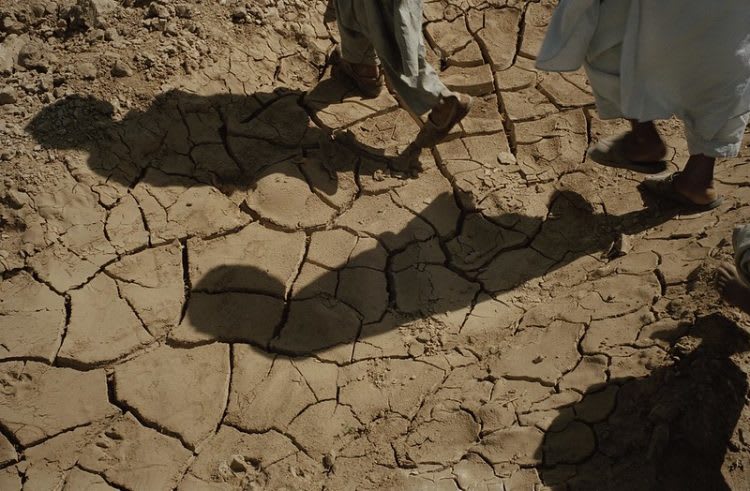 Large-scale migration from newly-uncultivable countries to cooler ones is likely. Photo by DFAT via Flickr (CC BY 2.0)
Its sudden appearance on a government website, without announcement or explanation, strongly suggests an attempt to minimise attention. Released amid the international crisis of Trump's Greenland aggression, the timing appears calculated to bury the story. That must not be allowed to happen.
From environmental issue to security emergencyThe report's title, Global Biodiversity Loss, Ecosystem Collapse and National Security, marks a decisive shift in official framing. Ecological breakdown is no longer treated as a distant, 'merely' environmental, concern, but as a direct and escalating threat to national and international stability.
The report warns that multiple ecosystem collapses are now likely, not merely hypothetical. These failures, it states, will have "dire implications" for national security and will require serious strategic adaptation merely to limit the damage. Such language is measured, but the message is unmistakable: the risk is immediate, systemic and severe.
Just one of the ways British national security is threatened by ecological breakdown as outlined in the report is through migration pressure. As ecosystems degrade, food systems fail, water scarcity increases and livelihoods collapse, "development gains begin to reverse." This restrained phrase points to mass human suffering - entire communities pushed back into poverty and instability. The report makes clear that these dynamics will drive large-scale displacement, creating cascading pressures on regional stability and on countries such as the UK.
Join our movement - 1000s of citizens telling the truth
We're proudly independent - no corporate owners or billionaire backers. But it costs us at least £150,000 a year to run our network. Support journalism by the people, for the people. Become a Friend of Bylines Network. For as little as £3.50 a month, you'll get behind-the-scenes insights, chances to engage with our editorial teams, access to special events, merchandise, and more. Sign up by clicking the button below, or upgrade your Substack subscription.
Become a Friend of Bylines Network
Where's the rest?
While the report is significant, it's pretty clearly not the full version and is strikingly thin in key areas. There is little detail on the geo-regional analyses that presumably underpin its conclusions. The links between specific regional ecosystem failures and concrete national security risks to Britain are not clearly explained. Even the report's 'Key Judgements', which are normally the core of any JIC assessment, are presented without adequate justification or depth.
This strongly suggests that what has been released is only part of a larger piece of work. The omissions appear deliberate, consistent with an effort to satisfy Freedom of Information requirements while withholding the most politically sensitive and disturbing findings.
The Government seems to be acknowledging the problem in principle while concealing its true scale and immediacy; in other words, withholding precisely the information citizens need in order to understand how to adapt to a declining global ecosystem.
First suppression, and now silenceThat this report was suppressed at all is deeply concerning. Its existence became public last October only through investigative journalism (based probably upon one or more officials taking risks with their own jobs), followed since then by sustained pressure from campaigners including notably Ruth Chambers, whose FOI work has been exemplary here.
Back in October, reporting was necessarily extremely limited; journalists had not been permitted to read the report itself. Now that the document has emerged, it is clear that earlier coverage barely captured its significance. This was not merely a warning about climate damage. It was a strategic assessment of how ecological collapse could destabilise entire regions, intensify conflict, disrupt economies and directly threaten the UK's security.
Its presentation at COBRA underscores this point. COBRA is convened for the most serious national threats. That ecosystem collapse featured there should have triggered urgent public debate. Instead, the report was buried.
Why this moment mattersThe quiet publication of this report may nonetheless mark a turning point. Once ecosystem collapse is formally recognised as a national security threat, the implications could be profound. Security threats demand preparation, strategic planning and decisive action. They also demand honesty.
The report exposes a widening gap between the scale of the threat and the inadequacy of current responses. Incremental policy measures and rhetorical commitments are clearly insufficient if multiple ecosystem collapses are likely within the foreseeable future. Strategic, nature-based adaptation will be unavoidable, and delay will only increase the human and economic cost.
This may explain the Government's reluctance to publicise the findings. Once citizens understand that ecological collapse threatens food security, migration stability, economic resilience and peace, pressure for meaningful action becomes unavoidable. This only bolsters the necessity for the Climate Majority Project's campaign calling on the government to fund (with mission-like deep pockets) a National Climate Resilience Plan; with military national security threats, we are always able to find the money to fund a response. It should be no different when the threat to national security is climate/ecological breakdown.
The case for full disclosureThere is now a compelling public interest case for releasing the full report. Democratic societies cannot respond effectively to threats that are only partially disclosed. Nor can citizens prepare for profound disruption if key information is withheld to avoid political discomfort.
Those who pursued the report's release through Freedom of Information requests deserve credit, as do those who commissioned it in the first place. But partial transparency is not enough. If the state holds detailed assessments of regional collapse, cascading risks and timelines, the substance of that knowledge must be shared. Anything less is a disservice to its citizens.
This is not about inducing panic. It is about enabling resilience, informed decision-making, and collective adaptation.
Facing the realityFinally, it must be said that the report's implications are emotionally difficult. To confront the likelihood of widespread ecosystem collapse is deeply distressing. That reaction is both rational and human.
When I first learnt what was really in this report, I suffered a serious episode of climate/polycrisis anxiety. Partly perhaps because I live on the edge of the Broads, in East Anglia, and so am intensely aware already of the (figurative and literal) rising tide of threats we now face.
If engaging with this material provokes anxiety or grief in you, it should not be faced alone. Talk with others. Seek support. Take time to process, and where possible, take action.
The attempt to bury this report has failed. The question now is whether we choose to face its warnings honestly, demand the full truth, and act accordingly, or allow one of the most consequential intelligence assessments of our time to slip quietly back into obscurity.
The stakes honestly could not be higher.
Postscript…Green Party MP for Waveney Valley, Adrian Ramsay, asked in Parliament on Thursday why the critical report was delayed and called for a debate on what the government is doing to prepare for the risks it outlines. The leader of the House responded by committing to making time for the debate (He also claimed that the Government had intended all along to publish the report…).
Crucially, on 23 January The Times also published a major new story about the report, which it observes is not the full version: agreeing with what I have written above.
The story reads in part: "…a full, internal version of the report, seen by The Times, goes further [than what the Government published last week], suggesting that the degradation of rainforests in the Congo and the drying up of rivers fed by the Himalayas could drive people to flee to Europe, leading to "more polarised and populist politics in the UK" and putting "additional pressure on already strained national infrastructure".
There is much more to come out…
Do pressure YOUR MP to get the full security assessment released.
Thanks to Joe Eastoe for crucial editorial assistance in the writing of this piece.
Rupert Read is Co-Director of the Climate Majority Project.
More from East Anglia Bylines
 Montage. Epstein by Scottish Govt (CC BY 2.0) via Wikimedia Commons; EU Parliament: image by Rawpixel (CC0)">USVI (CC0); Farage by UK Parliament(CC BY 3.0); EU Parliament by Rawpixel (CC0)
Stephen McNair writes on the Epstein files and what they reveal about the role of Brexit in a global network which stands to gain from undermining democracy itself.

Songbirds have charmed people for hundreds of years, boosting our spirits and health. They also play a vital ecological role: dispersing seeds, promoting plant growth, controlling pests and supporting a healthy natural environment. As sensitive indicators of environmental change, they also act as nature's early warning system, alerting us when something's going wrong.
Our UK songbirds are facing unprecedented threats; over the last 50 years, populations have fallen by 50% and continue to decline. We live in an era of mass species extinction, driven by threats such as climate change, insect decline, pollution, predation and landscape changes. Once common species - such as the bullfinch and spotted flycatcher - have become rare sights and sounds.
SongBird Survival, a charity headquartered in Diss, Norfolk, funds scientific research into the reasons for this decline. It focuses on areas where scientific evidence is sparse, inadequate or lacking.
Research into the impact of vet medicinesIn 2023 the charity funded a 2-year research study, working with Sussex University, looking at the effects of veterinary meds on nesting blue tits and great tits. Many species of birds use hair, wool and fur to line their nests as cushioning before laying their eggs. This lining can come from livestock, deer or sometimes from our domestic pets. The study examined the lining of nests for pesticides (such as fipronil, imidacloprid and permethrin) that are commonly found in anti-parasite treatments and tested if the presence of these pesticides had an impact on the offspring of nesting tits.

 Young great tits in their nest box. Image by jokevanderleij8 (CC0) | Two Blue Tit (Cyanistes caeruleus) parents admire their first chick to hatch, just moments before this picture was taken. The female (right) has a caterpillar for the chick's first meal. Image by fs-phil via Wikimedia Commons (CC BY-SA 2.0)
Research findings
Young great tits in their nest box. Image by jokevanderleij8 (CC0) | Two Blue Tit (Cyanistes caeruleus) parents admire their first chick to hatch, just moments before this picture was taken. The female (right) has a caterpillar for the chick's first meal. Image by fs-phil via Wikimedia Commons (CC BY-SA 2.0)
Research findings
The findings from this initial study paint a sad picture for our feathered friends:
- 103 nests were collected from blue tits and great tits and 100% of the nests were contaminated with fipronil (used in spot-on flea treatments for domestic pets).
- 89.1% of blue tit nests and 87.2% of great tit nests had detected levels of imidacloprid (also used in spot-on flea treatments).
- 89.1% of blue tit nests and 84.6% of great tit nests had detected levels of permethrin (typically used in anti-parasite treatments on beef/dairy cattle, horses, sheep, goats, swine, and poultry).
A second phase of this research project investigated whether the chemical exposure is influencing breeding success and survival in songbirds by measuring pesticide levels in the eggs and dead chicks of blue tits and great tits.
"This latest study is due to be published in early spring," Susan Morgan, SongBird Survival Chief Executive Officer told East Anglia Bylines, "so we're on the cusp of learning far more about the hidden impacts these chemicals could be having on our songbirds."
Next stepsWe are a nation of pet lovers, and many pet owners will be using the 'spot-on' flea treatments for cats and dogs. Farmers seek veterinary medical support to control flies, ticks, lice and mites on their livestock. Unfortunately the research findings add to growing evidence that veterinary medicines are potentially having a negative impact on songbird populations. This is why we need a greater environmental risk assessment of veterinary medicines.
SongBird Survival, along with other environmental organisations, is using the research findings to push for a more complete environmental risk assessment of veterinary meds by the Veterinary Medicines Directorate. The impact of pesticides on all wildlife and the environment needs greater understanding.
The charity will be launching a public campaign to help pet owners make informed choices, raising awareness of the environmental impacts of these products and encouraging people to have conversations with vets about the safest and most suitable options for their pets.
What can you do now?
To help prevent treatment pesticides compromising wildlife, SongBird Survival recommends:
- Talk to your vet about the most suitable options for your pet.
- If you do continue to use fipronil, imidacloprid and permethrin spot-on treatments, don't brush your dogs or cats outside or put out hair for the birds to use in nest-making.
- Don't allow pets to go into rivers and streams following the application of spot-on flea treatments, preferably for as long as possible.
- Make sure you dispose of the packaging properly in household waste.
SongBird Survival is the only national UK charity solely dedicated to changing the future for songbirds. Its vision is to create rich, resilient and balanced songbird populations. It makes an impact by driving conservation through scientific research, protecting songbirds by raising awareness and inspiring action, and safeguarding the most at-risk songbird species. Please visit www.songbird-survival.org.uk for more information on how you can help protect songbirds.
More from East Anglia Bylines
 Environment
From silence to song: saving the farmland birds
byRachel Fulcher 5 October 2025
Environment
From silence to song: saving the farmland birds
byRachel Fulcher 5 October 2025
 Environment
Hidden wonders: my fascinating encounters with the Bittern
byLeslie Cater 11 November 2025
Environment
Hidden wonders: my fascinating encounters with the Bittern
byLeslie Cater 11 November 2025
 Climate
The truth about migratory birds and the climate emergency
byJenny Rhodes 18 October 2025
Climate
The truth about migratory birds and the climate emergency
byJenny Rhodes 18 October 2025
 Environment
More than a hobby: garden birdwatching is the new conservation frontier
bySusan Jones 1 February 2026
Environment
More than a hobby: garden birdwatching is the new conservation frontier
bySusan Jones 1 February 2026
 Friends of Bylines Network
There has never been a greater need for grassroots journalism that investigates the stories that really matter, holds power to account and champions the voices of everyday citizens. We are proudly powered by volunteers but what we do isn't free.
STAND WITH US for independent, citizen-led journalism that makes democracy stronger, and you will even get some exclusive benefits.
BECOME A FRIENDThe post Fighting for songbird survival and safer everyday veterinary medicines first appeared on East Anglia Bylines.

This heartwarming video shows a pigeon caring for a pregnant cat and her babies. The pigeon collects straw and builds a bed around the cat for comfort. After the kittens are born, it keeps adding to the nest, ensuring they're all cared for. — Read the rest
The post Watch a sweet pigeon care for a pregnant cat and her kittens appeared first on Boing Boing.

Wooly Story (1964) is a quietly enchanting stop-motion short from Czech animator Hermína Týrlová, who makes everyday materials feel alive. In nine minutes, a simple ball of yarn awakens with curiosity, slowly unraveling into playful movement and mischief. Without dialogue, the film lets texture, motion, and timing do all the storytelling. — Read the rest
The post Wooly Story is a whimsical stop-motion short from 1964 that brings yarn to life appeared first on Boing Boing.

This may be a step towards telling new Star Wars stories on the big screen, or just a merchandising blitz.
The Mandalorian and Grogu is the next feature-length Star Wars movie, releasing in theaters. It seems to leap directly off the little screen and onto the big, feeling even more like an episode of the TV series than Star Trek attempts at movies with their television casts. — Read the rest
The post Mando and Baby Yoda the Movie's "official" trailer appeared first on Boing Boing.

These photos capture the subtle art of deep sleep marks—imprints left on skin after napping on objects. The collection includes marks from a TV remote, earbuds, and even a palm print.
Each photo tells a story about where someone dozed off. — Read the rest
The post Deep sleep marks captured in photos show the imprints of naps appeared first on Boing Boing.

Skateboarder Ted Barrow takes a look at the yesterday and today of Los Angeles' famous beachfront skate spots, from the Santa Monica Pier to the Venice Pavilion.
Whether you grew up watching skate movies or in West Los Angeles, the skate spots along Santa Monica and Venice Beach are iconic. — Read the rest
The post The architecture and history of LA's skateable beachfront appeared first on Boing Boing.
So I thought I would republish my paean to pancakes — which are kind of like cocktails, if you think about it —— from last year. Only this time, it's FREE. Enjoy.

The winter Olympic events consist of skiing, skating, or sliding in a variety of wild ways. Biathlon, which combines cross-country skiing and target shooting, has some competition for the title of "craziest sport combining other sports" at the Olympics with the debut of skimo. — Read the rest
The post The newest Olympic sport is bonkers appeared first on Boing Boing.


