
Sounds right enough
Axios: 1 big thing: 3 historic shifts. It begins,
"You can only fully understand politics, business and your own anxiety in 2026 by reckoning with the three, once-in-a-generation shifts unfolding at once, Jim VandeHei and Mike Allen write in a "Behind the Curtain" column:
- The ideologies, tactics and tone of governance.
- The lightning-fast advancements in AI.
- The overnight transformation of how our realities are shaped."
I have now been here a week and I think that I have absorbed enough to attempt a little analysis, as opposed to the simple impressions I gave shortly after arrival.
Those impressions remain valid however: this is not a repressive state. I was on the Randy Credico show live on WBAI New York on Friday, and by chance my friend, the renowned FBI whistleblower Colleen Rowley was also on, from Minnesota (where I have stayed with Colleen and her husband in their home).
I was explaining that, in a week of going all round Caracas, I had yet to see a checkpoint, that nobody had at any stage asked me who I am, what I was doing or prevented me from going anywhere, and that the shops, bars and restaurants are all functioning normally.
Colleen reported from Minneapolis that there were checkpoints everywhere, that the streets are full of heavily armed men, that people are frequently stopped, questioned, asked to produce documents, and diverted, and that many shops bars and restaurants are closed because the staff are afraid to venture out into the streets. Colleen is heavily involved in detainee support and in getting supplies to people sheltering in their homes.
Remind me again, which of us is in a supposed dictatorship?
I want to tell you a couple of things to help explain Venezuela. I visited the mausoleum of Simon Bolivar, a genuinely heroic man. He has now been removed from the main Venezuelan Pantheon into a connected dedicated modern mausoleum. The Pantheon itself contains the remains of many of the heroes of the Venezuelan War of Independence, and monuments to all of them.
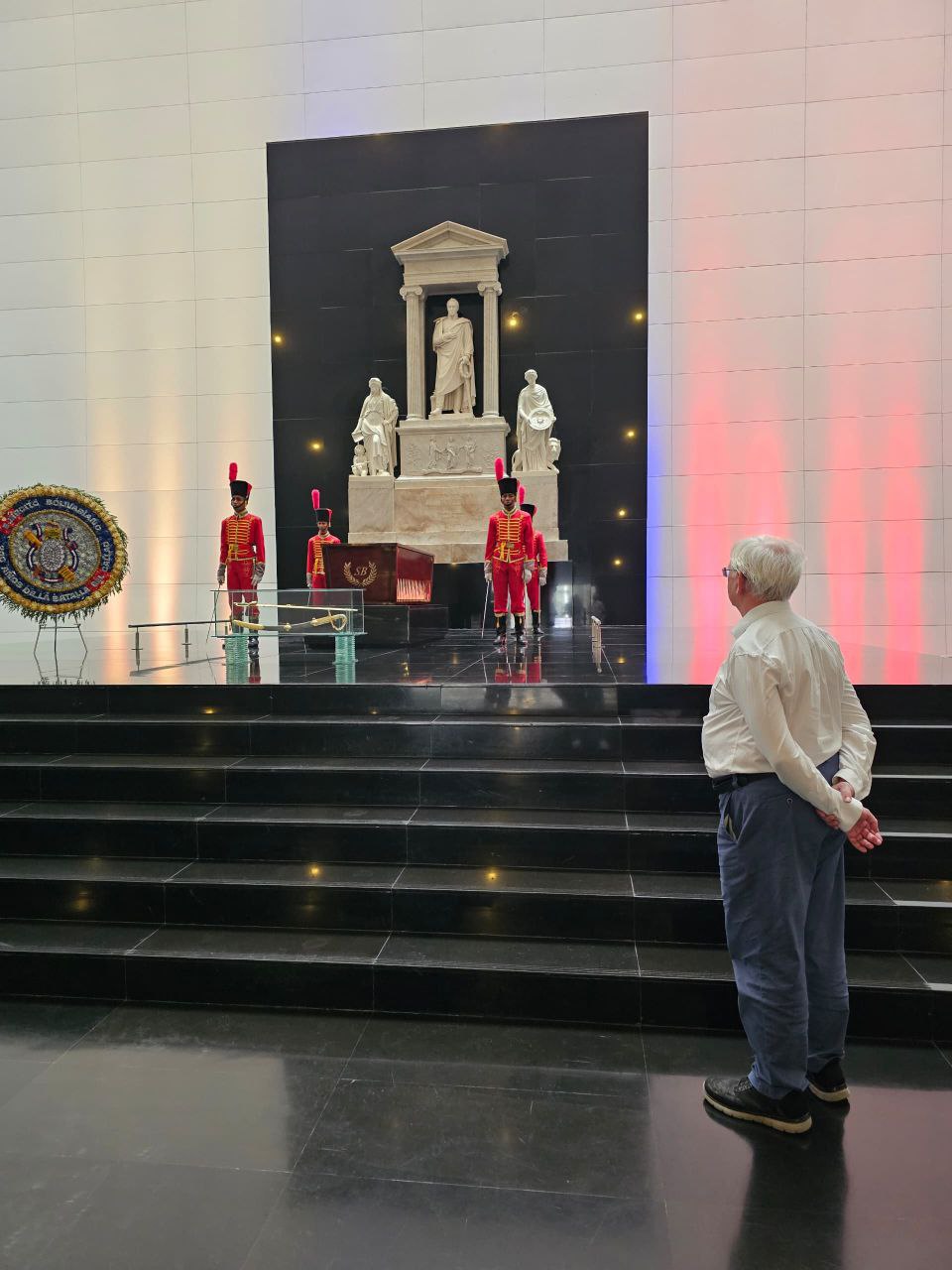
The Venezuelan War of Independence was, of course, in many respects similar to the United States war given the same name. It was a war between colonial elites and their metropolitan masters. Unlike the founders of the USA, Bolivar himself was genuinely opposed to slavery, but that was not true of many of his key allies.
So the Pantheon as originally conceived in the late 19th century was inhabited by the remains and memories almost entirely of those heroic people of Spanish descent who fought against the colonial control of Spain. This is the great founding ideal of Venezuela.
When Chavez and Maduro came to power, they made a very important change. They added a monument to the liberated slaves who had fought against the Spanish. Then Chavez and Maduro each added an extra monument: to leaders of the Native Americans who had fought against Spanish invasion in the first place.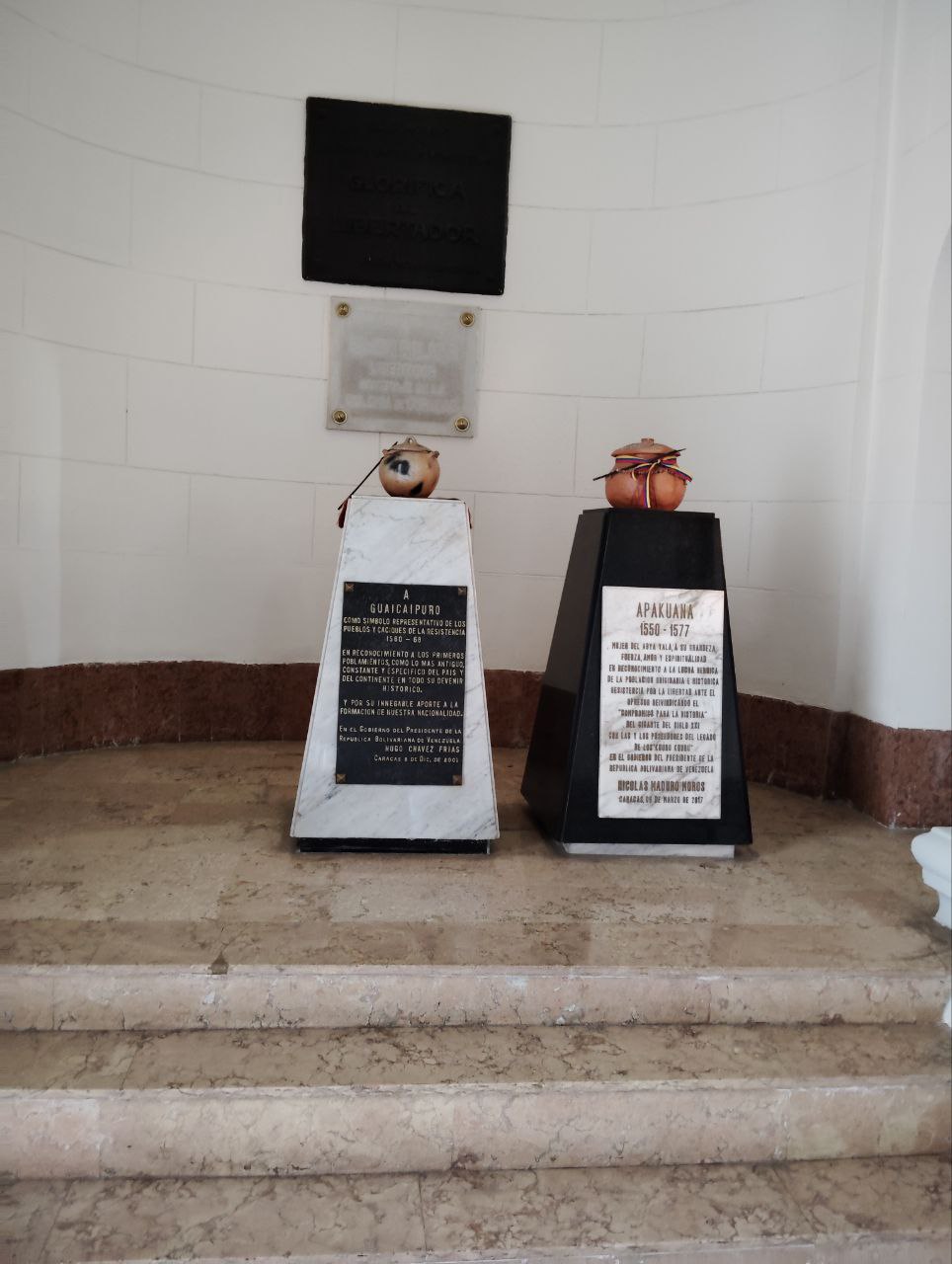
This caused outrage among right wingers furious that the purity of the Pantheon, the great focus of Venezuelan nationalism, was being desecrated for what they viewed as political purposes. Which brings me to what I think is a fundamental observation. Politics in Venezuela are basically racial.
I am treading on eggshells here, but in 2019 I published this post noticing the contrast between opposition and government group photos. The leadership of the right wing are basically whiter. That is simply who they are.
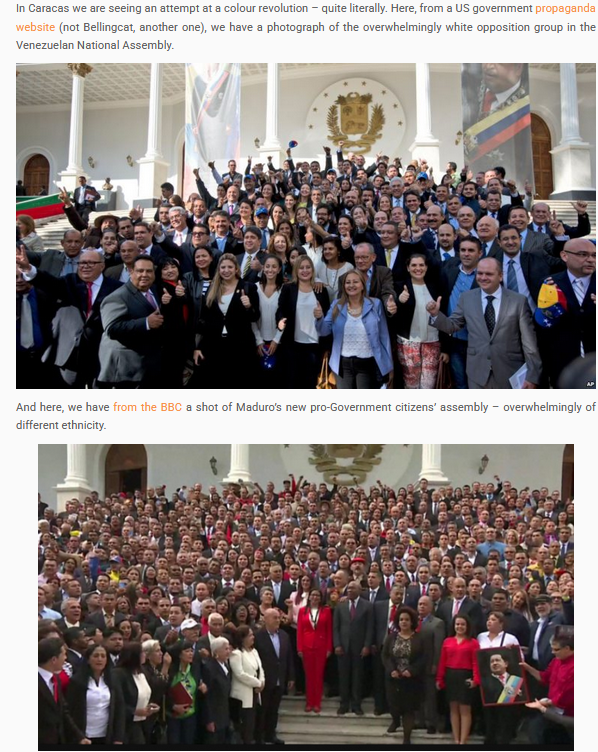
Of course the divide is not absolute, and individual exceptions exist. But it is there. Politics in Venezuela are strongly class based, and in this post colonial society it is difficult to disentangle race from class.
What the opposition want is simply to turn back the clock and restore economic apartheid in Venezuela. I had a very interesting talk with Ricardo Vaz of Venezuela Analysis. He explained how Chavez' revolutionary policies had brought people into political discourse who had always been ignored in what was historically an extremely unequal society:
"The rulers, now the opposition, suddenly found that their cook, their cleaner, their driver and even their gardener were learning to read and write and starting to get political ideas. They did not like this at all".
They still don't like that. It is not possible for me here now to capture what happened exactly in the 2024 elections. Plainly the opposition performed relatively well, though I do not in the least believe they got 68% of the result. Maduro's closing rally had 1 million people while the opposition's had 50,000.
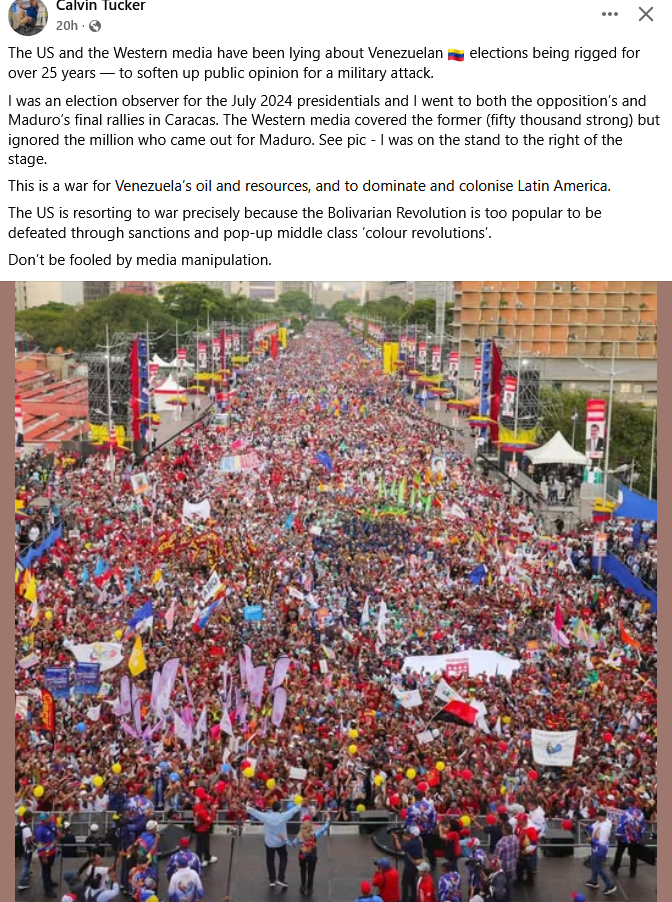
For the government to remain in power against the will of 68% of the population would require a degree of state repression which simply does not exist here. There is very little surveillance compared to western states, let alone to acknowledged dictatorships. There are no politicised police or militias in the streets. There are no restrictions on people moving around and mingling.
Machado has discredited herself, as effectively as she has discredited the Nobel peace prize. Giving the prize to Trump made her look foolish and suppliant, and praising the bombing of her own country which killed fellow citizens has really not gone down well at all, even with opposition supporters.
But even that has not harmed her nearly as much as her remark to the Nobel Peace Prize Committee that 60% of Venezuelans are involved in narcotics or prostitution. This is not quite what she said, but it is near enough and it really annoyed people here:
We have the Colombian guerrilla, the drug cartels that have taken over 60% of our populations, and not only involving drug trafficking, but in human trafficking, in networks of prostitution. So this has turned Venezuela into the criminal hub of the Americas…
Which takes me back to personal impressions. I have, as those who follow me would expect, assiduously been checking out the bars of Caracas. I have found some very beautiful ones - Juan Sebastian Bar is one of the most lovely bars that I have ever seen. A piece of stunning interior design. I took these photos before it opened one evening. It serves mojitos even better than you can get in Havana.
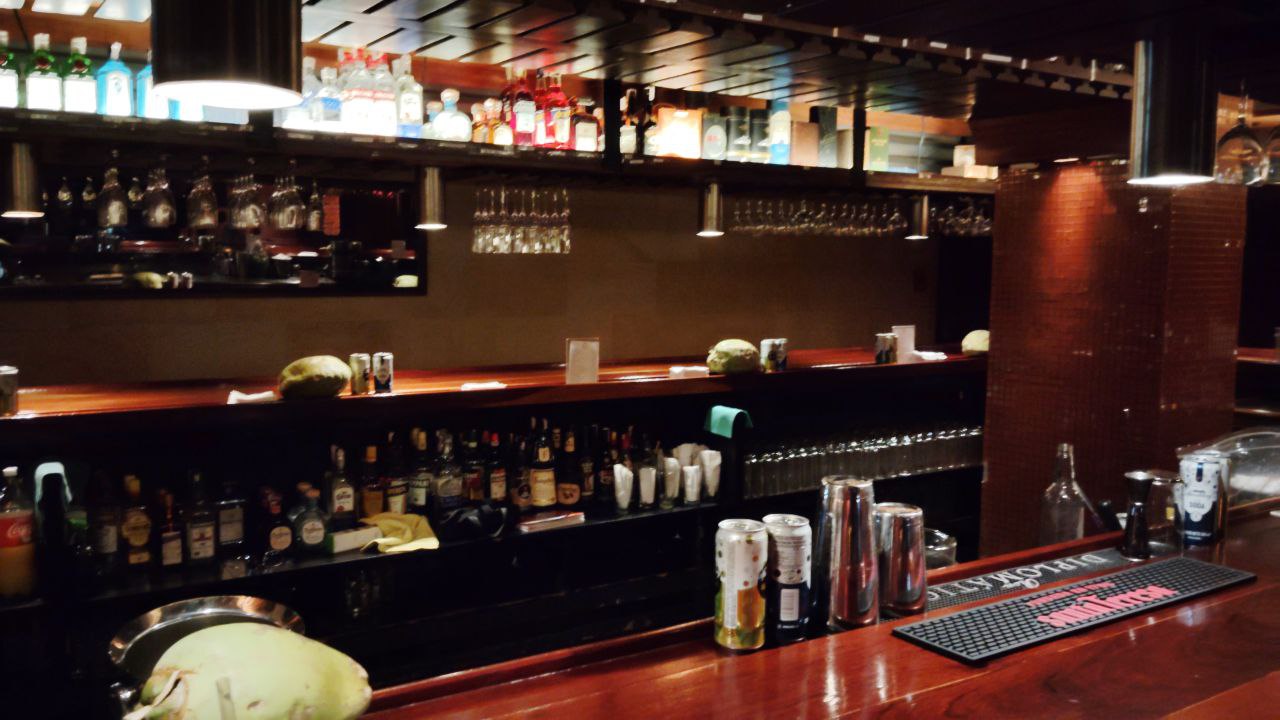
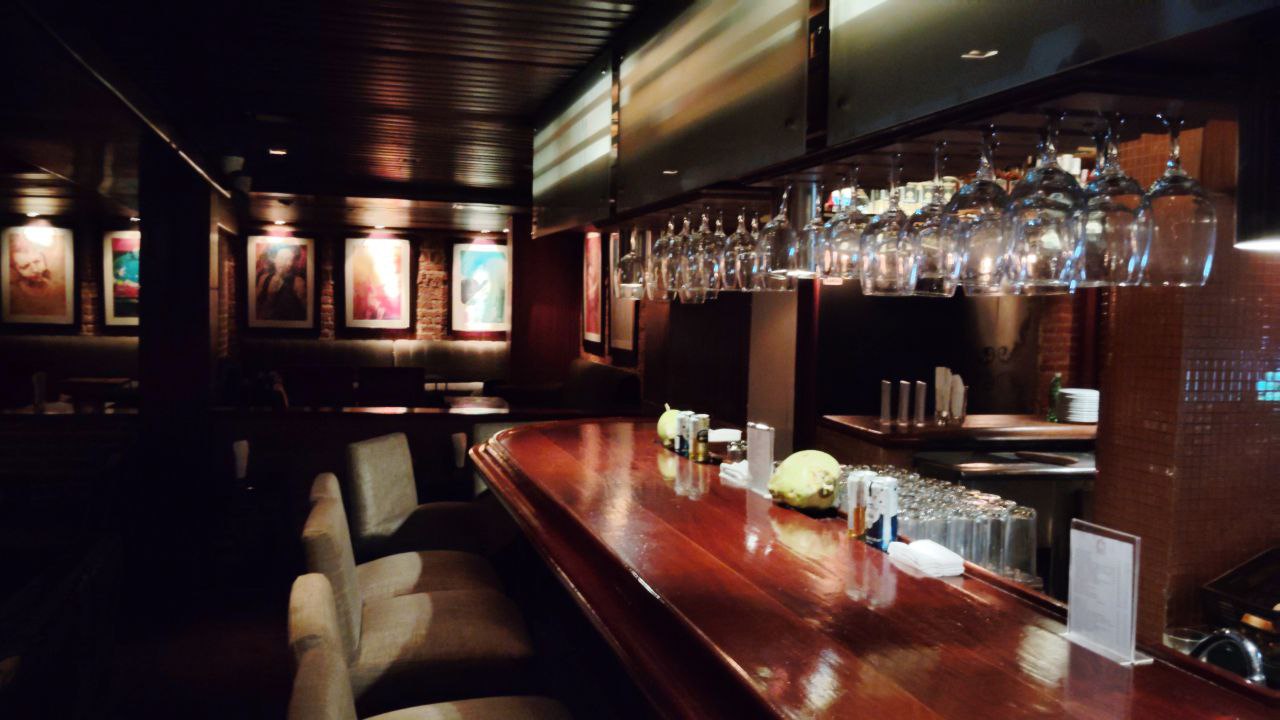
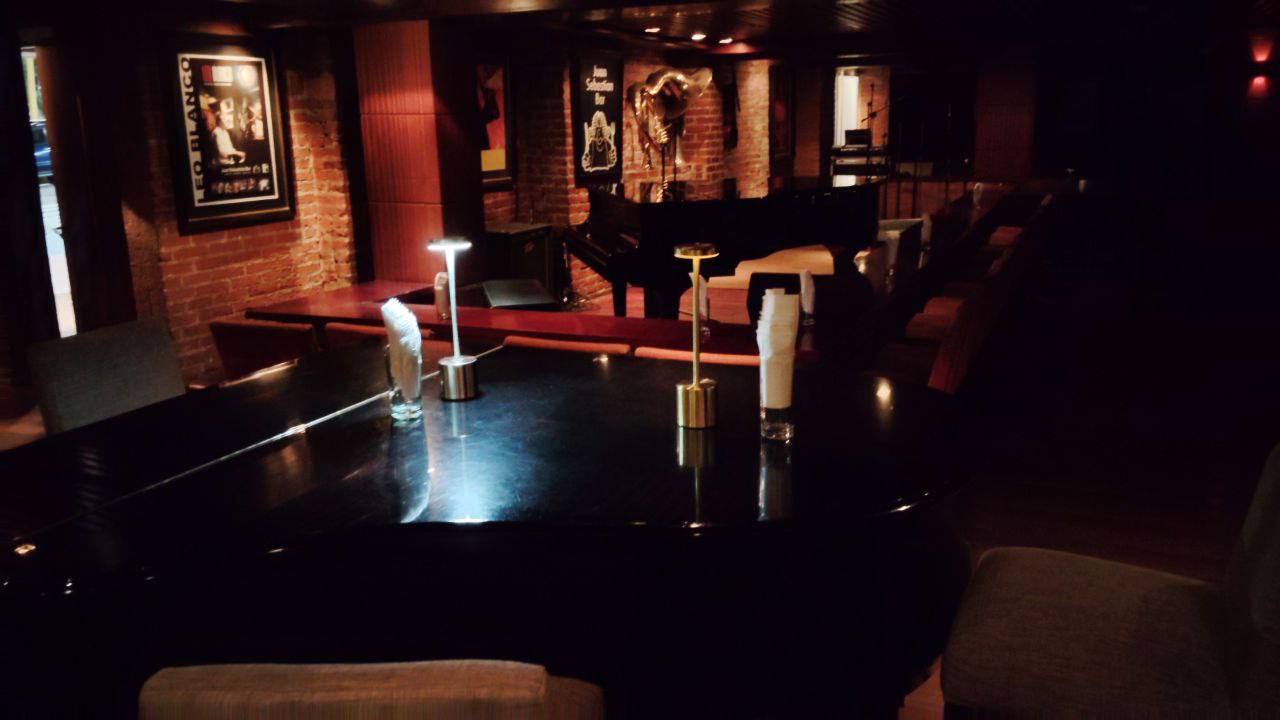
That is not a mirror, those are two grand pianos!
The point is that not in my hotel, not in any bar, not on any street, have I seen a single person who appeared to be operating as a sex worker. Not one - and I might perhaps be viewed as a pretty archetypal target. Similarly I have not seen any sign at all of narcotics abuse. In two days in Salisbury investigating the Skripal hoax I was shocked by how many obvious drug addicts we saw on the streets. There is nothing of the kind in Caracas.
While I appreciate that the allegation is that Venezuela exports narcotics rather than consumes them, you always get clusters of addiction around production points and transit nodes. I just see no evidence that the common tropes about Venezuela and Venezuelans are true: and I am a trained and seasoned observer.
Sanctions against Venezuela did not start after the disputed 2024 election; they have been applied by the Western powers more or less since the very start of Chavez' socialist experiment. The repression of socialism in Latin America has been US policy for a century, and the more Chavez succeeded the more the west sought to suppress it. France refused to provide spares for the Mirage jets of the Venezuelan air force, and equally refused to supply spare parts for the trains of the Metro service.
The gold and foreign currency reserves abroad of the government of Venezuela have simply been stolen by foreign governments, and the blocking of Venezuela from the Swift bank transfer system for a while caused havoc. It has however spurred BRICS to develop an alternative, not fully adopted not finished but working in Venezuela, which accounts for the full stocks in the shops and ultimately might represent a significant moment in international economics.
Slowly, unwillingly, the Socialist Party under Maduro has been forced precisely by the crippling effect of sanctions to allow more space for the private sector and move from a fully socialist to a more social democratic model - though to describe the reforms under Maduro as "neoliberal" is ridiculous. It may theoretically be possible to build socialism in one country, but if the major economic powers join forces to destroy you, it becomes very difficult indeed.
A dangerously simplistic narrative about what has happened in Venezuela has taken hold in the West, fueled by Trump, CIA and Machado/Miami sources.
On this reading, Acting President Delcy Rodriguez is in collusion with Trump, betrayed Maduro and stood down defences on the night of his kidnap, and is now instituting neoliberal policies, including a new petroleum law which states only the USA may ship Venezuelan oil and that payments for it will go exclusively through the US in Qatar.
In fact this is not true at all. Venezuela's new petroleum legislation contains no provisions banning oil exports to China or Russia and no provision for payments to be routed through the USA. The new Petroleum law is in fact legislation which sets out a new commercial basis for the operation of the Venezuelan petroleum sector on the same kind of concession, licensing and royalty basis as pertains in almost every other oil producer.
The key point is that the legislation was drafted under Maduro, with extensive consultation and debate. It came for its first reading to the Assembly literally the day after Maduro was kidnapped. That was already scheduled, not a result of the kidnapping. The notion that Maduro opposed the legislation and Rodriguez had to get rid of him to get it thorough is patent nonsense.
The legislation is unrelated to the United States current hijack of the sale of Venezuelan oil. This is proceeding through simple piracy. Trump decreed that only two companies, Vitol and Trafigura, would be allowed to load Venezuelan oil, and those companies would pay for the oil to the United States, into a special account held in Qatar under Trump's name.
This new scheme has been enforced by simple piracy. Any tankers carrying oil not owned by Vitol and Trafigura from Venezuela have been illegally seized at sea by the US Navy, sometimes assisted by the UK government. The United States has been claiming that Venezuela agrees to this arrangement. That is not true. Or it is true in the sense that a hostage held at gunpoint agrees to stay put, rather than get a bullet through the skull.
The Venezuelan government simply has no physical ability to prevent the United States Navy from seizing oil tankers.
Nor is it true that the Venezuelan government gave the United States information on non Vitol and Trafigura tankers and requested their interception. Obviously the United States could get the information on "rogue" tankers from Vitol and Trafigura.
Trafigura have featured in my writing for decades as the archetypal extremely corrupt western corporation. Their record for deliberate pollution and corruption in Africa is appalling, including in Angola and Ivory Coast. They have frequently been involved in CIA schemes for egime change.
How Vitol and Trafigura came to be the beneficiaries of a duopoly, and what backhanders than may have involved, is another question. In fact this is the one area of domestic pressure that has forced a step back from Trump, and last Friday it was announced that the arrangement will be expanded to include more companies.
It is worth noting that the system has not just been invented for Venezuela. It is almost identical to the sysyem imposed on Iraq after its destruction by the United States and its allies, with payments for Iraqi oil made to the USA and a percentage of them returned to the Iraqi government.
The difference is that the Iraqi revenues were paid to the US Treasury, whereas the Venezuelan funds are going to a Qatar account under Trump's personal control, removed from the reach of Congress. At its most charitable reading, it gives him a massive slush fund to pursue policy outside the United States legal framework. It is like Iran Contra on a massive scale.
To reiterate: none of this sales arrangement has been agreed by Rodriguez and none if it is contained in the new Venezuelan hydrocarbon legislation on concessions and royalties. There are two separate things being widely conflated.
The line that Delcy Rodriguez agrees to both the kidnap of Nicolas Maduro and his wife Cilia, and to the hijacking of Venezuelan oil sales and revenues, has been deliberately spread by the US and its acolytes, despite Delcy Rodriguez' furious denials.
If Rodriguez really was Trump's placed woman, then boasting about it would fatally undermine her within Venezuela and bring about her downfall - which obviously would be entirely counterproductive were there any truth in the claim.
So why is this rumour being spread? Well the obvious reason is precisely to undermine Rodriguez and destabilise the government of Venezuela.
But perhaps a more important factor is Trump's obsessive need to claim victory. He gathered a massive military force off the coast of Venezuela, and stood in danger of mockery as the Grand Old Duke of York if he simply sailed it away again.
The seizure of Maduro has in fact changed nothing in policy terms within Venezuela, but it has provided a spectacular operation for Trump to claim as a victory. In truth, as a demonstration of the capabilities of the United States' offensive military technology, it was indeed technically impressive.
For the removal of Maduro to be portrayed as a triumph, Trump has to claim that Rodrigues is solidy pro-USA, even though this is plainly not true. It is merely a part of the parade of triumph that is an essential component both of Trump's ego and of the bombastic Trump method.
What now happens to Maduro and Cilia is, on this reading, not really relevant. The entirely false narrative of the non-existent Cartel do los Soles has already been abandoned as part of the prosecution. In the USA's misnamed "justice" system, they have a variety of witness accusations from diverse figures prepared to sign nonsense against Maduro as part of a plea bargain agreement. These include rococo Trump-pleasing standouts such as testimony that Maduro was involved in fixing the 2020 US Presidential election on behalf of Biden.
My prediction is that Trump will "pardon" Maduro before the prosecution gets too silly, and present that as another part of his triumph. But who can predict a madman?
That is precisely the conundrum now facing Delcy Rodriguez. She is dealing with two imponderable equations.
The first was already difficult enough. Historians and ideologues will debate for centuries whether Chavismo could have succeeded economically with its full-on socialist programme, had the western world not determined to destroy it by crippling sanctions.
What is I think beyond dispute is that the sanctions were so crippling that they caused considerable public hardship, and massive inflation. At the same time, the very fact that Venezuela is not highly dictatorial and both Chavez and Maduro broadly allowed debate, free opposition political parties and media, and the operation of western funded NGOs, meant that the Venezuelan population were continually bombarded with western propaganda which blamed the problems caused by sanctions on the Bolivarian Revolution.
This eroded support for the socialist project, which though still intact, has crumbled at the edges. The Bolivarian government has been obliged to try to mitigate the effects of the sanctions which stole the government's own capital, and to seek the removal of some sanctions, by the opening up of more space for capitalist investment and operation in the economy, notably but by no means only in the oil sector.
In other words the government has been forced to concede some ground to the West by inching along the spectrum from socialist to social democratic, while attempting to maintain the massive social gains of the Chavez revolution.
This is an exercise in which Nicolas Maduro himself was fully engaged. I believe that both Maduro and Rodriguez have the intention of inching back from social democracy towards socialism over time, once pressures have eased. Theirs is a game of strategy not of tactics.
To this already extremely sensitive calculation is added the extraordinary factor of Trump. His willingness to simply kill innocent people, to shatter international law, and impose his will by exploiting massive United States military advantage over a small country, changed all the rules of the game.
The pressure to make changes faster to appease somebody who is plainly mentally unstable, the difficulty of understanding his limits and true goals, is an excruciating experience when the lives and deaths of Venezuelans are in your hands. Trump's incredible bombast, his wild claims that Venezuelan land and oil is stolen from the USA, are not contained within the realm of normal diplomatic negotiation.
Delcy Rodriguez is not so much walking a tightrope, as navigating an Indiana Jones tunnel full of traps.
One thing that Trump has in fact got right is his contention that Machado does not have the public support to rule. This seems to me indisputable, and an attempt to impose her would result in civil war. This of course in itself undermines the contention that Machado's team massively won the 2024 election.
Meanwhile life in Venezuela goes on for ordinary people. I had the great pleasure to attend a concert by the National Symphony Orchestra on Sunday. It was very accomplished, and the auditorium was full. The programme was entirely of Venezuelan composers, and I had never heard any of the music before. The opening sympnonic poem by Juan Bautista Plaza would stand alongside the European repertoire without blushing.
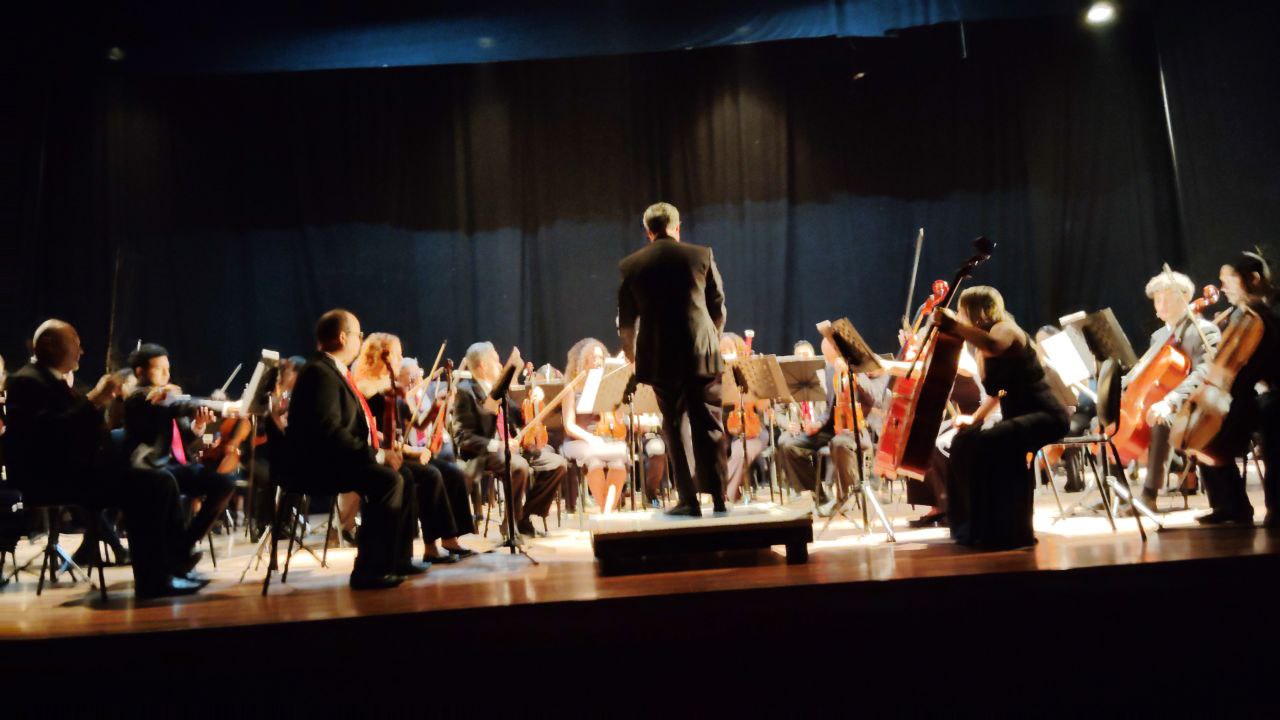
I make no apologies for bringing little slices of ordinary life to you, because the picture we have given of Venezuela is so strangely and massively distorted, it requires multiple points of correction.
Chavez instituted a programme of musical education for working class children that became the envy of the classical music world, known simply as La Sistema. Much more heart-rending examples of western sanctions might be found, involving medical provision. But as an example of the cruel absurdity of the sanctions regime, the youth orchestra of Venezuela has difficulties getting hold of simple consumables - strings, reeds, plectra - because of sanctions.
In bringing violin strings to a child I should be committing a crime in the United States of America. Let that be a testament to the absurdity of using sanctions to crush human spirit.
I am very aware I have not left Caracas yet and of the limitations of my experience so far. But I am already struck of the great advantage of being here over commentators in the West who I see daily, even when well-intentioned, getting it all wrong. The mainstream media of course produce a fake narrative entirely as a matter of policy.
I am delighted to say that today our new videographer and editor are starting and we will be able to bring you video content. I also hope today to conclude rent of an office/studio space.
we now have a Venezuela reporting crowdfunder. I have simply edited the Lebanese GoFundMe crowdfunder, because that took many weeks to be approved and I don't want to go through all that again. So its starting baseline is the £35,000 we raised and spent in Lebanon.
I do very much appreciate that I have been simultaneously crowdfunding to fight the UK government in the Scottish courts over the proscription of Palestine Action. We fight forces that have unlimited funds. We can only succeed if we spread the load. 98% of those who read my articles never contribute financially. This would be a good moment to change that. It is just the simple baseline subscriptions to my blog that have got me to Venezuela, and that remains the foundation for all my work.
Anybody is welcome to republish and reuse, including in translation.
Because some people wish an alternative to PayPal, I have set up new methods of subscription payment including a Patreon account and a Substack account if you wish to subscribe that way. The content will be the same as you get on this blog. Substack has the advantage of overcoming social media suppression by emailing you direct every time I post. You can if you wish subscribe free to Substack and use the email notifications as a trigger to come for this blog and read the articles for free. I am determined to maintain free access for those who cannot afford a subscription.
Subscriptions to keep this blog going are gratefully received.
Choose subscription amount from dropdown box:
Recurring Donations
3 Pounds : £3.00 GBP - monthly5 Pounds : £5.00 GBP - monthly10 Pounds : £10.00 GBP - monthly15 Pounds : £15.00 GBP - monthly20 Pounds : £20.00 GBP - monthly30 Pounds : £30.00 GBP - monthly50 Pounds : £50.00 GBP - monthly70 Pounds : £70.00 GBP - monthly100 Pounds : £100.00 GBP - monthly

PayPal address for one-off donations: craigmurray1710@btinternet.com
Alternatively by bank transfer or standing order:
Account name
MURRAY CJ
Account number 3 2 1 5 0 9 6 2
Sort code 6 0 - 4 0 - 0 5
IBAN GB98NWBK60400532150962
BIC NWBKGB2L
Bank address NatWest, PO Box 414, 38 Strand, London, WC2H 5JB
Bitcoin: bc1q3sdm60rshynxtvfnkhhqjn83vk3e3nyw78cjx9
Ethereum/ERC-20: 0x764a6054783e86C321Cb8208442477d24834861a
The post Trump, Pirate of the Caribbean appeared first on Craig Murray.

John Owen, one of the last veterans of the French and Indian War, posed for this photograph shortly before his death in 1843 at the age of 107. He was born on April 16, 1735 — making him one of the earliest-born humans ever to be photographed. — Read the rest
The post One of the earliest-born humans ever to be photographed appeared first on Boing Boing.

Sociable weaver birds in the Kalahari Desert have adapted to the scarcity of trees by building their massive communal nests on telephone poles instead. Some of these nests appear to be as large as a truck. These photos from Lostfoundartny on Instagram look like something out of a Dr. — Read the rest
The post These massive bird nests on telephone poles look like Dr. Seuss art appeared first on Boing Boing.

Ice volcanoes are short-lived formations that appear along very cold lake shorelines, most commonly near the Great Lakes. This video shows what they look like when they "erupt." They resemble small volcanic cones, but there's no lava — just freezing temperatures and powerful waves. — Read the rest
The post Watch ice volcanoes spray frozen water along the Great Lakes appeared first on Boing Boing.

How I Experience the Web Today is a simulation of what it's like to complete a simple Google search in 2026. Accept or deny cookies. Enter your email. Allow notifications? Watch your sanity crumble.
The site responds to whatever you click, just like a real webpage would. — Read the rest
The post This site simulates the nightmare of modern web browsing appeared first on Boing Boing.
• Gastronomic world records broken in 1971: 437 clams in 10 minutes, 1lb unpipped grapes in 86 seconds, 12 whole lemon quarters in 162 seconds, 60 pickled onions in 15 minutes 12 seconds, 1 quart of milk in 6 seconds, 2 pints of beer drunk while upsidedown in 45 seconds
• Herbs in The Herbs: Parsley, Dill, Sage, Sir Basil, Lady Rosemary, Constable Knapweed, Bayleaf, Aunt Mint, Mr Onion, The Chives, Tarragon
• The year in various calendars: AM 5786, AD 2026, AM 1742, AH 1447, BS 1432, SH 1404
• Archers characters who've appeared in more than 200 episodes in the 2020s: Alice 332, Susan 268, Tracy 261, Emma 260, Helen 248, Lillian 241, Kirsty 238, Lynda 237, Brian 234, Jazzer 233, Fallon 228, George 223
• Things I bought 40 years ago today: 3 pairs of white socks, 'Happy Birthday' banner (reduced in closing down sale), 2 birthday cards, stamps, soluble asprin.
• Refreshment outlets in the Millennium Dome: Acclaim, AMT Espresso, Aroma, Bakers Oven, Costa, Great American Bagel Factory, Harry Ramsdens, Hot Bites, Internet Exchange, Juicepiration, Main Square Cafe, Meridian Cafe, McDonalds, New Covent Garden Soup Co, Mezzanine Cafe, Opa John's Famous Wrolls, Street Bites, t.fresh, Trade Winds Food Court, World Bites, Yo! Sushi
• Letters that appeared half as often on Smarties lids: q, z
• The shortest films to win an Oscar for Best Picture: Annie Hall (1h33m), Marty, Hamlet, The Broadway Melody, The Artist, The Lost Weekend, Casablanca, The French Connection, It Happened One Night, Kramer vs Kramer (1h45m)
• Paris Métro stations that opened on 3rd February: Billancourt, Marcel Sembat, Pont de Sèvres
• Departments on the ground floor at Grace Brothers: Perfumery, Stationery and leather goods, Wigs and haberdashery, Kitchenware and food
• Sponsors of the Rugby League Challenge Cup: State Express, Silk Cut, Kellogg's Nutrigrain, Powergen, Leeds Met Carnegie, Tetley's, Ladbrokes, Coral, Betfred
• Words you can make out of squirrel: lurers, quires, risque, rulers, squire, squirl, surlier
• Unlikely Batman Exclamations: Holy Armadillos! Holy Chocolate Eclair! Holy Interplanetary Yardstick! Holy Knit One Purl Two! Holy Mashed Potatoes! Holy Priceless Collection Of Etruscan Snoods! Holy Reverse Polarity! Holy Tuxedo!
• Vegetarian restaurants in Rutland: Castle Cottage Cafe, Don Paddy's, Hitchen's Barn, Jashir, Sarpech, Soi, The Blonde Beet, The Mad Turk
• English constituencies where over 98% of the population is white: Torridge and Tavistock, Whitehaven and Workington, North Northumberland, Tiverton and Minehead, Penrith and Solway, North Norfolk, Thirsk and Malton, Easington, Bridlington and The Wolds, Bishop Auckland, Staffordshire Moorlands
• Crevasse fields in Queen Maud Land: Hamarglovene, Jutulgryta, Jutulpløgsla, Kråsen, Styggebrekka, Trollkjelen, Ulendet
• London museums that closed in the last 10 years: British Dental Association Museum, City of London Police Museum, Clowns Gallery Museum, Firepower!, Greenwich Heritage Centre, Jewish Museum, London Motor Museum, London Motorcycle Museum, Museum of Army Music, Pollocks Toy Museum, Royal London Hospital Archives
• 5 things I did 25 years ago today: downloaded songs off Napster, loitered on IRC, drove to Essex, watched marmalade bubble, performed surprisingly well in a remembered digits test
• Anagrams of SI units: Adrian, twat, coolbum, nemesis, slate, sluices, yarg, restive
• Years I've been alive that aren't UK dialling codes: 01965, 01966, 01973, 01976, 01979, 01990, 01991, 01996, 01998 and all subsequent years
• Stations opened in the last three years: Reading Green Park, Marsh Barton, Thanet Parkway, Portway Park & Ride, Headbolt Lane, Brent Cross West, East Linton, Leven, Cameron Bridge, Ashley Down, Ashington, Seaton Deleval, Newsham, Blyth Bebside, Beaulieu Park
• Words that are animals backwards: doc, flow, god, kay, lee, mar, reed, stab, star, sung, tang, tarps
• Daily newspapers, cheapest first: i, Mail, Sun, Star, Express, Mirror, Times, Guardian, Telegraph, FT, Racing Post
• Watch With Mother shows broadcast on Tuesdays: Andy Pandy, Bizzy Lizzy, Trumpton, Mary Mungo & Midge, Bagpuss, Mr Men, Bod, Thomas, How Do You Do!
• Tetley teabag pack sizes: 1, 20, 25, 40, 50, 75, 80, 100, 120, 160, 200, 240, 250, 400, 420, 440, 600, 800, 1100, 1540
15 lists but I'm not telling you what they are (before 10am) (one guess each)
• ✅A: La Paz, Quito, Bogotá, Addis Ababa, Thimphu, Asmara, Sanaa, Mexico City, Tehran
• ✅B: Sunday Girl, I Don't Like Mondays, Freaky Friday, Funky Friday, Saturday Night, Saturday Night At The Movies
• ✅C: H, Be, F, S, Mn, Kr, Ir, Gd, Tl, Fm
• ✅D: Nathaniel, Nerissa, Nestor, Nicanor, Norfolk, Northumberland, Nurse, Nym
• E: Sirius, Canopus, Rigil Kentaurus, Arcturus
• ✅F: Samuel, Kings, Chronicles, Corinthians, Thessalonians, Timothy, Peter, John
• ✅G: Happy, Funny, Bounce, Nonsense, Skinny, Mischief, Brave
• ✅H: Andorra, Belgium, Denmark, Liechtenstein, Luxembourg, Monaco, Netherlands, Norway, Spain, Sweden, UK
• ✅I: Apple Jack, Captain Cody, Choco, Fab, Freak Out, Jack of Diamonds, Jelly Terror, Jungle Jim, Lemon and Lime Squeeze, Mivvi, Orange Maid, Red Devil, Score, Smash, Zoom
• ✅J: Cindery, Cobmarsh, Foulness, Great Cob, Havengore, Hedge-end, Horsey, Lower Horse, Mersea, New England, Northey, Osea, Pewit, Potton, Rushley, Skipper's, Wallasea
• ✅K: 109, 127, 157, 197, 353, 359, 367, 433, 439, 463
• ✅L: Switzerland, Norway, Austria, Bosnia and Herzegovina (as Yugoslavia)
• M: Northamptonshire, Milton Keynes, Central Bedfordshire, Dacorum, Three Rivers, Hillingdon, Slough, Windsor & Maidenhead, South Oxfordshire, Cherwell
• ✅N: Antlia, Ara, Caelum, Carina, Circinus, Corona Australis, Corona Borealis, Crater, Crux, Eridanus, Fornax, Horologium, Libra, Lyra, Mensa, Microscopium, Norma, Octans, Pictor, Puppis, Pyxis, Reticulum, Sagitta, Scutum, Sextans, Telescopium, Triangulum, Vela
• ✅O: Central Park Tower, Chongqing International Land-Sea Center, KK100, Trump International Hotel and Tower
5 lists I hope you'll provide
• ?????:
• ?????:
• ?????:
• ?????:
• ?????:
My colleague and fellow RAW fan, Tom Jackson, has done some valuable work in tracking down and interviewing four editors who had a hand in getting Illuminatus! published and who worked with Robert Shea and RAW on that project.1 One of the most striking things, to me, is the report that RAW was one of the most difficult writers to work with. Feldman told Jackson about RAW, "I don't think he was happy .... I seem to remember it was a struggle to get him to get on board with the way we were going to produce the books." RAW didn't want Illuminatus! divided into a trilogy, but the publishers were worried about investing that much in what must have been a 2000 page manuscript. David Harris, who worked at Dell, said, "I do clearly remember Bob Wilson as one of the most difficult authors I ever worked with. He seemed to think of me as his enemy, rather than his ally in getting the book into print." To his fans, RAW was kind, funny, a delight. This was not so for most of the editors and publishers he worked with. Why?
RAW's entire oeuvre, including interviews, is teeming with snide remarks about publishers and editors. It got to the point where he published a large number of non-fiction books with a publisher, Falcon Press/New Falcon, who barely edited his work at all, which was what RAW wanted. A laissez faire publisher. A team of volunteer editors at Hilaritas Press has since gone over those books when they were re-printed and reissued with better bindings, artwork, and paper quality.
This Substack is reader-supported. To receive new posts and support my work, consider becoming a free or paid subscriber.
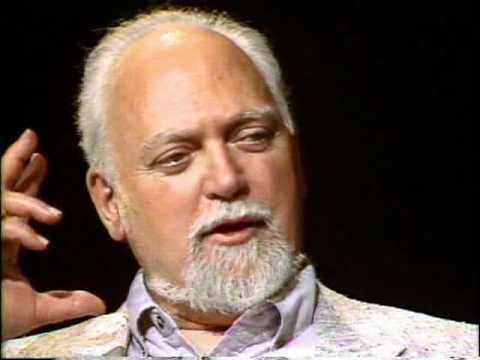
(Robert Anton Wilson)
Falcon/New Falcon books were usually not reviewed in the mainstream, and this seems to have hurt Wilson's reputation. Why didn't he publish with a more reputable publisher? It seems complicated to me, and I want to link RAW's adversarial views about editors and publishers to his very close reading of Ezra Pound, begun when RAW was a teenager, until his death a week away from his 75th birthday. But also: RAW gives reasons why he thinks he'd had a rough time as a writer and I think quite lot of it holds up. Still…let us say that he and Pound were not quiet about the adversarial nature of writers vs. publishers.
Ezra PoundWhen I first plowed through Pound's works I was struck by how cantankerous he was toward academics and universities ("beaneries") and publishers and editors.
Pound wrote a letter to his parents in 1908, age 22-23, in which he complained about commercial publishing and bookselling and "the curious system of trade and traders which has grown up with the purpose or result of interposing itself between literature and the public."2
When Pound's artist and writer friends died in WWI for no good reason at all, he decided he had to figure out what was behind the War, and soon he seemed to have found the reason: it was economics, banking and money loaned at interest. When he tried to get certain publishers to invest in those works, he had a rough time, largely because of the antisemitism in those works. Pound was convinced the Jews ran all the banks. Yea, that old noisy saw again. Farrar and Rinehart were publishers who shied away, being two examples.
In assessing Wilson's love of Pound's work, I see this as very complex, but I don't think we should underestimate the odd cranky tone of Pound, who was clearly a mad genius. Here's a couple of lines from 1931-1932, on publishing and Pound's cantankerousness:
Some months ago and off and on for some time I tried and have tried to stimulate the publication in the outer occident of a series of brochures that would serve as communication between intelligent men, proposing to print such books in America! "dollar impracticable" "fifty cents impossible" undsoweiter can be imagined by 30 percent of my readers; and the conclusion, i.e, that the idea that publishing is a profession not a trade, and the idea of using a publishing house as a focus of enlightenment are both alien to our national sensibility, will come as a surprise to, no one.3
The idea that publishers won't do what Pound thinks needs to be done, for cheap, is a typical riff from Ezra. What I think RAW got from Pound was that books and literature are absolutely vital to the health of the citizens, or at least the ones who are interested in learning. This seems a conceit of all writers of substance: damn the business and profit motive, these are good ideas! Get them out to the people and stop looking at your bottom line! I also think this attitude of Pound's formed part of RAW's identity as a writer, one who would not shrink from speaking out about money issues on behalf of not only his own interests as a writer, but for all writers, especially freelancers.
"We live in a vile age when it is impossible to get reprints of the few dozen books that are practically essential to competent knowledge of poetry." Pound writes this in 1933. He was forever complaining (and I have been doing this, too, for the last 15 years, in my own way) that books are allowed to not only go out of print, but libraries are weeding and discarding books "of substance" at an alarming rate. When Pound is engaged here in railing against "microcephalous bureaucracy" the members of which are "sick with inferiority complex," and which infect American universities with "academic bacilli" and an "inferiority complex directed against creative activity in the arts," I feel quite uneasy: this is Pound sounding completely nuts, but I also…gotta admit…I kinda see his point. I doubt American academia was that bad in 1933, but now?4 In these fulminating passages Pound seems to be hinting that there's a conspiracy between editors and publishers to dumb down the students.
Pound and Wilson seem to think there are legions of readers and writers just like themselves. I have never perceived this in my lifetime as a reader, and I never even stuck it out in academia, but continued to read omnivorously. I think their kind of reading and intellectual interests - and they were both outsiders and not academics - to be fairly rare. This brings up the idea of the writer's perceived audience, and Ideal Readers, which I can't go into here.
In Machine Art, Pound effuses about the lag in getting Ernest Fenollosa's work before the public, and calls out one "P. Carus" as being particularly egregious in this.5 As if the public was going to begin fomenting a revolution against current human perception, the syllogism, the problematic in subject-predicate structure in Indo- European languages, or even interest rates after they got hold of Fenollosa's ideas about Chinese writing and the ideograms. While I am one who does go ga-ga over this stuff, I never believed the public at large would be the least bit interested. Oh, but it was for people like RAW (and me'n you) to Spread the Word. Nouns don't exist, things are placed in relation and are filled with action, etc: I love this stuff; at the same time every week there's some article about incoming collegiate freshman who are functionally illiterate.
Who did get excited over Pound's various enthusiasms and obsessions? Probably at least 50% of those we call "Modernist" writers. Pound's influence has been humongous, and we're all influenced by Pound at least second-hand. As Wilson thought about Pound: Ezra resolved to cause a revolution in the arts, and he succeeded.
In what ways is that World now lost?
RAW and Pound Have Lots of Company Re: Publishers, etcThere's an inexhaustible list of quotes from artists complaining about "the suits," and just the other day I ran across a quote from Katherine Anne Porter that could have been by Wilson.6 When William S. Burroughs writes about the relationship between heroin dealer and junky, the isomorphisms here seem troublingly apt to me. Charlie "Bird" Parker saw the people who booked gigs for him like dealers: "judges" and "robbers" who had control over his life.7 Sam Peckinpaugh and Erich von Stroheim have similar quotes about the purse-string holders in the film biz. I won't even go into Orson Welles here…Check out Vladimir Nabokov, on his dealings with Olympia Press and the notorious Maurice Girodias:
I began to curse my association with Olympia Press not in 1957, when our agreement was, according to Mr. Girodias, "weighing heavily" on my "dreams of impending fortune" in America, but as early as 1955; that is, the very first year of my dealings with Mr. Girodias. From the very start I was confronted with the peculiar aura surrounding his business transactions with me, an aura of negligence, evasiveness, procrastination, and falsity. I complained of these peculiarities in most of my letters to my agent who faithfully transmitted my complaints to him but these he never explains in his account of our ten-year-long (1955-1965) association.8
American writers seem right to complain about the Big Five New York-based conglomerates9, who are like the movie studios after Jaws and Star Wars: they only want blockbusters, and have almost entirely neglected daring literary works. But the late Slavic writer Dubravka Ugrešić asserted that, despite her high status as a literary figure, in 2017, she couldn't get published in Croatia, her home country, because she had left it for Amsterdam. In a 2017 essay, "Artists and Murderers"10 she relates how war criminals, thugs, and other PsOS were getting published, selling art, and opening galleries in Croatia. It's mordant, dark stuff and sounds utterly believable.
Finally, in a July 3rd, 1986 letter to Kurt Smith from Wilson's residence in Ireland, RAW goes into minute detail about how publishers in England, France, and Poland have interests in publishing his books there, and he winds up this line of discourse with, "I am owed money by no less than seven publishers right now, all of them over a month late." To quote David Byrne: same as it ever was.
Wilson's Very Poundian Take on PublishingAn anecdote about editors that Wilson repeated a few times in interviews and at least once in a book was this one:
Nervous editors are always trying to guess the publisher's prejudices from minimal clues and they often guess wrong, which, of course, makes them more nervous in the future. That's probably why Gene Fowler uttered the immortal aphorism, "Every editor should have pimp as an older brother, so he'd have somebody to look up to."11
In 1977 Wilson sat down for an interview with two erudite fans, D. Scott Apel and Kevin Briggs. Early in the interview they ask RAW about his relationship with publishers, and he didn't hold back. I feel Pound lurking here, but you be the judge:
Well, by and large, I am not madly in love with publishers. Publishers are businessmen, and businessmen are really not my favorite type of human beings. James Joyce went into business briefly, and after a while he said to Italo Svevo, "You know, I think my partners are cheating me." Svevo said, "You only think they're cheating you? Joyce, you are an artist!"
RAW tells Apel and Briggs he was employed for seven years in engineering, but the rest of his life he wrote advertising, and worked in magazines and books - "the whole publishing field" - and he thinks businessmen "have no more morals than a scorpion." On with RAW on publishers:
There are two types of predators. There are predators who just go out and grab what they want and take their chances on getting caught. If they spend a little time in jail, that's all part of the game. They lose a few points. As soon as they get out they try to win again, at the same primitive level. And then there is the second type of predator, the type who has figured out that you can do all that grabbing without risking jail. There's a great novel about this, JR, by William Gaddis. It's one of my favorite books. JR keeps saying that anybody who steals is a fool; you can get as rich as you want in this country by using the laws creatively. Businessmen are people who know that. They've got the same mentality as pirates. When they think they can get away with it, they break the law as boldly as thieves.
Then RAW repeats the Gene Fowler line about editors, but replaces "editor" with "publisher." Then:
At this point, nothing a publisher does would amaze me. If a publisher came in the door and shit on the table and said, "You've got to accept that because I'm a publisher and you're a writer," I'd be awed, but I wouldn't be surprised. Nothing they could do would startle me at this point. If a publisher was caught the way Nixon was caught it wouldn't surprise me. In fact, I wonder why none of them have been caught yet. Sometimes I puzzle about things like the Clifford Irving12 case. I don't know how guilty Irving was, but certainly the whole ambience of the publishing business is to incite people to behave that way. It wouldn't surprise me at all if the publishers were ten times guiltier than Irving himself.
I guess I sound uncharitable or unforgiving…(raucous laughter), but as you go around interviewing writers, you'll hear this from all of them.13 This is what writers always talk about when they get together.14
In a wide-ranging 1983 interview, RAW was asked about non-linearity and montage in film and how literature seems to have fallen behind in the 20th century:
Well, I think it's certainly true that writing is regressive compared to other arts in our time. I'm inclined to blame the publishers. I think writers would be a lot more innovative and experimental and would catch up and become contemporary with the other arts except that it is so difficult to get anything published that's at all experimental. And so, even people who have done very experimental work, like William S. Burroughs, tend to write more conventionally as they go along because they just discover it's hard to get their experimental works into print. There is a new anthology of Burroughs' work that just came out recently which has an introduction in which the introducer says that Burroughs has stated quite frankly that it was commercial considerations that led him to cut down the amount of cutups in his books. Publishers have always been chiefly mercantile, of course, but it's getting worse as the cost of printing goes up and book production gets more expensive. They are less and less interested in anything chancy. What publishers are most interested in is a guaranteed bestseller. The further you depart from the formula, the more nervous they get and the harder it is to get published. So writers, in so far as they have any sense of survival at all, tend to become more cautious and less experimental. And it's happened to me; I have made efforts to be more conventional. Of course, it does not always work. If you have an unconventional mind, your books tend to be unconventional no matter how hard you try to be conventional. But it is hard to sell anything that's the least bit avant-garde or experimental.15
So here we have Wilson referring to publishing problems and his own unconventional mind. The idea that writing must keep pace with film seems Ezratic to me. Wilson in other places extended this to a total view of Science and Literature and the Arts: they must keep pace with each other.
Overall, this may be the main reason he remained as a hero in the marginals milieu, with his "difficult" relationship with editors and publishers as secondary. We as fans of marginally noted writers all must contend with: how come my favorite writer seems so neglected? Are we weird?16 Are other readers stupid for going for that NYT best-seller? What are we missing? At least we have the books and damn the publishing machine anyway.17
Wilson also thought about persecution and esotericism regarding publishing, in ways that Pound didn't seem to articulate much. RAW published Sex and Drugs: A Journey Beyond Limits, in 1972. You'd think with this title it would sell well, but RAW thought Playboy must have issued the book on "a need-to-know basis, or something of that sort."18 He also saw his status as known accomplice of Timothy Leary as probably a publishing liability. Finally, RAW often remarked that his style of mixing fact with fiction and genre-mixing in order to make the reader think, was a problem with a lot of publishers:
Dr. Jeffrey Elliot, asks RAW about Illuminatus!: Im what sense is the book science as opposed to science fiction?
RAW: I wanted to write a book that combined several different literary genres. As a result, Illuminatus! is a combination detective story, occult thriller, political satire, and science-fiction work, with overtones of a porno novel, a dissertation on politics, and an occult fantasy. It constantly keeps changing. Whenever the reader thinks he knows where it's going, it turns into another type of novel. That was part of our problem in selling it. Publishers don't like that; they like a novel they can easily label. I'm still struggling with this problem in my present writing. My next book, Masks of the Illuminati, is something the publisher is going to have a hard time finding a label for, because it deliberately starts out as one kind of novel and turns into an entirely different type of novel. This, to me, is realism. After all, life doesn't fall into categories. People don't live their whole lives in detective stories or gothic thrillers or soap operas or science-fiction novels or Hitchcock dramas. People's lives change from day to day, from hour to hour. I've always wanted to write novels in which the reader doesn't know what kind of script he's living in. Publishers can't stand this approach. They want to put a label on a story, and I keep trying to break that restriction. This is all part of my insidious campaign to undermine the minds of readers who think they know what they're reading. I want people to realize that literature isn't always what they think it is. Then they might realize that life isn't what they think it is.19
For decades now I've thought about RAW and publishers needing a label and how it may have hurt him, and I still waffle all over the place about how accurate I think this is. He frequently told interviewers that when Dell advertised Illuminatus! as science fiction or bookstores placed it in their science fiction area, that this harmed the status and/or potential for the book(s). At the same time, he had argued that his Schrödinger's Cat Trilogy predated William Gibson's Necromancer as the first "cyberpunk" book. There he did a trilogy on his own, without pressure from the publisher, and though the framing device is different interpretations of quantum mechanics for each novel, it doesn't read as science fiction to me, much less cyberpunk. So I'm not sure about that, either. If you have an opinion, I'd like to hear it!
Part 2, on RAW's publishers, will be here soon. Stay in touch!
1Go to RAWIllumination.net, scan the right hand side of the page and scroll down until you see "Illuminatus Resources" and find interviews with Dell editors Fred Feldman and David M. Harris, Bob Abel, and Jim Frenkel. Also see Jackson's interview with Teresa Nielsen Hayden, who edited The Widow's Son. Also see Jackson's edited book on Robert Shea's writings, Every Day Is A Good Day, pp.12-13 (RAW against Dell dividing Illuminatus! into a trilogy); 129 (RAW's and Shea's agent, Al Zuckerman); 334-338 (Jackson on Paul Krassner's friend Bob Abel, who helped Illuminatus! get published)
2Italics mine. I'm not kidding when I assert you can collect 300 comments from Pound on just this topic: the perfidiousness of the entire industry. This even though he dealt extensively with more mainstream publishers. Those who haven't read much Pound but who know of his famous off-the-rails and revolting antisemitic stance in the 1930s through the early 1960s will be excused for assuming this constant leitmotif against publishing, academics, and editors was a concealed Jew-baiting, but I don't see it. Not much. He came at this distrust of publishers honestly: I think it was a simple dislike of anyone as "middleman," which does inform much of his economic thought, but there isn't much antisemitism toward publishers. Nothing close to his problems with bankers, about who…whew! 'Nuff said here, for now! I nabbed this quote from a 1908 letter to his parents from Greg Barnhisel's delightful, scholarly, riveting James Laughlin, New Directions, and the Remaking of Ezra Pound, p. 21. Those interested in Pound and the 20th century in publishing are advised to check out Barnhisel's work.
3Selected Prose, 1909-1965, p.54. Originally in The New Review, winter, 1931-32. This feels like Pound really gone off the deep end to me. He's batty, possibly manic-depressive, but I've never figured him out satisfactorily. He's writing this from Italy, where, RAW thought Pound so naive he convinced himself that Mussolini was the second coming of Thomas Jefferson, and Ez was going around the neighborhood feeding the stray cats.
4Selected Prose, 1909-1965, pp.392-393.
5Machine Art & Other Writings: The Lost Thought of the Italian Years, Pound, ed. by Maria Luisa Ardizzone, p.110.
6Writers At Work, 2nd series, ed. George Plimpton, p.156 for Porter quote. From a series of books collecting interviews with writers from the Paris Review.
7Bird: The Legend of Charlie Parker, ed. Robert. G. Reisner, pp. 40-41
8Strong Opinions, Nabokov, p.272, but see the entire chapter 5, "Lolita and Mr. Girodias," pp. 268-269. Nabokov's imputations of "haggling maneuvers" and "abstruse prevarications" rival Pound's invective on the same sort of subject. This was a book in which I realized Nabokov wasn't someone I would have wanted to try to hang out with; he seems quite unpleasant but unassailably genius as a writer. And, to be fair along the lines of Girodias, many other writers had similar takes on him.
9Penguin-Random House; Harper Collins; Hachette; Simon and Schuster; Macmillan. RAW and many other West-Coast-based writers have noted the divide between New York and the big publishing houses, and their seeming antipathy to West Coast aesthetics, and it probably goes back at least to Kenneth Rexroth in the late 1940s. Wilson complained that the big mainstream publishers seemed to think they were hip but they were hopelessly behind the times, and in the 1970s still thought Marx and Darwin were the hottest topics around.
10The Age of Skin, Ugrešić, pp.97-111
11Sex, Drugs & Magick, Wilson, p.12, Hilaritas ed.
12Irving got busted for convincing a publisher that he had a hotline to Howard Hughes for a biography about the wealthy recluse, but he was faking it. Irving also wrote a book on the art forger, Elmyr de Hory, and Orson Welles made a documentary, F For Fake (1973), about Elmyr's and Irving's fakery, but Welles's play with footage was all a fake itself, which delighted Wilson no end.
13One writer I haven't heard complain is Dan Brown, whose agent was the same one RAW had: Al Zuckerman. When Brown did a book tour for Angels and Demons, writers in the audience would ask him advice on how to sell their books, and Brown often referred them to Zuckerman's book, Writing The Blockbuster Novel, with his "seven points." The irony here with regard to Wilson's lingering "cult writer" status vs. Brown's wealth…is too thick to go into here. Suffice to say that RAW's "unconventional mind" and not being able to write a bestseller seems completely on the mark for me, and that we have met the avant garde literary enemy, and it is us. (Not us-us, but everyone else, of course!)
14Beyond Chaos and Beyond, ed. by D. Scott Apel, pp.15-16. (2019) Wilson and Apel put out a magazine, Trajectories, and this is mostly parts from that, although there are some transcripts.
15Coincidance: A Head Test, Wilson, p.323. This interview is only found in the Hilaritas Press ed. of this book, not in the New Falcon version.
16I confess that, yea, personally, I'm weird AF.
17I saw a documentary on this topic once that I now cannot locate. It was called The Stone Reader, and was by weirdo filmmaker and inveterate reader of literary fiction and modernism, Mark Moskowitz, and how he loved a fat novel titled The Stones of Summer, by Dow Mossman. Why was Mossman so obscure? He's great! Etc. Hey, a lot of us have been there. I felt a kinship with Moskowitz after seeing this film; I have not read Mossman yet.
18Sex, Drugs & Magick: A Journey Beyond Limits, Wilson, p.12, Hilaritas ed. RAW thinks by 1972 Nixon's war on the counterculture may have stifled the reception of a book with such a title. he'd give talks and fans hadn't even heard about the book, much less seen it. Others reported it hard to find. For a discussion on Wilson and Giambattista Vico and protective and defensive esotericism in history, especially regarding their own works, see my "Notes on Wilson, Vico, Language, and Class Warfare" in TSOG: The Tsarist Occupation Government by Wilson, pp. 245-293. (2022)
19Literary Voices #1, interview with Dr. Jeffrey Elliot, Borgo Press, pp.50-64; this section pp.56-57. (1980) A much shorter version of this was included in Email To The Universe, pp.213-217, New Falcon ed; 229-234 of Hilaritas ed. Elliot died in 2009 at age 61 or 62.

(graphic art work by Bobby Campbell)
 Weak democracy now or better democracy later? [ 03-Feb-26 5:39am ]
At the root of the debate about delaying local elections this year is a dilemma. If you choose your democratic right for them to go ahead, you risk delaying the implementation of a change which could give you more agency in the long run. Perhaps the biggest positive change of any in recent history.
Why it mattersDevolution is one of the current government's flagship policies, one of its core manifesto pledges, and arguably the single most impactful change to how democracy is done on our island this century. It simplifies the current muddle of different local councils, and creates new elected mayors with serious strategic powers. It is a historically rare show of humility: largely London-based politicians admitting that they do not know how best to run our areas.
The plan acknowledges that they cannot run England as if it is London; it recognises that we know best how our own home works. Devolution will give us the ability to elect someone who can do more than chase up the council to sweep the roads - it will give us someone who can decide things way further up the line. It could transcend the jurisdictional malaise that has set in across many parts of the country; the constant name-calling and blaming that happens between the city, borough, district and county councils so desperately in need of unification. Because who, bar hopeless idealists like myself - interested in politics because we hope we have access to our own agency - actually knows what any of those actually are?
Political apathyTo grasp the importance of devolution, we need to recognise the vicious circle behind the oft-lamented lack of interest in politics. The more disenfranchised a person feels in the system, the less they feel they can affect it, the less they will participate. This leaves us in a place where the people who have the most to gain from choosing their vote carefully are the least likely to do so, or to vote at all.
They are more likely to believe the people who live far, far away, and who know nothing about their community. The people who decide what they read, watch and hear because they have more zeros tacked on to the end of their net worth. And we as a society seem to have decided that that is reason enough to give them control over the information we access about the world around us.
In reality, we should recognise how impressionable we are and therefore how far we should run away from people who want to conserve their wealth; how misaligned their interests and ours truly are.
Devolution is the answerIf we truly believe in a democratic system, if we want to make choices for ourselves and believe we are up to the task of making them, if we don't want to outsource our brain processing either to AI or to the first rich man who talks about the problems we face. We must scream and cry and gasp for devolution, for localised governance of our services.
We must understand that this is our last stand against the army of billionaires and their puppets threatening to return to power. We need to arm ourselves with patience while we sort out the bureaucracy of reorganisation.
As the leader of Tory Norfolk County Council put it: "If our elections go ahead in 2026, I cannot guarantee that my council will be able to deliver devolution because of the governance restraints.
"In the case of implementing local government reorganisation successfully, we will face significant challenges in the reorganisation of eight councils into a currently unknown number of unitaries. In both these cases there is the added issue of the political will and capacity of the new administration to implement the government's priorities."
This is not an issue along party lines. There is, and has always been, consensus among all vaguely pragmatic politicians that elections in the middle of local government reorganisation harms the process. In our case it's the invaluable process of devolution, of control, of a path to a world where we do not feel so hopeless. Where we feel we have someone to turn to when things need improving. A world of comfort, community and conviviality which feels intensely British, vividly Norfolk. May the mayor we choose to elect live up to this vision.
More from East Anglia Bylines
 Democracy
In a Christmas surprise, turkeys vote for devolution
byStephen McNair 12 January 2025
Democracy
In a Christmas surprise, turkeys vote for devolution
byStephen McNair 12 January 2025
 Devolution
What will the new local government map look like in Norfolk and Suffolk?
byJack Abbott MPand1 others 20 March 2025
Devolution
What will the new local government map look like in Norfolk and Suffolk?
byJack Abbott MPand1 others 20 March 2025
 Local government
New report confirms local government crisis is growing
byStephen McNair 24 October 2025
Local government
New report confirms local government crisis is growing
byStephen McNair 24 October 2025
 Letters
Letter to the editor: Britain should learn from France on local government
byEast Anglia Bylines 2 September 2025
Letters
Letter to the editor: Britain should learn from France on local government
byEast Anglia Bylines 2 September 2025
 Democracy
Weak democracy now or better democracy later?
byMatthew Ainsley 3 February 2026
Democracy
Weak democracy now or better democracy later?
byMatthew Ainsley 3 February 2026
 Bylines Network Gazette is back!
With a thematic issue on a vital topic - the rise child poverty, ending on a hopeful note. You will find sharp analyses on the effect of poverty on children's lives, with a spotlight on the communities that are on the front line of deprivation, with personal stories and shared solutions. Click on the image to gain access to it, or find us on Substack.
Journalism by the people, for the people.
The post Weak democracy now or better democracy later? first appeared on East Anglia Bylines.
# [ 03-Feb-26 4:00am ] SpaceX and xAI Are Merging Into a Very Silly-Sounding Conglomerate. Take It Seriously [ 03-Feb-26 3:20am ] Palantir Touts $2 Billion in Revenue from Aiding Trump Administration's 'Unusual' Operations [ 03-Feb-26 1:23am ]
ICE claims man in custody shattered his own skull. Sure. [ 03-Feb-26 12:05am ]
SpaceX and xAI Are Merging Into a Very Silly-Sounding Conglomerate. Take It Seriously [ 03-Feb-26 3:20am ] Palantir Touts $2 Billion in Revenue from Aiding Trump Administration's 'Unusual' Operations [ 03-Feb-26 1:23am ]
ICE claims man in custody shattered his own skull. Sure. [ 03-Feb-26 12:05am ]
Immigrations and Customs Enforcement says a man in its custody ran face-first into a wall. No officer caused it. No excessive force was involved. No one else is responsible. The legally in this country immigrant and business owner just decided to shatter his own skill. — Read the rest
The post ICE claims man in custody shattered his own skull. Sure. appeared first on Boing Boing.
Normalizing surveillance under the banner of helping lost pets [ 02-Feb-26 11:52pm ]
The product manager behind Ring/Amazon's expanded "Search Party" feature may actually care about pet safety and animal kindness: a lost dog, a community alert that helps find the lost pup. What it really does is further normalize a private surveillance network that conditions people to accept constant monitoring, expanded data sharing, and passive participation in a system they don't control waiting to be used against them. — Read the rest
The post Normalizing surveillance under the banner of helping lost pets appeared first on Boing Boing.
Work smarter, not harder with 92% off Windows [ 02-Feb-26 10:00pm ]
TL;DR: Power your productivity with one purchase. Upgrade your Windows OS Microsoft Windows 11 Pro for just $12.97 (Reg. $199).
I've never believed in the old adage: "If it ain't broke, don't fix it." In fact, in this day and age, sticking to that idea will keep you stuck in the mud while your peers race ahead of you. — Read the rest
The post Work smarter, not harder with 92% off Windows appeared first on Boing Boing.
Stephen Watts, Poet [ 03-Feb-26 12:01am ]
"I remember coming out of the tube in Whitechapel in 1974 and being overwhelmed," recalled Stephen Watts affectionately, his deep brown eyes glowing with inner fire to describe the spiritual epiphany of his arrival in the East End, when coming to London after three years on North Uist in the Outer Hebrides. Today Stephen lives in Shadwell and has a tiny writing office in the Toynbee Hall in Commercial St where I paid him a call upon him.
"Migration is in my awareness and in my blood," he admitted, referring to his family who were mountain people dwelling in the Swiss Alps on the Italian border - living twelve hundred feet above sea level - and his grandfather who came to London before the First World War, worked in a cafe in Soho and then bought his own cafe. "I realised this was an area of migration since the seventeenth century when the farm workers of Cambridgeshire, Kent and Suffolk began to arrive here, and I immediately felt an affinity for the place," Stephen continued, casting his thoughts back far beyond his own arrival in Whitechapel, yet wary to qualify the vision too, lest I should think it self-dramatising.
"It is very easy to be romantic about it, but I think migration has been the objective reality for many people in the twentieth and twenty-first century. So it seemed to be something very natural, when I came to live in Whitechapel." he revealed with an amiable smile. Yet although he allowed himself a moment to savour this thought, Stephen possesses a restless energy and a mind in constant motion, suggesting that he might be gone at any moment, and entirely precluding any sense of being at home and here to stay. Even if he has lived in his council house in Shadwell for forty years, I would not be surprised if the wind blew Stephen away.
A tall skinny man with his loose clothes hanging off him and his long white locks drifting around, Stephen does present a superficial air of insubstantiality, even other-wordliness. Yet when you are in conversation with Stephen you quickly encounter the substance of his quicksilver mind, moving swiftly and using words with delicate precision, making unexpected connections. "In the Outer Hebrides the unemployment rate was twenty-five per cent and it was the same in Tower Hamlets when I arrived," he said, informing me of the parallels with precise logic, "also Tower Hamlets had large areas of empty water then, just like the North Uist." drawing comparison between the abandoned dockland and the Hebridean sea lochs, in regions of Britain that could not be more different in ever other respect.
We took the advantage of the frosty sunlight to make a half hour's circuit of the streets attending Brick Lane and these familiar paths took on another quality in Stephen's company, because while I tend to be always going somewhere, Stephen has the sense to halt and look around - indicative of certain open-ness of temperament that has led him befriend all kinds of people in pubs and on the street in Whitechapel over the years. I took this moment to ask Stephen if he chose to be a poet. "I made a choice when I quit university after a year and went to live in North Uist," he said as we resumed our pace, "and then I made a choice to be a poet. But as a choice it was unavoidable, because I realised that it was so much part of me that not to have done it would be a denial of my humanity."
Returning to the Toynbee Hall, Stephen allowed me the privilege of a peek into his tiny room on an upper floor, not much larger than a broom cupboard. The walls were lined with thin poetry books in magnificent order, arrayed in wine boxes stacked floor to ceiling and standing proud of the walls to create bays, leaving space only for one as slim as Stephen to squeeze through. It was a sacred space, the lair of the mountain man or a hermit's retreat. It felt organic, like a cave, or maybe - it occurred to me - a shepherd's hut carved out of the rock. And there, up above Stephen's head was an old black and white photo of shepherds on a mountain road, taken in the Swiss Alps whence Stephen's family originate and where even now he still returns to visit his relatives.
Stephen's room is a haven of peace in the midst of Whitechapel, yet he delights to complement his life in here by working alongside Bengali and Somali poets in all kinds of projects in schools around Tower Hamlets, and pursues translation alongside his own poetry too, as means to "invite difference" into his work. Possessing a natural warmth of personality and brightness of temperament which make you want to listen and hang off his words, Stephen has a genuine self-effacing charm. "I don't believe in being a professional poet in the sense of promoting myself, being a poet is about becoming embedded in humanity," he proposed modestly, presuming to speak for no-one than himself, "And that's why I lived in the East End and that's why I still find it inspiring - because of the tremendous range of human presence in Whitechapel."
BRICK LANE
(after the death of Altab Ali, and for Bill Fishman)
Whoever has walked slowly down Brick Lane in the darkening air and a stiff little rain,
past the curry house with lascivious frescoes,
past the casual Sylheti sweet-shops and cafés
and the Huguenot silk attics of Fournier Street,
and the mosque that before was a synagogue and before that a chapel,
whoever has walked down that darkening tunnel of rich history
from Bethnal Green to Osborne Street at Aldgate,
past the sweat-shops at night and imams with hennaed hair,
and recalls the beigel-sellers on the pavements, windows candled to Friday night,
would know this street is a seamless cloth, this city, these people,
and would not suffocate ever from formlessness or abrupted memory,
would know rich history is the present before us,
laid out like a cloth - a cloth for the wearing - with bits of mirror and coloured stuff,
and can walk slowly down Brick Lane from end to seamless end,
looped in the air and the light of it, in the human lattice of it,
the blood and exhausted flesh of it, and the words grown bright with the body's belief,
and life to be fought for and never to be taken away.

Song for Mickie the Brickie
Mickie I met down Watney Street and he whistled me across.
"How are you" he said
—and of course really meant "have you a little to spare for some drink"—
but could not bear to ask.
We walked through the decayed market,
a yellow-black sun gazed down over Sainsbury's as I went to look for change.
Ten pound was hardly enough to get him through the dregs of that bitter day.
We stood on the corner where for centuries people have stood.
Many worlds passed us by.
When he had been in hospital he'd taken his pills and been looked after and had not got worse.
Now he's barely getting by.
He walks out of the rooming house in Bethnal Green when it gets too loud inside.
His scalp's flaking and he needs a reliable level and a small brickie's trowel.
That woman's son's inside for good.
That one's man is a chronic alcoholic.
This one's on her own and better for it.
But how can you know anyone's story when every day you walk by without stopping.
Charlie Malone was a good friend. So was John Long.
Now they're resting in Tadman's Parlour
—and first thing in the morning Mickie'll go and say to them words that cannot be answered.
Those are the best words, but they're hardest to bear.
To me he says : "Always—always—stop me—always—come across."
And what is the point of centuries of conversation if no-one's ever there to hear.

FRAGMENT
… And so I long for snow to
sweep across the low heights of London
from the lonely railyards and trackhuts
- London a lichen mapped on mild clays
and its rough circle without purpose -
because I remember the gap for clarity
that comes before snow in the north and
I remember the lucid air's changing sky
and I remember the grey-black wall with
every colour imminent in a coming white
the moon rising only to be displaced and
the measured volatile calmness of after
and I remember the blue snow hummocks
the mountains of miles off in snow-light
frozen lakes - a frozen moss to stand on
where once a swarmed drifting stopped.
And I think - we need such a change,
my city and I, that may be conjured in
us that dream birth of compassion with
reason & energy merged in slow dance.
Photographs copyright © Lucinda Douglas-Menzies
Fintech CEO and Forbes 30 Under 30 alum has been charged for alleged fraud [ 03-Feb-26 12:16am ]
'Pretty Please, I Don't Want to Be a Magical Girl' Has the Juice [ 02-Feb-26 10:30pm ]
Elon Musk's SpaceX officially acquires Elon Musk's xAI, with plan to build data centers in space [ 02-Feb-26 10:21pm ]
Major California Union Calls for Waymo to Be Kicked Off the Streets [ 02-Feb-26 9:55pm ] NASA Picked the Stupidest Possible Week to Go Back to the Moon [ 02-Feb-26 9:45pm ]
China is leading the fight against hidden car door handles [ 02-Feb-26 9:55pm ]
Gore Verbinski on the Difficulties of Making His Weird, Epic New Sci-Fi Movie [ 02-Feb-26 9:30pm ] Mozilla Adding 'Off' Switch to AI in Firefox [ 02-Feb-26 9:25pm ] NASA Let AI Drive a Rover on Mars—and It Somehow Survived [ 02-Feb-26 9:20pm ] Is 'Can It Do Raytracing' the New 'Can It Run DOOM'? [ 02-Feb-26 9:05pm ]
Adobe Animate is shutting down as company focuses on AI [ 02-Feb-26 9:15pm ]
Future iPhone Might Straight-Up Copy Samsung's Z Flip [ 02-Feb-26 8:40pm ] Nearly Half of Americans Have Hypertension—and Most Aren't Doing Anything about It [ 02-Feb-26 8:40pm ] Disney Expects Fewer International Theme Park Visitors Because, You Know [ 02-Feb-26 8:30pm ] It Turns Out 'Social Media for AI Agents' Is a Security Nightmare [ 02-Feb-26 8:30pm ]
Two Stanford students launch $2M startup accelerator for students nationwide [ 02-Feb-26 8:39pm ]
Ira Parker on That Big 'A Knight of the Seven Kingdoms' Reveal [ 02-Feb-26 7:44pm ] HyperX Cloud Alpha 2 Review: An Enormous Battery Life Wasted on a Stationary Headset [ 02-Feb-26 7:30pm ]


For only the third time in its 70-year history, Tito's Tacos has added an item to its legendary menu: a cheese quesadilla.
Tito's is a love-it-or-leave-it restaurant in West Los Angeles. Specializing in deep-fried tacos and long lines, if you think Tito's tacos are great, you are willing to brave the line. — Read the rest
The post Los Angeles' Tito's Tacos adds a menu item appeared first on Boing Boing.


