

The Devil Wears Prada 2, complete with Meryl Streep, Anne Hathaway, Emily Blunt, and Stanley Tucci, hits theaters on May 1. Here's the trailer! If this is an extremely dubious sequel, it sells itself well. Hathaway's Andy is returning to Vog—sorry, Runway, as its new features editor, but Streep's Miranda Priestly has either forgotten who she is or is pretending to have forgotten who she is. — Read the rest
The post The Devil Wears Prada 2 trailer appeared first on Boing Boing.

Congresswoman Nancy Mace ordered her staff to boost her in a Reddit discussion about the "hottest women in Congress," upvoting positive comments and otherwise manipulating her standings. And that's just one magical detail in New York Magazine's portrait of the South Carolina Republican, "Nancy Mace Is Not Okay," by Jake Lahut. — Read the rest
The post Former staff say Nancy Mace had them rig Reddit discussion about hottest women in congress appeared first on Boing Boing.

Pelletino is a tiny handheld Pac-Mac arcade game you play by tilting it. It runs the original 1980 arcade ROM under emulation on a 32-bit RISC-V ESP32-C6 microcontroller, wedded to a 240×280 ST7789 LCD and a six-axis inertial measurement unit to detect movements. — Read the rest
The post Pelletino puts a tilt-controlled Pac Man in your pocket appeared first on Boing Boing.

I've thoroughly enjoyed all of Janice Hallett's previous crime books. The Examiner is, frankly, more of the same - and I'm happy with that!
You, the reader, are given a series of transcripts and have to work out what crime (if any) has been committed. You don't find out who the victim(s) is/are until reasonably far through the story. The characters are well realised (although a little similar to some of her others). The twists are shockingly good and will make you flick back to see if you could have spotted them.
Hallett is exquisite at building tension through the slow drip-drip-drip of reveals. OK, so the transcripts are a bit unrealistic but they make a good scaffold. While it might be nice to include user avatars on the WhatsApp messages, the characters' voices are unique enough to distinguish them easily.
Much like The Mysterious Case of the Alperton Angels, the book plays around with symbolism and the nature of faith. You may find yourself sympathising with the characters and then quickly recanting!
Technical IssuesViper, the publisher, seem to have messed up the structure of this eBook. Despite being published in 2024, they're using an ancient and obsolete version of the Blitz ePub CSS which itself was archived back in 2020. As well as strange indents, there's a hard-coded 2em margin only on the right.
Accessibility is poor. All the abbreviations use the <abbr> element. But some kind of automated find-and-replace has mangled most of them. For example, the "Masters degree in Multimedia Art (Full-Time Programme)" is shortened to "MMAM(FTP)" and then given the nonsensical abbreviation of "Molecular Area Per Molecule (File Transfer Protocol)"!
Much like before I've written to them asking them to correct it.
C is for Cranford

For my third alphabetical visit to unsung suburbs we're off to Cranford, once described as "one of the smallest and prettiest villages in Middlesex" and today absolutely none of those things. It lies on the River Crane, fairly obviously, and straddles the boroughs of Hillingdon and Hounslow (though mostly the latter). What tarnished Cranford was mass transit, first a main road, then a bypass, then a motorway, then the expansive environs of Heathrow which encroach just across the river. A few treasures remain but you do have to look quite hard, and best bring boots because it's muddy out there. [14 photos]

Cranford started out as a few cottages near a crossing over the River Crane. The main road west from London passed this way, a couple of miles beyond the important coaching hub of Hounslow, becoming safer and more strategically important after being turnpiked in 1717. The bridge here needed rebuilding in 1776, then was widened and strengthened in 1915 to cope with a greater volume of traffic. The stone parapet displays the arms of the county of Middlesex, who were dead proud of it, and also marked the dividing line between the parishes of Cranford and Bedfont. These days the Bath Road carries so many vehicles that unbroken barriers have been built down the central reservation, so impenetrable that it took me five minutes to cross from one side of the bridge to the other. The A4 essentially divides Cranford in two with pedestrians very much an afterthought, although there is a subway with authentic prewar signage if you walk as far as the roundabout.

If you've ever driven through Cranford you'll know it as the place with the turrets. Most of the rest of the main street is drab but in the middle of Berkeley Parade is an extraordinary cluster of fairytale towers surrounding the central crossroads. They have crow-stepped gables and pointy tops in Scottish Baronial style and were added to the shopping mix by E B Musman in 1930. At the foot of the towers are gorgeous wooden doors leading to twin flats above, although like much of the parade they look like they've seen better days. A busy carwash blocks the best view to the south but this just adds to the overall idiosyncrasy. Alas the northeast turrets were demolished in the 1960s to be replaced by anodyne flats whereas the northwest pair have been more elegantly absorbed into a hotel. It's notionally a 4-star Hilton but its signs were taken down recently because sssh, the clientele are now mostly migrants.

The rest of the main road is a mix of local services and airport filler, including boxy budget hotels for those whose flight plans require an overnight stay. The Moxy looks tackier than the Ibis, though it's a close call. Heathrow-edge development has been inexorable here with what used to be the White Hart now a drive-in KFC and the village pond the site of a chunky office block that now hands out degrees from the University of Derby. Bullish optimism can be the only reason behind naming a business Sublime Solicitors, ditto the nextdoor Jolly Cafe. Meanwhile the old flatroofed Cranford Library has just been closed so that a sparse collection of books can be shifted down the road into what the council describes as a Community Hub. Activities provided include money management advice, Storytime and 'all ages mindful colouring' (but it's closed on Wednesdays, so don't all rush).

Thankfully there is an older heart to suburban Cranford, a lengthy High Street which wiggles off the Bath Road opposite Tesco Express. It includes a few Edwardian cottages at the southern end and further up a converted stable block beside a proper listed Victorian villa with stone dogs guarding the door (alas extremely well hidden by shrubbery). But the real treat is a cylindrical brick hut dating back to pre-police days in 1838 which is one of only two parish lock-ups remaining in London. Drunks and thieves would have been confined overnight in dark cramped conditions before being turned over to a magistrate, highway robbery being a particular issue in the locality. The lock-up cuts a strange sight on the verge outside a block of flats, and could perhaps be mistaken for a bin store were it not for the information board placed out front when it was renovated in 2017. Full marks to Hounslow and the Heritage of London Trust.

Far less impressive is the church of Holy Angels, a geometric redbrick building built in 1970 to replace a previous church twice destroyed by arson. It was still in use as a place of worship until fairly recently but you can plainly see damp patches and peeling strips on the exterior, also metal panels securely affixed where all the windows and doors have been sealed up. The parish website confesses "As a result of bad design and sub standard construction at the time of building, Holy Angels is now closed. We await the outcome of discussions concerning the building", thus the congregation now has to troop off to another church we'll get to later. The Catholic church nextdoor is also oddly polygonal but thankfully had a different architect so remains in one piece, if locked away to restrict regular access.

The second road to despoil rural Cranford was The Parkway, a dual carriageway added in 1959 to bypass Cranford, Hayes and Yeading. Alas it sliced straight through the top of the High Street taking out a couple of big villas, and today the old road abruptly meets a seething airport feeder where pedestrians have a choice between several pushbuttons or a ridiculously long footbridge. On the far side is Cranford's only pub, The Queen's Head, which claims to be "the first pub in England to be granted a Spirits Licence" although the current building's a very '30s rebuild. Across the road The Jolly Gardeners initially looks like it might still serve pints but no, it closed 15 years ago and has morphed into a shabby home that still advertises hot food and Taylor Walker cask ales in increasingly decrepit gold lettering.

Cranford has a second historic nucleus to the northwest but to get there you need to cross the River Crane and there are no good options. To the north of Cranford Bridge is an older arched bridge used by drivers as a cut-through to Harlington, but much too narrow to be safely used by pedestrians. The London Loop prefers to cross Berkeley Meadows and then hug the river through Cranford Park, where I stared at the quagmire by the entrance gate and decided against. More direct is Avenue Park, essentially a cluster of playgrounds leading to a vast sodden meadow, which has a single footbridge at the very far end but is sadly devoid of any tarmacked means of getting there. The only all-weather route is a lengthy walk alongside the thunderous Parkway to a turnoff by a motorway junction, or of course to drive, which is likely how most parishioners get to church these days.

Cranford Park was once the site of two medieval manors controlled by the Knights Templar and Hospitaller, one moated and the other taking advantage of raised land beside the River Crane. In 1618 the combined estate was bought by a courtier of James I and later passed into the hands of the Earls of Berkeley who used it as their summer seat. Alas in 1944 their vacated manor house was demolished along with half the stable block, although the east wing of equine stalls survives and looks unexpectedly magnificent as well as magnificently unexpected. If you visit only one building in Cranford this is the one you should see. Also intact is London's oldest ha-ha - an unobtrusive boundary ditch visible from only one side - although several bricks on the corner have recently been dislodged so if anyone reading this works for Hillingdon council you might want to get that sorted. A visitor centre used to sit atop the old cellars but that burned down and construction of its replacement appears to have stalled, indeed its windows are already smashed, so you'll need to bring your own refreshments.

Immediately adjacent is St Dunstan's Church, Saxon in origin and medieval at heart. These days it's very much High Anglican so all Masses and Benedictions rather than Communions and chumminess, and likely smells it too. The churchyard is full of old graves and surrounded by memorial tablets packed onto the perimeter wall. At the far end facing sideways is the memorial to much-loved comic Tony Hancock whose ashes were scattered here, but marginally outside the burial ground because his death was a suicide. It jolts somewhat to see he predeceased his mother. And less than 100m away is the third road to sever Cranford which is the M4 motorway which was squeezed through a narrow gap between church and council estate in the early 1960s. Junction 3 was carved out of Crane-side woodland to link with The Parkway, diverting the river and allowing parishioner access through the St Dunstan's Subway. Look one way and you could still be on a country estate, look the other and convoys of articulated lorries are rumbling towards Slough. Poor Cranford... and there's one more blight to come.

Houses in south Cranford have the misfortune to be directly on the Heathrow flightpath and less than a mile from the end of the northern runway. I was fortunate on my visit that planes were taking off from the southern runway so any noise pollution was merely a semi-intrusive whine. But the pattern alternates delivering a regular stream of decelerating jet engines roaring low over the houses in Waye Avenue, either before or after 3pm, ensuring there are few less appealing streets to live anywhere in the capital. Residents foresaw this problem in 1952 and got a civil servant to agree that planes would never take off over Cranford, only land, except in times of exceptional need. The so-called Cranford Agreement was never legally ratified but has held sway ever since, even though the Coalition government decided they'd like to end it. Plans for a third runway have since muddied the waters and more crucially the airport's not yet built sufficient taxiways to enable mass eastbound take-offs from the northern runway. But one day the gentlemen's agreement will fail and Cranford will be crisscrossed not just by two dual carriageways and a motorway but also a horrendous flighpath... so if you're visiting, come before then.
Recent paintings by Rudy Rucker. Inspired by my sojourns in the lands of math and literature. Images are Copyright (C) Rudy Rucker, 2026. For more info on Rudy's art, go to his Paintings Page. I'll be talking about this stuff, and selling prints, at a Dorkbot event on February 25 at the Monkeybrains building at […]
The post Mind, Writing, and Painting first appeared on Rudy's Blog.
 Book review: Proto - How One Ancient Language Went Global [ 03-Feb-26 6:00am ]
Expensive gas still biggest driver of high UK electricity bills [ 04-Feb-26 5:37am ]
Book review: Proto - How One Ancient Language Went Global [ 03-Feb-26 6:00am ]
Expensive gas still biggest driver of high UK electricity bills [ 04-Feb-26 5:37am ]
High gas prices are responsible for two-thirds of the rise in household electricity bills since before the global energy crisis, says the UK Energy Research Centre (UKERC). The new analysis, from one of the UK's foremost research bodies on energy, flatly contradicts widespread media and political narratives that misleadingly seek to blame climate policies for high bills.
Kaylen Camacho McCluskey, research assistant at UKERC, tells Carbon Brief that despite "misleading claims" about policy costs, gas prices are the main driver of high bills. She says: "While the story of what has driven up GB consumer electricity bills is often largely attributed to policy costs, our analysis shows that this is not the case. Volatile, gas-linked market prices - not green policies, as some misleading claims have suggested - dominate the real-terms increase in bills since 2021."
In its 2025 review of UK energy policy, published today, UKERC says that annual electricity bills for typical households have risen by £166 since 2021.
It says that, after adjusting for inflation, some two-thirds of this increase (£112) is due to higher wholesale gas prices, as shown in the figure below. (This analysis does not account for the recent surge in wholesale gas prices, which, in a matter of days, have jumped by around 40% in the UK and 140% in the US.)
 Contributions to the rise in annual electricity bills for typical households, £ adjusted for inflation, between April-September 2021 and April-September 2025. "Networks" includes the cost of building and operating the electricity grid. "Policy" includes costs to support clean power, as well as social policies and the "capacity market" that guarantees security of supply. "Other" includes supplier operating costs. Source: UKERC analysis of data from the Ofgem price cap.
Gas sets the price far beyond its share of generation
Contributions to the rise in annual electricity bills for typical households, £ adjusted for inflation, between April-September 2021 and April-September 2025. "Networks" includes the cost of building and operating the electricity grid. "Policy" includes costs to support clean power, as well as social policies and the "capacity market" that guarantees security of supply. "Other" includes supplier operating costs. Source: UKERC analysis of data from the Ofgem price cap.
Gas sets the price far beyond its share of generation
UKERC estimates that, despite only supplying a third of the country's electricity, gas-fired generators set the wholesale price of power around 90% of the time in 2025. (This is slightly lower than widely cited earlier estimates, published in 2023 and covering 2021, which found gas was setting power prices 97% of the time.)
A surge of new clean power means that gas would only set wholesale power prices 60% of the time by 2029, UKERC says, adding that this would cut the nation's exposure to "gas price shocks". It finds that new renewable projects set to come online over the next three years could cut wholesale power prices by 8% from current levels.
UKERC argues that the government could "strengthen…these downward trends" by shifting older renewable plants onto fixed-price "contracts for difference" (CfDs). These older schemes, built under a policy known as the "renewables obligation", are paid a top-up subsidy in addition to the wholesale power price, linking their receipts to high gas prices. Newer renewable projects with CfDs get a fixed price, which is not linked to wholesale electricity prices or the price of gas power that drives it.
Prof Rob Gross, UKERC director says in a press release that "unpredictable global gas prices still dominate our power market".
He adds, "The link between the wholesale price of gas and electricity prices continues to be the most significant factor in the price increases consumers have seen over the last few years. Government took action on some policy costs in [last year's] budget and ongoing policies will weaken the link to gas prices. But more could be done to help ensure that the stable prices offered by renewables flow through to consumer bills."
The UKERC analysis shows that rising network charges, linked to investments in expanding the electricity grid as well as balancing supply and demand in real time, were the second-largest contributor to the rise in bills since 2021.
Significant further grid investments are set to add further pressure on bills over the next few years. However, energy regulator Ofgem says these investments will cut bills relative to the alternative.
Policy costs are only the third-largest driver of current high bills, according to UKERC's analysis. It says these were linked to just 12% of the rise for typical households, or £19 per year.
 Image by Centre for Ageing Better via Pexels (CC0)
It is commonly argued that rising policy costs are certain to raise bills, but this tends to ignore the interplay between CfDs and wholesale power prices. The record-breaking recent government auction for CfDs is expected to be roughly "cost neutral" for bills, potentially even generating consumer savings of £1bn a year by 2035. As UKERC explains, this is because new renewable projects will receive CfD payments and may result in higher network costs, but they also cut wholesale power prices. A full analysis of the overall impact on bills must take all of these factors into account.
Thinktanks agree: gas is still the biggest factorThe UKERC report aligns with another recent analysis from thinktank Nesta, which said that, while there was a pressing need to look at future cost pressures from network and policy charges, "it is clear that gas is still the main source of our high energy bills to date". It added:
"It is still true that higher gas prices are the main reason for higher energy bills for most British households when you look at the whole bill. Gas is not the only culprit, but it is still the biggest one."
This article by CarbonBrief is republished under a Creative Commons licence (CC BY-NC-ND 4.0). Read the original here.
More from East Anglia Bylines
 Energy
Is zonal electricity pricing the future of UK energy?
byEast Anglia Bylines 29 June 2025
Energy
Is zonal electricity pricing the future of UK energy?
byEast Anglia Bylines 29 June 2025
 Energy
Unlocking cheaper energy: Europe's electricity bills could plummet by 2030
byFred Lewsey 4 February 2025
Energy
Unlocking cheaper energy: Europe's electricity bills could plummet by 2030
byFred Lewsey 4 February 2025
 Economics
Why are energy prices still too high?
byProf Richard Murphy 23 February 2024
Economics
Why are energy prices still too high?
byProf Richard Murphy 23 February 2024
 Brexit
 has inflated energy bills by over £1 billion
byEast Anglia Bylines 21 May 2023
Brexit
Brexit has inflated energy bills by over £1 billion
byEast Anglia Bylines 21 May 2023
 Bylines Network Gazette is back!
With a thematic issue on a vital topic - the rise child poverty, ending on a hopeful note. You will find sharp analyses on the effect of poverty on children's lives, with a spotlight on the communities that are on the front line of deprivation, with personal stories and shared solutions. Click on the image to gain access to it, or find us on Substack.
Journalism by the people, for the people.
The post Expensive gas still biggest driver of high UK electricity bills first appeared on East Anglia Bylines.
Not So Fast, Google: That Lenient Monopoly Ruling from Last Year Is Being Appealed [ 04-Feb-26 12:59am ]
So Long, Nelson St Synagogue [ 04-Feb-26 12:01am ]After more than a century of operation, Nelson St Synagogue is to be auctioned off on 12th February. Since part of the roof collapsed at the time of the pandemic in 2020 it has been disused. Click here for details of the auction
Below you can read my account of a visit there in 2012.

Leon Silver
When Leon Silver opened the golden shutter of the ark at the East London Central Synagogue in Nelson St for me, a stash of Torah scrolls were revealed shrouded in ancient velvet with embroidered texts in silver thread gleaming through the gloom, caught by last rays of afternoon sunlight.
Leon told me that no-one any longer knows the origin of all these scrolls, which were acquired as synagogues closed or amalgamated with the departure of Jewish people from the East End since World War II. Many scrolls were brought over in the nineteenth century from all across Eastern Europe, and some are of the eighteenth century or earlier, originating from communities that no longer exist and places that vanished from the map generations ago.
Yet the scrolls were safe in Nelson St under the remarkable stewardship of Leon Silver, President, Senior Warden & Treasurer, who had selflessly devoted himself to keeping this beautiful synagogue open for the small yet devoted congregation - mostly in their eighties and nineties - for whom it fulfilled a vital function. An earlier world still glimmered there in this beautiful synagogue that may not have seen a coat of new paint in a while, but was well tended by Leon and kept perfectly clean with freshly hoovered carpet and polished wood by a diligent cleaner of ninety years old.
As the sunlight faded, Leon and I sat at the long table at the back of the lofty synagogue where refreshments were enjoyed after the service, and Leon's cool grey eyes sparkled as he spoke of this synagogue that meant so much to him, and of its place in the lives of his congregation.
"I grew up in the East End, in Albert Gardens, half a mile from here. I first came to the synagogue as a little boy of four years old and I've been coming here all my life. Three generations of my family have been involved here, my maternal grandfather was the vice-president and my late uncle's mother's brother was the last president, he was still taking sacrament at ninety-five. My father used to come here to every service in the days when it was twice daily. And when I was twenty-nine, I came here to recite the mourner's prayer after my father died. I remember when it was so crowded on the Sabbath, we had to put benches in front of the bimmah to accommodate everyone, now it is a much smaller congregation but we always get the ten you need to hold a service.
I'm a professional actor, so it gives me plenty of free time. I was asked to be the Honorary Treasurer and told that it entailed no responsibility - which was entirely untrue - and I've done it ever since. As people have died or moved away, I have taken on more responsibility. It means a lot to me. There was talk of closing us down or moving to smaller premises, but I've fought battles and we are still here. I spend quite a lot of hours at the end of the week. We have refreshments after the service, cake, crisps and whisky. I do the shopping and put out the drinks. The majority here are quite elderly and they are very friendly, everyone gets on well, especially when they have had a few drinks. In the main, they are East Enders. We don't ask how they come because strictly speaking you shouldn't ride the bus on the Sabbath. Now, even if young Jewish people wanted to come to return to the East End there are no facilities for them. No kosher butcher or baker, just the kosher counter at Sainsburys.
My father's family came here at the end of the nineteenth century, and my maternal grandfather Lewis (who I'm named after) came at the outbreak of the First World War. As a resident alien, he had to report to Leman St Police Station every day. He came from part of the Austro-Hungarian Empire and he came on an Austrian passport, but when my mother came in 1920, she came on a Polish passport. Then in 1940, my grandfather and his brothers were arrested and my grandmother was put in Holloway Prison, before they were all interned on the Isle of Man. Then my uncle joined the British army and was told on his way to the camp that his parents had been released. My grandparents' families on both sides died in the Holocaust. My mother once tried to write a list of all the names but she gave up after fifty because it was too upsetting. And this story is true for most of the congregation at the synagogue. One man of ninety from Alsace, he won't talk about it. A lot of them won't talk about it. These people carry a lot of history and that's why it's important for them to come together.
When Jewish people first came here, they took comfort from being with their compatriots who spoke the same style of Yiddish, the same style of pronunciation, the same style of worship. It was their security in a strange new world, a self-help society to help with unemployment and funeral expenses."
Thanks to Leon, the shul to existed as a sacred meeting place for these first generation immigrants - then in their senior years - who shared a common need to be among others with comparable experiences. Polite and softly spoken yet resolute in his purpose, Leon Silver was custodian of a synagogue that was a secure home for ancient scrolls and a safe harbour for those whose lives were shaped by their shared histories.

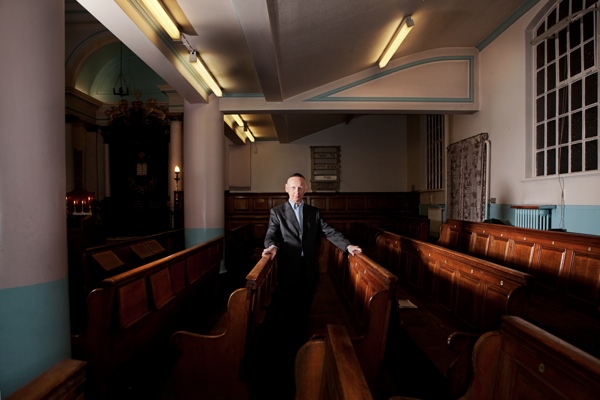

Photographs 2 & 3 © Mike Tsang
Epstein-linked longevity guru Peter Attia leaves David Protein, and his own startup 'won't comment' [ 04-Feb-26 12:11am ]
We're Nowhere Near Ready to Make Babies in Space, Experts Warn [ 04-Feb-26 12:01am ]
India's Varaha bags $20M to scale carbon removal from the Global South [ 03-Feb-26 11:30pm ]
The Scripts for David Lynch's Never-Made Netflix Pitch May Soon Be Published [ 03-Feb-26 11:15pm ]

TL;DR: This Headway Premium Lifetime Subscription provides users with unlimited access to over 2,000 text and audio book summaries for just $59.99 (reg. $299.95).
In a world filled with technology and apps built to keep your attention, it can be difficult to switch over to more productive habits. — Read the rest
The post Learn on the go with Headway Premium, now $60 for lifetime access! appeared first on Boing Boing.

Melinda French Gates, former wife of Microsoft co-founder Bill Gates, confirmed today that she left him over allegations now revealed in the Epstein Files. "I am so happy to be away from all the muck that was there," she told Rachel Martin on NPR's Wild Card. — Read the rest
The post Melinda Gates ended marriage with Bill Gates over Epstein allegations appeared first on Boing Boing.

Representative Ted Lieu (D-CA) pointed out that the latest tranche of released Epstein files raises serious questions about Donald Trump, and that Republican fascination with Bill and Hillary Clinton is just a distraction.
"Why are Republicans are so interested in the Bill and Hillary Clinton it's because they're trying to distract from the fact that Donald Trump is in the Epstein files thousands & thousands of times. — Read the rest
The post "Highly disturbing allegations of Donald Trump raping children" appeared first on Boing Boing.
Jupiter smaller than thought [ 03-Feb-26 6:12pm ]
The scientific literature was wrong. The school textbooks will have to be replaced. Entire careers were built on falsehoods. New measurements overturn almost 50 years of consensus about the size and shape of the planet Jupiter, the largest in our solar system, which we now know is smaller than previously believed. — Read the rest
The post Jupiter smaller than thought appeared first on Boing Boing.
2026 plans: What's next for Startup Battlefield 200 [ 03-Feb-26 6:57pm ]

