
 Measles Outbreak in South Carolina Linked to Brain Swelling in Kids [ 06-Feb-26 7:40pm ] Trump's Memecoin Down 95% as Democrats Seek Answers on Crypto 'Corruption' [ 06-Feb-26 7:20pm ]
Endless entertainment for your most elusive animal starts here [ 06-Feb-26 4:00pm ]
Measles Outbreak in South Carolina Linked to Brain Swelling in Kids [ 06-Feb-26 7:40pm ] Trump's Memecoin Down 95% as Democrats Seek Answers on Crypto 'Corruption' [ 06-Feb-26 7:20pm ]
Endless entertainment for your most elusive animal starts here [ 06-Feb-26 4:00pm ]
TL;DR: Looking for endless entertainment for your cat? Give them the gift of the Cheerble Ball for $26.90 (MSRP $27.99).
Haven't seen your cat in a while? Our elusive furry friends tend to disappear for hours on end, entertaining themselves and, thus, ignoring you. — Read the rest
The post Endless entertainment for your most elusive animal starts here appeared first on Boing Boing.
Youbooks is the tool that turns your notes pile into a real manuscript for $49 [ 05-Feb-26 10:00pm ]
TL;DR: Get Youbooks for $49 (reg. $359) and turn a nonfiction idea into a book-length draft you can actually edit and ship.
If you've been hoarding ideas, outlines, and research like they're going to assemble themselves, Youbooks for $49 (reg. $359) is the nudge that turns the pile into a draft. — Read the rest
The post Youbooks is the tool that turns your notes pile into a real manuscript for $49 appeared first on Boing Boing.
Dinosaurs And Non-Dinosaurs [ 06-Feb-26 12:00am ]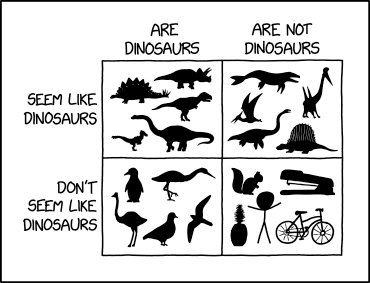 'Baldur's Gate 3' Was Always Going to Have a Weird Future [ 06-Feb-26 7:00pm ] Trump Deletes Extremely Racist Meme About Obamas After Backlash From Republicans [ 06-Feb-26 6:35pm ]
Greg Bovino learns he is below Las Vegas standards [ 06-Feb-26 6:14pm ]
'Baldur's Gate 3' Was Always Going to Have a Weird Future [ 06-Feb-26 7:00pm ] Trump Deletes Extremely Racist Meme About Obamas After Backlash From Republicans [ 06-Feb-26 6:35pm ]
Greg Bovino learns he is below Las Vegas standards [ 06-Feb-26 6:14pm ]
What happens in Las Vegas stays in Las Vegas, a city built on excess, poor judgment, and extremely flexible moral boundaries. Even so, a bar on the Las Vegas Strip felt obligated to demand Border Patrol official and Gruppenführer impersonator Greg Bovino GTFO. — Read the rest
The post Greg Bovino learns he is below Las Vegas standards appeared first on Boing Boing.
How Elon Musk is rewriting the rules on founder power [ 06-Feb-26 6:46pm ]
How elites consoled Jeffrey Epstein after his conviction [ 06-Feb-26 5:54pm ]
Private correspondence recently made public reveals that prominent people in politics, business, and academia didn't just maintain ties with Jeffrey Epstein after his 2008 conviction for soliciting a minor. They actively consoled him, cast him as a victim, and offered advice on rehabilitating his image, reports the Wall Street Journal. — Read the rest
The post How elites consoled Jeffrey Epstein after his conviction appeared first on Boing Boing.
Reddit says it's looking for more acquisitions in adtech and elsewhere [ 06-Feb-26 6:33pm ] Here's how Roblox's age checks work [ 06-Feb-26 6:28pm ]
Trump deletes racist Obama video after outcry — Karoline Leavitt was the only Republican who loved it [ 06-Feb-26 5:32pm ]
President Trump deleted a blatantly racist video clip portraying Barack and Michelle Obama as apes after an outcry that included members of his own party, reports the New York Times.
The 62-second clip, set to "The Lion Sleeps Tonight," spliced in the Obamas depicted as apes near the end of a video promoting conspiracy theories about the 2020 election. — Read the rest
The post Trump deletes racist Obama video after outcry — Karoline Leavitt was the only Republican who loved it appeared first on Boing Boing.
"Babe, wake up, new panda rat just dropped!": Meet the Northern Luzon Cloud Rat [ 06-Feb-26 5:27pm ]
Here's my latest installment in my ongoing series, "Cute Animals You Should Know": the Northern Luzon cloud rat. The adorable ratty creature is endemic to the northern section of Luzon, the Philippines' largest island. Looking at it, you might not recognize it as a rat, as, first, it's huge, and, second, it doesn't really look like a rat. — Read the rest
The post "Babe, wake up, new panda rat just dropped!": Meet the Northern Luzon Cloud Rat appeared first on Boing Boing.
Exit 8 looks like the creepy film I've been waiting for [ 06-Feb-26 5:26pm ]
There's nothing like a bit of faux existential dread to rip you from the grip of actual the-fall-of-the-rules-based-order existential dread. Given how many platforms it's been ported to, I'm shocked I'd never heard of The Exit 8. If the game is anywhere as cheeky and doomful as the trailer for its film adaptation, its developers can have all of my gaming money for the month. — Read the rest
The post Exit 8 looks like the creepy film I've been waiting for appeared first on Boing Boing.
Man accused of ejaculating in colleague's mug: "I just wanted to get close to her" [ 06-Feb-26 5:16pm ]
An employee at Highmark whose drink "smelled and looked like semen" told police, who placed a hidden camera, with her permission, to monitor the mug she used. They allegedly filmed a manager taking and returning the mug with fresh deposits, twice, and he was taken into custody. — Read the rest
The post Man accused of ejaculating in colleague's mug: "I just wanted to get close to her" appeared first on Boing Boing.
15 Super Movies for Super Bowl Sunday [ 06-Feb-26 6:00pm ]
Senator, who has repeatedly warned about secret U.S. government surveillance, sounds new alarm over 'CIA activities' [ 06-Feb-26 6:02pm ]
New research shows menopause linked to cognitive decline [ 06-Feb-26 5:25pm ]
Menopause is linked to reductions in grey matter volume in key brain regions as well as increased levels of anxiety and depression and difficulties with sleep, according to new research from the University of Cambridge.
The study, published in Psychological Medicine, found that hormone replacement therapy (HRT) does not appear to mitigate these effects, though it can slow the decline in reaction times.
Menopause is a key period in a woman's life when her periods stop, due to lower hormone levels. It typically affects women between the ages of 45 and 55, during which time they may experience hot flushes, low mood and sleep problems. Menopause has previously been linked to cognitive decline, such as memory, attention and language deficits.
To counter the effects of menopause - particularly depressive symptoms and sleep problems - many women are prescribed HRT. In England, in 2023, 15% of women were prescribed the treatment. However, there is limited understanding of the effects of menopause and subsequent HRT use on the brain, cognition and mental health.
How researchers analysed menopause, HRT and cognitionTo address this question, researchers at the University of Cambridge analysed data from UK Biobank of almost 125,000 women, who were classified into three categories: pre-menopause, post-menopause who have never used HRT, or post-menopause who have used HRT.
As well as answering questionnaires that included questions related to their experience of menopause, self-reported mental health, sleep patterns and overall health, some participants took part in tests of cognition, including tests of memory and reaction times. Around 11,000 participants also underwent magnetic resonance imaging (MRI) scans, allowing the researchers to look at the structure of their brains.
The average age of onset of menopause among the participants was around 49.5 years, and the average age that women prescribed HRT began their treatment was around 49 years.
Mental health and sleep problems more common after menopausePost-menopausal women were more likely than those pre-menopause to have sought help from their GP or a psychiatrist for anxiety, nerves or depression, and to score more highly on questionnaires for symptoms of depression. Similarly, they were more likely to have been prescribed antidepressants.
Although women in the HRT group had greater anxiety and depression compared with the non-HRT group, further analysis showed that these differences in symptoms were already present before menopause. It is possible, say the researchers, that in some cases, a woman's GP may have prescribed HRT in anticipation of menopause worsening her symptoms.
Women post-menopause were more likely to report insomnia, get less sleep, and feel tired. Those on HRT reported feeling the most tired of all three groups, even though there was no difference in sleep duration between these women and those women post-menopause not on the medication.
Dr Christelle Langley from the Department of Psychiatry said: "When women will go through menopause, it can be a life-changing event whether they take HRT or not. A healthy lifestyle - exercising, keeping active and eating a healthy diet, for example - is particularly important during this period to help mitigate some of its effects.
"We all need to be more sensitive to not only the physical, but also the mental health of women during menopause, however, and recognise when they are struggling. There should be no embarrassment in letting others know what you're going through and asking for help."
Reaction times slow, but HRT may offer limited benefitMenopause also appeared to have an impact on cognition. Post-menopausal women who were not on HRT had slower reaction times than those yet to start menopause or who were on HRT. However, there were no significant differences between the three groups when it came to memory tasks.
Dr Katharina Zühlsdorff from the Department of Psychology at the University of Cambridge, said: "As we age, our reaction times tend to get slower - it's just a part of the natural ageing process and it happens to both women and men. You can imagine being asked a question at a quiz - while you might still arrive at the correct answer as your younger self, younger people would no doubt get there much faster. Menopause seems to accelerate this process, but HRT appears to put the brakes on, slowing the ageing process slightly."
In both groups of women post-menopause, the researchers found significant reductions in volume of grey matter - brain tissue that contains nerve cell bodies and helps process information, control movement and manage memory and emotions.
In particular, these differences occurred in the hippocampus (responsible for forming and storing memories); entorhinal cortex (the 'gateway' for passing information between the hippocampus and the rest of the brain); and the anterior cingulate cortex (part of the brain that helps you manage emotions, make decisions, and focus your attention).
Possible implications for dementia riskProfessor Barbara Sahakian, the study's senior author from the Department of Psychiatry, added: "The brain regions where we saw these differences are ones that tend to be affected by Alzheimer's disease. Menopause could make these women vulnerable further down the line. While not the whole story, it may help explain why we see almost twice as many cases of dementia in women than in men."
The research was funded by the Wellcome Trust, with additional support from the National Institute for Health and Care Research (NIHR) Cambridge Biomedical Research Centre.
This article from the University of Cambridge is republished under a Creative Commons licence (CC BY-NC 4.0). Read the original here.
More from East Anglia Bylines
 Business
Women's pensions worth a third of men's on retirement
byMartin Waller 7 February 2024
Business
Women's pensions worth a third of men's on retirement
byMartin Waller 7 February 2024
 Economics
Equal pay for women: still out of reach 50 years after Discrimination Act
byJenny Rhodes 13 January 2025
Economics
Equal pay for women: still out of reach 50 years after Discrimination Act
byJenny Rhodes 13 January 2025
 Politics
Why are women moving to the left?
byRosie Campbelland1 others 1 October 2023
Politics
Why are women moving to the left?
byRosie Campbelland1 others 1 October 2023
 Activism
How International Women's Day protests sparked the Russian Revolution
byCameron Holloway 9 March 2022
Activism
How International Women's Day protests sparked the Russian Revolution
byCameron Holloway 9 March 2022
 Bylines Network Gazette is back!
With a thematic issue on a vital topic - the rise child poverty, ending on a hopeful note. You will find sharp analyses on the effect of poverty on children's lives, with a spotlight on the communities that are on the front line of deprivation, with personal stories and shared solutions. Click on the image to gain access to it, or find us on Substack.
Journalism by the people, for the people.
The post New research shows menopause linked to cognitive decline first appeared on East Anglia Bylines.
90% of everything is sanding e.g. laundry [ 06-Feb-26 5:21pm ]What mundane pleasures will I be robbed of by domestic robots?
Sometimes I feel like my job at home is putting things into machines and taking things out of machines.
I don't mean to sound unappreciative about "modern conveniences" (modern being the 1950s) because I take care of laundry and emptying the dishwasher, and I love both. We have a two drawer dishwasher so that is a conveyer belt. And I particularly love laundry. We generate a lot of laundry it seems.
There was a tweet in 2025: "woodworking sounds really cool until you find out it's 90% sanding"
And it became an idiom because 90% of everything is sanding. See this reddit thread… 90% of photography is file management; 90% of baking is measuring; etc.
So when I say that I love laundry I don't mean that I love clean clothes (everyone loves clean clothes) but I love the sanding. I love the sorting into piles for different washes, I love reading the little labels, especially finding the hidden ones; I love the sequencing so we don't run out of room on the racks, I love folding, I love the rare peak moments when everything comes together and there are no dirty clothes anywhere in the house nor clean clothes waiting to be returned. (I hate ironing. But fortunately I love my dry cleaner and I feel all neighbourhood-y when I visit and we talk about the cricket.)
Soon! Domestic robots will take it all away.
Whether in 6 months or 6 years.
I don't know what my tipping point will be…
I imagine robots will be priced like a car and not like a dishwasher? It'll be worth it, assuming reliability. RELATED: I was thinking about what my price cap would be for Claude Code. I pay $100/mo for Claude right now and I would pay $1,500/mo personally for the same functionality. Beyond that I'd complain and have to find new ways to earn, but I'm elastic till that point.
Because I don't doubt that domestic robots will be reliable. Waymo has remote operators that drop in for ambiguous situations so that's the reliability solve.
But in a home setting? The open mic, open camera, and a robot arms on wheels - required for tele-operators - gives me pause.
(Remember that smart home hack where you could stand outside and yell through the letterbox, hey Alexa unlock the front door? Pranks aplenty if your voice-operated assistant can also dismantle the kitchen table.)
So let's say I've still got a few years before trust+reliability is at a point where the robot is unloading the dishwasher for me and stacking the dishes in the cupboard, and doing the laundry for me and also sorting and loading and folding and stacking and…
i.e. taking care of the sanding.
In Fraggle Rock the Fraggles live in their underground caves generally playing and singing and swimming (with occasional visits to an oracular sentient compost heap, look the 80s were a whole thing), and also they live alongside tiny Doozers who spend their days in hard hats industriously constructing sprawling yet intricate miniature cities.
Which the Fraggles eat. (The cities are delicious.)
Far from being distressed, the Doozers appreciate the destruction as it gives them more room to go on constructing.
Me and laundry. Same same.
Being good at something is all about loving the sanding.
Here's a quote about Olympic swimmers:
The very features of the sport that the 'C' swimmer finds unpleasant, the top level swimmer enjoys. What others see as boring-swimming back and forth over a black line for two hours, say-they find peaceful, even meditative, often challenging, or therapeutic. … It is incorrect to believe that top athletes suffer great sacrifices to achieve their goals. Often, they don't see what they do as sacrificial at all. They like it.
From The Mundanity of Excellence: An Ethnographic Report on Stratification and Olympic Swimmers (1989) by Daniel Chambliss (PDF).
But remember that 90% of everything is sanding.
With domestic appliances, sanding is preparing to put things into machines and handling things when you take them out of the machines.
This "drudgery" will be taken away.
So then there will be new sanding. Inevitably!
With domestic robots, what will the new continuous repetitive micro task be? Will I have to empty its lint trap? Will I have to polish its eyes every night? Will I have to go shopping for it, day after day, or just endlessly answer the door to Amazon deliveries of floor polish and laundry tabs? Maybe the future is me carrying my robot up the stairs and down the stairs and up the stairs and down the stairs, forever.
I worry that I won't love future sanding as much as I love today sanding.
I love my Pixel Fold but hate its on-screen keyboard [ 06-Feb-26 4:55pm ]
Over the last few months, I've found Google's Pixel 10 Pro Fold to be a pretty sweet productivity machine, which, as an added bonus, makes my music sound better than it ever did on any iPhone or iPad I can recollect. — Read the rest
The post I love my Pixel Fold but hate its on-screen keyboard appeared first on Boing Boing.
The "dire wolf" company is building a genetic biovault in Dubai [ 06-Feb-26 4:51pm ]
Colossal Biosciences, the genetic engineering company that claimed to have resurrected the extinct dire wolf, is creating a biovault to preserve the genetic material of endangered species. The tissue and cells of up to 10,000 species will be sequenced and preserved, and the genomic data will be open-sourced. — Read the rest
The post The "dire wolf" company is building a genetic biovault in Dubai appeared first on Boing Boing.
DOJ omitted Bondi, Patel, Blanche communications in Epstein files [ 06-Feb-26 4:47pm ]
A watchdog group is asking the Justice Department to explain why communications from Attorney General Pam Bondi, Deputy Attorney General Todd Blanche, and FBI Director Kash Patel don't appear anywhere in the 2 million+ pages of Epstein files released to the public, Axios reports. — Read the rest
The post DOJ omitted Bondi, Patel, Blanche communications in Epstein files appeared first on Boing Boing.
Apple Is More Serious About AI Devices Than We Thought [ 06-Feb-26 5:10pm ] Nacelle's New 'Star Trek' Toys Are Summoning You to the Bridge (Exclusive) [ 06-Feb-26 5:00pm ] An $88 Million Satellite Died Early—and Still Blew the Lid Off Industry Emissions [ 06-Feb-26 4:55pm ]
The Kindle Scribe Colorsoft is a pricey but pretty e-ink color tablet with AI features [ 06-Feb-26 4:37pm ]
Book Freak #196: The Art of Spending Money [ 06-Feb-26 4:00pm ]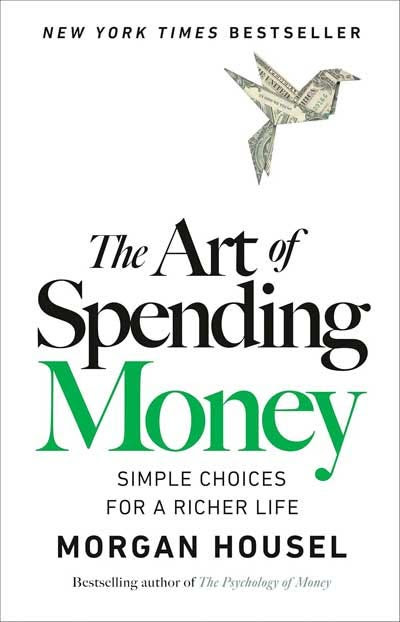
From the bestselling author of The Psychology of Money, The Art of Spending Money explores the overlooked side of personal finance — arguing that true wealth isn't about what you accumulate, but how you use money to build freedom, meaning, and joy.
Core Principles Use Money to Buy FreedomWealth is not about luxury — it's about control. The highest form of wealth is the ability to wake up and do whatever you want. Money is a tool that buys you time, allows you to make choices about where and how you live, and provides peace of mind. As Housel puts it: "I'd rather wake up and be able to do anything I want than try to impress you with nice stuff."
Comparison Is a Losing GameThere are two ways to use money: as a tool to live a better life, or as a yardstick to measure yourself against others. Many people aspire for the former but spend their lives chasing the latter. Spending to impress others rarely leads to happiness because there's always something more to strive toward — and disappointment is often the outcome.
Experiences Over PossessionsSpend on things that either resist adaptation or that you can repeatedly rediscover. You adapt to your new couch almost immediately, but a meaningful trip creates memories that bring pleasure for years. The best spending often looks invisible — living in a modest home you love, cultivating friendships, preserving mental health — things you can't display but deeply feel.
Spend Extravagantly on What You LoveThe goal isn't extreme frugality — hoarding money for its own sake is another trap. Instead, spend extravagantly on the things you truly love while mercilessly cutting the things you don't. Think about spending in terms of minimizing future regret: no one gets a prize for dying with the highest account balance.
Try It Now- List your top 5 purchases from the past month. For each one, ask: "Did this bring me lasting satisfaction, or was it forgotten within days?"
- Identify one recurring expense that doesn't actually improve your life. Cancel or reduce it this week.
- Think of one thing you've been denying yourself that would genuinely increase your daily happiness. Permit yourself to spend on it.
- Write down what "enough" looks like for you — the point where more money wouldn't meaningfully improve your life.
- For your next purchase over $50, wait 48 hours and ask: "Am I buying this for me, or to impress someone else?"
"There are two ways to use money. One is as a tool to live a better life. The other is as a yardstick of status to measure yourself against others. Many people aspire for the former but spend their life chasing the latter."
Iguanas Fell From Trees During Florida Cold Snap—and the Numbers Are Staggering [ 06-Feb-26 4:25pm ] EU Says TikTok's 'Addictive Design' Likely Violates the Law, Will Need to Change [ 06-Feb-26 4:20pm ] The Olympics May Have a Penis Problem Thanks to Ski Jumping [ 06-Feb-26 4:05pm ] Paul W.S. Anderson Can't Help But Return to Video Game Zombies [ 06-Feb-26 4:00pm ] You Couldn't Afford Nvidia's Next Gen GPUs, Even if You Wanted Them [ 06-Feb-26 4:00pm ]
EU says TikTok must disable 'addictive' features like infinite scroll, fix its recommendation engine [ 06-Feb-26 4:24pm ]
An Alaska for Every Mood [ 06-Feb-26 11:00am ]The Alaska, a simple mix of gin, yellow Chartreuse and orange bitters, hails from the beginning of the 20th century. The "delectable potion," as it was described in the 1930 Savoy Cocktail Book, has all the trappings of modern success: It's essentially a Martini riff, made with the liqueur everyone can't stop talking about. It looks both demure in a Nick & Nora and, thanks to its golden hue, a little playful in a V-shaped glass. Yet for all its appeal, it has taken nearly a century for the drink to finally get its due. Now it dots menus at top bars, and there's never been a better time to order one—or to make one at home. Here are some of our favorite recipes for the drink.
China's Salt Typhoon hackers broke into Norwegian companies [ 06-Feb-26 3:39pm ]

While nothing will ever top the picture-perfect selfie taken by a macaque with a stolen camera, a sled dog in Greenland is vying for at least the top five list of animal photography.
An Associated Press crew on a shoot in Ilulissat, Greenland, discovered that a 360-degree camera was missing. — Read the rest
The post Sled dog films itself using $700 camera as chew toy appeared first on Boing Boing.

When it comes to reportage on terrible things, there are few journalists I trust more than Spencer Ackerman. He's been writing about the world working very hard to bleed itself to death since the early 2000s. The quality of his work has led to his being employed by Wired, The Daily Beast, and The Guardian to watch the politics and mechanisms that try very hard to do us dirty and to talk about them in a way we can understand. — Read the rest
The post Senator Wyden's cryptic CIA letter is ominous appeared first on Boing Boing.

On the night of February 5, President Donald Trump shared an AI-generated video on Truth Social that depicts Barack and Michelle Obama with their faces superimposed on the bodies of apes in a jungle setting. The Obamas appear for a second or two near the end of a roughly one-minute clip that otherwise pushes false claims about 2020 election fraud, reports the New York Times. — Read the rest
The post After Epstein files, Trump posts Obamas as apes appeared first on Boing Boing.

One more item, if I may, from Bobby Campbell's latest newsletter:
"Wanted to make sure I mentioned this wonderful addition to the Illuminatus! canon, an excellently crafted spotlight on co-author Robert Shea. My enthusiastic review is enclosed below:
Meet Bob Shea! The legendary co-creator of Illuminatus!, Hodge to Robert Anton Wilson's Podge, a luminous man of letters, friendly suburban zen buddhist anarchist, and visionary creator of better tomorrows, that you are most welcome to enjoy today!
Tom Jackson has crafted a perfect introduction to Robert Shea's literary labyrinth, a guided tour of his revolutionary ouvré, wherein Shea's unique voice delivers enlightening epiphanies as casually as an old friend discussing the weather.
Make no mistake, the mystic mystery of Illuminatus! continues right here and now!
In a comment on my recent post about the latest Hilaritas podcast, podcast host Mike Gathers said the podcast on the Shea book and the Vincent Murphy podcast were two highlights in the 2025 podcasts. I thought the Shea podcast was good, too --- not because I was on it, but because Mike Shea told so many wonderful stories about his father.

No-one knows what U.S. Senator Ron Wyden is referring to in his short letter to CIA director John Ratcliffe, but all agree that it's scary.
"I write to alert you to a classified letter I sent you earlier today in which I express deep concerns about CIA activities," is the entirety of the letter, but for pleasantries. — Read the rest
The post Alarming letter from Senator Ron Wyden draws attention to whatever the CIA is up to appeared first on Boing Boing.

Two comic books that cost a dime apiece in 1940 just sold for $13 million combined.
Heritage Auctions announced a private sale pairing the highest-graded Batman No. 1 (CGC 9.4) with the second highest-graded Superman No. 1 (CGC 8.5, Mile High pedigree). — Read the rest
The post "The summit of scarcity" — Batman No. 1 and Superman No. 1 sell for $13 million appeared first on Boing Boing.

Bitcoin is edging up this morning, but after yesterday's rout has still lost all the gains of the second Trump administration. It's at $66,217, barely half of its october peak at $123,857. No, what's going on with Bitcoin?, asks CNN's, David Goldman. — Read the rest
The post Bitcoin's "Trump Bump" wiped out, loses half its value in 4 months appeared first on Boing Boing.

The Information reports that chip giant Nvidia is skipping a planned refresh of the 5000 series GPUs and delaying the next-gen 6000 series until 2027. With RAM in short supply and its own silicon essential to the AI boom, there simply isn't the capacity to get them on the shelves. — Read the rest
The post Gamer GPUs delayed as Nvidia prioritizes AI appeared first on Boing Boing.

With the very long-awated Baldur's Gate 3, a classic computer role-playing series not only took off again but went into orbit, scoring game of the year awards and a vast army of players and fans. So it's only natural the Dungeons & Dragons fantasy would head to the screen. — Read the rest
The post Baldur's Gate comes to television appeared first on Boing Boing.


