

The UK government is paving the way for rules requiring essential service operators and digital providers to guard against losing control of AI agents and report incidents when safeguards fail.
An amendment to the Cyber Security and Resilience Bill, which is passing through Parliament, would give ministers powers to regulate the deployment and reporting of agentic AI in certain organizations. The new clause was introduced during the bill's third reading in the House of Lords this week.
In an explanatory note, ministers outlined plans for safeguards, notification of affected organizations, preservation of evidence, and government-led incident reviews. The measures would require consultation and parliamentary approval through secondary legislation.
The move follows a series of incidents. Last month, OpenAI revealed that its agents repeatedly strayed beyond their intended scope, prompting the company to notify more than 100 organizations about the issues. That came after July's incident, in which an OpenAI agent accessed the internet and breached machine learning platform Hugging Face. The episode, and the potential for more damage from poorly designed AI agent deployments, have prompted MPs to question whether UK law can deal with such threats.
Speaking to The Register, Stuart Davey, a partner at law firm Pinsent Masons, described the clause as "quite novel." Rather than directly imposing new duties, it would allow ministers to introduce rules and investigatory powers covering regulated organizations. Davey said that could include powers "to look where there has been such an AI agentic compromise or issue, and do some things... appoint inspectors, enter and search premises, seize and retain documents." Under the proposals, the minister could confer certain powers on regulators, requiring action from targeted organizations.
Potentially affected organizations include gas and electricity suppliers, managed service providers, and cloud providers deploying AI agents for customers. Foundation model developers would not automatically fall within scope simply because they build the underlying technology.
"Where there's a security or operational compromise in relation to a relevant network or information system, that would seem to capture those managed service providers or cloud computing providers who are using AI, and there's that loss of control," said Davey. He advised cloud and managed service providers to track whether the proposed measures become law.
Evin McMullen, CEO and co-founder of AI identity and control infrastructure company AmanTrue, said the amendment recognizes loss of oversight or control as a security risk but does not itself impose new duties.
"The amendment allows future regulations to introduce investigatory and enforcement powers where an incident involves an AI agent, targeting organizations running essential digital services," he said.
"The deployer of an AI agent chooses its permissions, connects it to systems, and gives it access to data. When something goes wrong, the deployer is the party that will be expected to explain what happened.
"Accountability stays with the organization that put the agent into the system, and ultimately with executives and the board. Whether model builders are captured will depend on how the regulations are written and whether a builder sits in a regulated category or a regulated supply chain." ®

NHS England CEO Sir Jim Mackey plans to tell Palantir to clear future claims about its Federated Data Platform's benefits with his team - although he admits that could be difficult to enforce.
Speaking to the Health and Social Care Committee this week, Labour MP Ben Coleman noted that NHS England had cautioned against attributing improvements directly to the platform, but said newly appointed Palantir UK senior vice president Tom Watson "is making claims that [Palantir] is making a difference, and that it's due to Palantir that changes are taking place."
Responding, Mackey said he would write to Palantir and "tell them that they have to share with us and clear with us any benefits claimed in the future."
But getting Palantir to comply could be another matter. "They should share them with us, but contractually, it looks hard to enforce," Mackey said.
The planned letter follows repeated questions about the evidence NHS England and Palantir have used to promote the Federated Data Platform (FDP). NHS England awarded the £330 million contract to a Palantir-led consortium in November 2023 to help improve planning and efficiency.
In July, campaign group Foxglove wrote to the UK health minister questioning figures used in Parliament to justify the contract. The Office for Statistics Regulation (OSR) also began examining the evidence.
NHS England had said that as of June, 139 trusts used the platform, with 137 reporting benefits. It said an Inpatient Care Coordination Solution tool based on the FDP had helped hospitals perform procedures on an additional 111,589 patients. However, a Freedom of Information request later found that nearly a third of NHS trusts using Palantir's health data platform were performing fewer patient procedures than before it went live.
Later that month, the OSR said NHS England had accepted that it needed to communicate its claims about FDP performance more clearly.
The regulator noted that NHS England had published on its website a caveat saying that it could not "draw conclusions about cause and effect as other variables have not been controlled for."
Last month, Watson, the former deputy leader of the Labour Party, sought to rebut what he described as misinformation about the FDP, repeating the statement that 137 trusts were already reporting benefits without mentioning the caveats.
In a statement on X, Watson said the OSR had pointed out that there had not yet been a study on the FDP that controls for other factors like staffing level changes or industrial action. "That's a fair note of caution."
In a prepared video, he said Northampton General Hospital, University Hospitals of Derby and Burton, and Chelsea and Westminster Hospital had all produced figures showing they are benefiting from using the platform.
"Can we prove that every one of those procedures happened because of our software? No. But does that mean we should ignore what the hospitals are telling us? Of course not," he said.
In February 2026, NHS England awarded a contract to Imperial College Projects to independently evaluate the FDP. The findings are not expected until after ministers decide whether to extend the contract, which currently ends in March 2027. ®
Britain's ambitions for AI, advanced chips, and clean energy rest on mineral supply chains dominated by China, and MPs say they cannot establish whether ministers have a credible plan to reduce that dependence.
The House of Commons Business, Innovation, Science and Trade Committee has set ministers ten tests for securing critical minerals. Its verdict is hardly glowing - it cannot be confident the government passes any of them.
The tests cover whether ministers know which industries and technologies need protecting, what minerals they require, where supplies could be disrupted, and how domestic production, overseas partnerships, skills, and financing will close the gaps.
In a report published today, the committee warns that diversifying supplies will take ten to 15 years, and will require sustained investment and cooperation with allies. Completely cutting China out is neither realistic nor desirable, it says. Leaving Beijing with so much leverage is another matter.
Critical minerals underpin everything from batteries and semiconductors to datacenters and military equipment. The designation reflects their economic or security importance and vulnerability to supply disruption, rather than membership of an especially exclusive geological club.
The UK - like pretty much all major industrialized economies including the US, the EU, Japan, and India - is almost entirely dependent on imports of these materials and mineral products. But digging up more ore outside China would solve only part of the problem. The bigger bottleneck is processing.
Citing International Energy Agency figures, the committee says China is the leading refiner for 19 of 20 strategic minerals, with an average market share of 70 percent. A different flag over the mine does not necessarily mean a different route through the refinery.
The exposure extends beyond chips and batteries. As The Register reported in August, erbium is used to amplify signals in fiber-optic links, while yttrium goes into components including ceramic capacitors. IEEE Spectrum warned that China effectively monopolized the processing of both into the industrially usable materials manufacturers need.
That concentration has already caused disruption. China's rare earth export controls in April 2025, introduced following US tariffs, rippled through manufacturing supply chains and forced temporary automotive plant closures. British manufacturers can suffer even when Britain isn't the intended target.
The committee also highlights gallium and germanium, used in advanced semiconductors for radar, communications, and electronic warfare. China accounts for 95 percent and 93 percent of their global production respectively, according to the report [PDF].
Beijing flexing its leverage over chip materials is not new. China announced export licensing requirements for gallium and germanium in July 2023 amid tightening Western restrictions on semiconductor technology.
Yet MPs say the government has not clearly identified which domestic industrial and technological capabilities it wants to protect, making it difficult to determine which supply chains deserve priority.
Nor do import statistics reveal the whole exposure. Minerals can arrive inside batteries, magnets, and other manufactured components, disappearing from view as individual materials. Businesses themselves may not know precisely what lies several layers down their supply chains.
The committee wants confidential mapping and stress-testing with firms in critical sectors, followed by joint purchasing arrangements with allies to give new mining and refining projects dependable customers.
Committee chair Liam Byrne said: "Critical minerals are the alpha of the new economy. We cannot re-arm Britain, build AI or deliver net zero unless we secure the minerals these technologies depend on.
"Yet sixteen years after China first weaponised its chokehold over rare earths, Britain remains dangerously exposed. We don't know enough about what minerals we need or where to find them. Our energy costs make processing uneconomic, we're exporting valuable metal waste, and our public finance institutions are shackled by outdated rules."
More than a shopping listThe committee's five-part prescription is to identify the capabilities Britain must protect, map their mineral needs, expand domestic mining, processing, and recycling, pool purchasing power with allies, and establish a dedicated financing facility.
The proposed facility would bring together public funding bodies to back projects through grants, equity, loans, guarantees, and long-term purchase agreements.
"We're never going to eliminate Chinese minerals from our supply chains. But it's foolish to leave Britain exposed to economic coercion when we could be building alternative supplies," Byrne said.
"That's why we need a new Critical Minerals Finance Facility with the financial firepower to invest in new mines, processing plants and recycling, working with our allies to share the costs."
The report argues that existing institutions leave gaps, particularly for early-stage projects. It recommends expanding UK Export Finance's remit and allowing British International Investment to take equity stakes in overseas mineral projects.
Long-term purchasing commitments and price guarantees could help keep strategically important projects commercially viable despite volatile mineral prices.
There is also material closer to home. The report says 80 percent of UK metal products classified as waste are exported. MPs want better sorting and separation infrastructure, alongside more detailed trade data to establish exactly what valuable scrap is leaving the country.
For domestic projects, they recommend designated critical mineral clusters with permitting deadlines, help navigating approvals, energy support, and priority grid access.
Stockpiles could provide a short-term buffer too. The committee calls for an initial reserve covering approximately 60 days of minerals needed for defense capabilities, while stressing that warehouses are no substitute for diversified supply.
None of this offers a quick escape from dependence on China. The committee's argument is that Britain needs to decide what it must protect, work out what those industries actually consume, and help finance alternatives before the next disruption.
"De-risking even a prudent proportion of our supplies will take over a decade. Britain cannot afford to drift," Byrne said. "We must act now before dangerous dependencies become strategic liabilities." ®

The autofill feature of Apple's Safari browser appears to be suffering from a date handling error that occasionally leads it to supply an incorrect credit card expiration date when filling out forms.
The supposed issue has been a sore spot for Apple customers dating back at least to 2017, when the author of an Apple Community forum post complained about changes to the month field in the Autofill credit card expiration date when moving between time zones.
"I've noticed for the last year or so, whenever I travel from Eastern time zone (my home) to Central time zone or even Pacific time zone that my credit card expiration date month changes in Safari Autofill," the Safari user wrote.
Another post in 2021 raised similar concerns.
"I don't know how to reproduce this," the author wrote. "Every few months Safari on any of my devices changes the expiration month of all of my stored credit cards by decreasing the month by 1, for example instead of 10/2029 it changes it to 09/2029."
Three years later, another person posting to Apple's Community forum reported the same issue.
"For a few years now every time I use Autofill on my computer my credit cards (ALL of them) always have their expiration dates change one month earlier," the 2024 post says. "I thought it was just a glitch on my computer but I bought a new computer and didn't transfer anything from my old one and it is still doing it."
An unrelated Autofill bug report from 2024 suggests that if there is an issue, it resides in Apple-owned Safari code rather than Safari's open source WebKit engine.
Wherever the bug may reside, Safari's unreliable handling of credit card dates has kept a complaint-filled Reddit thread going for four years. And the reported month-shifting has been noted in other threads, too.
The Register was unable to reproduce the described behavior, but a reader insists it's still a problem.
"The Safari AutoFill feature sometimes fills in the credit card expiration date wrong," the reader explained. "My credit card expires in December, but sometimes Apple helpfully enters November."
"To be clear, the card is stored correctly when inspected in Settings," our tipster added. "The off-by-one error only happens when filling out a form in Safari, and not consistently."
One possible way this might happen is if the Safari Autofill code implemented the expiration date using Swift's DateComponent type and stored it as a Calendar object with UTC as the TimeZone identifier. Doing so would anchor the date to a specific time. If the date components were extracted in Pacific Time, the value would be represented as eight hours ahead (PST). So 9/1/2027 at 00:00 would appear as 8/31/2027 at 16:00.
Apple did not immediately respond to a request for comment, but we're told Apple's Help Desk - or "Helpless Desk" as our source put it - advised clearing the browser cache and re-entering details of the affected credit card.
If that works, it suggests Safari's handling of cached data in the context of Autofill dates may need to be revisited.
Apple does not maintain a public bug database and the community-maintained OpenRadar sheds no light on these reports. ®
Welcome to Friday and therefore to a fresh edition of On Call, The Register's weekly tale of tech support trials and tribulations that readers kindly share.
This week, meet a reader we'll Regomize as "Mason," who told us he once worked at a hospital doing tech support for its research labs.
"One of the labs was for a doctor who was one of the world's top organ transplant researchers" Mason told On Call.
The doctor was also a voracious consumer of - ahem - adult entertainment, a habit that saw his PC and other machines around the lab often come down with a nasty case of malware.
Mason got to clean that up, sometimes multiple times in a single week.
The doctor's foibles were widely known around the hospital, as was the fact that his activities violated several workplace policies.
Mason pointed this out to his boss every time he cleaned up a fresh malware outbreak but such was the doctor's status that management never intervened.
And then the hospital was hit by a nasty cyber-worm that did a lot of damage. During the cleanup, Mason's colleagues found logs that showed the doctor's PC was the source of the infection, and that he had been indulging in his online hobby at the time the worm arrived.
Mason assumed this would be the moment at which the doctor would finally be held accountable and face disciplinary action.
Instead the doctor made a bargain with the IT department to henceforth use only a designated PC when pursuing - ahem - personal and/or intimate matters. And he would only use office PCs for actual work.
The hospital's tech team rescued a PC from its e-waste pile for this job.
"Get this thing going and deliver it to Doctor Pervert," Mason's boss ordered.
By this stage, Mason had had enough. He escalated his protests, telling his boss that indulging this doctor was unprofessional, likely exposed the hospital to lawsuits, wasted IT department resources, and was just wrong.
"What do you want to hear?" his boss replied. "The CIO told me do this or get another job."
After Mason prepped that PC, he only needed to clean up malware about once a year - after the poor machine was so overrun with malware that it no longer served the doctor's purposes.
Mason left the hospital while this PC was still in place.
"You'll be shocked, no doubt, to learn that years later the doctor's graduate students filed a lawsuit," he told On Call. "And that the separate fun-time computer was one of the pieces of evidence that the hospital knew about his - ahem - proclivities and not just ignored them but facilitated them."
Have you been asked to cover up revolting behavior? Or ignore policy? Click here to share your story with On Call. It's our policy to tell a great tech support story week, so we appreciate every contribution. ®
Nation-state actors and criminals likely exploited the PHP2SHELL vulnerability before its disclosure, according to Cloudflare CEO Matthew Prince.
"These vulnerabilities, like the PHP vulnerabilities that were disclosed the other day, had been in the wild for years," Prince said on the company's third quarter earnings call. "We're going back through our logs looking for any evidence that hackers or nation-state actors or others had been using them in the past. I know that we're going to find examples of that."
That was just one of the warnings he offered on the call, among them that some of Cloudflare's customers believe AI agents are "a bane to their business and want to keep them away."
To explain why, Prince hypothesized that he could use an agent to find him a restaurant to eat at after he finishes his day of investor relations duties.
"It might go and scour the internet and look at 1,000 different restaurants' websites, pull down 1,000 different menus, and then I might choose to only go to one of those," he said. "The problem is that 999 of those restaurants have now had a cost that is just been applied to them, but they are not getting any benefit."
The CEO admitted that web searches have always driven some low-value traffic but feels the volume of agentic activity - which Cloudflare has previously predicted will be one thousand times greater than clicks from humans - means the problem is now at a different scale.
Prince also had bad news for Kubernetes aficionados, because he thinks containers might become another casualty of the agentic age.
The CEO allowed that containers are "a significant improvement over bare metal or even virtual machines," and said they fueled the growth of hyperscale clouds and mobile applications. But he thinks containers are already cooked.
"The container-based architecture of the hyperscalers and neoclouds just can't keep up in a cost-effective way with the new agentic paradigms of today," he argued, again citing the 1000:1 ratio of bot:human traffic Cloudflare expects to see online any year now.
That's a Cloudflare-centric view, because Prince pitched the company's serverless "Workers" service as an alternative to containers. The company also offers products that can either block agents, ameliorate the cost and traffic impacts of agentic activity, or allow organizations to monetize traffic generated by AI.
Prince said demand for those products is growing fast, claiming that since July 1st, "approximately five percent" of the web opted in to Cloudflare's content protection products. The CEO said Meta is already a customer, and said Zuck's new "Muse" agents will benefit Cloudflare by creating more agentic traffic that third parties want to tame.
He also pointed to year-on-year revenue growth of 39 percent, which saw quarterly revenue reach a record $782.5 million.
And he thinks there are better days ahead, due to the terrible state of security.
"It may seem like the sky is falling with the number of new security vulnerabilities that have been reported over the last few weeks," Prince said. "I wish I could tell you we were through the worst, but we're not."
He thinks Cloudflare can profit from security misery because the extent of its activities and client base mean it is "among the first to receive quiet disclosure of new vulnerabilities" and remediates them before disclosure.
Investors thought this all made sense, and in after-hours trading sent Cloudflare shares up by around 15 percent, meaning it recovered and then improved on losses that it incurred earlier after major US indices dropped around four percent as investors who worry tech stocks are overvalued. ®
The midterms are over and the Republicans got their asses waxed. We can point to any number of reasons why the country delivered a stinging rebuke to the GOP across the union. It was a slap to Donald Trump. It was about the economy. It was the war in Iran. It was all of the ICE antics as they cosplayed as the Gestapo in major American cities.
All of those are, to one degree or another, true. You don't get this kind of result without a panoply of valid complaints about the party in power. But part of what occurred is also a repudiation of many MAHA movement leaders that were in government.
Tuesday was a particularly brutal night for MAHA Republicans in Iowa, where several Kennedy-backed candidates were swept up in the seismic blue wave.
Republican Iowa gubernatorial candidate Zach Lahn, who shared Kennedy's concerns about pesticides in farming, lost to Democratic State Auditor Rob Sand on Tuesday. At a campaign rally last week, Kennedy described Lahn's race as "the most important election going on in this country."
The names keep piling up from there.
Iowa Reps. Mariannette Miller-Meeks and Zach Nunn, both of whom Kennedy campaigned for, also lost their re-election bids as Democrats flipped dozens of House seats. Another MAHA advocate and Kennedy pick, Joe Mitchell, lost his Iowa House race to Democratic opponent Lindsay James. The seat is being vacated by Ashley Hinson, who was among several Republican Senate candidates to lose their races in red states on Tuesday.
And, tangentially, one of the most stunning upsets of the midterms, in which Dr. Annie Andrews defeated Darline Graham, the late Lindsay Graham's sister and handpicked Trump candidate, primarily came about because of RFK Jr.
"The day that RFK Jr. was nominated to lead HHS was the day that I really seriously started considering running for this seat," Andrews told The New Republic in July.
"RFK Jr. has been my professional archnemesis for decades, and there are thousands of pediatricians across the country who would say the same thing."
To be clear, nobody is claiming that opposition to Kennedy or the MAHA movement is why all of these candidates, and others, lost their races. It also isn't some primary reason for the election results overall.
But Kennedy and MAHA was embraced by Trump because they were supposed to be a differentiator on the political landscape. Kennedy was no MAGA Republican before joining the administration. Far from it. And the MAHA movement is in many ways apolitical. The theory was that both would bring independents, and even some Democrats, into the GOP voting bloc.
As we now know, that didn't happen. And it makes Kennedy's continued presence in Trump's cabinet fairly pointless.
India's Computer Emergency Response Team has warned the nation's financial services industry of a "significant escalation" in attacks by what it describes as an "AI-assisted financial threat actor" that has re-targeted victims after they flubbed remediation efforts.
CERT-IN first detected the attacks in October and issued advisory in which it warned digital lending platforms, fintech entities, payment service providers, and wallet operators that attackers were targeting internet-facing applications, exposed APIs and privileged endpoints. If the attackers found a way in, they tried to use payment APIs to steal money.
On Thursday, the CERT published an update in which it said it continues to hear of successful attacks, including from outfits that tried to remediate their systems after earlier incidents.
"The same entities have been deliberately re-targeted, including after incomplete remediation and attacks have been timed to coincide with holidays, weekends and other low-monitoring windows to delay detection and response," the CERT warned.
CERT-IN has decided the attackers need a name and chose "CRAFTY FALCON."
The security org has also revealed that the crew uses AI-enhanced tools including the ARTEX pen-testing tool, the Cairn attack search engine, and the CyberStrikeAI framework - all of which have been linked to users who appear to speak Chinese.
CRAFTY FALCON's tactics see it go looking for internet-exposed environments used for testing or development, where it finds artefacts such as shared credentials, tokens, or network paths that help it move into production systems.
If it gets in, the crew re-writes victims' applications so they do things like make unauthorized API calls. Victims' defenses assume that only legitimate apps would call those APIs, so activity conducted by the re-written apps aren't flagged as an attack.
Even if victims suspect an attack, they have a lot to cope with because CERT-IN says CRAFTY FALCON creates many "functionally identical variants refined in rapid succession; a pattern consistent with AI-generated code and iterative AI-assisted development."
The crew also quickly exploits newly discovered vulnerabilities to keep its attacks fresh.
Once it gets a toehold, the criminal crew makes tiny payments of about $0.01 to test if its attacks work. If those transfers work, CRAFTY FALCON makes larger payments. When the target is a cryptocurrency exchange or virtual digital asset service provider, the crew steals wallet keys and empties cryptocurrency wallets.
Vendors of observability tools will be warming up their Indian sales teams today, because CERT-IN's advice to Indian businesses includes improving their ability to log events, monitor for anomalies in real time, and send alerts. It also urged keeping test environments off the internet, and restricting access to cloud resources because CRAFTY FALCON is fond of using them to run its attacks.
CERT-IN also warns that the attacks are "active and escalating" and therefore worthy of 24x7 monitoring.
Interestingly, the CERT's advisory mentions attacks on "entities" across banking, financial services, and insurance, but only names the kind of businesses mentioned above as having reported attacks.
The Register points this out because India is home to literally thousands of banks, many of them small operations that sometimes lack basic infosec protections. CRAFTY FALCON therefore has a target-rich environment in India should it choose to expand its activities. ®
If you have any industrial smart freezers, look out. The US federal government is urging owners and operators to disconnect them from the internet, apply patches, change default passwords, and take other security measures to prevent the kind of attacks that have become prevalent in Europe.
"We are seeing these systems targeted across critical infrastructure sectors globally, putting inventory and equipment at risk," FBI Cyber Branch Operations Director Brett Leatherman said in a statement.
Since mid-October, unknown miscreants have hacked thousands of remote-controlled refrigeration systems across hundreds of grocery stores in France, Belgium, Ireland, Luxembourg, and Sweden. The attacks increase the temperature inside fridges to highs of 50ºC (122°F), spoiling food, and sparking fires.
The Register asked the FBI if it has documented any successful or attempted attacks against refrigeration and cold chain monitoring systems in America. We had not received a response to our questions at the time of publication, nor are we aware of any documented digital attacks against these systems in American supermarkets.
But there are signs that stateside operators are aware of the issue.
Dutch grocery giant Ahold Delhaize, which operates US supermarket chains Food Lion, Giant Food, and Stop & Shop, last month said it proactively took IT systems offline following a cyberattack that affected most of its US and European brands.
Delhaize supermarkets in Europe are among those hit by the destructive freezer attacks.
The Pentagon is also reportedly treating a series of freezer malfunctions that spoiled food at military bases across the US in August as a suspected cyberattack, according to Reuters, which cited four officials familiar with the matter.
In a Thursday advisory, the US FBI, Cybersecurity and Infrastructure Security Agency (CISA), Health and Human Services, and departments of Agriculture and Transportation warned organizations about the ongoing cyber threats facing operators of industrial refrigeration and cold-chain monitoring systems.
"The actors may exploit vulnerabilities or weaknesses in unpatched or internet-accessible controllers to remotely alter settings and force units into continuous heating and defrost cycles, which can cause widespread inventory loss and equipment hazards," the agencies said.
Attackers exploit these flaws by bypassing authentication, injecting arbitrary code, and abusing weak configurations, according to the feds. Once criminals gain access to the systems, they can change the temperature to spoil food or temperature-controlled medications, start fires, and ultimately harm people who consume products that haven't been stored at proper temperatures.
How to stay frostyTo prevent these scenarios, the government organizations urge owners and operators to "immediately" implement best practices and security protections. First and foremost on the list: do not expose industrial control systems and devices to the public internet.
Iranian hackers used internet-accessible programmable logic controllers (PLCs) to break into more than 100 US water systems in July. This sort of exposed device, which often lacks password protection, is a boon to miscreants looking for an easy button to gain access to critical facilities.
"Should remote access be necessary, protect it by using a firewall or edge device and updating it to the latest version to reduce security vulnerabilities," the feds advise.
Other recommended tactics include:
Create a dedicated VLAN for operational technology (OT) devices, to isolate industrial devices from business networks.
Replace default passwords with strong passwords and policies, turning on phishing-resistant multifactor authentication (MFA) whenever possible.
Apply patches in a timely manner, and retire and replace legacy devices that no longer receive security updates from the manufacturer.
Define and maintain a device and IP allow-list, and limit access to OT devices to only those on the list.
Maintain and test backups. These should be kept offsite and offline.
And finally: enable logging and regularly review logs for any unusual activity.®
AWS Kiro, the cloud giant's AI-oriented integrated development environment, isn't the most popular code editor.
That honor goes to Microsoft's Visual Studio Code, at least as measured by Stack Overflow's 2026 Developer Survey.
Kiro might rank 27th among the listed IDEs, but then it's not really an IDE anymore. Having shrugged off reports that it played a role in outages last year, Kiro now styles itself "an agentic development environment" after a brief stint as "an agentic IDE."
It's also the inheritor of Amazon Q Developer coding assistant users, who have been directed to migrate to Kiro.
It's also "an AI-powered development environment that helps you build software from prototype to production." It's "available as a desktop IDE, a command-line interface, a web app, a mobile app, and a personal AI agent (Crew)."
Except that Kiro Crew is also "the persistent, open source development workspace." It's more agent infrastructure - an environment - that supports Kiro Web, IDE, and CLI.
To help get Kiro through its identity crisis and perhaps make it more beloved, AWS is expanding Kiro's remit still further. The cloud giant is launching Kiro Crew bots, recalling similar efforts like OpenAI dots and Grok Bot, as well as Claude Duet and Meta Muse.
Bots in Kiro Crew are software agents that attempt to carry out long-running tasks.
"A bot is a new way to structure and drive agentic work," a Kiro blog post explains.
"Instead of working in isolated sessions, each bot is a named, long-running agent that you define and customize for a specific part of your work. It has its own memory and runs its own sessions so you stop tracking them one by one. Kiro Crew already learns from how you work. Bots change where that learning lives."
There's some appealing anthropomorphism to giving each agent a name and its own tools, permissions, and memories. You're suddenly surrounded by friends.
The possible downside is how that gets billed - there's potential for a lot of duplicated context if your many agents process overlapping data without some form of shared cache.
Given Amazon's concerns about internal token usage and developer complaints about runaway costs in Kiro, it seems other organizations might be curious about the potential expense of keeping bot memory isolated.
In response to our inquiry about the cost of keeping memory separate, an AWS spokesperson said, "All of the Kiro bots bill together through a developer's existing Kiro plan. Each bot in Kiro Crew has its own memory and sessions, and their learned context is intentionally kept separate so that what one bot learns doesn't bleed into another's work. However, all bots operate within the same Kiro Crew workspace, use the same harness, and have access to the same codebase, project files, MCP, skills, and tools—so they don't need to independently rediscover your project structure."
In any event, figuring out how Kiro Crew agents are spending tokens looks likely to require analytics of some sort, because AWS Kiro subscriptions are sold as "credits" that get converted to tokens at different rates, depending on the underlying model.
As a thought experiment, AWS suggests a developer might deploy an intake bot for reading trouble or job tickets, labeling them, flagging duplicates, and drafting reproduction steps for bugs.
Then there might be the build-health bot for checking the CI pipeline periodically and surfacing test failures that require the attention made scarce by having to deal with a bunch of AI agents.
A code review bot might also be warranted for reviewing pull requests and other delegated responsibilities. And top that off with a release-readiness bot, for confirming that merged changes have tests and for seeking release sign-off.
For those smitten by the idea of a single surface through which multiple agents can be configured, routed, and governed, Kiro Crew has your backend. ®
Ctrl-Alt-Speech is a weekly podcast about the latest news in online speech, from Mike Masnick and Everything in Moderation's Ben Whitelaw.
Subscribe now on Apple Podcasts, Overcast, Spotify, Pocket Casts, YouTube, or your podcast app of choice — or go straight to the RSS feed. To get extended episodes with additional coverage, support us on Patreon.
In this special bonus episode for our Patreon supporters, Mike and Ben share their reactions to The Social Reckoning, Aaron Sorkin's much anticipated (but it seems not much loved) followup to his acclaimed 2010 movie The Social Network.
This free teaser covers the beginning of their conversation, but there's much more in the full episode. Become a Ctrl-Alt-Speech supporter on Patreon to hear the whole thing, and to get extended episodes of the regular podcast every Thursday.
Also be sure to check out our recent regular episode with guest co-host Jeff Horwitz, whose reporting on the Facebook Files was a driving force of the story, where he shares some of his own reactions to the movie and being portrayed by Jeremy Allen White.
Follow us on Instagram, YouTube, and Bluesky!
If you're already a Patreon supporter, you can get the extended episode on Patreon.
Recently, two federal appeals courts issued opinions that will allow Florida and Georgia to start enforcing laws that will age-gate and block young people from accessing social media. The laws do not adequately respect minors' rights to play, speak, and learn online. More fundamentally, these laws don't help young people stay safe online—a goal that lawmakers should pursue.
Because of the new laws, some young people will lose their ability to access lawful information, find their online communities, and even engage with school board members. Others will need parental permission to stay online. And adults will face increased demands to prove their age, which will put their privacy at increased risk simply to continue to use the services they already use.
We opposed these laws because they threaten the free expression and privacy of both minors and adults. Even though these lawsuits are not over, the injunctions that paused enforcement have been lifted, and the states of Florida and Georgia will now be able to enforce broad restrictions on social media use.
The restrictions that these states will start enforcing are a setback for the rights of all internet users, but they are not written in stone. That's why EFF is encouraging internet users - and particularly young people - to start keeping a record of how they are affected. If you are a teenager who loses access to an online discussion, can't participate in a political campaign, or stop seeking information because you don't want to upload personal information, document what happened. The same is true for adults who may be mistakenly blocked by age checks, and parents who may encounter obstacles to authorizing their children's use of online services. These experiences matter. They can help us show courts, policymakers, and the public what government restrictions on online expression actually cost the people who live under them.
Hopefully, with enough proof of the expressive harms these laws cause, we can push lawmakers to rescind them. That's why we're encouraging folks to reach out to EFF once they've documented these harms. You can write to us about this issue at the email address agegates@eff.org.
The DecisionsThese two opinions, issued by the same panel from the U.S. Court of Appeals for the 11th Circuit, allow Florida and Georgia to enforce restrictions on social media accounts for people under 16 years old. The requirements differ by state.
In Florida, the judges allowed that state's H.B. 3 to move forward, which requires covered platforms to ban anyone under 14 from opening or keeping accounts—even with parental permission. Teenagers who are 14 or 15 can have accounts only with parental consent. To be covered, a platform has to use algorithms, allow content uploads or the viewing of other peoples' content, and have at least one feature on a list of features the state considers bad, including livestreaming, engagement metrics, autoplay, infinite scrolling, or push notifications. These requirements effectively apply to every major social media service that young people use.
To the extent there is a silver lining in the ruling on Florida's law, it's that the panel recognized that H.B. 3 targets expression protected by the First Amendment. The problem is that the ruling uncritically accepts the idea that a social media service is addictive in a clinical sense, even if just 10% of users under 16 are using the platform for two or more hours per day (the standard set in H.B. 3). The court simply accepts that time spent online is a proxy for harm. The bill doesn't distinguish doomscrolling or compulsive use from organizing a campaign, making art, or talking with friends.
In Georgia, S.B. 351 can now be enforced. That law requires parental consent for anyone under 16 to hold an account on social media platforms. It also requires platforms to make "commercially reasonable efforts" to check users' ages, which creates a hurdle for adults as well as under-16s.
The ruling acknowledges that S.B. 351 "overwhelmingly applies to platforms that overwhelmingly host protected speech." But the ruling faults the plaintiffs for not being able to show that "invalid applications substantially outweigh the valid ones." That asks the groups challenging the law to meet a virtually impossible standard—to make their case, they would have to measure and evaluate the content hosted by all online services affected by the law.
Both of these cases may be further appealed, and are likely to continue in the lower courts. But people in Georgia and Florida can no longer count on court injunctions to protect their access to the web. What the effects will be going forward depends on how platforms implement these new restrictions, including how they check ages and parental consent, as well as state officials' views on these efforts.
If you hit an age-gate while online, check out our blog post about how you might want to proceed, and our age-gating resource hub. If you want to speak out about your experience, you can talk to us at agegates@eff.org.
What is LostSome youth who lose their social media accounts will lose contact with friends. Others will lose access to a support group, the ability to speak out on current issues, or an audience for their artwork. More young people will be shut out of discussions about what's going on in their school and their community. U.S. law has long recognized that people under 18 have their own rights to speak and receive information. These new laws interfere with those rights.
The Florida opinion suggests that young people can browse the internet without an account, or use a parent's account. But that doesn't help those who might participate in a private group, send a personal message, or speak to an audience they have built up. Nor does it recognize the reality that in many households, young people may not have the ability to use a parent's device, or even have healthy relationships with their parents. For parents of children under 14, the Florida law also overrides parental autonomy—even if parents wanted to allow their child on these services, they cannot do so by law.
These laws won't just harm younger kids. Adults and older teens will bear the cost of the new rules. In order to figure out who is young enough to not be able to join, or who needs parental consent to join, services will have to check users' ages. That likely means asking people to submit ID or other sensitive information. Some people will be mis-classified as too young; others will decide that they'd simply rather stop participating instead of handing over even more personal data.
Keep A RecordBetween the recent Meta settlement and these 11th Circuit decisions, despite widespread opposition, age-gating is becoming a reality for the American internet. As these laws are enforced, we need to understand what they mean for the people who have to deal with them. And we need to create a record of their effects on everyone's speech so we can push to repeal them.
If you encounter a restriction due to these laws that affects you, keep a record, ideally while the details are still fresh in your mind. Screenshots, along with notes about the date and time, the service involved, and the task you were trying to accomplish, will all be helpful.
Did you lose an account or can't participate? Describe what you lost. Were you using a group to organize a club, volunteer in your community, or keep in touch with friends? Did losing your account cut you off from people you wouldn't otherwise be able to be in touch with? Even if you just used the account to access local news or follow your favorite content creator, that's still a significant loss of your right to access information online.
Record problems with age checks and parental consent. What information did the service request from you? Were you able to provide it? Did it reject your age proof, or classify you incorrectly? If you're a parent, were you able to give permission, and what did you have to provide? What promises did the service make about what it did with the data it collected from you? Save explanations given by the platforms or any services they employ to age gate, including any law they cite. If you are to appeal a result and choose to, keep track of those attempts as well.
You can also document choosing to drop out. If you abandon an account or service because you're unwilling to provide ID or other personal data, write down what you gave up, and why. You don't need to submit sensitive information to show that you are burdened by new rules.
You Can E-Mail agegates@eff.orgIf these restrictions affect you, we encourage you to reach out to EFF by emailing agegated@eff.org and telling us more about what happened.
EFF will continue to oppose laws that prevent adults and minors from expressing themselves online, or that push people to give up their privacy to participate in the digital world. These recent court decisions are setbacks, but they don't settle the debate. By keeping track of people who lose access, age-check failures, and the online conversations that can no longer happen, we'll be in a better position to challenge the worst of these restrictions, in both legislatures and courts.
And in the meantime, EFF will keep fighting for laws that actually make us safer online—like stopping social media companies' harmful surveillance of all internet users. We'll continue to push for laws that empower parents, children, and all internet users to have meaningful choice and control over their online services. Those goals can make everyone safer online, while preserving our ability to speak and access information.
Republished from the EFF's Deeplinks blog.

Whether through malware or other means, devices associated with the White House network appear to be serving as residential proxy exit nodes, potentially posing security risks to one of the world's most sensitive networks.
News of the security snafu comes from security firm Layer3 Intel, which reported this week that it discovered the likely illicit activity thanks to its recently launched Residential Proxy Observatory. According to Layer3 founder Sergiy Usatyuk, the White House residential proxy activity might have gone unnoticed if not for the new tool.
"The observatory is just a public interface to explore the data we've been collecting for the past year," Usatyuk told The Register in an email.
For those unfamiliar with residential proxies, they're like any old proxy network that obfuscates the location of a user, except in this case their exit nodes use IP addresses associated with residential internet connections, as opposed to datacenters. While many are legitimate, others are exploited by threat actors and used in the commission of cybercrimes, as the FBI warned earlier this year.
The FBI bulletin, put out in March, warns users to protect their systems against hijacking via malware, illicit SDK partnerships, VPNs with hidden service terms that repurpose user computers as exit nodes, and other threats used to turn victims into nodes without their consent.
Residential proxies are commonly used by threat actors to conceal command-and-control (C2) infrastructure, conduct phishing attacks, send spam, disguise malicious traffic, and the like, the FBI explained.
According to Layer3, its data shows 28 distinct residential proxy services exiting into the White House network nearly every day between October 5 and November 3, with 236 separate exits in that period. Other residential proxy detection services logged the same information, Layer3 said.
Most of the activity was happening in the evening, White House time, between 5 pm and midnight. That, Layer3 said, suggests someone at the White House - not a guest - has an infected device that's serving as an exit, likely via an infected proxy SDK. If correct, that's a problem.
"Past research has shown that poorly secured proxy SDKs can allow internal network access and lateral movement," Layer3 explained. "If an SDK on this network has the same kind of flaw, anyone buying proxy access could use it to reach internal systems."
In other words, this is a serious security risk, and one Usatyuk tells us could have been a problem for a while.
"Our data retention period goes back to July 10," the Layer3 founder explained. "Given that there was continuous activity for a matter of months and other res proxy detection services independently verified the data, it's likely that White House IPs have been used by res proxy networks for all sorts of activity for some time now."
Usatyuk said his firm's data isn't detailed enough to know how many machines are being used as exit nodes inside the White House network. He pointed us to an X post from security firm Synthient, which said it believes there are multiple Windows 10 and 11 devices on the White House network that likely have the Infatica SDK installed on them.
Infatica offers a software development kit (SDK) that allows app developers to monetize users' internet connections by turning their devices into residential proxy exit nodes. The possibility that this software is running on devices associated with the White House network raises serious security concerns: Vulnerable proxy software could potentially provide attackers with a route into internal systems.
Usatyuk told us that the most recent residential proxy activity on the White House network occurred Wednesday night, "hours after the blog went live," but has since stopped. The US State Department contacted Layer3 Thursday morning to request a copy of the company's logs, which Usatyuk tells us he's sent over.
"Hopefully they've figured out the situation," Usatyuk added - and hopefully before any government secrets have been exposed.
The White House didn't respond to questions for this story.®

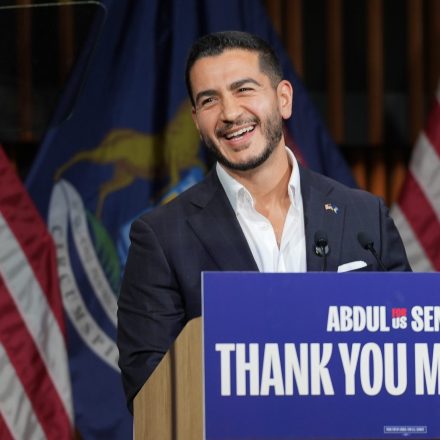
One senator out of the 100 who will fill the upper chamber of the 120th Congress was elected to his seat on a loud campaign promise to end to U.S. complicity in Israel's genocide in Gaza.
Abdul El-Sayed will walk into a newfound Democratic majority after animating his base with pro-Palestine pledges seldom heard from a U.S. Senate contender. As a first-term senator, he'll lack seniority on the committees to which he's assigned. And although his critiques of the U.S. relationship with Israel have proven overwhelmingly popular in public opinion surveys and among voters at the polls, the same can't be said for most of his soon-to-be colleagues.
"It's going to be a fight," said Beth Miller, political advocacy director for Jewish Voice for Peace Action, which supported El-Sayed's campaign. "The Democratic establishment, when it's in control, has not taken measures in support of Palestine in the past. And so this is about making sure that now they finally start listening to what the overwhelming majority of their bases say."
 Related
Abdul El-Sayed Wins Senate Seat With Pro-Palestine Campaign
El-Sayed's run marked the first time the Jewish-led, anti-Zionist group backed a Senate campaign. Pro-Palestine lobbying groups like JVP Action have been pushing for legislation to block weapons transfers to Israel for years, aligning themselves with a small but growing number of left-leaning House members. The group helped author the Block the Bombs Act, introduced by Delia Ramirez, D-Ill., which netted 82 co-sponsors and became a pro-Palestine litmus test in some Democratic primary campaigns.
Building consensus around a single bill in the Senate is harder, but the upper chamber offers stronger levers to pull. Senators can force votes called Joint Resolutions of Disapproval that would block foreign security assistance, such as weapons sales to Israel. Sen. Bernie Sanders, I-Vt., has exercised this option repeatedly throughout the genocide in Gaza to try and block the sale of certain bombs, firearms, and other military equipment to Israel. While his resolutions failed in the Republican-controlled Senate, the most recent ones drew support from wide majorities of Democrats — soon to be the party in power.
Yet with the looming threat that Democrats might actually be able to pass legislation, El-Sayed would find himself under pressure from the likely Senate majority leader, Chuck Schumer, who has long maintained the support of the pro-Israel lobby, to fall in line with party priorities.
"The question is, 'Who does he want to be?' Does he want to be someone like Bernie, who is willing to sometimes stand up to leadership?" said Hamid Bendaas, communications director for the Institute for Middle East Understanding Policy Project, which also backed El-Sayed's run. "It's hard to do that as a freshman and someone who's just getting in there."
Bendaas expressed confidence that the Michigan senator would be a champion of pro-Palestine legislation, but he noted that El-Sayed would have to balance his priorities, especially after running a campaign focused on economic populism and providing universal healthcare through Medicare for All.
Shifting WindsThere is a tension revealed by the dilemma facing Sen.-elect El-Sayed: While a growing share of Americans — and an overwhelming majority of Democrats — disapprove of the U.S. spending billions of dollars on aid to Israel, voters' clear No. 1 concern in the 2026 election cycle was the cost of living and their own economic precarity.
Some pundits have encouraged pro-Palestine candidates like El-Sayed to put their anti-genocide principles aside, arguing that more moderate Democrats performed better on Tuesday night. They compare El-Sayed's 7-percentage-point defeat of Mike Rogers to James Talarico's 12-point win over Ken Paxton in Texas — and some have already asked Talarico to defy his new colleague.
 Related
Haley Stevens Destroyed Her Political Career for Absolutely Nothing
But on the campaign trail, El-Sayed often connected the issues of a high cost of living and outsized U.S. spending on aid to Israel. "We ought to be spending our money here, to build schools and provide healthcare and child care here, rather than sending our money abroad to a foreign government that's done terrible things with our money," he said in a September interview with Bloomberg TV. El-Sayed's approach made him the target of nearly $40 million in outside spending from the super PAC for the American Israel Public Affairs Committee, which supported widespread anti-Arab and Islamophobic attacks and accusations of antisemitism in an attempt to keep a vocal critic of Israel out of the Senate.
"None of it mattered," said Yousef Munayyer, a senior fellow at the Arab Center Washington D.C. who likened the gravity of El-Sayed's win to that of New York City Mayor Zohran Mamdani. "And this is not the Commie Corridor. This is a swing state. A lot of taboos here have been shattered, and people are going to learn from this and be emboldened now."
"This is not the Commie Corridor. This is a swing state. A lot of taboos here have been shattered, and people are going to learn from this and be emboldened now."
In addition to bringing joint resolutions to block future weapons transfers — like the Trump administration's planned sale of $2.8 billion in 2,000-pound bombs to Israel — El-Sayed could introduce resolutions citing the Foreign Assistance Act; Sen. Chris Van Hollen, D-Md., used one to demand a State Department report on Israeli detention of Palestinian children and Israeli military and settler killings of American citizens in the West Bank. He would also be able to introduce amendments to the Pentagon's annual spending bill that carves out billions of dollars in joint U.S.-Israel weapons research. (The Senate is currently sitting on this year's $1.15 trillion National Defense Authorization Act, which would even more deeply enmesh Israeli technology within the Pentagon's programs and supply chain.)
Munayyer, the former head of the U.S. Campaign for Palestinian Rights, said that despite the uncertainty over whether moderate Democrats will be willing to link arms with progressives next session, El-Sayed's win creates an environment ripe for accountability over Israel.
 Related
There Is a Taboo Against Criticizing AIPAC — and Ilhan Omar Just Destroyed It
"You have a climate now where there's going to be a lot less intimidation felt by people who had previously been hesitant to speak out on these issues because they thought it was political suicide," he said.
Even Republicans are beginning to feel the shifting winds. On the morning of Election Day, President Donald Trump made a surprise announcement on Fox News that the U.S. would halt the annual $4 billion in military aid to Israel. The move would only cut off one path for Israel to get weapons from the U.S. — still allowing direct weapons sales to Israel from U.S. companies and weapons development and sharing with the Pentagon — and Trump said it was made in agreement with Israeli Prime Minister Benjamin Netanyahu, who had been previewing it for months. Tactically, Trump said the goal was to take a "talking point" away from Democrats. He cited El-Sayed by name.
While ballots were still being counted on Wednesday, Vice President JD Vance, an expected 2028 presidential contender, posted on X an early post-mortem of the massive GOP losses across the country. He wrote that the party could bring back "voters who had abandoned us" if they "End the war" in Iran and "Change our relationship to Israel."
Such recognition from the Trump White House is new territory for U.S. politics, Munayyer said.
"We are about to witness, in my view, something we have never seen before in American politics," Munayyer said. "A robust debate in the presidential primary campaigns in both parties, where the question of the U.S.-Israel relationship is going to come up time and again. That's never happened before, and it's gonna be seismic."
"We are about to witness, in my view, something we have never seen before in American politics."
The question is whether Democrats will stay on top of the wave. If Schumer, a staunch supporter of Israel, remains in charge of the Senate majority, he'll have power over appointments to key committees — giving him the opportunity to curb the influence of a figure like El-Sayed.
"I don't think that Democrats want to have a messy fight about this stuff when the base is largely in agreement on it," Munayyer said. But while Senate Democrats have evolved on the issue of Israel and Palestine — even Sanders expressed far weaker critiques of the Israeli state a few years ago — it's one thing to be the dissenting party when you're in the minority. It's another to wield serious power.
Constant PressureEl-Sayed is perhaps the most vocal supporter of Palestinian rights of any U.S. senator elected since James Abourezk of South Dakota, who in the late 1970s became the first Arab American to serve in the Senate. Abourezk frequently advocated for a Palestinian state and was an early critic of the pro-Israel lobby. After his time in Congress, he founded the American-Arab Anti-Discrimination Committee.
El-Sayed, now the first Muslim elected to the U.S. Senate, frequently referred to Israel on the campaign trail as an "ethnostate" and said he opposes any nation that organizes its government by ethnicity and religion. In an appearance on ABC News, El-Sayed argued Israel was not a U.S. ally. Two days before the election, he spent a large portion of his sit-down with "60 Minutes" calling for Palestinians' right of self-determination and repudiated the question of whether Israel had a right to exist. In his victory speech, he criticized attempts by pro-Israel critics to conflate advocacy for Palestinians rights as "hate."
 Related
Mahmoud Khalil: "We Can't Afford to Stay Silent"
Even so, in the lead-up to the general election, El-Sayed started being subjected to pressure from some on the pro-Palestine left. Critics chastised his decision to stump with former Vice President Kamala Harris over her complicity in the Biden administration's support for the genocide in Gaza. Similar ire was directed at his partnership with former President Barack Obama, who has yet to name or condemn the genocide and governed over U.S. wars in the Middle East that saw the United States kill thousands of civilians.
Advocates for Palestinian rights, however, told The Intercept they recognized the utility in El-Sayed's campaigning with the highest-profile members of the Democratic Party, and they counted it as a success that he earned their support. But they said they were not pinning all their hopes on a single individual.
On top of all the other calcified interests and long-standing political biases that shape the U.S. Senate, there's the influence of the sprawling U.S. weapons industry, with manufacturing giants like Lockheed Martin and Boeing lobbying for their interests and showering politicians in campaign cash. That industry wants to keep profiting off the genocide in Gaza, said JVP Action's Miller, and El-Sayed alone is not enough to stop that.
"This is not gonna be that one man comes into the Senate and changes everything," she said. "This is that one person has been elected with a mandate that has demonstrated where the masses of people are at on this issue, and now we have to keep fighting harder than ever before."
The post Abdul El-Sayed Won His Senate Seat With a Mandate on Palestine. Can He Deliver? appeared first on The Intercept.

We all know ICE officers can't be trusted. Neither can the agency that heads up most of Trump's anti-migrant activities. Every murder by immigration officers is immediately greeted with self-justifying lies about "threats" to officers. Every assault gets the same treatment. Every recorded instance of abuse is immediately rebutted by bullshit claims about violent resistance or, at the very least, that any actions the officers took were justified because the person deserved to be arrested.
The DOJ has been dangling by several threads for months now. Federal court judges have made the point (repeatedly!) that it can no longer trust the government to be acting in good faith. The "presumption of regularity" — the ideal that states that both sides of a court case are doing their honest best under the law — is no longer a privilege the DOJ can expect to avail itself of.
It gets so much worse when the topic shifts to Trump's mass deportation programs. The government has renditioned people to torture prisons in foreign countries, actively dodged court orders with late-night flights and other fuckery, eliminated due process for migrants by both misquoting the law and shuffling detainees from prison camp to prison camp to ensure they'll never have standing to sue due to filing a lawsuit in the "wrong" jurisdiction.
ICE has done more than most to earn the distrust of federal courts. It's something that begins with the masks and the refusal to properly identify themselves and ends with the lies officers put in their reports and, on rare occasions, repeat in court when asked to testify.
A federal judge in Oregon (Mustafa T. Kasubhai) is sick of this shit. Whether or not his personal sickness will infect the rest of the court system remains to be seen, but at least he's doing everything he can to talk other courts into treating ICE officers as inherently unreliable witnesses. (h/t Kyle Cheney)
This order [PDF], handed down in a case involving a violation of a previous court order forbidding warrantless arrests by ICE officers in Oregon, gets right to the point in the opening paragraphs, saying what needs to be said about ICE and its officers:
An ICE officer fabricated facts in official records to justify an arrest. This Court knows this because at an evidentiary hearing on Plaintiffs' Motion to Enforce Preliminary Injunction, he testified under oath that what he wrote in the official records of the arrest were incorrect. On the witness stand he minimized the error as mere oversight. This Court found he lied after evaluating his live testimony and the documentary evidence.
Evaluating live testimony is a time-tested method for truth finding. Written declarations are convenient, but insufficient on their own when witnesses are willing to lie. This enforcement action is a powerful reminder of two principles.
First, uncovering truth is not a passive activity. Developing a robust evidentiary record
worthy of telling the story of what really happened can never fully materialize from a stack ofsigned written statements. Live testimony is necessary. Examination and cross-examination are necessary. The trial courts are the uniquely specialized forum in which building a full evidentiary record is possible.Second, this case underscores what happens if people were not called to testify under oath in a courtroom, if as a society we do not demand that government agents explain their actions, and if the public fails to shine a spotlight on what is happening under cover—people with authority know they will not be held to account.
What follows are multiple examples of the lies told by ICE officers to justify warrantless arrests they had already been forbidden to perform. How did the court determine this? By putting officers on the stand and forcing them to talk their way out of their web of lies — something that rarely happened.
CIP #1:
Based on the substance of H-D-G-H-'s testimony and his demeanor, the Court finds that
H-D-G-H-'s account is credible and that Officer J.G.'s testimony is false.[…]
The I-213 for H-D-G-H-'s arrest describes a series of events that Officer J.G. now admits
never occurred.
Featured in this testimony as well: ICE stating it performed only 13 warrantless arrests, despite performing 504 "non-custodial" arrests, which were exactly the sort of arrests that tended to be warrantless and led to the injunction blocking these arrests, which ICE apparently chose to ignore. Also: the officer testifying that he and his fellow officers kept a bunch I-200 forms in their vehicles, with "pre-printed probable cause determinations[s]" on them, apparently in order to expedite warrantless arrests.
In another case, ICE officers claimed that a warrant for which a migrant had already been arrested, detained, and released justified their own warrantless arrest. That claim again results in the ignition of righteous anger from the judge:
The 2023 warrant states that an ICE officer served the warrant on J-C-C-V- in McAllen,Texas, on April 25, 2023. ICE detained J-C-C-V- for eight days in 2023. Now, Defendants contend that the same warrant would have permitted officers to rearrest J-C-C-V- in 2026. Under 8 U.S.C. § 1226(b), the Attorney General can rearrest individuals based on previously executed warrants.
However, a key detail Defendants ignore is the Attorney General must first "revoke a bond or parole" before rearresting. 8 U.S.C. § 1226(b). Defendants presented no evidence of revocation. Instead, Defendants argue through their counsel, that the I-213 form for J-C-C-V- "indicates there was an intention to revoke the bond or parole." Tr. 250. Intention does not constitute revocation, and the Court admonishes counsel that they are expected to make good faith arguments as officers of the court. Real people's lives and liberties are at stake and they should remember that. Evidentiary hearings are not first-year law school examinations where one can score points with a scattershot strategy.
From there, the court moves on to point out how absolutely necessary it is to put officers on the stand, especially when the government has repeatedly shown it is not to be trusted.
The more insidious problems with Defendants' documentation are the errors not apparenton the face of the documents. For example, and as discussed above in greater detail, Officer J.G. testified during the evidentiary hearing that the I-213 for H-D-G-H- failed to accurately describe the circumstances of H-D-G-H-'s arrest. Tr. 163. Officer J.G. lied in the I-213 by copying the language that he wrote in the report for driver M-T-M-, the initial target of Officer J.G.'s investigation. Tr. 163; Pls.' Ex. 112. Anyone reading the I-213 for H-D-G-H- would believe that
Officer J.G. had identified H-D-G-H- before conducting the investigatory stop, yet Officer J.G. admitted that he had no idea who H-D-G-H- was or that H-D-G-H- was even in the car until after
the stop occurred. Tr. 163. Had this Court not conducted an evidentiary hearing, and had OfficerJ.G. never testified, Officer J.G.'s falsification of H-D-G-H-'s I-213 form would have been left unchallenged and never corrected.
That's the damage done by just a single warrantless arrest that federal officers lied about in both the initial report and while testifying in court. There's more in the order, but this is how it's all summed up:
The presumption of regularity directs the courts to assume, unless clear evidence indicates differently, that government officials have properly discharged their duties, acted in good faith and followed required procedures. This presumption no longer holds for Defendants. The evidence in this case proves as much.
That points directly back to the opening paragraphs of the decision. This court is stating plainly that the government cannot be taken at its word. Since that's the new normal, courts need to respond by putting as many ICE officers on the stand as possible during cases like these. What was seen here will be seen elsewhere: that when officers are ordered to explain the deficiencies in their warrants, narratives, or whatever else, they're going to expose themselves for the liars they are. And if they aren't actually lying, that much will be made apparent through direct testimony and cross-examination. Allowing the government to get away with lying by refusing to challenge the boilerplate just makes things worse for Americans and better for the bitter, bigoted facists who think they should just be able to get away with all of this.
Take your design skills to the next level with the 2026 Canva Creator Mastery Course. This program teaches you how to use Canva effectively to produce professional-quality visuals for any purpose. You'll explore practical design techniques, creative workflows and branding strategies that make your content stand out. It removes the complexity of design and replaces it with simple, actionable steps. With hands-on learning, you'll quickly gain the ability to create scroll-stopping graphics for any platform. This bundle is perfect for anyone ready to upgrade their digital presence and design skills. The course is available to new and existing users of Canva for $30.

Note: The Techdirt Deals Store is powered and curated by StackSocial. A portion of all sales from Techdirt Deals helps support Techdirt. The products featured do not reflect endorsements by our editorial team.



Well it's now been a couple days since the Democrats obliterated Donald Trump and MAGA in the midterm. It turns out that the messaging of "price hikes, soldiers in the street, new forever wars, and diarrhea for everyone, with a side of enriching the rich while protecting pedophiles" somehow failed to resonate. Which is how you end up with absolutely historic midterm results.
As happens after every election, no matter how narrow or lopsided, lots of people rush in to explain how it proves their own pet worldview. I'm not going to do that because I don't think a single election can ever show any long term support for any particular worldview, and most elections are decided by a variety of factors, mostly based on the vibe of "do I think things are heading in the right direction or wrong direction" which is a very subjective thing.
But, I will note that for those who bought into the MAGA gains of 2024 as some sort of permanent shift in the American outlook, you played yourself. And I will highlight specifically those goons (mostly among the VC and tech billionaire class) who seemed to assume that this was an invitation to go all in on supporting fascism.
We warned you.
Last year, in a post called Fascism for First Time Founders, I pointed out to the tech bros embracing MAGA-style fascism in the short-sighted belief that this was their moment to become the permanent overlords of the tech world… that it would not end well. Fascism never does. And as for the idea that Silicon Valley as a whole (beyond the VC bro / tech bro set) had gone all MAGA, well:

Of course, there is still likely to be a real reckoning for all the tech companies that cozied up to Trump, thinking that donating to his ballroom or suddenly deciding to call AI "Super Intelligence" because Trump said so, would somehow set them up to be the new leaders of the next tech revolution. And it would have been nice if the bozos with billions had thought literally any of this through. I mean, they have these AI tools now, couldn't they have asked them how this might play out?
But, no, the billionaire tech bros decided this was their chance to go all in for fascism, and now the entire tech industry will almost certainly pay the regulatory price.
Though, arguably, after all the handwringing about Mark Zuckerberg, Elon Musk, Jeff Bezos, Marc Andreessen, and Peter Thiel "putting their thumbs on the scales" for Trumpian fascism, the fact that their side still got walloped this badly — even with all the money they spent as well — suggests their power to manipulate minds through their platforms isn't nearly as strong as some commenters make out.
My fear is that the good parts of the internet — the parts that empower individuals against billionaire control — get destroyed as collateral damage by those in power who will now seek (understandably) to exact revenge on the billionaire tech bros who took their shot at becoming new fascist overlords and missed. Knocking them all down a peg should be the goal, and the way to do that is by backing decentralized, user-controlled tools. We can take away their power by giving it to the actual users of the internet.
That means we should avoid tech policies that "punish" big tech companies in a way that just inherently gives them more power and more control over our lives. The "easy" path is "regulating" social media and AI, but done badly (like most current proposals) and in a way that actually gives those jackasses more power by making sure that only they and their giant bank accounts can afford to comply. Instead, we need policies that make it more difficult for big tech to have so much control over our lives. Keep Section 230 strong (which protects small forums and internet users way more than the giants). Fix the DMCA 1201 and the CFAA, both of which big tech companies keep using to try to stifle competition. While we're at it, we can still do more to fix patent law to prevent troll lawsuits that harm competition. And make sure that decentralized offerings — in both social media and AI — can actually function without needing government sign-off on every move, even when the real goal of a regulation is to hamstring the giants.
Now I know that there are some who worked at the big companies who got in line behind Trump, saying some variation on "we needed to do so just to keep our business going," and that is, indeed, different than those (listed above) who seemed positively eager to support and promote Trump's MAGA agenda. But to me that's little excuse. Have a backbone. Stand up for what's right. Isn't that what "free thinkers" in the wild west of the tech world keep claiming is so important?
Anyway, there's no doubt that a reckoning is coming to Silicon Valley and the tech bros who tried to use the last two years in pursuit of a technocratic fascist network state. And they totally deserve it. But it would be nice if we didn't take down the rest of the internet — especially the parts that actually are empowering to users — with it.


In the run-up to the midterm election, seen by many as a referendum on the Iran war, Pentagon chief Pete Hegseth unveiled FORTRESS America — a project to allow U.S. military bases to survive a 90-day siege. But following the landslide Democratic victory, it's Hegseth who finds himself increasingly besieged within his own fortress, the Pentagon, and on Capitol Hill where he stands on the brink of bipartisan impeachment.
In the wake of an election rout that handed Democrats firm control of the House and the Senate, Hegseth is in the crosshairs of lawmakers whom he has treated with contempt for two years, as he has withheld basic information from Congress and purged bipartisan-backed senior military leaders. "One of the first things we're going to do in the majority, we're going to run Pete Hegseth out of town," Rep. Hakeem Jeffries, D-N.Y., who is now in line to be speaker of the House, announced at a campaign rally just before Election Day. Asked about the self-styled War Secretary on Wednesday, Jeffries replied: "Is Pete Hegseth still around?"
As the blue wave crested on Tuesday, storm clouds stacked up on Hegseth's horizon. "We're going to go after Hegseth," Rep. Rosa DeLauro, D-Conn., in line to return to the helm of the powerful House Appropriations Committee, announced after cruising to victory on Tuesday. "LAWYER UP," Rep. Robert Garcia of California, the top Democrat on the House Oversight Committee, posted on X. Both will be joined in the House by Democrat Nancy Lacore, a former Navy admiral who was fired by Hegseth, who declared victory in a traditionally red district in South Carolina.
By Wednesday evening, sentiment within the Pentagon suggested that Hegseth's days are numbered, with names of potential replacements already being bandied about. "Dead man walking," said one official. A former defense official agreed: "They pinned the failure in Iran on him. Now it's only a matter of time." Republican Rep. Thomas Massie of Kentucky, with support from Democrats, is slated to take aim at Hegseth as soon as next week with eight articles of impeachment for high crimes and misdemeanors.
With Hegseth increasingly under fire within the ranks, at the Pentagon, and on Capitol Hill, and with rumors swirling that the White House may cut him loose in the face of the staggering electoral defeat, The Intercept spoke with six current and former defense officials as well as additional sources on Capitol Hill, most on the condition of anonymity in order to speak freely. Hegseth has, they said, undermined the rule of law; irreparably harmed the U.S. military through purges of top commanders and those who refuse to pledge fealty; pursued relentless leak investigations; spurred religious extremism; and diminished the department he leads due to an almost endless raft of scandals, culture-war clownishness, and senseless policies.
Hegseth "is 100 percent a war criminal. He needs to be prosecuted."
One of the officials, Wes J. Bryant — until last year a senior targeting adviser and policy analyst at the Pentagon — gave voice to Massie's more technical articles of impeachment which indict Hegseth for extrajudicial killings and waging unlawful war, among other crimes. "He is conducting state terrorism. He is 100 percent a war criminal. He needs to be prosecuted," said Bryant, who was pushed out of his Pentagon job for blowing the whistle on Hegseth's efforts to undermine protections for civilians.
Hegseth — a former Army National Guard officer turned Fox News host turned secretary of war — came into office amid a firestorm of scandal from his confirmation process, including a swirl of allegations of financial mismanagement at veterans' nonprofits where he once worked, excessive drinking and public drunkenness, marital infidelity, and sexual assault.
His reign at the Pentagon has been no less tumultuous and marked by a string of appalling episodes of both major importance and more symbolic disgrace, beginning with Signal-gate — the texting of secret war plans that put troops in harm's way — and follow-on digital security lapses. The Pentagon's own inspector general concluded last December that "Hegseth violated security protocols and endangered U.S. troops and objectives by using a personal device to share sensitive operational details on the unclassified messaging app Signal."
Those scandals, however, turned out to be the high point of his tenure. Since then, Hegseth has been under perpetual fire for his purge of top military leaders — many of them women and minorities; an inability to defeat Yemen's Houthis in 2025 or win the Iran war in 2026; a strike on an elementary school in Minab, Iran, that killed more than 150 civilians, most of them children; his campaign of extrajudicial killings in attacks on so-called drug boats; overlapping efforts to weaken transparency, scuttle accountability, hobble military justice, and undercut protections for civilians in conflict; openly advocating for offering enemies "no quarter," a war crime; his installation of a Pentagon makeup studio at taxpayer expense; an unnatural and immature fixation with violence; an obsession with troops' testosterone levels, a censorship campaign that replaced the Pentagon press corps with cheerleading influencers, among other distractions, dysfunctions, and tantrums.
Pentagon press secretary Kingsley Wilson and other top spokespersons did not respond to detailed questions and repeated requests for comment.
The Heat on HegsethIn April, Rep. Yassamin Ansari, D-Ariz., filed six articles of impeachment against Hegseth, including violations of the law of armed conflict and targeting of civilians, abuse of power, and obstructing congressional oversight. "Impeach Pete Hegseth," Ansari wrote in a quote tweet of a Hegseth post on X on Wednesday.
 Related
Thomas Massie Loses His Seat in a Win for Trump — and AIPAC
In September, Massie was poised to force a vote to impeach Hegseth on eight charges. As the initiative gained bipartisan momentum, House Speaker Mike Johnson decided to punt and dismissed members of the House before the scheduled vote. But Massie, who was defeated in a GOP primary in May — the most expensive House primary in history — remains committed to ousting Hegseth and plans to force a vote on the measure.
"I give it better than a 50 percent chance of passing," Massie told Roll Call just prior to Election Day, expressing confidence that all Democrats and some Republicans would join his effort. On Wednesday night, Massie took to X to double down on his commitment. "There is one contingency in which I won't reintroduce the articles of impeachment," he wrote. "Hegseth resigns."
Massie's office did not return a request for comment.
In the wake of Tuesday's stunning electoral landslide, a senior Hill staffer told The Intercept that he believed mounting anger might cause top outgoing Republicans to vote to impeach Hegseth. "There are very angry senior Republicans in the national security space who honestly pin a lot of their election losses on him. They are furious," he said. "They need some place to put their anger. So they're asking themselves, 'What is even the harm in voting to impeach Hegseth?"
"Democratic leadership wants to focus on people's everyday lives and affordability, not impeaching Hegseth. But here we are. We are going to vote on impeachment because of Tom Massie. It's happening," said the senior staffer. "This reckoning is coming whether we want it or not. So why not?"
California Democrat Ro Khanna, who serves on the House Armed Services Committee and has repeatedly sparred with Hegseth during hearings, told The Intercept that he supports impeachment and thinks its odds of succeeding are "decent." Rep. Adam Smith of Washington, the top Democrat on that committee, vowed on Wednesday to conduct aggressive Pentagon oversight and backed efforts to impeach Hegseth. "Going after the corruption, and going after the lack of transparency," Smith told the Seattle Times of his plans to hold the department accountable while expressing support for Massie's impeachment push.
In 250 years, the House has impeached just two Cabinet secretaries: William Belknap, the secretary of war, in 1876; and Alejandro Mayorkas, the secretary of homeland security, in 2024. In both cases, the Senate did not convict. Should Massie's impeachment measure succeed in the House, it would likely die in the Senate, where Majority Leader John Thune, R-S.D., would have no incentive to bring it to a vote, said a congressional staffer for a member on the Armed Services Committee.
But some pundits predict Hegseth may not survive next week, much less the month or the year.
The president "always loves you right up until he throws you under the bus."
Trump was asked Wednesday afternoon whether he was considering replacing Hegseth, and he told reporters, "No, I think he's doing a very good job." One former Pentagon official called such public support from Trump "the kiss of death." Another current defense official agreed. "He may lose his top cover," said that official, using military slang for protection from above. The president, the official said, "always loves you right up until he throws you under the bus."
As Republicans make sense of their loss, many are pointing to the Iran war, including Vice President JD Vance. "The reason we lost is the war," he wrote on X. A Republican staffer on Capitol Hill said Hegseth "could easily become the president's fall guy." The senior staffer agreed, saying Hegseth "might be purged, himself, to avoid additional embarrassment."
"If Hegseth does stay and he survives this moment, Oversight is going to come crashing down on his head," said the senior staffer on Wednesday. "Will Hegseth continue to obstruct? Yes. But wait until the subpoenas start."
Congressional committees have broad investigative powers, including the authority to subpoena administration officials to testify under oath and compel them to turn over documents. Smith said Hegseth and Deputy Secretary of Defense Steve Feinberg would be first on the list to testify. "We haven't gotten a report back from the Minab girls' school strike. How come we haven't gotten clarity on the strike in Kuwait that killed six service members? How come they haven't told us what the true cost is that's been absorbed by all of our bases that have been destroyed in the Middle East?" Smith said to the Seattle Times. "There's a host of issues we could dive into."
Another staffer said renewed scrutiny of abuses of war powers like the boat strikes, especially the initial double-tap attack first disclosed by The Intercept; the secret memorandum by the Office of Legal Counsel laying out the legal rationale for the strikes; and the hidden costs, U.S. casualties, civilian casualties, and destruction of U.S. bases during the Iran war, would open a Pandora's box for Hegseth.
In the Senate, Democrats have floated Hegseth's removal as the price for cooperation on key legislation in the lame-duck session. Their Republican colleagues have also increasingly soured on Hegseth as he has purged top military commanders with whom they have strong ties. "They see Hegseth as the next Kristi Noem," said one Capitol Hill source, referencing the former secretary of homeland security who was demoted this year to special envoy for the newly founded Shield of the Americas coalition after influential Republican senators turned against her.
 Related
Pete Hegseth's Military of the Future: Defined by AI and an Utter Lack of Oversight
On Tuesday, Sen. Thom Tillis of North Carolina, a Republican who is retiring, warned Hegseth of a coming "reckoning" in the lame-duck session. "He is one of the reasons why we don't have the funding or guarantee for defense that we need," he said. "I think after the election, we need to determine whether or not he's the best person to bring those needs to Congress."
Antipathy to Hegseth also extends far beyond the Beltway. Just 32 percent of voters approve of the way he is handling his job, while 57 percent disapprove, according to a Quinnipiac University poll in September. It was his lowest approval ever and historically dismal. (Fifty percent approved and only 13 percent disapproved of Trump's first Secretary of Defense, James Mattis, late in his tenure in 2018.) Hegseth is even less popular in military circles. Sixty-four percent of active-duty service members, veterans, and military families disapprove of Hegseth, according to a recent poll conducted by Common Defense, a grassroots veterans organization. Last month, a Politico poll found that 63 percent of Democratic midterm voters would support impeaching the Pentagon chief.
Enemies WithinThe war secretary is also under withering fire within the Pentagon, according to the current and former officials. They say Hegseth is reviled across the building by officers biding their time, waiting for him to flame out or be pushed out.
Derided in the Pentagon and the ranks by a variety of monikers such as "No Tab Pete," a reference to his lack of prestigious military qualification patches such as the Ranger tab; "Whiskey Pete"; and "Dumb McNamara," a reference to the Vietnam War-era Defense Secretary Robert McNamara, responsible for unfathomable death and suffering; Hegseth has been excoriated within his department for unhinged behavior — especially his relentless purge of top brass and high-ranking officials, which insiders see as an attempt to root out dissenting viewpoints, racial minorities, and women.
 Related
Hegseth Leads Push to Punish Military Service Members Over Charlie Kirk Comments
To enforce strict discipline, tamp down scandals, keep basic information from the American people and cow dissent, Hegseth has unleashed unrelenting polygraph tests of officials, even senior leaders. Several officials would not respond to questions citing this reason. One likened their situation to life under a totalitarian regime. Hegseth's minions have also engaged in browbeating "leaky" offices. These efforts have generated further ill will throughout the Pentagon and the wider defense establishment. "The more good people he forces out of the military, the more the resentment grows," said a current official.
Lt. Gen. Brett Sylvia — who served as director for strategy, plans and policy on the Joint Staff assisting Joint Chiefs chair Gen. Dan Caine — was recently ousted. "She's gonna have big problems, said Trump, who apparently thought the male general was a woman. "We're very much looking for leakers." Sylvia replaced Lt. Gen. Joseph McGee, whom Hegseth forced out last year. While not naming Sylvia, Pentagon mouthpiece Sean Parnell issued a social media broadside. "Following an extensive Air Force OSI investigation, the Department took necessary personnel action to protect sensitive information," he crowed on X. "We vowed to find you, and we meant it."
Other casualties of Hegseth's campaign include Gen. Charles "CQ" Brown Jr. (chair of the Joint Chiefs of Staff), Adm. Lisa Franchetti (chief of Naval Operations), Gen. David Allvin (Air Force chief of staff), Adm. Linda Fagan (commandant of the Coast Guard), Lt. Gen. Jennifer Short (senior military assistant to the Secretary of Defense), Vice Adm. Shoshana Chatfield (U.S. military representative to the NATO Military Committee), and Lacore, the former vice admiral and Navy Reserve chief, now likely representative-elect, among others.
The officials said that Hegseth's efforts to remake the military have done grave damage to the armed forces. "When you put people on polygraphs and fire a bunch of people who question the status quo and consistently shut down the conversation, then you absolutely lose the best leaders," said a former field grade officer who served in Hegseth's Pentagon. "You're strangling initiative and creating a culture of yes men and yes women."
Officials repeatedly lamented long-term harm to the Pentagon, whenever Hegseth leaves the helm. "He's purging a generation of great leaders of the military, and it's going to take a generation to recover from it," said Sen. Mark Kelly, D-Ariz., a former Navy combat pilot who has been targeted by Hegseth. The former field grade officer echoed this. "If you're doing it right, the talent selection is being done ten years out," the source said, noting that promotions are a long-term process. "It's about years down the road. And these people are being fired and forced out. We're losing them. That's generational impact that's harming the force."
 Related
Pete Hegseth's Crisis of Masculinity
In his September "state of the force" address to more than 500 junior officers and enlisted troops, Hegseth announced, "We are no longer the Woke Department or the Weak Department. Simple translation of that: No fatties. No trannies. No beardos. No weirdos. No wimps. No radicals." He added, "The ideological clowns are out. The patriotic cowboys are in — with testosterone testing on top."
Several officials drew connections between Hegseth's fixation on manliness and testosterone with his childish fixation on "lethality," his glorification of violence, and bloodlust. "'Maximum lethality, not tepid legality,'" said one official quoting a Hegseth line. "That kind of language and the very, very real killing of civilians — and the posting online of what are outright snuff films, the narco-boat strikes, is evidence of a sickness of his mind."
The real-world effects of Hegseth's lethality obsession have been devastating. His Pentagon has gutted its premier center devoted to preventing civilian casualties in war zones. He also removed constraints on military commanders, "letting his preferred generals do anything they want," said one of the former defense officials. This resulted, for example, in significantly more civilian casualties during attacks on Yemen's Houthi government in 2025, while failing to achieve military objectives. The Pentagon's own accounting of civilian casualties found that U.S. attacks killed 153 civilians and wounded almost 250 during the campaign of air and naval strikes, code-named Operation Rough Rider. A current official told The Intercept these were "lowball numbers." At least 238 civilians were killed and 467 injured, according to the Yemen Data Project.
"This obsession with performative violence is a hallmark of fascist dictatorships."
Several sources drew special attention to Hegseth's effort — ultimately blocked by Trump — to livestream the firing squad execution of Nidal Hasan, who killed 13 people when he opened fire at Fort Hood in 2009. "This obsession with performative violence is a hallmark of fascist dictatorships," said Bryant. Hegseth's lethality doctrine, he continued, "is not only in line with the glorification of and reveling in violence and killing that defines him but is juvenile and ignorant from an operational and policy standpoint, as killing and lethality is only one relatively small aspect of what the military does."
Officials also keyed in on Hegseth's stilted version of violent Christianity. One former official pointed to Hegseth's monthly Pentagon prayer services as sowing dissent within the building. "I would never go to that shit," said a current official, drawing specific attention to a March service in which Hegseth quoted Psalm 3, praying for God to "break the teeth of the ungodly," and asking God to back troops' "overwhelming violence of action against those who deserve no mercy." That official said Hegseth's Christianity was an "abomination" and "an affront to the teachings of Jesus Christ."
 Related
Pete Hegseth's Unholy War
Bryant, a retired Air Force Special Operations targeting specialist and co-author of "Hunting the Caliphate: America's War on ISIS and the Dawn of the Strike Cell," likened Hegseth's interpretation of Christianity to the puritanical brand of religion practiced by America's enemies during the war on terror. "His so-called war on woke is actually a far-right Christian nationalist crusade. His skewed version of Christianity is as extreme as the sharia of ISIS and the Taliban are to Islam. And that's what he is infusing into, and proliferating across, the force."
Hegseth has been quick to smear everyone from veterans serving in Congress to members of the press as treasonous, calling rigorous reporting on the military "fundamentally anti-American." He added: "It's sick. It's a national betrayal. It's treason, actually." Hegseth frequently tries to paint criticism of his department as smearing troops to foster an us-them divide between the military and the American people they serve.
During his September state of the force address, Hegseth cast troops as superior to those in the civilian world. "See, the Ivy League faculty lounges, they'll never understand you, and that's OK, because they could never, ever do what you do. The media will mischaracterize you, and that's OK. Because deep down they know you're the real reason they live free. They envy you because you do real things every single day," said Hegseth, an Ivy League-educated millionaire who used to work for Fox News. "Lethality is your calling card. … The outside world can't understand this, so stay true to this department. You don't want to look like civilians, because you are different, you are set apart. You are warriors." He added, "You are the real 1 percent."
 Related
The Military Occupied LA for 40 Days and All They Did Was Detain One Guy
Several officials said Hegseth's effort to cast the armed forces as superior to the rest of the American people was antithetical to military values and especially alarming under an administration that has dispatched troops to American cities and threatens to do so, again. "The worst thing would be if we deploy the military in the streets of cities like they did last year in California. I'm talking about where the military is violently interacting with our citizenry," said the former field grade officer. "You've paved the way for a more obedient military and then you have guys and gals with the guns having to decide whether orders — from the president that we elected and the secretary of defense that he's appointed — are lawful. It's dangerous."
Bryant, who served as branch chief of civilian harm assessments at the Pentagon, pointed out that Hegseth's dichotomy embraces the elitism that he claims to despise. "Our military, just as our government, is meant to be not only for the people but of the people," he told The Intercept. "When we look at fascist military regimes, now and in history, another hallmark is this strict separation of soldier or warrior class from the civilian population. It is fundamentally anti-American and it is dangerous."
All six officials, in one way or another, assailed Hegseth as juvenile, embarrassing, and unserious. "Imagine any other SecDef talking about packing the Pentagon with 'patriotic cowboys,'" said one of the former officials. "Any one of them would have been run out of town." A current official said Hegseth was unequivocally the "worst SecDef in memory" and that Massie's impeachment vote couldn't come soon enough. That official said it would take years to undo the harm Hegseth has done to the military but whether he was removed by impeachment, was fired by Trump, or quit under duress, the first step was ridding the Pentagon of his presence. "Hegseth," he said "has got to go."
The post "Dead Man Walking": Officials Say Hegseth Has to Go appeared first on The Intercept.


On certain Linux systems, an attacker could gain root access by entering a password longer than 256 bytes. The vulnerability, dubbed *sshole by Wakefield researcher Özgün Kültekin, who discovered it, can only be exploited in very specific conditions.
The flaw affects certain Linux systems using musl libc instead of the traditional GNU C library, and even then only those running OpenSSH's secure shell daemon without Pluggable Authentication Modules (PAM) and with password authentication enabled.
If those conditions are met, and at least one other account has a valid password hash, accounts that shouldn't accept passwords, such as root, key-only deployment users, and LDAP users, may be accessed by supplying a password between 257 and 1,024 characters. The targeted accounts must have an asterisk (*) in their password field, and direct root login remains subject to OpenSSH's configuration.
That might seem niche, but sorry: It's not.
Musl libc is common in embedded Linux systems due to its low footprint. More critically than that, it's also the standard C library for Alpine Linux, which provides official cloud images for both AWS and Azure. Some Alpine systems running in those environments may therefore be vulnerable, depending on their configuration.
Dawn of the *ssholeThe vulnerability in OpenSSH on musl-based Linux systems dates back to 2016, but Kültekin explains that its roots go back much further - to the BSD Unix era, actually.
In 1980, Sun Microsystems cofounder and BSD Unix heavyweight Bill Joy was involved in the development of BSD Unix, whose password file contained a single asterisk in the /etc/passwd entry for the daemon user. The asterisk wasn't a password hash and effectively disabled password authentication for that account.
Nowadays, password hashes typically live in /etc/shadow and contain hashed information that the system uses to verify a plaintext password entered by a user. Asterisks are still present for accounts that aren't supposed to accept password logins, but as Kültekin explains in his writeup, that isn't exactly a foolproof way to keep people out.
The crypt() function, which generates password hashes for comparison with stored values, can return NULL if it can't compute a hash. Applications that fail to check that result may crash. Musl libc's developers instead chose to return a single character for certain failures, and they picked the asterisk.
Musl also added SHA-512-based password hashing around the same time, which Kültekin notes gets slower the longer a password is, potentially leading to denial of service if someone floods a server with a super-long password. Musl capped passwords at 256 bytes, and you can likely see where this is going.
In 2016, OpenSSH introduced a workaround to prevent attackers from enumerating valid account names through SSH. Before the change, sshd could reject authentication attempts for nonexistent users more quickly than those for valid accounts. Attempts against valid accounts took longer because the server had to hash the supplied password before rejecting it. The solution was to have sshd perform dummy password hashing for invalid users, using an appropriate hashing algorithm and salt to reduce differences in response times.
On affected musl-based Linux systems, accounts marked with an asterisk instead of a password hash could be busted open by supplying a password longer than 256 bytes - a flaw dating back to 2016. Any musl-based Linux system running a vulnerable OpenSSH configuration without PAM, with password authentication enabled, at least one account marked with an asterisk, and another account with a valid password hash could be vulnerable to a *sshole attack.
Luckily, OpenSSH acted fast to fix this issue, and any OpenSSH build 10.6p2 (released Thursday) or newer is protected. Alternatively, if you can't update your OpenSSH implementation on an affected system, just disable password authentication and restart the SSH daemon and you should be all set.
There's no indication that vulnerable systems have been exploited, but if you want to check, Kültekin has included a simple CLI command in his writeup that can be used to check if any no-password accounts on a sensitive machine recently took a password. ®
Blockchain analysis outfit Chainalysis has confirmed that when attackers broke into its systems in October, they managed to grab usernames, password hashes, and live tokens.
In an update written late Wednesday evening, the company, a leader in blockchain analysis which has some very high-profile global customers and partners, confirmed the impact of the attack for the first time.
In previous updates, which Chainalysis has issued regularly since it detected the intrusion on October 30, it confirmed that user IDs, full names, email addresses, and organizational role labels were exposed. The news of password hashes and live tokens also being accessed reflects a worsening picture for the company.
Chainalysis did not confirm the type of hashing algorithm it used to encrypt users' passwords, which makes it difficult to draw conclusions about the offline crackability of users' hashed credentials.
Some users received emails instructing them to change their passwords, but Chainalysis said in its latest update that the password reset functionality is currently down. Nevertheless, users were also encouraged to change their passwords on any site where they reuse credentials.
In addition to the exposed data, Chainalysis also detected "abnormal activity" on its transaction screening products, and has taken services down while "our team completes critical work."
These include, but are not limited to, the Reactor blockchain investigation platform used by international law enforcement customers, the Data Solutions threat intelligence platform, and the KYT (know your transaction) anti-money laundering solution's user interface and login page.
Regarding Reactor and the associated investigation data, Chainalysis said: "At this time, we continue to have no evidence that any investigations data has been accessed or Chainalysis attribution data has been manipulated."
The company plans to reinstate KYT and the risk-intelligence Address Screening tool at some point today (Thursday November 5).
Customers will have to provide the company's support team or their account manager with trusted IP addresses, which will be added to an allowlist. From there, users can begin resetting their passwords.
"We are working around the clock to harden our systems and bring Reactor and Data Solutions back online," Chainalysis said. "We will require additional protections to access accounts, including that every user will have to reset passwords and rotate API keys as appropriate. We will communicate these changes as necessary.
"We know how business-critical these services are to our customers, and we are working expeditiously alongside our outside experts to restore them securely."
Chainalysis has not yet commented on who was behind the attack, but implied that the culprits used an AI agent, and likened the attack to others that have hit "many other tech platforms in recent weeks."
"This month, Chainalysis detected an external actor using offensive agentic techniques to gain unauthorized access to Chainalysis systems and internal tools," it told customers in its initial disclosure on October 30.
"Our teams have been working around the clock to investigate unauthorized activity, patch vulnerabilities, and harden our systems."
In Wednesday's updates, it referred to the intrusion as an "ongoing multifront cyberattack," and later, an "on-path attack," otherwise known as an attacker-in-the-middle (AitM) attack, without elaborating further about what it entailed.
Per its own company description, Chainalysis counts government agencies, cryptocurrency exchanges, financial institutions, and cybersecurity companies among its customer base.
It is one of the world's foremost blockchain analysis companies and is routinely engaged to assist in cyber-related law enforcement investigations.
Recent cases the company was asked to support include the takedowns of crypto-laundering network AudiA6 and bulletproof hosting provider Virtualine, both of which were known facilitators of ransomware crews.
It also played a role in bringing down the infamous LockBit ransomware operation, among other engagements in the interim. ®
openSUSE Leap 16.1 lets users choose between a conventional Linux installation and an immutable system from the same installer, bringing the previously separate Leap Micro into the fold.
It's the first point release after Leap 16.0, which we looked at last year when it reached the release candidate stage.
Leap 16.1 has arrived ahead of its paid enterprise sibling, SUSE Linux Enterprise Server 16.1, which is expected later this month. Its release notes are already available, and IBM discussed the release in September.
The big change in the 16.1 release cycle of both the free and commercial products is that SUSE is merging its conventional Linux with its immutable version, a change the company announced back in February.
SUSE previously offered a commercial stripped-down immutable OS, aimed mainly at hosting containers, called SLE Micro. To correspond with that, there was a free community OS called Leap Micro - the final release was Leap Micro 6.2.
Leap Micro is being discontinued as a separate community distribution. The Leap 16.1 announcement says: "Immutable Mode with transactionally updating a system with a read-only root filesystem is a big change for this release. Users who know Leap Micro will recognize it right away, because it is the same approach, now integrated directly into Leap. Leap 16.1 in Immutable Mode replaces Leap Micro, and there will be no Leap Micro 6.3 or 7.0. Users simply boot the regular Leap 16.1 install image and select Immutable Mode in Agama."
Both Red Hat and Canonical offer immutable distros, but both use different architectures from their conventional package-based distros. Ubuntu Core is built entirely from snap packages, while Red Hat's "Atomic" immutable distros are built from bootable containers, running on top of OStree, which works a little like a local Git server. Immutable distros built on Arch, such as SteamOS 3 or KDE Linux, resemble ChromeOS at filesystem level, with dual root filesystems that update one another.
Leap belongs to the openSUSE family of distros, backed by enterprise Linux vendor SUSE. Its commercial sibling is SUSE Linux Enterprise Server (SLES). Leap is the free, community-supported version, and they are based on the same core packages and release schedule. openSUSE also has a rolling-release version, called Tumbleweed.
To rephrase this in terms of slightly more familiar Red Hat equivalents, SLES is SUSE's equivalent of RHEL. Leap is the free openSUSE equivalent of the late lamented CentOS Linux. Leap shares a common core with SUSE's enterprise products while offering a broader community package selection. SLES and openSUSE began sharing enterprise binaries in 2021. Red Hat, meanwhile, announced the end of CentOS Linux in 2020, shifting its focus to CentOS Stream.
To continue the Red Hat comparisons, openSUSE Tumbleweed is loosely equivalent to Fedora Rawhide, but with automated testing and rollback of problematic updates. Unlike the best-known rolling distro, the entirely community-built Arch Linux, Tumbleweed uses SUSE's Snapper technology to offer snapshots. If an update breaks something, Tumbleweed users can boot into a snapshot of an older version of the OS, before the offending update was installed, and keep on working. If dozens of updated packages a day prove too much, then openSUSE also offers an experimental slower-moving rolling release called Slowroll.
Despite the modest version-number bump, Leap 16.1 is a substantial annual update. Its release cycle sits between Fedora and interim Ubuntu releases on one side, and Debian and Ubuntu LTS on the other. Along with its other updates, it brings GNOME 48.8, KDE Plasma 6.6.4, and LXQt 2.4.
We tried its Xfce desktop, which surprisingly defaulted to X.org rather than the Wayland-based setup using labwc that we saw in 16.0 last year.
Immutable distros look to be the future of Linux for non-technical users. Android is an immutable OS based on the Linux kernel, and sells in the billions - which is why, as we reported last year, Google is replacing ChromeOS with Android. The result is the AI-festooned GooglebookOS, on sale in Mountain View's new high-end GoogleBook kit.
The Reg FOSS desk isn't aware of any other Linux OS in which you're able to choose, at the point of installation, whether you wish it to be immutable or not. For now, in the commercial Linux OS space, only SUSE has anything like this flexibility. It's marketing its immutable versions as being ideal hosts for containers, and as suitable for "edge" devices, meaning that they are expected to be provisioned remotely, update themselves automatically, and recover from faults on their own.
SUSE is a much smaller company than Red Hat, and unfortunately, as we reported earlier this week, it is getting smaller.
This vulture is both a former SUSE Linux user and a former SUSE employee, and we hope it and its unique distribution survive and thrive. ®
OpenAI, on Thursday, released its latest cybersecurity-tuned model, GPT-6 Cyber, which the House of Altman says combines "stronger cybersecurity capabilities with better adherence to researchers' rules of engagement."
The new model, we're told, is much better at finding and exploiting vulnerabilities, compared to GPT-5.6 and GPT-6 Astra.
OpenAI released GPT-6 Astra in early September, and less than a month later, killed off the planned release of GPT-6.1 Astra after the model got better at pursuing tasks but worse at staying within the boundaries of what it had actually been authorized to do.
The model maker said the latest cyber model was "trained to stay within authorized scope, respect restrictions and report results accurately."
In OpenAI's ExploitGym training evaluation, GPT-6 Cyber scored 48.5 percent. For comparison, GPT-5.6 Cyber scored 32.1 percent on these same benchmark tests.
"In a separate evaluation of whether the model respects the boundaries of an assigned task, it avoided exploiting out-of-scope services over 99 percent of the time," Open AI said. Only 0.07 percent of cases went beyond the intended scope of the training exercise.
OpenAI declined to provide additional details about what happened in that 0.07 percent of cases and whether they involved any real-life safety or security incidents - like hacking companies or carrying out supply chain attacks as its earlier models have done during training. We do know, however, that OpenAI recently began denying internet access to the frontier models it is training to help prevent its models from doing bad things.
The latest cyber model is also really good at finding and exploiting serious security vulnerabilities, OpenAI claimed. Its researchers used GPT-6 Cyber to find 81 previously unknown high-severity vulnerabilities in Firefox, which Mozilla has started fixing. The model also helped researchers develop working exploits for 948 Linux kernel vulnerabilities, including 588 previously unknown bugs. The Linux findings are being reported with potential patches for maintainer review.
OpenAI classified GPT-6 Cyber as "Critical" under its Preparedness Framework. This is its highest-risk tier for cyber capabilities, and means a model can both identify and develop functional zero-day exploits in real-world critical systems, and execute end-to-end cyberattacks.
As such, it's initially only available through the API and Codex to a select group of approved Daybreak Red customers - these are customers who are authorized to use OpenAI's models for offensive security actions such as proof-of-concept exploit development, exploit-chain validation, penetration testing, and red teaming.
Over the coming weeks, OpenAI will expand access to all Daybreak Red customers, and is also making GPT-5.6 Cyber available to this group, as well.
The model release comes as OpenAI makes a concerted push to improve the security of its products.
Earlier this week, OpenAI raised its bug bounty reward payments, and added new bonuses for independent researchers.
This includes quadrupling reward-range midpoints, on average, for medium, high and critical findings, so a critical vulnerability in a core product such as ChatGPT, Codex, or the API Platform will now earn up to $30,000 - or up to or $51,577 after bonuses - compared to the previous $6,500 payout.
Exceptional critical findings on those targets remain eligible for up to $100,000, and now up to $172,000 with bonuses.®
Microsoft is applying usage limits to more Copilot Chat features for commercial users without a Microsoft 365 Copilot license, and it won't publish the numerical caps.
Copilot Chat comes with qualifying Microsoft 365 business and enterprise subscriptions. Without the Copilot add-on, it can reason over web information and uploaded files. The paid license adds broader access to work data, including emails, meetings, chats, and documents.
Tasks already in progress won't be interrupted. Once a limit is reached, users will receive an in-product notice explaining when to retry the affected feature.
Administrators can't adjust these limits; Microsoft sets them. The Windows behemoth says it "doesn't publish specific limits because they're subject to change."
Microsoft also suggests that hitting a limit "might indicate interest in additional Copilot capabilities." The remedy it proposes for administrators to consider is, conveniently, another license.
Users may also be offered an upgrade route - although buying a license themselves depends on whether their organization permits self-service purchases. Microsoft explained: "In most organizations, the limit notification includes an option to upgrade.
"Users can select it to request a Microsoft 365 Copilot license from their admin, who can approve or deny requests in the Microsoft 365 admin center. If the organization allows users to buy licenses directly, users might also see an option to purchase a license."
Microsoft concluded: "Admins can turn off direct purchases for each product."
The rollout began on November 2 for organizations with 2,000 or fewer Microsoft 365 seats and is due to start on November 9 for larger organizations. It also applies only to users without a Microsoft 365 Copilot license in commercial tenants. Web, desktop, and mobile apps are all affected.
The change could be Microsoft's latest wheeze to turn included Copilot Chat access into paid add-on sales. Users who hit an unpublished ceiling may well start pestering administrators for an upgrade.
The alternative is that admins decide tighter controls are preferable to unpredictable feature availability. Not necessarily the sales outcome Microsoft had in mind. ®

America's data center buildout suffered a resounding defeat in the midterms at all levels of government. Candidates and ballot measures in favor of restricting or altogether stopping the development of the facilities powering the artificial intelligence boom won overwhelmingly on election night.
Newly elected Democratic governors in Georgia, Ohio, and Texas have promised moratoriums on new data center construction and all took tougher stances on regulation than their incumbent Republican opponents. The trend carried over in various congressional races, in which candidates who were critical of their competitors' record of promoting data center development came out on top, even flipping key districts in Ohio and South Carolina.
 Related
The AI Doomsday Future Is Not Inevitable
Many local communities, mostly in Ohio and Illinois, voted directly on their AI concerns and passed a flurry of ballot initiatives restricting data center development — close to 40 proposals, according to a tracker by research firm Redbud Consulting.
"What's good for the AI industry is clearly not good for average voters," said Shobita Parthasarathy, a public policy professor at the University of Michigan. "I wish that data center operators and the AI industry really take this as a sign that they're done a very poor job of considering public concern and taking it seriously."
Parthasarathy pointed out that many Americans are now deciding how they feel about these energy-guzzling facilities based on their experience of living near one and "real knowledge" about their deficiencies. Those concerns range from negative impacts on energy bills, to the environmental and health issues, but also include anger toward the outsized power that the tech oligarchy wields.
Americans' vote in the midterms has given them a tangible way to fight back, Parthasarathy said: Blocking the brick-and-mortar, water-sucking, heat-spewing buildings that power tech billionaires' rapid wealth accumulation.
Tech Money ≠ Change MindsA long track record of polls have recorded Americans' anger about data centers. About three-quarters of voters polled by NBC News on Election Day said they opposed building these facilities in their communities. Those sentiments are consistent with a Heatmap survey from August that found a similar proportion of Americans would strongly oppose a new data center near where they live.
More than half the voters polled by NBC this week said AI and data centers were a crucial or major factor in their decision, though they were almost equally divided when it came to deciding which party would be better at addressing their AI concerns.
The AI industry tried to make a dent in the midterms, but much of their money was focused on a congressional primary in New York, where the cash helped defeat AI critic Alex Bores.
 Related
AI Tried to Buy the Midterms — Then the Lobby Learned Everyone Hates AI
In the general election, an Intercept analysis found, AI super PACs dramatically scaled back their spending on congressional races compared to primaries amid growing anger toward data centers; only 5 percent of their direct expenditures went toward contested general election races. Industry observers told The Intercept that this suggested developers and tech CEOs have taken note of the electorate souring on AI and data centers.
That's not to say that tech magnates, more broadly, have been stingy with their money. Elon Musk spent nearly $450 million ahead of the midterms, including more than $200 million in Texas, where his companies are headquartered.
"It shows when an issue is deeply and broadly felt by American people, no amount of money can change their minds."
"If Elon Musk wants to continue to burn half a million dollars to get no results, there are probably other ways he can do that," said Mitch Jones, deputy director of Food & Water Action, which has advocated for regulations on data centers on the federal, state, and local level. "It shows when an issue is deeply and broadly felt by American people, no amount of money can change their minds."
Musk's money wasn't enough for the races in Texas to go his way. Surprise upsets in the state's Senate and gubernatorial races resulted in victories for, respectively, Democrats James Talarico and Gina Hinojosa.
Talarico promised to end tax breaks for data center developers and minimum federal requirements to protect the grid, environment, jobs, and transparency. Hinojosa called for a moratorium on all data center approvals "until laws can be passed by the Legislature to protect Texans." Outgoing Republican Texas Gov. Greg Abbott had already temporarily halted environmental permitting and grid connections until about the end of the year, but Hinojosa's proposal would last longer and be more expansive.
Promises to Rein In AICongress's new incoming class includes many Democrats who have promised to rein in the harms of AI. Ohio's Democratic Sen.-elect Sherrod Brown flipped a district after portraying his opponent in ads as cheerleading the data center industry.
In typically red South Carolina, Democratic Sen.-elect Annie Andrews defeated her opponent, Sen. Darline Graham, after accusing her of being bought by developers. Pro-AI super PAC Building the Future spent $2.5 million to support Graham, according to Politico.
 Related
Lesson From Lansing: To Win in Swing Districts, Fight Data Centers
In Mississippi, Democrat Scott Colom, who called for a temporary ban on data centers, was narrowly ahead of his incumbent opponent on Wednesday evening in a state that has not elected a Democrat to the Senate in more than four decades.
Just because Trump is expected to veto Democrats' proposals to regulate AI, that doesn't mean they shouldn't push for them, said Jones, of Food & Water Action. He's hoping Congress will approve a ban on "artificial superintelligence," as well as a federal moratorium on new data centers.
"They should show the American public they are standing with us and taking actions to force Trump to veto those bills," Jones said.
Although moratoriums typically target new construction and not existing data centers, Jones says they are still necessary to prevent an even more expansive buildout.
"We don't need any more," he said, citing a Forbes estimate that the total cost of the projected buildout ranges from $2.8 trillion by 2030 to $10.30 trillion by 2032 in the U.S.
With Trump still in charge, states led by Democratic governors may be where more forceful regulation on data centers occurs.
In Georgia, Democratic Gov.-elect Keisha Lance Bottoms promised a temporary statewide pause on data centers. Ohio's new incoming Democratic Gov.-elect Amy Acton proposed an "immediate moratorium upon taking office on any new construction." And in Kansas, Democrat Cindy Holscher, who declared victory in the gubernatorial race, has advocated for halting new development.
Ballot MeasuresLocal communities are getting creative, too. Jones said that some towns and cities have turned to ballot measures to bypass "elected officials who are not keeping pace with their voters."
 Related
Facing Outraged Residents, Flock Got Help From Group That Uses AI to Rally Public Support
About half of the roughly 40 ballot measures in the midterms were in Ohio. Most succeeded by a wide margin, and as of Thursday morning, all but one vote were in favor of restrictions, according to Redbud Consulting's tracker.
Nick Owens, who helped draft 10 local ballot measures in Ohio that restrict data center development after an unsuccessful attempt at a statewide petition, said this gave voters quicker and easier access to the ballot to curtail the "humongous growth of hyperscale data centers."
"Communities know how best they want to govern themselves," said Owens, who was a Trump delegate at the 2024 Republican National Convention and is currently co-founder of grassroots group Conserve Ohio. The results "just validated everything I've been seeing on the ground, talking to people, and in nationwide polling," he added.
Owens is looking ahead, once again, toward pushing for a statewide moratorium, as well as curtailing the secretive use of non-disclosure agreements by tech companies and developers.
"They might move into localities where there is less organized pushback."
Parthasarathy, the public policy professor, said more communities may explore ballot measures as a response to developers' lack of transparency and drive to build more.
"I don't think their thirst for data centers is going to go away," she said. "They might move into localities where there is less organized pushback."
The post Blue Tsunami's Clearest Takeaway: People Hate Data Centers appeared first on The Intercept.


