
It's time for a new generation of faster flash storage, but not on your laptop or desktop. Micron's first PCIe 6.0 SSDs have entered mass production and promise eye-watering transfer rates of up to 28 GB/s. However, unless you're building flash storage arrays for AI, you won't have a use for them.…
Texas is suing Wi-Fi router maker TP-Link for deceptively marketing the security of its products and allowing Chinese hacking groups to access Americans' devices, Attorney General Ken Paxton has announced. Paxton originally started looking into TP-Link in October 2025. Texas Governor Greg Abbott later prohibited state employees from using TP-Link products in January of this year.
TP-Link is no longer owned by a Chinese company and its products are assembled in Vietnam, but Paxton's lawsuit claims that because the company's "ownership and supply-chain are tied to China" it's subject to the country's data laws, which require companies to comply with requests from Chinese intelligence agencies. The lawsuit also says that firmware vulnerabilities in TP-Link's hardware have already "exposed millions of consumers to severe cybersecurity risks."
Engadget has asked TP-Link to comment on the Texas lawsuit and Paxton's claims. We'll update this article if we hear back.
TP-Link was reportedly being investigated at the federal level in 2024 after its devices were connected to the massive "Salt Typhoon" hack that accessed data from multiple US telecom companies. Despite all signs pointing to the federal government getting ready to ban TP-Link in 2025, Reuters reports that the Trump administration paused plans to ban the company's routers in early February, ahead of a meeting between President Donald Trump and President Xi Jinping.
This article originally appeared on Engadget at https://www.engadget.com/cybersecurity/texas-ag-sues-tp-link-over-purported-connection-to-china-193802258.html?src=rss
 A warehouse that U.S. Immigration and Customs Enforcement plans to convert into a detention center for immigrants in Roxbury, N.J., on Feb. 16, 2026. Photo: Charly Triballeau/AFP via Getty Images)
The scale of the Trump administration's plans to warehouse human beings is hard to fathom. Here's one way to put it in perspective: On a given day, New York City's notorious Rikers Island jail complex holds approximately 7,000 detainees. President Donald Trump's regime, which is currently holding a record 70,000 people in immigration detention, now plans to develop a network of Rikers-sized concentration camps for immigrants nationwide.
The Department of Homeland Security is racing to buy up and convert two-dozen-plus warehouses into mass detention centers for immigrants, some capable of holding up to 10,000 people. According to documents released last week, Immigration and Customs Enforcement expects to spend $38.3 billion acquiring warehouses across the country and retrofitting them to collectively hold nearly 100,000 beds.
"If these mega-camps are utilized to the full capacity ICE intends, they'll be the largest prisons in the country, with little real oversight," noted Aaron Reichlin-Melnick, senior fellow at the American Immigration Council. "The federal government hasn't operated a prison camp inside the United States that large since Japanese Internment."
When Trump's border czar, Tom Homan, last week announced that ICE's "surge" in Minnesota would wind down, it marked a significant victory for the thousands of Minnesotans who have fought back against the federal forces terrorizing their state; resistance forced the Trump regime to change its plans. But nothing is ramping down when it comes to the deportation machine at large. When billions of dollars are spent to turn industrial spaces into detention camps, authoritarian desires meet market logic: The warehouses must be filled.
Local communities are nonetheless pushing back, even in the face of seemingly insurmountable federal forces with unlimited funding, abetted by powerful private interests who stand to gain from this carceral build-out.
As The Appeal reported last week, investors on a recent quarterly earnings call for private prison giant CoreCivic were worried that ICE's unprecedented detention numbers were still not high enough. "I think people thought we'd be at that 100,000 level," one caller reportedly said of the number of people currently held by ICE. "We're at a little over 70,000."
The Trump administration has made clear that it can afford anything when it comes to the rounding up and brutalizing of immigrants and antifascist protesters.
The company's CEO stressed the major financial gains made though Trump's anti-immigrant campaign and assured callers that the drawdown in Minnesota did not, in his view, portend "meaningful changes in enforcement style or approach." That is to say, the racial profiling, cruelty, and mass roundups will continue, and private prison corporations like CoreCivic and Geo Group, alongside giants of surveillance infrastructure like Palantir, will collectively make billions from DHS spending. What author John Ganz has called "ICE's function as an employment program for the Trumpenproletarian mob" — now with 22,000 officers — will also continue to be handsomely funded.
None of this is a surprise: When Congress passed Trump's One Big Beautiful Bill Act allocating ICE nearly $80 billion in multiyear funding, the administration made clear that money would be no object in enacting its project of ethnic cleansing and the expansion of the carceral system for targeted groups of immigrants and opponents. The warehouse purchases and related government contracts have, as The Lever reported, been a boon for Trump-connected real estate brokers and a bailout for "commercial real estate owners, who have struggled to sell their properties over the past year under the weight of macroeconomic headwinds and Trump's tariff war."
Economic stimulus based in ethnic cleansing would, of course, be despicable. But the Trump regime can't even pretend this dizzyingly expensive project serves its own base. Only a small number of interested businesses and parties stand to gain. Meanwhile, as public resistance in both Republican- and Democratic-majority locales has already made clear, everyone else stands to lose. And hundreds of thousands of our immigrant neighbors stand to lose the most.
Trump's mass deportation plan is estimated by the libertarian Cato Institute to have a fiscal cost of up to $1 trillion over a decade. And the losses? Due to the loss of workers across U.S. industries, the American Immigration Council found that mass deportation would reduce the U.S. gross domestic product by 4.2 to 6.8 percent. It's money that could be spent improving our collective lives. The $45 billion total budgeted for ICE detention centers is nearly four times the $12.8 billion the U.S. spent on new affordable housing in 2023. The huge budget for ICE mega warehouses reflects the most Trumpian mix: cronyist dealmaking in service of white nationalism.
The historian Adam Tooze has at various points recalled the words of economist John Maynard Keynes, who said in 1942 that "anything we can actually do we can afford." Keynes was arguing that sovereign governments have extraordinary capacity to mobilize finances; the constraints lie elsewhere. Tooze has stressed that the limits of what a government can "actually do" are political, technical, material, and logistical — and extremely complicated as such. But, he points out, they are not budgetary. The Trump administration has made clear that it can afford anything when it comes to the rounding up and brutalizing of immigrants and antifascist protesters. That, however, does not mean the government can actually do everything it wants.
A number of warehouse owners, facing local backlash and pressure, have already backed out of lucrative sales to ICE. According to Bloomberg, Canadian billionaire Jim Pattison's company announced that a transaction to sell a 550,000-square-foot warehouse in Ashland, Virginia, "will not be proceeding." The company made clear that the move was political, saying, "We understand that the conversation around immigration policy and enforcement is particularly heated, and has become much more so over the past few weeks. We respect that this issue is deeply important to many people."
For ICE, money is no object. But constant and relentless public protest, blockades, boycotts, and local government pressure significantly lessen the appeal for warehouse owners and potential contractors to do this fascist work.
Deals for warehouses near Kansas City, Oklahoma City, Salt Lake City, and Byhalia, Missouri, have also fallen through. In each case, warehouse owners faced protests and mounting pressure. In some jurisdictions, backlash to ICE warehouses have come in the worst sort of NIMBY variety — including complaints from Republicans who do not want immigrant detainees brought to their town en masse. Concerns about water and sewage systems and economic strains in remote areas also abound. But if local self-interest becomes a barrier to the expansion of Trump's deportation regime, that's no bad thing, given the urgent need to hold back Trump's deeply unpopular but otherwise unrestrained forces.
We need every possible limit on what Trump and his loyalists can actually do.
The post Can Trump's Plan for Warehouse Immigrant Detention Camps Be Stopped? appeared first on The Intercept.
 Gold medalists Alysa Liu and Amber Glenn of Team USA pose for a photo after the medal ceremony for the team figure skating event on Feb. 8, 2026, in Milan, Italy. Photo by Jamie Squire/Getty Images
At the Milan Cortina 2026 Winter Olympics, competing under the American banner has put some athletes at odds with their own government, transforming them — in a handful of candid remarks — from cereal-box patriots into political liabilities swiftly pilloried by the conservative establishment.
When reporters asked American freestyle skier Hunter Hess how it felt to wear the U.S. flag in front of the world in this moment, he said it "brings up mixed emotions." Hess drew a clear line between the country he competes for and the policies coming out of Washington, saying, "Just because I'm wearing the flag doesn't mean I represent everything that's going on in the U.S."
Hess's plain, honest answer triggered one of the most striking political crosscurrents of these Games: President Donald Trump logged on to Truth Social to call Hess "a real loser" who shouldn't have tried out for the Olympic team at all.
Hess wasn't alone in speaking out. Curler Rich Ruohonen, an attorney and Minnesota native, criticized recent federal law enforcement actions in the state, saying the operations were "wrong" and violated Americans' constitutional rights. Snowboarder Chloe Kim, whose parents immigrated to the United States from South Korea, defended her fellow teammates, saying Trump's immigration policies "hit pretty close to home" and that athletes are "allowed to voice" their opinions.
The response from conservative media was instant: shame, dismissal, and, at times, openly cheering against the very athletes carrying the American flag.
Vice President JD Vance told reporters that Olympians are "not there to pop off about politics" and said they should expect "pushback" if they do. Florida Rep. Byron Donalds went further on social media, telling U.S. athletes that if they don't want to represent the flag, "GO HOME."
Sports in America are advertised, sold, and draped in red, white, and blue so completely that they become impossible to separate from nationalism.
Conservative commentators also charged in on behalf of the administration. After U.S. figure skater Amber Glenn, who won gold in the team event, voiced support for her LGBTQ community, conservative podcaster and former Fox News host Megyn Kelly branded her "another turncoat to root against" to her 3.6 million followers. The outrage snowballed, and Glenn said she received a "scary amount of hate/threats," prompting her to take a break from social media altogether. (She later returned to TikTok with a carousel of images of her and teammate Alysa Liu wearing their team gold medals and addressing her critics: "They hate to see two woke bitches winning.")
The intensity of the backlash illustrates how symbolic these Games have become — not just for who wins medals, but for who gets to define what national representation means on the international stage. While the Olympic Committee and the U.S. government prefer to present the Games as a neutral display of discipline, athletic poise, and national pride, the truth is less tidy. The Olympics have always served as a global window into the political and social conditions athletes come from — and when that window opens, protest has rarely been far behind.
Seen, Not HeardAlthough the modern Olympic Charter's Rule 50 aims to ban political, religious, or racial "propaganda" from competition, the idea that the Games have ever been apolitical ignores more than a century of history. Long before the International Olympic Committee tried to censor athletic competition, athletes and states recognized there was no separating sports from politics. At the 1906 Athens Games, Irish track and field star Peter O'Connor protested being listed as a British competitor by climbing a 20-foot flagpole and unfurling a green flag bearing the words "Erin Go Bragh" — Ireland forever — and went on to win gold.
As the Olympics entered the broadcast era and the audience stretched far beyond the stadium, political leaders were acutely aware they could use the Games' reach to bolster their legitimacy. By the 1936 Berlin Olympics, Adolf Hitler and his propagandists transformed the Games into a showcase for the Nazi regime's image and ideology. The widely publicized spectacle of a nation unified under Nazism was engineered to sanitize the Third Reich at home and abroad, cementing the modern Olympics as a global platform for state propaganda — and, inevitably, for those willing to resist it. Jewish organizations, labor leaders, and civil rights groups in the United States and Europe tried to organize a boycott of the event, warning that participation would validate Hitler's regime and its persecution of Jews, but the effort ultimately failed. Athletes responded with the most direct act of resistance available to them: by winning, in open defiance. Jesse Owens — an African American runner — shattered Hitler's carefully staged narrative of "Aryan" superiority by winning four gold medals, turning his victories into a de facto rebuke of the regime's racial ideology.
Decades later, the 1968 Mexico City Games delivered one of the clearest political statements in Olympic history: sprinters Tommie Smith and John Carlos raising black-gloved fists on the medal stand in protest of racial injustice in the United States — an enduring image that turned the podium into a site of public dissent in front of the world.
 American athletes, gold medalist Tommie Smith (center) and bronze medalist John Carlos (right) each raise a clenched fist and bow their heads on the podium during their medal ceremony at the 1968 Summer Games. Photo: Photo by Rolls Press/Popperfoto via Getty Images
The backlash was swift. Olympic officials expelled them from the Games, much of the press cast them as radicals, and both men faced threats and professional fallout for years afterward. Their protest remains one of the most controversial moments in Olympic history — and, as Smith later put it, entirely necessary: "We had to be seen because we couldn't be heard."
At the 2024 Paris opening ceremony, Palestinian boxer Waseem Abu Sal wore a shirt depicting the bombing of children in Gaza and told AFP it was meant to represent "the children who are martyred and die under the rubble," bringing the war's human toll visibly into the Olympic spotlight.
Across decades and continents, athletes and nations alike have used both participating in and abstaining from the Olympics to make statements about war, occupation, racial oppression, and human rights. This long history underscores a simple truth: When the whole world is watching, both governments and their critics understand the Games are too powerful a platform to leave unused.
More Than a PodiumIt's important that dissent shows up at the Olympics for more than just symbolic reasons: The conditions that shape who gets to compete are deeply connected to the social and political structures in the athletes' home countries. Sports in America are advertised, sold, and draped in red, white, and blue so completely that they become impossible to separate from nationalism, transforming competition into a ritual where athletic achievement is inseparable from the story the nation tells about itself.
American Olympic success is not a vacuum. An analysis by researchers at George Mason University found that roughly 3 percent of athletes on Team USA at the 2026 Winter Games were born abroad and another 13.5 percent are children of immigrant parents — meaning nearly 17 percent of the delegation has direct ties to immigrant communities. That reality reflects how the United States develops and recruits athletic talent across communities, including immigrant families and underrepresented groups whose contributions have long powered American sports on the world stage.
For athletes whose families or personal histories intersect with immigration pathways, this shift is not an abstraction. It's about who has secure status in the United States and who faces potential removal or legal uncertainty. The ways in which these forces shape an athlete don't stop when they step on the snow or ice, no matter what flag is on their back.
The Games are built on spectacle, but beneath the pageantry is a hard truth: Athletes do not compete only for themselves, they compete as symbols of the nation they represent. When Americans step onto that global stage, they are presented as proof of what the United States claims to stand for — freedom, dignity, equality — even as the country itself struggles to live up to those ideals. That contradiction carries a real moral weight. Competing under the flag is not just an honor; it's a responsibility to confront the distance between national image and national reality.
The post It's Correct and Moral to Use the Olympics to Speak Out About Politics appeared first on The Intercept.
Bit barns need a lot of power to operate and, as hyperscalers look for ways to generate it, they are adding more dirty energy in the form of new gas turbines. One estimate says that these new power sources could add another 44 million tons of carbon dioxide to the atmosphere by 2030, equivalent to the annual emissions of 10 million private cars.…

Strikes by more than 200 Transport for Greater Manchester (TfGM) workers have ended with a pay victory, trade union Unite has announced.
The workers, who undertake vital roles including ticketing, passenger assistance and information services for the bus network, voted to accept the deal following intensive negotiations.
Pay rises across the boardThe deal includes a pay uplift of at least 3.2 per cent backdated to April 2025 for all staff, plus a non-consolidated payment of up to £1,000. Workers on lower bands will see pay rise to at least £15.10 an hour. This will result in wage increases of between 6.4 and 11.1 per cent.
Pay for all staff will increase again from April 2026 by at least three per cent.
Unite general secretary Sharon Graham said:
A huge well done to Unite's members at TfGM. They know that collective action works and by standing together and taking strike action they achieved this excellent pay deal.
This is yet another example of Unite's unrelenting focus on improving jobs, pay and conditions paying dividends for our members.
The deal also sees increases in standby payments, shift pattern improvements and new union recognition and facility time agreements. 'Facility time' is where staff get paid time away from their normal role to carry out union work.
The workers began striking in October 2025 and took 18 days of industrial action in total.
Unite regional officer Samantha Marshall said:
This deal could not have been achieved without the hard work and dedication of our reps and members. As this result shows, those wanting better wages and working conditions should join Unite and get their colleagues to join as well.
Featured image via the Canary
By The Canary

According to a recent academic study, the Israeli onslaught on the Gaza Strip does not stop at mass murder and the destruction of infrastructure, but extends - according to American researcher Henry A. Giroux - to the systematic targeting of education, culture, collective memory and Palestinian identity.
In his study entitled "Scholasticide: Waging War on Education from Gaza to the West,' published in the Journal of Holy Land and Palestine Studies, Giroux proposes the concept of 'scholasticide" as an analytical framework for understanding war as a structural project that is not limited to physical destruction, but also targets the intellectual and cultural foundations of Palestinian society.
Israel is targeting the conditions for survival in GazaThe study argues that military operations are not isolated events or incidental consequences of the conflict, but part of an integrated process that strikes at the conditions for the survival of society, including the institutions that produce and transmit knowledge: schools, universities, libraries, museums, and cultural centres.
Giroux writes:
War crimes do more than destroy bodies; they erode morality, memories, and the deeply rooted habits of public consciousness. The brutality of Israel's military actions in Gaza is painfully evident in the images of children's bodies, torn apart amidst bombed mosques, hospitals, and schools.
His work ties the destruction of Gaza - in all its many facets - with the broader aim of Israel normalising such destruction. That normalisation comes in the form of arrests, house demolitions, widespread bombing and the targeting of civilian facilities, including schools and hospitals, are presented, according to his analysis, as routine measures or security necessities, creating a cultural and ethical climate that accepts and reproduces oppression.
He also points out that any attempt to document violations or legally characterise them as war crimes is met with smear campaigns and ready-made accusations, which negatively affects freedom of expression, especially in the academic sphere:
Figures reveal the extent of educational lossesThe ideological assault on free speech and academic freedom lays the groundwork for the physical destruction of institutions essential to critical education as a practice of freedom and liberation
The study is based on UN and human rights reports that point to widespread destruction in the education sector, including:
- A large proportion of schools in the Gaza Strip have been damaged.
- All universities in the Strip have been bombed or vandalised, resulting in the suspension of studies for tens of thousands of students.
- Large numbers of students, teachers and university professors have been killed or injured.
Giroux believes that these facts cannot be interpreted as collateral damage, but rather as part of a policy that effectively undermines the knowledge structure of society and threatens its ability to recover.
Definition of 'cultural genocide'Giroux defines cultural genocide as the systematic destruction of education, culture and intellectual infrastructure with the aim of erasing collective memory and preventing society from producing and transmitting knowledge. This process includes:
- The destruction of educational institutions, archives and libraries.
- Killing or displacing teachers and intellectuals.
- Targeting cultural and historical sites.
He adds that this pattern is not limited to the Palestinian context, but extends, according to his analysis, to universities in the United States and Europe, where controversy over freedom of expression and the punishment of academics and students for their political positions is growing, reflecting, in his view, a broader crisis in the independence of education.
Focus on childrenThe study pays particular attention to children, arguing that depriving them of education in the aftermath of war has profound psychological and social consequences. Giroux describes this impact as 'slow violence' because it does not immediately manifest itself in images of destruction, but leaves long-lasting scars on the fabric of society and its hope for the future.
The study also addresses the relationship between some Israeli universities and the military establishment and security industries, arguing that this entanglement contributes to the transformation of knowledge into a tool that serves the military system and influences the nature of the academic discourse produced about the conflict.
A global test of the meaning of educationGiroux concludes that what is happening in Gaza is no longer a local issue, but has become a global test of the value of education and human rights. When schools are targeted and the right to education is undermined, the question becomes broader than geography: what is the meaning of justice if the very conditions of knowledge are destroyed?
He emphasises that defending education and freedom of research is not a narrow political position, but a moral obligation to protect the future of societies, warning that silence on the destruction of knowledge could open the door to a world reshaped on the foundations of oppression and ignorance rather than justice and human dignity.
Featured image via the Canary
By Alaa Shamali

As Ramadan begins, trade union UNISON is highlighting how thoughtful workplace adjustments and open conversations can help Muslim employees balance faith, wellbeing and work.
The holy Muslim month of Ramadan is due to begin on the evening of Tuesday 17 February, or Wednesday 18 February, depending on the moon.
Eid-al-Fitr, the celebration that marks the end of Ramadan, is expected to fall on the evening of 19 March or 20 March.
The Ramadan fastDuring the month of Ramadan, Muslims spend a period of 30 days abstaining from food, drink (including water) and smoking during daylight hours, as a means of celebrating and reflecting on their faith.
Iftar, the meal that breaks the fast when the sun has set, is often shared with family and the local community. Traditionally, the fast is broken with a date.
During this important holy period for Muslims, UNISON reminds both workers and employers that it is within the Equality Act 2010 for all employers to ensure flexible working and provide reasonable adjustments for workers wishing to observe Ramadan. This includes fasting, prayers, charity and reflecting on the Quran.
Small, thoughtful adjustments, shaped by open conversations, can make a meaningful difference for Muslim employees observing Ramadan.
UNISON spoke to two Muslim members, Raza Sadiq and Nadia Al-Farid, about how their workplaces support them during Ramadan - and what more employers can do.
Ramadan is more than fastingRamadan is not just about abstaining from food and drink. Many Muslims give a percentage of their wages to charity during this month and become more involved in community work. As Raza explains:
It's not just about you personally, it's about community.
Nadia describes how families often invite students who cannot afford proper meals to share iftar (the breaking of the fast) or attend the mosque together for extra prayers. The month strengthens community bonds and encourages generosity.
But alongside this spiritual focus comes physical impact. Many Muslims attend additional late-night Taraweeh prayers, then wake early before Fajr to prepare and eat before the fast begins. This can mean significantly less sleep.
'It's just small tweaks'For Raza, a careers adviser at Skills Development Scotland, workplace support does not need to be complex. He tells UNISON:
It's just small tweaks. A room that people could go and worship in - that would be ideal.
He believes that colleagues taking time to learn about Ramadan, or simply speaking to Muslim coworkers, helps to build bridges and create a more inclusive environment. After once giving a presentation about Ramadan, he returned to his desk to find a colleague eating a ham sandwich beside him without much thought. He laughs about it but reflects:
It just shows a lack of understanding - it's just thinking and having self awareness.
Because fasting, late-night prayers and lack of water can lead to tiredness or dehydration, flexibility is key:
Practical adjustments matterIf someone is asking to swap a shift or start at a different time, colleagues helping is really important during this time.
Nadia, a clinical support worker in microbiology at the Queen Elizabeth Hospital in Glasgow, highlights the importance of suitable prayer facilities:
Our ritual cleansing is wudu - we must do it before we pray. We can't pray in a room that has religious symbols, for example crosses or human figures.
Access to a quiet space near washing facilities is essential.
She also points to temperature control as an important but often overlooked adjustment during Ramadan. Working in lab coats in rooms that can reach 25-30°C while fasting is challenging:
Having AC, even reducing the temperature by one or two degrees, can make the difference between dehydration and just feeling a little thirsty.
Support from colleagues also makes a difference. She explains:
It helps when colleagues are supportive when we feel a little tired, to allow us to take a moment.
Coworkers often share tasks involving heavy lifting and step in when she feels lightheaded or unwell:
Open conversations build understandingAnything that involves heavy lifting they are more likely to say, you can do the lighter stuff… Instead of it being a lone task they will accompany you.
Nadia is clear that asking respectful questions about Ramadan is not offensive:
It's absolutely fine. Some people think if you're religious, you don't want to talk about it. But it's not a personal question.
She also gently dispels common misconceptions. For example, seeing others eat does not invalidate the fast. "It doesn't bother us at all," she says. In fact, fasting can deepen appreciation and patience. She adds with a laugh:
During Ramadan, we are supposed to hold fast to our tongue… so maybe don't be irritating.
Nadia and Raza emphasise that individual circumstances, rather than blanket policy, should shape the reasonable adjustments. Family responsibilities, caring duties, and job roles all affect what support looks like. Nadia says:
The reasonable adjustments framework should be implemented and led by the employee rather than the employer. Two people don't have the same reasonable adjustment frameworks.
Ultimately, supporting employees during Ramadan is about understanding, kindness, and flexibility. Small, thoughtful changes - a quiet room, temperature adjustments, shift swaps, a supportive team - can ensure Muslim staff feel valued, respected, and able to observe their faith without unnecessary barriers.
Featured image via the Canary
By The Canary

In amongst Reform's patently ridiculous announcement of its new 'shadow cabinet', the far-right party has announced Suella Braverman as its education, skills and equalities spokesperson.
In her first move as part of the new role, Braverman announced that Reform would rip up the Equality Act on day one. You'd think an equalities spokesperson would be less zealously committed to legalising discrimination, but that's par for the course for the far-right party.
Braverman whines about diversityAs the Canary's Rachel Charlton-Dailey noted, Reform aren't the official opposition, and thus have no right to be running around announcing shadow cabinets anyway. The whole thing is a PR exercise for egomaniac Nigel Farage.
In a continuation of the bizarre, shortly after being awarded this imaginary role Braverman announced that her party would eliminate the role of equalities minister altogether. She then set off on a rant about the UK being:
ripped apart by diversity, equality and inclusion policies.
Braverman also stated that her (new) party would repeal the Equality Act on its first day of office. By way of reasoning, the ex-Tory minister claimed that she wanted to get rid of the:
divisive notion of protected characteristics.
As a quick reminder, those divisive protected characteristics are age, disability, gender reassignment, marriage and civil partnership, pregnancy and maternity, race, religion or belief, sex, and sexual orientation.
'A sledgehammer to hard-won rights'Parliament instituted the Equality Act back in 2010. It prohibits the victimisation of individuals on the basis of those seven protected characteristics. It forms the basis of anti-discrimination law in the UK, preventing - for example - an employer from sacking somebody upon finding out the employee is gay.
As such, it's not exactly hard to see why a party founded on the idea of bashing immigrants wouldn't be a fan. However, Braverman also claimed that she didn't want to eliminate workplace protections altogether.
In spite of that flimsy reassurance, the Trades Union Congress was quick to call Reform out on its game. TUC general secretary Paul Nowak said:
Hypocrisy and liesIt's official - Reform UK think discrimination should be legal.
Scrapping the Equality Act would be a sledgehammer to hard-won rights working people fought for over generations.
If you're discriminated against because you're a woman, black, disabled, pregnant or gay - that's fine with them.
This is a blank cheque for bad employers to mistreat their staff.
And it wouldn't stop there. Scrapping the Equality Act would just be the start.
From ripping up equality protections, to backing fire-and-rehire, to opposing a ban on zero-hours contracts, Reform UK have made it clear whose side they're on - and it's not working people.
Braverman herself is hardly a stranger to trampling over human rights. As the Tory home secretary, she was a vocal promoter of the infamous Illegal Migration Act. In a clear breach of the European Convention on Human Rights, the act would have enabled the government to transport unlawful migrants to Rwanda.
In spite of her own parents' status as immigrants, Braverman named immigrants an:
existential challenge for the political and cultural institutions of the West.
Of course, the ex-Tory is no stranger to rank hypocrisy either. She once insisted that the Conservative Party needed to do "everything we can" to win Tory voters back from Reform, before slipping off to join the far-right party instead.
Then again, Farage himself previously vowed that his retirement home for washed-up Tories would never take in Suella Braverman.
So, to recap, Reform didn't want to take in Braverman, and Braverman wanted to win votes back from Reform. Then she joined the far-right party after all.
Following that, Reform appointed her to the post of equalities spokesperson, so Braverman promptly announced that she'd abolish her own job - and the public's protection against discrimination into the bargain.
Is anybody else's head spinning here?
Featured image via the Canary

Martin Lewis has accused the Labour Party of turning student loans into a tax on young people.
At the Autumn budget, Labour froze the student loan repayment thresholds for Plan 2 loans at £29,385 from April 2026.
Lewis pointed out that this was either a targeted tax rise on young people, or a:
Student loans are being turned into a taxretrospective rewriting of the terms of a private contract.
Either way, Rachel Reeves claimed the freeze was "fair and reasonable" - which is, of course, bullshit.
Mainly because rich kids who had the bank of mummy and daddy to pay their tuition fees up front are now exempt from this additional tax.
There are five student loan plans in operation. These cover most postgraduate courses, Scotland and three mainly English student cohorts. Namely, entrants pre-2012, those between 2012 and 2023, and those post-2023.
The current student loan controversy refers to plan 2 loans. Around 6m people took these out in England and Wales between 2012 and 2023.
According to the Guardian:
For a plan 2 graduate, every pound earned between £30,000 and £50,000 already faces 20% income tax, 8% national insurance and 9% loan repayment - a 37% marginal rate. Freezing the plan 2 threshold, as Ms Reeves proposes from 2027, penalises these graduates by holding down the point at which repayments begin (roughly £30,000), so that as wages rise, a growing share of their income faces the 9% charge. This ensures more income is taxed at 37% for longer as incomes go up.
According to the Institute for Fiscal Studies, this is equivalent to a tax rise.
£53k of debt per studentGraduates now have an average debt of £53,000. For some doctors, that figure is over £100,000. Which is messed up, considering Rachel Reeves said that the Government will use the repayment freeze to fund the NHS and keep prescription charges under £10.
As the Guardian points out:
If someone earns £60,000, they should be taxed because they earn £60,000 - not because they went to university in 2014 rather than 2009.
Campaign platforms, Organise and Rethink Repayment, previously accused the Government of acting "like a loan shark".
Roxy Khan-William, head of campaigns at Organise, told LBC:
The evidence increasingly points to the hallmarks of mis-selling: complex terms, optimistic assurances, underplayed risks, and later rule changes that materially worsen outcomes.
In effect, the Government is acting like a loan shark.
Most banks would not approve a £50k high-interest loan for the average 18-year-old. Yet that is exactly how the Government is treating the student loans system.
Except there is no contract, no fixed terms, and no interest rate, and most graduates never recall seeing the terms and conditions.
Shitting on young peopleOn my previous point about Rachel Reeves talking shit - when she finished her undergraduate degree in 2000, the average student loan debt was £3,000.
The government only announced tuition fee rises in 2004. So when Reeves finished her postgraduate degree that year, they were still capped at £1,125 per year.
Both of her loans were Plan 1. This means the interest rate is linked to inflation, so there is no real cost to borrowing.
Reeves benefited from low tuition fees and not having tens of thousands of pounds in debt when she left university. Yet now she wants to take a shit on young people?
Another rule for the richWealthy families can essentially buy their kids out of this ridiculous tax. From the vast connections that come with money, to private school, not having to work through education, to the mental health benefits of growing up in financial stability, it's fair to say that kids born into rich families already have enough of a leg up.
And whilst there's no doubt that many rich kids turn out to be massive pricks, why should they be exempt from taxes?
Reeves may as well start handing out step ladders at graduation.
How many other ways does Labour want to say "we hate poor people"? Gone are the days when Labour was the party of the working class.
And let's face it, yes, they hate poor people - but the only reason anyone is poor in the first place is because of the incompetence of consecutive governments.
Featured image via the Canary
By HG
Netflix has been in the game adaptation business for a while now, but until recently most of its attention had been on adapting video games. That's still very much happening, but the streaming giant is also now buying up rights for board game IP too, with the latest being Asmodee's Ticket to Ride.
Netflix will look to greenlight a number of projects spanning TV, film and "additional formats," it wrote in a press release. The first of these will be a feature film written by Ben Mekler and Chris Amick. Ticket to Ride creator Alan R. Moon will serve as an executive producer on the project, which will be the game's first on-screen adaptation. Exactly what it will look like is not yet clear, but the internet already has plenty of theories.
Ticket to Ride is a train-themed turn-based strategy and route-building game first released over 20 years ago. Since then it has gone on to ship more than 20 million copies and has been translated into over 30 languages. It's also been given the video game adaptation treatment before.
This is actually the second of Asmodee's IP that Netflix has acquired the rights to, after announcing last year that Catan will also be making its way to screens in various forms. And it isn't just interested in scripted TV and movie opportunities. In early 2025, the company also signed a deal with Hasbro to adapt Monopoly into a TV game show.
This article originally appeared on Engadget at https://www.engadget.com/entertainment/netflix-is-adapting-the-board-game-ticket-to-ride-180505164.html?src=rss
We've been covering Australia's monumentally stupid social media ban for kids under 16 since before it went into effect. We noted how dumb the whole premise was, how the rollout was an immediate mess, how a gambling ad agency helped push the whole thing, and how two massive studies involving 125,000 kids found the entire "social media is inherently harmful" narrative doesn't hold up.
But theory and data are one thing. Now we're getting real-world stories of actual kids being harmed by a law that was supposedly designed to protect them. And wouldn't you know it, the harm is falling hardest on the kids who were already most vulnerable. Just like many people predicted.
The Guardian has a deeply frustrating piece about how Australia's ban is isolating kids with disabilities—the exact population for whom social media often serves as a genuine lifeline.
Meet Indy, a 14-year-old autistic girl who used social media to connect with friends in ways that her disability makes difficult in person:
While some young people were exposed to harmful content and bullying online, for Indy, social media was always a safe space. If she ever came across anything that felt unsafe, she says, she would ask her parents or sisters about it.
"I have autism and mental health things, it's hard making friends in real life for me," she says. "My online friends were easier because I can communicate in my own time and think about what I want to say. My social media was my main way of socialising and without it I feel like I've lost my friends."
As the article notes, the ban started just as schools in Australia let out for the summer, just when kids would generally use communications systems like social media to stay in touch with friends.
"I didn't have all my friends' phone numbers because we mostly talked on Snapchat and Instagram. When I lost everything I all of a sudden couldn't talk to them at all, that's made me feel very lonely and not connected," she says.
"Being banned feels unfair because it takes away something that helped me cope, where I could be myself and feel like I had friends who liked me for being myself."
This is exactly what critics pretty much across the board warned would happen. Social media isn't just "distraction" or "screen time" for many young people with disabilities—it's their primary social infrastructure.
Advocacy group Children and Young People with Disability Australia (CYDA) says social media and the internet is "often a lifeline for young people with disability, providing one of the few truly accessible ways to build connections and find community".
In a submission to the Senate inquiry around the laws, CYDA said social media was: "a place where young people can choose how they want to represent themselves and their disability and learn from others going through similar things".
"It provides an avenue to experiment and find new opportunities and can help lessen the sting of loneliness," the submission said. "Cutting off that access ignores the lived reality of thousands and risks isolating disabled youth from their peer networks and broader society."
This goes beyond people with disabilities, certainly, but the damage done to that community is even clearer than with some others. We were among those who warned advocates of an age ban that nearly every study shows social media helps some kids, is neutral for many, and is harmful for some others. The evidence suggests the harmed group is less than 5% of kids. We should do what we can to help those kids, but it's astounding that politicians, advocates, and the media don't seem to care about those now harmed by these bans:
Isabella Choate , CEO of WA's Youth Disability Network (YDAN), says they are concerned that young people with disability have been disproportionately affected by losing access to online communities. "Young people with disability are already isolated from community often do not have capacity to find alternative pathways to connection," Choate says.
"Losing access to community with no practical plan for supporting young people has in fact not reduced the online risk of harm and has simultaneously increased risk for young people's wellbeing."
A few years back we highlighted a massive meta study on children and social media that suggested the real issue for kids was the lack of "third spaces" where kids could be kids. That had pushed many into social media, because they had few unsupervised places where they could just hang out with their friends. Social media became a digitally intermediated third space. And now the adults are taking that away as well.
Ezra Sholl is a 15-year-old Victorian teenager and disability advocate. His accounts have not yet been shut down, but says if they were it would mean "losing access to a key part" of his social life.
"As a teenager with a severe disability, social media gives me an avenue to connect with my friends and have access to communities with similar interests," Ezra says.
"Having a severe disability can be isolating, social media makes me feel less alone."
There's a pattern here: every time kids find a space to gather—malls, arcades, now social media—a moral panic emerges and policymakers move to shut it down. It's almost as if adults just don't want kids to gather with each other anywhere at all. But the kids still figure out ways to gather.
As Ezra notes in that Guardian piece, most kids are just… bypassing the whole thing anyway:
But he adds that many of his friends have also evaded the ban, either because their original account was not picked up in age verification sweeps or because they started a new one.
"Those that were asked to prove their age just did facial ID and passed, others weren't asked at all and weren't kicked off," Ezra says.
So the kids who follow the rules, or whose parents enforce them, lose their support networks. The kids who figure out the trivially easy workarounds keep right on using social media. And the politicians get to take victory laps about "protecting children" while the most vulnerable kids pay the price.
It doesn't seem like a very good system.
Remember, this is the same Australia where that recent study found social media's relationship with teen well-being is U-shaped—moderate use is associated with the best outcomes, while no use (especially for older teenage boys) is associated with worse outcomes than even heavy use. Australia's ban is taking kids who might have been moderate users with good outcomes and forcing them into the "no use" category that the research associates with worse well-being. Even if you're cautious about inferring causation from that correlation, it should, at minimum, give policymakers pause before assuming that less social media automatically means better outcomes.
And yet, the folks who pushed this ban remain unrepentant. The Guardian quotes Dany Elachi, founder of the Heads Up Alliance (one of the parent groups that advocated for the ban), taking credit for starting the "debate" and saying that it's a "win" in his book that kids are suffering now, because… that's part of the debate, I guess?
"So the fact that this was a debate that was front and centre for over a year means that the message got through to every parent in the country, and from that perspective alone I count it as a win," Elachi says. "What happens further from that is a bonus, we are trying to change the social norm and that takes years."
He's essentially shrugging off the actual harms as collateral damage, which is quite incredible, because you know that he would be screaming loudly about it if any tech company ever suggested any harms to kids on social media were collateral damage.
"Ultimately we don't want to have platforms policing what is going on, we just want parents themselves to say 'this is not good for you' to their twelve or thirteen year old children, and saying the new standard is that we don't get on social media until we're 16 - just like we don't think twice about not giving cigarettes to kids any more or about not giving them alcohol to drink in early teens."
Right. Except the law doesn't let parents make that call. It makes it for them. That's… the entire point of the ban. Parents who think their autistic kid benefits from social media connections don't get to decide their kid can keep using it. The government has decided for them.
This is what happens when you build policy on moral panic instead of evidence. You end up with a law that:
- Cuts off support networks for kids with disabilities
- Does nothing about the kids who just bypass it
- Ignores the actual research on what helps and harms young people
- Was pushed by an advertising agency that makes gambling ads
- Lets politicians claim victory while vulnerable kids suffer
But sure, think of the children.
It's like the movie Inception, but without Leonardo DiCaprio, unless you imagine him. Researchers used carefully timed sound cues to nudge dream content, and in some cases, boost next-morning problem solving. Could dreamtime product placement come next?…
Web designers of the world: The Automattic-owned WordPress.com is further embracing AI on its platform. On Tuesday, it expanded its one-off AI site builder into a persistent AI assistant for editing and media creation.
In the site editor, the AI assistant can help with site-wide structure and design choices. For example, you can ask the chatbot to "give me more font options that feel clean and professional or "change my site colors to be brighter and bolder." It also includes image generation and writing assistance, such as "rewrite this to sound more confident." (Who needs learning when you have automation!)
The assistant can also now be integrated into your site's media library. It can generate new images or make prompted edits to your existing ones. Examples include "update this image to be black and white" or "replace this stack of pancakes with waffles." (Just don't fake that if your business sells breakfast food, okay?) WordPress says the assistant understands your website's look and brand and can tailor the media accordingly.
WordPress also added the AI assistant to the platform's team chat, Block Notes. You can summon the chatbot from within your team chat threads.
The tool is available for WordPress.com's Business or Commerce plans. (Or, if you made your site using the AI builder, it's enabled by default, no matter which plan you use.) The feature works best with the platform's block themes; it's much more limited with classic ones. You'll find the toggle to activate the AI assistant in your site settings under the "AI tools" section.
This article originally appeared on Engadget at https://www.engadget.com/ai/wordpress-adds-an-ai-assistant-174719676.html?src=rss
Devographics has published its State of React survey, with over 3,700 developers speaking out about what they love and hate in the fractured React ecosystem.…
The European Parliament has reportedly turned off AI features on lawmakers' devices amid concerns about content going where it shouldn't.…
The AI hype cycle has officially reached the toilet, with a Japanese bathroom giant suddenly being pitched as a serious tech play.…
A group of influential users and developers of MySQL have invited Oracle to join their plans to create an independent foundation to guide the future development of the popular open source database, which Big Red owns.…
Netflix is streaming its very first live MMA fight on May 16. The combatants are one-time phenom Ronda Rousey and one-time actor Gina Carano. Both women have retired from the sport. Rousey left in 2016 and Carano left all the way back in 2009. In any event, they are both back for one night only.
The featherweight bout will take place inside a hexagon cage and will stream globally. It's likely Netflix had to choose two retired fighters because current stars are under contracts with various promotional entities. This fight is co-hosted by Most Valuable Productions, a promotional company started by Jake Paul.
A LEGACY SHOWDOWN
Fans of The Mandalorian and his tiny green apprentice Grogu are getting their best look yet at the duo's upcoming theatrical adventure, set for release this spring. It's hard to believe that it's been just over six years since the last Star Wars movie was released in theaters, followed by wall-to-wall coverage of so-called Star Wars Fatigue.
The newest trailer, released today, clocks in at just over two minutes long and offers some new footage and details to sink our teeth into. Picking up after the events of the Disney+ series The Mandalorian, the Empire has collapsed and Din Djarin (Pedro Pascal) and Grogu are tasked with taking out a bevy of baddies from gangsters to war criminals for the New Republic. Colonel Ward, new to the Star Wars universe and played by Sigourney Weaver, tells Djarin, "This isn't about revenge, it's about preventing another war."
Jeremy Allen White will also star in the film, as Rotta the Hutt, Jabba's son, who we briefly see battling Din Djarin in a colosseum of sorts. Notably, at one point we see Djarin on his knees before Jabba sans helmet, so we'll definitely be getting some moments of Pedro Pascal unfiltered by Beskar. Like any Star Wars adventure, we see flashes of some new creatures that our heroes will face. Most importantly, we see Grogu being downright adorable, playing with buttons on the ship, commandeering a flying bassinet, and snacking on a cookie.
The Mandalorian and Grogu hits theaters on May 22 and, according to the trailer, was shot at least in part for IMAX.
This article originally appeared on Engadget at https://www.engadget.com/entertainment/tv-movies/the-first-full-trailer-for-the-mandalorian-and-grogu-is-here-164244117.html?src=rssXbox has revealed the second batch of Game Pass additions for February. There are quite a few heavyweights in the mix this time, including Kingdom Come: Deliverance II and The Witcher 3: Wild Hunt. Let's start with what's available today, though. Xbox previously said Avatar: Frontiers of Pandora (Game Pass Ultimate and PC Game Pass on Cloud, Xbox Series X/S, handheld and PC) would arrive today, while Avowed joins the Game Pass Premium library on Cloud, Xbox Series X/S and PC on the same day it hits PS5.
There's another Game Pass addition today in the form of Aerial_Knight's DropShot (Game Pass Ultimate and PC Game Pass on Cloud, Xbox Series X/S, handheld and PC). I've been looking forward to this after digging solo developer Aerial_Knight's previous games as well as the demo.
This is a single-player skydiving FPS in which you'll have to fend off enemies to grab the only parachute. You'll use finger guns to take out the competition. Oh, and there are dragons to deal with.
Another trio of games joins the lineup on Friday, including The Witcher 3: Wild Hunt - Complete Edition (Game Pass Ultimate and Premium on Cloud and consoles). This version of the classic action RPG includes all the DLC, so it could keep you busy for quite some time. EA Sports College Football 26 (Game Pass Ultimate on Cloud and Xbox Series X/S) arrives on the same day along with the eye-catching Soulslike deckbuilder Death Howl (Game Pass Ultimate and Premium on Cloud, Xbox Series X/S, handheld and PC). That was already on PC Game Pass.
On February 24 TCG Card Shop Simulator hits Cloud, Xbox Series X/S, handheld and PC in Game Preview on Game Pass Ultimate, Premium and PC Game Pass. As the title suggests, here you'll be managing a trading card game store. Dice A Million — a day-one addition to Game Pass Ultimate and PC Game Pass on PC on February 25 — is an intriguing numbers-go-up game. It's a roguelike deckbuilder in which you'll combine dice with different abilities as well as rings with passive effects as you attempt to roll a million points.
February 26 sees the full release of Towerborne, which had been in game preview (and in early access on Steam). Xbox Game Studios is publishing this co-op action RPG from Stoic. Offline play and online co-op will be added along with more story, areas, enemies, progression features and difficulty settings. The full version of Towerborne will be available on Game Pass Ultimate, Premium and PC Game Pass across consoles, handheld and PC.
Looking a bit further ahead, two high-profile titles are coming to Game Pass Ultimate, Premium and PC Game Pass on Cloud, Xbox Series X/S and PC on March 3: Final Fantasy III and Kingdom Come: Deliverance II. The latter received several nominations at The Game Awards, including Game of the Year, and it was one of our favorite games of 2025. It follows Kingdom Come Deliverance hitting Game Pass just last week.
This article originally appeared on Engadget at https://www.engadget.com/gaming/xbox/kingdom-come-deliverance-2-and-the-witcher-3-are-coming-to-game-pass-163624685.html?src=rss

Venture capital has long avoided 'hard' sectors such as government, defence, energy, manufacturing, and hardware, viewing them as uninvestable because startups have limited scope to challenge incumbents. Instead, investors have prioritised fast-moving and lightly regulated software markets with lower barriers to entry. End users in these hard industries have paid the price, as a lack […]
This story continues at The Next Web

Nigel Farage announced the Reform UK shadow cabinet today, with former Tories taking front and centre. This is despite the fact that Reform UK has just eight MPs, so is in no need of a shadow cabinet.
As the racist party are not the official opposition, so they don't get to name a shadow cabinet. But, why would the facts stop Farage? At a flashy event reminiscent of an American election campaign, Farage announced the first members of his "shadow cabinet".
New Tory cabinet for ReformAnd surprise, surprise, it's full of Tories
Robert Jenrick has been named as their shadow chancellor. Jenrick defected from the Tory party last month and has stolen the role from both Richard Tice and Zia Yusuf.
Jenrick, who lost the Tory leadership to its current leader, Kemi Badenoch, is expected to give a speech outlining his economic plan sometime this week. By that point, he might've actually come up with one.
The most recent Tory defector, Suella Braverman, will take on more than one role. As well as education and skills, she will also handle equalities. Though this is Reform, so that means she'll be hellbent on destroying any sort of equality. Namely, she wants to get rid of the Equality Act.
Richard Tice isn't too glum about being sidelined as Chancellor. As well as deputy leader, he'll now be 'in charge of' (and we use that term loosely) business, trade, and energy. His biggest focus is on getting rid of net-zero targets to focus on oil and gas.
And then finally, we have Zia Yusuf as Reform's 'home secretary'. Again, there's a heavy use of quotation marks here, because they aren't the shadow cabinet or opposition.
Definitely not a one-man bandOne person noticeably missing was Reform laughing stock Lee Anderson. Ol' 30p will apparently remain as "chief whip", but it's interesting he wasn't announced for a welfare role when he's apparently been their "welfare spokesperson" for months now.
Presumably it's because he can't so much as move without making a fool of himself. Most recently, he was mocked for campaigning in the wrong place,
As well as no DWP "shadow" minister, there was no health secretary announced. This surely shows what Reform's priorities are. You can only assume this is because Reform are so snugly in private healthcare's pockets.
Farage said a big reason for naming a "cabinet" was so the world didn't see Reform as a "one man band". Which would be more believable if he wasn't constantly fucking everywhere. But then it's not like he's got many people to sub in is it?
Despite apparently not wanting to be the star of the show, Farage announced each member of his cabinet in the centre of a big stand at a podium. Instead of letting them speak at his podium, they all had their own smaller podiums. These were also, naturally, slightly further back.
Reform are not to be taken seriouslyThe naming of Reform's shadow cabinet confused a lot of people, but probably none more so than 30p Lee Anderson. Just three weeks ago, Anderson rebuffed rumours of an almost correctly predicted shadow cabinet.
When a Tory, Luke Robert Black, remarked that this was "savage" towards Anderson, he replied
Thicko alert. We cannot possibly have a shadow cabinet, we have spokespersons. I was made DWP Spokesperson last year. Carry on being a useful idiot for the Tory party, but you won't get that safe seat you want. They're laughing at you.
This tweet is currently still up, but let's see how long it lasts. Instead of addressing this, Anderson tweeted this afternoon that the new cabinet was "the Beginnings of a World Class Team."
This latest announcement from Reform UK is just the latest in the long line of them assuming they have any sort of authority or power in Westminster.
More than anything, it shows how entitled they all are. But to the country it's just another silly stunt by Farage, and even more reason to not take Reform seriously.
Featured image via the Canary

The UK have signed a deal with California to collaborate on green energy initiatives and boost investment.
However, US president Trump has been vocal in his opposition to the agreement. As such, the move is an unusual tactic for Starmer's Labour, which has so far sucked up to the far-right dictator like its life depends on it.
The UK government announced that the California deal will connect the UK's clean energy sector with the Californian market. Beyond this, the agreement will also see the two governments share expertise on issues like protecting biodiversity and resilience in the face of extreme weather.
Energy secretary Ed Miliband signed the memorandum of understanding (MoU) on the deal with Californian governor Gavin Newsom on 16 February in London. The MoU itself affirmed that both governments:
Trump tantrumsupport the goals of the Paris Agreement and the United Nations Framework Convention on Climate Change, recognize the urgency of addressing global climate change, and aim to strengthen bilateral cooperation to decarbonize their economies, protect residents from the worst effects of climate change, promote sustainable growth, secure the resources needed for the energy transition, enable research exchange and technology advancement, and develop skilled and modern workforces
The UK-California MoU is one of 12 similar agreements with other US states. These include the Democrat-led Washington and Republican-led Florida.
However, the deal has immediately enraged Donald Trump. He stated that it was "inappropriate" for the UK "to be dealing with him (Newsom)." Governor Newsom has been a notable opponent of Trump's rule within the Senate, particularly regarding both climate policy and immigration.
Earlier this year, the Trump administration backed the US out of the United Nations Framework Convention on Climate Change. However, Newsom has used his recent transatlantic tour to assure European leaders that Trump's climate hostility is "temporary" in the grand scheme of US politics.
Notably, the UK-California deal specifically commits the US state to follow the UN Framework Convention, in spite of Trump's withdrawal.
'Gavin is a loser'In an interview with Politico, Trump displayed his typically childish displeasure:
The UK's got enough trouble without getting involved with Gavin Newscum. Gavin is a loser. Everything he's touched turns to garbage. His state has gone to hell, and his environmental work is a disaster.
The US dictator continued:
The worst thing that the U.K. can do is get involved in Gavin. If they did to the U.K. what he did to California, this will not be a very successful venture.
Devastating wildfires recently ravaged California, with Trump accusing Newsom of mismanaging the state's response. A spokesperson for the Californian governor, meanwhile, highlighted that the Trump administration was withholding disaster funding, stating that:
Starmer the suck-upThe Trump Administration refused a routine wildfire recovery meeting — a rejection we've never seen before — even as LA families near a year without long-term federal financial help. The message to survivors is unmistakable: Donald Trump doesn't care about them.
The move to anger Trump is an unusual one for the Labour Party, which has thus-far been a keen ally of the US far-right.
Recently, Starmer dutifully deployed aircraft carriers to the Arctic Circle. The move seen by some commentators as an act of deference to Trump's 'defence gap' narrative, with which he tried to justify the annexation of Greenland.
Last month, Starmer failed even to condemn Trump's blatantly illegal attack on Venezuela and kidnap of president Maduro. Beyond this, Labour have repeatedly claimed that the USA "keeps us safe" under the Trump regime.
In September 2025, the Labour government celebrated a £150bn deal with Trump. Meanwhile, commentators described the agreement as a thinly veiled mechanism for US firms to asset-strip UK wealth. The list goes on and on.
However, regarding the UK-California climate agreement, we at the Canary aren't exactly convinced that Starmer is finally growing a backbone. If he thinks this one small move to ruffle Trump's feathers will make up for a litany of fawning in the face of the far right, he's got another think coming.
Then again, there's always the possibility that Labour didn't consider that dealing with a vocal Trump opponent might piss off America's fascist-in-chief. You'd think that kind of thing might be obvious to anyone with an ounce of political wherewithal, but this is Starmer's Labour we're talking about.
Featured image via the Canary

Workers at a Cumbria packaging firm will vote on strike action after rejecting an 'insulting' pay offer.
Pay offer = pay cutMore than 100 workers at Futamura, in Wigton, turned down the company's 1.2 per cent pay offer by a majority of 94 per cent. Trade union GMB is demanding a 3.8 per cent pay increase, in line with inflation. This is to ensure members do not suffer yet another real-terms pay cut.
The union has engaged with the Advisory, Conciliation and Arbitration Service (Acas) to help bring the company back to the table.
Futamura makes cellulose film for packaging.
The dispute mirrors other situations where pay has failed to keep pace with inflation. And it comes against a backdrop of long-term "pay depression" going back 20 years.
Michael Hall, GMB Regional Organiser, said:
This 1.2 per cent offer is nothing short of an insult. GMB members have spoken loudly and clearly. Enough is enough. Futamura workers deserve a fair pay rise that simply keeps up with the cost of living.
The company should be listening, not digging in. GMB has been patient and our members have been patient. But Futamura has refused to make a fair and reasonable pay offer.
Featured image via the Canary
By The Canary

Booker Prize-winning author Arundhati Roy has announced her withdrawal from the Berlin International Film Festival (Berlinale) because of filmmaker Wim Wenders' "jaw-dropping" comments on Israel's genocide in Gaza.
Roy described Wenders' comments as "a way of shutting down a conversation about a crime against humanity even as it unfolds before us in real time". Wenders said at a press conference on 12 February 2026 that the art world should "stay out of politics":
Arundhati Roy speaks outWe have to stay out of politics because if we make movies that are dedicatedly political, we enter the field of politics. [Filmmakers should be] the counterweight of politics, we are the opposite of politics. We have to do the work of people, not the work of politicians.
The "shocked and disgusted" Roy was unequivocal in her opposition to Wenders's nonsense:
To hear them say that art should not be political is jaw-dropping," said Roy in a statement announcing she would be exiting the Berlinale jury. "It is a way of shutting down a conversation about a crime against humanity even as it unfolds before us in real time - when artists, writers and film makers should be doing everything in their power to stop it.
It is, of course, inherently political to say that art should not be political, because silence aids the oppressor. The Israel lobby always attempts to cow politicians, news media, and artists into either silence or active collaboration. All too often it succeeds.
The festival previously marketed itself as the most political major film festival, but capitulated to the Israel lobby after the start of Israel's genocide in Gaza. Humanitarian campaigners called for a boycott of the 2024 festival for its refusal to denounce the genocide and Israel's other crimes against the Palestinian people.
Roy's full statement reads:
In Which Annie Gives It Those Ones, a whimsical film that I wrote 38 years ago, was selected to be screened under the Classics section at the Berlinale 2026. There was something sweet and wonderful about this for me.
Although I have been profoundly disturbed by the positions taken by the German government and various German cultural institutions on Palestine, I have always received political solidarity when I have spoken to German audiences about my views on the genocide in Gaza. This is what made it possible for me to think of attending the screening of Annie at the Berlinale.
This morning, like millions of people across the world, I heard the unconscionable statements made by members of the jury of the Berlin film festival when they were asked to comment about the genocide in Gaza. To hear them say that art should not be political is jaw-dropping. It is a way of shutting down a conversation about a crime against humanity even as it unfolds before us in real time - when artists, writers and film makers should be doing everything in their power to stop it.
Let me say this clearly: what has happened in Gaza, what continues to happen, is a genocide of the Palestinian people by the State of Israel. It is supported and funded by the governments of the United States and Germany, as well as several other countries in Europe, which makes them complicit in the crime.
If the greatest film makers and artists of our time cannot stand up and say so, they should know that history will judge them. I am shocked and disgusted.
With deep regret, I must say that I will not be attending the Berlinale.
Arundhati Roy
Featured image via the Canary
By Skwawkbox

Crisis-hit UK PM Keir Starmer is fast-tracking gigantic spikes in war spending. He says it is to defend the country. In reality, Starmer is yet again sucking up to US president Donald Trump. The UK government needs to get its head out of 1997 for all our sakes.
Starmer wants £14bn a year spent on war and the military. That is to say, £14bn more going into the pockets of arms firms and their fellow travelers.
The Guardian reported:
At the Munich Security Conference at the weekend, Starmer argued for higher and more sustained defence spending to meet the threat from Russia. "We must build our hard power because that is the currency of our age," he said. "We must spend more, deliver more and coordinate more."
Currently the UK spends 2.3% of its gross domestic product (GDP) on defence. The increase would take that figure up to 2.6%.
But it could go higher still:
The BBC said No 10 was considering an increase to 3% of GDP by the end of this parliament in 2029 to meet Starmer's ambition, although it is unclear if this will turn into a concrete plan given the many obstacles.
Politico explained the rate of acceleration:
Starmer is Trump's minionThe British prime minister last year pledged to spend 2.6 percent of GDP on defense by 2027, and 3 percent by the end of the next parliament in 2034.
Ministers are now considering accelerating those plans to hit 3 percent by 2029, as first reported by the BBC and backed up by two government officials.
Stop the War Coalition said the move was simply about appeasing Trump's demands for higher spending among European allies:
This is part of a massive European arms drive aimed at appeasing Trump as he demands Europe pay more for its own defence.
The additional cost comes at a time when we are told to accept cuts to pensions, to wages and to public services, while much of what is spent will go directly into the coffers of US arms manufacturers.
The coalition warned the militarist foundations were being laid for a major war in Europe:
We need new ideasIt is clear Europe is creating a climate in which war with Russia is more likely, a war where nuclear weapons could be used with catastrophic consequences.
US secretary of state Marco Rubio's said as much in his Munich Security Conference speech. As part of his weird colonialist rant, Rubio warned the European 'civilisation' was under threat.
He also said:
And this is why we do not want our allies to be weak, because that makes us weaker. We want allies who can defend themselves so that no adversary will ever be tempted to test our collective strength.
Adding:
We want allies who are proud of their culture and of their heritage, who understand that we are heirs to the same great and noble civilization, and who, together with us, are willing and able to defend it.
Starmer wants to stay close to the US - despite Trump's erratic behaviour. The UK PM is from a school of British political thought which ran out of steam decades ago. That Blairite ideology was defined by a puppy-like obedience to US power. It didn't serve the UK then and it sure as hell doesn't serve us now.
This country needs fresh ideas. A good one would be to stop being snivelling vassal of the United States.
Featured image via the Canary
By Joe Glenton
Here we go again.
The Trump FTC has threatened Apple and CEO Tim Cook with a fake investigation claiming that Apple News doesn't do a good enough job coddling right wing, Trump-friendly ideology.
The announcement and associated letter pretends that Apple is violating Section 5 of the FTC Act (which "prohibits unfair or deceptive acts or practices") because it's not giving right wing propaganda outlets the same visibility as other media in the Apple News feed (which the letter falsely claims are "left wing"):
"Recently, there have been reports that Apple News has systematically promoted news
articles from left-wing news outlets and suppressed news articles from more conservative
publications. Indeed, multiple studies have found that in recent months Apple News has chosen not to feature a single article from an American conservative-leaning news source, while simultaneously promoting hundreds of articles from liberal publications."
This is all gibberish and bullshit. Their primary evidence is a shitty article from Rupert Murdoch's right wing rag The New York Post, which in turn leans on a laughable study by the right wing Media Research Center. That "study" looked at a small sample size of 620 articles promoted by Apple News, randomly and arbitrarily declared 440 of them as having a "liberal bias," and then concluded Apple was up to no good.
Among the outlets derided as "liberal" sits papers like the Washington Post, which has been tripping over itself to appease Trump and become, very obviously, more right wing and corporatist than ever under its owner Jeff Bezos, who recently vastly overpaid Donald Trump's wife to make a "documentary" about her.
The FTC's fake investigation obviously violates the First Amendment. Even if it were true that Apple was biased in what sources it had in Apple News (which the evidence doesn't actually support), that's… still legal, based on Apple's First Amendment rights. If the Biden FTC had gone after Fox News for "anti-liberal bias" everyone (including many Democrats) would call out the obvious First Amendment problem. But even ignoring the First Amendment problems of all this, claiming that this is covered by Section 5 is laughable. I've watched for years as the FTC has struggled to legally defend genuine investigations into obvious corporate instances of very clear fraud and still come out on the losing end due to the murky construction of the law.
This inquiry has no legal legs to stand on.
I suspect FTC boss Andrew Ferguson is leaving soon and wanted an opportunity to put his name in lights across the right wing propaganda echoplex as somebody who is "doing something to combat the wokes" with a phony investigation, much like the FCC's Brendan Carr does. It's likely this is mostly being driven by partisan ambition.
There doesn't need to be any legally supporting evidence (or hell even an actual investigation), the point is to have the growing parade of right-wing friendly media make it appear as if key MAGA zealots are doing useful things in service of the cause. And to threaten companies with costly and pointless headaches if they don't pathetically bend the knee to Trumpism (which Cook has been very good at so far).
So while the "investigation" may be completely bogus, the threat of it still has a dangerous impact on free expression in a country staring down the barrel of authoritarianism. Somewhere, Tim Cook is shopping around for another shiny bauble to throw at the feet of our mad, idiot king.
Here's where I'll mention that if you ask an actual, objective media scholar here on planet Earth, they'll be quick to inform you that U.S. media and journalism pretty consistently has a center-right, corporatist bias.
As the ad-driven U.S. media consolidates under corporate control, it largely functions less and less as a venue for real journalism and informed democratic consensus, and more as either an infotainment distraction mechanism to keep the plebs busy, or as a purveyor of corporate-friendly agitprop that coddles the narratives surrounding unchecked wealth accumulation by the extraction class.
From the Washington Post to CBS, from Twitter to TikTok, to consolidation among local right wing broadcasters, the U.S. right wing is very clearly buying up U.S. media in the pursuit of the same sort of autocratic state television we've seen arise in countries like Russia and Hungary.
This effort is propped up by an endless barrage of claims that the already corporatist, center-right U.S. press is secretly left wing, and that the only solution is to shift the editorial Overton window even further to the right. These folks genuinely will not be satisfied until the entirety of U.S. media resembles the sort of fawning, mindless agitprop we see in countries like North Korea.
This is not hyperbole. They're building it right in front of your noses. It's yet to be seen if fans of free speech, democratic norms, and objective reality can muster any sort of useful resistance.
The UK's long-promised "Single Trade Window" has quietly run out of steam after burning through more than £111 million ($150 million), with officials confirming the program has been "brought to early closure."…
Snapchat is taking a page out of Meta's handbook. The social media platform has announced it will launch creator subscriptions for users. Meta-owned Instagram and Facebook currently offer a similar feature.
On Snapchat, creator subscriptions will give users access to exclusive content across Snaps and Stories. They will also get priority replies and go ad-free on stories. Snapchat pitches the new feature as great way to give creators "freedom to experiment" and "build a recurring income stream" — all good things for keeping people on your platform.
Creators can choose exactly how much they want to charge subscribers per month. They can spread these figures out across Snapchat's recommended tiers.
Starting February 23, select US-based Snapchat creators will be able to offer subscriptions. In the US, iOS users should then be able to subscribe to their accounts. The feature should expand to Canada, France, and the UK in the coming weeks.
This article originally appeared on Engadget at https://www.engadget.com/social-media/snapchat-is-rolling-out-creator-subscriptions-152114731.html?src=rss
Nintendo's Virtual Boy app is now available to download on Switch and Switch 2 as part of its Nintendo Classics offering. You'll need to have a Nintendo Switch Online + Expansion Pack membership to access the launch titles, and unlike Nintendo's other retro emulators, this one also requires a dedicated accessory.
As a reminder, the Virtual Boy was a portable tabletop system released in 1995, and the first console capable of rendering stereoscopic 3D graphics. It had a facemask with a monochrome red display built onto a bipod, so rather than wearing it like a modern VR headset, you had to awkwardly push your face towards it to play games.
Once you enter the third dimension, there's no going back…#VirtualBoy - Nintendo Classics is available now on #NintendoSwitch2 and #NintendoSwitch, as part of #NintendoSwitchOnline + Expansion Pack! pic.twitter.com/2uLd8iYorB
— Nintendo UK (@NintendoUK) February 17, 2026
While undeniably innovative for the time, the console never took off (to put it gently), but Nintendo is giving anyone who missed out in the '90s a chance to experience one of the strangest experiments in its history in 2026. Aesthetically, the $100 Virtual Boy add-on is a near perfect replica of the original console, with the big difference being that rather than a built-in display, it has a slot for sliding in your Switch or Switch 2. And unlike the OG Virtual Boy, this one is also wireless.
If $100 seems a bit steep for something that'll almost certainly be collecting dust before summer rolls around, Nintendo is also selling a $25 cardboard version (unfortunately your old Labo VR headset won't work here). Both are available to buy from the My Nintendo Store.
The Virtual Boy app is launching with the following games today: 3d Tetris, Galactic Pinball, Golf, The Mansion of Innsmouth, Red Alarm, Teleroboxer and Virtual Boy Wario Land. More games will be added in the future, including Mario Clash, Mario's Tennis and Space Invaders Virtual Collection.
This article originally appeared on Engadget at https://www.engadget.com/gaming/nintendo/nintendos-virtual-boy-app-is-now-available-to-download-150705800.html?src=rssDuring the flurry of CES 2026 news at the start of the year, it might have been easy to overlook Amazon's announcement that the Fire TV user interface is getting a revamp. But that redesign is rolling out starting today for US viewers. It will be available to users as a free update.
The main visual updates for the streaming device's UI are a lot of rounded corners. But Amazon is also emphasizing speed in this new look, claiming that the improvements will offer 20 to 30 percent faster interactions. This version of the UI also makes more apps visible on the screen at a time, with up to 20 apps able to be pinned to the homescreen compared with six in the prior design. The update also has access to the Alexa+ AI voice assistant if you want to use it to pull up viewing suggestions or to organize your viewing queue.
This article originally appeared on Engadget at https://www.engadget.com/entertainment/streaming/amazons-fire-tv-redesign-is-rolling-out-today-150000988.html?src=rss

An employment tribunal has reaffirmed that anti-Zionism is a "protected characteristic" under equality legislation in relation to the workplace. It then denied protection to two Muslim women disciplined by an Israel-supporting bank for opposing its genocide-friendly investments.
The finding reconfirms the landmark decision of a 2024 tribunal that sacked Bristol professor David Miller's anti-Zionism is protected by anti-discrimination workplace law. It also notably rejected the claim of the Israel lobby's so-called 'IHRA definition of antisemitism', which Lloyds Bank tried to invoke.
Anti-Zionism is a principled stanceHowever, the tribunal judges decided that the two women's anti-Zionism had not yet reached the level of a "philosophical belief" at the time they sent messages to colleagues demanding that Lloyds stop investing in companies profiting from Israel's genocide. Instead, they said that at that point it was "political opinion" not protected by legislation. They hold it as philosophical belief now, the judges ruled, so they would have upheld their claim if the disciplinary action happened now. The judges strongly criticised Lloyds Bank's actions but rejected the women's claim.
Under equality legislation, according to mediator Acas, a "philosophical belief" must be "all of the following":
• genuinely held
• not just an opinion or point of view based on current information
• about a significant aspect of human life and behaviour
• clear, consistent, serious and important
• acceptable in a democratic society - it must respect other people's fundamental rights
The European Legal Support Centre, which supported the two women's case, said that in spite of the adverse outcome the judgment was positive:
This judgment adds to the growing body of cases confirming that anti-Zionism is capable of amounting to a protected philosophical belief under the Equality Act 2010. While the claims did not succeed on the particular facts, the Tribunal made clear that beliefs supporting Palestinian rights can be worthy of respect in a democratic society, and that weaponisation of disciplinary action may give rise to unlawful discrimination.
Ms Sohail and Mrs Khalid should be recognised for their principled decision to pursue this case, which has helped clarify the law and strengthen protections for workers who seek to express deeply held beliefs in the workplace.
The so-called 'IHRA working definition of antisemitism' has been rejected even by its author as unfit for purpose. It has been rejected by legal experts, including Jewish experts, as legally useless for anything but attacking critics of Israel. It is frequently presented as the gold standard and used to protect Israel from criticism.
Featured image via the Canary
By Skwawkbox

US Senator and professional Southern Good Ol' Boy Lindsey Graham says the future of warfare looks like Israel's genocidal attack on Gaza. For once South Carolina's most swivel-eyed hard-right Zionist is bang on the money. And the evidence is right under American noses…
Graham told an audience in Tel Aviv:
The wars of the future are being planned here in Israel.
He insisted that
the most clever, creative military forces on the planet are here in Israel because they have to be to survive
Adding:
So what we're looking at is that Israel is advancing down the road to new weaponry far beyond us. And it would be nice to have a process where we could be partners.
Self-evidently, a lot of this is is garbage, including the myth of 'poor little Israel' fighting to survive in the midst of its enemies. The nuclear-armed settler-colonial state has been backed and armed by - and for the benefit of - Western imperial powers since the very beginning.
Lindsey Graham chats shit from Minnesota to GazaGraham is right though that the genocide in Gaza contain a blueprint for future warfighting. In fact, we can even see that taking place inside the US.
As +972 reported on 12 February:
ICE operations increasingly resemble Israeli occupation. That's no coincidence.
Immigration and Customs Enforcement (ICE) are US president Donald Trump's own paramilitary force. Officially their remit is to detain undocumented migrants. In reality, they are being used to discipline Trump's enemies - using Israeli-linked tactics and AI.
Using apps like ELITE and Fortify, ICE's occupations in places like Minnesota have mirrored Israeli methods.
The technologies supporting their operations illustrate how thoroughly ICE is following in Israel's footsteps: both ELITE and Mobile Fortify bear a striking resemblance to mobile targeting applications Israeli forces have integrated into their policing arsenal over the last decade.
Graham may be a clown, but even the most ridiculous court jester can stumble upon profound truths.
And in a shock no nobody who has been following the news lately, Graham singled out the UAE for special praise:
Graham told his audience that butcher of Gaza 'Bibi' Netanyahu wanted him to tell the UAE's leaders what a great partner the oil state had been to Israel.
I want to go there tomorrow to and acknowledge MBZ's leadership and suggest that America improve his capability to defend the UAE and the region.
The UAE, like Israel, is currently deeply implicated in genocide. The UAE is supporting Sudan's Rapid Support Forces in a war which has killed and displaced millions over the last three years. Here are a whole raft of articles on Sudan we've done lately.
BlowbackLindsey Graham has never seen a genocide - or met a genocidaire - he didn't like. But at the heart of his commentary there is a fundamental truth: Israel has laid the groundwork for a new scorched earth way of war powered by a deranged cocktail of old-fashioned colonial racism and new-fashioned technology.
For my first piece back at the Canary in 2025 I wrote about what Hannah Arendt would call the imperial boomerang. You can read that here.
But Arendt was merely drawing on something Aimé Césaire had developed. Césaire, a seminal anti-colonialist writer, said of Europeans that before the tactics and technologies of empire exploded back into the imperial core as 20th century fascism:
They tolerated that Nazism before it was inflicted on them, … they absolved it, shut their eyes to it, legitimized it, because, until then, it had been applied only to non-European peoples.
It's awfully late in the day, folks. But if I was you, I'd get reading…
Featured image via the Canary
By Joe Glenton

The following is a repost of a piece by Areej Alghazzawi which Amnesty International published on 16 February.
Silent TraumasTrauma follows us like our shadows during daylight. At night, trauma envelopes us until we feel like we are drowning.
Trauma also lives inside us like a disease. Good people in Geneva, New York, and The Hague say there is a cure, but we can't inject their statements.
14-year-old Shorouq Thabet is the only survivor of her immediate family, who were all killed during Israel's genocide. When I first asked her how she was, she simply responded with "nightmare".
Adulthood is being forced on Shorouq, and she fights it by fantasising about being a young child again, when her only worry was wondering where her doll had wandered off to.
She longs to hear her parents' voices; even their arguments could bring some comfort. They were killed in Deir Al-Balah following an Israeli attack on 17 March 2024. It was the last time she would sleep beside her mother and feel that special warmth. It was the last time she'd play with her younger sister, Shahed.
Destruction everywhere and in everyone in GazaShorouq has been in therapy for some time now in the hope of learning to resist the darkness. Until now, there has been no relief. The smell and sight of destruction that is everywhere, and in everyone, in Gaza, open up the wounds again within seconds of leaving her therapy sessions.
On the night of the Israeli strike, she told me she had a strange feeling - that danger was in the room with them. She asked her mother to turn on a flashlight and hold her closely.
At some point, she said she managed to sleep, but when she woke, she was in a hospital. Her mother had survived the attack and was covered in blood:
She was frantically checking on me, my sister, and two brothers, Mohammed and Ahmad. I could see her but not feel her. I was going in and out of the darkness.
It was the first time she had seen her mother in such pain. Her mother's face, covered in blood, is the last memory she has of her.
Her mother didn't survive, nor did her father, little sister, or older brothers. The full details of her family massacre were only told to her when she was out of the hospital after seven days of urgent medical attention.
Everybody was crying. Nobody was talking.Now she lives with her uncle Wael and his wife. I saw many people gathered at their home when Shorouq arrived. Everybody was crying. Nobody was talking.
A few days later, Shorouq told me:
At that moment, surrounded by so many unhappy people, I felt a change. I felt myself turning into an adult, with responsibilities. Now is not the time of dolls and dreams.
Try as she did to resist the pain, it was clear that young Shorouq just wanted to say a last goodbye to her sister and play together one more time.
Her lack of closure has been explored in her therapy sessions. The therapist asks her to draw what she feels. Sometimes, an empty paper expresses everything she feels.
She told me:
I used to love playing with dolls with Shahed. After the massacre, I lost my interest in everything. I actually still have a small piece of my doll that I found under the rubble.
In her free time, when she is not in school, she feels the pressure, and the flashbacks come back. She tells me she is consumed with uncontrollable thoughts. Now she is enrolled in an additional school. The time spent studying is an attempt to escape from her memories.
The detachment may be helping. Recently, Shorouq told me:
I hung a drawing on the door in my room. It's a drawing of a warm home with open windows. Each morning, I look at that because it looks like peace.
Areej Alghazzawi is a junior accountancy student at the Islamic University of Gaza. She hopes to become a teacher and an accountant. She had one year left of her studies before Israel's attack put her hopes on hold.
Alghazzawi is currently displaced but still in Gaza and, along with her family members, struggling every day to survive.
Featured image via the Canary
By The Canary

The mainstream media are choosing to ignore blatant anti-semitism and Islamophobia from Rupert Lowe's new racist party, Restore Britain.
Hey I wonder if this party unambiguous believing that Jewish people can't be British will receive much press attention. pic.twitter.com/j4dB7YuP2f
— linkshund (@linkshund) February 17, 2026
During an interview with Talk TV, Charlie Downes, campaigns director and spokesperson for Restore Britain, stated that Reform UK do not have a clear picture of who the British people are.
Then, in a follow-up post on X, Downes stated:
Restore Britain believe that Britain is a people defined by indigenous British ancestry and Christian faith.
Essentially, Restore Britain has shown itself to be anti-anything that isn't white Christian.
You've never clearly explained what British is
You say ethnicity, then waver into some cultural ties, then go to the way of life, then dip into religion, and end up with Christianity
Excuse me, Celtic Britons were there before. How do you dismiss that blood line?#RestoreGate https://t.co/QawK1tbNXw
— JustCallMeMum
The Trump administration is looking for a deputy federal CIO, and theater fans need not apply.…
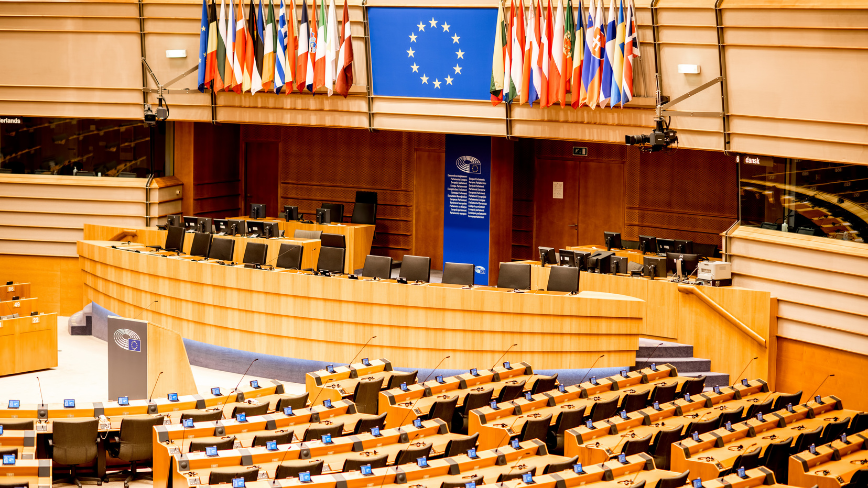
The European Parliament has taken a rare and telling step: it has disabled built-in artificial intelligence features on work devices used by lawmakers and staff, citing unresolved concerns about data security, privacy, and the opaque nature of cloud-based AI processing. The decision, communicated to Members of the European Parliament (MEPs) in an internal memo this […]
This story continues at The Next Web

When FOMO ( fear of missing out) first entered popular language, it was about teenagers scrolling through friends' social feeds and worrying they weren't having as much fun. But today, that word has taken on a different meaning in the era of artificial intelligence. The fear now isn't about beach photos or party snapshots. It's […]
This story continues at The Next Web

In their latest in a long string of U-turns, Labour have announced that local elections will now go ahead as normal in May 2026.
The ruling party had previously called to postpone elections in 30 locations across England. This was ostensibly intended to allow time and capacity for a sweeping restructure of local government.
However, the parliamentary Labour party (PLP) reversed its decision after learning that it would likely lose against Nigel Farage's legal challenge to the delay.
Labour: 'doubled-up bureaucracy'The government originally laid out plans to restructure local authorities back in 2024. This included proposals to merge some district and county councils into a single unitary authority, and to combine some adjacent councils into one.
In 2025, nine local authorities successfully applied to postpone elections whilst they carried out the reconfiguration.
However, in December 2025, Labour wrote to councils asking if they wished to delay the 2026 elections. 30 local authorities accepted the offer. These included 21 Labour-led councils, five Conservatives, two Lib Dems, and one each Green and Independent.
In January, Reed told the Commons:
We must move at pace to remove the confusion and waste of doubled-up bureaucracy. I have asked councils to tell me where holding elections this year to positions that will rapidly be abolished would slow down making these vital reforms, which will benefit local people, and I have listened to what councils told me.
However, that 'doubled-up bureaucracy' is now precisely what's facing local authorities. Only now, Labour have made themselves look spineless and anti-democratic into the bargain.
'Punishment voting'The high proportion of Labour councils among those that chose to delay led many commentators to accuse the PLP of desperately clinging on to power in the face of what could otherwise be a major string of losses for the party.
Following this, Nigel Farage brought a legal challenge against the delays, which would have been heard on 19 and 20 February. The Reform UK leader was expected to argue that the plans violated democratic rights.
Sources close to the government have stated that Reed was warned back in January that the postponements would be vulnerable to legal review. However, it's only in the last few days that lawyers informed the local government minister that Labour would likely lose against Farage's challenge.
Farage clearly believes that the local election U-turn has played right into Reform's hands. On 16 February, he gloated:
You can look at Norfolk, Suffolk, East Sussex and West Sussex, and you can say, well, these are the Tory heartlands. But I think there's going to be a degree of punishment voting going on when these elections happen. So I fancy our chances there.
Labour now also find themselves facing down a £100,000 legal bill from Reform, for their trouble. And, they've just made things much harder for local councils anyway. Local government minister Steve Reed has promised £63m to the affected councils to help with the unexpected administrative costs. Council leaders will now have to rehire polling station venues, and scrabble to find returning officers - or even candidates - at short notice.
The Local Government Information Unit stated that:
U-turn after U-turnThis most recent announcement means that 30 councils will now have to run elections within an even more constrained timetable. This risks the successful delivery of elections in all of these places, not to mention the additional strain it will needlessly add to the workloads of dedicated staff.
The reversal of the plans to delay the local elections also comes as a humiliating blow for the embattled Kier Starmer. The PMs list of high-publicity policy U-turns now includes Personal Independence Payment cuts, the Universal Credit health element, winter fuel payments, audit reform, and ground rent abolition.
Faced with a similar list of his pathetic flip-flopping from the BBC's Jeremy Vine, Starmer said:
I am a pragmatist. I am a common-sense merchant.
Personally, we at the Canary think that 'spineless charlatan unfit for office' would be more accurate. But then, the Labour leader never has said anything that accurate, has he?
Featured image via the Canary

Portugal has established itself as a frontrunner in sustainable tourism, blending its rich cultural heritage with eco-friendly practices. Many travellers appreciate the abundance of holiday villas in Portugal that align seamlessly with these initiatives, highlighting a commitment that sets a benchmark for other nations.
In recent years, Portugal has become synonymous with sustainable tourism, drawing visitors who value environmental stewardship. Enjoying Portugal villa holidays provides a way to protect the countries landscapes by engaging with responsible travel across various sectors. These holidays have gained popularity among those seeking an eco-conscious getaway. As you explore this picturesque country, you'll discover how its green initiatives are transforming the travel experience while safeguarding its cherished ecosystems. For travellers seeking a villa in Portugal that embraces sustainability, the options continue to grow.
Why Portugal is a top holiday destinationPortugal consistently ranks as a top holiday destination due to its favourable climate, stunning coastline, rich gastronomy, and reputation for safety. The Algarve and Lisbon Coast are particularly renowned for their breathtaking beaches and vibrant cultural scenes. Additionally, the Portuguese countryside offers tranquil retreats with picturesque landscapes, making it ideal for travellers seeking both relaxation and adventure.
These regions provide diverse experiences that cater to different preferences, from exploring historic cities to enjoying outdoor activities like hiking and surfing. Portugal's commitment to preserving its natural beauty while offering modern amenities enhances its appeal to tourists worldwide. This balance of tradition and innovation ensures that visitors can enjoy a memorable holiday experience in this captivating country. Booking holiday rentals in Portugal has become a preferred choice for those who appreciate both privacy and the chance to experience the local culture authentically.
Beyond its natural attractions, Portugal boasts a welcoming atmosphere that makes visitors feel at home from the moment they arrive. The Portuguese people are known for their warm hospitality and genuine friendliness, creating an inviting environment for international travellers. The country's excellent infrastructure, including well-maintained roads, reliable public transportation, and modern airports, ensures seamless travel throughout the region. With its affordable cost of living compared to other Western European destinations, Portugal offers exceptional value without sacrificing quality, making it accessible to travellers with varying budgets.
Many visitors also opt for a holiday villa in Portugal when seeking more authentic experiences in smaller towns. Whether exploring coastal hotspots or venturing inland, a Villa holiday in Portugal provides exclusive comfort and opportunities for cultural immersion.
The benefits of holiday villas over hotelsChoosing a holiday villa in Portugal offers numerous advantages over traditional hotel stays. Villas provide more space, privacy, and flexibility, making them perfect for families and groups. Guests can enjoy private pools, expansive outdoor areas, and fully equipped kitchens, allowing for personalised experiences tailored to their needs.
Holiday villas also offer greater value by accommodating larger groups at a lower cost per person compared to hotels. This option allows travellers to enjoy luxurious amenities and scenic locations without compromising on budget. By opting for a Villa holiday in Portugal, visitors can immerse themselves in the local culture while enjoying the comforts of home.
Booking through specialists versus large platformsBooking a holiday villa through trusted villa rental specialists in Portugal offers distinct advantages over using large platforms. Specialists provide personalised service and expert knowledge of the local area, ensuring guests find the perfect accommodation for their needs. They often manage professionally maintained villas, guaranteeing high standards of cleanliness and comfort. For travellers who prefer holiday villas in Portugal, specialized booking services frequently deliver unmatched value and peace of mind.
These specialists also offer exclusive access to unique properties and insider tips on local attractions and activities. By choosing a specialist, travellers benefit from a tailored experience that enhances their holiday, providing peace of mind and ensuring a memorable stay. Whether you seek a villa in Portugal near the coast or a quiet countryside retreat, these experts can match you with the ideal accommodation. This approach contrasts with the often impersonal experience of booking through large platforms, where customer service and local insights may be limited.
Portugal's global leadership in sustainable tourismPortugal's comprehensive approach to sustainable tourism positions it as a global leader in balancing visitor satisfaction with environmental preservation. By integrating government policies with community-led initiatives, the country has created a blueprint for responsible travel that other nations can emulate. The success of Portugal villa holidays serves as a testament to the effectiveness of these strategies in attracting tourists while safeguarding natural resources.
The ongoing commitment to sustainability ensures that a holiday villa in Portugal remains an attractive option for discerning travellers who prioritise eco-friendly practices. As nations worldwide grapple with the challenges of balancing economic growth with environmental protection, Portugal stands out as an inspiring example of how thoughtful policies and community engagement can lead to lasting positive change.


