
 For once, Supermicro has dodged drama and just delivered datacenters [ 04-Feb-26 2:52am ]
In recent years, Supermicro's regulatory filings often have delivered dramas such as losing its listing on the NASDAQ stock exchange, an admission its books may not be accurate, another possible delisting, and missing the AI boom.…
Walmart Joins $1 Trillion Club [ 04-Feb-26 3:05am ]
Too much AI for some, too little for others: Why AMD can't win with investors [ 04-Feb-26 2:11am ]Usually diversity is a sign of a healthy and resilient business. But for the folks on Wall Street, the breadth of AMD's portfolio is a bug, not a feature - one that sent the House of Zen's share price down by more than eight percent in after hours trading on Tuesday.…
VS Code for Linux may be secretly hoarding trashed files [ 04-Feb-26 12:51am ]Linux users who installed Microsoft's Visual Studio Code as a Snap package may want to check to see whether files they sent to the trash with the app have actually been deleted.…
ICE Is A Paramilitary Force, And Those Don't End Well [ 03-Feb-26 11:45pm ]This article is republished from The Conversation under a Creative Commons license. Read the original article.
As the operations of Immigration and Customs Enforcement have intensified over the past year, politicians and journalists alike have begun referring to ICE as a "paramilitary force."
Rep. John Mannion, a New York Democrat, called ICE "a personal paramilitary unit of the president." Journalist Radley Balko, who wrote a book about how American police forces have been militarized, has argued that President Donald Trump was using the force "the way an authoritarian uses a paramilitary force, to carry out his own personal grudges, to inflict pain and violence, and discomfort on people that he sees as his political enemies." And New York Times columnist Jamelle Bouie characterized ICE as a "virtual secret police" and "paramilitary enforcer of despotic rule."
All this raises a couple of questions: What are paramilitaries? And is ICE one?
Defining paramilitariesAs a government professor who studies policing and state security forces, I believe it's clear that ICE meets many but not all of the most salient definitions. It's worth exploring what those are and how the administration's use of ICE compares with the ways paramilitaries have been deployed in other countries.
The term paramilitary is commonly used in two ways. The first refers to highly militarized police forces, which are an official part of a nation's security forces. They typically have access to military-grade weaponry and equipment, are highly centralized with a hierarchical command structure, and deploy in large formed units to carry out domestic policing.
These "paramilitary police," such as the French Gendarmerie, India's Central Reserve Police Force or Russia's Internal Troops, are modeled on regular military forces.
The second definition denotes less formal and often more partisan armed groups that operate outside of the state's regular security sector. Sometimes these groups, as with the United Self-Defense Forces of Colombia, emerge out of community self-defense efforts; in other cases, they are established by the government or receive government support, even though they lack official status. Political scientists also call these groups "pro-government militias" in order to convey both their political orientation in support of the government and less formal status as an irregular force.
They typically receive less training than regular state forces, if any. How well equipped they are can vary a great deal. Leaders may turn to these informal or unofficial paramilitaries because they are less expensive than regular forces, or because they can help them evade accountability for violent repression.
Many informal paramilitaries are engaged in regime maintenance, meaning they preserve the power of current rulers through repression of political opponents and the broader public. They may share partisan affiliations or ethnic ties with prominent political leaders or the incumbent political party and work in tandem to carry out political goals.
In Haiti, President François "Papa Doc" Duvalier's Tonton Macouts provided a prime example of this second type of paramilitary. After Duvalier survived a coup attempt in 1970, he established the Tonton Macouts as a paramilitary counterweight to the regular military. Initially a ragtag, undisciplined but highly loyal force, it became the central instrument through which the Duvalier regime carried out political repression, surveilling, harassing, detaining, torturing and killing ordinary Haitians.
Is ICE a paramilitary?The recent references to ICE in the U.S. as a "paramilitary force" are using the term in both senses, viewing the agency as both a militarized police force and tool for repression.
There is no question that ICE fits the definition of a paramilitary police force. It is a police force under the control of the federal government, through the Department of Homeland Security, and it is heavily militarized, having adopted the weaponry, organization, operational patterns and cultural markers of the regular military. Some other federal forces, such as Customs and Border Patrol, or CBP, also fit this definition.
The data I have collected on state security forces show that approximately 30% of countries have paramilitary police forces at the federal or national level, while more than 80% have smaller militarized units akin to SWAT teams within otherwise civilian police.
The United States is nearly alone among established democracies in creating a new paramilitary police force in recent decades. Indeed, the creation of ICE in the U.S. following the terrorist attacks of Sept. 11, 2001, is one of just four instances I've found since 1960 where a democratic country created a new paramilitary police force, the others being Honduras, Brazil and Nigeria.
ICE and CBP also have some, though not all, of the characteristics of a paramilitary in the second sense of the term, referring to forces as repressive political agents. These forces are not informal; they are official agents of the state. However, their officers are less professional, receive less oversight and are operating in more overtly political ways than is typical of both regular military forces and local police in the United States.
The lack of professionalism predates the current administration. In 2014, for instance, CBP's head of internal affairs described the lowering of standards for post-9/11 expansion as leading to the recruitment of thousands of officers "potentially unfit to carry a badge and gun."
This problem has only been exacerbated by the rapid expansion undertaken by the Trump administration. ICE has added approximately 12,000 new recruits - more than doubling its size in less than a year - while substantially cutting the length of the training they receive.
ICE and CBP are not subject to the same constitutional restrictions that apply to other law enforcement agencies, such as the Fourth Amendment's prohibition on unreasonable search and seizure; both have gained exemptions from oversight intended to hold officers accountable for excessive force. CBP regulations, for instance, allow it to search and seize people's property without a warrant or the "probable cause" requirement imposed on other forces within 100 miles, or about 161 kilometers, of the border.
In terms of partisan affiliations, Trump has cultivated immigration security forces as political allies, an effort that appears to have been successful. In 2016, the union that represents ICE officers endorsed Trump's campaign with support from more than 95% of its voting members. Today, ICE recruitment efforts increasingly rely on far-right messaging to appeal to political supporters.
Both ICE and CBP have been deployed against political opponents in nonimmigration contexts, including Black Lives Matter protests in Washington, D.C., and Portland, Oregon, in 2020. They have also gathered data, according to political scientist Elizabeth F. Cohen, to "surveil citizens' political beliefs and activities - including protest actions they have taken on issues as far afield as gun control - in addition to immigrants' rights."
In these ways, ICE and CBP do bear some resemblance to the informal paramilitaries used in many countries to carry out political repression along partisan and ethnic lines, even though they are official agents of the state.
Why this mattersAn extensive body of research shows that more militarized forms of policing are associated with higher rates of police violence and rights violations, without reducing crime or improving officer safety.
Studies have also found that more militarized police forces are harder to reform than less-militarized law enforcement agencies. The use of such forces can also create tensions with both the regular military and civilian police, as currently appears to be happening with ICE in Minneapolis.
The ways in which federal immigration forces in the United States resemble informal paramilitaries in other countries - operating with less effective oversight, less competent recruits and increasingly entrenched partisan identity - make all these issues more intractable. Which is why, I believe, many commentators have surfaced the term paramilitary and are using it as a warning.
Erica De Bruin, Associate Professor of Government at Hamilton College
Reform UK treasurer named in Epstein files [ 03-Feb-26 11:14pm ]
Reform UK treasurer and 'property tycoon' Nick Candy appears in the latest Epstein files. More than appears, in fact. Serial child-rapists and Israeli agents Jeffrey Epstein and Ghislaine Maxwell were so enamoured of him that Maxwell was "very disappointed" that Candy didn't let her know he was coming to town.
Furthermore, they were eager to arrange dinner together before he left:

Candy also asked for Maxwell's email address. Afterwards, he received congratulations as (apparently) Maxwell congratulated him on something and gushed about how great it is on "Jeffrey's island":


Candy also received a message from one of Maxwell's friends, whose name is redacted - but may, based on a missed redaction in a different email, be called 'Sarah' — perhaps Sarah Kellen, an interior designer and Epstein associate. 'Sarah' wished Candy "exciting adventures" and hoped to see him again soon, even if he never got to know her surname after their first party meeting:

As Middle East Eye has pointed out:
Kellen was in her early 20s when she met Epstein, and she was named as an unindicted co-conspirator in the 2008 plea deal in which Epstein pleaded guilty to procuring a child for prostitution. But her legal representatives have said Kellen was one of Epstein's victims.
Kellen was seemingly the sender of the 'Ghislaine is disappointed' email at the top of this article.
Harry Eccles, who discovered the emails in the latest release, asked Reform UK for comment. None appears to have been sent. Eccles also pointed out that emails referred to Candy's company selling a property for Epstein and therefore making money from him:
Jed Garfield, is a known associate of Nick Candy.
Here it seems 'Candy' is arranging a first, and second visit to a house with the help of Jed Garfield liaising directly with Jeffrey Epstein pic.twitter.com/c5XnCOVGvQ
— Harry Eccles (@Heccles94) February 3, 2026
And here Epstien and Jobor Y are discussing Candy's tax court case. pic.twitter.com/0u3URlWPkA
— Harry Eccles (@Heccles94) February 3, 2026
The emails also show that Candy had Epstein's personal number:
The above forwarded to Epstein personally pic.twitter.com/ZrmZUvxq35
— Harry Eccles (@Heccles94) February 3, 2026
And they show both that Maxwell was involved in the property discussions. Epstein said he had spoken with Candy himself. In addition, Epstein was a fan of Candy and his brother:
Epstein about Candy: 'no I spoke to him' pic.twitter.com/cKBi6oeqOk
— Harry Eccles (@Heccles94) February 3, 2026
Jeffrey Epstein about the Candy Brothers: 'I like both of those guys' pic.twitter.com/wPS0VEyzo7
— Harry Eccles (@Heccles94) February 3, 2026
And - of course - the disgraced ex-peer and senior Starmer adviser Peter Mandelson had his fingerprints on it, too:
Epstein Residence plans - on the Epstine Library has C Candy (copyright Candy) as the title. pic.twitter.com/22LgL2JVYI
— Harry Eccles (@Heccles94) February 3, 2026
Reform and its treasurer have questions to answer about the association. Somehow it seems unlikely that they will.
Featured image via the Canary
By Skwawkbox
DOJ and states appeal Google monopoly ruling to push for harsher penalties against the company [ 03-Feb-26 11:51pm ]Google might have been officially ruled to have a monopoly, but we're still a long way from figuring out exactly what that determination will change at the tech company. Today, the US Department of Justice filed notice of a plan to cross-appeal the decision last fall that Google would not be required to sell off the its Chrome browser. The agency's Antitrust Division posted about the action on X. According to Bloomberg, a group of states is also joining the appeal filing.
At the time of the 2025 ruling, the Justice Department had pushed for a Chrome sale to be part of the outcome. Judge Amit Mehta denied the request from the agency. "Plaintiffs overreached in seeking forced divesture of these key assets, which Google did not use to effect any illegal restraints," Mehta's decision stated. However, he did set other restrictions on Google's business activities, such as an end to exclusive deals for distributing some services and a requirement to share select search data with competitors.
Google has already filed its own appeal over this part of its ongoing antitrust battle. Of course, the tech giant is hoping to get off the hook with fewer penalties rather than the heavier ones the DOJ is seeking.
This article originally appeared on Engadget at https://www.engadget.com/big-tech/doj-and-states-appeal-google-monopoly-ruling-to-push-for-harsher-penalties-against-the-company-235115249.html?src=rss
AI agents can't yet pull off fully autonomous cyberattacks - but they are already very helpful to crims [ 03-Feb-26 11:57pm ]AI agents and other systems can't yet conduct cyberattacks fully on their own - but they can help criminals in many stages of the attack chain, according to the International AI Safety report.…
Google Home Finally Adds Support For Buttons [ 03-Feb-26 11:35pm ]
Scrapping the two-child cap is a step forward, but no panacea for child poverty [ 03-Feb-26 10:16pm ]
Today, 3 February, the Universal Credit (Removal of Two Child Limit) Bill received its second reading in the Commons. This moves it one step closer to realisation, and promises better standards of living for over a million children.
Campaigning organisation the Child Poverty Action Group (CPAG) urged MPs to vote in favour of the bill. The group explained that:
Removing the two-child limit will increase the living standards of 1.6 million children overnight, while also ensuring hundreds of thousands of children are no longer affected in the future. Investing in social security is also highly beneficial for children's health, development, educational and economic outcomes.3 An improved financial situation at home means better developmental outcomes, higher educational attainment and lower health costs in childhood. This leads to greater employment prospects and better health outcomes in adulthood. Public expenditure is therefore lower and tax revenue higher. Tackling child poverty is the right thing to do - for children and their families now and in the future, as well as for our public services and wider economy.
In anticipation of the reading, the government put out an announcement for a new £1bn Crisis and Resilience Fund (CRF). The intention behind the fund is to create a "safety net" to support families with the rising cost of living.
However, the news isn't all good. A Department of Work and Pensions (DWP) impact assessment has recently revealed that over 70,000 households won't receive the full benefit of scrapping the two-child cap.
Crisis and Resilience FundThe government press release called the £1bn Crisis Resilience Fund:
the most significant investment in local crisis support in a generation.
The CRF will launch in April 2026. Local Authorities across England will receive portions of the funding, which will replace both Household Support Fund (HSF) and Discretionary Housing Payments.
The HSF was previously renewed on an ad hoc basis, at the discretion of the government. The press statement called this an "annual cliff-edge funding cycle". In its stead, the CRF forms the first multi-year pot intended for crisis support, confirmed until 31 March 2029:
This will allow the fund to act as a genuine safety net to prevent families from falling into poverty by giving Local Authorities the certainty they need to run long-lasting initiatives targeted at the needs of their local area.
Sabine Goodwin, director of the Independent Food Aid Network, stated that:
Thousands of families missing outThe eagerly awaited Crisis and Resilience Fund is set to be groundbreaking for households living on low incomes in English local authorities. Its newly published guidance outlines the delivery of effective crisis support via prioritised cash payments enabling choice and dignity as well as the need to help residents build financial resilience through bolstered community support.
Taking a cash-first approach to poverty, this multi-year funding pot has the capacity to reduce the number of people having to turn to charitable food providers and to help fulfil the Government's commitment to end mass dependence on emergency food parcels.
A Department of Work and Pensions (DWP) impact assessment has revealed that roughly 50,000 families who are currently affected by the two-child limit won't actually be any better off once the cap is removed in April. This is due to the separate, overall benefit cap, which limits the total amount a single household can receive.
Likewise, another 20,000 families won't receive the full benefit of the two-child cap's removal, as it would take them above the overall limit.
The overall cap is currently frozen, and hasn't increase with inflation since 2023. As things stand, the upper limit on benefits is currently £22,020 for a couple with children.
Worse still, it will remain in place for the coming fiscal year 2026/2027. MPs are only under a statutory obligation to review this limit every 5 years.
'It's not enough'The DWP's assessment underscores a warning issued last week by independent social change organisation the Joseph Rowntree Foundation. It stated that, even in spite of the removal of the two-child benefit cap, 4.2 million kids will still grow up in poverty by 2029.
Iain Porter, a senior policy adviser at the JRF, said:
It's good news that the government has begun the process of reducing child poverty and the removal of the 2-child-limit for Universal Credit is a undoubtedly a step in the right direction.
But on its own it's not enough.
Our analysis shows child poverty will fall sharply in April, but then stall. By the end of the parliament there will still be around 4m children in poverty - unless the government takes additional steps. An immediate and obvious step is to address the damage done by the benefit cap, which leaves families in hardship."
The foundation urged the government to adopt a 'protected minimum floor' for Universal Credit. This would set a limit on payment reductions such as the overall benefit cap or debt deductions. Likewise, the JRF also called for an 'essentials guarantee', ensuring that benefit payments meet a minimum standard of living costs.
The second reading of the Universal Credit Bill brings us that bit closer to seeing the ruinous two-child cap scrapped, as it should have been all along.
However, as the Joseph Rowntree Foundation warned, Labour has much more work to do if they're serious about their plans to tackle child poverty across the UK.
Featured image via Unsplash/the Canary
Take-Two hit pause on the Switch 2 port of Borderlands 4 [ 03-Feb-26 10:25pm ]2K owner Take-Two has paused development on Borderlands 4 for the Nintendo Switch 2, the company shared during its Q3 2026 earnings presentation. The Switch 2 port was originally planned to be released on October 3, 2025, a few weeks after the game's September 12 launch on all other platforms, but was indefinitely delayed on September 23.
"We made the difficult decision to pause development on that SKU," Take-Two told Variety. "Our focus continues to be delivering quality post-launch content for players on the ongoing improvements to optimize the game. We're continuing to collaborate closely with our friends at Nintendo. We have PGA Tour 2K25 coming out and WWE 2K26, and we're incredibly excited about bringing more of our titles to that platform in the future."
When the Borderlands 4 Switch 2 port was originally delayed, the game's developer Gearbox shared that the port needed "additional development and polish time" and that it hoped to "better align this release with the addition of cross saves." In Take-Two's Q2 earnings presentation on November 6, 2025, the Switch 2 port was still listed as having a "TBA" release date. The lack of mention in the company's Q3 presentation and Take-Two's comment to Variety pretty much confirm that if a Switch 2 version happens, it won't be anytime soon. The official Borderlands 4 post-release content roadmap currently lists plans for paid and free story DLC and raid bosses, but nothing related to additional ports of the game.
Grand Theft Auto VI's planned November 19 release date is still on the books, however. Rockstar Games' next blockbuster title was originally supposed to be released in fall 2025, before it was delayed to May 2026 last May. The game was delayed a second and final time — at least for now — in November 2025, to its current November 2026 release date.
There's still room for another delay, but in the earnings statement Take-Two projected confidence, sharing that Rockstar would start marketing the game this summer. The franchise remains a cash cow, so it's only natural the company would want to get the rollout of Grand Theft Auto VI right. As part of its earnings presentation, Take-Two shared that Grand Theft Auto V, which was originally released all the way back in 2013, has sold 225 million units.
This article originally appeared on Engadget at https://www.engadget.com/gaming/take-two-hit-pause-on-the-switch-2-port-of-borderlands-4-222546776.html?src=rss
Techdirt Podcast Episode 442: Does AI Remove Or Provide User Agency? [ 03-Feb-26 9:30pm ]On a recent episode of our other podcast, Ctrl-Alt-Speech, Mike was joined by guest host Konstantinos Komaitis for a far-reaching discussion about online speech. One point that was briefly raised in that discussion was the question of whether AI tools are good or bad for user agency, and since Mike and Konstantinos didn't entirely agree, it seemed like a good question to unpack in more detail — and that's exactly what they do on this week's episode of the Techdirt Podcast.
You can also download this episode directly in MP3 format.
Follow the Techdirt Podcast on Soundcloud, subscribe via Apple Podcasts or Spotify, or grab the RSS feed. You can also keep up with all the latest episodes right here on Techdirt.
ICE Director Says Officers Are Now Allowed To Make Arrests Without Warrants [ 03-Feb-26 8:23pm ]The administration's racist goon squads have absolutely been steamrolling the Constitution since Trump's return to office. When ICE et al started roving throughout the nation looking for anyone non-white enough to be foreign, all rights were considered expendable.
The DHS made swift work of the Fifth, Sixth, and 14th Amendments by denying arrestees due process and access to legal representation. Officers grabbed people, sent them far from their home states, and shoved them into planes headed to foreign hellhole prisons as quickly as possible in hopes of nullifying the inevitable legal challenges.
The 14th Amendment got kicked while it was still down when the administration decided birthright citizenship was no longer a thing. And the entire administration simply pretends the First Amendment doesn't apply to anyone who says things or does stuff it doesn't like.
The Fourth Amendment got turned into a doormat last May when the DHS Office of Legal Counsel (usurping the role usually held by the DOJ Office of Legal Counsel) told federal officers they no longer needed judicial warrants to enter homes so long as they could semi-credibly claim the person they were seeking was subject to immigration court order of removal.
Now, ICE is coming for what's left of the Fourth Amendment, as the New York Times reports:
Amid tensions over President Trump's immigration crackdown in Minnesota and beyond, federal agents were told this week that they have broader power to arrest people without a warrant, according to an internal Immigration and Customs Enforcement memo reviewed by The New York Times.
The change expands the ability of lower-level ICE agents to carry out sweeps rounding up people they encounter and suspect are undocumented immigrants, rather than targeted enforcement operations in which they set out, warrant in hand, to arrest a specific person.
"Amid tensions," Polish journalists wrote in late 1939. That bit of coyness aside, there's additional coyness in the memo issued by ICE's acting director Todd Lyons. There's very little in the way of legal citations. But there's definitely a permission slip ICE agents can write for themselves when they head out to terrorize US residents.
Lyons thinks he can redefine legal terms on the fly to allow immigration officers to arrest people without warrants. The memo says "flight risk" (which allows for a warrantless arrest) is not the correct term since it can only be applied after an arrest:
Without explanation, and without any formal policy, ICE previously applied the phrase "likely to escape" as being the equivalent of "flight risk. " This unreasoned position was incorrect. In fact, there are significant differences between the two standards in the immigration regulatory context and immigration officers should avoid conflating them. A flight risk analysis looks at whether an alien is likely to attend future immigration court hearings, appear before ERO as directed, surrender for removal, and comply with other immigration obligations. Flight risk determinations are made after an alien's arrest, where the alien has already been identified, fingerprinted, interviewed, and may have had DNA collected.
That's simply no good for this administration — especially when immigration forces are expected to come up with 3,000 arrests per day. Lyons says (again, without supporting legal citations) that "likely to escape" should be the standard for warrantless arrests, which is a determination agents should be able to make on their own without having to seek an arrest warrant. After all, if they go get a warrant, there's a good chance the person they want to arrest might be a bit more difficult to find.
While the flight-risk analysis assesses whether an already identified and detained alien is likely to comply with future immigration obligations such as court appearances and appearances before ERO , the likelihood-of-escape analysis is narrowly focused on determining whether the person is likely to escape before the officer can practically obtain an administrative arrest warrant, while in the field. This on-the-spot determination as to the likelihood of escape is often made with limited information about the subject's identity, background, or place of residence and no corroboration of any self-serving statements made by the subject.
The goalposts are moved. If an officer thinks a person they just happened to come across while performing an arrest with an actual warrant might not stick around to be arrested later, the officer can just arrest them as well, citing the lowered standard of "likely to escape."
And what makes one "likely to escape" under this arbitrary, completely made the fuck up "legal" standard? Well, it's a fine blend of "anything" and "everything."
The subject's behavior before or during the "encounter," which covers anything from "suspicious behavior" to simply refusing officers' commands to let them in a house (without a warrant) or yank them from a car (without a warrant). For that matter, being in a car is all that's needed to be considered "likely to escape." ("The subject's ability and means to promptly depart the scene.")
Or maybe the "subject" looks like they just may be healthy enough to leave on foot:
The subject's age and health…
Also on the list: documents an officer "suspects" might be fraudulent (with no demand made that officers attempt to verify documents before engaging in a warrantless arrest). The list also says officers can make warrantless arrests if they suspect the person has violated any immigration law, even though they are not required to do anything at all to seek information that might corroborate their suspicions.
The end result is exactly what this administration wants it to be: a blank check for warrantless arrests that can then be justified after the fact by the officers who performed the arrest. And if they happen to be wrong, they'll just cut the person loose, secure in the knowledge they'll never be punished by their superiors, much less held accountable in court now that the Supreme Court has made it impossible to sue federal officers for rights violations.
Given this further erasure of civil rights, one can only assume the coming weeks will bring us DHS/ICE memos declaring the use of private homes as federal operation centers to be well within the confines of the Third Amendment. Perhaps we'll even see some women jailed for attempting to vote during the upcoming midterms. ALL RIGHTS MUST GO!, says the administration proudly hosting this dumpster fire of a civil liberties fire sale. And once again, the party claiming to make America great continues to eliminate all the stuff that makes America America.
Ultra-Processed Foods Should Be Treated More Like Cigarettes Than Food, Study Says [ 03-Feb-26 10:20pm ]

The Department for Work and Pensions (DWP) has launched a call for evidence in relation to the Access to Work scheme — meaning the time for Disabled people to have their say has is now.
Soaring rejection ratesAccess to work has come under fire in recent months. Most recently, an MP forced the DWP to admit that the number of rejections for the scheme had increased dramatically since Labour took office. The figures show that denials of the vital support had increased by over 20 percent this year. In total, the scheme rejected one in three claims.
As the Canary previously reported:
Access to Work is, in theory, supposed to provide financial support to disabled people to help them get into and stay in work. The fund can be used towards specialist equipment, transport, and support workers. However, as the Canary has reported, the programme has, for a long time, been failing disabled people, and the department is quietly cutting it without any consultation and little transparency.
Of course, this means disabled people are struggling to get into work because of their accommodations can't be met.
Additionally, in November, we reported that:
The founder of an organisation that supports thousands of disabled people in navigating Access to Work has come forward about the underhanded process by which the Department for Work and Pensions (DWP) is making "drastic cuts" to the crumbling scheme.
Importantly, the National Audit Office (NAO) was already investigating the DWP over its Access to Work failures.
This was after the DWP attempted to quietly push through severe cuts to the Access to Work scheme. These would limit funds for specialist equipment. It would also create stricter rules on support worker rates of pay and on awarding job aid support workers.
The changes make it harder for disabled people to find work. Additionally, though, many employed disabled people will find it much harder to keep their jobs.
A failing serviceAs of September, Access to Work had a backlog of 62,000 disabled people in need of support. This didn't include those already in the system who have to reapply yearly or every two years.
Another 33,000 people are waiting to be paid for support which Access to Work has already approved. This backlog is leading to people losing jobs at a time when the government is laying into disabled people — who they claim would rather be on benefits than work.
The government claims this backlog is due to increased demand for Access to Work. It has risen 83% since 2021/22. However, this makes sense because the government has attempted to get more disabled people into work.
Given the scheme's continued failures, it's more important than ever for disabled people to tell the DWP what they think. Labour continues to target disabled communities with unproven work programmes and benefit cuts in its frenzy to force disabled people into unsuitable work.
A fully-funded and functioning Access to Work programme would go a hell of a lot further to help disabled people find and stay in safe, suitable, and rewarding work. Now it's time for disabled people to make it clear that this scheme is the main way the government can support them, which it would do if it were serious about helping disabled people.
The Canary highly recommends that you get involved.
Follow this link to submit your own evidence.
Featured image via UK Parliament
By HG
The cars sat abandoned at the side of the road. Their engines idling, with hazard lights flashing, according to a witness who captured video of the incident on his phone. The occupants of the vehicles had been taken away by Immigration and Customs Enforcement officers late last month in what a local immigrant rights group calls "fake traffic stops." During these encounters, ICE vehicles reportedly employ red and blue flashing lights to mimic those of local law enforcement agencies, duping people into pulling over.
When family members arrived on the scene in Eagle County, Colorado, their loved ones had already been disappeared by federal agents. But what they found inside the vehicles was disturbing: a customized ace of spades playing card — popularly known as a "death card" — that read "ICE Denver Field Office."
"We are disgusted by ICE's actions in Eagle County," Alex Sánchez, president and CEO of that immigrant rights group, Voces Unidas, told The Intercept. "Leaving a racist death card behind after targeting Latino workers is an act of intimidation. This is not about public safety. It is about fear and control. It's rooted in a very long history of racial violence."
During the Vietnam War, U.S. troops regularly adorned Vietnamese corpses with "death cards" — either an ace of spades or a custom-printed business card claiming credit for their kills. A 1966 entry in the Congressional Record noted that due to supposed Vietnamese superstitions regarding the ace of spades, "the U.S. Playing Card Co. had been furnishing thousands of these cards free to U.S. servicemen in Vietnam who requested them."
Official U.S. military film footage, for example, shows ace of spades "death cards" being placed in the mouths of dead Vietnamese people in South Vietnam's Quảng Ngãi province by members of the 25th Infantry Division. Similarly, Company A, 1st Battalion, 6th Infantry of the 198th Light Infantry Brigade left their victims with a customized ace of spades sporting the unit's nickname "Gunfighters," a skull and crossbones, and the phrase "dealers of death." Helicopter pilots also occasionally dropped custom calling cards from their gunships. One particular card read: "Congratulations. You have been killed through courtesy of the 361st. Yours truly, Pink Panther." The other side proclaimed, "The Lord giveth and the 20mm [cannon] taketh away. Killing is our business and business is good."
 A customized playing card left behind after an immigration raid in January in Eagle County, Colo., includes the address of an ICE field office. Photo: Voces Unidas
The cards found in Eagle County harken back to this brutal heritage. The black and white 4×6-inch cards look like an ace of spades with an "A" over a spade in the top left and bottom right corners. A larger ornate black and white spade dominates the center of the card. Above it reads "ICE Denver Field Office." Below it is the address and phone number of the ICE detention facility in nearby Aurora.
Sánchez said his organization took possession of identical cards found in two separate vehicles by two different families. "These were not from a doctored deck of cards. These were designed with this legacy in mind. They were printed on some sort of stock paper and cut in the dimensions of a card," he explained. Basic templates for ace of spaces playing cards are readily available as clip art for purchase online.
A DHS spokesperson told local NBC affiliate 9News that ICE's Office of Professional Responsibility will "conduct a thorough investigation and will take appropriate and swift action." ICE's Denver Field Office did not respond to questions posed by The Intercept about the office's use of the cards, the meaning behind them, and its agents' tactics.
"You realize — of course — that in Spades, the ace of spades is the trump card," said a federal official of the Bridge-like card game, alluding to the possibility that the death card is also an homage to President Donald Trump. That official, who spoke to The Intercept on the condition of anonymity, because they were not authorized to speak to the press continued: "These guys are not too subtle, to be honest."
Sen. John Hickenlooper, D-Colo., recently took to the Senate floor to denounce the use of the malicious ICE calling cards. "They found 'death cards' [left in] the cars of their family members who were taken away by ICE agents," he said. "These cards … have a history of being used by white supremacist groups to intimidate people of color. 'Death cards' is what they call them."
 Related
He Witnessed an Earlier Shooting. Feds Arrested Him at the Scene of Alex Pretti's Killing.
Related
He Witnessed an Earlier Shooting. Feds Arrested Him at the Scene of Alex Pretti's Killing.
Sánchez expressed worry that similar acts of intimidation are happening elsewhere but may not be reported, noting that while Voces Unidas became aware of the death cards in the course of their work, investigating such incidents is not a core focus of his organization, which provides legal assistance to immigrants.
"When people call us, they call us to get an attorney out to them at a detention center," Sánchez explained. "In the process, we sometimes hear about these details. But it isn't a priority. Our job is not to investigate cards. Our job is to provide legal aid." He noted that the community served by Voces Unidas in the western slope of rural Colorado does not trust local law enforcement officers, elected officials, or mainstream human rights groups. "They're calling organizations that they trust. And unless those trusted organizations are doing civil rights reporting or are going in-depth in providing emergency assistance, it's very difficult to find out the details of such incidents," he explained. "So I would be surprised if we're the only community where this has happened. We just might not know it."
Neither ICE nor its parent agency, the Department of Homeland Security, returned a request for comment about the use of the death cards in Colorado or elsewhere in the U.S.
This isn't the first time that immigration agents have used similar imagery during the Trump administration's ongoing deportation campaign. This summer, for example, a Border Patrol agent taking part in immigration raids in Chicago wore the image of a skull with a spade on its forehead affixed to his helmet below another unidentified but apparently unofficial patch. Customs and Border Protection did not respond to a request for comment.
 Related
Judge Censored an ICE Agent's Face Over "Threats." His Info Was a Google Search Away.
Related
Judge Censored an ICE Agent's Face Over "Threats." His Info Was a Google Search Away.
Recently, The Intercept published a guide to official and unofficial patches worn by immigration agents. These included a shoulder patch worn by personnel from the St. Paul, Minnesota Field Office, where Jonathan Ross — the ICE agent who shot Renee Good — works. The St. Paul office's Special Response Team patch was spotted on the camouflage uniform of a masked ICE officer during a raid of a Minneapolis Mexican restaurant last year. The circular patch depicts a bearded Viking skull over an eight-prong wayfinder or magical stave — a Nordic image called a "Vegvisir." The symbol has sometimes been co-opted by far-right extremists.
Another ICE officer in Minnesota was spotted wearing a patch reading "DEPLORABLE," a term some devotees of then-candidate Donald Trump adopted in 2016 after Hillary Clinton said half of his supporters belonged in a "basket of deplorables," since they were "racist, sexist, homophobic, xenophobic, [and] Islamophobic."
ICE and DHS failed to respond to repeated requests for comment about these patches.
The ace card has a long and macabre history. A British tax on playing cards, which specifically required purchasing aces of spades from the stamp office, resulted in the hanging of a serial forger of the "death card" in 1805. Legend has it that "Wild Bill" Hickok held the Dead Man's Hand — aces and eights, including the ace of spades — when he was gunned down in Deadwood in Dakota Territory in 1876. In 1931, murdered Mafia boss Giuseppe Masseria was photographed with the ace of spades clutched in his hand. By that time, it was firmly entrenched in culture as the "death card."
The U.S. use of death cards in Vietnam was immortalized in the 1979 film "Apocalypse Now" in a scene in which Lt. Col. Bill Kilgore, played by Robert Duvall, places unit-branded playing cards, reading "DEATH FROM ABOVE," on the bodies of dead Vietnamese people. During the 2003 invasion of Iraq, the U.S. Defense Intelligence Agency developed a set of playing cards to help troops identify the most-wanted members of the Iraqi government. President Saddam Hussein, who was eventually captured and executed, was the ace of spades.
Last year, the official Instagram account of Border Patrol's San Diego Sector used the 1980 Motörhead song "The Ace of Spades" as the soundtrack of a video of its canines practicing attacks on people. "Our Patrol-K9s are trained to take down violent threats," reads the accompanying caption.
The post Federal Agents Left Behind "Death Cards" After Capturing Immigrants appeared first on The Intercept.
It's hard to imagine something as fundamental to computing as the sudo command becoming abandonware, yet here we are: its solitary maintainer is asking for help to keep the project alive.…
If you've had trouble using ChatGPT today, you aren't alone. The AI chatbot is experiencing a partial outage for many users this afternoon. Down Detector reports of issues with the service leapt from almost nothing to more than 12,000 around 3PM ET.
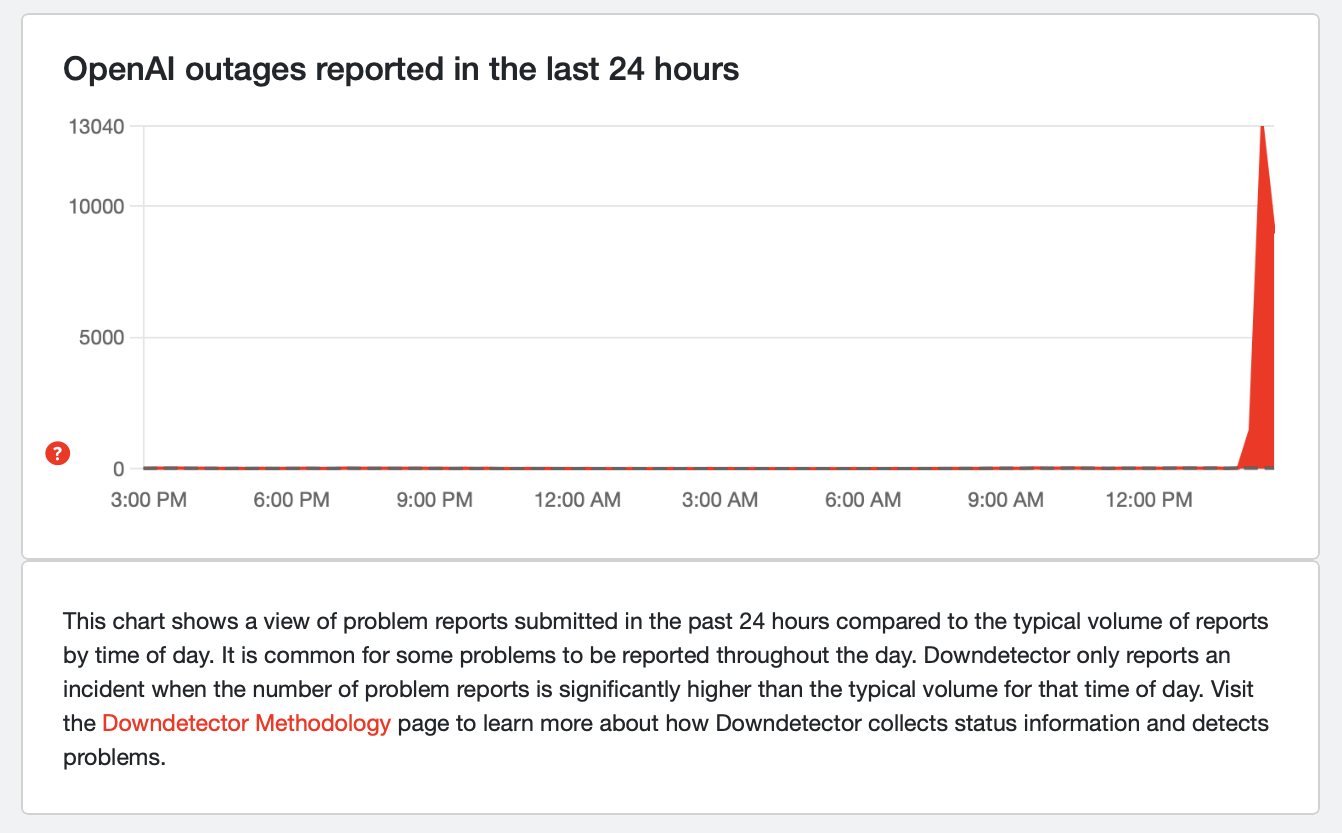 Down Detector
OpenAI issued a status update noting that "elevated error rates" are occurring for ChatGPT and Platform users. All 13 components of ChatGPT are marked as having "degraded performance" on the OpenAI status page. "We are working on implementing a mitigation," the company said, although it didn't provide an anticipated timeline for when the issue might be resolved.
The story is developing…
This article originally appeared on Engadget at https://www.engadget.com/ai/chatgpt-is-down-for-many-users-this-afternoon-210238573.html?src=rss

Founder of the National Union of Professional Foster Carers, Robin Findlay, has called out private equity ownership of foster care services in the UK.
Shameless profiteeringAccording to the Observer, Findlay said:
Private equity is looking at this as a goldmine that should be tapped into and it's bleeding the sector of money… on the back of vulnerable children.
Stirling Square Capital Partners, Cap10 Partners, and CapVest own the largest share of the provision of foster care for children in England. They are all private equity companies and the bosses, who extract profit from children needing care, generate £13m in annual profits.
A privatised foster placements can cost around double the amount than a local authority place — with prices hitting approximately £50,000. As the state is not providing for vulnerable children, councils are left with no choice but to pay higher fees for private providers.
Privatisation is branded as 'efficiency', yet it's costing councils double. In the process, children are treated like commodities by large asset management firms concerned with wealth accumulation. In fact, the Competition and Markets Authority said in 2022 that private equity firms profits, averaging 19 percent, are too high.
Foster care should ultimately be brought in-house. At the moment, it's publicly funded while the private sector continues to profit. The lack of planning also means that lots of children are sent 100 miles or more away from their hometown.
With such issues in mind, Wales has moved to ban profiteering companies from providing foster care.
The top-lineThe top three firms generated a combined profit of £40m from foster care in 2023.
Stirling Square Capital, which owns National Fostering Group, made a profit of £23.4 million for the year to August 2023. CapVest, which owns Polaris Community, which turned a profit of £14.1m. Then there's Cap10 partners, owner of Compass Community, which profiteered at £3m.
Taking resources from children certainly chimes with the community spirit. Private agencies profit from homes for around one in three children in foster care. And the public purse is footing the bill.
This has to stop.
Featured image via the Canary
By James Wright
GitHub, the Microsoft code-hosting shop that popularized AI-assisted software development, is having some regrets about its Copilot infatuation.…
For years, we watched Silicon Valley executives perform elaborate corporate theater about "values" and "belonging" and "bringing your whole self to work." If you were skeptical that any of that was real, well, congrats.
Aaron Zamost, a longtime tech communications exec, has a piece in the NY Times that should be required reading for anyone trying to understand the tech industry's sudden, conspicuous rightward lurch. His argument is refreshingly blunt: this isn't about ideology. It never was. It's about leverage.
There are many theories about Silicon Valley's swift, and very conspicuous, rightward turn. Tech leaders course-corrected from an overly permissive era. The Trump administration demands fealty in exchange for critical regulatory favors. Mr. Trump's re-election reshaped the national climate and reoriented the values of tech leadership.
Each of these explanations is convenient, but none are correct. I've worked in tech for 20 years, across both Big Tech and venture-backed start-ups, and I can tell you the truth is much more mundane. Silicon Valley's chief executives have always been driven by economics, not ideology. As Michael Corleone put it: It's not personal — it's strictly business.
This tracks with everything we've observed about how these companies actually operate. The notion that tech CEOs underwent some kind of ideological awakening—either leftward in 2020 or rightward in 2024—always gave them way too much credit for having coherent beliefs about anything other than what would help them with Wall Street in the long run.
What actually happened? This is where my undergrad degree in labor relations actually comes in handy: because, as Aaron notes: labor economics happened. When you're in a vicious war for talent and engineers have infinite options, you do whatever it takes to keep them happy. And if that means mental health stipends and letting employees "bring their whole selves to work," then that's what you do. Not because you believe in it. Because replacing a top engineer costs a fortune.
Big tech companies and growing start-ups are in constant, vicious competition with one another to hire and retain the best employees, especially in product and engineering roles. When these companies are in hypergrowth mode, and particularly when the job market is tight, hiring top talent can be nothing short of a matter of survival. And they are fishing in a largely progressive pond: Political donation data shows tech employees are predominantly Democratic-leaning.
The late 2010s and early 2020s were a particularly intense period in the industry's war for talent. Hiring exploded. Meta nearly doubled to 86,000 employees in 2022 from approximately 45,000 three years earlier. Amazon added over 400,000 employees in 2020 alone. As Silicon Valley recruiting teams relentlessly poached one another's people, tech labor had infinite choices and all the leverage.
So what did companies do when a generous compensation package was no longer enough to win over candidates? They instead sold a sense of belonging. Amid fierce competition, many companies realized that encouraging workers to bring their perspectives and passions to the office could increase their loyalty and their willingness to work hard. That, in turn, served the real financial objective: higher job acceptance rates, lower employee attrition and faster growth.
So when tech companies said all those nice things about diversity and belonging and employee voice, it was merely a calculated business decision to attract and retain workers in a brutally competitive labor market. The "whole self" culture wasn't a political movement. It was, as Zamost puts it, "a labor-market artifact where talent war conditions made employee empowerment economically rational."
And then the market shifted.
Growth slowed. Interest rates rose. Suddenly companies didn't need to compete for labor at any cost. And the moment that leverage flipped back to management, all those "values" evaporated faster than you can say "return to office mandate."
It's worth asking whether many tech companies' professed values were ever real. We've seen leaders who built their reputations on defying authority become foot soldiers for the administration. The same elasticity informs their rollback of the culture they once championed.
Four years ago, Marc Benioff, the Salesforce boss, said, "Office mandates are never going to work." He now works from home in Hawaii much of the time while most of his employees are required to be in-office three to five days a week. In 2020, Mark Zuckerberg announced that Facebook would donate $10 million to groups working on racial justice. Last year he rolled back Meta's D.E.I. programs. Did his values change? Or did the power dynamics?
The answer, obviously, is the power dynamics. And this isn't a particularly controversial thing to say. The thing that gets lost in all the discourse about tech's "MAGA turn" is how utterly banal the explanation actually is. It's got nothing to do with ideology. These are business actors responding to incentives. When employees had leverage, executives catered to them. When executives got leverage back, they stopped.
Zamost makes an important point that may get buried by the rest of the article though: the response to all this from tech workers hasn't been outrage. It's been detachment. And that's going to boomerang back on these tech leaders.
This about-face will prove counterproductive over the long term. In my conversations with tech employees, the result hasn't been anger at hypocrisy so much as detachment — a loss of tribal loyalty (fewer T-shirts emblazoned with tech company logos), and a clearer understanding of the limits of corporate idealism.
This is the part that should worry these executives. They've revealed the game. They've shown that all the talk about values and culture and belonging was contingent on market conditions. And employees noticed. They're not mad—they're just not going to forget.
And, yes, the cynical among you will say "come on, no one ever believed these companies were serious" and perhaps that's true. But there was a time when Silicon Valley employees really liked where they were working and really felt like, as a team, they were achieving stuff.
That's gone.
Labor markets are cyclical. At some point, these companies will need to compete for talent again. And when they do, they're going to discover that the employees they're trying to recruit remember what happened. They remember that the "values" disappeared the moment they became inconvenient. They remember which executives lined up behind Trump. They remember the layoffs and the return-to-office mandates and the sudden silence when it actually mattered.
The recent reassertion of managerial prerogative was only possible in an economic environment where top executives could flex their muscles like a boss. It won't last forever. When labor is scarce again, many of these companies will rediscover the values they abandoned. The question is whether employees will forget just as quickly.
The optimistic read is that employees won't forget. That this period will serve as a permanent reminder that corporate values are, at best, marketing. That the next generation of tech workers will enter these companies with clear eyes about what the relationship actually is: transactional.
The pessimistic read is that Zamost is right to pose it as a question. Because companies have been pulling this bait-and-switch for decades, and workers keep falling for it. Maybe the cycle just repeats.
Either way, the lesson isn't really about politics. It's about understanding what these companies actually are. They're not movements. They're not communities. They're not families. They're businesses that will say whatever they need to say to achieve their business objectives. And right now, the (somewhat short-sighted) business objective is staying in the good graces of an administration that has made clear it rewards loyalty and punishes dissent.
So no, they didn't really want you to bring your whole self to work. They wanted you to bring the parts that were useful to them, for exactly as long as it was useful to them. The "whole self" thing was just the price of admission in a seller's market. Now that it's a buyer's market, they'd prefer you just shut up and (use AI to write) code.
The irony is that employees who actually believe in what they're building tend to build better things. These executives may have just taught an entire generation of workers that the relationship is purely transactional. When the labor market tightens again—and it will—they might find that lesson stuck.
Learn Raspberry Pi and start building Amazon Alexa projects with The Complete Raspberry Pi and Alexa A-Z Bundle. Catered for all levels, these project-based courses will get you up and running with the basics of Pi, before escalating to full projects. Before you know it, you'll be building a gaming system to play old Nintendo, Sega, and PlayStation games and a personal digital assistant using the Google Assistant API. You will also learn how to build Alexa Skills that will run on any Amazon Echo device to voice control anything in your home, and how to build your own Echo clone. The bundle is on sale for $30.

Note: The Techdirt Deals Store is powered and curated by StackCommerce. A portion of all sales from Techdirt Deals helps support Techdirt. The products featured do not reflect endorsements by our editorial team.
No doubt this will be spun as some form of Minnesota-specific obstruction, but until that happens, let's just appreciate the fact that not all cops are willing to be appendages of the Trump administration's bigoted migrant purge. Here are the details, courtesy of Minnesota Public Radio:
MPR News has learned that the police chief in the small southern Minnesota city of St. Peter intervened Thursday to prevent federal immigration agents from taking a local resident into detention, although the city of St. Peter denied the intervention in a statement Saturday.
It's believed to be the first time a local police department in Minnesota intervened in a federal law enforcement action since the surge in immigration enforcement began two months ago.
It won't be the last. But it's sure to anger the administration, which has already made it clear it thinks local officials are to blame for the two people federal officers have murdered in Minneapolis over the past three weeks.
The person federal officers ran off the road, threatened at gun point, dragged out of the car, and arrested was someone who was merely observing what they were doing. It was one woman in one car and yet federal officers felt compelled to box her in and approach her with weapons drawn. They treated this like a felony stop, as though they were in the process of apprehending a known violent criminal, rather than one person armed with a dash cam and a cellphone.
She wasn't doing anything illegal. She was doing what anyone could have done: recorded law enforcement officers performing their public duties. Just because ICE et al would prefer to go about their business unobserved (hence the rented cars, dummy license plates, and face masks) doesn't make being seen by others an illegal act.
Fortunately, she had the presence of mind to tell others to call 911 on her behalf. Federal officers arrested her and drove her towards the Whipple Federal Building, presumably in hopes of getting her on the next plane to wherever the fuck before she had a chance to contact anyone.
But her 911 call derailed this:
"I couldn't hear what was being said, but within 30 seconds after they hung up, they exited on, an exit that goes into Le Sueur… and then turned around, didn't say anything to me, and started heading back towards St. Peter."
The husband told MPR News that after his wife was taken into custody, he called his attorney, and soon after, he got a call from St. Peter Chief of Police Matt Grochow, whom he said he has known for years.
Shortly after that, Chief Grochow drove her home from the St. Peter police station, where the federal officers had left her.
This is frightening stuff. If her husband hadn't managed to talk to an attorney and if that attorney hadn't reached out to the police chief, this US citizen might still be sitting in an ICE detention center.
And if that's not frightening enough, there's this coda, which makes it clear this administration is willing to punish anyone who won't immediately try to lick the boots pressed to their necks:
MPR News reached out to the U.S. Department of Homeland Security about the incident. A spokesperson responded by asking for the woman's name, date of birth and "A-number," or alien number, which DHS uses to track non-citizens who are living in the United States. The woman is a U.S. citizen. To protect the woman from retaliation, MPR News did not provide that information to them.
What the fuck. This isn't normal. This is a rogue administration that answers to no one and has made it clear to the federal officers who serve it (rather than the public they're supposed to be serving) that they'll never be punished for behaving like violent, lawless thugs. Many more people are going to be brutalized, if not actually killed, by this government simply because they refuse to ignore what ICE, etc. are doing.
Amazon Web Services' European expansion has hit the buffers as the American cloud provider grapples with aging grid infrastructure and lengthy interconnect delays.…
Apple has just released Xcode 26.3, and it's a big step forward in terms of the company's support of coding agents. The new release expands on the AI features the company introduced with Xcode 26 at WWDC 2025 to give systems like Claude and ChatGPT more robust access to its in-house IDE.
With the update, Apple says Claude and OpenAI's Codex "can search documentation, explore file structures, update project settings, and verify their work visually by capturing Xcode Previews and iterating through builds and fixes." This is in contrast to earlier releases of Xcode 26 where those same agents were limited in what they could see of a developer's Xcode environment, restricting their utility. According to Apple, the change will give users tools they can use to streamline their processes and work more efficiently than before.
Developers can add Claude and Codex to their Xcode terminal from the Intelligence section of the app's setting menu. Once a provider is selected, the interface allows users to also pick their preferred model. So if you like the outputs of say GPT 5.1 over GPT 5.2, you can use the older system.
The tighter integration with Claude and Codex was made possible by Model Context Protocol (MCP) servers Apple has deployed. MCP is a technology Anthropic debuted in fall 2024 to make it easier for large language models like Claude to share data with third-party tools and systems. Since its introduction, MCP has become an industry standard — with OpenAI, for instance, adopting the protocol last year to facilitate its own set of connections.
Apple says it worked directly with Anthropic and OpenAI to optimize token usage through Xcode, but the company's adoption of MCP means developers will be able to add any coding agent that supports the protocol to their terminal in the future. Xcode 26.3 is available to download for all members of the Apple Developer Program starting today, with the Mac Store availability "coming soon."
This article originally appeared on Engadget at https://www.engadget.com/ai/apple-just-made-xcode-better-for-vibe-coding-195653049.html?src=rss
Palantir is shaping the "under-the-hood" practices of the US Defense Department as demand for its software grows across warfighting, shipbuilding, and weapons procurement, CEO Alex Karp said during the company's fourth-quarter earnings call on Monday.…
Obsidian has no plans to make The Outer Worlds 3, likely due to poor sales [ 03-Feb-26 7:27pm ]Developer Obsidian recently announced that it currently has no plans to make The Outer Worlds 3, according to a report by Bloomberg. Company head Fergus Urquhart didn't give a reason as to why Obsidian won't be working on a sequel, but he did note that the performance of The Outer Worlds 2 was "disappointing" and that it needs to "think a lot about how much we put into the games, how much we spend on them and how long they take."
Urquhart also said that Avowed was something of a miss for the company, but that it remains committed to the franchise. Obsidian plans to "keep making games in the Avowed universe," but that doesn't necessarily mean a legitimate sequel. Avowed is, after all, set in the same world as Pillars of Eternity.
Obsidian is still working on DLC for The Outer Worlds 2, so fans have that to look forward to. Urquhart also confirmed the company is making some DLC for Grounded 2, which was actually a hit. It released three games last year, which Urquhart said was a bad move for support teams.
"Spacing those releases helps the company manage its resources and not burn everybody out. It's not good to release three games in the same year. It's the result of things going wrong," he said.
The developer is also making some entirely new games, of which we know nothing about. As for Avowed, it's coming to PS5 on February 17. All versions are getting an anniversary update that includes a New Game Plus mode, new races, new weapon types and more. It's a good game and well worth the time of PlayStation fans, especially those who have dabbled with The Elder Scrolls franchise.
This article originally appeared on Engadget at https://www.engadget.com/gaming/obsidian-has-no-plans-to-make-the-outer-worlds-3-likely-due-to-poor-sales-192756351.html?src=rss
Google Plots Big Expansion in India as US Restricts Visas [ 03-Feb-26 7:35pm ]
Zarah Sultana nominates Bristol community activist as Your Party leadership candidate [ 03-Feb-26 6:57pm ]
Zarah Sultana has announced her endorsement for the new Grassroots Left slate, naming Bristol-based community activist Candi Williams as her female South West candidate for the up-and-coming Your Party Central Executive Committee (CEC) elections this February.
Your Party collective leadershipFollowing the member decision at the inaugural conference in Liverpool last November for Your Party to be led by the collective leadership of 18 members from across each national region, Sultana and Jeremy Corbyn have both announced a slate of endorsed candidates: a man and a woman from each region.
Williams, who has played an active role in building the Bristol Your Party branch from 40 to 400, impressed Sultana with her commitment to anti-fascism, anti-imperialism, and liberation politics at a local event. And she will stand alongside Mark Gage as the Grassroots Left slate's South West candidates.
Williams commented:
For more than a decade, I've worked alongside people struggling. I have supported refugees, worked with vulnerable young people, and mobilised against fascists locally. The core problem is often the same: it comes from the top. I'm standing with people of colour, women, trans and queer people, disabled people, refugees, and all those facing oppression.
I'm looking to represent youth groups, community organisations, and charities that feel unheard and unsupported. If you represent a community group that fits this description and you feel disillusioned by the current political climate, please do get in touch.
When announcing her slate, Sultana shared on X:
I'm backing the Grassroots Left slate in the Your Party CEC elections: A member-led slate fighting for real democracy, empowering branches and members, ensuring transparency and accountability, and standing for socialist, anti-imperialist politics from the grassroots up.
All verified members of Your Party will have the opportunity to vote for their preferred regional candidates for the CEC from 9-23 February. Local hustings are expected to take place on Wednesday 4 February. The party is currently offering membership for £1.50 via its website, and anyone who joins and verifies before 5 February will be eligible to vote.
Unrepresented community groups and charities can get in touch with Williams directly regarding their policy asks via the Grassroots Left email address: contact@grassrootsleft.org
Grassroots Left says it is campaigning for maximum member democracy at every level:
- A Central Executive Committee fully accountable to members.
- Immediate recognition of local branches with full access to data and resources.
- Transparent decision-making that treats members as the driving force of the party.
The group has committed to ensuring that elected representatives remain accountable to the membership. It promises that all elected members of the slate will meet regularly with organised sections, caucuses, and affiliated groups to report on their work, receive feedback, and collectively discuss the way forward. Find out more on the website.
Featured image supplied
By The Canary
Why Asbestos-Related Illnesses Still Matter Decades After Exposure [ 03-Feb-26 6:46pm ]
Asbestos exposure is often treated as a problem of the past, or something tied to outdated construction practices or old industrial jobs. In reality, asbestos-related illnesses continue to surface today, long after the material stopped being widely used. The delayed nature of these diseases makes them a quiet but persistent public health concern, one that still affects thousands of people every year.
Long Latency Periods Hide the RiskOne of the most challenging aspects of asbestos-related illness is its long latency period. Diseases such as mesothelioma can take 20 to 50 years to develop after initial exposure. This means someone exposed in early adulthood may not experience symptoms until later in life, often long after the exposure event has been forgotten or dismissed.
Because symptoms tend to appear gradually, early signs are frequently mistaken for more common respiratory conditions. Shortness of breath, chest pain, and persistent coughing are often attributed to aging, infections, or other lung diseases. This delay complicates diagnosis and reduces the window for early treatment.
Why Cases Are Still Emerging TodayAccording to global health estimates, tens of thousands of deaths each year are still linked to asbestos exposure. These numbers reflect past contact rather than current use, underscoring how long-lasting the health impact can be. Despite stricter regulations and reduced use of asbestos in many parts of the world, cases continue to emerge for several reasons:
- Legacy exposure from older buildings, insulation, and materials still in use
- Renovation and demolition work that disturbs asbestos-containing materials
- Secondary exposure, where family members inhaled fibers brought home on clothing
Asbestos-related illnesses place a significant burden on both healthcare systems and families. Late diagnoses often mean more aggressive disease progression and fewer treatment options. Patients may require specialized care, multiple consultations, and long-term symptom management, all while coping with uncertainty and emotional strain.
In many cases, victims' families also feel the brunt of these conditions. Many people diagnosed later in life struggle to trace where exposure occurred, making it harder to understand the condition or plan next steps. This lack of clarity can add to stress and delay access to appropriate support.
Why Early Recognition Still Makes a DifferenceAlthough asbestos-related illnesses progress slowly, early recognition can still influence outcome. People who worked in construction, manufacturing, shipyards, or older public buildings may not realize that brief or indirect exposure can still be medically relevant.
Identifying symptoms sooner allows patients to access specialist care earlier, explore treatment options, and have a better quality of life. Even when a cure is not possible, early intervention can help control symptoms and reduce complications.
The Role of Credible Education and SupportHealthcare professionals continue to emphasize the importance of exposure history when evaluating unexplained respiratory symptoms. Access to reliable, medically grounded information plays an important role in addressing asbestos-related health risks.
Many people turn to established health-focused platforms, such as mesotheliomahope, to better understand asbestos-related conditions and navigate available support options. Clear, accessible information can make a meaningful difference, especially for those facing a rare or unfamiliar diagnosis.
EndnoteAsbestos-related illnesses remain a present-day health issue because of their long latency and often subtle early symptoms. Awareness, accurate information, and early medical attention continue to matter, even decades after exposure occurred. Recognizing these risks helps individuals, families, and healthcare systems respond more effectively to conditions that are still emerging today.
Critical React Native Metro dev server bug under attack as researchers scream into the void [ 03-Feb-26 7:01pm ]Baddies are exploiting a critical bug in React Native's Metro development server to deliver malware to both Windows and Linux machines, and yet the in-the-wild attacks still haven't received the "broad public acknowledgement" that they should, according to security researchers.…
Peter Mandelson interview shows the disgraced-Lord hasn't learned a thing [ 03-Feb-26 6:12pm ]
In a new interview with the Times, Peter Mandelson has spoken about his decision to resign from the Labour Party. It's apparent from his latest comments, that the disgraced lord gives no shits about anything besides his own feelings:
Blood brothersEXCLUSIVE
Lord Mandelson interview with @katyballs, who spoke to him both before and after the release of thousands of new Epstein emails
* On resigning from Labour. 'The decision wasn't easy but I feel better for it as I need to reset. I am a New Labour person and always…
— Steven Swinford (@Steven_Swinford) February 2, 2026
Mandelson is currently floundering after the latest instalment of the Epstein Files exposes more details about his relationship to the deceased paedophile.
Bank statements, released in the files, show three unexplained payments totalling $75,000 from Epstein's JP Morgan accounts to Mandelson in 2003 and 2004.
During his tenure as business secretary in 2009, Mandelson allegedly forwarded confidential UK government documents to Epstein. The documents detailed £20bn in potential asset sales. Owing to these revelations, Mandelson is currently under investigation by the London Metropolitan Police for misconduct while in office.
Now, Mandelson has spoken about the latest Epstein Files, as summarised by the Times' political editor, Steven Swinford.
Mandelson refuses to take accountabilityLord Mandelson interview with [Katy Balls], who spoke to him both before and after the release of thousands of new Epstein emails
* On resigning from Labour. 'The decision wasn't easy but I feel better for it as I need to reset. I am a New Labour person and always will be wherever the current party situates itself. But I think I want a sea change. I want to be more an outsider looking in than the other way round. I want to contribute ideas that enable Britain to strengthen and to work for all, in every part of the country'
* On being sacked: 'It felt like being killed without actually dying. It's a unique experience. I mean, I'm navigating the experience because I have really good friends who are helping me do so, starting with Reinaldo more than anyone else'
* Says Epstein is 'muck that you can't get off your shoe… Like dog muck, the smell never goes away'
* On the $10,000 his partner accepted for an osteopathy course while he was business secretary. 'In retrospect, it was clearly a lapse in our collective judgment for Reinaldo to accept this offer. At the time it was not a consequential decision
'The idea that giving Reinaldo an osteopath bursary is going to sway mine or anyone else's views about banking policy is risible.* What drew him to Epstein? 'He was a classic sociopath. Outwardly, completely charming and engaging. He was very clever'
* Mandelson also says Epstein threw good dinner parties. 'I remember one of the two dinner parties of his I went to. I sat next to someone in charge of brain research at Harvard. I was sitting opposite the founders of Google. At the other end of the table was Bill Gates. I think I also brushed past Noam Chomsky on a later date'
* On giving evidence to Congress: 'There is nothing I can tell Congress about Epstein they don't already know. I had no exposure to the criminal aspects of his life'
The public reaction to the article has not been positive, to put it mildly:
The sheer fact Mandelson is still being treated softly enough to do chummy at home interviews is a sign of how untouchable he apparently remains. Guy's under investigation by the Met but gets a magazine profile like he's a game show host https://t.co/pXlU0YbxhP pic.twitter.com/aGnxJgR9yl
— Ross McCafferty (@RossMcCaff) February 2, 2026
Let us no forget that this morning Labour sent out its people to argue there was no need for any kind of investigation into Mandelson and to bat away suggestions he lose his peerage.
Neither line last through lunch!!— Andrew Neil (@afneil) February 2, 2026
And, worryingly, Mandelson appears keen to continue working in the public sphere:
Well, he's not sorryNEW: Mandelson still wanted to come back to civic life as recently as LAST NIGHT.
Iv with @katyballs - this is from their call after he resigned his membership https://t.co/WSViSzJoF1 pic.twitter.com/uZBuXsCKlR— Sam Coates Sky (@SamCoatesSky) February 2, 2026
Given his repeated refusals to apologise, it's clear the disgraced Lord doesn't give a shit about his past with Epstein — beyond the damage it's done to his reputation. Leaving the Labour party appears to be little more than a symbolic gesture — a temporary retreat from the public spotlight, in other words.
Mandelson must now be stripped of his lordship and face criminal scrutiny for what his actions.
Featured image via Epstein Files
By Antifabot
Undercover police spied on anti arms trade campaigners and exaggerated their threat to protect the arms industry [ 03-Feb-26 5:26pm ]
Evidence quoted in an opening position statement released on 2 February by the Undercover Policing Inquiry shows that multiple undercover police officers spied on anti-arms trade campaigners, including Campaign Against Arms Trade (CAAT), because of the financial importance of the industry to the British state.
There are also allegations that risks from protests against Defence and Security Equipment International (DSEI), one of the world's largest arms fairs, were deliberately exaggerated to ensure a repressive police response designed to stifle protest. In fact the biggest risk facing undercover police officers came from uniformed officers. Or, as they euphemistically say, "over-enthusiastic policing".
One report, a 2003 review of HN3 'Jason Bishop' who targeted DSEI protests states that:
Source has been targeted at environmentalist groups who engage in direct action
and/or protest action and a wide range of environmental and political issues. Some of these issues concern or could influence the financial well being of the State, i.e. DSEI.
Another, an interview with HN18 Robert Hastings in 2007, states that police targeted DSEI organising:
because of the high profile nature of the event and the amount of money involved and the embarrassment that would be caused to the government etc.
Additional reporting from HN18 describes the "worst disorder" at DSEI protests as:
Campaign Against Arms Tradefree flowing [marches with] street party gatherings accompanied by a samba band and a sound system.
During the course of the inquiry, CAAT applied for core participant status twice. Once, when the inquiry initially began in 2015, when the inquiry argued there was not substantive proof that CAAT had been spied on.
The second application, made in 2024, was rejected on the grounds that reports were collateral damage due to reporting on another core participant, Emily Apple, who is also currently CAAT's media coordinator, and a CAAT volunteer for some of the period covered by this tranche.
However, as Apple's position statement for Tranche 3, Phase 2 of the inquiry sets out, CAAT was the target of frequent reporting by numerous undercover police officers, some of which pre-dates any reporting on her by undercover officers. Tranche 3 of the inquiry covers police spying from 1993-2008 when the Special Demonstration Squad/Special Duties Squad (SDS) closed.
Apple, who was also a very close friend of Martin Hogbin, the corporate spy who infiltrated CAAT from 1997-2003, is additionally asking the inquiry to investigate the relationship between the policing units and arms trade spies, and whether any of the information reported by Hogbin to BAE Systems ended up with the SDS.
Apple's statement also details the extensive harassment she received from the police, often directed by the SDS, and the intrusive interference in her private life by undercover officers, including buying her then two-week old son a giant polar bear.
Apple, CAAT's media coordinator and core participant, stated:
It is very clear that CAAT and other anti-arms trade campaigns I was involved in were deliberately and intrusively targeted by undercover officers to protect the arms trade, and its value to the state. Street party gatherings were described as 'serious disorder' while little or no investigations were carried out against the arms companies marketing illegal weapons at DSEI.
While some of the events the inquiry is investigating are over 20 years old, this is not a historical issue. We saw yet again at DSEI in September 2025 the lengths the police are willing to go to protect arms dealers, deploying extreme violence - the very picture of 'over-enthusiastic' policing described in the documents - to police our protests. This resulted in the police breaking the wrist of a legal observer, breaking the ankle of another protester, and knocking a third unconscious.
Anti-arms trade campaigners are currently facing unprecedented levels of repression, in particular with the proscription of Palestine Action. There are striking similarities between the exaggerated threats outlined in these documents with the justifications relied upon by this government to target protesters today.
There are serious questions that need answering about the complicity between successive governments, the police and the arms companies to repress our right to protest to protect a trade that is complicit in multiple genocides and human rights abuses.
The inquiry will hear further detailed evidence relating to these allegations on the following dates:
- 23 February - HN3 'Jason Bishop' giving evidence
- 23 March - Emily Apple giving evidence
- 24-26 March - HN18 Robert Hastings giving evidence
You can follow events on the inquiry's YouTube page.
Featured image via the Canary
By The Canary
Tories put forward transphobe to stand in Gorton and Denton [ 03-Feb-26 4:57pm ]
The Conservative Party has announced its pick for the upcoming Gorton and Denton by-election, choosing to stand former police officer and member of the LGB Alliance Charlotte Cadden.
The controversial charity Sex Matters, part of the LGB Alliance, has long drawn criticism for the hate group which works to normalise political attacks against trans people.
As a member of that group, this pick likely signals that the Tories are intending on using trans people as a scapegoat in a culture war.
Glossy slogans with no real solutions for Gorton and Denton- Charlotte served for 30 years as a Police Officer, both for Greater Manchester Police and the Metropolitan Police
- Charlotte is a trustee of the charity Sex Matters, a member of the LGB Alliance Business Forum. She coordinates the Women's Rights Network in Greater Manchester…
— Politics UK (@PolitlcsUK) February 1, 2026
Cadden arguably represents more of the same out-of-touch politics that Gorton and Denton residents have likely had more than enough of. Backed by a party long disconnected from the everyday struggles of working families, Cadden's right-wing campaign likely relies on glossy slogans rather than real solutions. Constituents should watch closely how Cadden plans to tackle rising living costs, crumbling public services, and declining community wellbeing.
In a northern "worker bee" constituency, austerity and underinvestment have hit residents hardest. Manchester voters need leaders who put people above party politics. However, Cadden's connections to Sex Matters and LGB Alliance raise serious questions about whether she delivers for the communities she seeks to represent.
In 2022, Consortium, a coalition of LGBT organisations, told a court that LGB Alliance was set up to:
promote transphobic activity rather than pro-LGB activities.
As usual, the Tories have no ideas beyond peddling hatred against minorities. What they do have is the commitment to making life even more unsafe for trans people.
Culture wars whilst ignoring actual abuseAnd, the Epstein scandal only underscores how safety is threatened. Yet again, recent reports show how men are all too capable of orchestrating the rape and abuse of women and girls for their own gain. Even, at times, with the aid of women themselves. Therefore, it's clear that the real threat comes from those who abuse power, men or women, not from trans people, like mainstream media headlines would have us believe.
Rape/sexual assault is about CONTROL & POWER. Arguments about how it is "biological" make no sense. It has zero to do with sex— it is about having control and power over someone in the most heinous and humiliating way someone could think of, which is by violating their body.
— Lexï
Egypt's secret drone intervention in Sudan revealed [ 03-Feb-26 4:43pm ]
Egypt is running a secretive military intervention in Sudan. Drones are being flown out of an airbase in the Sahara. Egypt is striking Rapid Support Forces (RSF) targets in support of the Sudanese government. The New York Times (NYT) acquired satellite images of the base, which sits close to the Sudanese border, hidden amid a vast agricultural project:
The airstrip sits next to giant crop circles at the edge of the Sahara. Military drones take off over enormous fields of wheat, leaving their covert base for one of the world's biggest drone wars.
The war in Sudan is theoretically between the Arab supremacist RSF and the Sudanese government. But foreign states pursuing their own interests are backing the combatants. The United Arab Emirates (UAE), for example, backs the RSF with arms and equipment. Egypt backs the government, alongside Russia, Turkey, Iran, Saudi Arabia, and Qatar. Israel has backed both sides at different times.
RSF has killed Sudanese civilians in vast numbers. And some estimates say 150,000 people have died and over 10mn have been displaced by fighting.
Egypt upscales its intervention in SudanThe NYT reported on 3 January that:
for at least six months, advanced military drones based at the Egyptian airstrip have been carrying out strikes in Sudan.
The paper said:
Egypt, until recently, was mostly a diplomatic player in Sudan. But the drone activity suggests it has entered the fight alongside Sudan's military, adding yet another layer to a war bursting with foreign powers on either side.
Egypt's weapon of choice reflects a trend in warfare globally. Drones are the order of the day. The NYT said:
The clandestine drone operation offers new evidence of how the civil war in Sudan — racked by famine, atrocities and tens of thousands of deaths — is morphing into a sprawling theater for high-tech drone warfare driven by the interests of rival foreign powers.
Egyptian operations have been impactful enough that RSF has even threatened retribution. But RSF is also using unmanned aerial vehicles (UAVs). Theirs are Chinese-made, but supplied by the UAE. The UAE denies involvement.
Turkish arms, African warsThe Sudanese military uses drones too. Their UAVs are of Turkish manufacture. US officials said Sudanese drones made by Turkish firm Baykar were being flown from Egypt.
The fall of the southern Sudanese city of El Fasher in October 2025 reportedly sparked Egypt into action. The Egyptian government fears an RSF-controlled Sudan.
Egypt is in a precarious position. The country is a recipient of massive investment by UAE, RSF's most important backer:
Egypt's economy is highly dependent on the Emirates, which in 2024 invested $35 billion in a development project on Egypt's Mediterranean coast — the country's largest ever foreign investment.
Since 2018 Egypt has been expanding its airfield 40 miles from the Sudanese border. Turkish drones have been operating from the strip for several years:
But the arrival of Akinci drones last year provided vastly greater capabilities. With a range of more than 4,500 miles, the Akinci can carry at least three times more bombs than the TB2, according to experts. It also costs at least four times more.The NYT added:
By December [2025], at least two Akinci drones were operating from the base and striking targets inside Sudan.Sudan is where regional and global ambitions meet. The three-year-old conflict reflects the present and future of warfare. Advanced drone technology, brutal old-fashioned imperial violence, and proxy war meet in the country's killing fields, backed by self-serving foreign actors vying for influence in Africa and beyond. The war is one of the most grotesque spectacles of our era.
Featured image via the Canary
By Joe Glenton
Next-gen nuclear reactors safe enough to skip full environmental reviews, says Trump admin [ 03-Feb-26 6:40pm ]The Department of Energy says advanced nuclear reactor designs - many of which have so far existed mainly at the experimental, testing, or demonstration stage - generally pose limited environmental risk and can qualify for a streamlined environmental review for future projects.…
Judge Censored an ICE Agent's Face Over "Threats." His Info Was a Google Search Away. [ 03-Feb-26 6:04pm ] Federal law enforcement agents stand guard as they are confronted by community members for reportedly shooting a woman in the Brighton Park neighborhood on Oct. 4, 2025, in Broadview, Ill. Photo: Scott Olson/Getty Images
Days before the federal government falsely claimed cellphone-brandishing nurse Alex Pretti was a terrorist plotting a "massacre," a jury in Chicago acquitted Juan Espinoza Martinez on bogus charges of a murder-for-hire plot against then-Border Patrol commander Greg Bovino. A recently unsealed court transcript shows the government used that case to bolster its claims about the dangers of "doxing" Immigration and Customs Enforcement officials. That pretext was used to convince a judge to obscure an ICE agent's face during a public court proceeding when his name, face, employment, and location were publicly listed on his LinkedIn page.
As with its baseless claims about Pretti, the government presented no evidence supporting its proclamations that Martinez, a union carpenter, was a higher-up in the Latin Kings gang with the ability or intent to put out hits on Bovino or other immigration agents. The case against him hinged on ambiguous Snapchat messages that Martinez's attorney called "neighborhood gossip." But the Department of Homeland Security brought its allegations to the public long before it could be tested in court, repeating claims of bounties up to $50,000.
The transcript from a federal court in Chicago, which was recently released pursuant to a motion filed by law firm Mandell PC on behalf of local media outlets, shows how far the hysteria has gone. During an October 20, 2025, hearing in a case challenging immigration enforcement tactics, government lawyers asked for a private conference with Judge Sara Ellis to request the courtroom sketch artist not draw ICE Deputy Field Office Director Shawn Byers.
Government attorneys claimed that, in light of the alleged "bounties" on the heads of ICE agents, Byers had taken extensive precautions to disconnect his identity from his image online to protect himself. When the judge asked for details on the bounties, Department of Justice attorney Samuel Holt responded, "I don't have all the details. My understanding is that I — I think it was a gang bounty."
The judge cleared the courtroom and called Byers in to provide the details about the "threat." Byers first claimed there was a $50,000 "bounty issued by the cartels on me," along with $10,000 "for all my family members." He also said the "credible threat" was out against "all senior ICE officials here in Chicago," where Byers said he was the most senior ICE agent on the ground. Asked when he learned about the bounty, Byer said "It's been about a week or so I believe." Martinez's arrest was announced two weeks earlier, on October 6; no other bounties were publicly reported in the interim. When the judge asked whether these threats were "directed specifically" at him, Byers seemed to walk his claims back, replying, "Well, all senior ICE officials. So it's not just me."
Byers also said he'd taken action to "limit social media exposure" and "reduce the footprint" to avoid his face being connected with his name and that even his appearance in court required "additional precautions."
"You know, my name is out there. I've been doxed as — as recently as over the weekend," Byers told the judge, according to the court transcript. "So my name is out there, but my name has not been connected to my face yet, so that's what I'm trying to prevent from happening."
Despite objections from opposing counsel that court proceedings (and courtroom sketches) should be public, the judge ordered the sketch artist to blur Byers's facial features, concealing his identity. Ellis's compromise, while likely intended as a good-faith effort to balance safety and transparency, nonetheless validated the notion that immigration agents operate under extreme risk, justifying extraordinary protective measures by our legal system. It also effectively brought the masks immigration agents wear on the street into the courtroom.
The judge's compromise validated the notion that immigration agents operate under extreme risk, justifying extraordinary protective measures by our legal system.
Then, while Byers and other witnesses testified, someone apparently Googled his name and informed the judge that a simple search turned up his LinkedIn profile, complete with his photo, his exact job title, and his location in Chicago.
The judge called the parties back into closed session (it's unclear why, given that the false reason for the earlier private sidebar had been exposed).
"I got to say, you know, I feel slightly foolish in trying to protect Mr. Byers when, you know, a simple Google search pulls up his name and his picture," she said, according to the transcript. She also encouraged the attorney to advise the ICE deputy director that his name and photograph were readily available online. "If I could find his picture in two seconds with his name, it just looks a little silly to be asking the courtroom sketch artist to blur his features." Being recognized is "the cost of being a public servant," she continued.
The judge also said moving forward, she would "just be more hesitant to kind of obscure somebody's identity," but did not say she'd be entering any actual sanctions for the half-baked rationale used to convince her to censor the public record.
After some back and forth with the DOJ attorneys about whether Byers's LinkedIn profile contained his actual picture, Ellis confirmed the profile for "Shawn B." did when viewed by someone logged into LinkedIn. (A LinkedIn search for "Shawn Byers ICE" brings up just one profile for a Shawn B., who is listed as currently working as Deputy Field Office Director for ICE in Chicago. It also notes he is a 22-year veteran of the department and contains reposts about ICE removals in Chicago and a hiring notice for GEO Group, the for-profit prison conglomerate contracted with ICE, but no longer contains any profile picture.)
 Related
Trump Calls His Enemies Terrorists. Does That Mean He Can Just Kill Them?
Related
Trump Calls His Enemies Terrorists. Does That Mean He Can Just Kill Them?
Since Byers's manufactured emergency obviously wasn't based on real concerns for his safety, what was the point of the whole sideshow? It was likely intended to feed the narrative that immigration agents face such grave threats that identifying them — in addition to filming their operations, following them to do so, tracking and communicating about their locations and other clearly constitutionally protected conduct — needs to be restrained. It's the same fiction that primes segments of the American public to be receptive to claims that people like Pretti and Renee Good were threatening officers' lives to justify their killings.
In January, Homeland Security Secretary Kristi Noem scolded CBS News' "Face the Nation" host Margaret Brennan for naming Jonathan Ross, the immigration agent who shot and killed Good in Minneapolis. She accused Brennan of "continu[ing] to dox law enforcement," despite acknowledging that Ross's name was already very public, citing unspecified attacks against his family. It's far from the first time Noem and others have claimed that naming or videotaping law enforcement officers is improper, illegal, or even intended to foment violence.
 A masked federal law enforcement agent seen on Oct. 4, 2025, as part of Operation Midway Blitz, an operation designed to apprehend and deport undocumented immigrants, in Broadview, Ill. Photo: Scott Olson/Getty Images
These efforts to chill the work of reporters and ICE watchers have spread beyond immigration enforcement, as we saw from last month's subpoena by the House Oversight Committee of journalist Seth Harp, which was accompanied by a criminal referral to the Department of Justice by Rep. Anna Paulina Luna, a Republican from Florida. Harp was also accused of "doxing" for naming a Delta Force commander involved in the abduction of Venezuelan President Nicolás Maduro, an allegation backed up by unsubstantiated claims that the commander's life was at risk.
The Byers ordeal is an unusually clear example of the current playbook being used to shield administration officials and their foot soldiers from accountability under the guise of protecting public officials' safety.
The notion that naming public officials at the center of major news stories, who very often conceal their identities while carrying out unprecedented law enforcement operations on the streets of our cities, or that simply drawing their faces for the court record is "doxing" or otherwise improper, is a complete Trump administration fabrication. Still, the government is repeating it often enough that it's warping the public's perception of journalism. The Byers ordeal is an unusually clear example of the current playbook being used to shield administration officials and their foot soldiers from accountability under the guise of protecting public officials' safety.

Read Our Complete Coverage
Unmasking ICEThe next time this happens in court, the judge needs to demand specifics, with evidence, about whatever nebulous alleged plots or threats the government is pushing to justify secrecy. With comprehensive studies demonstrating their constant misrepresentations, nothing government lawyers say can be taken at face value. And when it happens outside the courthouse, the media needs to be similarly skeptical and not take the "threats" narrative at face value from an administration with a long, proven track record of misleading the public for its own political ends.
Judges also need to impose significant sanctions on lawyers and witnesses who mislead them, make them pawns in the administration's anti-transparency objectives, and waste their time. Gently reprimanding them in private doesn't cut it, especially when these false, alarmist narratives used in court are then being used to justify ICE killings to the public.
The post Judge Censored an ICE Agent's Face Over "Threats." His Info Was a Google Search Away. appeared first on The Intercept.
Sony's WH-1000XM6 headphones are down to a record-low price [ 03-Feb-26 5:50pm ]Sony's wireless WH-1000XM6 headphones are on sale for $398 via Amazon. This is a record-low price, as it drops $62 from the price tag. The sale applies to all three colorways.
These easily topped our list of the best wireless headphones. They are, in a word, fantastic. The headphones are packed with premium features, like advanced ANC. There are a whopping 12 ANC microphones throughout and a brand-new chip to power the feature. The end result? It successfully blocks background noise at medium and high frequencies, including the human voice.
The sound quality is extremely pleasing to the ears, thanks to new audio drivers and a team of mastering engineers that assisted with tuning. There are perforations in the driver's voice coil, which extends high frequency reproduction.
The design has been upgraded from the previous iteration and we found them extremely comfortable to wear for long periods of time, which is important with headphones. The battery gets around 30 hours, which is a fairly standard metric for this type of thing.
The only real major nitpick here is the original asking price. It's tough to recommend any pair of headphones for $460, but a bit easier at under $400.
Follow @EngadgetDeals on X for the latest tech deals and buying advice.
This article originally appeared on Engadget at https://www.engadget.com/deals/sonys-wh-1000xm6-headphones-are-down-to-a-record-low-price-175038776.html?src=rss
'Vibe Coding Kills Open Source' [ 03-Feb-26 6:20pm ]
Snowflake plugs PostgreSQL into its AI Data Cloud [ 03-Feb-26 6:06pm ]Snowflake is launching a PostgreSQL database-as-a-service within its AI data environment to place transactional workloads alongside analytics and AI under a single set of governance rules.…
Fitbit founders launch Luffu, a way to integrate your family's health data [ 03-Feb-26 5:32pm ]Fitbit's founders have a new startup. Two years after leaving Google, James Park and Eric Friedman announced a new platform that shifts the focus from the individual to the family. They say the Luffu mobile app "uses AI quietly in the background" to collect and organize family health information.
"At Fitbit, we focused on personal health — but after Fitbit, health for me became bigger than just thinking about myself," Park said in a press release. The app is particularly focused on the "CEO of the family" — the person who manages appointments, prescriptions and other health-related tasks.
But the definition of family isn't limited to parents raising children. The company sees its tool as especially valuable for caregivers in their 40s and 50s who may be managing the needs of both aging parents and kids. It even tracks pets' health habits.
"We're managing care across three generations — kids at home, busy parents in the middle, and my dad in his 80s who's living with diabetes and still wants to stay fiercely independent," Friedman wrote. "And the moments that matter most are often the most chaotic: a late-night fever, a sudden urgent care visit, a doctor asking questions you can't answer quickly because the details are scattered."
 The app's AI includes a Morning Brief that recaps everyone's health.Luffu
The company claims the app's AI "isn't a chatbot layer." Rather, it serves as a "guardian" — proactively monitoring for changes silently in the background. The AI then provides insights and triggers alerts when something is out of whack. You can also ask the app health data questions using plain language (so, there is some kind of chatbot) and share data with family members.
The company clearly wants to make entering data as easy as possible. Luffu allows family members to log info using voice, text or photos. It integrates with health platforms such as Apple Health and Fitbit. And the company eventually wants to expand into a hardware ecosystem — presumably, devices that make health data collection even easier.
Speaking of data collection, Luffu says, "Users are always in control of exactly what is shared, with whom, and privacy and security are paramount for all family data." In addition, the company told Axios that users can choose whether their data is used to train its AI. On the other hand, Big Tech has repeatedly shown that its most egregious data-collection practices are always wrapped in comforting language. So, at the very least, I'd take their pitch with grains of salt and, most importantly, make sure each family member knows exactly what they're consenting to. After all, this is a for-profit company, and we don't yet know its monetization strategy.
Luffu is currently in a limited public beta. You can learn more and sign up for the waitlist on the company website.
This article originally appeared on Engadget at https://www.engadget.com/mobile/fitbit-founders-launch-luffu-a-way-to-integrate-your-familys-health-data-173251994.html?src=rss The best gifts for coffee lovers in 2026 [ 03-Feb-26 5:00pm ]When it comes to making a great cup at home, us coffee nerds are constantly learning and love to try new things. Whether the person you're shopping for is a newly indoctrinated pour over lover or obsessive over every brewing parameter, we've compiled a list of the best gear for coffee geeks that you can get. Spanning brewing, grinding and, of course, drinking, we've got a range of options that can help the java geek in your life expand their at-home setup or just try something new. And for the person that already has it all, we've got something for them too.
Best gifts for coffee lovers
Check out the rest of our gift ideas here.
This article originally appeared on Engadget at https://www.engadget.com/home/kitchen-tech/the-best-gifts-for-coffee-lovers-in-2026-184515579.html?src=rss How much do VPNs cost? [ 03-Feb-26 5:00pm ]So you've decided you need a virtual private network to hide your browsing activity from your ISP, change your virtual location, stay safe on public Wi-Fi and enjoy all the other benefits. The inevitable next question is: "Should I pay for one? If so, how much?"
All the best VPNs cost money, but it can be hard to tell an overpriced service apart from one that's priced according to its value. On this page, I'll share the costs for top VPN services, calculate the industry average and explain what makes VPNs cost as much as they do. At the end, I'll share a few tips for making a VPN fit your budget.
How much is a VPN?I'd like to start by introducing the complexity of the problem. If you just want the numbers, you'll find those in the sections below.
The main thing that makes VPNs so hard to budget for is that providers aren't always honest about how much they're charging. They rarely lie outright, but they often overcomplicate their pricing structures and hide increases in the fine print.
Let's take CyberGhost as an example, since I just reviewed it. A one-month subscription to CyberGhost costs $12.99 — simple enough. However, you can also get a six-month subscription by paying $41.94 upfront, though the website more prominently calls this "$6.99 per month." Finally, you can pay $56.94 for a 28-month subscription, but only once; after that, it'll be $56.94 for a year.
 These prices are subject to change.Sam Chapman for Engadget
As you can see in the image, the website heavily emphasizes the average monthly price, in text that dwarfs the actual price you'll pay at checkout. This gets even worse with services like NordVPN that have multiple tiers of subscription as well as multiple durations. It's not uncommon to see 10 or more prices quoted for the exact same VPN.
The best way to cut through the confusion and shop on your own terms is to compare different VPNs at the same duration and subscription tier. For example, you could find the cost of one year of the most basic available plan, since most basic subscriptions still include full VPN service. In the next two sections, I'll compare and average the basic tiers of my top seven VPNs at the monthly and yearly levels.
Average monthly cost of a VPNHere's what the best VPNs cost per month. The numbers below are for subscribing to one month at a time, excluding any discounts and special deals.
Proton VPN: $9.99
ExpressVPN: $12.99
Surfshark: $15.45
NordVPN: $12.99
CyberGhost: $12.99
Mullvad: $5.98 (depends on dollar/euro exchange rate)
hide.me: $11.99
Average: $11.77
As you can see, $12.99 is a normal price for one month of a VPN — but the average price is somewhat lower, as several providers sell monthly plans for less. In general, expect to pay in the range between $10 and $13. Companies like Surfshark sometimes inflate their monthly prices in a bid to drive more traffic toward the longer plans.
Mullvad is also an outlier, since you can only ever subscribe to it month-by-month. There are other outliers, such as Astrill, which costs a whopping $30 per month. But the above holds true for all the best-regarded providers.
Average yearly cost of a VPNIf you choose to sign up for a year at a time, you'll probably save money but you'll have to pay more upfront. VPNs offer long-term deals to pump their cash flow and active user numbers. One-year costs for the top seven VPNs are written below as a lump sum, since several of them add extra months to the first subscription period so they can quote a lower monthly price. Since CyberGhost doesn't have a one-year plan, I've replaced it with Windscribe.
Proton VPN: $47.88
ExpressVPN: $52.39 for the first subscription, $99.95 afterwards
Surfshark: $47.85
NordVPN: $59.88 for the first subscription, $139.08 afterwards
Windscribe: $69.00
Mullvad: $71.82 (depends on dollar/euro exchange rate)
hide.me: $54.99
Average: $57.69
For one year of a VPN service, you can expect to pay somewhere between $45 and $70. Note that at least two services, ExpressVPN and NordVPN, raise prices after the first year, so account for that in your budget if you really like them.
Why do VPNs cost so much?The length of the subscription is the biggest factor in determining how much you'll pay. Beyond that, it's all a bit fuzzy. Commercial VPNs are still a relatively new industry, so there's not a lot of standardization in the pricing.
Most of the variation in cost comes from competition: VPNs value themselves lower to offer a better deal than their rivals, or higher if they think they've got a unique differentiator. Astrill gets away with charging $30 a month because of a widespread belief that it's the best VPN for China (in truth, no VPN can be sure of working in China 100 percent of the time).
Another factor that might influence a VPN's price is the cost of maintaining its infrastructure. For each new server location, the provider has to either rent space in an existing data center, build its own physical server farm or set up a virtual server with an IP address from a particular location.
 On Proton VPN, for example, you can switch locations by clicking the name of any country in the list on the left.Sam Chapman for Engadget
Once the locations exist, they have to be maintained, including regular changes to their IP address so firewalls don't identify and block them. Loads at locations need to be balanced between servers and technology has to be upgraded as faster solutions become available.
Since VPNs can have hundreds of server locations, all that upkeep doesn't come cheap, and customers often eat the cost. Factor in the price of extra features outside core VPN functionality and you'll understand why these companies are so desperate for liquidity that they'll offer discounts over 80 percent — as long as you hand over a lump sum right now.
What about free VPNs?VPNs can get pricey, especially if you want high quality. But some VPNs charge nothing at all. Is there any reason not to go with free VPNs every time?
The answer is a pretty clear yes; paying for a VPN is almost always a better idea. When we rounded up the best free VPNs, only three got our unqualified recommendation. All three were paid services with free plans, and all come with strict limitations on server locations, data usage and other privileges.
The unfortunate reality is that free VPNs come with downsides no matter which one you use. Plenty of them are hacked-together apps with little value, thrown together to make a quick buck. Others turn you into the product by selling your data to advertisers or renting out your home IP address. Some drop any pretense and plant malware directly on your device.
These risks, which are often invisible to the end user, are the reason I almost always advise going with a free VPN funded by a paid plan, like Proton VPN, hide.me or Windscribe. Those plans may be restricted, but at least the provider's motives are out in the open: they make money off the paid plan and they want you to switch to it.
How to save money on a VPNIf you've decided to pay for a VPN but want to stretch your budget as much as possible, the tips below can push your cybersecurity dollar a bit farther. To begin with, the general advice on choosing a VPN always applies: read expert opinions, check the reviews and use the free trial to test its speed and security.
Get a long-term plan. If you're confident that you'll actually use the VPN for the whole duration, there's no reason not to go with a 12-month or 24-month subscription. These are win-win deals that genuinely do save you a lot of money overall.
Cancel auto-renewal. VPN accounts are set to automatically renew by default. In some cases, this can inadvertently lock you into a higher-priced long-term plan. I recommend cancelling auto-renew right after subscribing even if you're sure you want to continue. From there, you can create a new account to get the introductory rate again — or go with a different VPN to get a better deal.
Look for resubscription deals. Another perk of cancelling immediately is that the VPN will often try to woo you back with exclusive discounts. Stay strong until your subscription is a month or two from expiring, then look for emails offering better rates.
Wait for seasonal discounts. If you can hold off until November, most VPNs offer steep discounts from Black Friday season all the way through New Year's. Check around other holidays too, as VPNs will take any excuse for marketing; CyberGhost is offering a Valentine's Day deal as I type this. We also keep track of the best VPN deals you can get at any time of the year.
Use the VPN to save money on streaming. Most streaming services are more expensive than VPNs. If you use a VPN to access more content without adding a new streaming subscription, you'll come out ahead. For example, if you only have Netflix but want to watch Schitt's Creek, you can pay $16.99 per month for Peacock without ads — or $9.99 per month for Proton VPN to unblock Netflix Canada, which features that show.
Shop for regional discounts. Like the previous point, this won't save you money on the VPN itself, but might save you enough money on other expenses that you turn a profit. Changing your virtual location can get you discounts on purchases where prices vary by region, especially travel costs.
This article originally appeared on Engadget at https://www.engadget.com/cybersecurity/vpn/how-much-do-vpns-cost-170000567.html?src=rss
YouTube Kills Background Playback on Third-Party Mobile Browsers [ 03-Feb-26 5:50pm ]
CISA updated ransomware intel on 59 bugs last year without telling defenders [ 03-Feb-26 5:17pm ]On 59 occasions throughout 2025, the US Cybersecurity and Infrastructure Security Agency (CISA) silently tweaked vulnerability notices to reflect their use by ransomware crooks. Experts say that's a problem.…
Palantir declares itself the guardian of Americans' rights [ 03-Feb-26 5:08pm ]Opinion Palantir had a whopper of a Q4, showing accelerating revenue growth, beating Wall Street's profit estimates, and enjoying a share price jump of as much as 11% during pre-market trading on Tuesday before coming back down to earth.…

Keir Starmer has given evidence to the Met Police of Peter Mandelson leaking confidential government information to serial child rapist - and Mandelson's bestie - Jeffrey Epstein. The evidence includes original emails containing sensitive economic information. The emails released by the US justice department also show Mandelson engaging in insider trading that would enrich Epstein and his allies.
Now Starmer has. But his Downing Street officials - and therefore Starmer - were aware of Mandelson's emails to Epstein months before now, probably even longer.
Last September, Starmer's office said it had emails sent by Mandelson that exposed "the depth and extent" of Mandelson's relationship with Epstein. That sounds a lot more extensive than merely the pining adoration that the September Epstein file release exposed - and Mandelson had already been vetted for his appointment by Starmer as UK ambassador to the US.
SNP MP Stephen Flynn made the same point on social media - and others agreed:
Stephen:
10/09/2025 Gordon Brown reports Mandelson to Cab Sec re leaks.
11/09/2025 Mandelson is sacked.
I think the Cab Sec found the files then so Mandelson sacked.
They have covered this up until now when files released for public viewing.
No choice but to hand material to the…— Ilkley John (@IlkleyJohn) February 3, 2026
Starmer said last September that he had full confidence in Mandelson. He knew, when he said it, about Mandelson's gushing emails to Epstein, sent after Epstein's first child rape conviction. If Starmer also knew that Mandelson was leaking sensitive information to the paedophile and Israeli spy and kept it secret, then he's toast.
Criminal toast.
Featured image via the Canary
By Skwawkbox

The US Department of Justice has released three million 'Epstein files', exposing horrific crimes against children by US, Israeli, and other elites. However the Department of Justice's deputy head has confirmed in a speech that his department is withholding much of the worst:
https://www.thecanary.co/wp-content/uploads/2026/02/SnapInsta-Ai_3822409017638115091.mp4What has already been released from the Epstein files includes admissions of torture and witness statements about rape, murder and violence toward children, mostly girls.
And Blanche admits that it includes photographic evidence of maiming, torture, rape - and murder.
All perpetrators must be exposed. There isn't a punishment strong enough both for those who've carried out these heinous crimes, and those who've enabled them or looked the other way. The whole system that has enabled and protected them must be dismantled.
Featured image via the Canary
By Skwawkbox

FIFA President Gianni Infantino's statements regarding the possibility of reviewing the suspension of Russia's participation in international competitions have reignited a broad debate about the consistency of FIFA's standards in dealing with armed conflicts.
Both FIFA and UEFA suspended the participation of Russian national teams and clubs in February 2022, following the Russian invasion of Ukraine. At the time, FIFA said the move was aimed at protecting the integrity of competitions and ensuring the safety of participants. However, Infantino has spent the intervening years courting Donald Trump's hateful regime ahead of the next world cup in the US. Now, Infantino has claimed that banning Russia "achieved nothing" and instead contributed to increased "frustration and hatred." He went on to claim that allowing Russian children to play football outside their country could be "a positive thing."
'Irresponsible and Childish Statements'Infantino's remarks were met with sharp criticism from Ukrainian Sports Minister Matvey Bidny, who argued that Infantino's remarks disconnected football from the reality of a war that continues to claim civilian lives, including children.
The Ukrainian minister pointed out that Russia is politicizing sports and using them to justify its aggression, emphasizing that his position aligns with that of the Ukrainian Football Federation, which also warns against Russia's return to international competitions.
He described Infantino's recent statements regarding the possibility of lifting the ban on Russia as "irresponsible" and "childish," given the ongoing Russian war on Ukraine, adding:
Inevitable questionsAs long as the Russians continue to kill Ukrainians and politicize sports, there is no place for their flag or their national symbols among those who respect the values of justice, integrity, and fair play.
These stances have brought to the forefront comparisons with FIFA's handling of Israel's genocide in Palestine. Just as with the above invasion, Israel have continued their settler colonial domination of Palestinian territory, and murdered footballers and other sports people. Passionate pleas from human rights organisations, players unions, and football fans calling for FIFA to ban Israel have gone ignored.
Critics argue that FIFA, which emphasizes its commitment to the principle of "not politicizing sport" in the case of Gaza, has adopted a different and more decisive stance in the case of Russia, raising questions about the application of the same standards in different conflicts.
Human rights reports indicate widespread destruction of civilian infrastructure in Gaza, including sports facilities, in addition to a large number of casualties among athletes and children. Nevertheless, FIFA continues to assert that it is closely monitoring the situation and addressing it through internal mechanisms without resorting to suspensions or sanctions.
As calls for accountability for violations of international humanitarian law persist, FIFA's handling of the situations in Ukraine and Gaza is seen as a true test of its credibility as a global body that claims to uphold the values of justice, integrity, and impartiality.
Based on its current showing, FIFA is a craven and corrupt organisation who values the lives of white people over and above the lives of Palestinians.
Featured image via the Canary
By Alaa Shamali


