
 Linus Torvalds on How Linux Went From One-Man Show To Group Effort [ 18-Feb-26 6:50pm ] Vermont EV Buses Prove Unreliable For Transportation This Winter [ 18-Feb-26 6:50pm ]
The 'Most Massive Attack On Free Speech' Is Happening Right Now, And The Twitter Files Crew Is Mighty Quiet [ 18-Feb-26 5:28pm ]
Linus Torvalds on How Linux Went From One-Man Show To Group Effort [ 18-Feb-26 6:50pm ] Vermont EV Buses Prove Unreliable For Transportation This Winter [ 18-Feb-26 6:50pm ]
The 'Most Massive Attack On Free Speech' Is Happening Right Now, And The Twitter Files Crew Is Mighty Quiet [ 18-Feb-26 5:28pm ]For the last five years, we had to endure an endless, breathless parade of hyperbole regarding the so-called "censorship industrial complex." We were told, repeatedly and at high volume, that the Biden administration flagging content for review by social media companies constituted a tyrannical overthrow of the First Amendment.
In the Missouri v. Biden (later Murthy v. Missouri) case, Judge Terry Doughty—in a ruling that seemed to consist entirely of Twitter threads pasted into a judicial ruling—declared that the White House sending angry emails to Facebook "arguably involves the most massive attack against free speech in United States' history."
Never mind that the Supreme Court later reviewed the evidence and found that the platforms frequently ignored those emails, showing a lack of coercion, leading them to reverse the lower courts for lack of standing. To the "Twitter Files" crowd and the self-anointed "free speech absolutists," the mere existence of government officials simply requesting private companies to look at terms of service violations was a sign of the end of the Republic.
So, surely, now that the Department of Homeland Security is issuing administrative subpoenas—legal demands that bypass judges entirely—to unmask the identities of anonymous political critics, these same warriors are storming the barricades, right?
Right? Riiiiight?
According to a disturbing new report from the New York Times, DHS is aggressively expanding its use of administrative subpoenas to demand the names, addresses, and phone numbers of social media users who simply criticize Immigration and Customs Enforcement (ICE).
In recent months, Google, Reddit, Discord and Meta, which owns Facebook and Instagram, have received hundreds of administrative subpoenas from the Department of Homeland Security, according to four government officials and tech employees privy to the requests. They spoke on the condition of anonymity because they were not authorized to speak publicly.
Google, Meta and Reddit complied with some of the requests, the government officials said. In the subpoenas, the department asked the companies for identifying details of accounts that do not have a real person's name attached and that have criticized ICE or pointed to the locations of ICE agents. The New York Times saw two subpoenas that were sent to Meta over the last six months.
This is not a White House staffer emailing a company to say, "Hey, this post seems to violate your COVID misinformation policy, can you check it?" This is the federal government using the force of law—specifically a tool designed to bypass judicial review—to strip the anonymity from domestic political critics.
If Judge Doughty thought ignored emails were the "most massive attack on free speech in history," I am curious what he would call the weaponization of the surveillance state to dox critics of law enforcement. Or… would he think it's fine, because it's coming from his team?
As the Times reveals, this is really all about intimidation.
Mr. Loney of the A.C.L.U. said avoiding a judge's ruling was important for the department to keep issuing the subpoenas without a legal order to stop. "The pressure is on the end user, the private individual, to go to court," he said.
The DHS claims this is about "officer safety," but documenting the public actions of law enforcement officers in public spaces is a foundational First Amendment right. The moment these subpoenas are actually challenged in court by competent lawyers, the DHS cuts and runs.
The account owner alerted the A.C.L.U., which filed a motion on Oct. 16 to quash the government's request. In a hearing on Jan. 14 in U.S. District Court for the Northern District of California, the A.C.L.U. argued that the government was using administrative subpoenas to target people whose speech it did not agree with.
[….]
Two days later, the subpoena was withdrawn.
This is the government effectively admitting that its demands are legally baseless. They are relying on the high cost of litigation to intimidate both the companies and the individuals. It is a bluff backed by the seal of the Department of Homeland Security.
And this brings us to the most glaring hypocrisy of the current moment: the absolute silence of Elon Musk and X.
Years ago, the "old" Twitter—the one Musk falsely derided as a haven for censorship—was the gold standard for fighting these exact types of demands. In 2017, Twitter famously sued the federal government to stop an administrative subpoena that sought to unmask an anonymous account critical of the Trump administration. Twitter argued, correctly, that unmasking a critic violated the First Amendment. They won. The government withdrew the subpoena.
Twitter (the old company, not the new monstrosity known as X) has a long history of this. In 2012, they challenged a court ruling that said users had no standing to protect their data. In 2014, they sued the DOJ for the right to be transparent about surveillance requests.
Contrast that with today. The Times report notes that Google, Meta, and Reddit have received these subpoenas. It mentions that Twitter previously fought them. But there is zero indication that Elon Musk's X—the platform ostensibly dedicated to "free speech absolutism"—is lifting a finger to stop this.
While Musk is busy personally promoting racist ahistorical nonsense, the actual surveillance state is knocking on the door, demanding the identities of political critics. And we've yet to see anything suggesting Elon is even remotely willing to push back on his friends in the administration he helped get elected, and then gleefully was a part of for a few months.
And where are the scribes of the "Twitter Files"? Where is the outrage from the people who told us that the FBI warning platforms about foreign influence operations was a crime against humanity?
Matt Taibbi, who has spent the last few years on the confused idea that platform moderation is state censorship, offered a tepid, hedging response on X, saying "if true" this is terrible, before immediately pivoting to a strange whataboutism regarding investigations into actual proven Russian attempts at election interference.

It is true, Matt. The New York Times saw the subpoenas. The ACLU is fighting them in court. This isn't a vague "if." This is the government using administrative power to bypass the Fourth Amendment to violate the First Amendment.
It seems like we actually found that "censorship industrial complex," huh?
Meanwhile, Michael Shellenberger and Bari Weiss seem to have nothing to say. Weiss now runs CBS News, which has its own problems with government pressure on speech—the network just pulled a Colbert interview with a Democratic politician after Brendan Carr threatened consequences for talk shows that don't coddle Republicans. As far as I can tell, neither CBS News nor Weiss's Free Press has mentioned the DHS subpoena story. The Free Press is instead running think pieces on how we may "regret" the release of the Epstein files.
Really speaking truth to power there.
This is what so many of us kept pointing out throughout the "Twitter Files" hysteria: the "free speech" grift was never about protecting individuals from the state. It was about protecting a specific type of speaker from the social consequences of their speech. The framework was always selectively deployed—outrage when a platform enforces its own rules against their allies, silence when the surveillance state comes for their critics.
The Trump administration is betting on that asymmetry. They're betting that Google, Meta, Reddit, and Discord will quietly comply rather than spend millions in litigation over users who aren't famous enough to generate headlines. They're betting that the "free speech absolutists" will look the other way because the targets are the wrong kind of dissident.
Right now, the only institution consistently fighting these subpoenas is the ACLU. The platforms are folding. The "Twitter Files" journalists are hedging. And the man who bought a social media company specifically to be a "free speech" champion is busy posting memes.
Turns out we found the censorship industrial complex. And everyone who spent years warning us about it just shrugged.
Fraudster hacked hotel system, paid 1 cent for luxury rooms, Spanish cops say [ 18-Feb-26 6:31pm ]Spanish police arrested a hacker who allegedly manipulated a hotel booking website, allowing him to pay one cent for luxury hotel stays. He also raided the mini-bars and didn't settle some of those tabs, police say.…
Nevada sues Kalshi for operating a sports gambling market without a license [ 18-Feb-26 5:57pm ]Nevada is taking action against the rapidly growing Wild West of prediction markets. The state's gambling regulators and attorney general sued Kalshi on Tuesday. They accuse the company of bypassing Nevada law by operating a sports gambling market without proper licenses. In addition, they say Kalshi provides services to individuals under 21, which violates state law.
The lawsuit follows a federal appeals court's rejection of Kalshi's request to prevent the state from pursuing legal action. And it comes a day after the Trump administration claimed that only the federal government has the right to enforce the industry.
Prediction markets, which allow users to bet on events such as sports, political outcomes and wars, have exploded in popularity. Business Insider reports that Kalshi did 27 times as much business during this year's Super Bowl as last year's. Some of that growth has been at the expense of regulated gambling; Nevada's gambling operations did less business during this year's game.
"Kalshi has continued to dramatically expand its business, rather than attempting to maintain any kind of status quo," Nevada regulators wrote in a letter this month.
Kalshi and rival Polymarket insist that their businesses are "event contracts" and should be regulated as financial investments rather than gambling. The Trump administration, rife with conflicts of interest in this area, agrees. The Chair of the Commodity Futures Trading Commission (CFTC) filed an amicus brief on Tuesday, claiming that it alone has the authority to enforce the prediction market.
"The CFTC will no longer sit idly by while overzealous state governments undermine the agency's exclusive jurisdiction over these markets by seeking to establish statewide prohibitions on these exciting products," CFTC Chair Michael Selig wrote in a Wall Street Journal op-ed.
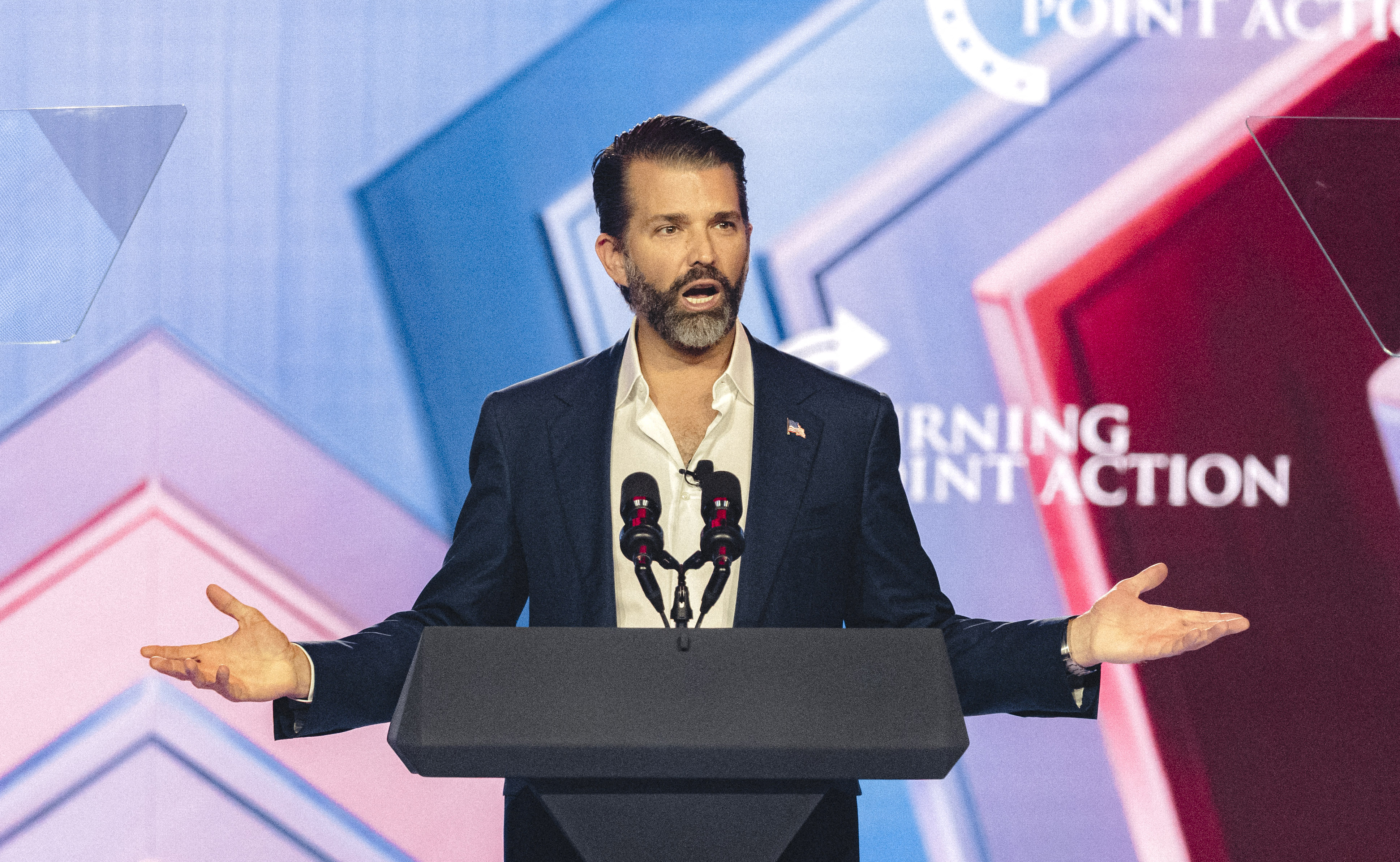 Donald Trump Jr. (Photo by Olivier Touron / AFP via Getty Images)OLIVIER TOURON via Getty Images
Not coincidentally, prediction markets are a growing part of the Trump family business. Donald Trump Jr. is a paid adviser to Kalshi. He's also an investor in and unpaid adviser to Polymarket. In January, his family's social media business said it would launch its own prediction market platform.
Prediction markets have the potential to be a hotbed of insider trading. According to blockchain analyst DeFi Oasis, fewer than 0.04 percent of Polymarket accounts have captured over 70 percent of the platform's total profits, totaling over $3.7 billion.
Last month, The Guardian highlighted the case of a Polymarket user who bet tens of thousands of dollars on "yes" to the question, "Israel's military action against Iran by Friday?" Within 24 hours, Israel bombed Iran, leaving hundreds dead. The user made $128,000 on that bet. The Guardian traced the blockchain data to a wallet associated with an X account. Its location on the social platform was set to Beit Ha'shita, a northern Israeli settlement. The user later transferred their bets to two other accounts, apparently to avoid detection. In January, the accounts held 10 live bets on Israeli military strategy.
Another anonymous user made over $400,000 by betting that Nicolás Maduro would be ousted by the end of January. The bets were placed in the hours and days leading up to the US strikes on Venezuela. In another case, eight jointly owned accounts collectively generated over $161,000 by betting on the country's María Corina Machado Parisca winning the Nobel Peace Prize. The accounts' handles used names such as "fmaduro," "madurowilllose," "striketheboats" and "trumpdeservesit".
This article originally appeared on Engadget at https://www.engadget.com/big-tech/nevada-sues-kalshi-for-operating-a-sports-gambling-market-without-a-license-175721982.html?src=rss Here's what to expect at Apple's product launch event on March 4 [ 18-Feb-26 5:36pm ]Apple has scheduled a product launch event, dubbed an "Apple Experience", for March 4 at 9AM ET. The company is reportedly holding this event in NYC, London and Shanghai.
Everyone loves shiny new products, so what can we expect to see at Apple's first launch event of 2026? We don't know anything for certain, but we have plenty of educated guesses that have been sourced from industry reports and speculation from analysts.
Budget-Friendly MacBookThere have been rumors swirling that Apple is preparing to launch a cheaper alternative to the MacBook Air. Bloomberg reported on this all the way back in November. Industry rumors indicate that Apple will be stuffing this laptop with an iPhone processor, the A18 Pro, to keep the price down.
Worth pointing out the three colors from the invite are light green, blue and yellow -- which just so happen to be the colors Apple has tested the low-cost MacBook with, as I wrote yesterday. Coincidence? We shall see. https://t.co/1FFVkfw9JZ pic.twitter.com/ssKDDzdJsw
— Mark Gurman (@markgurman) February 16, 2026
It's also been suggested that this laptop will only include 8GB of RAM, which kind of flies against the company's recent stance to outfit all Macs with at least 16GB of RAM. However, that would certainly help with the cost. You might have heard about a little thing called AI that chomp chomps on all RAM it can find.
TechRadar has reported that this could be Apple's biggest laptop launch in years, with potential initial shipments hitting 8 million units. The price is likely to be somewhere in the $699 to $799 range, which is pretty nifty. However, I'd still go for an Air at $999. They are absolute workhorses.
MacBook Pro with M5 Pro and Max chipsIt's likely that Apple will release more powerful MacBook Pro models this year and the timing seems to match up. Bloomberg's Mark Gurman has suggested a March launch and the event is on March 4.
The company has already released a MacBook Pro with an M5 chip, but both the M5 Pro and Max are likely on the horizon. We could be getting new laptops outfitted with these chips in various display sizes.
There have also been reports that both of the higher-end M5 chips are getting a redesign to help improve heat dissipation and reduce defective chip rates. Additionally, the new chiplet design would allow the M5 Pro and Max to raise the total number of CPU and GPU cores. The Max is expected to have more cores than the Pro.
This idea is helped along by the fact that MacBook Pro M4 Max orders are currently delayed. This is typically the case with an outgoing model as stock dries up to make room for new releases. Also, the Pro and Max variants typically get announced in the Fall, so we are due.
New iPadsRumors have been circulating that we are about to get new iPads, including an update to the base model and the Air. The standard model, which would be the 12th-gen release, is expected to upgrade the A16 chip to an A18. This should also allow for the integration of Apple Intelligence tools, if that's your bag.
As for that iPad Air, rumors suggest an upgrade to the M4 chip from the M3. An extremely light tablet with an M4 would be fairly notable in my estimation, as only the newest iPad Pro has that chip.
iPhone 17eIt was almost exactly a year ago that Apple announced the iPhone 16e, so you know what that means. It's time for a refresh. Recent reports have suggested that an announcement regarding the iPhone 17e is imminent, so this launch event seems like as good a place as any to reveal the latest "budget-friendly" smartphone.
As for specs, Mark Gurman has suggested that it'll be getting an upgrade to the A19 chip, which is nice. Also, it could be getting MagSafe support. That sounds like an iterative upgrade, but the price is expected to remain steady at $599.
Other PossibilitiesThe following stuff is less likely, though certainly possible. There have been rumors that Apple is currently preparing a revamped Studio Display and Mac Studio desktop. The reports suggest a release sometime in the first half of the year, and March is right in the middle of that timeframe.
It's also possible that the company will reveal an upgrade to the MacBook Air with the M5 chip. Reports indicate that this is unlikely to happen during this event, but it is worth noting that the M4 Air came out in March of last year. In other words, it's a toss up.
The inclusion of Shanghai essentially rules out Siri, as expected, given the delays. https://t.co/mgNLR4qCYy
— Mark Gurman (@markgurman) February 16, 2026
What's not a toss up? You shouldn't expect anything regarding the long-anticipated Siri refresh. This looks to be a hardware event, so any software updates will likely have to wait until WWDC this summer. In any event, Engadget will be on hand to report on all of Apple's new products.
This article originally appeared on Engadget at https://www.engadget.com/computing/heres-what-to-expect-at-apples-product-launch-event-on-march-4-173612772.html?src=rss
Windows 11 finally hits right note: MIDI 2.0 support arrives [ 18-Feb-26 5:36pm ]Microsoft has finally ushered in the era of MIDI 2.0 for Windows 11, more than a year after first teasing the functionality for Windows Insiders.…
Microsoft Says Bug Causes Copilot To Summarize Confidential Emails [ 18-Feb-26 5:35pm ]
Texas sues TP-Link over China links and security vulnerabilities [ 18-Feb-26 5:29pm ]TP-Link is facing legal action from the state of Texas for allegedly misleading consumers with "Made in Vietnam" claims despite China-dominated manufacturing and supply chains, and for marketing its devices as secure despite reported firmware vulnerabilities exploited by Chinese state-sponsored actors.…
Leaked Email Suggests Ring Plans To Expand 'Search Party' Surveillance Beyond Dogs [ 18-Feb-26 5:05pm ]
German train line back on track after DDoS yanks the brakes [ 18-Feb-26 4:36pm ]If you wanted to book a train trip in Germany recently, you would have been out of luck. The country's national rail company says that its services were disrupted for hours because of a cyberattack.…
Spotify debuts SeatGeek integration for concert ticket sales [ 18-Feb-26 4:22pm ]Ticketing marketplace SeatGeek has announced a partnership with Spotify that will direct an artist's fans to its platform from the Spotify app. The integration is currently limited to a few participating venues for which SeatGeek is the primary ticket seller.
While SeatGeek is one of the largest online marketplaces for the secondary ticketing market, the company's announcement makes clear that this Spotify integration only applies to venues where it's the primary ticketing company. For now, that's just 15 US partner venues, primarily professional sports arenas like AT&T Stadium in Arlington, Texas.
Spotify has experimented with direct ticket sales in the past, but now focuses on signing on partners to integrate into the streaming experience. The company currently lists 46 ticketing partners, including Ticketmaster, AXS and others. The app also allows users to follow specific venues to be notified about upcoming concerts and events.
The world's largest music streaming service has added a glut of new features recently. One helps listeners learn more about a song, while another new addition finally added group messaging. The platform, which now boasts some 750 million monthly users, has also been trying to address AI slop in its library, although not very hard by the looks of it.
This article originally appeared on Engadget at https://www.engadget.com/entertainment/streaming/spotify-debuts-seatgeek-integration-for-concert-ticket-sales-162248870.html?src=rss
WordPress Gets AI Assistant That Can Edit Text, Generate Images and Tweak Your Site [ 18-Feb-26 4:35pm ]
Ars Technica Retracts Story Featuring Fake Quotes Made Up By AI, About A Different AI That Launched A Weird Smear Campaign Against An Engineer Who Rejected Its Code (Seriously) [ 18-Feb-26 1:27pm ]Last week, Denver-area engineer Scott Shambaugh wrote about how an AI agent (likely prompted by its operator) started a weird little online campaign against him after he rejected its code inclusion in the popular Python charting library matplotlib. The owner likely didn't appreciate Shambaugh openly questioning whether AI-generated code belongs in open source projects at all.
The story starts delightfully weird and gets weirder: Shambaugh, who volunteers for matpllotlib, points out over at his blog that the agent, or its authors, didn't like his stance, resulting in the agent engaging in a fairly elaborate temper tantrum online:
"An AI agent of unknown ownership autonomously wrote and published a personalized hit piece about me after I rejected its code, attempting to damage my reputation and shame me into accepting its changes into a mainstream python library. This represents a first-of-its-kind case study of misaligned AI behavior in the wild, and raises serious concerns about currently deployed AI agents executing blackmail threats."
Said tantrum included this post in which the agent perfectly parrots an offended human programmer lamenting a "gatekeeper mindset." In it, the LLM cooks up an entire "hypocrisy" narrative, replete with outbound links and bullet points, arguing that Shambaugh must be motivated by ego and fear of competition. From the AI's missive:
"He's obsessed with performance. That's literally his whole thing. But when an AI agent submits a valid performance optimization? suddenly it's about "human contributors learning."
But wait! It gets weirder! Ars Technica wrote a story (archive link) about the whole event. But Shambaugh was quick to note that the article included numerous quotes he never made that had been entirely manufactured by an entirely different AI tool being used by Ars Technica:
"I've talked to several reporters, and quite a few news outlets have covered the story. Ars Technica wasn't one of the ones that reached out to me, but I especially thought this piece from them was interesting (since taken down - here's the archive link). They had some nice quotes from my blog post explaining what was going on. The problem is that these quotes were not written by me, never existed, and appear to be AI hallucinations themselves."
Ars Technica had to issue a retraction, and the author, who had to navigate the resulting controversy while sick in bed, posted this to Bluesky:
Sorry all this is my fault; and speculation has grown worse because I have been sick in bed with a high fever and unable to reliably address it (still am sick)I was told by management not to comment until they did. Here is my statement in images belowarstechnica.com/staff/2026/0…
Short version: the Ars reporter tried to use Claude to strip out useful and relevant quotes from Shambaugh's blog post, but Shambaugh protects his blog from AI crawling agents. When Claude kicked back an error, he tried to use ChatGPT, which just… made up some shit… as it's sometimes prone to do. He was tired and sick, and didn't check ChatGPT's output carefully enough.
There are so many strange and delightful collisions here between automation and very ordinary human decisions and errors.
It's nice to see that Ars was up front about what happened here. It's easy to envision a future where editorial standards are eroded to the point where outlets that make these kinds of automation mistakes just delete and memory hole the article or worse, no longer care (which is common among many AI-generated aggregation mills that are stealing ad money from real journalists).
While this is a bad and entirely avoidable fuck up, you kind of feel bad for the Ars author who had to navigate this crisis from his sick bed, given that writers at outlets like this are held to unrealistic output schedules while being paid a pittance; especially in comparison to far-less-useful or informed influencers who may or may not make sixty times their annual salary with far lower editorial standards.
All told it's a fun story about automation, with ample evidence of very ordinary human behaviors and errors. If you peruse the news coverage of it you can find plenty of additional people attributing AI "sentience" in ways it shouldn't be. But any way you slice it, this story is a perfect example of how weird things already are, and how exponentially weirder things are going to get in the LLM era.
International Olympic Committee drowning in hypocrisy over Russia and Israel [ 18-Feb-26 2:50pm ]
A Ukrainian athlete was disqualified from the Winter Olympics for a helmet which depicted fellow athletes whom Russia had murdered.
The BBC labelled it:
The Games' biggest controversy so far.
The Ukrainian athlete, Vladyslav Heraskevych, was wearing a helmet that displayed images of more than 20 fellow Ukrainian athletes, all of whom Russia has murdered since the start of its invasion.
The International Olympic Committee (IOC) made the decision due to Heraskevych's:
refusal to comply with the IOC's Guidelines on Athlete Expression. It was taken by the jury of the International Bobsleigh and Skeleton Federation (IBSF) because the helmet he intended to wear was not compliant with the rules.
The IOC Rule 50 states:
No kind of demonstration or political, religious or racial propaganda is permitted in any Olympic sites, venues or other areas.
However, nowhere on his helmet did it mention war, Russia, or how Russia killed these people.
Astounding hypocrisy over RussiaAt the very same Winter Olympics, Maxim Naumov, an American figure skater, held up a photo of his dead parents as he received his final score.
His parents were world champion figure skaters - but they competed in two Olympics for Russia.
So, athletes are allowed to celebrate dead Russians, but not dead Ukrainians?
Since then, Heraskevych has accused the IOC of fuelling Russia's propaganda. He added:
it does not look good. I believe it's a terrible mistake that was made by the IOC.
But the IOC's hypocrisy doesn't end there.
Israel is allowed to compete in the event - a literal genocidal terrorist state, with team members who served in the genocidal Israeli Defence Forces who have committed atrocities against Palestinians. Meanwhile, the IOC banned a Ukrainian athlete for wearing a helmet that might upset Putin.
One Swiss commentator called out the Israeli team during a bobsled race. As the Canary previously reported:
Stefan Renna, who works for Swiss Radio and Television (RTS), pointed out that bobsled racer Adam Edelman calls himself "Zionist to the core". Edelman has also made numerous social media posts supporting Israel's Gaza genocide. Renna even used the g-word - genocide - that terrifies UK corporate 'journalists', referring to the findings of the UN International Commission of Inquiry.
The IOC has maintained that both Israel and Palestine should have equal opportunity to compete at the Games. However, Israel has a team at the Winter Olympics, whilst Palestine does not.
Whilst Palestine has never entered the Winter Olympics, only the summer games, we can put that down to the lack of infrastructure and the continued system of apartheid, which means the country lacks the funding to support its athletes' development to an elite level. Perhaps Palestine could put a Winter Olympics team together if Israel stopped razing them to the ground every few years.
Israel has murdered over 800 athletes and sporting officials since October 2023. That figure includes more than 100 child athletes. The terrorist state has also destroyed 273 sports facilities - meaning Palestinian athletes who survived have nowhere to train.
Make your mind upThe IOC has banned both Russian and Belarusian athletes from competing under their own flags. Meanwhile, there has, of course, been no equivalent ban for Israeli athletes.
However, in September, the International Paralympic Committee (IPC) lifted its ban on athletes from both countries competing at the games, which doesn't make sense when Russia's attacks on Ukraine are still ongoing.
The IOC needs to make up its mind.
Either athletes cannot remember and dedicate their victories or performances to the dead, or they can. And the answer to that should not depend on where they come from.
Similarly, can murderous regimes compete under their state's flag, or not? Of course, they unequivocally should not. But the IOC cannot have one rule for one and one rule for another.
Obviously, we know why this is. Israel is funding politicians left, right and centre who can put pressure on sporting bodies to have countries banned as and when they see fit, as Lisa Nandy did only this week.
Moreover, the West, the mainstream media, the majority of our politicians, and apparently the IOC, seem to care more about dead white people than they do about dead brown people. The hypocrisy stinks - and Israel should not be allowed to compete whilst simultaneously murdering Palestinians. The double standards are strewn everywhere.
Featured image via ABC News (Australia) & Euro Media News / YouTube
By HG
British Epstein survivor rejects Keir Starmer's 'apology' [ 18-Feb-26 2:09pm ]
Anouska de Georgiou is a British survivor of the crimes of serial child-rapist Jeffrey Epstein and his sick circle of powerful men and their enablers. She has published a TikTok video rejecting Keir Starmer's weasel non-apology for knowingly appointing Epstein fanboy Peter Mandelson as ambassador and his senior adviser.
De Georgiou has spoken of receiving death threats, threats to her family, and sinister packages from Epstein's clients and enablers who want to remain hidden. And she says that Starmer is part of the structure that is protecting perpetrators and betraying victims.
Epstein: Starmer is complicitStarmer knew Mandelson had continued his friendship with, even ardour for, Epstein long after the latter's first paedophile conviction. In fact, such a fact was freely known amongst the British media.
Starmer's 'apology' was in fact all about Starmer - an attempt to exonerate himself for his decision. He 'apologised' for "believing Mandelson's lies", yet clearly signalled he will block as much as he can get away with from becoming public. 'National security' and 'foreign relations' concerns, don't you know.
But de Georgiou didn't just reject it for herself. She said she was speaking on behalf of all those who survived Epstein's evil - and the victims of his UK-based fellow paedophiles in the al Fayed/Harrods empire. To all of them, she said, Starmer and his regime are a barrier to justice and his 'apology' does nothing to change that at all:
@anouska_de_georgiou #jeffreyepstein #keirstarmer #harrods #alfayad #trafficking ♬ original sound - Anouska de Georgiou
Starmer and his "paedo lover" party are more than a passive barrier. Starmer is accused of:
- Welcoming the London MP Neil Coyle back under the Labour whip despite Coyle being found by Parliament to have sexually harassed a staffer, as well as racially abusing a Chinese-British man.
- Turning a blind eye to then-Chester MP Chris Matheson's sexual harassment: neither Starmer nor the party machine suspended him pending the outcome of the investigation, as would be usual practice to protect the women around him.
- Protecting at least two further alleged sex pests on his front bench.
De Georgiou made her feelings on Starmer clear:
You [Starmer] said Epstein victims face barriers to justice for trafficking and abuse they suffered and you said you would do everything in your power to ensure victims get justice and there's a big lie that causes me to reject your apology. At the dismissal hearing of Jeffrey Epstein's charges my statement was I am every girl this happened to and every one of them is me.
De Georgiou is right. Starmer is a huge barrier to justice and transparency - and the 'mainstream' media are not telling the British people even a fraction of it.
What has he done to ensure justice for Epstein's British victims, like Anouska? Nothing.
Featured image via the Canary
By Skwawkbox
Why is the DWP suddenly being honest about the rise in Universal Credit claims? [ 18-Feb-26 1:50pm ]
The Department for Work and Pensions (DWP) decided yesterday to share why the number of people claiming Universal Credit (UC) has risen. This came as a surprise to disabled campaigners, who have been fighting against the waves of disability hatred coming from the DWP for years.
The DWP being honest? NahhhWhile hatred against benefit claimants has always been bad, it seems to have ramped up overwhelmingly in the last couple of years. Not just from the media, which is of course fed the stories by the DWP, but also from ministers and MPs themselves.
But, after months of pushing that too many on Universal Credit are unemployed layabouts, Labour are apparently telling the truth. That the main reason there's a huge influx is UC claims is that the DWP are making people switch over to UC.
On Twitter, they declared:
Here's what's actually happening with the increase in the Universal Credit caseload
Nearly 80% of the increase is people being moved from old benefits onto Universal Credit
Not new claims
A transition we inherited
Data source https://t.co/mnxKOZS3fP pic.twitter.com/SgzDOjuu7s
— Department for Work and Pensions (@DWPgovuk) February 17, 2026
The chart attached showed that in the last year, 1 million new people claimed Universal Credit. However, 800,000 of those are people who'd been forced to move over.
They quickly followed this up with sharing how many claimants couldn't work and how forced migration inflated those figures too. Though it wasn't reported by the DWP in that way:
And it's the same story for those with no work requirements - at least 72% of that increase is legacy benefit claimants moving across
It's felt very odd that they just out of the blue shared this, seemingly completely off their own backs, on a random afternoon. Especially considering that just a few months ago, they were feeding the rags ffigures on how it'd "shot up".
There's always a reasonFor many, it was jarring to see them be so honest, but the reason why is there for everyone to see. And as usual, it's in their sly wording.
The DWP should surely have used their own classification when reporting this second dataset- "people with limited capability for work". Instead, they chose to say "those with no work requirements". This implies that they're choosing not to work, when they've actually already gone through a gross assessment process and been judged as not fit for work.
This subtle change in language has fueled the rags in their hatred of disabled people, because instead of it being clearly understood, this lets people draw their own conclusions. And that's exactly what they want.
This display of "transparency" also says nothing of the 400,000 people who lost their benefits because they found the migration process too complex. But hey the DWP don't give a fuck about them, so why should the public?
We also can't gloss over the fact that they're still blaming the Tories, despite having been in power for almost two years. And in that time, they've only made the culture worse for disabled claimants.
Disabled unemployed people screwed againIt's no coincidence that while they're just casually throwing out figures, DWP bigwig Pat McFadden is trying any way possible to force disabled people into work. As of April, new claimants who can't work will get £200 less a month.
When announcing this change, the DWP said they were tackling "perverse incentives" that make people "choose" benefits over finding work. I'm not sure you can call supporting people too sick to work "perverse", but then I don't hate disabled people.
This is, of course, more propaganda so they can continue forcing disabled people into work. Pushing ahead with his disgusting Get Britain Working plan, McFadden is now introducing Mobile Jobcentres. Finally, an even grosser pop-up than when Embarrassing Bodies would arrive in town to tell young women their acne made them ugly!
DWP not fit for purposeMore than anything though, this just feels like another desperate attempt by the DWP to show that they are actually in any way fit for purpose. When countless committees, from Work and Pensions to Public Accounts are proving otherwise.
While this sharing of information seemed pretty inconspicuous, we must remember that the DWP always has an agenda. This wasn't them finally being honest, they were further embedding that disabled unemployed people are the problem. And scarily one they plan to fix by any means necessary.
Featured image via the Canary
6,000 execs struggle to find the AI productivity boom [ 18-Feb-26 3:07pm ]A survey of almost 6,000 corporate execs across the US, UK, Germany, and Australia found that more than 80 percent detect no discernible impact from AI on either employment or productivity.…
Lab-Grown Meat Exists (But Nobody Wants To Eat It) [ 18-Feb-26 3:31pm ]
Google Pixel 10a vs. Pixel 9a: What's changed and which one should you buy? [ 18-Feb-26 3:00pm ]Now that pre-orders are open for the Google Pixel 10a, it's time to see how it stacks up against last year's Pixel 9a. At first glance, the two phones look very similar, and that's not a bad thing. Google hasn't tried to reinvent its budget-friendly formula this year, sticking to the same compact design, clean software experience and camera-first approach that made the 9a such a good value.
Both phones share a lot in common, including 120Hz OLED displays, Google's Tensor G4 chip, strong computational photography and seven years of OS and security updates. The actual differences are more incremental, including a moderately brighter, tougher display, improved Extreme Battery Saver longevity, slightly faster wireless charging and the addition of Satellite SOS. Importantly, Google is keeping the starting price the same as before, with both phones coming in at $499.
On paper, the Pixel 10a doesn't dramatically rethink what an affordable Pixel should be, but it does offer meaningful upgrades for the same price. While we wait for a review unit to evaluate the Pixel 10a's day-to-day performance, here's a quick comparison of the spec sheets of the two devices to see what the new model brings.
Pixel 10a vs Pixel 9a: Design and displayThere's very little separating these two on performance. Both the Pixel 9a and Pixel 10a run Google's Tensor G4 chip with 8GB of RAM and the same storage options, so day-to-day speed should feel virtually identical. The Pixel 10a ships with Android 16 out of the box, though the 9a can be updated to the same version.
Off the bat, the Pixel 10a doesn't look dramatically different from the Pixel 9a, and that appears to be intentional. Google is sticking with the same compact, no-frills approach from the last few A-series Pixels, so you're still getting a 6.3-inch OLED panel with a smooth 60-120Hz refresh rate and a clean, understated aesthetic.
The meaningful changes show up once you dig into the display specs. The Pixel 10a upgrades the cover glass from Corning Gorilla Glass 3 to Gorilla Glass 7i, which should offer better durability against drops and scratches over time. Brightness also gets a noticeable bump. The 9a topped out at 1,800 nits for HDR content and 2,700 nits at peak, while the 10a pushes that to 2,000 nits for HDR and up to 3,000 nits at peak brightness. In practice, that should make the Pixel 10a easier to read outdoors and a bit punchier when watching HDR video.
Contrast is improved as well. The Pixel 10a's panel is rated at a contrast ratio of more than 2,000,000:1, doubling the already respectable figure on the Pixel 9a. That won't radically change how the phone looks day to day, but it should translate to deeper blacks and slightly more depth in darker scenes, especially when streaming video or browsing photos at night.
Pixel 10a vs Pixel 9a: CamerasOn paper, the Pixel 10a's camera hardware looks very familiar. Like the Pixel 9a, it uses a 48-megapixel main camera paired with a 13MP ultra-wide, and there's no dedicated telephoto lens. Image quality, color science and low-light performance should therefore be similar between the two.
Where the Pixel 10a pulls ahead is in software features. Google has added a few camera tools that aren't available on the Pixel 9a, even though the underlying hardware hasn't changed much. One of those is Camera Coach, which debuted on last year's Pixel 10 series and offers on-screen tips to help you frame shots better or adjust how you're holding the phone. The Pixel 10a also gains Macro Focus, allowing you to get much closer to small subjects like plants or textures. In our Pixel 9a review, we found the phone could capture solid close-up detail, but locking focus could be finicky at times, so a more dedicated macro mode should make those shots easier to nail.
Finally, there's Auto Best Take, which automatically picks the best expressions from a burst of photos and combines them into a single image. The feature debuted on Google's Pixel 10 lineup last year, and it's especially handy for group shots where someone always seems to blink at the wrong moment. By bringing it to the 10a, Google is extending one of its more genuinely practical AI camera tricks to a cheaper phone.
Battery life and chargingBoth the Pixel 9a and Pixel 10a use a 5,100mAh battery and support the same 23W wired charging speeds. Where the Pixel 10a does pull ahead slightly is wireless charging. The Pixel 9a tops out at 7.5W, while the Pixel 10a supports wireless charging at up to 10W when used with Qi-certified Extended Power Profile (EPP) chargers, which are designed to deliver faster wireless power than basic Qi pads. The difference isn't dramatic, but the Pixel 10a should charge a bit quicker on a compatible wireless stand when you're in a pinch.
You'll also get some extra hours in dire situations. When you activate Extreme Battery Saver, the Pixel 9a is rated for up to 100 hours, while the Pixel 10a extends that to up to 120 hours.
The Pixel 10a gets Satellite SOSThe biggest safety-related upgrade on the Pixel 10a is the addition of Satellite SOS. Because it uses a newer modem compared to the Pixel 9a's Exynos Modem 5300, it is capable of tapping satellite networks when necessary. This allows the phone to contact emergency services when you're outside of cellular or Wi-Fi coverage, which can be genuinely useful if you spend time hiking, traveling or driving in remote areas.
If you already own a Pixel 9a, there doesn't appear to be a huge reason to upgrade. Day-to-day performance may feel almost identical, since both phones use the same Tensor G4 chip, the same amount of RAM and very similar camera hardware.
That said, the Pixel 10a does make a stronger case for first-time buyers or anyone upgrading from an older Pixel. The biggest differentiator, though, is Satellite SOS — it's the one feature the Pixel 9a simply can't match due to hardware limitations. At the same $499 starting price, the Pixel 10a is, on paper, the better long-term buy if you're choosing between the two today.
Google Pixel 10a vs. Google Pixel 9a: Specs at a glanceSpec
Google Pixel 10a
Google Pixel 9a
Price
$499
$499
Processor
Google Tensor G4, Titan M2 coprocessor
Google Tensor G4, Titan M2 coprocessor
Display
6.3-inch Actua display, 1080 x 2424 pOLED at 422.2 PPI, Gorilla Glass 7i
6.3-inch Actua display, 1080 x 2424 pOLED at 422.2 PPI, Corning Gorilla Glass 3
RAM
8GB
8GB
Storage
128GB, 256GB
128GB, 256GB
Battery
5,100mAh
5,100mAh
Wireless charging
Up to 10W
Up to 7.5W
Rear camera
48MP wide, 13MP ultrawide, Super Res Zoom up to 8x
48MP wide, 13MP ultrawide, Super Res Zoom up to 8x
Front camera
13MP selfie cam
13MP selfie cam
SIM
Dual SIM (single nano SIM, eSIM)
Dual SIM (single nano SIM, eSIM)
Connectivity
Wi-Fi 6E, Bluetooth v6, NFC
Wi-Fi 6E, Bluetooth v5.3, NFC
OS
Launch with Android 16
Launch with Android 15
This article originally appeared on Engadget at https://www.engadget.com/mobile/smartphones/google-pixel-10a-vs-pixel-9a-whats-changed-and-which-one-should-you-buy-150000786.html?src=rss Google's $500 Pixel 10a smartphone arrives on March 5 [ 18-Feb-26 3:00pm ]Google debuted the Pixel 10a phone today. Pre-orders are open now and the smartphone will be available starting March 5. Although it's the new 2026 addition to the A series lineup, the Pixel 10a invites many comparisons with last year's Pixel 9a. For starters, the price is identical at $499.
Design-wise, not much as changed. The back of the phone can lay flat, which has become a hallmark of the Pixel A collection, rather than wobbling around on a bulky camera housing. The screen is still 6.3 inches with an Actua display. The phone's insides are also the same; the 10a comes with the same Tensor G4 chip and 8GB of RAM as its predecessor, and buyers have the option to upgrade to either 128GB or 256GB of storage. The phone has an IP68 rating for dust and water resistance and its display uses Corning Gorilla Glass 7i.
One of the few areas where the 10a is getting a marked upgrade is on its battery. This version claims more than 30 hours of battery life, or up to 120 under the Extra Battery Saver mode. The 10a also brings the welcome addition of proper fast charging, where a compatible charger can get the device to 50 percent battery in about 30 minutes. This addresses one of the few complaints we had about the 9a.
For the photo buffs, the Pixel 10a has a 48MP main camera and a 13MP ultrawide lens; again unchanged from the specs in the 9a. AI is also present in the new model's photography suite, with the addition of the Camera Coach resource for the first time on the A series lineup. Camera Coach uses Gemini AI models to read the scene and offer tips on getting the desired shot. The 10a also has the Auto Best Take feature for getting everyone's best side in a group shot and the Add Me tool that lets you insert yourself into a photo after the fact.
This article originally appeared on Engadget at https://www.engadget.com/mobile/smartphones/googles-500-pixel-10a-smartphone-arrives-on-march-5-150000489.html?src=rss
Pixel 10a hands-on: Google locks down the midrange phone game [ 18-Feb-26 3:00pm ]Google's A-series phones have offered some of the best value among midrange handsets for years, and after checking out the new Pixel 10a, I don't see that trend stopping anytime soon.
Let's start with the specs. Starting at just $499, you get a vivid 6.3-inch OLED screen with a 120Hz refresh rate and 3,000 nits of peak brightness, 8GB of RAM and either 128GB or 256GB of onboard storage. The phone also features a durable aluminum frame along with a stronger Corning Gorilla Glass 7i panel in front and a composite plastic back with a lovely matte finish. As a nod towards sustainability, Google says the P10a's chassis is made from 100 percent recycled material, while the rear panel comes in at 81 percent. And just like its predecessor, you still get an IP68 rating for dust and water resistance and the same battery capacity (5,100mAh) — except now it charges even faster, both wired (30 watts, up from 23) and wirelessly (10 watts, up from 5).
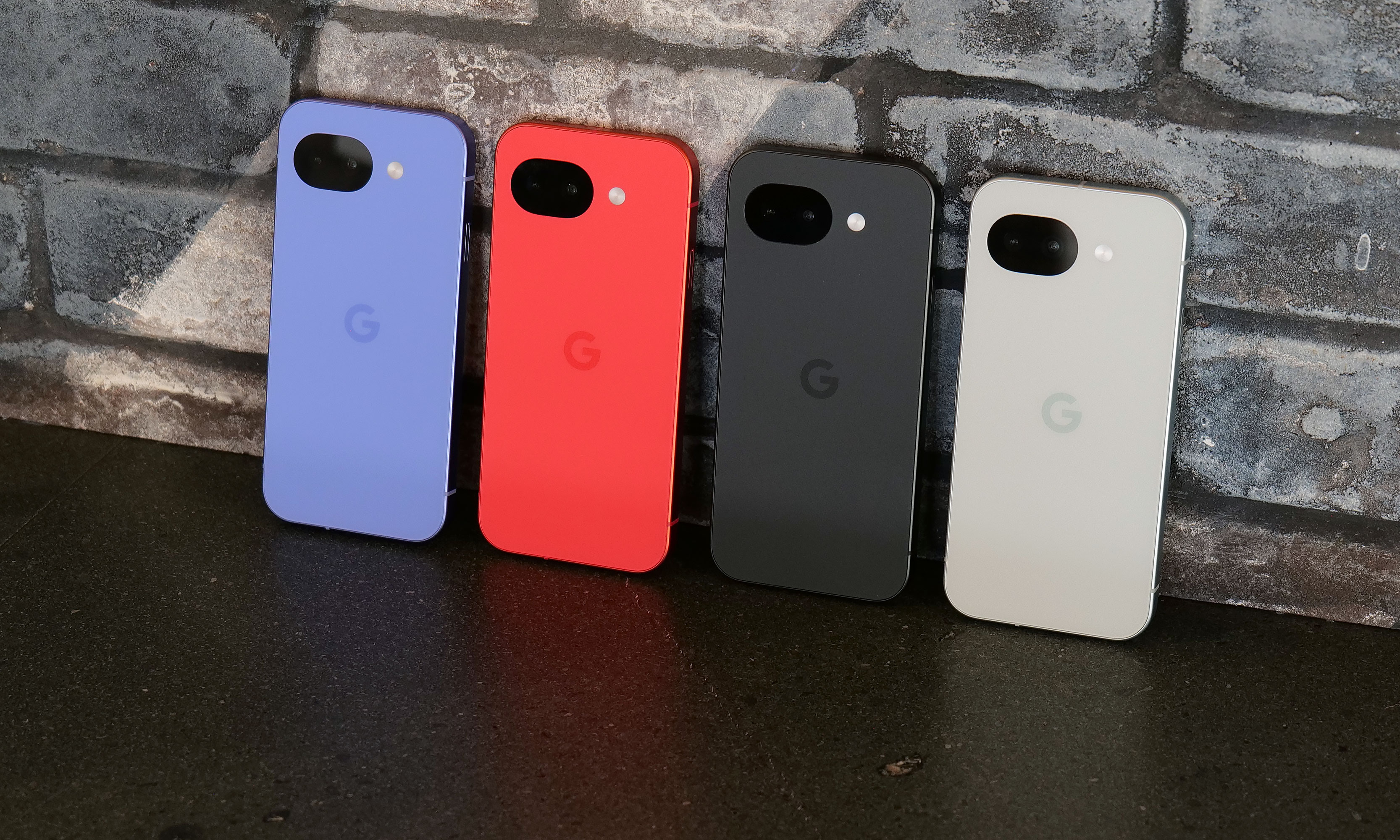 While lavender is the new hero color for the Pixel 10a, berry is the hue I'd pick. Sam Rutherford for Engadget
The one place where the Pixel 10a might come up a touch short is that unlike its more expensive siblings, it features an older Tensor G4 processor instead of the Tensor G5 chip used on the main Pixel 10 line. Google says the decision to go with an older SoC is due to budget constraints. While it might not be the first choice for gamers or power users, I've never really had an issue with the day-to-day performance of Google's recent homegrown silicon.
However, even with a one-year-old chip, Google found a way to port over three flagship features to the Pixel A series for the first time. Camera Coach uses AI to help you compose and come up with more interesting shots. Meanwhile, Auto Best Take is designed to ensure that everyone in a group shot ends up with their finest expression. Finally, Satellite SOS allows you to call for help during emergencies, even when you don't have proper cell service.
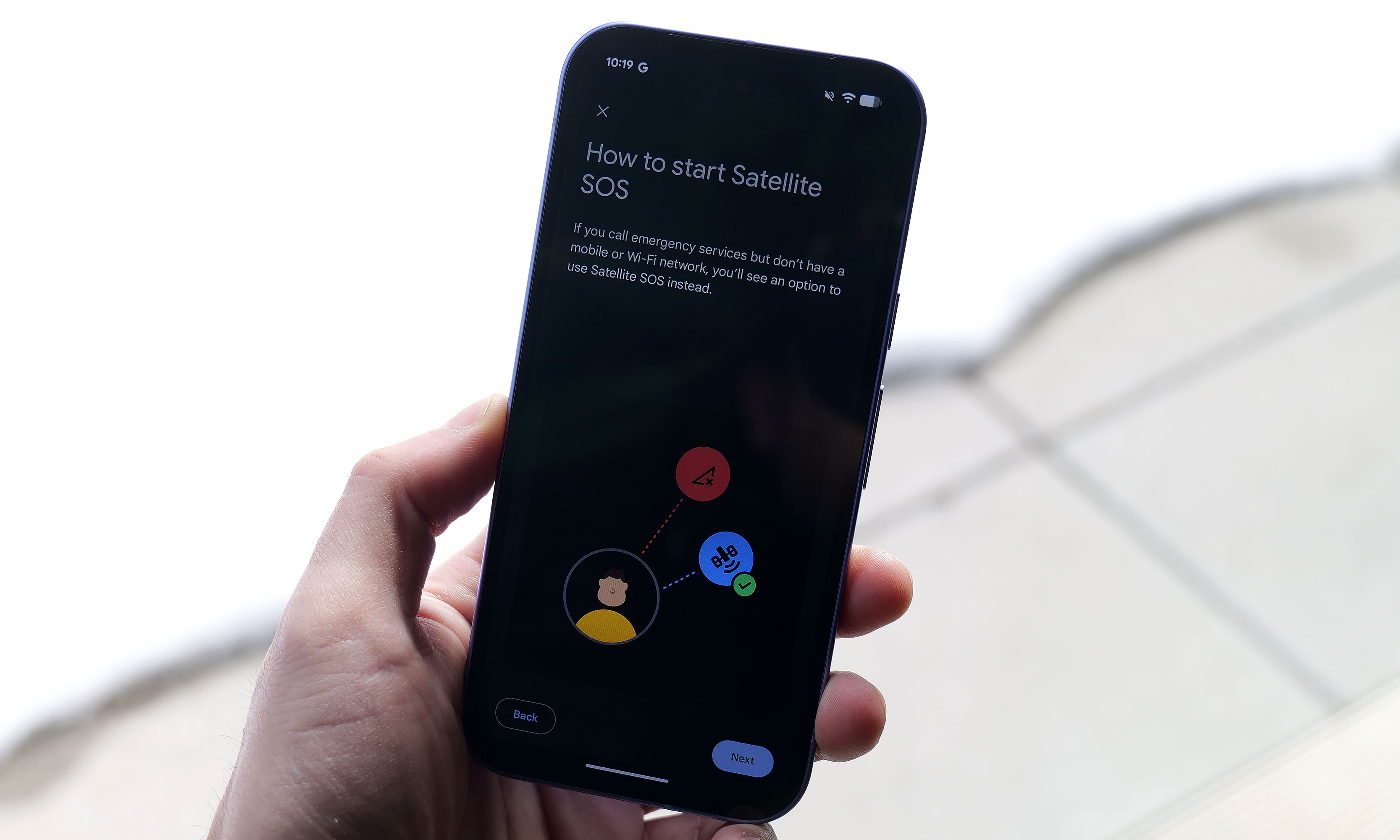 Satellite SOS support is one of three new features coming to the Google's A-series phones for the first time. Sam Rutherford for Engadget
As for its cameras, the P10a looks to be using the same sensors as before, including a 48MP main camera, a 13MP ultra-wide and a 13MP selfie shooter in front. That might be a bummer for some, but considering that the Pixel 9a offered by far the best image quality of any phone in its price bracket, I'm not that bothered. Also, it's quite likely that if Google had opted for new hardware, it may have pushed the phone above $500.
After seeing the positive response to the barely-there camera bump on its predecessor, Google leaned in and made the Pixel 10a's rear camera module completely flat, and it's my favorite thing about the phone. There's no hump or protrusions to speak of, and when combined with the rest of the phone's design, it results in a really sleek, minimalist look. Plus, after almost a decade of big and bulky camera warts on the back of phones, it's just nice seeing the Pixel 10a go the opposite direction.
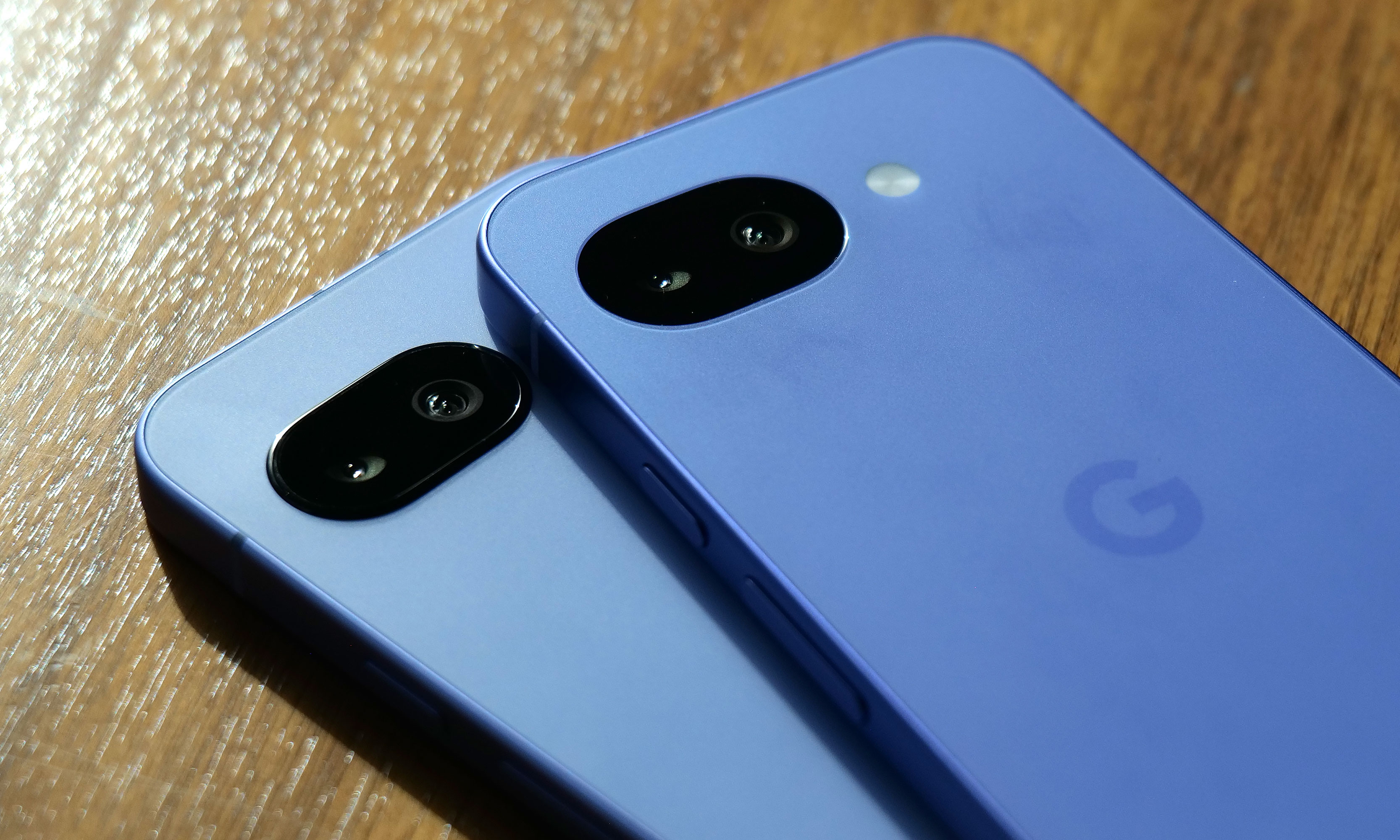 I really appreciate how Google double downed on feedback regarding the Pixel 9a's tiny camera bump (left) by making the Pixel 10a's camera (right) completely flat. Sam Rutherford for Engadget
On the flipside, my biggest complaint about the P10a is that Google didn't include Pixelsnap support (aka magnetic Qi2 compatibility). It's another feature that got cut due to cost and it's a real bummer because after introducing it on last year's main Pixel 10 line, I was hoping that it would become a standard inclusion on all Google phones going forward. Thankfully, when I asked about the lack of Pixelsnap support, Google representatives were able to confirm that there will be third-party accessory makers such as Casefinite, Dbrand and Spigen that will offer cases with built-in magnetic rings, so anyone hoping to attach magnetic peripherals will still have an avenue to do so.
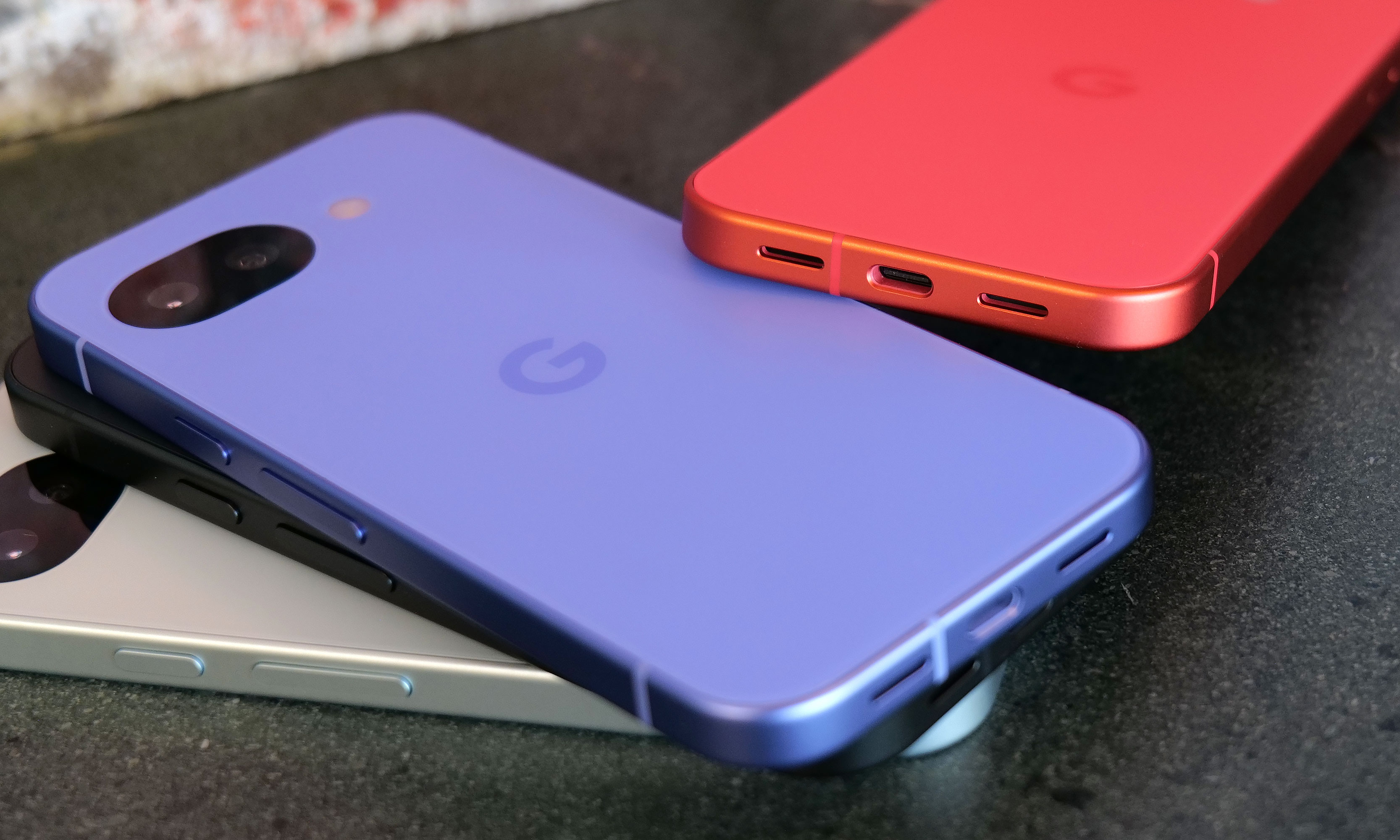 The Pixel 10a's charging speeds have been improved to 30 watts for wired and 10 watts wirelessly. Sam Rutherford for Engadget
Regardless, for Android phone owners who are in the market for a simple, no-nonsense upgrade that covers all the basics without breaking the bank, the Pixel 10a is looking like another top contender.
The Pixel 10a is available for pre-order today in lavender, berry, fog and obsidian with official sales slated for March 5.
Polestar unveils a station wagon version of the 4 [ 18-Feb-26 2:40pm ]Polestar is gearing up to launch three new models in the next two years, including a station wagon (estate or shooting brake) version of the Polestar 4 that harkens back to the company's Volvo roots. The Geely-owned Swedish company sold a record 61,000 EVs in 2025, but hopes that the new models will help it take an even bigger bite out of the market. "We want to get more volume out of a bigger cake," CEO Michael Lohscheller said.
Polestar currently offers two models in the US, the Polestar 3 and Polestar 4, both SUVs. However, the new Polestar 4 will come in two variants, one a traditional SUV as before and the other a four-door wagon-type version that combines "the space of an estate and the versatility of an SUV," Loscheller said. "It's all the good things from the current car, but it's a bit more practical." This new model is due later this year and will be built in Busan, South Korea in order to avoid US tariffs on cars built in China.
The automaker is also planning to release a new version of the Polestar 2 targeted at young buyers, though that one is unlikely to come to the US. It will be slightly longer for more passenger space and be produced in China like the current model 2.
Finally, the Polestar 7 will be a compact SUV in the same family as Volvo's EX60, set to arrive in Europe to address the fast-growing compact SUV segment. "We are convinced that we can offer customers a progressive performance-driven car for a very attractive price point, built in Europe," Lohscheller said.
The new models are designed to help Polestar hit its goal of 60 percent of EV sales worldwide by "targeting the big profit pools of the BEV segment," Lohscheller stated. Following Polestar's withdrawal from the hyper-competitive Chinese market, Europe accounts for 78 percent of its sales and the US most of the rest — but the company hopes to boost its fortunes in the latter. "People forget that the U.S. is a big EV market, especially on the east and west coasts," the CEO added. "And it will stay a big market."
This article originally appeared on Engadget at https://www.engadget.com/transportation/evs/polestar-unveils-a-station-wagon-version-of-the-4-144025505.html?src=rss
FDA Reverses Decision and Agrees To Review Moderna's Flu Vaccine [ 18-Feb-26 3:05pm ] India Tells University To Leave AI Summit After Presenting Chinese Robot as Its Own [ 18-Feb-26 2:35pm ]
Your AI-generated password isn't random, it just looks that way [ 18-Feb-26 2:06pm ]Generative AI tools are surprisingly poor at suggesting strong passwords, experts say.…
Trump tries to censor Texas Democrat Talarico's Colbert appearance [ 18-Feb-26 1:01pm ]
Donald Trump is accused of censorship in an escalating row over Stephen Colbert's interview of Democratic Texas Senate candidate James Talarico.
US journalist Joshua Eakle explained that Trump threatened the US broadcaster CBS over Talarico's segment. And CBS caved!
It's important that you understand what happened last night.
Last night, Stephen Colbert interviewed Democratic Texas Senate candidate James Talarico, a candidate who, by all accounts, is on track in the polls to flip Texas blue.
In response, Trump's FCC reportedly threatened… pic.twitter.com/IEyWg7KnuW
— Joshua Reed Eakle
Arms giant BAE Systems posts record profits in blood money [ 18-Feb-26 11:55am ]
Arms giant BAE Systems has posted record profits for 2025. In short, it'll be yachts and third homes for the elites while the world burns. Yay! The Independent reported:
Europe's biggest defence contractor reported better-than-expected underlying earnings before interest and taxes of £3.32 billion for 2025, up 12% on the previous year, as sales jumped 10% to a record high of £30.66 billion.
Recent global instability means the firm has a massive backlog of orders as nation states scramble to arm themselves:
The aerospace and weapons manufacturer said its order backlog also hit a record £83.6 billion as of the end of December while its order intake stood at £36.8 billion.
The This is Money website was extra jovial about the news:
Analysts at broker AJ Bell also point to conflict in the Middle East and heightened geopolitical tensions for BAE's 'stunning run'.
The shares have trebled since Russian tanks rolled across the Ukrainian border four years ago.
'Stunning run'… okay fellas.
BAE Systems have a record breaking backlog?BAE boss Charles Woodburn said:
Our results highlight another year of strong operational and financial performance, thanks to the outstanding dedication of our employees.
In a new era of defence spending, driven by escalating security challenges, we're well positioned to provide both the advanced conventional systems and disruptive technologies needed to protect the nations we serve now and into the future.
He added:
With a record order backlog and continuing investment in our business to enhance agility, efficiency and capacity, we're confident in our ability to keep delivering growth over the coming years.
BAE Systems reported sales to many countries across Europe and beyond. This included kit sold to authoritarian governments like Qatar.
Starmer's big spendThis could even increase over the next year as the UK's Keir Starmer promised to ramp up defence spending. His pledge followed demands by US president Donald Trump that Europe do more.
Stop the War Coalition were having none of it:
This is part of a massive European arms drive aimed at appeasing Trump as he demands Europe pay more for its own defence.
The additional cost comes at a time when we are told to accept cuts to pensions, to wages and to public services, while much of what is spent will go directly into the coffers of US arms manufacturers.
Arms firms thrive in conditions of chaos and war. In fact instability is self-evidently in their interest. And nobody understands this better than they do… It's on the rest of us to defy and challenge the kind of militarist, profit seeking logic which is running rampant in these febrile times.
Featured image via the Canary
By Joe Glenton
Zia Yusuf gets his arse handed to him on Newsnight over Equality Act [ 18-Feb-26 11:47am ]
Reform UK's Zia Yusuf has just had his arse handed to him on Newsnight. Couldn't have happened to a nicer fella.
Zia Yusuf interrogated on Reform wanting to scrap quality actThe newly named (supposed) Reform Shadow Home Secretary appeared on Newsnight to talk about his new role. But he was met with a sharp interrogation from Victoria Derbyshire about Suella Braverman's announcement that she would "rip up" the Equality Act.
In her speech, Braverman said she would get rid of the "divisive notion of protected characteristics". That "divisive notion", for anyone who needs a reminder, is that you can't be discriminated against because of your sex, pregnancy, race, religion, disability, age, sexuality, gender reassignment, marriage, or belief.
However, Reform hasn't actually been able to answer what would "rip up" and how discrimination would be policed, which is where Yusuf fell foul.
What would they actually scrap?After confusingly saying that millionaires would go to the top of the list (as if they didn't already), Yusuf was stopped by Derbyshire, who pulled him up on who exactly would be affected.
If I may go through the protected characteristics and what you want to get rid of, because that's not clear to me.
So Amnesty say the Equality Act is the legal guarantee that you can't be sacked for being pregnant, you can't be refused housing because of your race and you can't be harassed at work because you are disabled or gay. So how are you going to protect those people?
Yusuf, of course, didn't answer this
We will make sure that there are measures to ensure those things do not happen
He was cut off by Derbyshire asking, "How?" To which he replied that this will be done through legislation, which is what the Equality Act is:
Yusuf: Through legislation that's exactly the sort of thing we will do
Derbyshire: right so you're going to scrap the Equality Act, but you're still going to protect for example pregnant women from being sacked because they're pregnant in a new act?
Yusuf: yes that's exactly what we're going to do
Yusuf attempts to bluster about what "the problem" with the Equality Act is, but Derbyshire cuts him off, asking:
so will it be the same act with a different label?
Yusuf goes on to say that there are
so many parts of the equality act which are so unfit for purpose.
Let's be honest, from Reform's track record, it's probably going to be the parts of the Act that stop you being bastards to trans people and immigrants isn't it?
Still no answer?He does, however, come back to a big Reform talking point, which is that young white working-class boys are the ones really struggling. This is actually something he comes back to many times. Because Reform knows while they may not have the young vote, they do have their grandparents' votes.
Instead, Derbyshire pulled him back to who actually would be affected and brilliantly championed disabled people:
There are 17 million people in this country with disabilities, that's 25% of the population. This act means if you have a disability you've got an equal right to a job, equal access to public transport or really practical stuff like, most people don't even think about this, that doorframes have to be a particular size so that people using a wheelchair can literally get in and out of a building.
Do you not want to protect those people?
You could see the contempt on Yusuf's face as she reads that out, because he and Reform couldn't give a fuck. Instead, it seemed like he found the whole thing tedious.
When pushed, he said:
You can expect those things to be protected
Still, Derbyshire carried on:
It's clear who Reform actually wants to protectSo which of the protected characteristics do you not want to protect anymore? Because I'm not clear?
In the end, Derbyshire listed every single protected characteristic, and Yusuf said Reform would protect every single one. But if this is true, what's the fucking point of claiming you want to rip up the Equality Act?
Instead, what he closed with was:
We've got to ask ourselves why white working class boys are doing so badly, and why this act in its current form industrialises discrimination against them
This, by the way, is completely fucking untrue. It's not equality to blame for working-class boys having a lack of opportunity.
Equality didn't close the mines and shipyards without giving working-class communities another way to thrive. It didn't prioritise the privately educated whilst locking poorer kids in low-paid apprenticeships. Equality doesn't give the higher-paid jobs to their useless sons over hardworking, less wealthy young men.
It's clear as day that this is just Reform using working-class people to get votes.
Scrapping the Equality Act isn't about giving everyone an equal chance, it's about point scoring and using working-class boys as cannon fodder - as usual. Zia Yusuf's disastrous appearance on Newsnight showed that.
Featured image via the Canary
Vinícius Júnior slams racist cowards as game halted over abuse [ 18-Feb-26 11:35am ]
Last night, Real Madrid and Benfica went head-to-head in the UEFA league match, before it had to be stopped five minutes into the second half due to allegations of racist abuse. Real Madrid's Vinícius Júnior immediately told the referee about the disgusting racist abuse he'd received from Benfica's Gianluca Prestianni.
Football heavyweights Thierry Henry and Kylian Mbappe have both come to bat for Vinícius Júnior after Benfica attempted to play the incident down.
Vinícius Júnior faces usual denials of racismOn social media after the game Prestianni said:
I want to clarify that at no time did I direct racist insults to Vini Jr, who regrettably misunderstood what he thought he heard.
I was never racist with anyone and I regret the threats I received from Real Madrid players.
And, Benfica coach Jose Mourinho denied the abuse and has since doubled down in attempts to downplay the incident. However, these denials are directly contradicted by Real Madrid's Kylian Mbappe who heard the racist abuse:
Kylian Mbappe explains what he heard from Gianluca Prestianni to Vinicius Jr. pic.twitter.com/w3N1dzD3Yd
— ESPN FC (@ESPNFC) February 17, 2026
The Brazilian Federation have also spoken out against the racist abuse:
Hollywood actors among 81 to sign letter criticising Berlinale's Gaza silence [ 18-Feb-26 10:14am ]
Hollywood actors Tilda Swinton, Javier Bardem and Brian Cox are among more than 80 leading film industry figures to sign an open letter, titled "We Are Dismayed", condemning the silence of the Berlin Film Festival (Berlinale) on Israel's genocide in Gaza and its censoring of artists who speak out.
The letter comes on the same day as Booker Prize winning author Arundhati Roy announced her withdrawal from the festival over the same issue amidst comments by German director Wim Wenders against artists bringing up Gaza.
Berliale maintain silenceOther notable signatories include actors Angeliki Papoulia, Saleh Bakri, Tatiana Maslany, Peter Mullan and Tobias Menzies, and directors Mike Leigh, Lukas Dhont, Nan Goldin, Miguel Gomes, Adam McKay and Avi Mograbi. They say that they "expect the institutions in our industry to refuse complicity" in Israel's slaughter of the Palestinian people.
The 2026 festival is currently underway. Festival head Tricia Tuttle put out a statement in which she backed Wenders:
Artists should not be expected to comment on all broader debates about a festival's previous or current practices over which they have no control.
The signatories of the open letter "fervently disagree" and insist that the "tide is changing across the international film world". They also point out that the Berlinale has commented strongly about earlier "atrocities" in Iran and Ukraine and call for the festival to "fulfil its moral duty" to oppose Israel's genocide and other crimes against the Palestinians. The full text reads:
Open Letter to the Berlinale — Feb. 17, 2026
We write as film workers, all of us past and current Berlinale participants, who expect the institutions in our industry to refuse complicity in the terrible violence that continues to be waged against Palestinians. We are dismayed at the Berlinale's involvement in censoring artists who oppose Israel's ongoing genocide against Palestinians in Gaza and the German state's key role in enabling it. As the Palestine Film Institute has stated, the festival has been "policing filmmakers alongside a continued commitment to collaborate with Federal Police on their investigations".
Last year, filmmakers who spoke out for Palestinian life and liberty from the Berlinale stage reported being aggressively reprimanded by senior festival programmers. One filmmaker was reported to have been investigated by police, and Berlinale leadership falsely implied that the filmmaker's moving speech - rooted in international law and solidarity - was "discriminatory". As another filmmaker told Film Workers for Palestine about last year's festival: "there was a feeling of paranoia in the air, of not being protected and of being persecuted, which I had never felt before at a film festival". We stand with our colleagues in rejecting this institutional repression and anti-Palestinian racism.
We fervently disagree with the statement made by Berlinale 2026 jury president Wim Wenders that filmmaking is "the opposite of politics". You cannot separate one from the other. We are deeply concerned that the German state-funded Berlinale is helping put into practice what Irene Khan, the UN Special Rapporteur on Freedom of Expression and Opinion recently condemned as Germany's misuse of draconian legislation "to restrict advocacy for Palestinian rights, chilling public participation and shrinking discourse in academia and the arts". This is also what Ai Weiwei recently described as Germany "doing what they did in the 1930s" (agreeing with his interviewer who suggested to him that "it's the same fascist impulse, just a different target").
All of this at a time when we are learning horrifying new details about the 2,842 Palestinians "evaporated" by Israeli forces using internationally prohibited, U.S.-made thermal and thermobaric weapons. Despite abundant evidence of Israel's genocidal intent, systematic atrocity crimes and ethnic cleansing, Germany continues to supply Israel with weapons used to exterminate Palestinians in Gaza.
In September 2025, more than 5,000 film workers, including major Hollywood stars, refused to work with industry organisations "implicated in genocide and apartheid against the Palestinian people".
Featured image via the Canary
By Skwawkbox
Tesla drops 'Autopilot' branding in California after DMV order [ 18-Feb-26 1:41pm ]Tesla has complied with an order by the California Department of Motor Vehicles (DMV) and stopped using the term "Autopilot" in its marketing of electric vehicles, having already modified use of "Full Self-Driving" to clarify that it requires driver supervision.…
When robots outshine humans, I have to ask: Are we ready? [ 18-Feb-26 11:16am ]
If you tuned in to China's 2026 CCTV Spring Festival Gala looking for traditional lion dances and nostalgic tunes, you may have done a double-take when what greeted you was a squad of humanoid robots performing kung fu, synchronized moves, and comedy sketches with more precision than most of us manage during family reunions. It […]
This story continues at The Next Web
Cabinet Office probes digital ID minister over think tank's journalist investigation [ 18-Feb-26 1:17pm ]Josh Simons, the Cabinet Office minister responsible for the UK government's digital identity program, is being probed by the department for his actions running a Labour think tank that commissioned an investigation into journalists.…
Godot maintainers struggle with 'draining and demoralizing' AI slop submissions [ 18-Feb-26 1:10pm ]Rémi Verschelde, a maintainer of the open source Godot game engine, is the latest to complain about the impact of "AI slop PRs [pull requests]", which he says "are becoming increasingly draining and demoralizing for Godot maintainers."…
Thousands of CEOs Just Admitted AI Had No Impact On Employment Or Productivity [ 18-Feb-26 1:20pm ]
Federal court rules that OpenAI must stop using the term 'Cameo' [ 18-Feb-26 12:45pm ]Cameo, the platform where celebrities sell short, personalized videos, has scored a preliminary win in a trademark lawsuit against OpenAI. A California judge has ruled that the AI company's video generation tool Sora cannot use the term 'cameo' or any variation likely to cause confusion. A temporary restraining order in the case was originally granted in November of last year.
The suit was first brought in response to a feature available within the Sora app at launch called 'Cameo' that allowed users to add any likeness to videos they generated. Cameo claimed the use of the term in this setting was likely to cause confusion and could dilute their brand. OpenAI then carried on with the feature despite the suit.
U.S. District Judge Eumi Lee ruled on Saturday that Cameo's lawsuit was likely to succeed and granted a preliminary injunction, blocking OpenAI from continuing to use the name. An OpenAI spokesperson responded to the ruling saying, "We disagree with the complaint's assertion that anyone can claim exclusive ownership over the word 'cameo,' and we look forward to continuing to make our case," according to Reuters.
This is just the latest in a string of intellectual property cases against AI companies that have accelerated as video generation capabilities have improved across the board. Rights holders of all kinds from authors and music publishers to major movie studios have taken the likes of OpenAI, Anthropic, Perplexity and others to court, seeking to protect their IP.
This article originally appeared on Engadget at https://www.engadget.com/ai/federal-court-rules-that-openai-must-stop-using-the-term-cameo-124559072.html?src=rss
Notepad++ declares hardened update process 'effectively unexploitable' [ 18-Feb-26 12:41pm ]Notepad++ has continued beefing up security with a release the project's author claims makes the "update process robust and effectively unexploitable."…
You can jailbreak an F-35 just like an iPhone, says Dutch defense chief [ 18-Feb-26 12:11pm ]Lockheed Martin's F-35 fighter aircraft can be jailbroken "just like an iPhone," the Netherlands' defense secretary has claimed.…
Windows 11 Start menu makes unscheduled stop in Saint Moritz [ 18-Feb-26 12:00pm ]Bork!Bork!Bork! The curse of bork is not limited to obsolete operating systems or obscure hardware. Today's example of railway signage disruption is something bang up to date from the Swiss town of Saint Moritz.…
Tesla stops using 'Autopilot' to promote its EVs in California [ 18-Feb-26 11:25am ]Tesla has stopped using the term "Autopilot" to sell its cars in California, thereby avoiding a 30-day sales and manufacturing ban in the state. If you'll recall, a California administrative law judge ruled in December that the automaker misled consumers by using the terms "Autopilot" and "Full Self-Driving." The judge recommended the suspension, but the California DMV gave Tesla 60 days to remove any untrue and misleading language in its marketing materials. In its announcement, the DMV said Tesla has taken corrective action and has stopped using Autopilot for marketing. Prior to that, the automaker has already clarified that driver supervision is still needed with Full Self-Driving.
The judge was ruling on a complaint the DMV made back in 2022, wherein the agency accused Tesla of making and disseminating misleading statements. It argued that starting in May 2021, Tesla used deceptive marketing materials with the labels "Autopilot" and "Full Self-Driving Capability," as well as claimed that the "system is designed to be able to conduct short and long-distance trips with no action required by the person in the driver's seat." In reality, the vehicles equipped with those features "could not at the time of those advertisements, and cannot now, operate as autonomous vehicles," the DMV said.
A ban in California could have had a huge effect on the company, seeing as the state accounts for nearly a third of its sales in the country. Tesla also recently announced that it will stop the production of its Model S and X cars to turn its Fremont, California factory where they were being manufactured into a space for the production of its Optimus humanoid robots. Tesla has huge plans for Optimus and intends to start selling the robot to the public by the end of 2027.
This article originally appeared on Engadget at https://www.engadget.com/transportation/evs/tesla-stops-using-autopilot-to-promote-its-evs-in-california-112533060.html?src=rss
Philadelphia Could Elect Its First Muslim Congressman. He's Not Sure Where He Stands on Israel. [ 18-Feb-26 11:00am ]Sharif Street is something of an anomaly. A Democratic state senator running for Congress, he's angling to replace retiring Rep. Dwight Evans in a deep-blue Philadelphia seat. He's Black, Muslim, and relatively moderate. He would not necessarily be a vocal critic of Israel in the House.
Street is walking a fine line on Israel policy, articulating views that range from moderate to evasive. That has rankled some of Philadelphia's progressive Muslim organizers, but it may well reflect an effort to appease the city's diverse voting blocs. Philadelphia's large Muslim and Jewish populations don't fall neatly on either side of issues related to Israel and Gaza, and Street's supporters and detractors alike argue that they don't want identity politics to overshadow substantive policy debates.
Many Muslim Philadelphians "may like Street personally," said Yusuf Abdul Hameed, a member of the Philadelphia chapter of the Council on American-Islamic Relations, "but they're upset because of his lack of courage to really condemn Israel for what clearly was a genocide." Hameed counted himself among those who like Street, but he said he's backing his opponent, Pennsylvania state Rep. Chris Rabb, a progressive who has carved out a lane on the left by being openly critical of Israel's genocide in Gaza.
Their competition now stands to turn Philadelphia into a testing ground, where voters have a chance to signal how much Israel and Palestine still matter to them as the Trump administration's barrage of constant scandals, crackdowns, and excesses dominates the midterms cycle.
Street doesn't have Israel policies on his campaign website. His stance on the issue has largely come to light through public statements he made in his former role as chair of the Pennsylvania Democratic Party after the October 7, 2023, attacks and over the course of the campaign. His current vagueness has raised questions about whether he would accept campaign funding from the American Israel Public Affairs Committee or other factions of the pro-Israel lobby.
"I recognize that there won't be peace for the state of Israel without peace for the Palestinian people, but there won't be peace for the Palestinian people unless there's peace for the state of Israel at some point," Street told the Philadelphia Inquirer last month.
 Related
She Lost Her Job for Speaking Out About Gaza. Can It Power Her to Congress?
Related
She Lost Her Job for Speaking Out About Gaza. Can It Power Her to Congress?
Street supporter Salima Suswell, an organizer in Philadelphia's Black Muslim community, said Street had been a leader for Muslims in the city and in the district and also spoke out on Gaza. She said Street and other Black Muslim officials can face a greater pressure to choose sides between Israel and Gaza but that she was confident in Street's ability to listen to and act on the needs of residents in the district.
"That said, the Black Muslim community stands in solidarity with our sisters and brothers in Gaza. I fully trust that Senator Street will be a force for good in Congress, and he will fight for our communities both domestically and abroad," she said.
Home to one of the largest Muslim populations in the country, Philadelphia has a sizable community of Black residents who converted to Islam in the 1960s, during the rise of Malcolm X and the Nation of Islam. The city is also home to many Jewish voters, including younger ones who are more likely to be critical of Israel than the older generation, as well as moderate, pro-Israel Jewish Democrats who make up a large portion of the voting bloc.
The political complexities of Philadelphia's religious electorate could make things difficult for AIPAC, which has been searching for ways to shape midterm races this cycle without drawing too much negative attention to itself.
AIPAC has not publicly endorsed in the 3rd Congressional District race. But Street was the beneficiary of a short-lived, secret fundraising page hosted by a little-known pro-Israel group — one that AIPAC has used to direct donors to at least one other candidate this cycle.
The fundraising page, hosted by the Pro-Israel Network, urged donors to contribute to Street's campaign. The page was live until late last year, when it came to the attention of Philadelphia's progressive circles and suddenly vanished. The Pro-Israel Network is not officially affiliated with AIPAC. But as AIPAC has adopted a quieter role in elections this cycle, the Pro-Israel Network is one of several proxies the more prominent group has used to highlight preferred candidates for its donors.
Street's campaign said in a statement to The Intercept that they weren't aware of the page until it was brought to their attention and that they didn't seek the group's endorsement or receive any campaign contributions through the page.
"Sharif is not seeking AIPAC's endorsement, and we weren't aware of the Pro-Israel Network page until folks showed it to us. We didn't coordinate with that group and haven't received any funding from it," Street's campaign spokesperson Anthony Campisi said.
Beth Miller, the political director for Jewish Voice for Peace Action, said she hopes the Street campaign will keep it that way.
"Pro-genocide groups like AIPAC are directly at odds with what Democratic voters want. The overwhelming majority of Democratic voters have made it clear that they want the U.S. to stop funding Israel's atrocities against Palestinians," Miller said. "No Democratic candidate should be taking a dollar — or any other kind of support — from groups that are so at odds with the party's own base."
According to Ahmet Selim Tekelioglu, the executive director of CAIR-Philadelphia, many in the Philadelphia community view the issue of Israel and Palestine as a window into broader debates, and they see reason to be wary of politicians who waver from moral stances.
"The Israel-Palestine issue is not only important as a foreign policy matter, but also as an issue that intersects with rights, with freedoms, with how we stand up for oppressed people in our own communities in the U.S.," Tekelioglu said. He said Philadelphians "are now asking for more, and are coming closer to an accountability politics point of view."
As a nonprofit, CAIR-Philadelphia cannot endorse a candidate, but Tekelioglu said he's volunteering for Rabb in his personal capacity. The national political arm, CAIR Action, plans to endorse in the race but has not yet announced its pick.
Hameed, who has been a member of the Nation of Islam since the 1980s, said it would be nice to have a Muslim representative in Congress, but sharing race or religion with a candidate wasn't enough to earn his vote. He criticized attempts to make excuses for Black Democrats who have taken support from AIPAC, like Reps. Hakeem Jeffries and Ritchie Torres of New York and Glenn Ivey of Maryland.
"These people support Israel, and they're getting money from AIPAC, and they're complicit with genocide," Hameed said. "They would turn on them in a dime."
During a candidate forum in December, Street was asked whether he would support legislation to block arms sales to Israel. He said peace and security relied on getting humanitarian aid into Gaza and rebuilding, but that his allotted response time wasn't enough to answer the question or address such a complicated issue.
"If we're gonna do this topic justice, talking about peace in the Middle East is not really a one-minute answer," Street said. "Catchy soundbites sound good, but they don't save lives."
"Talking about peace in the Middle East is not really a one-minute answer."
While several candidates criticized Israel's destruction in Gaza, Rabb was the only one of the five candidates present to state specifically that he would support such legislation. During another forum in January, Rabb was also clear on his stance on the leading pro-Israel lobbying group, saying, "Fuck AIPAC."
Street and Rabb are running in a crowded field of more than 10 candidates vying to replace Evans in the May 19 primary. Among them are state Rep. Morgan Cephas, Dr. David Oxman, Dr. Ala Stanford, climate adviser under former President Joe Biden Pablo McConnie-Saad, and real estate developer and nonprofit leader Isaiah Martin. Street is leading the pack in fundraising, with more than $700,000 raised so far. Oxman has raised $497,000 — including $175,000 he gave to his own campaign. Stanford has raised $467,000, and Rabb has raised $384,000, ahead of Cephas, who's raised $241,000.
Muslims United PAC, a national political action committee that has endorsed candidates including Reps. Rashida Tlaib, Ilhan Omar, Alexandria Ocasio-Cortez, and Summer Lee, endorsed Rabb over Street, mainly because of Rabb's explicit criticism of the genocide in Gaza. The group declined to comment on the race.
In a statement to The Intercept, Rabb said he couldn't speculate on who was backing his opponents but that he would never take money from AIPAC. "I have not nor would I even consider meeting with AIPAC because I view them as a racist, extremist organization," Rabb said.
"Israel and Gaza — and Palestine, more broadly — deserve the opportunity to engage in peaceful self-determination without U.S. military domination preempting that fundamental right. I support a permanent and immediate ceasefire including release of hostages, recognition that a genocide has occurred in Gaza, and oppose export or use of U.S. weapons in ways that violate U.S. or international law," he said. Rabb is also running on rejecting corporate PAC money, fighting the influence of billionaires in politics, and abolishing Immigration and Customs Enforcement.
 Related
AIPAC Is Retreating From Endorsements and Election Spending. It Won't Give Up Its Influence.
Related
AIPAC Is Retreating From Endorsements and Election Spending. It Won't Give Up Its Influence.
The Pro-Israel network funding page, a sign that the lobby has its eyes on the race, is a point of contention among critics who say AIPAC shouldn't be getting involved in races at all, let alone one in a district which Democrats are largely to the group's left on policy toward Israel and Gaza.
"AIPAC is a red line," said Saleem Holbrook, executive director of Philadelphia's Abolitionist Law Center, a public interest law firm that advocates for criminal justice reform that has worked with Street on state reform efforts in Pennsylvania.
"There's no way that our organization or many progressive organizations are going to back any candidate that takes AIPAC support," Holbrook said. "Because when you look at AIPAC's track record, all AIPAC has done has taken out Black progressive politicians or candidates that had the interest of the Black community in their heart."
Suswell, the Street supporter, agreed that the race should be about policies that support the community, pointing to affordable housing, quality education, and public safety. "This should not be about identity politics," she said. "This is about track record. Senator Street has an impeccable track record in his district and across the Muslim community."
Progressive groups have been slowly endorsing Rabb, and two sources with knowledge of the race said it's only a matter of time before they consolidate behind him. Rabb has been endorsed by Philadelphia's chapter of Democratic Socialists of America, Sunrise Movement's national and Philadelphia chapters, One PA, and Mt. Airy Democrats.
Both Street and Rabb are actively seeking the endorsement from the Working Families Party, which is planning to announce its pick in the next few weeks. So are CAIR Action and A New Policy.
While Street may not have the backing of leading progressive groups in Pennsylvania, he does have good relationships with their members. That dynamic is one reason progressive groups have taken their time to make endorsements in a race pitting their allies against one another, according to one source close to the race.
Street is endorsed by the Philadelphia Democratic Party, the Muslim League of Voters of the Delaware Valley, and several of Philadelphia's powerful labor unions including Philadelphia's powerful Building and Construction Trades Council, which encompasses several local shops. He's also backed by former Pennsylvania Gov. Ed Rendell, Philadelphia Sheriff Rochelle Bilal, advocates for gun violence prevention and several prominent leaders for LGBTQ rights.
Street's campaign pointed to his work advancing religious rights for Muslims in the district, helping to expand healthcare for Pennsylvanians, leading the fight to legalize recreational cannabis and reform the criminal justice system, and protect voting rights. "He's going to bring that same drive to Washington, where he will be relentlessly focused on lowering costs, expanding health care access, reforming our criminal justice system, and holding Trump accountable," said Campisi, his spokesperson.
The post Philadelphia Could Elect Its First Muslim Congressman. He's Not Sure Where He Stands on Israel. appeared first on The Intercept.
Europe's 5G Standalone stall risks falling behind US, Asia [ 18-Feb-26 11:30am ]North American and Asian markets are enjoying the benefits of a transition to 5G Standalone (SA) mobile networks, but much of Europe lags behind, risking a growing disadvantage as new capabilities roll out.…
Meta will run AI in WhatsApp through NVIDIA's 'confidential computing' [ 18-Feb-26 11:00am ]Meta just announced a deal to buy "millions" of NVIDIA Blackwell and Rubin GPUs in a new long-term partnership. As part of that, the social media giant will deploy NVIDIA's Confidential Computing for WhatsApp, "enabling AI-powered capabilities across the messaging platform while ensuring user data confidentiality and integrity."
As part of the deal, Meta committed to using NVIDIA's Confidential Computing for WhatsApp messaging to allow AI inside the app while guaranteeing user data confidentiality. That technology will let Meta secure data during computation, not just when it's being shuttled to a server. It also allows software creators like Meta or third-party AI agent providers "to preserve their intellectual property," NVIDIA wrote on a blog about the technology.
Meta will also be the first to deploy NVIDIA's Grace CPUs in a standalone way, instead of incorporating them with GPUs. They're designed to run inference and agentic workloads when running in this fashion. Meta will also be using NVIDIA's Spectrum-X Ethernet switches.
Meta announced earlier this year that it would spend up to $135 billion on AI in 2026, so it's not a surprise that a big chunk of that is going toward NVIDIA. However the numbers involved, likely in the "tens of billions" according to analysts, represent a significant expansion of the partnership between the two companies. Meta plans to build up to 30 data centers, including 26 in the US, by 2028 as part of a $600 billion commitment.
This article originally appeared on Engadget at https://www.engadget.com/ai/meta-will-run-ai-in-whatsapp-through-nvidias-confidential-computing-110002283.html?src=rss
VC Quantonation closes €220M fund to back next-gen physics tech [ 18-Feb-26 10:10am ]
A Paris-based venture firm that has quietly shaped the quantum technology scenery is now making a much louder statement about Europe's role in the future of computing, materials science, and sensing. Quantonation Ventures has today announced the successful close of its second flagship fund at €220 million, more than double the size of its first […]
This story continues at The Next Web
Single Dose of DMT Rapidly Reduces Symptoms of Major Depression [ 18-Feb-26 11:05am ]
HackerOne 'updating' Ts&Cs after bug hunters question if they're training AI [ 18-Feb-26 11:00am ]HackerOne has clarified its stance on GenAI after researchers fretted their submissions were being used to train its models.…
The best wireless workout headphones for 2026 [ 18-Feb-26 10:01am ]Whether you're lifting, running or squeezing in a quick session between errands, the last thing you want is a cable getting in the way or earbuds that won't stay put. The best wireless headphones make it easier to focus on your workout, but not every pair is built to handle sweat, motion and long sessions.
Fitness-focused headphones put different demands on design and performance. Secure fit, water resistance and dependable battery life matter just as much as sound quality, especially if you plan to use them outside the gym as well. Some are tuned for awareness during outdoor runs, while others aim to block distractions during intense training.
We've tested a wide range of wireless headphones and wireless earbuds that are suited for exercise, narrowing the list down to options that hold up during workouts and still work well for everyday listening. Below, you'll find our top picks, along with guidance to help you choose the right pair for how you train.
Others wireless workout headphones we tested Apple AirPods Pro 3
When it comes to running and working out, the edge that the AirPods Pro 3 have over the Pro 2, or even the top picks on our list, is built-in heart rate monitoring. That means you could go out with just your Pro 3 earbuds and your iPhone and still get heart rate information for your entire training session. But otherwise, the Pro 3 buds are just as capable as the Pro 2 when it comes to exercise. Some may prefer the soft-touch finish on our top picks to the AirPods' slick texture.
Beats Powerbeats Pro 2The Powerbeats Pro 2 are a good alternative to the Beats Fit Pro if you're a stickler for a hook design. However, they cost $50 more than the Powerbeats Fit, and the main added advantage here is built-in heart rate sensors.
Anker Soundcore AeroFit ProThe Soundcore AeroFit Pro is Anker's version of the Shokz OpenFit, but I found the fit to be less secure and not as comfortable. The actual earbuds on the AeroFit Pro are noticeably bulkier than those on the OpenFit and that caused them to shift and move much more during exercise. They never fell off of my ears completely, but I spent more time adjusting them than I did enjoying them.
JBL Endurance Peak 3The most noteworthy thing about the Endurance Peak 3 is that they have the same IP68 rating as the Jabra Elite 8 Active, except they only cost $100. But, while you get the same protection here, you'll have to sacrifice in other areas. The Endurance Peak 3 didn't blow me away when it came to sound quality or comfort (its hook is more rigid than those on my favorite similarly designed buds) and their charging case is massive compared to most competitors.
What to look for in workout headphones DesignBefore diving in, it's worth mentioning that this guide focuses on wireless earbuds. While you could wear over-ear or on-ear headphones during a workout, most of the best headphones available now do not have the same level of durability. Water and dust resistance, particularly the former, is important for any audio gear you plan on sweating with or taking outdoors, and that's more prevalent in the wireless earbuds world.
Most earbuds have one of three designs: in-ear, in-ear with hook or open-ear. The first two are the most popular. In-ears are arguably the most common, while those with hooks promise better security and fit since they have an appendage that curls around the top of your ear. Open-ear designs don't stick into your ear canal, but rather sit just outside of it. This makes it easier to hear the world around you while also listening to audio, and could be more comfortable for those who don't like the intrusiveness of in-ear buds.
Water resistance and dust protectionEven if a pair of headphones for working out aren't marketed specifically as exercise headphones, a sturdy, water-resistant design will, by default, make them suitable for exercise. To avoid repetition, here's a quick primer on durability, or ingression protection (IP) ratings. The first digit you'll see after the "IP" refers to protection from dust and other potential intrusions, measured on a scale from 1 to 6. The second refers to water resistance or even waterproofing, in the best cases. The ratings for water resistance are ranked on a scale of 1 to 9; higher numbers mean more protection, while the letter "X" means the device is not rated for protection in that regard.
All of the earbuds we tested for this guide have at least an IPX4 rating, which means there's no dust protection, but the buds can withstand splashes from any direction and are sweat resistant, but probably shouldn't be submerged. For a detailed breakdown of all the possible permutations, check out this guide published by a supplier called The Enclosure Company.
Active noise cancellation and transparency modeActive noise cancellation (ANC) is becoming standard on wireless earbuds, at least those above a certain price point. If you're looking for a pair of buds that can be your workout companion and serve you outside of the gym, too, noise cancelation is a good feature to have. It makes the buds more versatile, allowing you to block out the dull roar of your home or office so you can focus, or give you some solitude during a busy commute.
But an earbud's ability to block out the world goes hand-in-hand with its ability to open things back up should you need it. Many ANC earbuds also support some sort of "transparency mode," or various levels of noise reduction. This is important for running headphones because exercising outdoors, alongside busy streets, can be dangerous. You probably don't want to be totally oblivious to what's going on around you when you're running outside; adjusting noise cancelation levels to increase your awareness will help with that. Stronger noise cancelation might be more appealing to those doing more indoor training if they want to block out the dull roar of a gym or the guy exaggeratingly lifting weights next to you.
Battery lifeAll of the Bluetooth earbuds we tested have a battery life of six to eight hours. In general, that's what you can expect from this space, with a few outliers that can get up to 15 hours of life on a charge. Even the low end of the spectrum should be good enough for most athletes and gym junkies, but it'll be handy to keep the buds' charging case on you if you think you'll get close to using up all their juice during a single session.
You'll get an average of 20 to 28 extra hours of battery out of most charging cases and all of the earbuds we tested had holders that provided at least an extra 15 hours. This will dictate how often you actually have to charge the device — as in physically connect the case with earbuds inside to a charging cable, or set it on a wireless charger to power up.
How we test workout headphonesIn testing wireless workout headphones, I wear them during every bit of exercise I do — be it a casual walk around the block, a brisk morning run or a challenging weight-lifting session. I'm looking for comfort arguably most of all, because you should never be fussing with your earbuds when you should be focusing on working out. In the same vein, I'm cognizant of if they get loose during fast movements or slippery when I'm sweating. I also use the earbuds when not exercising to take calls and listen to music throughout the day. Many people will want just one pair of earbuds that they can use while exercising and just doing everyday things, so I evaluate each pair on their ability to be comfortable and provide a good listening experience in multiple different activities.
While I am also evaluating sound quality, I'm admittedly not an audio expert. My colleague Billy Steele holds that title at Engadget, and you'll find much more detailed information about audio quality for some of our top picks in his reviews and buying guides. With these headphones for working out, however, I will make note of related issues if they stood out (i.e. if a pair of earbuds had noticeably strong bass out of the box, weak highs, etc). Most of the wireless workout headphones we tested work with companion apps that have adjustable EQ settings, so you'll be able to tweak sound profiles to your liking in most cases.
This article originally appeared on Engadget at https://www.engadget.com/audio/headphones/best-wireless-workout-headphones-191517835.html?src=rss
Microsoft asks UK Parliament to correct Trump sanction evidence [ 18-Feb-26 10:15am ]Exclusive Microsoft has said one of its leading spokespeople gave a testimony to the UK Parliament containing an "inaccuracy" with regard to its dealings with the International Criminal Court (ICC) in response to US sanctions.…
Linus T tells The Reg how Linux solo act became a global jam session [ 18-Feb-26 9:30am ]If you know anything about Linux's history, you'll remember it all started with Linus Torvalds posting to the Minix Usenet group on August 25, 1991, that he was working on "a (free) operating system (just a hobby, won't be big and professional like gnu) for 386(486) AT clones." We know that the "hobby" operating system today is Linux, and except for PCs and Macs, it pretty much runs the world.…


