21-Mar-15
 Gold-plated DEC [ 21-Mar-15 2:03pm ]
Tastier than Bear's 4: Allotment weeds [ 13-Mar-15 10:34am ]
Awake at the Big Bend [ 04-Jan-14 7:17pm ]
Gold-plated DEC [ 21-Mar-15 2:03pm ]
Tastier than Bear's 4: Allotment weeds [ 13-Mar-15 10:34am ]
Awake at the Big Bend [ 04-Jan-14 7:17pm ]
Ration The Future [ 21-Mar-15 2:03pm ]

Gold-plated DEC [ 21-Mar-15 2:03pm ]I spent a couple of days recently responding to a government consultation, which will seriously effect the work that I do and could leave me looking for a new job. Improving the Display Energy Certificates Regime for Public Buildings is a consultation from the Department of Communities and Local Government (CLG), with the objective to simplify and "reduce the burden of compliance" of energy certificate legislation.
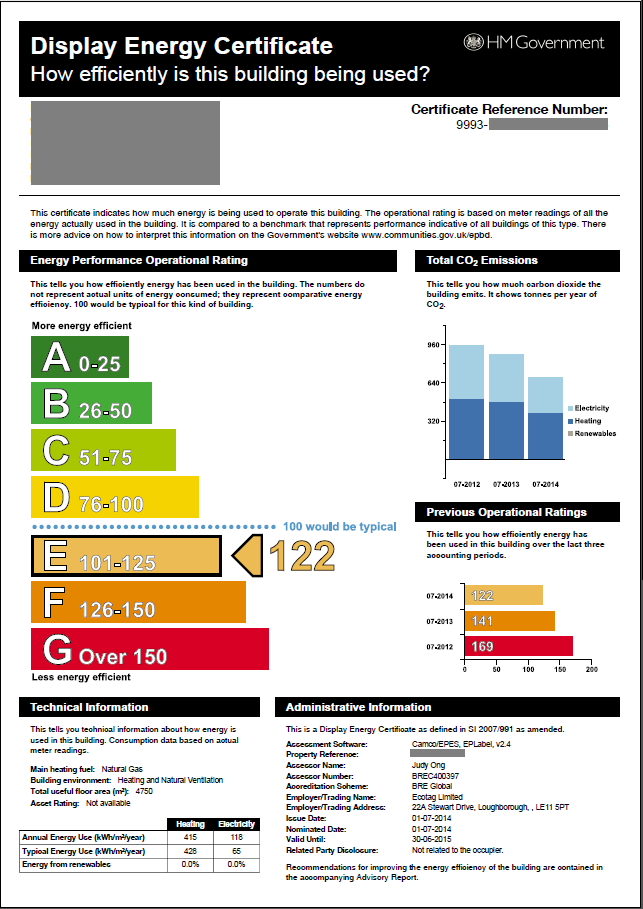
Display Energy Certificates, known as DEC, provide an energy rating for public building such as schools and hospitals over a certain size. This A to G rating is based on the actual energy consumption for the building, so if the energy consumption decreases, the rating will improve. For the DEC shown above, the graphs on the right show that the energy rating has improved significantly each year for this building, from a G in 2012 to an E in 2014.
The DEC need to be displayed in a prominent place, so that if you walk into your local town hall or hospital you can see how much energy they consume compared to the average for that building type. They are a good way of raising awareness, and staff walking past these ratings on a daily basis may become more active in reducing their energy waste.

At the same time Leicestershire County Council's newsletter dropped through the door and the extent of cuts they are facing over the next few years as a result of austerity measures is horrendous. The cost of DEC is only a very small slice of the budget, but the focus is clearly going to be on keeping essential services going.

Whatever the responses were to the consultation document, it was already clear that there was a very negative slant towards DEC in the document, referring to them as a 'burden'. DEC have been a large part of my work for the last 7 years, but the picture painted was that they no longer had a future. I was left feeling rather gloomy, that I would inevitably have to find an alternative way to make a living.
Then some of my old colleagues kicked me back into touch. (Thanks Phil, Nick and Bryony!)
In 2008 the legislation forced DEC onto reluctant building managers. Gathering all the data needed was a pain the first few years, because in many cases energy wasn't being managed. Where energy was being managed well, the DEC seemed somewhat superfluous. But over the last 7 years building managers have adapted to using DEC as a tool. The DEC is an independent, annual energy review resulting in a visible, clearly understandable, and easily comparable energy rating. It provides useful information to help building managers make decisions on maintenance, justify investment in efficiency projects and target awareness campaigns.
I know of County Councils who use the DEC energy ratings to help them monitor the energy consumption of their buildings and to target their improvement measures - improvement measures that save them money on energy bills. They want to keep using the DEC as they are a valuable tool.
Headteachers, who have far more to worry about than tracking their complicated energy bills, can see at a glance how their school performs compared to an average school. And yes - they do check out the DEC rating in other schools that they visit! Displaying the energy rating in reception means that a poor G rating cannot be ignored, and is visible for parents, governors and teachers to see. It is a powerful motivation for making improvements.
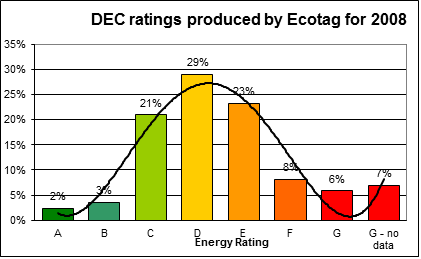
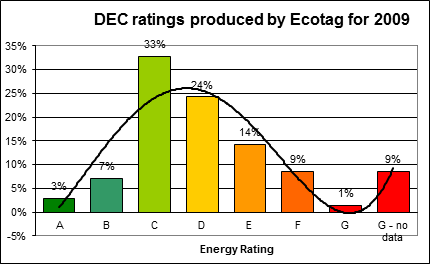
Back in 2009 I compared how the DEC ratings I had produced had changed from the previous year. You can see that in general there was a shift towards the higher A, B and C rated certificates. The graphs above show that even in just one year there was an improvement in energy ratings, which means my clients actually reduced their energy consumption.
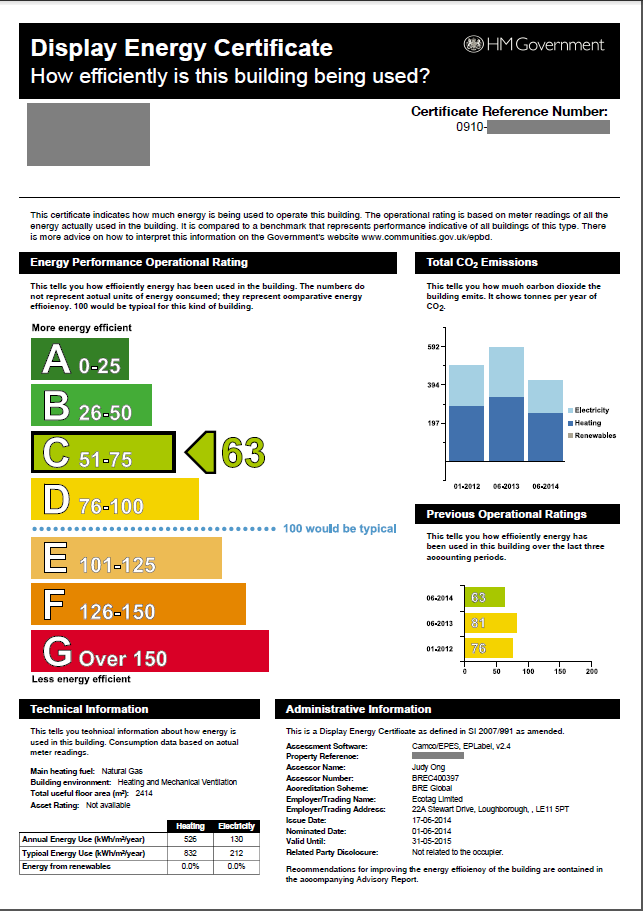
The above DEC is for a leisure centre, where the CHP (combined heat and power unit) was old and the efficiency was deteriorating. The effect of replacing it for a new CHP unit and additional improvements can be seen with the increase in the energy rating for the building from a D to a C. The cost saving was over £20,000 the following year, even after allowing for the effect of weather. What part the DEC played can't really be quantified, but raising the awareness and priority of energy efficiency improvements can have some significant financial benefits.
DEC aren't a financial burden, they are a money saving tool. Evidence from the Department of Energy and Climate Change, shows significant energy efficiency improvements between 2008 and 2012, which outweighs the cost of providing DEC. Shame that CLG, sees DEC as a 'burden' and wants to reduce or eliminate DEC requirements. Many of the proposed changes in the consultation would undermine DEC and make them almost useless as a tool for encouraging energy efficiency. CLG must understand that, yet they continue to push for dismantling them.
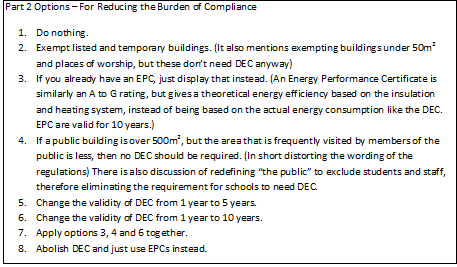 All the options DCLG provide in the consultation (my summary above) are to cut corners, whilst trying to stay just within the boundaries of the mandatory EU Directive. If the intention was to save money rather than reduce the 'burden', there could have been several options for improving the DEC to make an even bigger impact on reducing energy consumption. This would be a win-win for public bodies looking for efficiency savings, and also the government who has a legally binding carbon reduction target to meet. I get the impression this has all been tossed aside in favour of protecting energy company profits instead, as they are the only ones to lose out from further energy efficiency measures.
Well, if you have been following for a while, you may know that I am not a 'cut and run' type of person. If I can't make a stand and act when it is about DEC, which I am an expert on, then when will I ever make a stand on anything? So......... I have made a decision. I am not waiting for any of these bad outcomes to be enforced by people who are really rather ignorant about energy certificates.
Saving energy is hard. It is an uphill struggle, with investment seen as the lynch pin. My clients want things that are easy and that work to reduce energy consumption, and for this the current DEC aren't good enough. With some small tweaks, they could be so much better - Gold-Plated in fact, but with little to no change to the clients 'burden'.
For example, the value on the current energy certificates is a carbon ratio, quite meaningless to most people. But in the process of gathering all the energy data, I end up with all the cost data too. Displaying the cost of energy consumption as well would help understanding. As in the leisure centre example above, a £20k saving has a much bigger impact on people than seeing a C rating. Equating that cost into something real, like how many nurses or teachers that money could employ if it wasn't spent on energy, would help to hit the message home. For an individual, using the stairs instead of the lift may seem like a tiny insignificant amount of energy in a large hospital, but when that energy is equated into real people and jobs saved (or climate change and lives) it is energy that is well worth saving.
I can't change the actual DEC certificate, but I can change how it is presented and provide additional information with it. I can't change the legal requirements of DEC, but I can demonstrate the benefits of having them, and encourage voluntary DECs. Already I have clients who have decided to go beyond the minimum requirements. And as an energy assessor I always strive to provide more value than the basic energy certificates require, with advice on energy bills and added details for recommendations.
Working with my regular clients I will be setting up some trials to see what improvements to the DEC give the best results for the least additional burden. My target is that within 3 years, every DEC I produce will be a Gold-Plated. I will also make all the results and Gold-Plated DEC templates freely available for everyone to benefit from. So if you are a disenchanted energy assessor, accreditation body or building manager and want more than CLG are offering, spread the word - Gold-Plated DEC will be coming your way soon!
13-Mar-15
Display Energy Certificates, known as DEC, provide an energy rating for public building such as schools and hospitals over a certain size. This A to G rating is based on the actual energy consumption for the building, so if the energy consumption decreases, the rating will improve. For the DEC shown above, the graphs on the right show that the energy rating has improved significantly each year for this building, from a G in 2012 to an E in 2014.
The DEC need to be displayed in a prominent place, so that if you walk into your local town hall or hospital you can see how much energy they consume compared to the average for that building type. They are a good way of raising awareness, and staff walking past these ratings on a daily basis may become more active in reducing their energy waste.
At the same time Leicestershire County Council's newsletter dropped through the door and the extent of cuts they are facing over the next few years as a result of austerity measures is horrendous. The cost of DEC is only a very small slice of the budget, but the focus is clearly going to be on keeping essential services going.
Whatever the responses were to the consultation document, it was already clear that there was a very negative slant towards DEC in the document, referring to them as a 'burden'. DEC have been a large part of my work for the last 7 years, but the picture painted was that they no longer had a future. I was left feeling rather gloomy, that I would inevitably have to find an alternative way to make a living.
Then some of my old colleagues kicked me back into touch. (Thanks Phil, Nick and Bryony!)
In 2008 the legislation forced DEC onto reluctant building managers. Gathering all the data needed was a pain the first few years, because in many cases energy wasn't being managed. Where energy was being managed well, the DEC seemed somewhat superfluous. But over the last 7 years building managers have adapted to using DEC as a tool. The DEC is an independent, annual energy review resulting in a visible, clearly understandable, and easily comparable energy rating. It provides useful information to help building managers make decisions on maintenance, justify investment in efficiency projects and target awareness campaigns.
I know of County Councils who use the DEC energy ratings to help them monitor the energy consumption of their buildings and to target their improvement measures - improvement measures that save them money on energy bills. They want to keep using the DEC as they are a valuable tool.
Headteachers, who have far more to worry about than tracking their complicated energy bills, can see at a glance how their school performs compared to an average school. And yes - they do check out the DEC rating in other schools that they visit! Displaying the energy rating in reception means that a poor G rating cannot be ignored, and is visible for parents, governors and teachers to see. It is a powerful motivation for making improvements.
Back in 2009 I compared how the DEC ratings I had produced had changed from the previous year. You can see that in general there was a shift towards the higher A, B and C rated certificates. The graphs above show that even in just one year there was an improvement in energy ratings, which means my clients actually reduced their energy consumption.
The above DEC is for a leisure centre, where the CHP (combined heat and power unit) was old and the efficiency was deteriorating. The effect of replacing it for a new CHP unit and additional improvements can be seen with the increase in the energy rating for the building from a D to a C. The cost saving was over £20,000 the following year, even after allowing for the effect of weather. What part the DEC played can't really be quantified, but raising the awareness and priority of energy efficiency improvements can have some significant financial benefits.
DEC aren't a financial burden, they are a money saving tool. Evidence from the Department of Energy and Climate Change, shows significant energy efficiency improvements between 2008 and 2012, which outweighs the cost of providing DEC. Shame that CLG, sees DEC as a 'burden' and wants to reduce or eliminate DEC requirements. Many of the proposed changes in the consultation would undermine DEC and make them almost useless as a tool for encouraging energy efficiency. CLG must understand that, yet they continue to push for dismantling them.
All the options DCLG provide in the consultation (my summary above) are to cut corners, whilst trying to stay just within the boundaries of the mandatory EU Directive. If the intention was to save money rather than reduce the 'burden', there could have been several options for improving the DEC to make an even bigger impact on reducing energy consumption. This would be a win-win for public bodies looking for efficiency savings, and also the government who has a legally binding carbon reduction target to meet. I get the impression this has all been tossed aside in favour of protecting energy company profits instead, as they are the only ones to lose out from further energy efficiency measures.Well, if you have been following for a while, you may know that I am not a 'cut and run' type of person. If I can't make a stand and act when it is about DEC, which I am an expert on, then when will I ever make a stand on anything? So......... I have made a decision. I am not waiting for any of these bad outcomes to be enforced by people who are really rather ignorant about energy certificates.
Saving energy is hard. It is an uphill struggle, with investment seen as the lynch pin. My clients want things that are easy and that work to reduce energy consumption, and for this the current DEC aren't good enough. With some small tweaks, they could be so much better - Gold-Plated in fact, but with little to no change to the clients 'burden'.
For example, the value on the current energy certificates is a carbon ratio, quite meaningless to most people. But in the process of gathering all the energy data, I end up with all the cost data too. Displaying the cost of energy consumption as well would help understanding. As in the leisure centre example above, a £20k saving has a much bigger impact on people than seeing a C rating. Equating that cost into something real, like how many nurses or teachers that money could employ if it wasn't spent on energy, would help to hit the message home. For an individual, using the stairs instead of the lift may seem like a tiny insignificant amount of energy in a large hospital, but when that energy is equated into real people and jobs saved (or climate change and lives) it is energy that is well worth saving.
I can't change the actual DEC certificate, but I can change how it is presented and provide additional information with it. I can't change the legal requirements of DEC, but I can demonstrate the benefits of having them, and encourage voluntary DECs. Already I have clients who have decided to go beyond the minimum requirements. And as an energy assessor I always strive to provide more value than the basic energy certificates require, with advice on energy bills and added details for recommendations.
Working with my regular clients I will be setting up some trials to see what improvements to the DEC give the best results for the least additional burden. My target is that within 3 years, every DEC I produce will be a Gold-Plated. I will also make all the results and Gold-Plated DEC templates freely available for everyone to benefit from. So if you are a disenchanted energy assessor, accreditation body or building manager and want more than CLG are offering, spread the word - Gold-Plated DEC will be coming your way soon!
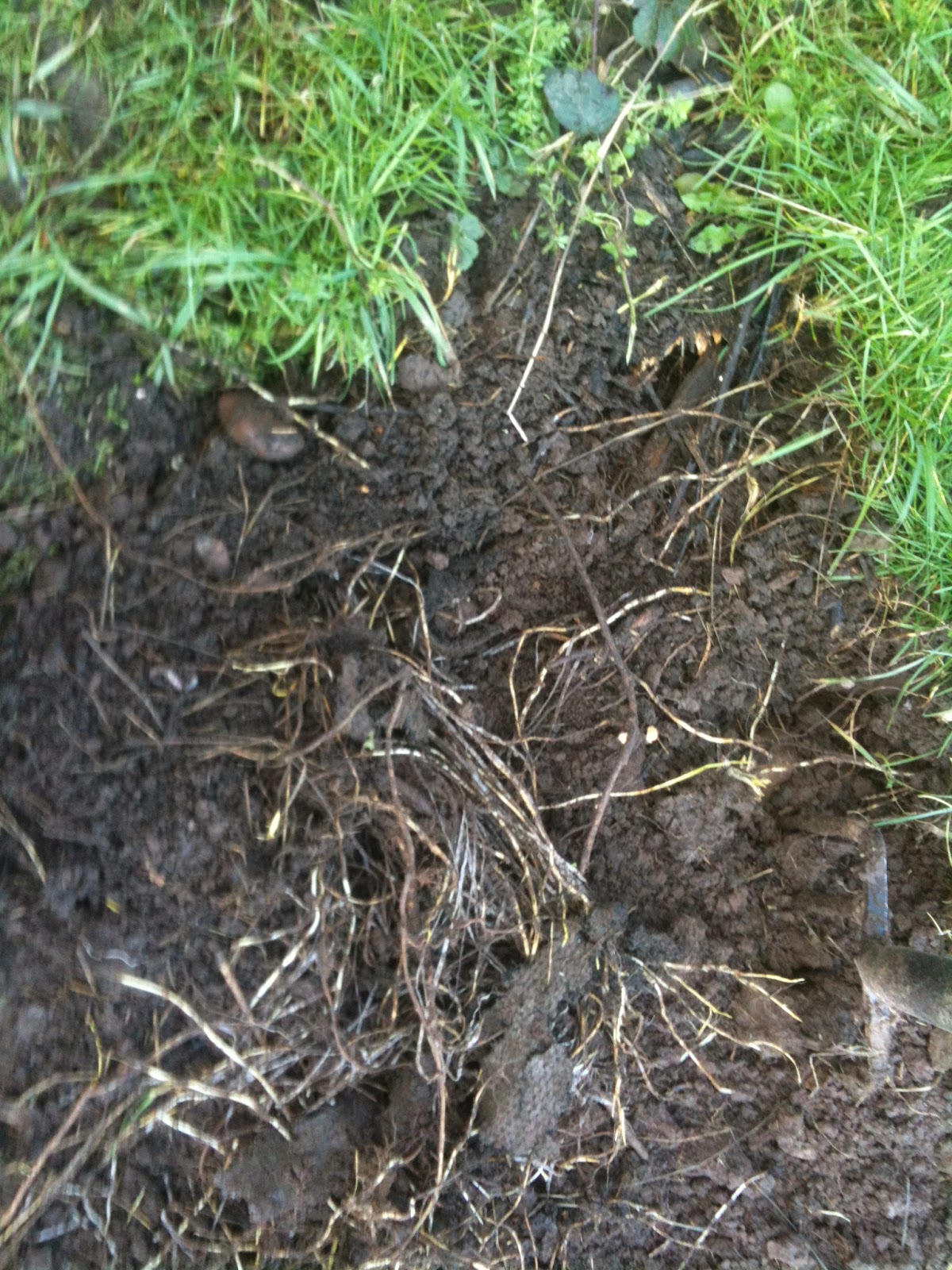
Tastier than Bear's 4: Allotment weeds [ 13-Mar-15 10:34am ]I am getting a little behind on my foraging challenge, partly because the weather has improved and I have spent more time at the allotment, throwing a ball for the dog, rather than taking her on walks. I have fixed the shed door, spread my remaining manure, planted fruit trees and bushes, and dug up buckets and buckets of couch grass, mixed in with the threads of old carpet.
 There has also been Transition meetings, including a lovely seed sowing workshop last weekend, led by a very patient and knowledgeable Andy. My youngest daughter said, "How can you do a workshop on sowing seeds - you just get some soil and put them in!" How little she knew! I picked up lots of tips, such as what compost to use and mixing in a little sharp sand for moisture retention. I also had a chance to ask questions about things that had gone wrong for me. And of course it was a very sociable event with home made refreshments too. If you are local you can check out the Transition Loughborough website for upcoming events.

Then this Sunday was the first car boot sale of the season. I decided to have a stall selling, the idea being that I raise funds to spend in following weeks. It turned out to be a very quiet event, so I didn't do as well as I had hoped. Still I emptied a few bags of outgrown clothes from the garage and made £21. Except that I spent £2 on a new basket, £2 on a wheely trug, 50p on a bag and....50p on something else that I can't remember.
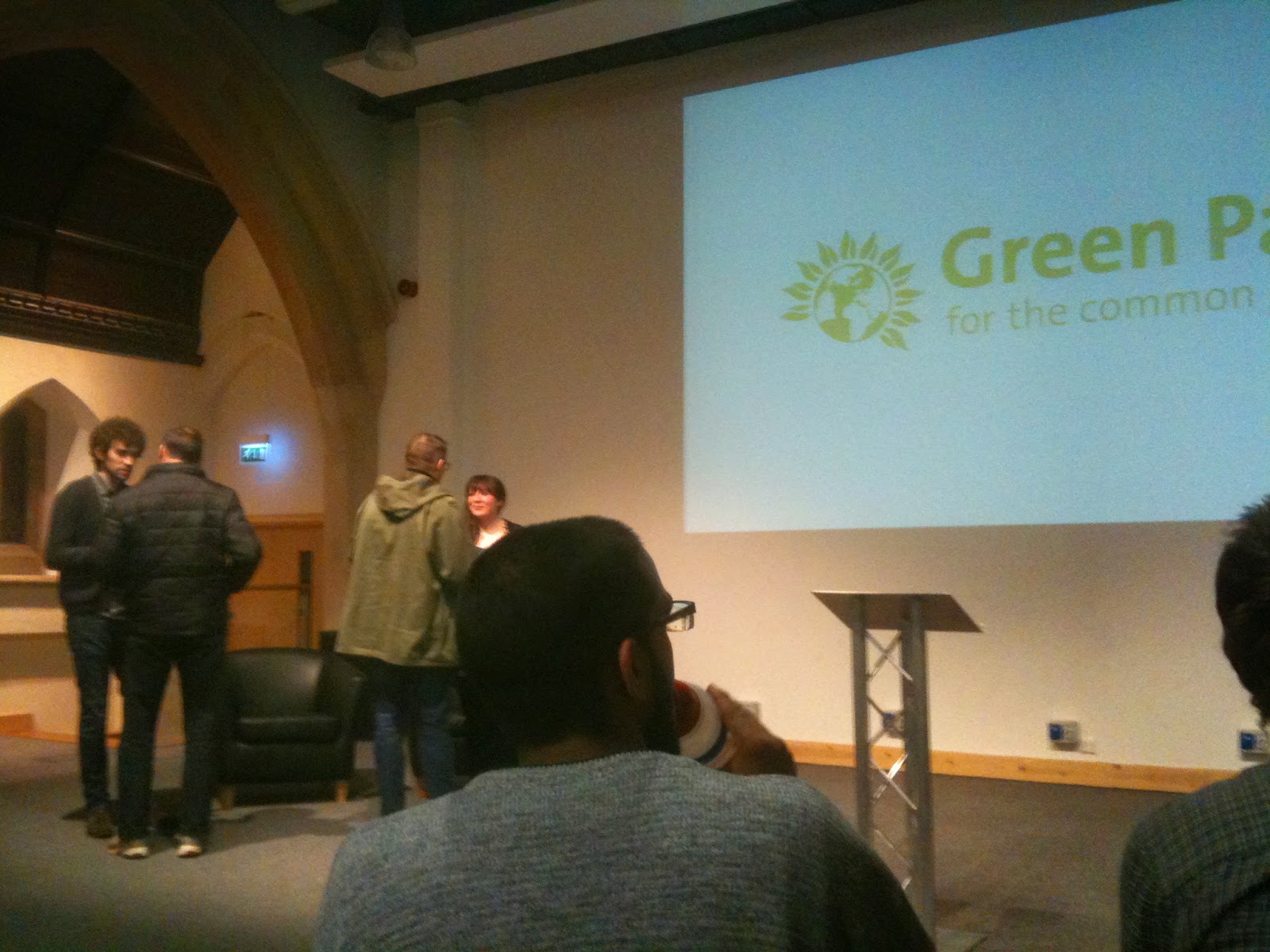
I also attended my first ever political meeting, as Amelia Womack, deputy leader for the Green Party was speaking locally. There will be a general election in May, and for the first time we will have a member of the green party standing locally. It was an opportunity to hear their policies and ask some important questions, and Amelia was a friendly and easy to follow speaker. She certainly gave me food for thought. And talking of food.......

It turns out that Couch grass roots are edible. Wish I had known that before I dumped buckets full of them.
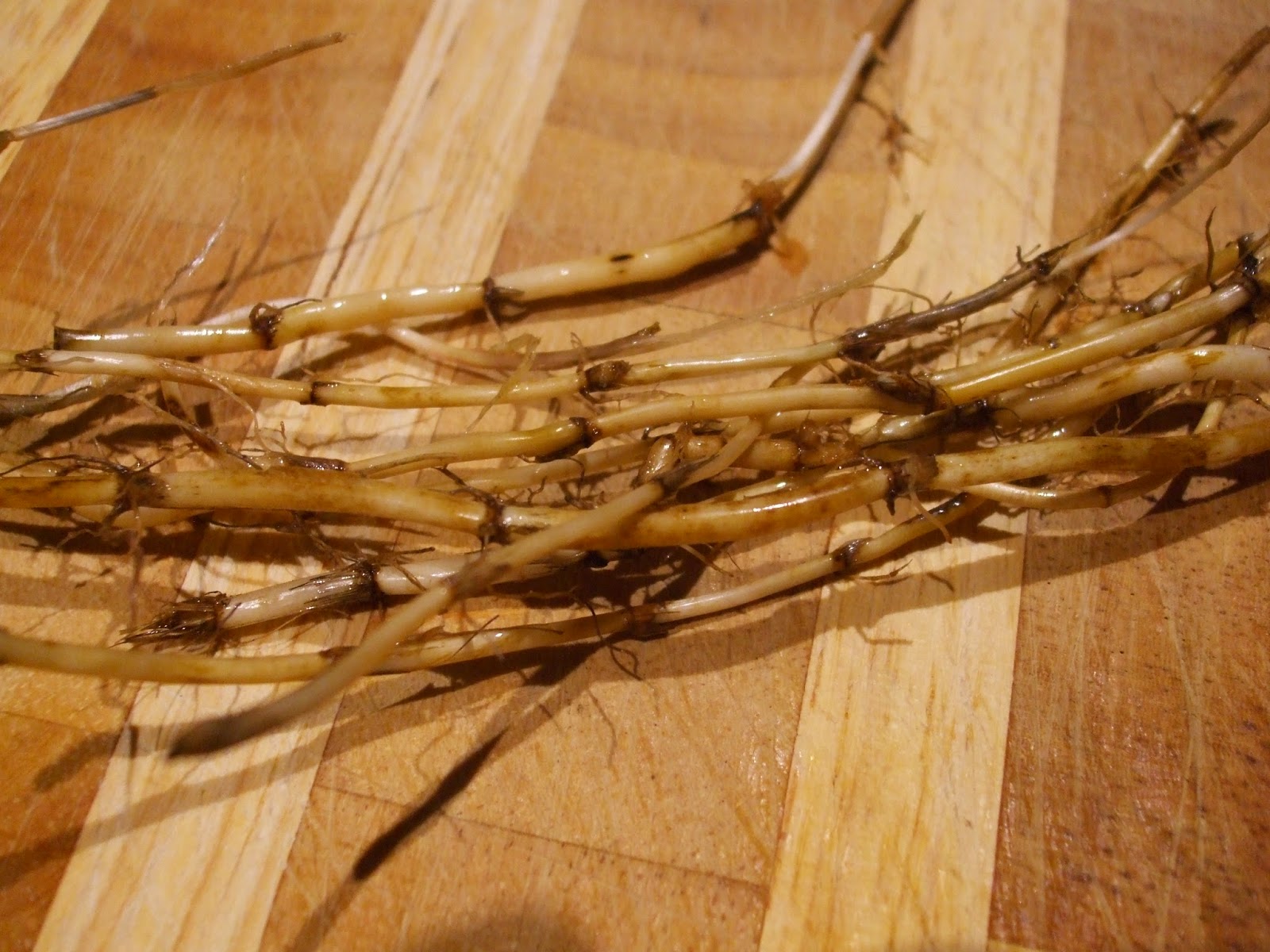
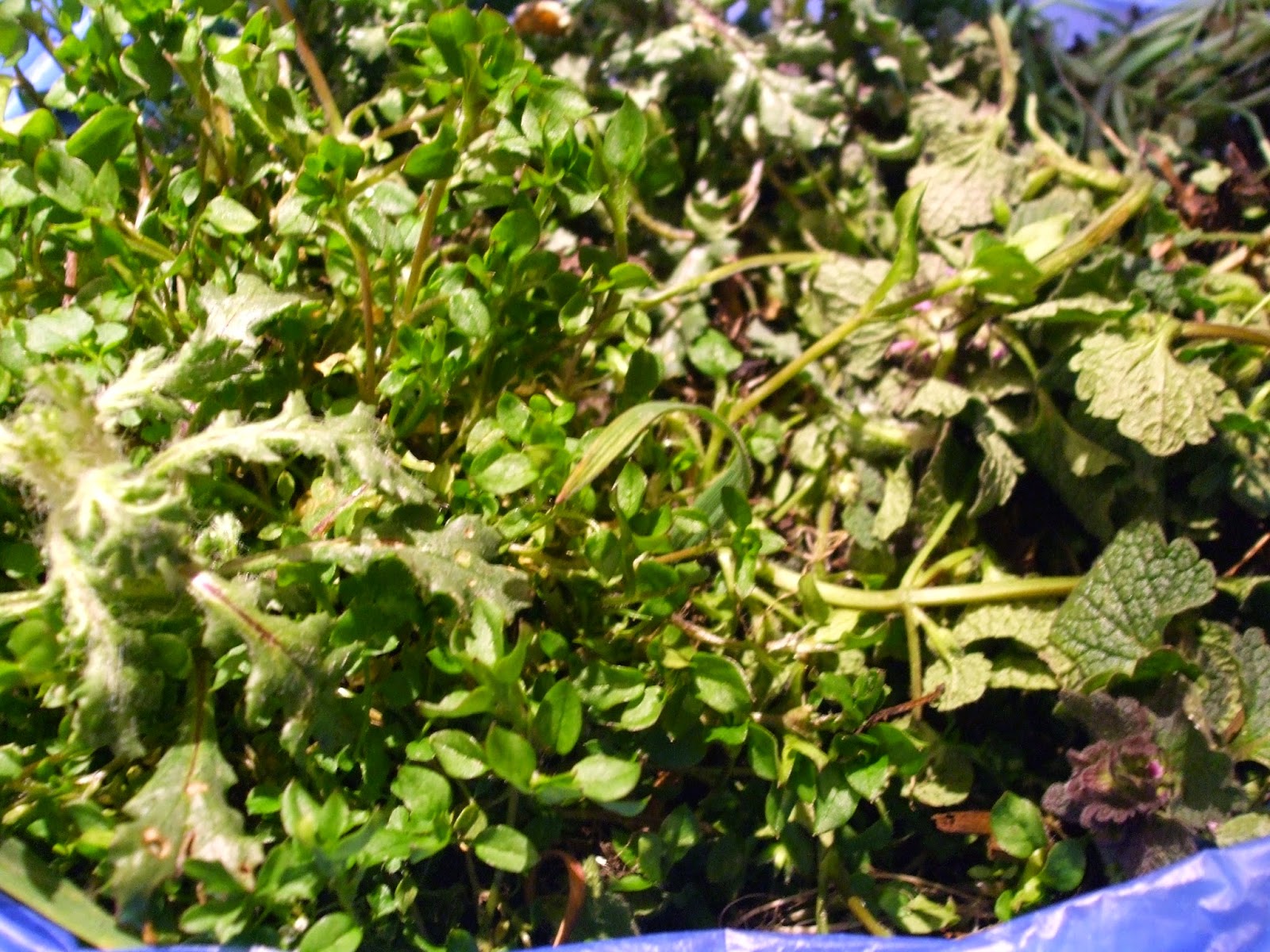
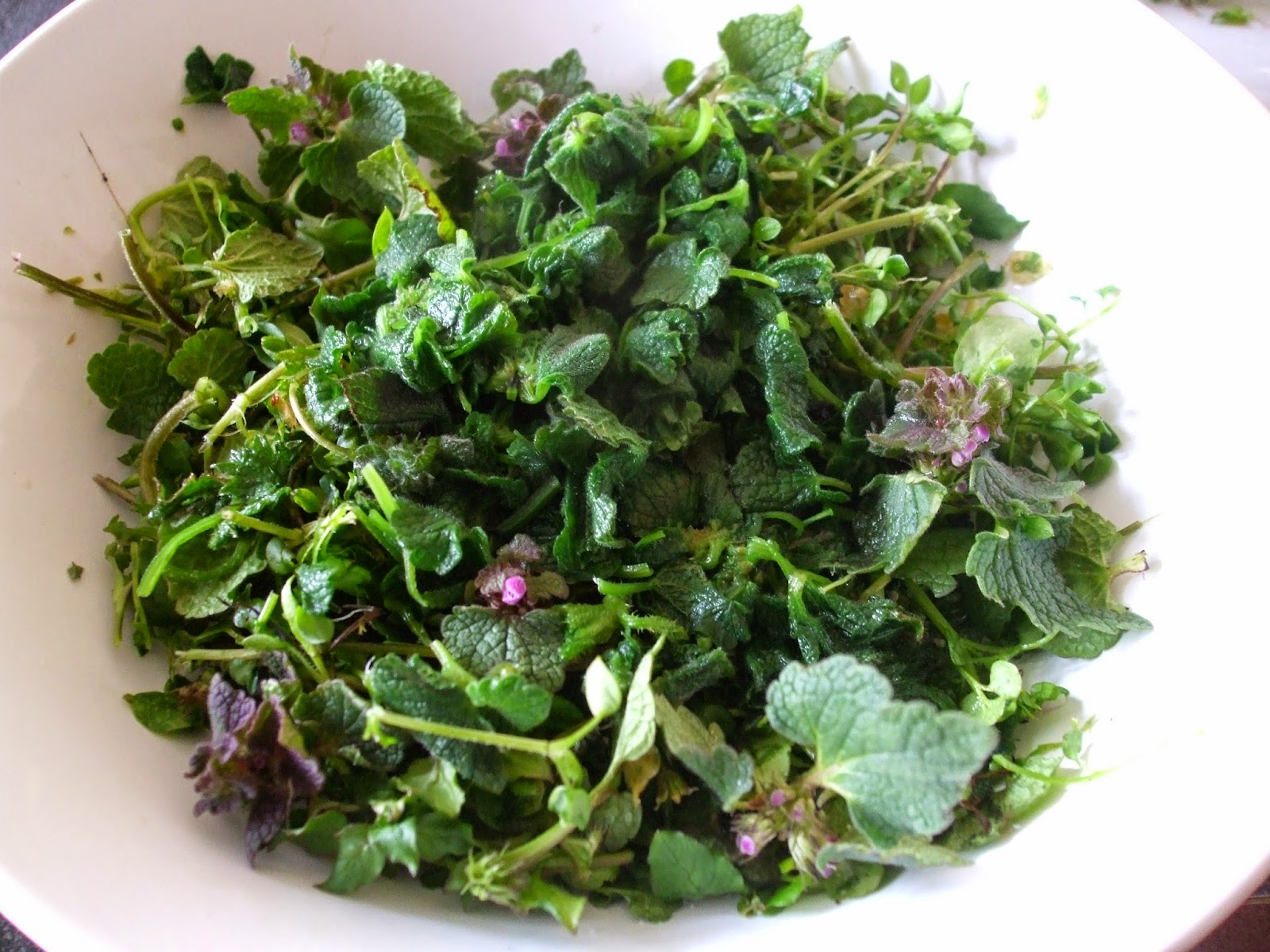
Actually they smell quite sweet, so they should make an interesting basis for a meal. So this weeks theme became allotment weeds. Alongside the couch I collected some red dead nettles again as they were so plentiful and pretty, a few stinging nettles as they needed to be weeded anyway, and the two new flavours of chickweed and hairy bittercress. How does this look for a bagged salad?
There was groundsel growing in and around the chickweed, so I brought some home to look up and was shocked that some websites described it as a salad plant whilst others said it was seriously toxic. I wasn't going to take a risk, but it just goes to show that it is worth double checking everything before you decide to eat it.
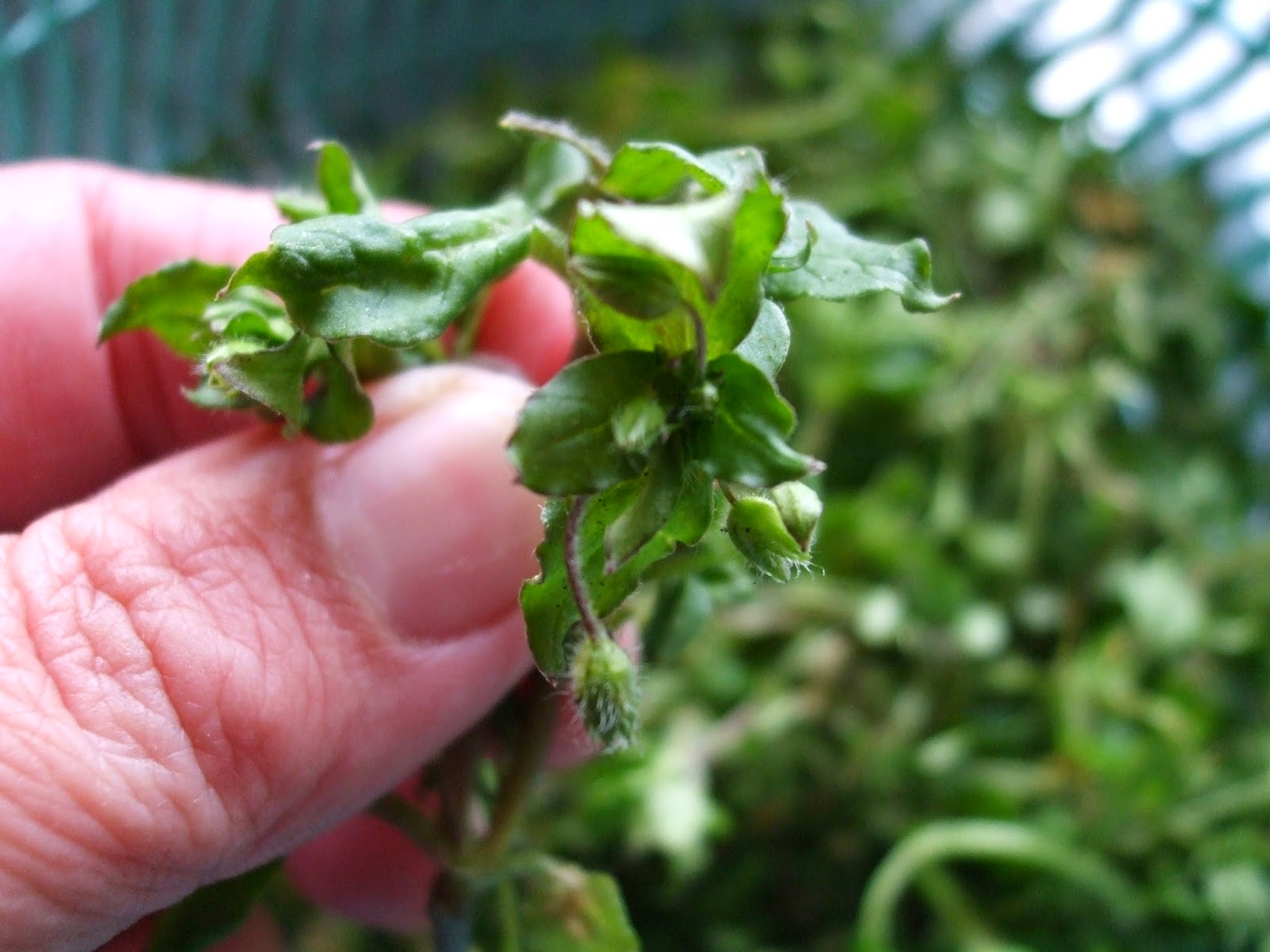
The chickweed had very pretty, distinctive white flowers, but they had closed up completely by the time I got my camera out. The stem has a single line of hairs down it, which help with the identification. John Wright describes the flavour of chickweed in The River Cottage Handbook No.7: Hedgerow as "...mild and pleasant, not unlike lettuce but with a bit of freshly mown cricket pitch thrown in." I had collected loads, and though it had a nice texture, the cricket pitch flavour was too much for me, so I only used a small handful.

The hairy bittercress was amazing though. It smelled and tasted just like cress and was not bitter at all. I mixed it in with the chickweed and some raw red dead nettles for the salad, but unfortunately the lovely cress flavour didn't come through. Maybe I need more next time.
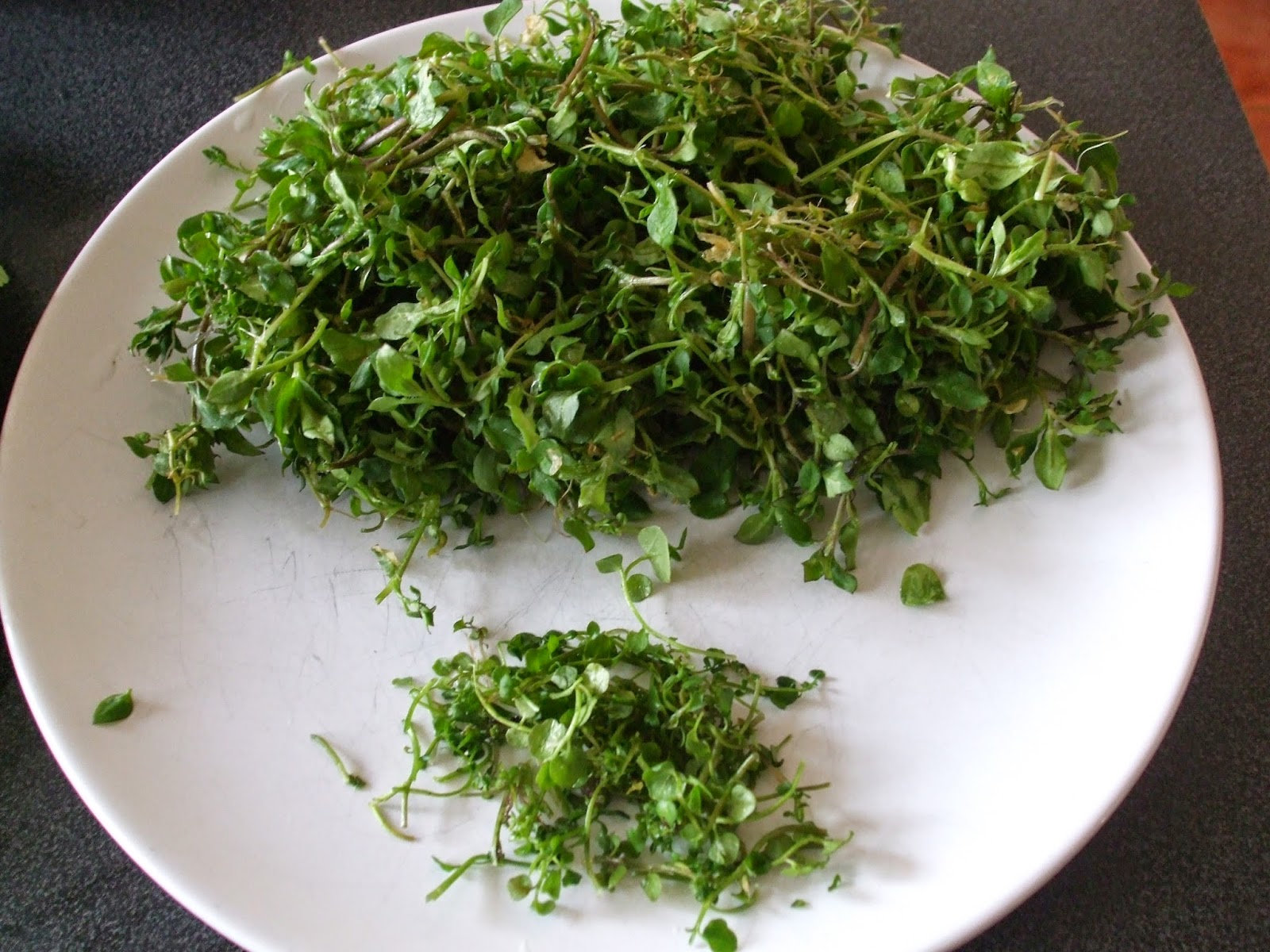
It would definitely work in egg sandwiches. I will be keeping all the hairy bittercress I dig up from now on, or just nibbling it raw in between digging.
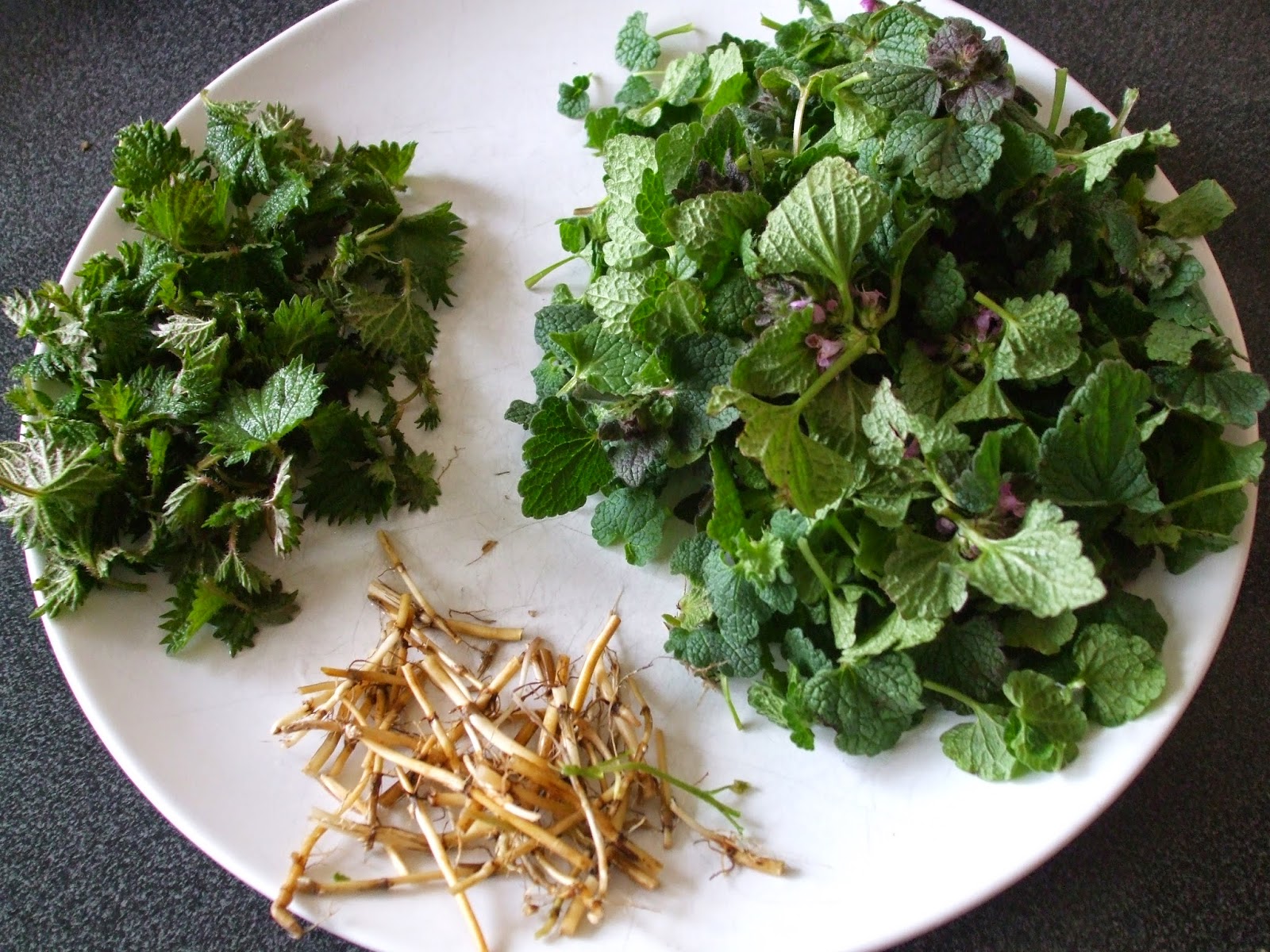
I fried the chopped couch grass roots with the nettles and some of the dead nettles, but I decided to taste them before adding them to my salad. Good job too, because they were really tough, like chewing twigs! The flavour was fine - no bitterness like the dandelion roots, but they were too tough to eat. Luckily I had picked lots of dead nettles, so I chucked the first batch with the couch grass away and fried the rest on their own.
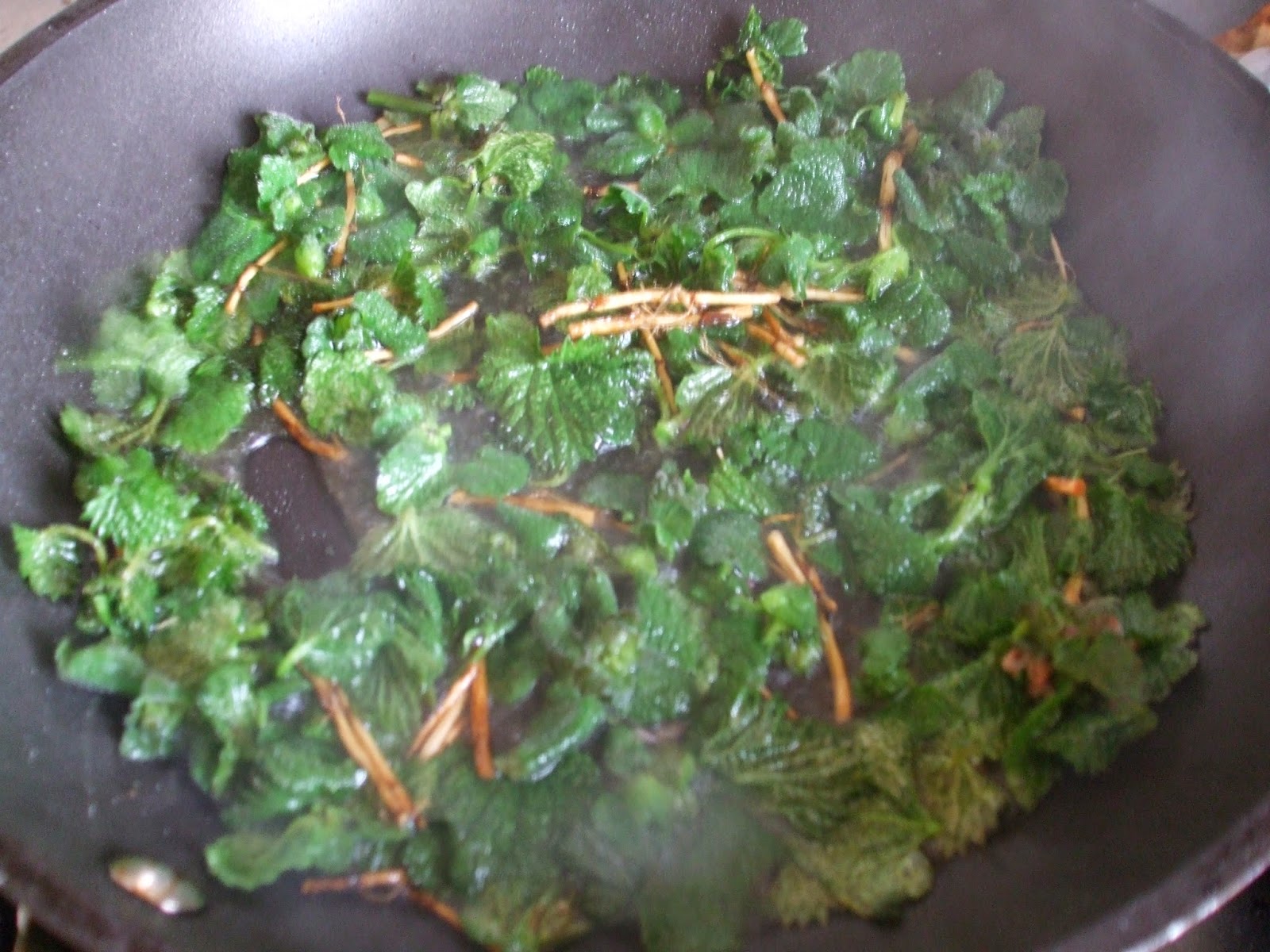 The fried dead nettles really were the star of the meal and very tasty. The salad was a lovely texture, but raw dead nettles aren't as tasty as the cooked ones, and the chickweed was the overriding flavour. I won't use chickweed again, or else in very small amounts, because I am not so keen on the grassy taste. Still I finished it all off..... well apart from the couch grass. Glad I did throw bucketsful away, because you would have to be very desperate to try eating it.
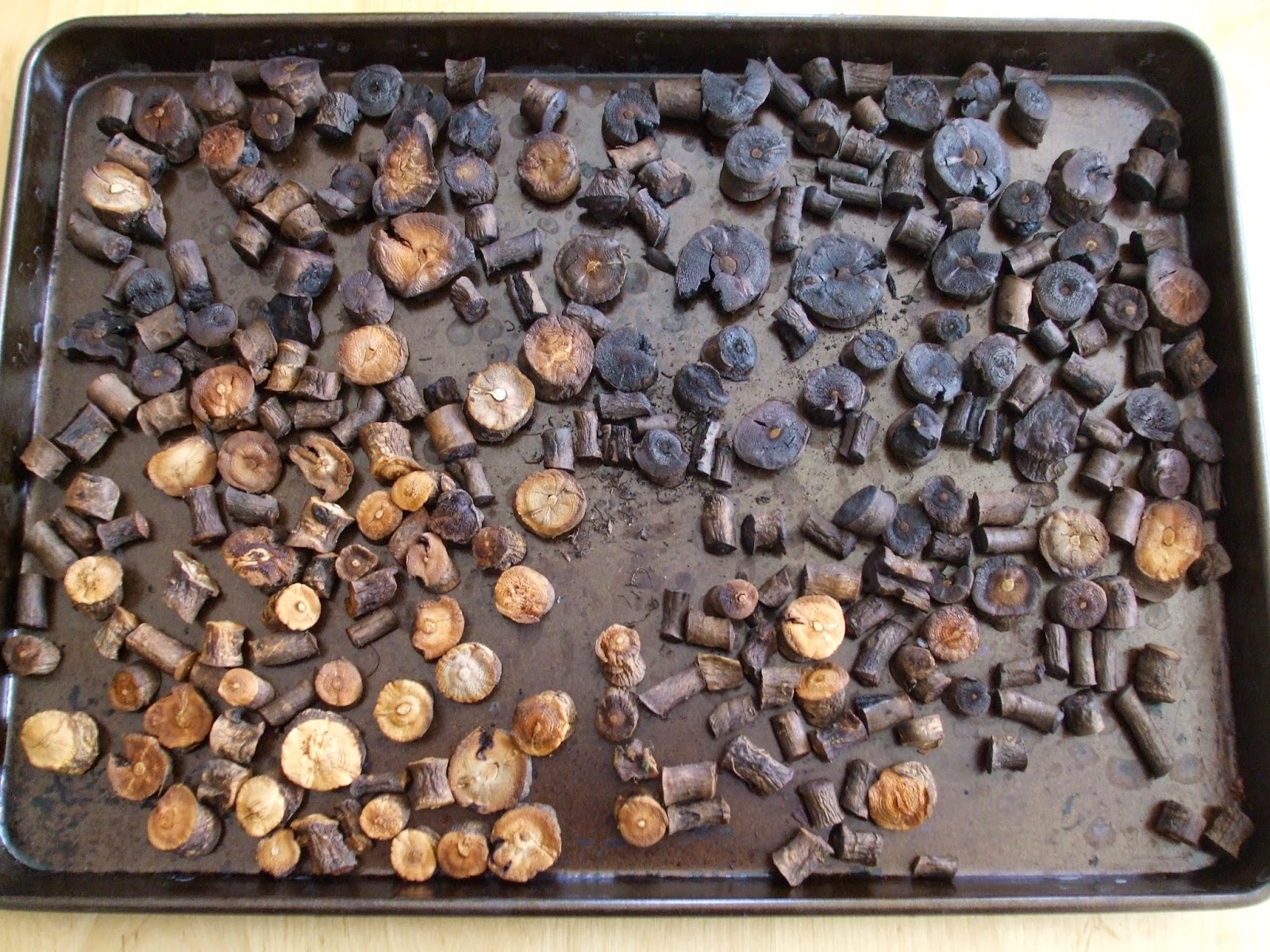
 Besides this week's meal I wanted to make another batch of dandelion coffee. The first attempt weren't roasted enough and tasted vile. The second attempt I followed guidance from River Cottage no.7 to cook them for 30minutes at 200 degrees C. They were burnt within 10 minutes, maybe because I had chopped them quite small and they were very dry to start with. Half of this batch weren't too burnt and it did make rather a lovely drink. Hopefully the next batch will be perfect again.
I also found some coltsfoot whilst I was walking round the local reservoir. It is supposed to be a good remedy for coughs, so I will pick a few more to dry next time, because it wil be good to have some remedies in for next winter. I have just dried a bunch of sweet violets on my windowsill too
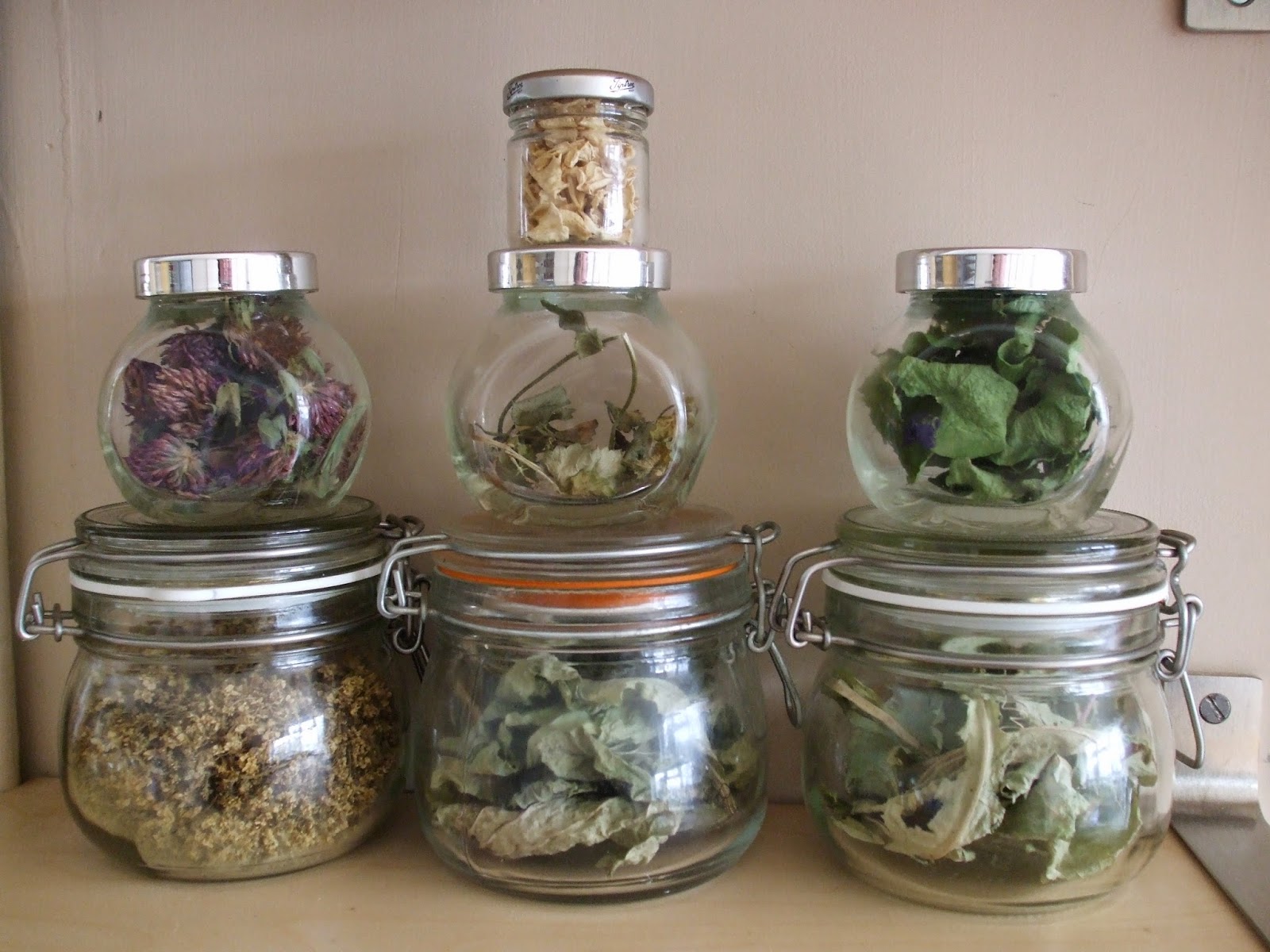
Every time I am out, I have brought one or two plants back for identification and tasting, so I am gradually increasing my wild plant knowledge. Where I really think that it will save me money is with herbal teas that I drink regularly, and with herbal remedies. I am gradually increasing my store of little bottles with dried plants, so that I should have enough variety to make more remedies soon. I had better start adding labels too, as I will no doubt forget what each one is! Let me know if you do any foraging or make any wild remedies?
28-May-14
There has also been Transition meetings, including a lovely seed sowing workshop last weekend, led by a very patient and knowledgeable Andy. My youngest daughter said, "How can you do a workshop on sowing seeds - you just get some soil and put them in!" How little she knew! I picked up lots of tips, such as what compost to use and mixing in a little sharp sand for moisture retention. I also had a chance to ask questions about things that had gone wrong for me. And of course it was a very sociable event with home made refreshments too. If you are local you can check out the Transition Loughborough website for upcoming events.Then this Sunday was the first car boot sale of the season. I decided to have a stall selling, the idea being that I raise funds to spend in following weeks. It turned out to be a very quiet event, so I didn't do as well as I had hoped. Still I emptied a few bags of outgrown clothes from the garage and made £21. Except that I spent £2 on a new basket, £2 on a wheely trug, 50p on a bag and....50p on something else that I can't remember.
I also attended my first ever political meeting, as Amelia Womack, deputy leader for the Green Party was speaking locally. There will be a general election in May, and for the first time we will have a member of the green party standing locally. It was an opportunity to hear their policies and ask some important questions, and Amelia was a friendly and easy to follow speaker. She certainly gave me food for thought. And talking of food.......
It turns out that Couch grass roots are edible. Wish I had known that before I dumped buckets full of them.
Actually they smell quite sweet, so they should make an interesting basis for a meal. So this weeks theme became allotment weeds. Alongside the couch I collected some red dead nettles again as they were so plentiful and pretty, a few stinging nettles as they needed to be weeded anyway, and the two new flavours of chickweed and hairy bittercress. How does this look for a bagged salad?
There was groundsel growing in and around the chickweed, so I brought some home to look up and was shocked that some websites described it as a salad plant whilst others said it was seriously toxic. I wasn't going to take a risk, but it just goes to show that it is worth double checking everything before you decide to eat it.
The chickweed had very pretty, distinctive white flowers, but they had closed up completely by the time I got my camera out. The stem has a single line of hairs down it, which help with the identification. John Wright describes the flavour of chickweed in The River Cottage Handbook No.7: Hedgerow as "...mild and pleasant, not unlike lettuce but with a bit of freshly mown cricket pitch thrown in." I had collected loads, and though it had a nice texture, the cricket pitch flavour was too much for me, so I only used a small handful.
The hairy bittercress was amazing though. It smelled and tasted just like cress and was not bitter at all. I mixed it in with the chickweed and some raw red dead nettles for the salad, but unfortunately the lovely cress flavour didn't come through. Maybe I need more next time.
It would definitely work in egg sandwiches. I will be keeping all the hairy bittercress I dig up from now on, or just nibbling it raw in between digging.
I fried the chopped couch grass roots with the nettles and some of the dead nettles, but I decided to taste them before adding them to my salad. Good job too, because they were really tough, like chewing twigs! The flavour was fine - no bitterness like the dandelion roots, but they were too tough to eat. Luckily I had picked lots of dead nettles, so I chucked the first batch with the couch grass away and fried the rest on their own.
The fried dead nettles really were the star of the meal and very tasty. The salad was a lovely texture, but raw dead nettles aren't as tasty as the cooked ones, and the chickweed was the overriding flavour. I won't use chickweed again, or else in very small amounts, because I am not so keen on the grassy taste. Still I finished it all off..... well apart from the couch grass. Glad I did throw bucketsful away, because you would have to be very desperate to try eating it. Besides this week's meal I wanted to make another batch of dandelion coffee. The first attempt weren't roasted enough and tasted vile. The second attempt I followed guidance from River Cottage no.7 to cook them for 30minutes at 200 degrees C. They were burnt within 10 minutes, maybe because I had chopped them quite small and they were very dry to start with. Half of this batch weren't too burnt and it did make rather a lovely drink. Hopefully the next batch will be perfect again.I also found some coltsfoot whilst I was walking round the local reservoir. It is supposed to be a good remedy for coughs, so I will pick a few more to dry next time, because it wil be good to have some remedies in for next winter. I have just dried a bunch of sweet violets on my windowsill too
Every time I am out, I have brought one or two plants back for identification and tasting, so I am gradually increasing my wild plant knowledge. Where I really think that it will save me money is with herbal teas that I drink regularly, and with herbal remedies. I am gradually increasing my store of little bottles with dried plants, so that I should have enough variety to make more remedies soon. I had better start adding labels too, as I will no doubt forget what each one is! Let me know if you do any foraging or make any wild remedies?
Climate Change - Medium [ 4-Jan-14 7:17pm ]
Awake at the Big Bend [ 04-Jan-14 7:17pm ]It was about 3 AM when I woke up, unzipped the tent and looked up, forever changing my relationship with the cosmos…


