
 Asia-Pacific Takes The Lead In Global Wind Expansion As The Philippines Moves Into The Investment Spotlight [ 18-Feb-26 4:18pm ]
The global wind industry's next growth phase is being written in Asia-Pacific, and the shift is happening faster than many expected. The Global Wind Energy Council's latest market signals show that the region is no longer an emerging contributor but the central driver of record installations, new supply chains and ... [continued]
The post Asia-Pacific Takes The Lead In Global Wind Expansion As The Philippines Moves Into The Investment Spotlight appeared first on CleanTechnica.
Ford Still Holds A Torch For EVs, Now With An F1 Twist [ 18-Feb-26 4:16pm ]The Ford Motor Company is moving forward with plans to launch an affordable electric pickup truck, pursuing a "bounty" strategy to optimize EV design.
The post Ford Still Holds A Torch For EVs, Now With An F1 Twist appeared first on CleanTechnica.
Battle Over Colorado River Water Ends In A Draw [ 18-Feb-26 4:13pm ]There is less water in the Colorado River today and more demand for it as cities and farms in the southwest continue to expand.
The post Battle Over Colorado River Water Ends In A Draw appeared first on CleanTechnica.
Uber Putting $100 Million into EV Charging for Robotaxis [ 18-Feb-26 4:06pm ]You may recall that Uber founder and CEO at the time Travis Kalanick said in 2015 that Uber would buy all of the robotaxis Tesla could produce by 2020, estimated to be 500,000 at the time. Then Elon Musk got into his own fantasy of operating them through Tesla and ... [continued]
The post Uber Putting $100 Million into EV Charging for Robotaxis appeared first on CleanTechnica.
Mosquito borne Chikungunya can now be transmitted in most of Europe. [ 18-Feb-26 9:00am ]"An excruciatingly painful tropical disease called chikungunya can now be transmitted by mosquitoes across most of Europe, a study has found.
Higher temperatures due to the climate crisis mean infections are now possible for more than six months of the year in Spain, Greece and other southern European countries, and for two months a year in south-east England. Continuing global heating means it is only a matter of time before the disease expands further northwards, the scientists said."
submitted by /u/Awkward_Mastodon4332[link] [comments]
AI Layoffs or Capex Layoffs? What the Data Actually Shows — ismichaelburryright.com/blog/ai-layoffs-or-capex-layoffs [ 17-Feb-26 5:01pm ]SS: This blog post is a follow-up to one of my previous posts. It's an in-depth multi source-backed analysis on how CEOs of major tech companies are actively lying to their investors and the public about the reasoning behind the layoff surge and job erasure.
They can keep hyping AI as much as they want, but there's a difference between hype, and data. Nothing in the data indicates that the layoffs or halting in hiring is due to AI's capability to replace workers. The current downturn in hiring is actually driven by overspending in LLMs.
submitted by /u/Rorisjack[link] [comments]
Deep sea landscapes are a new frontier of human exploration - here's what we may find [ 18-Feb-26 1:10pm ] Lillac/Shutterstock
When we dream of landscapes, we might imagine rolling valleys or rugged mountains. But there is a whole landscape hidden from human view: the secret world of the seafloor.
Half of Earth's oceans are more than 3.2km deep. Beneath them lie cavernous plains untouched by sunlight, vast gaping trenches made by Earth's tectonic plates shifting, and ranges of underwater mountains on which no human has ever set foot.
We have better maps of the surface of the Moon than of these secret landscapes of the seafloor. However, the international 2030 seafloor project has an ambitious aim: to create a definitive map of our oceans.
To date, despite huge efforts, less than a third of our oceans have been fully mapped. But one unexpected way to help understand what's beneath the surface may come from a project one of us (Jessica) works on called Mermaid - a mission that was originally designed to detect earthquakes.
Earth's deepest region, the Marianas Trench, plunges 2km deeper than Mount Everest is high. But along the ocean floors, there are also tens of thousands of mountains which rise upwards: seamounts. Traditionally mapped by ships, modern satellite missions are revealing more information about these - indeed, it's estimated that the number of known seamounts may double thanks to these space-based observations.
What's on the seafloor?The seafloor is, typically, geologically much younger than the continents that make up Earth's dry land. New rock is formed at mid-ocean ridges that snake across the Earth's major oceans. These host hydrothermal vents where conditions are so different to the surface that astrobiologists compare them to other planets.
While the major mid-ocean ridges were being mapped 70 years ago, other underwater mountains dotted across the oceans are much less well known. These seamounts are often of volcanic origin and can grow so large that their summits escape the ocean, becoming islands. From its summit to its base at the floor of the Pacific Ocean, for example, Hawaii's dormant volcano Mauna Kea is taller than Everest.
Many seamounts are topped with coral reefs which have drowned as they sank too far below the ocean surface. But these drowned reefs remain important hotspots of biological diversity in our oceans, hosting both bottom-dwelling and swimming lifeforms.
A small number of seamounts are currently growing - some of which will eventually become Earth's newest islands. For example, if Vailuluʻu seamount keeps growing, it will become the newest island in the Samoan Archipelago.
New seamounts are still being discovered. It may seem odd to miss a mountain when you're making a map of a landscape, but they can be hard to find below the ocean.
How are scientists trying to map the seafloor?Traditional methods of mapping the seafloor involve using ships to estimate the ocean's depth. New advances involve autonomous underwater vehicles, which can estimate seafloor depth, and satellite missions, which can "feel" the changes in gravity caused by seamounts.
Another indirect approach comes from EarthScope-Oceans, the consortium which operates Mermaid - a project sending small robots deep below the ocean surface to detect earthquakes.
Mermaid robots float at depths of about 1.5km, where the water pressure is 150 times that at the surface. These robots listen for pressure waves generated by signals from distant earthquakes in Earth's solid interior. Since 2018, one fleet of Mermaid sensors, deployed in the South Pacific Ocean, has recorded thousands of waves associated with earthquakes.
 There is so much of the oceans left to explore.
divedog/Shutterstock
There is so much of the oceans left to explore.
divedog/Shutterstock
But in 2022, scientists realised that Mermaid robots had recorded something else: waves travelling through the ocean from a volcano. The violent underwater eruption of Hunga Tonga-Hunga Ha'apai, a South Pacific underwater volcano, was the biggest in nearly 150 years. As well as causing volcanic lightning and sending plumes of ash tens of kilometres into the sky, the eruptions sent pressure waves into the waters of the Pacific.
Mermaid sensors heard these waves thousands of kilometres away from the volcano. At some of these sensors - scattered across the ocean over vast distances - the sounds were virtually identical. But where the sounds were different, recent research has revealed that seamounts were often to blame.
Seamounts block energy travelling through the ocean. This opens the prospect of using pressure waves from underwater explosions and eruptions to listen for "acoustic shadows" caused by unknown seamounts. In other words, finding seamounts by listening to the pressure waves they interrupt.
The future of deep ocean landscapesAs we explore the seafloor, human impact on it will become more apparent. While some researchers are discovering exotic lifeforms such as deep-sea snailfish in the oceans' deep trenches, others are detecting signs of microplastic waste in trench-dwellers such as deep sea scavenging amphipods (which look a bit like shrimp).
The seafloor is rich in mineral deposits, many of which are elusive on land - including minerals critical for battery construction. For example, polymetallic nodules rich in rare earth elements litter the ocean floor.
Areas of elevated seafloor like seamounts are especially likely to host cobalt-rich deposits - one of many critical minerals needed for the green energy transition and to meet UN sustainability goals.
However, exploration and active mining in the delicate ecosystems that surround these hidden worlds is controversial, because of the harm it can cause.
If we want to know where resources lie - and where the ocean floor most needs our protection - it is vital we understand the landscapes of the seafloor.

Jessica Irving has received funding from the National Science Foundation to work with MERMAID. She is a member of the Earthscope Oceans Science Committee and was involved in the research study described in this article. Dr Irving acknowledges useful input from Dr Joel Simon of Bathymetrix, who led the MERMAID research into the Hunga Tonga Hunga Ha'apai eruption.
Elizabeth Day is part of the Membership Committee of the Royal Astronomical Society and also sits on the Royal Astronomical Society's Education and Outreach grants panel.
The Bafta film awards are going greener - but some climate problems are hiding off camera [ 18-Feb-26 1:10pm ]The Bafta film awards are brilliant at making film feel like it matters. The clothes, the cameras, the applause, the shared cultural moment. That spectacle is the point.
But it also has a climate shadow. Not just from the night itself, but from the behaviour it effectively rewards and normalises in the weeks around it.
Here's the awkward truth: the biggest carbon impact in film and TV isn't the red carpet. It's travel. And awards season is, in effect, a celebration of travel.
Industry data backs this up. Bafta Albert is the film and TV industry's sustainability organisation which supports productions to measure and reduce their environmental impact.
It highlights that productions that report their emissions find that around 65% come from travel and transport, with flights alone accounting for roughly 30% of the total. Energy use - mainly from studios and on-location generators - makes up about a fifth, while materials and waste account for the rest. In short: the carbon is mostly off camera.
So what about the Bafta film awards themselves?
Bafta has made visible efforts to reduce the negative environmental effects of the ceremony. This year, organisers are using diesel-free generators at the venue and green electricity tariffs at Royal Festival Hall in London, plus reusing existing sets and props. Red meat won't feature on the menu and guests are encouraged to rewear or hire an outfit for the occasion.
A spokesperson for Bafta and Bafta Albert explained that the carbon emissions and the footprint of the awards have been measured and reduced using Bafta Albert resources and guidance. "Proactive steps taken this year include the use of [hydrotreated vegetable oil] HVO generators, hosting the awards at a venue also dedicated to reducing its own carbon emissions, encouraging sustainable travel, banning single use plastics, sustainable menus and minimising waste," they said.
Previous awards have been described as carbon neutral, with changes such as removing nominee goody bags and introducing vegan menu options. More recently, sustainability messaging has extended to catering and packaging choices.
These changes aren't meaningless. They're also the easiest things to photograph.
The problem is scale. If flights dominate emissions, then the biggest wins won't come from menus or outfits. They'll come from changing how people get there in the first place.
I research sustainability in film production, including how cinematography and production practices can reduce environmental impact, and one thing is clear: framing sustainability as removal or punishment rarely works. People resist. They dig in. Or they swing hard in the opposite direction.
At the same time, the glamour of awards season is precisely why people watch and pay attention. Strip that away entirely and the cultural power goes with it. The real challenge is finding a balance: keeping the spectacle while changing the behaviour it endorses.
One practical way to do this is to stop treating awards travel as an unfortunate side-effect and instead make it part of the event itself.
Read more: The hidden carbon cost of reality TV shows like The Traitors
Rather than dozens of individual long-haul flights - and, yes, sometimes private jets - designated flights from major hubs could be coordinated from places like Los Angeles, New York, Paris or Amsterdam. If you're attending, you take the shared flight. If you can't, you accept your award remotely, as people have done perfectly well in the past.
This wouldn't eliminate flying. But it would reduce per-person emissions, remove the prestige of flying separately and turn collective travel into something visible and intentional.
I've experienced this kind of shared travel firsthand. Years ago, flying back from a film shoot in Budapest, Hungary, I found myself on a completely ordinary commercial flight that happened to be carrying athletes travelling to London ahead of the 2012 Olympic Games.
There was press at the airport, excitement in the cabin and a palpable sense of shared purpose. These were people at the top of their fields, travelling together, not separately, on the same flight as everyone else. It didn't feel like a compromise. It felt anticipatory, slightly chaotic, yet collective.
This is not an unprecedented idea. Sport already does this. Politics does this. Even music tours do this. Film just pretends it can't.
During COVID, awards ceremonies and press circuits moved online or became hybrid events. It wasn't perfect, but it worked. Research comparing in-person and virtual international events shows that moving online can cut carbon footprints by around 94%, largely by removing travel. Awards aren't conferences, but the lesson is clear: if travel is the biggest source of emissions, reducing travel is the biggest lever.
Greenwash v real changeA simple test helps separate meaningful sustainability from greenwash. Does an action reduce high-emissions activities - flights, fuel, power, logistics - or does it mainly change how things look?
Carbon offsetting, for example, is often used to claim climate neutrality without changing underlying behaviour. But many offset schemes have been criticised as ineffective or misleading. The EU has moved to restrict environmental claims based on offsetting alone.
 Flights are a big contributor to the environmental footprint of film awards.
Yusei/Shutterstock
Flights are a big contributor to the environmental footprint of film awards.
Yusei/Shutterstock
That doesn't mean nothing is happening. Bafta Albert's Accelerate 2025 roadmap is a UK-wide plan developed with broadcasters and streamers to cut film and TV emissions.
It focuses on cutting flights and encouraging train travel, cleaning up on-set power and changing production norms. This is being echoed by trade coverage calling for practical, immediate action to cut carbon emissions across the film and TV sector.
A spokesperson for Bafta and Bafta Albert stated: "There is a clear dedication to continually increasing the sustainability of the awards, behind the scenes, at the event itself and on screen."
Awards culture still matters. The Baftas don't produce most of the industry's emissions. But they help define what success looks like. If success looks like frantic long-haul travel and personal convenience, that becomes the aspiration. If it looks like coordinated travel, cleaner power and credible data, that becomes the norm.
So keep the glamour. Keep the ceremony. But redesign the signals. If we can make the journey part of the story, we might finally start shrinking the part of film's footprint that nobody sees - until the planet sends the bill.
Don't have time to read about climate change as much as you'd like?
Get a weekly roundup in your inbox instead. Every Wednesday, The Conversation's environment editor writes Imagine, a short email that goes a little deeper into just one climate issue. Join the 47,000+ readers who've subscribed so far.

Jack Shelbourn is a member of the Green Party of England and Wales.
Trump has done more than harm the government's ability to fight global heating | Jamil Smith [ 18-Feb-26 3:00pm ]By repealing the EPA's determination that greenhouse gases threaten public health, the president is denying reality itself
The climate crisis is killing people. These deaths are measurable, documented and ongoing. Concluding otherwise is just playing pretend. Studies explain the mechanics, but lived experience supplies the truth. The people who suffer the consequences see the fire rising and water closing in. They need their government's help.
Despite that, the president of the United States stood at a microphone last Thursday and abdicated his duty to them. "It has nothing to do with public health," he claimed about the climate crisis while announcing that the federal government would repeal the Environmental Protection Agency's "endangerment finding", a determination that greenhouse gases endanger human health and welfare. "This is all a scam, a giant scam."
Jamil Smith is a Guardian US columnist
Continue reading...
Earth on Track to Become Uninhabitable, Scientists Say [ 18-Feb-26 2:48pm ]
Volkswagen Launches The All-New Caravelle PHEV In South Africa [ 18-Feb-26 1:22pm ]Plug-in hybrids are the hottest thing in South Africa right now in terms of sales growth. Sales of plug-in hybrids (PHEVs) were up 280% in 2025 compared with sales figures from 2024. In total, 738 PHEVs were sold in 2024 and 2,808 PHEVs were sold in 2025 in the passenger ... [continued]
The post Volkswagen Launches The All-New Caravelle PHEV In South Africa appeared first on CleanTechnica.
Romania in safety drive to improve EU's deadliest roads [ 18-Feb-26 2:00pm ]Government takes its first serious steps to crack down on dangerous driving but progress is slow
The first time Lucian Mîndruță crashed his car, he swerved to avoid a village dog and hit another vehicle. The second time, he missed a right-of-way sign and was struck by a car at a junction. The third time, ice sent him skidding off the road and into two trees. Crashes four to eight, he said, were bumper-scratches in traffic too minor to mention.
That Mîndruță escaped those collisions with his life - and without having taken anyone else's - is not a given in Romania. Home to the deadliest roads in the EU, its poor infrastructure, weak law enforcement and aggressive driving culture led to 78 people per million dying in traffic in 2024. Almost half of the 1,500 annual fatalities are vulnerable road users such as pedestrians and cyclists.
Continue reading... Environmental groups sue Trump's EPA over repeal of landmark climate finding [ 18-Feb-26 12:10pm ]Lawsuit from health and environmental justice groups challenges the EPA's rollback of the 'endangerment finding'
More than a dozen health and environmental justice non-profits have sued the Environmental Protection Agency over its revocation of the legal determination that underpins US federal climate regulations.
Filed in Washington DC circuit court, the lawsuit challenges the EPA's rollback of the "endangerment finding", which states that the buildup of heat-trapping pollution in the atmosphere endangers public health and welfare and has allowed the EPA to limit those emissions from vehicles, power plants and other industrial sources since 2009. The rollback was widely seen as a major setback to US efforts to combat the climate crisis.
Continue reading... US sanctions, power cuts, climate crisis: why Cuba is betting on renewables [ 18-Feb-26 1:00pm ]With Trump blocking Venezuelan oil imports and old power plants breaking down, the island - with Chinese help - is turning to solar and wind to bolster its fragile energy system
Intense heat hangs over the sugarcane fields near Cuba's eastern coast. In the village of Herradura, a blond-maned horse rests under a palm tree after spending all Saturday in the fields with its owner, Roberto, who cultivates maize and beans.
Roberto was among those worst affected by Hurricane Melissa, which hit eastern Cuba - the country's poorest region - late last year. The storm affected 3.5 million people, damaging or destroying 90,000 homes and 100,000 hectares of crops.
Continue reading... Second wild beaver spotted living at Norfolk nature reserve [ 18-Feb-26 12:05pm ]Exclusive: Pensthorpe was believed to be home to just one individual but pair have been filmed grooming each other
No one knows where they came from or how they ended up in Norfolk. But one thing is certain: now, there are two of them.
Until last week, experts believed there was only one wild beaver living in Pensthorpe nature reserve, about 20 miles outside of Norwich. But just in time for Valentine's Day, two were caught on camera going for a late-night swim together and grooming each other by the riverbank.
Continue reading...
Spain will continue fishing eels until their extinction. [ 18-Feb-26 10:24am ]
Coffee-growing countries becoming too hot to cultivate beans, analysis finds [ 18-Feb-26 10:00am ]Five countries responsible for 75% of world's coffee supply record average of 57 extra days of coffee-harming heat a year
In Ethiopia, the birthplace of coffee, more than 4m households rely on coffee as their primary source of income. It contributes almost a third of the country's export earnings, but for how much longer is uncertain.
"Coffee farmers in Ethiopia are already seeing the impact of extreme heat," said Dejene Dadi, the general manager of Oromia Coffee Farmers Cooperatives Union (OCFCU), a smallholder cooperative.
Continue reading...
Humanity has lost the battle against climate change [ 18-Feb-26 9:51am ]A concise video showing the war against climate change has already been lost. A huge decline in population and economic activity is now inevitable.
Nothing in this video should come as a shock to anyone here, but it's still an interesting watch.
submitted by /u/sp1steel[link] [comments]
18th February 2026 Today's Round-Up of Economic News [ 18-Feb-26 9:21am ]Huge thanks to my February sponsor, John Rember, author of the three-book series Journal of the Plague Years, a psychic survival guide for humanity's looming date with destiny, shaped by his experiences living through the pandemic in his native Idaho. Thoughtful, wry and humane, Journal 1 is a pleasure.
 "World Uncertainty Index surges to 106,862 in February - worse than COVID, 2008 crash, and 9/11 combined…
"The WUI …measures structured analyst reports written by professionals who assess real economic, political, and financial risks on the ground. This makes the February 2026 spike unusually significant."
 "Global Shift Toward Sovereign Launch Gains Momentum Amid Geopolitical Tensions.
"Driven by the "SpaceX monopoly" on the commercial market and heightened geopolitical instability, nations including Australia, Canada, Spain, and Germany are aggressively funding domestic rocket startups to ensure guaranteed access to orbit."
 "GFC 2.0? Trump is taking a big risk with America's banks…
"After the 2023 regional banking crisis that saw several smaller banks fail, the Biden administration wanted to toughen prudential requirements, but didn't act before Biden lost office. Now, the Trump administration wants to loosen them."
 "Fund managers are taking the most bearish stance on the dollar in more than a decade…
"The shift comes as President Donald Trump's aggressive geopolitical actions and pressure on institutions such as the Federal Reserve have raised anxiety over the country's attractiveness as a haven for the world's capital."
https://www.ft.com/content/b6436d45-9eb0-4bfa-a773-48b517b9202d
 "The Affordability Crisis Can Now Add Wages to the Mix.
"No matter the economic survey or poll, the message is the same thing: Americans are deeply concerned about what they call an affordability crisis. Yet to former hedge fund manager and current Treasury Secretary Scott Bessent, it's a joke."
 "US restaurants downsize meals to counter anti-obesity drugs and affordability crisis.
"US restaurants are pivoting to smaller, more affordable portions as the dual impact of anti-obesity drugs (GLP-1s like Ozempic) and a persistent affordability crisis reshapes consumer behavior."
https://www.ft.com/content/8ba1cae7-957d-4e02-a707-14d501e146fc
 "US College Underemployment Hits 42.5% as first-job prospects weaken.
""The rate matches the levels seen during the 2008 Financial Crisis," except this time, there is no global economic collapse to explain it away. Moreover, more than half of all new graduates, over 52.0%, enter the labour market underemployed."
 "'It's soul-crushing': young people battle to find any work in bleak jobs market [UK].
"Official figures show youth unemployment among 18 to 24-year-olds rose to a five-year high in the final three months of 2025. Strip out the Covid spike in 2020 and youth unemployment has hit an 11-year-high."
 "Is Britain on borrowed time?
"A particular kind of uneasy quiet hangs over Britain. For decades, we have, fiscally speaking, relied on the "kindness of strangers" to keep us afloat. Yet, as public sector net debt hovers at a staggering 100% of GDP and growth has remained largely stagnant since the Global Financial Crisis of 2008, we are now testing the limits of our credibility."
https://thecritic.co.uk/is-britain-on-borrowed-time/
 "Dutch Lawmakers Approve a 36% Tax on Unrealized Crypto, Stock, and Bond Gains…
"If a Dutch resident holds a portfolio of shares that rises by €10,000 over the course of a year, the tax authority will treat that paper gain as taxable income, regardless of whether the investor has sold anything."
 "Western Balkans truck drivers warn of new blockades over Schengen stay rules.
"Truck drivers from Serbia, Montenegro, North Macedonia and Bosnia & Herzegovina are considering new blockades of cargo border crossings after the European Union rejected all proposals aimed at easing restrictions on their stay in the Schengen area, local media reported on February 16."
 "Poland extends war reparations campaign to Russia.
"Poland is preparing a reparations claim against Russia for atrocities committed during Soviet dominance of the country, echoing its demand for €1.3tn in compensation from Germany for second world war crimes."
https://www.ft.com/content/ba2d11d9-271b-4960-93e3-e352879be4dc
 "Facing a demographic catastrophe, Ukraine is paying for troops to freeze their sperm.
"Maxim doesn't mind discussing his sperm. In fact, he wishes more in Ukraine's military would talk about their fertility - or at least think about it. "Our men are dying. The Ukrainian gene pool is dying. This is about the survival of our nation," the soldier tells me…"
https://www.bbc.co.uk/news/articles/cqxd9549y4xo
 "Russia Sees Wave of Children's Store Closures.
"Children's clothing stores are rapidly disappearing across Russia as a deepening demographic crisis reshapes the country's retail landscape, with falling birth rates sharply reducing demand… The trend is especially visible in Moscow, where approximately 16% of children's clothing stores closed over the past year alone."
https://caspianpost.com/regions/russia-sees-wave-of-children-s-store-closures
 "'Close our eyes': To escape war, Muscovites flock to high culture…
"The conflict, launched when Vladimir Putin ordered troops into Ukraine on February 24, 2022, has become Europe's deadliest since World War II, killing tens of thousands of civilians and hundreds of thousands of soldiers."
 "Sofa so bad: China's home-furnishing sector hits a do-or-die moment.
"China's more than 100,000 home furnishing companies - most of which are micro businesses - have entered a tumultuous phase as a property slump and persistent deflationary pressure prevent them from making profits."
 "No five-year plan will solve the paradox of China's economy…
"The drags and the dynamism are closely linked. Massive resource mobilisation and industrial policy on steroids also strain government budgets, distort labour and product markets, repress consumption and sustain domestic imbalances that lie behind China's huge and contentious trade surplus."
 "South Korea is 'a massive bubble', says emerging market specialist.
"Rob Marshall-Lee, founding partner and chief investment officer at Cusana Capital, countered that South Korea's rally is built on low-quality businesses and speculative flows, creating a fundamentally unsustainable market. "South Korea is a massive bubble," he said."
 "How the World's Most Boring Market Became a 'Battlefield' [Japan].
""The question is: How do they hold it all together?" Kyle Bass said. Borrowing costs are rising in a number of the world's largest economies. Japan, however, "is about 10 years ahead of everyone in its financial position," he said. "I'm afraid of the situation they're in.""
https://www.nytimes.com/2026/02/18/business/jgb-trade-excitement.html
 "Karenni rebels blow up bridge to block Myanmar troops near Thai border.
"Intense fighting between Karenni rebels and Myanmar forces escalates, with Karenni blowing up a key bridge to stop Myanmar troops from advancing. The conflict, just 45 km from Thailand's border, raises concerns over a looming refugee crisis."
https://www.nationthailand.com/news/asean/40062675
 "Nepal is 'addicted' to the trade in its own people…
"Every day the bodies of three or four migrant workers are handed back to their families at the airport, the final transaction in a well-oiled system — overseen by the state — that helps keep Nepal's economy afloat."
https://www.japantimes.co.jp/news/2026/02/18/asia-pacific/society/nepal-foreign-workers-death/
 "Eight suspected terrorists killed in Pakistan's Balochistan…
"A spokesperson of the Balochistan Counter Terrorism Department (CTD) told the media that the CTD had carried out an intelligence-based raid near Darakshan town on the outskirts of Quetta in which the militants were killed."
 "Pakistan's oldest brewery resumes alcohol exports amid economic crisis.
"Alcohol is officially banned for most people in Pakistan, with legal sales only available for non-Muslims and foreigners. Sales abroad now offer potential revenue for the country's oldest brewery. Regulators have granted Murree Brewery permission to ship its products overseas."
 "Iran has partially closed the Strait of Hormuz for the first time since the 1980s amid a US military build-up in the Arabian Sea…
"After talks concluded on Tuesday, Abbas Araghchi, Iran's foreign minister, said that both sides agreed on "guiding principles" but they fell short of a full deal. Despite the apparent progress, both Washington and Tehran are refusing to call off the escalating military tensions."
https://www.telegraph.co.uk/world-news/2026/02/17/trump-to-join-iran-talks-indirectly/
 "In Iran, Payment Plans for Groceries Signal a Deepening Economic Crisis…
"Annual food inflation was already at 72% when protests broke out across the country in December. Iranians continue to report fast-rising prices for basic foods including rice, milk and vegetables. One Iranian man said he overheard his mother and her friend discussing the price of two bundles of spinach—the equivalent of about $28."
https://www.tovima.com/wsj/in-iran-payment-plans-for-groceries-signal-a-deepening-economic-crisis/
 "Report warns Iraq's economic crisis has become structural…
"At first glance, the situation appears to be a cash-flow issue. However, economic experts cited in the report argue that the roots of the crisis lie in Iraq's fragile economic structure, which remains heavily dependent on oil revenues and vulnerable to global market fluctuations."
https://www.iraqinews.com/business/iraq-structural-economic-crisis-bank-withdrawals
 "Protesters block Beirut roads after Cabinet approves new taxes that raise fuel prices…
"The Cabinet approved a tax of 300,000 Lebanese pounds (about $3.30) on every 20 liters (5.3 gallons) of gasoline on Monday. Diesel fuel was exempted from the new tax, as most in Lebanon depend on it to run private generators to make up for severe shortages in state electricity."
https://www.independent.co.uk/news/cabinet-lebanon-protesters-beirut-hezbollah-b2921859.html
 "I would scream in my sleep: Women from Syria's Alawite minority tell of kidnap and rape…
"Nearly all those reported missing are members of the Alawite sect, an offshoot of Shia Islam that makes up about 10% of Syria's population and to which the ousted president belongs."
https://www.bbc.co.uk/news/articles/cn5g751pl7lo
 "More than 80 UN member states condemn Israel's plans to expand in West Bank.
""We strongly condemn unilateral Israeli decisions and measures aimed at expanding Israel's unlawful presence in the West Bank," the statement reads. "Such decisions are contrary to Israel's obligations under international law and must be immediately reversed.""
 "Ethiopia and Eritrea Massively Mobilize Troops Along Shared Borders, Raising Fears of Renewed War.
"Fresh reports from diplomatic, regional, and local sources indicate that both Ethiopia and Eritrea are undertaking large-scale military mobilizations along their shared borders, dramatically escalating fears of renewed conflict in the Horn of Africa."
 "Drone attack on busy market in Sudan kills at least 28…
"Emergency Lawyers, a group tracking violence against civilians, said in a statement on Monday that drones bombed the al-Safiya market in the town of Sodari in North Kordofan state… "The attack occurred when the market was bustling with civilians, including women, children and the elderly," the group said."
https://www.aljazeera.com/news/2026/2/16/drone-strike-on-busy-market-in-sudan-kills-at-least-28
 "Ghana tomato traders among dead in Burkina Faso attack.
"Reports say at least 20 people were killed on Saturday in the northern town of Titao, Burkina Faso, in attacks claimed by JNIM - an Islamist militant group linked to al-Qaeda. Among the dead were seven Ghanaians "burnt beyond recognition" who have yet to be identified…"
https://www.bbc.co.uk/news/articles/cjd9edyllnro
 "Niger: Islamist Armed Group Massacres Villagers in West…
""IS Sahel is brutally targeting civilians in the Tillabéri region," said Ilaria Allegrozzi, senior Sahel researcher at Human Rights Watch. "The recent killings fit a disturbing pattern of IS Sahel's atrocities against civilians and show complete disregard for human life.""
https://africa.com/niger-islamist-armed-group-massacres-villagers-in-west/
 "US soldiers arrive in Nigeria to aid its fight against Islamist militants.
"About 100 US soldiers have arrived in Nigeria to train the West African nation's armed forces and help them with intelligence in their battle against growing security threats from Islamist militants and other armed groups."
https://www.bbc.co.uk/news/articles/cj6d79gyrdro
 "US says 11 people killed in latest strikes on alleged drug boats…
"The military action on Monday brought the number of fatalities caused by US strikes to 145 since September, when Donald Trump called on American armed forces to attack people deemed "narco-terrorists" on small vessels."
https://www.theguardian.com/us-news/2026/feb/17/us-military-boats-strikes
 "Cuba cancels major cigar festival as it struggles under economic crisis.
"Oil imports from Venezuela have ceased since Washington toppled its leader last month, cutting Cuba's main source of energy. As a result, the island nation has had to shutter parts of its economy, while public services are struggling to operate."
 "Families March in San Salvador to Block Mass Trials of El Salvador Detainees.
"Relatives of prisoners detained in El Salvador's anti-gang campaign marched through the capital on Sunday to reject plans for mass trials. They say the proceedings will convict innocent people alongside actual gang members."
 "Guatemalan troops deploy to gang-plagued capital.
"Heavily armed Guatemalan troops and military police deployed to the country's capital Tuesday, challenging street gangs blamed for killing 11 officers and sparking a major security crisis… President Bernardo Arevalo ordered the "Plan Sentinel" operation to break the stranglehold of Barrio 18 and MS‑13 gangs on urban areas."
https://gulfnews.com/world/americas/guatemalan-troops-deploy-to-gang-plagued-capital-1.500446853
 "Ecuador: Eight Severed Heads Discovered in Coastal Guayas Province Amidst Escalating Drug Violence.
"This disturbing find underscores the intensifying violence associated with organized crime and drug trafficking in the South American nation. Authorities are conducting a thorough investigation into this horrific crime, seeking to identify and apprehend those responsible for these atrocities."
 "In Argentina, locals are taking loans to buy food…
""Living on credit puts you in a very dangerous cycle. It's very easy to fall behind with payments, and then it is a matter of chasing your own tail. Most people I know are in the same situation. We are living in a constant state of stress and anxiety, and it feels like there's no way out.""
https://www.aljazeera.com/economy/2026/2/16/in-argentina-locals-are-taking-loans-to-buy-food
 "Rising Peaks of Wealth and the Deepening Abyss of Hunger.
"In the history of the world, such a grotesque and contradictory picture of wealth has perhaps never been witnessed as starkly as it is today. On one side, a handful of individuals accumulate in a single year more wealth than the annual income of entire nations. On the other, every fourth person in the world goes to bed half hungry."
https://countercurrents.org/2026/02/rising-peaks-of-wealth-and-the-deepening-abyss-of-hunger/
I rely on donations and tips from my readers to to keep the site running. Every little bit helps. Can you chip in even a dollar? Buy me a coffee or become a Patreon supporter. A huge thank you to those who do subscribe or donate.
You can read the previous "Economic" thread here. I'll be back tomorrow with a "Climate" thread.
The post 18th February 2026 Today's Round-Up of Economic News appeared first on Climate and Economy.
No trees, no food, shot for fun … yet Serbia's imperial eagles are making an improbable return [ 18-Feb-26 9:00am ]Less than a decade ago, the Balkan country had just one breeding pair of the eastern imperial species of raptor left. Now things are changing, thanks to the dogged work of conservationists
At the start of every spring, before the trees in northern Serbia begin to leaf out, ornithologists drive across the plains of Vojvodina. They check old nesting sites of eastern imperial eagles, scan solitary trees along field margins, and search for signs of new nests.
For years, the work of the Bird Protection and Study Society of Serbia (BPSSS) has been getting more demanding - and more rewarding. In 2017, Serbia was down to a single breeding pair. Last year, BPSSS recorded 19 breeding pairs, 10 of which successfully raised young.
Continue reading... One in nine new homes in England built in areas of flood risk, study shows [ 18-Feb-26 12:01am ]Figures from Aviva also show number of homes being built in risky areas is rising
One in nine new homes in England built between 2022 and 2024 were constructed in areas that could now be at risk of flooding, according to new data.
The figures show the number of homes being built in risky areas is on the rise - a previous analysis showed that between 2013 and 2022, one in 13 new homes were in potential flooding zones.
Continue reading... Country diary: Persistence and confusion - this is how magpies build their nest | Nic Wilson [ 18-Feb-26 5:30am ]Hitchin, Hertfordshire: It's not quick, it's not graceful, but these early nesters are hard at work in preparation for egg-laying in a few weeks
Is it too early to whisper the S word? If so, I blame the magpies. Every day for the past two weeks, while enjoying my morning cuppa in bed, I've been watching a pair nest-building in a Norway maple across the road. But though the arrival of spring advances each year at a faster pace than any other season, the magpies' calendar is not out of kilter. Like their corvid cousins the rooks and ravens, they usually start nesting in winter, occasionally as early as December.
Now, a fortnight in, they're shoring up the bowl-shaped platform in a fork between three upper branches. The movement of their swinging tails as they manoeuvre twigs into place looks graceful, even balletic.
Continue reading...
Joyful hedonism [ 18-Feb-26 7:13am ] Revisiting the Nova Scotia Flax to Linen Ecosystem [ 18-Feb-26 7:12am ] Ditching Dualist Language [ 18-Feb-26 7:11am ]
Environmental Groups Sue DOE Over Approval of CP2 LNG Export Application [ 18-Feb-26 4:53am ]WASHINGTON, D.C. — Environmental groups filed a lawsuit today challenging the Department of Energy's (DOE) approval of Venture Global's application to export liquefied natural gas (LNG) from a future facility, currently under construction in Louisiana. NRDC is co-counsel with Earthjustice representing Sierra Club, in challenging the export approval based on ... [continued]
The post Environmental Groups Sue DOE Over Approval of CP2 LNG Export Application appeared first on CleanTechnica.
Sierra Club & SW Detroiters Celebrate $100M Penalty, Clean Air Wins in EES Coke Ruling [ 18-Feb-26 4:47am ]DTE and EES Coke were ordered to invest $20 million in community projects. Detroit, MI — A federal court today ruled against DTE and EES Coke for violating the Clean Air Act by allowing a Zug Island facility to emit thousands of tons of sulfur dioxide that led to asthma ... [continued]
The post Sierra Club & SW Detroiters Celebrate $100M Penalty, Clean Air Wins in EES Coke Ruling appeared first on CleanTechnica.
Ford Hypes "Bounty" Culture and UEV Platform [ 18-Feb-26 4:55am ]Ford has been all over the place on electric vehicles in the past 15 years or so. Back in February 2013, it released the Ford Fusion Electric, which was basically representative of the technology at the time but was a quite weak attempt at creating an electric vehicle by electrifying ... [continued]
The post Ford Hypes "Bounty" Culture and UEV Platform appeared first on CleanTechnica.
Waymo's Remote Operations Strategy Highlights Why the Philippines is a Critical Hub [ 18-Feb-26 4:50am ]A report by David Shepardson for Reuters on the U.S. Senate Commerce Committee hearing into autonomous vehicle safety placed Waymo's performance record under intense scrutiny. Cleantechnica reported on the industry developments beyond Washington point to how the Alphabet-owned company chose the Philippines as the location for its remote fleet response ... [continued]
The post Waymo's Remote Operations Strategy Highlights Why the Philippines is a Critical Hub appeared first on CleanTechnica.
The death of Heather Preen: how an eight-year-old lost her life amid the UK sewage crisis [ 18-Feb-26 5:00am ]In 1999, Heather Preen contracted E coli on the beach. Two weeks later she died. Now, as a new Channel 4 show dramatises the scandal, her mother, Julie Maughan, explains why she is still looking for someone to take responsibility
When Julie Maughan was invited to help with a factual drama that would focus on the illegal dumping of raw sewage by water companies, she had to think hard. In some ways, it felt 25 years too late. In 1999, Maughan's eight-year-old daughter, Heather Preen, had contracted the pathogen E coli O157 on a Devon beach and died within a fortnight. Maughan's marriage hadn't survived the grief - she separated from Heather's father, Mark Preen, a builder, who later took his own life. "I've always said it was like a bomb had gone off under our family," says Maughan. "This little girl, just playing, doing her nutty stuff on an English beach. And that was the price." Yet there had been no outrage, few questions raised and no clear answers. "Why weren't people looking into this? It felt as if Heather didn't matter. Over time, it felt as if she'd been forgotten." All these years later, Maughan wasn't sure if she could revisit it. "I didn't know if I could go back into that world," she says. "But I'm glad I have."
The result, Dirty Business, a three-part Channel 4 factual drama, is aiming to spark the same anger over pollution that ITV's Mr Bates Vs the Post Office did for the Horizon scandal. Jumping between timelines, using actors as well as "real people" and with actual footage of scummy rivers and beaches dotted with toilet paper, sanitary towels and dead fish, it shows how raw sewage dumps have become standard policy for England's water companies. Jason Watkins and David Thewlis play "sewage sleuths" Peter Hammond and Ash Smith, Cotswolds neighbours who, over time, watched their local river turn from clear and teeming with nature to dense grey and devoid of life. Hammond is a retired professor of computational biology, Smith a retired detective, and together, they used hidden cameras, freedom of information requests and AI models to uncover sewage dumps on an industrial scale.
Continue reading...
To Chinese Clean Tech Companies: 恭喜發財 [ 18-Feb-26 1:25am ]Chinese New Year or Lunar New Year is today, February 17. However, the celebration extends further. Public schools are out this week in NYC and there are multiple celebrations in the city. The traditional Chinese New Year greeting above (Gong Xi Fa Cai / Gong Hei Fat Choy) wishes people prosperity and ... [continued]
The post To Chinese Clean Tech Companies: 恭喜發財 appeared first on CleanTechnica.
The hype around artificial intelligence (AI) has reached enormous heights. Everything is AI all the time now. At least, that's how it feels as someone working in the media who is bombarded by PR pitches mentioning AI. Additionally, though, we see how much money is being put into building massive ... [continued]
The post No, Claude Is Not Conscious appeared first on CleanTechnica.
Waymo is scaling up. How much, and how quickly? Those are the questions. We may have a hint at an answer. Reportedly, the self-driving tech leader is looking to purchase 50,000 Hyundai IONIQ 5 electric cars in the next few years, at a cost of about $2.5 billion. The IONIQ ... [continued]
The post Waymo Looking to Buy 50,000 Hyundai Ioniq 5 Robotaxis for $2.5 Billion appeared first on CleanTechnica.
Related to collapse because very soon the conversation about geoengineering is going to become louder.
https://substack.com/home/post/p-187985982
"The heating is going to be so big and so obvious that it will lead, for the first time, to a real global discussion of solar geoengineering as a response. I think that is tragic and also increasingly likely, because the cost of letting the temperature continue to rise will be so large that the side-effects that could come from pouring sulfur into the atmosphere will start to seem more more evenly matched with the weather carnage on display. It's probably time for those who care about the planet to start figuring out what their response to this debate will look like. There are some good reasons to fight it tooth and nail, but it's also the moment to start insisting that if it's ever going to be even considered it be accompanied by an iron-clad commitment to drive down fossil fuel emissions to zero. If we're going to bet the future of the planet, the reason can't be to make sure Exxon's business model remains intact."
submitted by /u/Imaginary_Bug_3800[link] [comments]
I wasn't here at the start - it took me several years before I became collapse aware. Lets say 2013. That feels accurate.
I'm going to try to flatter this sub. You are all brilliant. You don't miss the forest for the trees. You have seen beyond the horizon and you have given me a terrifing preview of what's to come.
You are honest, curious and passionate. You are everything I want to be.
You have humility. You correct each other constantly and, generally speaking, you admit when you are wrong. You yearn to learn.
I remember when this sub had over half a million users. Tens of thousands of users were actively engaged in the sub.
We now sit at around 150k and in 2026 that means only a few thousand accounts are real people. The collapse of collapse, as it were.
I wonder what caused it. We aren't that annoying are we? I've never seen a sub die so quickly.
submitted by /u/Fast_Performer_3722[link] [comments]
The governor of New Jersey is pushing programs forward to simplify permitting for residential and community solar.
The post New Jersey Promotes Solar To Lower Utility Bills appeared first on CleanTechnica.
Public debt currently amounts to nearly 100 trillion dollars and corporate debt isn't far behind.
Published recently by the Committee for the Abolition of Illegitimate Debt, this article concerns, well, debt.
Collapse related because the "danger zone" for debt to GDP is 90% and some economists have argued even 60% is concerning. The world is currently at over 300% and rising fast. Last year the US government alone spent nearly a trillion dollars just on interest payments.
In the eloquent words of Scooby-doo
Ruh Roh
submitted by /u/Fast_Performer_3722[link] [comments]
The economics of clean energy "just get better and better", leaving opponents of the transition looking like "King Canute", says Chris Stark.
Stark is head of the UK government's "mission" to deliver clean power by 2030, having previously been chief executive of the advisory Climate Change Committee (CCC).
In a wide-ranging interview with Carbon Brief, Stark makes the case for the "radical" clean-power mission, which he says will act as "huge insurance" against future gas-price spikes.
He pushes back on "super daft" calls to abandon the 2030 target, saying he has a "huge disagreement" on this with critics, such as the Tony Blair Institute.
Stark also takes issue with "completely…crazy" attacks on the UK's Climate Change Act, warns of the "great risk" of Conservative proposals to scrap carbon pricing and stresses - in the face of threats from the climate-sceptic Reform party - the importance of being a country that respects legal contracts.
He says: "The problems and woes of this country, in terms of the cost of energy, are due to fossil fuels, not due to the Climate Change Act."
The UK should become an "electrostate" built on clean-energy technologies, says Stark, but it needs a "cute" strategy on domestic supply chains and will have to interact with China.
Beyond the UK, despite media misinformation and the US turn against climate action, Stark concludes that the global energy transition is "heading in one direction":
"You've got to see the movie, not the scene. The movie is that things are heading in one direction, towards something cleaner. Good luck if you think you can avoid that."
- On the rationale for clean power 2030: "We're trying to do something radical in a short space of time…It has all the characteristics of something that you can do quickly, but which has long-term benefit."
- On grid investment: "[T]he programme of investment in infrastructure and in networks is genuinely once in a generation and we haven't really done investment at this scale since the coal-fired generation was first planned."
- On 88 "critical" grid upgrades: "We really need them to be on time, because the consumer will see the benefit of each one of those upgrades."
- On electricity demand: "I think we are in the point now where we are starting to see the signal of that demand increase - and it is largely being driven by electric vehicle uptake."
- On high electricity prices: "[I]t's largely the product of decades of [decisions] before us. We do have high electricity prices and we absolutely need to bring them down."
- On industrial power prices: "[W]e've got a whole package of things that…[will] take those energy prices down very significantly, probably below the sort of prices that you'll see on the continent."
- On cutting bills further: "The investments that we think we need for 2030…will add to some of those fixed costs, but…facilitate a lower wholesale price for electricity, [which] we think will at least match and probably outweigh those extra costs."
- On insuring against the next gas price spike: "The amount of gas we're displacing when that [new renewable capacity] comes online is a huge insurance [policy] against the next price spike that [there] will be, inevitably, [at] some point in the future for gas prices."
- On Centrica boss Chris O'Shea's comments on electricity bills in 2030: "I don't think he's right on this…I'm much more optimistic than Chris is about how quickly we can bring bills down."
- On the need for investment: "I think there's a hard truth to this, that any government - of any colour - would face the same challenge. You cannot have a system without that investment, unless you are dicing with a future where you're not able to meet that future demand."
- On the high price of gas power: "If you don't think that offshore wind is the answer for [rising electricity demand], then you need to look to gas - and new gas is far more expensive."
- On calls to scrap the 2030 mission: "I have a huge disagreement with the Tony Blair Institute on this…I think it's daft - like, super daft - to step back from something that's so clearly working."
- On Conservative calls to scrap carbon pricing: "We absolutely have to have carbon pricing…if you want to make progress on our climate objectives. It also has been a very successful tool…I think it's a great risk to start playing around with that system."
- On gas prices being volatile: "[A]t the time that Russia invaded Ukraine…the global gas price spiked to an extraordinary degree…I'm afraid that is a pattern that is repeated consistently."
- On insulating against gas price spikes: "[Y]ou cannot steer geopolitics from here in the UK. What you can do is insulate yourself from it…Clean power is largely about ensuring that."
- On Reform threats to renewable contracts: "[A]ll this sort of threatening stuff, that is about ripping up existing contracts, has a much bigger impact than just the energy transition. This has always been a country that respects those legacy contracts."
- On the wider benefits of the clean-power mission: "In the end, we're bringing all sorts of benefits to the country that go beyond the climate here. The jobs that go with that transition, investment that comes with that and, of course, the energy security that we're buying ourselves by having all of this domestic supply. It's hard to argue that that is bad for the country."
- On the UK's plans for a renewable-led energy system: "[The] idea of a renewables-led system, with nuclear on the horizon, is just so clearly the obvious thing to do. I don't really know what the alternative would be for us if we weren't pursuing it."
- On the UK becoming an "electrostate": "Yes, that's quite good for the climate…It's also extraordinarily good for productivity, because you're not wasting energy. Fossil fuels bring a huge amount of waste…You don't get that with electrotech. I want us to be an electrostate."
- On bringing supply chains and Chinese technology: "I want to see us adopt electrotech. I also want us to own a large part of the supply chain…I don't think it's ever going to be the case that we can…avoid the Chinese interaction…[B]ut I think it's really important that our industrial strategy is cute about which bits of that supply chain it wants to see here."
- On attacks on UK climate policy: "A lot of the criticism of the Climate Change Act I find completely…crazy. It has not acted as a straitjacket. It has not restricted economic growth. The problems and woes of this country, in terms of the cost of energy, are due to fossil fuels, not due to the Climate Change Act."
- On media misinformation: "[C]limate change and probably net-zero have taken on a role in the 'culture wars' that they didn't previously have."
- On winning the argument for clean power: "Actually, it's not to shoot down every assertion that you know to be false. It's just to get on with trying to do this thing, to demonstrate to people that there's a better way to go about this."
- On net-zero: "I think we are getting beyond a period where net-zero has a slogan value. I think it's probably moved back to being what it always should have been, really, which is a scientific target - and in this country, a statutory target that guides activity."
- On the geopolitics of climate action: "[I]t's striking how much it's shifted, not least because of the US…It is slightly weird…that has happened at a time when every day, almost, the evidence is there that the cleaner alternative is the way that the world is heading."
- On US withdrawal from the Paris Agreement: "I wish that hadn't happened, but the economics of the cleaner alternative that we're building just get better and better over time."
- On watching "the movie, not the scene": "The movie is that things are heading in one direction, towards something cleaner. Good luck if you think you can avoid that - [like] King Canute."
Carbon Brief: Thanks very much for joining us today. Chris, you're in charge of the government's mission for clean power by 2030. Can you just explain what the point of that mission is?
Chris Stark: Well, we're trying to do something radical in a short space of time. And maybe if I start with the backstory to that, Ed Miliband, as secretary of state, was looking for a project where he could make a difference quickly. And the reason that we are focused on clean power 2030 is because it is that project. It has all the characteristics of something that you can do quickly, but which has long-term benefits.
What we're trying to do is to accelerate a process that was already underway of decarbonising the power system, but to do so in a time when we feel it's essential that we start that journey and move it more quickly, because in the 2030s we're expecting the demand for electricity to grow. So this is a bit of a sprint to get ourselves prepped for where we think we need to be from 2030 onwards. And it's also, coming to my role, it's the job I want to do, because I spent many years advising that you should decarbonise the economy by electrifying - and stage one of that is to finish the job on cleaning up the supply.
So it's kind of the perfect project, really. And if you want to do clean power by 2030, [the] first thing is to say we're not going to take an overly purist approach to that. So we admit and are conscious - in fact, find it useful - to have gas in the mix between now and 2030. The challenge is to run it down to, if we can, 5% of the total mix in 2030 and to grow the clean stuff alongside it. So, using gas as a flexible source, and that, we think is a great platform to grow the demand for electricity on the journey, but especially after 2030 - and that's when the decarbonisation really kicks in.
So it's a sort of exciting thing to try and do. And if you want to do it, here comes the interesting thing. You need the whole system, all the policies, all the institutions, all the interactions with the private sector, interactions with the consumer, to be lined up in the right way.
So clean power by 2030 is also the best expression of how quickly we want the planning system to work, how much harder we want the energy institutions like NESO [the National Energy System Operator] and energy regulator Ofgem to support it - and how we want to send a message to investors that they should come here to do their investment. Turns out, it's a great way of advertising all of that and making it happen. And so far, it's working great.
CB: Thanks. So do you still think it's achievable? We're sitting in "mission control". You've got some big screens on the wall. Is there anything on those screens that's flashing red at the moment?
CS: So, right behind you are the big screens. And it's tremendously useful to have a room, a physical space, where we can plan this stuff and coordinate this stuff. There's lots of things that flash red. There's no question. And it's an expression of it being a genuine mission. This is not business as usual. So you wouldn't move as quickly as this, unless you've set your North Star around it. And it does frame all the things that, especially this department is doing, but also the rest of government, in terms of the story of where we are.
We're approaching two years into this mission and - really important to say - if the mission is about constructing infrastructure, it's in that timeframe that you'll do most of the work, setting it up so that we get the things that we think we need for 2030 constructed.
We're already reaching the end of that phase one, and we did that by first of all, going as hard and as fast as we could to establish a plan for 2030, which involved us going first to the energy system operator, NESO, to give us their independent advice. We then turned that into a plan, and the expression of that plan is largely that we need to see construction of new networks, new generation, new storage and a new set of retail models to make all of that stick together well for the consumer.
Phase one was about using that plan to try and go hard at a set of super-ambitious technology ranges for all the clean technologies, so onshore wind, offshore wind, solar [and] also the energy storage technologies. We've set a range that we're trying to hit by 2030 that is right at the top end of what we think is possible. Then we went about constructing the policies to make that happen.
Behind you on the big screens, what we're often doing is looking at the project pipeline that would deliver that [ambition]. At the heart of it is the idea that if you want to do something quickly by 2030, there is a project pipeline already in development that will deliver that for you, if you can curate it and reorder it to deliver. And therefore, the most important and radical thing that we did - alongside all the reforms to things like contracts for difference and the kind of classic policy support - is this very radical reordering of the connection queue, which allows us to put to the front of the queue the projects that we think will deliver what we need for 2030 - and into the 2030s.
Then, alongside that, the other big thing, and I think this is going to be more of a priority in the second phase of work for us, is the networks themselves. We are trying to essentially build the plane while it flies by contracting the generation whilst also building the networks, and of course, doing this connection queue reform at the same time. That is, again, radical, but the programme of investment in infrastructure and in networks is genuinely once in a generation and we haven't really done investment at this scale since the coal-fired generation was first planned. We think a lot about 88 - we think - really critical transmission upgrades. We really need them to be on time, because the consumer will see the benefit of each one of those upgrades.
CB: You already talked about electricity demand growing as the economy electrifies. Do you think that there's a risk that we could hit the clean power 2030 target, but at the same time, perhaps meeting it accidentally, by not electrifying as quickly as we think - and therefore demand not growing as quickly?
CS: So, an unspoken - we need to clearly make this more of a factor - an unspoken factor in the shape of the energy system we have today has been an assumption, for well over 20 years, really, that demand for electricity was always going to pick up. In fact, what we've seen is the opposite. So for about a quarter of a century, demand has fallen. Interestingly, the system - the energy system, the electricity system - generally plans for an increase in demand that never arrives. We could have a much longer conversation about why that happened and the institutional framework that led to that. But it is nonetheless the case.
I think we are at the point now where we are starting to see the signal of that demand increase - and it is largely being driven by electric vehicle uptake. The story of net-zero and decarbonisation does rest on electrification at a much bigger scale than just electric cars. So part of what we're trying to do is prepare for that moment.
But you're absolutely right, if demand doesn't increase, the biggest single challenge will be that we've got a lot of new fixed costs and a bigger system - on the generation side and the network side - that are being spread over a demand base that's too small. So, slightly counter-intuitively, because there's a lot of coverage around the world about the concern about the increase in electricity demand, I want that increase in electricity demand, but I also want it to be of a particular type. So if we can, we want to grow the demand for electricity with flexible demand, as much as possible, that is matching - as best we can - the availability of the supply when the wind blows or the sun shines. That makes the system itself cheaper.
The more electricity demand we see, the more those fixed costs that are in the system - for networks and increasingly for the large renewable projects - the more they are spread over a bigger demand base and the lower the unit costs of electricity, which will be good, in turn, for the uptake of more and more electrification in the future. So there's this virtuous circle that comes from getting this right. In terms of where we go next with clean power 2030, a big part of that story needs to be electrification. We want to see more electricity demand, again, of the right sort, if we can. More flexible demand and, again, [the] more that that is on the system, the better the system will operate - and the cheaper it will be for the consumer.
CB: So, the UK has among the highest electricity prices of any major economy. Can you just talk through why you think that is - and what we should be doing about it?
CS: Yeah, there's a story that the Financial Times runs every three months about the cost of electricity - and particularly industrial electricity prices. Every time that happens, we slightly wince here, because it's largely the product of decades of [decisions] before us.
We do have high electricity prices and we absolutely need to bring them down. For those industrial users, we've got a whole package of things that will come on, over the next few months, into next year, that will make a big difference, I think. For those industrial users, [it will] take those energy prices down very significantly, probably below the sort of prices that you'll see on the continent, and that, I hope, will help.
But we have a bigger plan to try and do something about electricity prices for all consumers. I think it's worth just dwelling on this: two-thirds of electricity consumption is not households, it's commercial. So the biggest part of this is the commercial electricity story - and then the rest, the final third, is for households. The politics of this, obviously, is around households.
You've seen in the last six months, this government has focused really hard on the cost of living and one of the best tools - if you want to go hard at it, to improve the cost of living - is energy bills. So the budget last year was a really big thing for us. It involved months of work - actually in this room. We commandeered this room to look solely at packages of policy that would reduce household bills quickly and landed on a package that was announced in the budget last year, that will take £150 off household bills from April. That's tremendous - and it's the sort of thing that we were advising when I was in the Climate Change Committee - because the core of that is to take policy costs off electricity bills, particularly, and to put them into general taxation, where [you have] slightly more progressive recovery of those costs.
But there's not another one of those enormous packages still to come. What we're dealing with, to answer your question, is a set of system costs, as we think of them, that are out there and must be recovered. Now we've chosen, in the first instance, to move some of those costs into general taxation. The next phase of this involves us doing the investments that we think we need for 2030, which will add to some of those fixed costs, but doing so because we are going to facilitate a lower wholesale price for electricity, that we think will at least match and probably outweigh those extra costs.
That opens up a further thing, which I think is where we'll go next with this story, on the consumer side, which is that we want to give the opportunity to more consumers - be they commercial or household - to flexibly use that power when it's available, and to do so in a way that makes that power cheaper for them.
You most obviously see that in something we published just a few weeks ago, the "warm homes plan", which, in its DNA, is about giving packages of these technologies to those households that most need them. So solar panels, batteries and eventually heat pumps in the homes that are most requiring of that kind of support, to allow them to access the cheaper energy that's been available for a while, actually, if you're rich enough to have those technologies already. That notion of a more flexible tech-enabled future, which gives you access to cheaper electricity, is where I think you will see the further savings that come beyond that £150. So the £150 is a bit like a down payment on all of that, but there's still a lot more to come on that. And in a sense, it's enabled by the clean power mission.
You know, we are moving so quickly on this now and maybe the final thing to say is that as we bring more and more renewables under long-term contracts - hopefully at really good value, discovered through an auction - we will be displacing more and more gas. If you look back over the last two auctions, it's quite staggering, 24 gigawatts [GW] - I think it is maybe more than that - we've contracted through two auction rounds. The amount of gas we're displacing when that stuff comes online is a huge insurance [policy] against the next price spike that [there] will be, inevitably, [at] some point in the future for gas prices. There's usually one or two of these price spikes every decade. So, when that moment comes, we're going to be much better insulated from it, because of these - I think - really good-value contracts that we're signing for renewables.
CB: We've seen quite a few public interventions by energy bosses recently - just this week, Chris O'Shea at Centrica, saying that electricity prices by 2030 could be as high as they were in the wake of Russia invading Ukraine. Just as a reminder, at that point, we were paying more than twice as much per unit of electricity as we're paying now - or we would have been if the government hadn't stepped in with tens of billions in subsidies. Can I just get your response to those comments from Chris O'Shea?
CS: Well, listen, Chris and I know each other well. In fact, he's a Celtic fan, he lives around the corner from me in Glasgow and he comes up for Celtic games regularly. So I do occasionally speak to him about these things. I don't think he's right on this. To put it as simply as I can, our view is very definitely that as we bring on the projects that we're contracting in AR6 [auction round six], AR7 and into AR8 and 9, as those projects are connected and start generating, we are going to see lower prices. That doesn't mean that we're complacent about this, but we've got, I would say, a really well-grounded view of how that would play out over the next few years. And you know, £150 off bills next year is only part one of that story. So I'm much more optimistic than Chris is about how quickly we can bring bills down.
CB: This government was obviously elected on a pledge to cut bills by £300 from 2024 to 2030. Do you think that's achievable? You talked about £150 pounds. That's half…
CS: Well if Ed [Miliband, energy secretary] were here, he would remind you it was up to £300. And of course, that matters. But yes, I do think - of course - I think that's well in scope. I don't want to gloss over this, though; there are real challenges here. We are entering a period where there's a lot of investment needed in our energy system and our power system.
I think there's a hard truth to this, that any government - of any colour - would face the same challenge. You cannot have a system without that investment, unless you are dicing with a future where you're not able to meet that future demand that we keep referring to. So I think we're doing a really prudent thing, which is approaching that investment challenge in the right way, to spread the costs in the right way for the consumer - so they don't see those impacts immediately - and to get us to the to the situation where we're able to sustain and meet the future demands that this country will have, in common with any other country in the world as it starts to electrify at scale. That's what we should be talking about.
We have really tried to push that argument, particularly with the offshore wind results, where we were making the counter case, that if you don't think that offshore wind is the answer for this, then you need to look to gas - and new gas is far more expensive. In a world where you're having to grow the size of the overall power system, I think it's very prudent to do what we're doing. So the network costs, the renewables costs that are coming, these are all part of the story of us getting prepared for the system that we need in the future, at the best possible price for the consumer. But of course, we would like to see a quicker impact here. We'd like to see those bills fall more quickly and I think we still have a few more tools in the box to play.
CB: There's an argument around that the clean power mission is, in fact, part of the problem, or even the biggest problem, in driving high bills. Do you think that getting rid of the mission would help to cut bills, as the Tony Blair Institute's been suggesting?
CS: I have a huge disagreement with the Tony Blair Institute on this. I mean, step back from this. The word mission gets bandied around a lot and I am very pleased that this mission continues. Mission government is quite a difficult thing to do and we're definitely delivering against the objectives that we set ourselves. But it's interesting just to step back and understand why that's happening. We deliberately aimed high with this mission because if you are mission-driven, that's what you should do. You should pitch your ambitions to…the top of where you think you can reach, in the knowledge that you shouldn't do that at any price. We've made that super clear, consistently. This is not clean power at any price. But also in the knowledge that if you aim your ambitions high, in a world where actually most of the work is done by the private sector, they need to see that you mean it - and we mean it.
There's a feedback loop here that, the more that the industry that does the investment and puts these projects in the ground, the more that they see we mean it, the more confident they are to do the projects, the more we can push them to go even faster. And Ed, in particular, has really stuck to his guns on this, because his view is, the minute you soften that message, the more likely it is [that] the whole thing fails.
So occasionally, you know - our expression of clean power is 95% clean in the year 2030 - occasionally you get people, particularly in the energy industry itself, say, "wow, you know, maybe it'd be better if you said 85%". The reality is, if you said 85%, you wouldn't get 85%, you would get 80%, so there's a need to keep pushing the envelope here, because if we all stick to our guns, we'll get to where we need to get to.
And that message on price, I have to say that was one of the best things last year, is that Ed Miliband made a really important speech at the Energy UK conference, to say to the industry, we will support offshore wind, but only if it shows the value that we think it needs to show for the consumer. And the industry stepped up and delivered on that. So that's part of the mission. So that's a very long way of saying I think it's daft - like, super daft - to step back from something that's so clearly working now.
CB: The Conservatives, in opposition, are claiming that we could cut bills by getting rid of carbon pricing and not contracting for any more renewables. They say getting rid of carbon pricing would make gas power cheap. What's your view on their proposals and what impact would it have if they were followed through?
CS: Well, look, carbon pricing has a much bigger role to play. We absolutely have to have carbon pricing in the system and in this economy, if you want to make progress on our climate objectives. It also has been a very successful tool, actually sending the right message to the industry to invest in the alternatives - the low-carbon alternatives - and that is one of the reasons why this country is doing very well, actually, cleaning up the supply of electricity - quite remarkably so actually, we really stand out. I think it's a great risk to start playing around with that system.
My main concern, though, is that the interaction with our friends on the continent [in the EU] does depend on us having carbon pricing in place. A lot of the stuff that I read - and not particularly talking about the Conservative proposals here at all, actually - but some of the commentary on this imagines a world where we are acting in isolation. Actually, we need to remember that Europe is erecting - and has erected now - a carbon border around it. Anything that we try to export to that territory, if it doesn't have appropriate carbon pricing around it, will simply be taxed.
I think we need to remember that we're in an interconnected world and that carbon pricing is part of that story. In the end, we won't have a problem if we remove the fossil [fuel] from the system in the first place, that's causing those costs. I think we're following the right track on this. In a sense, my strategy isn't to worry so much about the carbon pricing bit of it. It's to displace the dirty stuff with clean stuff. That strategy, in the end, is the most effective one of all. It doesn't matter what the ETS [emissions trading system] is telling you in terms of carbon pricing or what the carbon price floor is, we won't have to worry at all about that if we have more and more of this clean stuff on the system.
CB: Just in terms of that idea that gas is actually really cheap, if only we could ignore carbon pricing. What do you think about that?
CS: Well, gas prices fluctuate enormously. The stat I always return to, or the fact that was returned to, is that we had single-digits percentage of Russian gas in the British system at the time that Russia invaded Ukraine, but we faced 100% of the impact that that had on the global gas price - and the global gas price spiked to an extraordinary degree after that. I'm afraid that is a pattern that is repeated consistently.
We've had oil crises in the past and we've had gas crises - and every time we are burned by it. The best possible insulation and insurance from that is to not have that problem in the first place. What we are about is ensuring that when that situation - I say when - that situation arises again, who knows what will drive it in the future? But you cannot steer geopolitics from here in the UK. What you can do is insulate yourself from it the next time it happens.
Clean power is largely about ensuring that in the future, the power price is not going to be so impacted by that spike in prices. Sure, there's lots of things you could do to make it [electricity] cheaper, but these are pretty marginal things, in terms of the overall mission of getting gas out of the system in the first place.
CB: Another opposition party, Reform, thinks that net-zero is the whole problem with high electricity prices. They're pledging to, if they get into government, to rip up existing contracts with renewables. To what extent do you think the work that you're doing now in mission control is locking in progress that will be very difficult to unpick?
CS: Well, it's important to say that we do not start from the position that we're trying to lock in something that a future government would find difficult to unwind. I mean, this is just straightforwardly an infrastructure challenge, in terms of what…we would like to see built and need to see built. And yes, I think it will be difficult to unwind that, because these are projects we want to actually have in construction.
We don't want to find ourselves - ever - in the future, in the kind of circumstance that you might see in the US, where projects are being cancelled so late that actually they end up in the courts. So look, it's not my job to advise the Reform Party and what their policy is on this. But all I would say is that all this sort of threatening stuff, that is about ripping up existing contracts, has a much bigger impact than just the energy transition. This has always been a country that respects those legacy contracts. I'm happy that it would be very difficult to change those contracts, because we [the government] are not a counterparty to those contracts. The Low Carbon Contracts Company was set up for this purpose. These are private-law contracts between developers and the LCCC. It would be extraordinarily difficult to step into that - you probably would need to take extraordinary measures to do so - and to what end?
I suppose my objective is simply to get stuff built and, in so doing, to demonstrate the value of those things, even if you don't care about climate change. In the end, we're bringing all sorts of benefits to the country that go beyond the climate here. The jobs that go with that transition, [the] investment that comes with that and, of course, the energy security that we're buying ourselves by having all of this domestic supply. It's hard to argue that that is bad for the country. It seems to me that that, inevitably, will mean that we will lock in those benefits into the future, with the clean power mission.
CB: One of the things that's been happening in the last few years is that solar continues this kind of onward march of getting cheaper and cheaper over time, but things like offshore wind, in particular - but arguably also gas power [and] other forms of generation - have been getting more expensive, due to supply chain challenges and so on. Do you think that means the UK has taken the wrong bet by putting offshore wind at the heart of its plans?
CS: I mean, latitude matters. It is definitely true that, were we in the sun-belt latitude of the world, solar would be the thing that we'd be pursuing. But we are blessed in having high wind speeds, relatively shallow waters and a pretty important requirement for extra energy when it's cold over the winter. And all that stuff coincides quite nicely with wind - and in particular, offshore wind. So I think our competitive advantage is to develop that. There are plenty of places, particularly in the northern hemisphere, [but] also potentially places like Japan down in Asia, where wind will be competitive.
The long future of this is, I tend to think, in terms of where we're heading, we are going to head eventually - ultimately - to a world where the wholesale price of this stuff is going to be negligible, whether it's solar or wind. Actually, the competitive challenge of it being slightly more expensive to have wind rather than solar is not going to be a major factor for us. But we can't move the position of this country - and therefore we should exploit the resources that we have. I think it's also true that there's room in the mix for more nuclear - and yes, we have solar capacity, particularly in the south of the country, that we want to see exploited as well.
Bring it all together, that idea of a renewables-led system, with nuclear on the horizon, is just so clearly the obvious thing to do. I don't really know what the alternative would be for us if we weren't pursuing it. It's a very obvious thing to do. Solar has this astonishing collapse in price over time. We're in a period, actually, where [solar's] going slightly more expensive at the moment because some of the components, like silver, for example, are becoming more expensive. So, a few blips on the way, but the long-term journey is still that it will continue to fall in price.
We want to get wind back on that track. The only way that happens and the only way that we get back on the cost-saving trajectory is by continuing to deploy and seeing deployment in other territories as well. We are a big part of that story. The big auction that we had recently for offshore wind [was a] huge success for us, that's been noticed in other parts of the world. We had the North Sea summit, for example, in Hamburg.
Just a few weeks ago, we were the talk of the town, because we have, I think, righted the ship on the story of offshore wind. That's going to give investors confidence. Hopefully, we can get those technologies back on a downward cost curve again and allow into the mix some of the more nascent technologies there, particularly floating offshore wind. We've got a big role to do some of that, but it's all good for this country and any other country that finds itself in a similar latitude.
CB: The UK strategy is - you mentioned this already - it's increasingly all about electrification. Electrotech, as it's being called, solar, batteries, EVs, renewables. Do you think that that is genuinely a recipe for energy security, or are we simply trading reliance on imported fossil fuels for reliance on imports that are linked to China?
CS: So there's a lot in that question. I mean, the first thing to say, I've been one of the people that's been talking about electrostates. Colleagues use the term electrotech interchangeably, essentially, but the electrostates idea is basically about two things. These are the countries of the world that are deploying renewables, because they are cheap, and then deploying electrified technologies that use the renewable power, especially using it flexibly when it's available. The combination of those two things is what makes an electrostate.
Yes, that's quite good for the climate - and that's obviously where I've been most interested in it. It's also extraordinarily good for productivity, because you're not wasting energy. Fossil fuels bring a huge amount of waste - almost two-thirds, perhaps, of fossil-fuel energy is wasted through the lost heat that comes from burning it. You don't get that with electrotech. So there's lots of good, solid productivity and efficiency reasons to want to have an electrostate and a system that is based - an economy that's based - more on electrotech.
You've come now to the most interesting thing, which is inherent in your question, which is, are we trading a dependency on increasingly imported fossil fuels for a dependency on imported tech? And I do think that is something that we should think about. I think underneath that, there are other issues playing out, like, for example, the mineral supply chains that sit in those technologies.
I think we in this country need to accept that some of that will be imported, but we should think very carefully about which bits of that supply chain we want to host and really go at that, as part of this story. So I want us to be an electrostate. I want to see us adopt electrotech. I also want us to own a large part of the supply chain.
Now, offshore wind is an obvious example of that. So we would like to see the blade manufacturing happening here, but also the nacelles and the towers. It's perfectly legitimate for us to go for that. That's the story of our ports and our manufacturing facilities. I think it is also true that we should try and bring battery manufacturing to the UK. It's a sensible thing to have production of batteries in this territory. Yes, we wouldn't sew up the entire supply chain, but that is something we should be going for.
Then there are other bits to this, including things like control systems and the components that are needed in the power system, where we have real assets and strength, and we want to have those bits of the supply chain here too. So, you know, we're in a globalised world. I don't think it's ever going to be the case that we can, for example, avoid the Chinese interaction. I don't think that should be our objective at all, but I think it's really important that our industrial strategy is cute about which bits of that supply chain it wants to see here and that is what you see in our industrial strategy.
So as we get into the next phase of the clean power mission, electrification and the industrial strategy that sits alongside that, I think, probably takes on more and more importance.
CB: I want to pan out a little bit now and you obviously were very focused, in your previous role, on the Climate Change Act. There's been quite a lot of suggestions - particularly from some opposition politicians - that the Climate Change Act has become a bit of a straitjacket for policymaking. Do you think that there's any truth in that and is it time for a different approach?
CS: We should always remember what the Climate Change Act is for. It was passed in 2008. It was not, I think, intended to be this sort of originator of the government's economic plans. It is there to act as a sort of guardrail, within which governments of any colour should make their plans for the economy and for broader society and for industry and for the energy sector and every other sector within it. I think to date, it's done an extraordinarily good job of that. It points you towards a future. A lot of the criticism of the Climate Change Act, I find completely…crazy. It has not acted as a straitjacket. It has not restricted economic growth. The problems and woes of this country, in terms of the cost of energy, are due to fossil fuels, not due to the Climate Change Act.
But I think it is also true to say that as we get further along the emissions trajectory that we need to follow in the Climate Change Act, it clearly gets harder. And you know, the Act was designed to guide that too. So what it's saying to us now is that you have to make the preparations for the tougher emissions targets that are coming, and that is largely about getting the infrastructure in place that will guide us to that. If you do that now, it's actually quite an easy glide path into carbon budgets five and six and seven. If you don't, it gets harder, and you then need to look to some more exotic stuff to believe that you're going to hit those targets.
I think we've got plenty of scope for the Climate Change Act still to play the role of providing the guardrails, but it doesn't need to define this government's industrial policy or economic policy - and neither does it. It should shape it - and I think the other thing to say about the Climate Change Act is it has definitely shown its worth on the international stage. It brings us - obviously - influence in the climate debate. But it has also kept us on the straight and narrow in a host of other areas too, not least the energy sector.
We have shown how it is possible to direct decarbonisation of energy, while seeing the benefits of all that and jobs that go with it, and investment that comes with it, probably more so than any other country, actually. So a Western democracy that's really going to follow the rules has seen the benefits from it. I want to see that kind of strategy, of course, in the power sector, but I want to see us direct that towards transport, towards buildings and especially towards the industries that we have here. Reshoring industries, because we are a place that's got this cheap, clean energy, is absolutely the endpoint for all of this.
So I'm not worried about the Climate Change Act, as long as we follow the implications of what it's there for. You know, we've got to get our house in order now and get those infrastructure investments in place and in the spending review just last year, you could see the provision that was made for that - Ed Miliband [was] extraordinarily successful in securing the deal that he needed. This year, of course, we will have to see the next carbon budget legislated. That's a lot easier when you've got plans that point us in the right direction towards those budgets.
CB: I wanted to ask about misinformation, which seems to be an increasingly big feature of the media and social-media environment. Do you think that's a particular problem for climate change? Any reflections on what's been happening?
CS: I suppose I don't know if it's a particular problem for climate change, but I know that it is a problem for climate change. There may well be similar campaigns and misinformation on other topics. I'm not so familiar with them. But it's a huge frustration that it's become as prevalent and as obvious as it is now. I mean, I used to love Twitter. You and I would interact on Twitter. I would interact with other commentators on Twitter and interact with real people on Twitter…But that's one of the great shames, is that platform has been lost to me now - and one of the reasons for that is it's been engulfed by this misinformation. It is very difficult to see a way back from that.
Actually, I don't know quite what leads it to be such a big issue, but I think you have to acknowledge that climate change and probably net-zero have taken on a role in the "culture wars" that they didn't previously have, or if they did, it wasn't as prevalent as it is now. That is what feeds a lot of this stuff. It's quite interesting doing a job like this now [within government], because when we were at the Climate Change Committee, I felt this stuff more acutely. It was quite raw. If someone made a real, you know, crazy assertion about something. Here - maybe it's the size of the machine around government - it causes you to be slightly more insulated from it.
It's been good for me, actually, to do that, because it means you just get your head down and get on with it, because you know, at the end of it, you're doing the right thing. I think in the end, that's how you win the arguments. Actually, it's not to shoot down every assertion that you know to be false. It's just to get on with trying to do this thing, to demonstrate to people that there's a better way to go about this. That is largely what we've been trying to do with the clean-power mission, is try not to be too buffeted by that stuff, but actually spend, especially the last two years - it's hard graft right - putting in place the right conditions. Hopefully now, we're in a period where you're going to start to see the benefits of that.
CB: Final question before you go. Just stepping back to the big picture, how optimistic do you feel - in this world of geopolitical uncertainty - about the UK's net-zero target and global efforts to avoid dangerous climate change?
CS: I'm going to be very honest with you, it's been tough, right? There was a different period in the discussion of climate when I was very fortunate to be at the Climate Change Committee and there was huge interest globally - and especially in the UK - on more ambition. It did feel that we were really motoring over that period. Some of the things that have happened in the last few years have been hard to swallow.
[It's] quite interesting doing what I do now, though, in a government that has stayed committed to what needs to be done in the face of a lot of things - and in particular the Clean Power mission, which has acted as sort of North Star for a lot of this. It's great - you see the benefit of not overreacting to some of that shift in opinion around you, [which] is that you can really get on with something.
We talked earlier about the industry reaction to what we're trying to do on clean power. You do see this virtuous circle of government staying close to its commitments and the private sector responding and a good consumer impact, if you collectively do that well. I think the net-zero target implies doing more of that. Yes, in the energy system, but also in the transport system and in the agriculture system and in the built environment. There's so much more of this still to come.
The net-zero target itself, I think, we are getting beyond a period where net-zero has a slogan value. I think it's probably moved back to being what it always should have been, really, which is a scientific target - and in this country, a statutory target that guides activity.
But I don't want to gloss over the geopolitical stuff, because it's striking how much it's shifted, not least because of the US and its attitudes towards climate. It is slightly weird then to say that, well, that has happened at a time when every day, almost, the evidence is there that the cleaner alternative is the way that the world is heading.
As we talk today, there's the emission stats from China, which do seem to indicate that we're getting close to two years of falls in carbon dioxide emissions from China. That's happening at a time when their energy demand is increasing and their economy is growing. That points to a change, that we are seeing now the impact of these cleaner technologies [being] rolled out. So I suppose, in that world, that's what I go back to, in a world where the discussion of climate change is definitely harder right now - no doubt - and the multilateral approach to that has frayed at the edges, with the US departing from the Paris Agreement. I wish that hadn't happened, but the economics of the cleaner alternative that we're building just get better and better over time - and it's obvious that that's the way you should head.
Pete Betts, who I knew very well, was for a long time, the head of the whole climate effort - when it came to the multilateral discussion on climate. I always remember he said to me - and this was before he was diagnosed and sadly died - he said look, it's all heading in one direction, this stuff, you've just got to keep remembering that. The COP, which is often the kind of touch point for this - I know you go every year, Simon - you know, he said, I always remember Pete said this, "you've got to see the movie, not the scene". The movie is that things are heading in one direction, towards something cleaner. Good luck if you think you can avoid that - King Canute standing, trying to make the waves stop, the waves lapping over him. But the scene is often the thing that we talk about, if it's the COP or the latest pronouncement from the US on the Paris Agreement. These are disappointing scenes in that movie, but the movie still ends in the right place, it seems to me, so we've got to stay focused on that ending.
CB: Brilliant, thanks very much, Chris.
IPBES chair Dr David Obura: Trump's US exit from global nature panel 'harms everybody'
Interviews
|11.02.26
Prof Ben Santer: Trump administration is 'embracing ignorance' on climate science
Interviews
|15.01.26

Interview: How 'mid-level bureaucrats' are helping to shape Chinese climate policy
China energy
|09.12.25

The Carbon Brief Interview: UK Met Office chief executive Penny Endersby
In Focus
|23.10.25
jQuery(document).ready(function() { jQuery('.block-related-articles-slider-block_978fa5a277bfceb75de63ae87ed118a0 .mh').matchHeight({ byRow: false }); });The post Chris Stark: The economics of clean energy 'just get better and better' appeared first on Carbon Brief.
Users of Birdex get points for each bird they see and can compete with friends, with 200,000 sightings logged so far
A new app has launched that aims to gamify birdwatching by allowing people to collect digital cards of UK bird species whenever they record seeing one.
Users of Birdex accumulate points for each bird they see, with less common and rare species yielding the greatest rewards. It is possible to add friends and compete over bird sightings. The app has got birdwatchers talking online - though it has raised hackles among some for its use of AI-generated artwork.
Continue reading...
When KG Motors handed over the first customer MiBots on December 30, 2025, it did more than complete a ceremonial delivery. It quietly placed a fully engineered, road-legal micro-EV into real-world use — and set the stage for a production ramp beginning in April of 2026. In one particular case, ... [continued]
The post Will The MiBot Work In Amsterdam? Here's A Biased Comparison appeared first on CleanTechnica.
Global adoption is accelerating, but South Africa's freight sector must balance innovation with operational certainty as it prepares for an electric future. Electric trucks are no longer a speculative technology. Across major global markets (particularly North America, Asia, and Europe), they are increasingly visible in urban delivery fleets, port operations, ... [continued]
The post Electric Trucking: Why Ecosystem Readiness Matters In South Africa appeared first on CleanTechnica.
The line at the VinFast booth during the 2026 Chicago Auto Show (CAS) was unexpectedly long, a stark contrast to the skepticism that once trailed the Vietnamese automaker. My only comparison on U.S. soil is last year's Electrify Expo in Nassau County, New York. For a regular at the McCormick ... [continued]
The post VinFast: From California Dreaming To Midwest Reality appeared first on CleanTechnica.
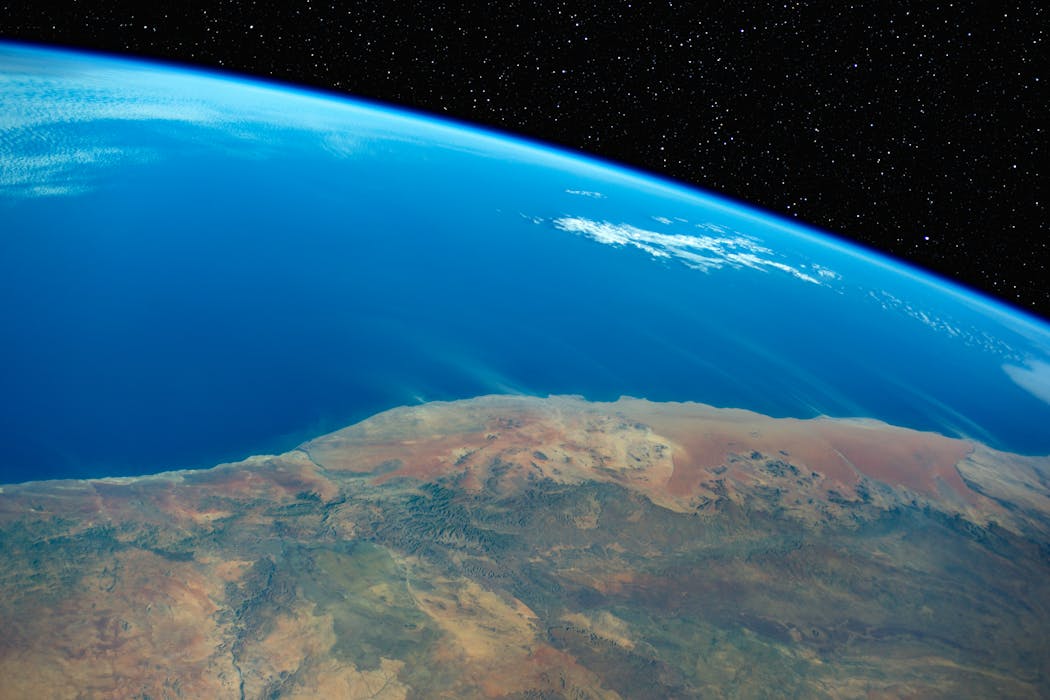 MarcelClemens / shutterstock
As the Atlantic warms, many fish along the east coast of North America have moved northwards to keep within their preferred temperature range. Black sea bass, for instance, have shifted hundreds of miles up the coast.
In the Mediterranean, the picture is very different. Without an easy escape route towards the poles, many species are effectively trapped in a sea that is warming rapidly. Some native fish are even being replaced by more heat-tolerant species that have slipped in through the Suez Canal.
It's a process affecting coastal species around the world: without a continuous pathway to cooler waters, many are in trouble. Escape becomes difficult where coastlines run east-west or are broken into enclosed basins and islands. In these settings, species have to move huge distances just to gain a few degrees of latitude - the so-called "latitudinal trap".
It's also a process that has repeated throughout history. When we analysed 540 million years of fossil data for a recent study published in the journal Science, we found that species along east-west coastlines were more likely to go extinct than those with easier movement north-south.
 Malanoski et al (2026) / Science
We hypothesised that the shape and orientation of coastlines could help species escape - or trap them. If coastlines provide direct, continuous pathways to move north or south, species should be able to better track shifting climates. But, where species have to travel a long way for minimal latitude gain, their extinction risk is raised during episodes of environmental change.
Coastlines themselves are not fixed. Over millions of years, plate tectonics rearrange continents, sometimes producing long north-south coasts, like those of the Americas today, and at other times sprawling east-west seaways such as during the Ordovician a bit over 400 million years ago.
This means climate shocks can produce very different extinction outcomes depending on the layout of continents at the time.
To test this hypothesis, we analysed fossil data for about 13,000 groups of related shallow-marine invertebrate species, such as clams, snails, sponges and starfish, spanning the last 540 million years. We then paired these records with reconstructions of ancient geography.
For each fossil, we estimated how difficult it would have been for that species to shift its latitude along shallow coastlines. We measured this as the shortest number of steps to travel 5°, 10°, or 15° latitude north or south. (For context, Great Britain covers about 9° from top to bottom). Short distances imply a relatively direct escape; long distances imply a long or maybe impossible escape route.
 A 5° shift in latitude can be reached quickly along a simple north-south coastline (A), but requires much longer routes—or cannot be reached at all—along convoluted east-west margins (B), interior seaways (C), and islands (D).
Malanoski et al (2026) / Science
A 5° shift in latitude can be reached quickly along a simple north-south coastline (A), but requires much longer routes—or cannot be reached at all—along convoluted east-west margins (B), interior seaways (C), and islands (D).
Malanoski et al (2026) / Science
We found that, over the last 540 million years, extinction risk was consistently higher for marine animals with long escape routes.
Geography amplifies catastropheThis pattern intensified during Earth's five mass extinction events. In our models, species with longer distances showed increases in extinction risk of up to 400% during mass extinctions, compared with about 60% during other intervals, highlighting that geography becomes far more consequential when climate change intensifies.
Although our analyses focused on geologic timescales, our results help us understand how shallow marine species may respond to climate change today. Species living in the Mediterranean or the Gulf of Mexico or other regions with semi-enclosed geography, or around the margins of islands, may have more difficulty as the ocean warms.
Coastline geometry may matter less for species that are good at dispersing themselves, however, especially those that have a long planktonic larvae phase where they drift around the ocean before becoming fixed in place. The survival of those species depends more on factors like ocean currents than coastline orientation.
Estimating whether a species is at risk of extinction is typically done with reference to attributes such as body size or geographic range size. But our work shows that extinction risk also depends on geography. Survival during climate upheaval depends not only on a species' biology - but on whether the map itself offers an escape.

Erin Saupe receives funding from the UK Natural Environment Research Council (NERC) and the Leverhulme Trust.
Cooper Malanoski does not work for, consult, own shares in or receive funding from any company or organisation that would benefit from this article, and has disclosed no relevant affiliations beyond their academic appointment.
From high-end boutiques to housing in disaster zones with beer-crate foundations, the Japanese architect creates with things people throw away. What will his distillery in whisky's holy land look like?
'I don't like waste," says Shigeru Ban. It's a simple statement - yet it encapsulates everything about the Japanese architect's work. He takes materials others might overlook or discard - from cardboard tubes to beer crates, styrofoam to shipping containers - and subjects them to a kind of alchemy, refining rough edges and transforming fragility into sturdiness.
The outcome is a perpetually ingenious and curiously poetic scavenger architecture that finds beauty and purpose in the everyday. From high-end boutiques to housing for refugees, Ban's buildings blur the lines between eastern and western design traditions, between the luxurious and the ordinary, and between what constitutes a temporary building and permanent one.
Continue reading...

Noam Chomsky and Jeffrey Epstein (image released by the House oversight committee). Via Scheerpost.
Each time I read new revelations from the heavily-censored Epstein files, I am at once shocked and not at all surprised.
It's a cliché that "power corrupts and absolute power corrupts absolutely". The oft-resurrected causal debate that arises when someone says this is whether (a) the very possession of power leads to its abuse, or (b) those with a predilection for corrupt and abusive behaviour (ie "bad people") strive for power to enable that behaviour.
I'm not going to get into that debate except to say that Lord Acton, to whom this quote is usually attributed, immediately went on to clarify unambiguously that he meant it in the former (a) sense.
I have had a few dozen brushes with members of what I call the patriciate*, this amorphous class of "fatherly nobility" (they're almost all males), and all of them, without exception, exuded a sense of arrogant certainty, intolerance of and obliviousness to criticism ("it isn't from one of our people so it is of no matter"), and an obnoxious sense of privilege (etym.: "that law doesn't apply to me") and of belief that they could basically do no wrong.
I knew some of these people before they became members of the patriciate, and so I do tend to agree with Lord Acton that it was their admission to the patriciate and its membership that corrupted and poisoned their character, thinking, and behaviours. But I also acknowledge that those who are already prone to corruption and abuse do disproportionally seem to strive for power and admission to the patriciate. It's a vicious cycle of depravity.
At some point I'm going to write a longer article about the brief and limited period in my own life when, based on the rewards and recognition I was receiving, I too began to be poisoned by "believing my own press (clippings)". I'm certainly not proud of my behaviour during that period, though it never included anything illegal.
But as a result I can completely understand the seduction and promises of power and their corrupting influence. We are, after all, conditioned by our biology and our culture, and it's not hard to be slowly, subtly conditioned to find certain behaviour that we might once have found revolting and outrageous to be somewhat justifiable, and then, gradually, acceptable and even ordinary.
Looking at the extreme example of Trump, if you disentangle the behaviour that is due to his accelerating senility and his traumatizing past, you see a guy who is utterly unapologetic for saying, while laughing, on camera, that when women don't do what you want, you have to "grab 'em by the pussy". His comments on the Epstein Files have made it quite clear that now that his censors have released millions of emails that aren't "about Me", he no longer sees what the fuss is all about and why anyone still cares about their content. The problem for him, obviously, isn't that the files reveal disgusting and illegal behaviour, it's that the perpetrators (at least the ones revealed so far) got caught and now have to face public reaction — distracting public attention from the demented king.
Worse, it's quite clear that he, just like Ghislaine Maxwell, doesn't really think anything that Epstein and the thousands of people in the patriciate (including Trump, if/when his incriminating emails ever get out) did was morally wrong. Just a bunch of bros hanging together and doing bro stuff. The lion always eats the lamb. If the "alleged victims", he is undoubtedly saying, didn't scream and run away, then they were either stupid or complicit — and hence there was no crime, legal or moral. This is, of course, the typical rationalization of pimps and johns (and of drug pushers). If everyone around you is a pimp or a john, you come to see this as normal behaviour. If you exploit an addict's behaviour, or that of someone weak or in desperate need, you rationalize that that's no reflection on you.
Once you get infected with the patriciate mindset, everyone and everything outside the patriciate becomes disposable without a thought or care: Children, women, animals, ideological opponents, nations, the environment, 'other' ethnic groups, the poor, the sick, the weak, people who have what you want and believe you 'deserve' (Greenland perhaps, or Palestine's land, or Iran's oil, or the Washington Post, or Twitter). They are all tolerated while they are of use to you and available to you, and then cease to be important and can be discarded.
This is not an 'elite' predilection. It's way too big for that. It is ubiquitous in our society. Political leaders and groups, government and institutional administrators and their groups, entertainment and sports stars and associations, business and 'professional' leaders and clubs, university leaders and clubs, religious leaders and associations, gurus of every stripe, leaders and cadres and 'in' groups in the military, in the media, in the sciences, in the arts, among cops and prison guards, street gangs and crime syndicates, and also wherever any kind of 'hazing' or other abusive rituals of membership rear their ugly head — everywhere that wealth, fame, authority and hence power is or can be concentrated, you will find layers of the patriciate. Power corrupts everywhere.
And just to stress, the patriciate is not 'organized' by anyone. This is not a tight cabal conspiring in secret to do nefarious things. It is insidious because it preys on our essential human nature, our malleability, our hunger for recognition and reassurance, our addictive tendencies in search of the next shot of dopamine, and our intense desire to belong and 'fit in'. We get seduced into its outer layers easily, and then just as easily slide into 'higher' layers where the reinforcement of privilege, impunity, recognition, faithful 'brotherhood', belonging, and the easy spoils of power ("money for nothing and your chicks for free") entrench us and blind us to the abuses and horrors we are inflicting on others and on the world. More than being 'invited', we quietly ask to belong. And soon we are conditioned to be part of it, with all the arrogance, self-certainty, intolerance, obliviousness to criticism, sense of impunity, and sense of privilege that goes with that. Everyone is vulnerable to being sucked into it.
What has been most remarkable about the behaviour of those 'outed' in the Epstein Files is their sense of disbelief and astonishment that anyone could dare insinuate that any of their behaviour was wrong. We see this in the annoyed denials, veiled threats, feeble self-apologies, and whitewashing (sometimes with the complicity of the alt media) of celebrities like Noam Chomsky, Richard Dawkins, Peter Thiel, Bill Gates, Bill Clinton, Richard Branson, Lawrence Summers, Ehud Barak, Howard Lutnick, Sergei Brin, Steve Bannon, Elon Musk, 'Prince' Andrew, and hundreds of others across the political spectrum, and in the sidestepping media coverage and absence of on-the-record comment from associates of all these rich and powerful men. You don't want to get on the 'wrong' side of any of this arrogant, privileged, and vengeful bunch, and not just because it would block your admission to the patriciate.
To show that the patriciate isn't exclusively men, Exhibit A is Epstein's partner-in-crime, Ghislaine Maxwell, who shows no remorse for her cruelty in the manipulations that destroyed so many people's lives (most of them women, and lots of them still children). She was quickly moved to more comfy prison quarters after people of influence talked with Trump about her, and has now publicly pledged to say nothing — ie to completely protect the patriciate — unless and until Trump gives her a full and unconditional pardon.
To repeat: This is not a small pocket of rich evil men secretly doing diabolical things among themselves. This is the inevitable product of human greed, thirst for fame, for security, happiness, reward, recognition, and reassurance, in the presence of a monstrous inequality of power. It's been going on for thousands of years.
This will not end with the closure (probably without significant prosecutions) of the Epstein Files. This is a sickness in an entire bewildered and traumatized species that has lost its connection with community and with the rest of life on Earth, whose privileged patriciate has been freed to do anything they want and who, together, and with their procurers, will do anything that will make them feel better about themselves, even for just the duration of a rush of dopamine and other feel-good chemicals, each a little more powerful than the last.
*Why do I not use the more familiar term patriarchy, you might ask? It's because I don't think most members of the patriciate are terribly fussed with the -archy of running things and controlling other people. Running things is hard, annoying work. In fact I think the patriciate would be quite delighted if the 8 billion 'other' people on the planet, who are no longer of immediate use to them getting what they want and what they think they deserve, just vanished and got out of their way.
There are some examples of renewable energy success right now in this world. Over 98% of electricity in British Columbia is generated by clean, renewable sources. Norway generates about 98% from renewables as well. This northern European country also leads in electric vehicles, as in fully electric vehicles, not hybrids ... [continued]
The post Electricity Prices Decreased In South Australia Because Of Clean Renewables appeared first on CleanTechnica.
A new round of tidal energy activity is beginning to surface in the US, including a plan to install slim, powerful tidal turbines from the Scottish firm Orbital Marine Power in Washington State.
The post The US Can Still Make Tidal Energy Happen appeared first on CleanTechnica.
A voiceover previewing a new sci-fi movie narrated, "The newcomers had killed their planet, just like we are." The ominous fiction rings true to today's reality. US President Donald J. Trump has rejected any gesture of global climate cooperation from allies and has withdrawn the US from the Paris climate ... [continued]
The post Can We Dare To Be Hopeful About Clean Energy? appeared first on CleanTechnica.


